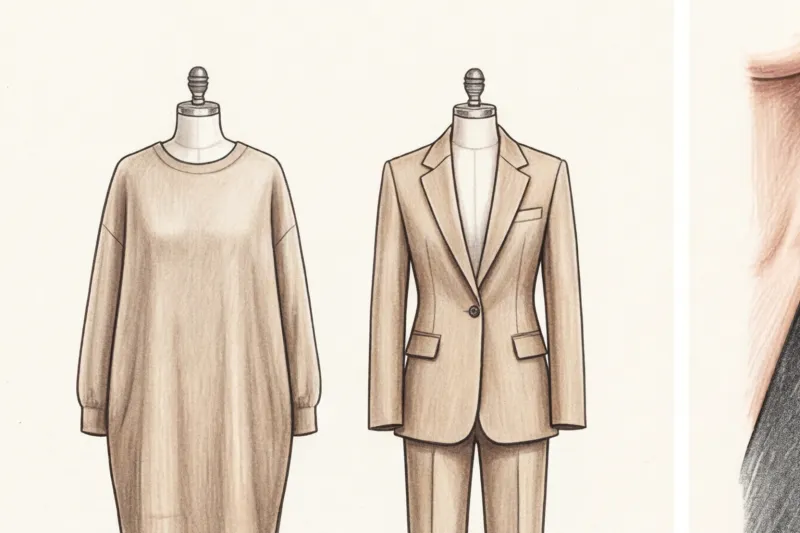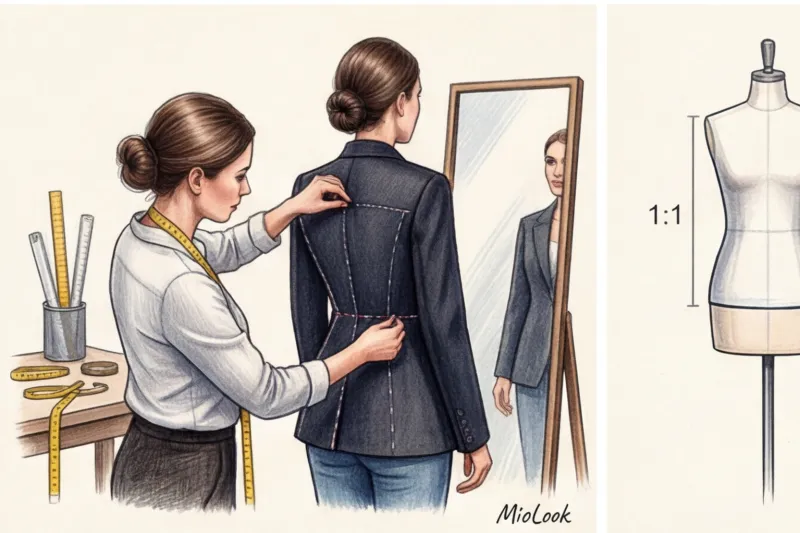
One of my clients, Anna, a top manager at an IT company, once came to a wardrobe review in tears. The day before, she'd spent almost €400 on a luxurious chunky-knit black cashmere cocoon cardigan. "Camilla, I wanted to hide the extra five kilos I gained after vacation, but I ended up looking like a thundercloud in it!" she complained. I pulled out a thick, structured wool-blend jacket from her closet, bought a couple of years ago at Massimo Dutti for €130, put it on, and rolled up the sleeves slightly. Instantly, Anna "dropped" two sizes without any dieting.
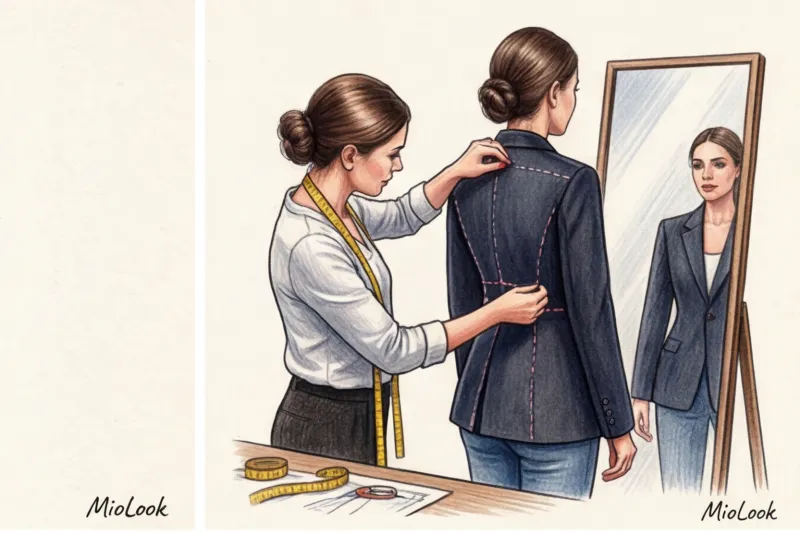
Let's be honest. Clothes that make you look slimmer — these aren't black, shapeless robes or suffocating shapewear. This is pure architecture and geometry. We've already discussed this global approach in more detail in our a complete guide to visual body shaping , but today I want to explore specific, physiologically based laws of optical illusions in styling. We'll use the rule of thirds and optics to sculpt a silhouette the same way a sculptor sculpts a form from clay.
Silhouette architecture: how slimming clothing works
Clothes aren't just a fabric cover for the body. They're a remote control for the focus of your conversation partner's attention. Over 12 years of working as a stylist at the intersection of Paris and the world's fashion capitals, I've realized the most important thing: we don't see a person's actual size, but the lines our gaze follows.
Recall the famous "Bar" jacket from Christian Dior's 1947 New Look collection. The models didn't have abnormally narrow waists—the illusion of a wasp waist was created by the rigid structure of the shoulders and the sharp widening of the peplum at the hips. This is pure physics of perception. In psychology, this is called the Müller-Lyer illusion: segments of the same length appear different depending on the direction of the "creases" at their ends. In fashion, creases on trousers, V-necks, and sharp lapels physiologically force the viewer's eye to move more quickly from top to bottom, without lingering on the width. You don't physically lose weight, but the viewer's brain perceives you as taller and slimmer.
Rules 1-3: Managing Proportions and the Rule of Thirds
If I were asked to leave just one piece of style advice, it would be the golden ratio. Proportion is everything.
1. Abandoning the 1:1 ratio
The most common and insidious mistake is dividing your body in half. If your contrasting top (for example, a white blouse) ends exactly where your dark mid-rise or low-waist trousers begin, you're cutting yourself in a 1:1 ratio. According to visual perception research from the Institute of Color and Design, this division visually shortens your legs by 10-15% and automatically adds volume to your waist.
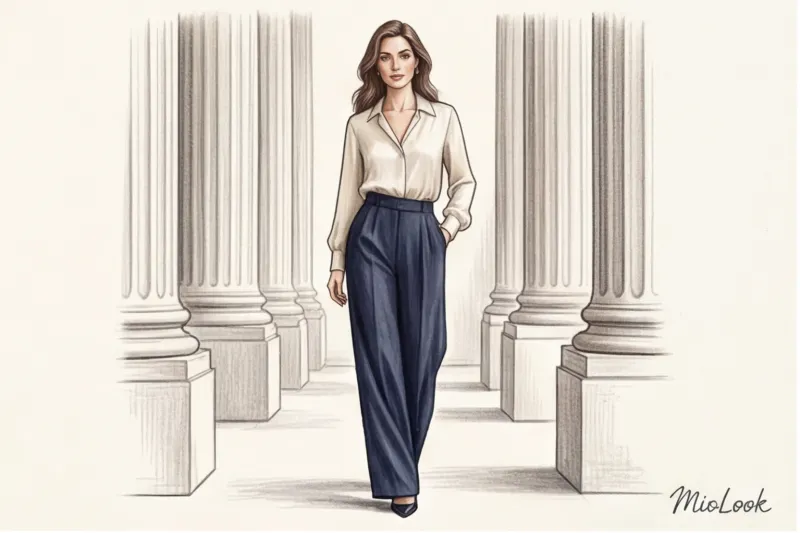
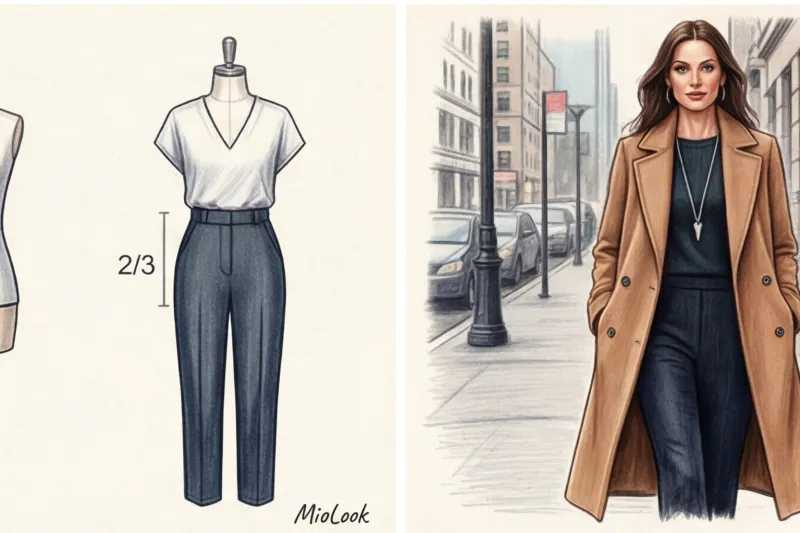
2. The saving proportion is 1/3 to 2/3
In my consultations, I often ask clients to simply fold the edge of the T-shirt inward by 3-4 centimeters or use a properly selected women's belt A high-waisted bottom (2/3 of your silhouette) and a cropped or tucked-in top (1/3) work wonders: your legs are lengthened and your waist is visually slimmer.
3. Control of the lengths of “dangerous” zones
The golden rule of a stylist: the horizontal edge of any item (the hem of a jacket, the edge of a sleeve, the length of a skirt) never The jacket shouldn't end at the widest part of your figure. If you have wide hips, the jacket should either end above them (at the waist) or cover them, falling to mid-thigh. The cut line always acts as a highlighter.
Access to MioLook for €0.99 — one-time payment
A smart AI stylist will select the perfect proportions for your figure.
Get access — €0.99 onceRules 4-5: Verticals and Diagonals (Forget the Stripe Stereotypes)
"Don't wear horizontal stripes, they make you look fat!" - this myth migrates from magazine to magazine. But let's look at it from an architectural perspective. A wide striped shirt under unbuttoned A classic trench coat or jacket won't make you look wider. Why?
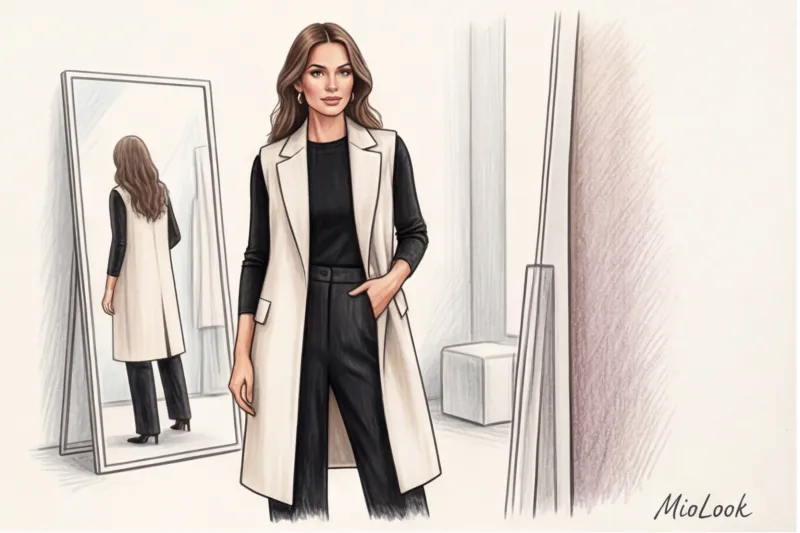
4. Creation of artificial verticals
You don't have to buy boring vertical stripes. Faux verticals are a hundred times more effective. A long, unbuttoned, fine-knit cardigan, an unbuttoned, straight coat, a long scarf with loose ends, or crisp, pressed creases on trousers. The two side flaps of an unbuttoned coat literally "cut off" your sides, leaving the viewer with only a narrow central column.
5. Diagonal lines and the magic of smell
Wrap dresses, invented by Diane von Furstenberg in the 1970s, remain the best-selling style in the world. A diagonal line across the torso breaks up the monolithic volume of the figure. An asymmetrical skirt hem does the same to the legs. The eye gets confused by the diagonals and can't register the true width of the hips.
Rules 6-7: Fabric Architecture (Why Stiffness is More Important than Color)
Let's get back to my client Anna and her cashmere sweater. The problem wasn't the black color, but the texture.
6. Structure vs. flimsiness
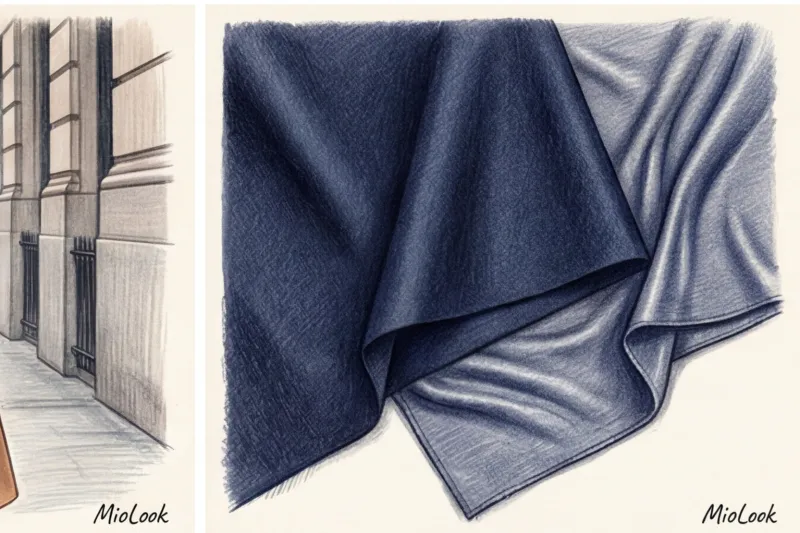
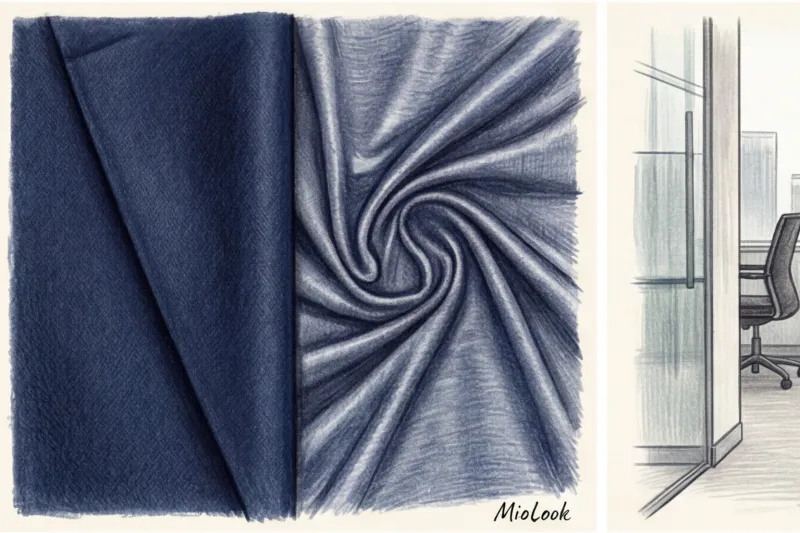
Thin viscose jersey, plain jersey, and cheap, thin silk are wardrobe "traitors." They'll cling to every wrinkle, even the ones you don't have (like a seam from your underwear). Want a slimmer look? Choose fabrics that hold their own shape: heavyweight denim (12 oz or more), suiting wool, or heavyweight cotton (180 g/m² or more). The garment should sculpt you, not you sculpt the garment.
7. Matte textures instead of gloss
The physics of light is unforgiving: shiny surfaces (satin, velvet, lurex, sequins) reflect light and visually expand an object by 1-2 sizes. Matte fabrics (wool, crepe, matte cotton) absorb light and make it appear smaller. If you really want to wear a silk satin skirt with a lingerie-inspired effect, balance it out with a thick matte sweater or a tailored jacket over it.
Your perfect look starts here
Join thousands of users who look flawless every day with the MioLook virtual fitting room.
Get access — €0.99 onceRules 8-9: Monochrome and Smart Color Blocking
Color is a powerful tool for correction if you know how to use it.
8. The power of a monochrome look
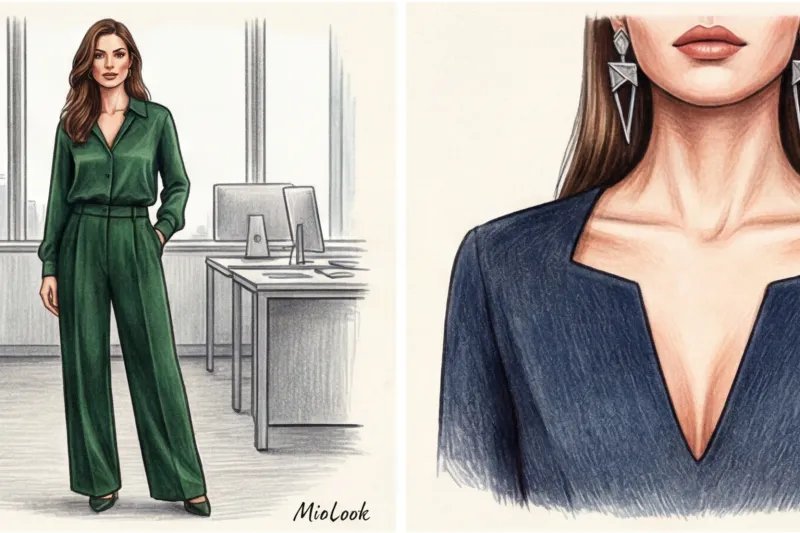
Wearing clothes in a single color (or similar tones, such as camel or dark chocolate) creates a continuous color column. The eye isn't distracted by color boundaries, making you appear taller and slimmer. When it does NOT work: Monochrome loses its impact if you cut it with a wide, contrasting belt right across the problem area of your tummy.
9. Contrast inserts on the sides
Remember the famous Stella McCartney dress (Octavia collection, 2011), which Kate Winslet wore to a sensational performance at the Venice Film Festival. The light, hourglass-shaped center panel and black side panels are clever color blocking. The dark sides physically blend into the background, and the brain interprets your figure solely by the light center.
Rule 10: Focus Control and the Magic of Accessories
If you don't want people looking at your thighs, give them a reason to look at your face. This is the main rule of illusionists.
Focus on the portrait area
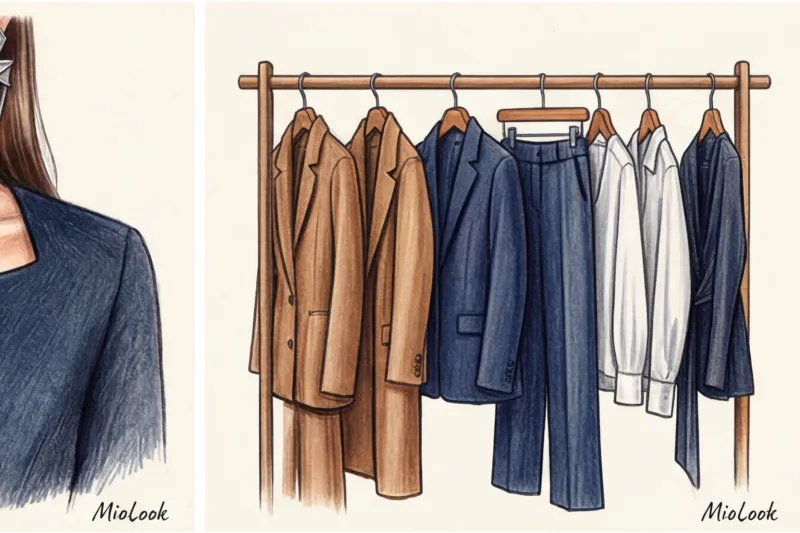
Use architectural V-necklines, accent brooches or statement earrings. The right combination of glasses and earrings is able to hold the attention of the interlocutor in the upper third of your silhouette.
Scale matters
This is my favorite topic in my master classes. The principle of proportionality states that accessories should correspond to your scale. If a woman of size XL (50-52) picks up a micro-sized Jacquemus bag, the contrast with this tiny object will make her figure appear even more monumental. Choose structured bags for plus size women Medium or large in size and rigid in shape. The same applies to shoes: a blunt toe shortens the leg, while a slightly pointed one gracefully elongates it.
Debunking myths: clothes that make you look slimmer aren't oversized.
Let's debunk three of the most toxic myths about visual weight loss.
"A psychological paradox: the harder we try to 'hide' in a robe, the more attention we draw to our actual size."
Myth 1: Oversized clothes will hide everything
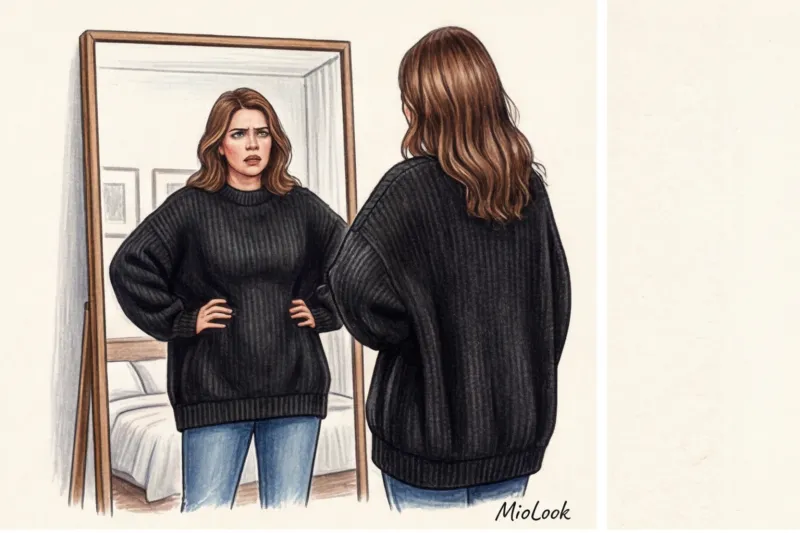
The main anti-trend is trying to hide in a tent. Hyper-oversized clothing without support makes your dimensions equal to the dimensions of the widest garment. You become a massive square. To make a loose garment work, you need to show off your thinner parts: expose your wrists (roll up your sleeves), bare your ankles, or accentuate your neck.
Myth 2: Black is always slimming
I've mentioned it before, but I'll say it again: black is slimming. only In a structured, matte fabric. Whether it's a black fluffy sweater or a thin, tight black turtleneck, it will show off every gram.
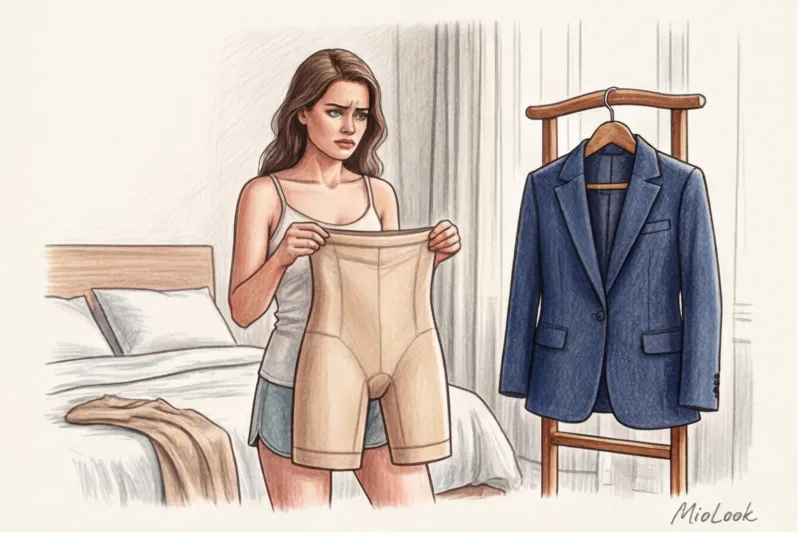
Myth 3: Shapewear is one size too small
Overly tight underwear (like stiff, oversized Spanx) creates a "caterpillar" effect. Your body doesn't disappear: constricted in one spot, it inevitably forms a bulge above the edge of the underwear, which will be treacherously visible under thin fabric. Choose tight, yet seamless underwear that fits your size to smooth out the contours, not to alter the overall dimensions.
A stylist's checklist: a wardrobe overhaul for a slimmer look
To ensure that your knowledge doesn't remain just text, I suggest you open your closet this evening and do a quick inventory.
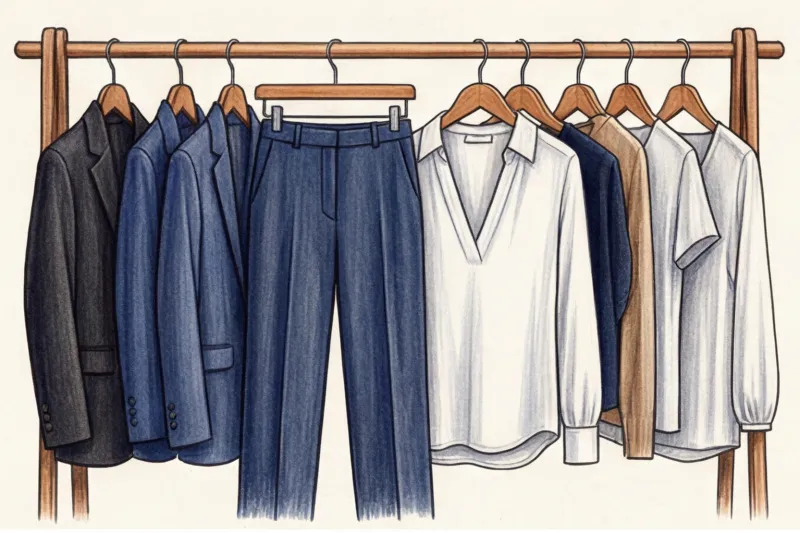
- Leave things with a clear shoulder line. Jackets, coats and shirts with set-in sleeves are your foundation.
- Get rid of flimsy knitwear. All those snotty cardigans and thin T-shirts bought on sale for €10 are costing your self-esteem too much. Replace them with thick cotton.
- Check the lengths. Put on your favorite jacket and see where it ends. If it's at the widest point of your hips, take it to a tailor to have it shortened, or wear it unbuttoned with the vertical part inside.
- Digitize your wardrobe. Use the app MioLook to upload your items. A smart algorithm will help you create those 1/3 to 2/3 proportions and evaluate your look before you even leave the house.
Slimness in clothing isn't about the size on the tag. It's about your ability to manipulate lines, fabrics, and proportions. Create your silhouette consciously, choose structure over shapelessness, and you'll see how not only your reflection but also your posture will change.