One of my clients, a top manager at an IT company, once confessed to spending around €3,000 on luxurious silk blouses, suits, and formal skirts for the office. Yet, she spent 80% of her time working from home or traveling for personal business, wearing the same gray cotton sweatshirt. When it finally started pilling, she came to me with the classic problem: her closet was overflowing, but she had nothing to wear. That's when we started putting together a premium everyday capsule collection for her.
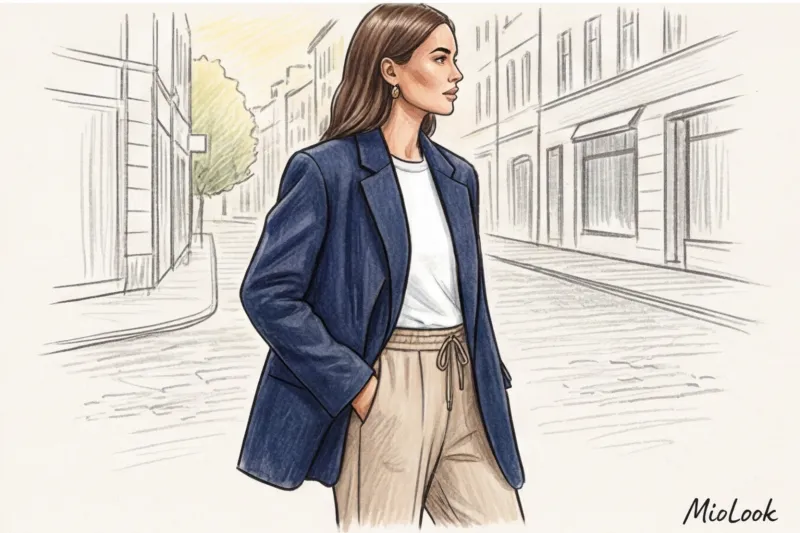
Ignoring your everyday wardrobe is a huge mistake. We're used to buying things "for a special occasion" or "for a formal office," forgetting what exactly casual style for women covers the lion's share of our real needs. We discussed in more detail why narrow style types no longer work in our complete guide to women's clothing styles.
In this article, as a textile expert and stylist, I won't simply advise you to "buy jeans and a T-shirt." We'll examine everyday wardrobe through the lens of textile engineering: how fabric density, the right blends, and clever structuring transform casual at-home style into expensive, well-groomed chic.
What is modern casual style for women (and why it's not just jeans)
The end of the era of "pure" styles has already arrived. A wardrobe consisting exclusively of strict classics or boho-romantic styles today looks theatrical and inevitably leads to stylistic burnout.
According to McKinsey's "State of Fashion (2024)" report, the shift to hybrid work has forever changed consumer habits. Dress codes have blurred: we want to feel as comfortable as pajamas, but also look ready to log on to Zoom or pop into a trendy coffee shop at any time.
Modern casual isn't about throwing away old clothes. It's a carefully crafted balance between physical relaxation and social appropriateness. My statistics are stark: women who don't have a well-thought-out casual wardrobe are four times more likely to complain about having nothing to wear in the morning.
Access to MioLook for €0.99 — one-time payment
A smart AI stylist will select the perfect look for your everyday tasks based on your preferences.
Get access — €0.99 onceFabrics and textures: how to distinguish expensive casual from "loungewear"
The biggest mistake a beginner makes is confusing street casual with clothes for the cottage or sleepwear. The difference between a stretched-out T-shirt and a stylish basic lies not in the brand logo, but solely in the texture and weight of the fabric.
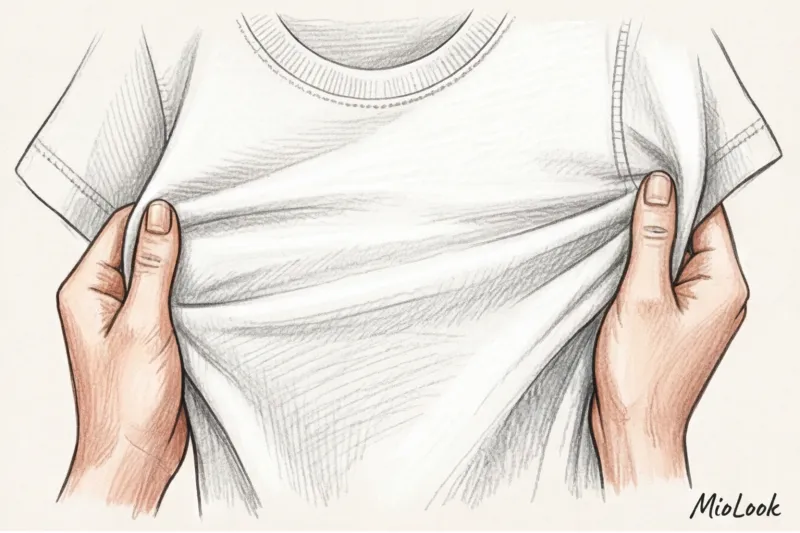
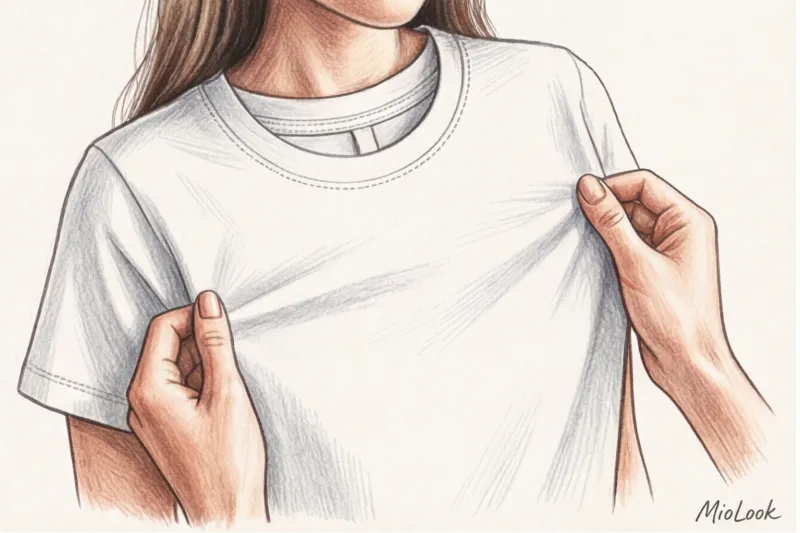
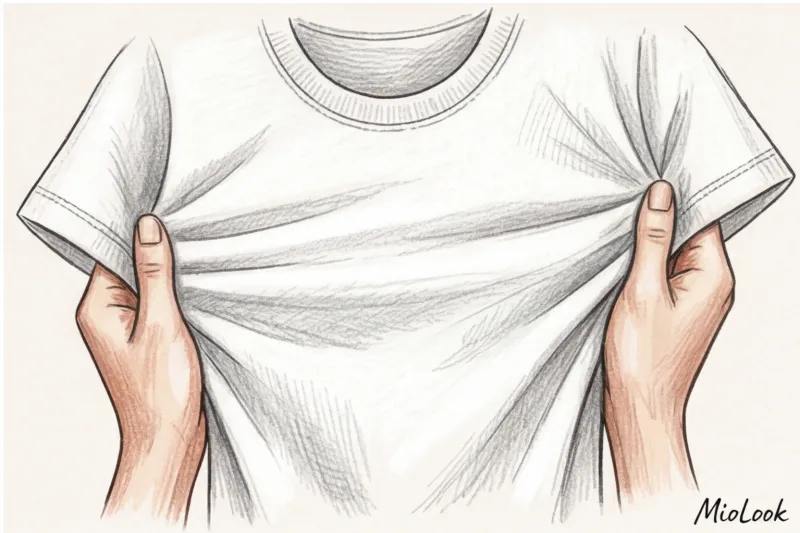
In the textile industry, there's a metric called GSM (Grams per Square Meter), which measures the density of a fabric. When I teach clients about basic T-shirts at stores like COS or Massimo Dutti, the first rule is the "light test." Hold the fabric up to a lamp. If you can clearly see your fingers through it, the item isn't suitable for high-class casual wear. Look for cotton with a weight of at least 180 g/m².
If you're environmentally conscious, consider next-generation fabrics. According to Textile Exchange, organic cotton blended with Tencel (lyocell) fibers is not only produced with less impact on the planet but also lasts 30% longer than regular cotton, maintaining a silky feel even after multiple washes.
The 100% Cotton Myth and the Right Blends
Now I’m going to say something that contradicts 90% of fashion blogs, but is confirmed by textile science and my years of practice.
For a casual knit wardrobe that you wear every day, 100% cotton is often a poor choice.
Yes, 100% cotton is ideal for a stiff men's shirt. But if you're buying joggers, a long-sleeve top, or a heavy T-shirt, pure cotton will quickly stretch out at the elbows and knees, and may become stiff after washing.
The secret to the durability of basic garments lies in engineered blends. The magic lies in the addition of 2–3% elastane and 10–15% modal or lyocell. Elastane acts as a spring, returning the fabric to its original shape (no more stretched knees!), while modal prevents cotton from becoming "wooden" after contact with hard tap water.
What should you absolutely avoid? Acrylic. It's the main enemy of a relaxed wardrobe. A €40 acrylic jumper will cause a greenhouse effect on your skin and become covered in irreparable pilling after just three weeks of wear.
The Anatomy of a Basic Casual Wardrobe: 5 Pieces Worth Investing In
The foundation of style is a capsule of interchangeable elements. Here are 5 pieces that make up 80% of successful looks.
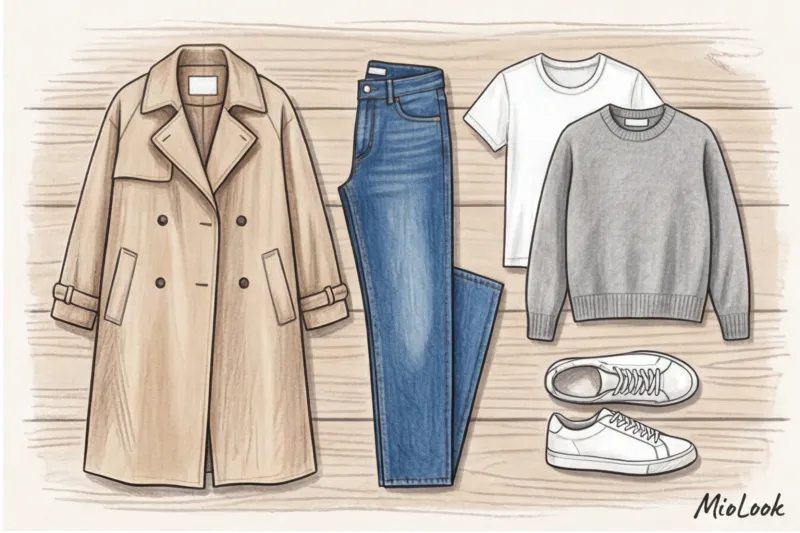
- Thick basic t-shirt: Loose-fitting, with at least 2-3 centimeters of air space between the fabric and your body. Save tight-fitting t-shirts made of thin rib knit for the base layer.
- Straight-leg jeans made of thick denim: The ideal choice is raw denim or washed denim with an elastane content of no more than 1-2%. They shape the silhouette, rather than simply cling to the legs.
- Loose jumper: Made from merino wool or thick textured cotton.
- Oversized jacket: A stiff, shapely jacket "off the shoulder" or a thick, chunky knit cardigan.
- Universal shoes: Minimalist leather sneakers without logos or soft suede loafers.
It's important to remember the Cost Per Wear index (CPE). Customers often resist buying a basic cashmere or merino hoodie for €200, preferring to buy five synthetic sweatshirts for €30. But you'll wear a €200 hoodie 100 times per season (CPW = €2), it will retain its shape and keep you warm. Five cheap sweatshirts will stretch out after the third wash, and you'll stop wearing them (CPW = €10). You should invest in the items you wear most often.
Your perfect wardrobe starts here.
Digitize your items in the MioLook app. Our AI will help you create the maximum number of stylish casual outfits from what you already own.
Download MioLookLook Formula: How to Wear Casual Style Without Looking Untidy
Why do sweatpants and hoodies look luxurious on Pinterest models, but in real life they often create the "I went out to buy bread with a fever" look? The answer lies in contrasts and the rules of layering.
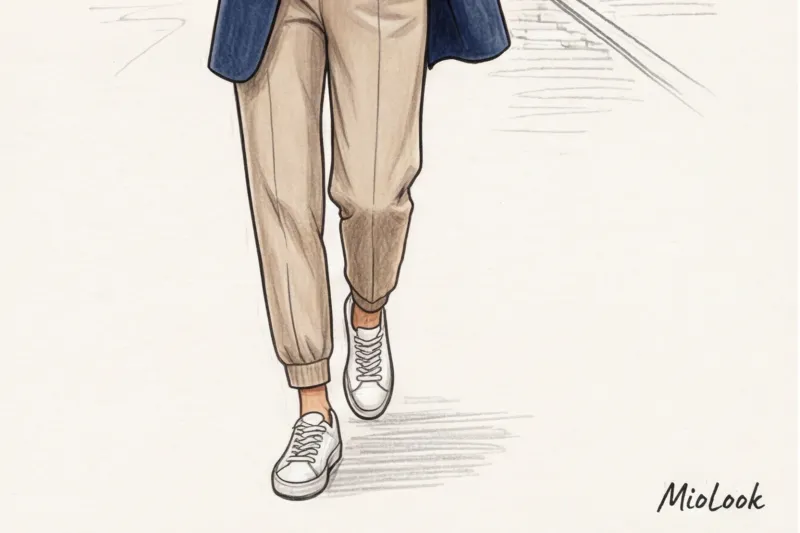
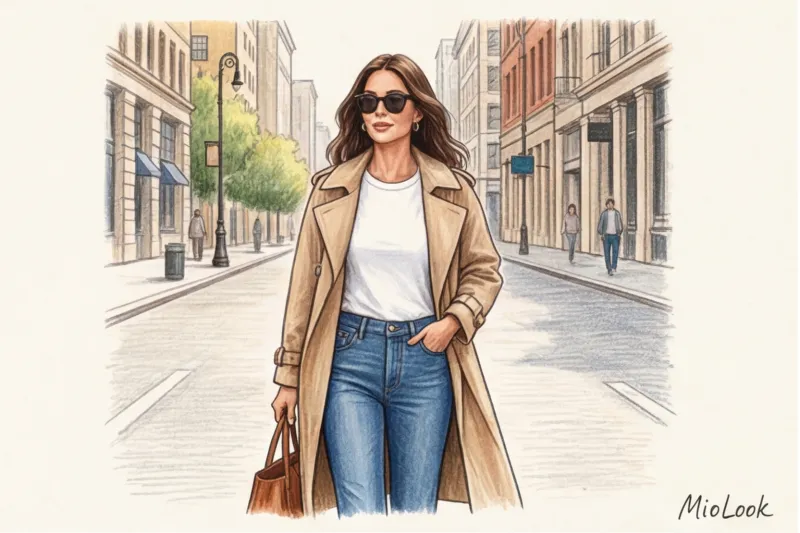
The golden rule of stylists is The Third Layer Rule Jeans and a T-shirt are a boring basic. But throw on a thick, structured shirt, trench coat, or jacket and the outfit instantly becomes complete.
The second secret is playing on contrasts of textures (by the way, if you want to delve deeper into this topic, study our rules combinations of textures in clothing ). Mix soft with hard: an oversized cotton sweatshirt looks stunning paired with a flowing silk skirt, while relaxed jeans call for sleek, structured shoes.
My favorite formula that saves me from the morning rush: 2 casual items + 1 classic item + 1 structured accessory For example: basic jeans and a soft long-sleeved T-shirt (casual) + a tailored tweed jacket (classic) + a geometric, rigid bag (structured). A rigid bag is your lifeline. It magically ties together even the baggiest outfit, showing others that your relaxed style is a conscious choice, not a sign of sloppiness.
Smart Casual vs. Relaxed Casual: Where's the Line?
The world of everyday style has its own hierarchy, which can be easily confused. Let's draw a clear line.
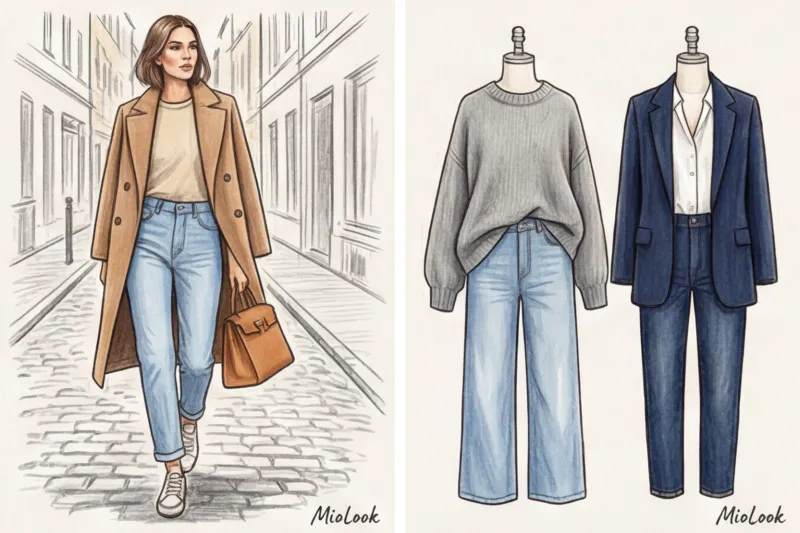
Relaxed Casual — these are knit suits, oversized sweatshirts, distressed jeans, soft shopper bags, and sneakers. This is a style for walks, flights, and weekends.
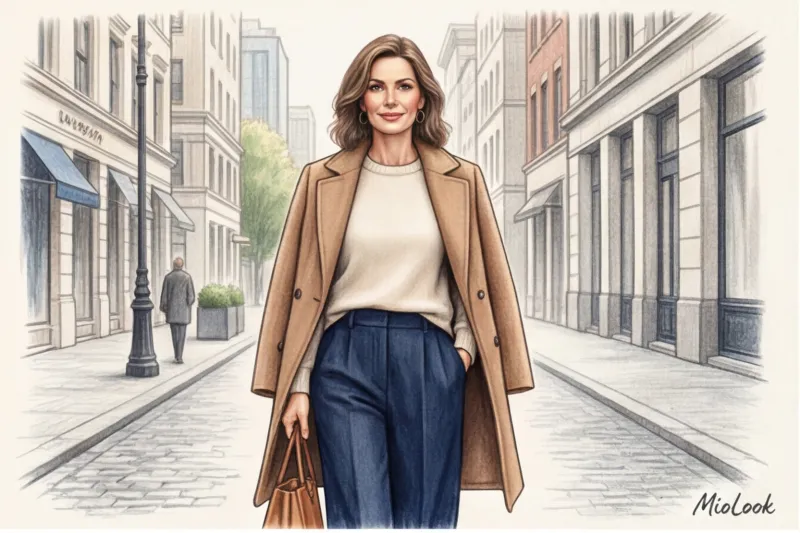
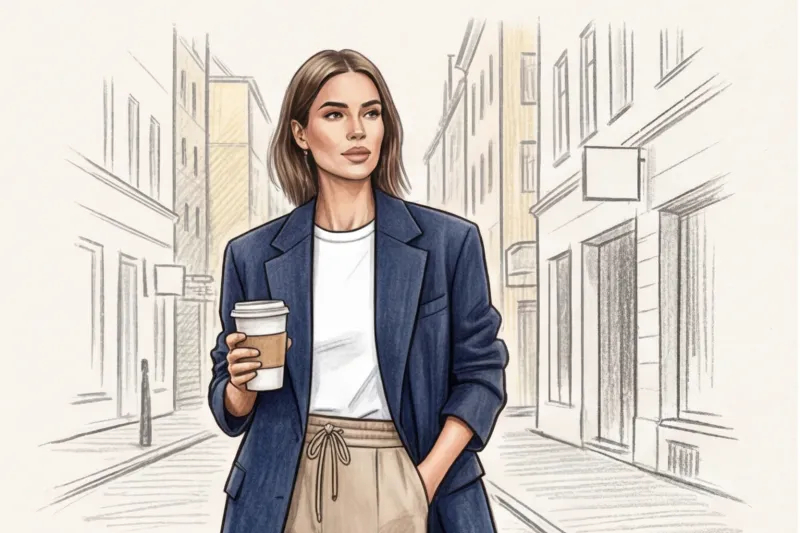
Smart Casual — this is when you take the comfort of casual but package it within the confines of a business dress code. Sportswear is a no-no here. You swap out jeans for pleated palazzo pants (but with an elastic waistband at the back for comfort!), and instead of a sweatshirt, you wear smooth viscose turtleneck and throw on a blazer.
The beauty of a well-assembled capsule collection is that it transforms your look with just one change. Swap your sneakers for slouchy loafers, your backpack for a leather tote, and your outfit automatically ups the formality factor, becoming appropriate even for a Friday at the office.
Checklist: Wardrobe audit and transition to high-quality casual wear
Knowledge is useless without application. Set aside this weekend to review your knowledge using this step-by-step plan.
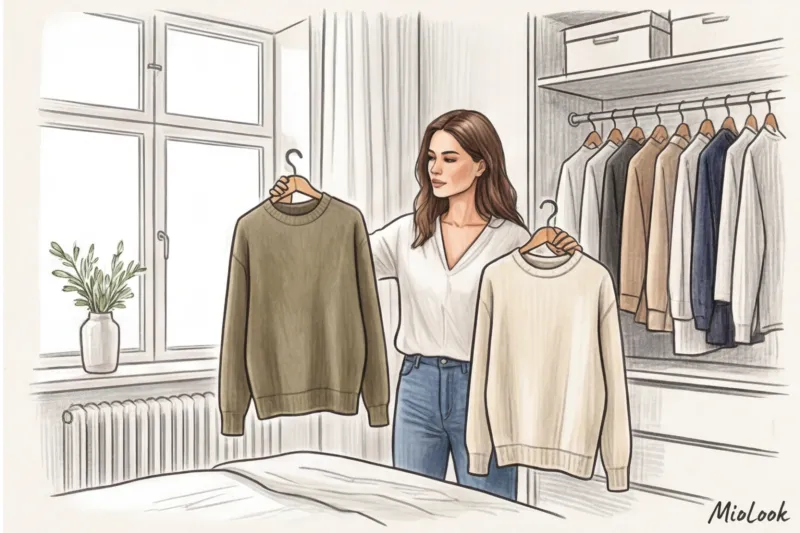
- Step 1: Banish the cottage style. Ruthlessly remove from your street wardrobe any items with stains, stretched elbows, or misshapen collars. If an item has lost its shape, it will ruin any look.
- Step 2: Analyze proportions. Fit is everything. Make sure your casual bottoms (trousers/jeans) sit snugly at the waist or comfortably on the hips, without bunching up in the crotch area.
- Step 3: Color discipline. Create a core of 3-4 neutral shades (camel, gray melange, deep blue, milky). Add 1-2 accent colors to set the mood.
- Step 4: Digitization. Add the remaining items to the app MioLook to clearly see what basic elements (for example, a light, thick shirt) you are missing to tie together the things you already have.
Ready to get started?
Try the MioLook plan for free—no commitments required. Create your perfect casual wardrobe with smart algorithms.
Get access — €0.99 onceCaring for a Basic Wardrobe (Secrets of a Textile Expert)
Sustainable fashion isn't just about buying organic items. It's about learning to wear clothes for years. High-quality casual clothing can last 5-7 years if you break a few of your usual household rules.
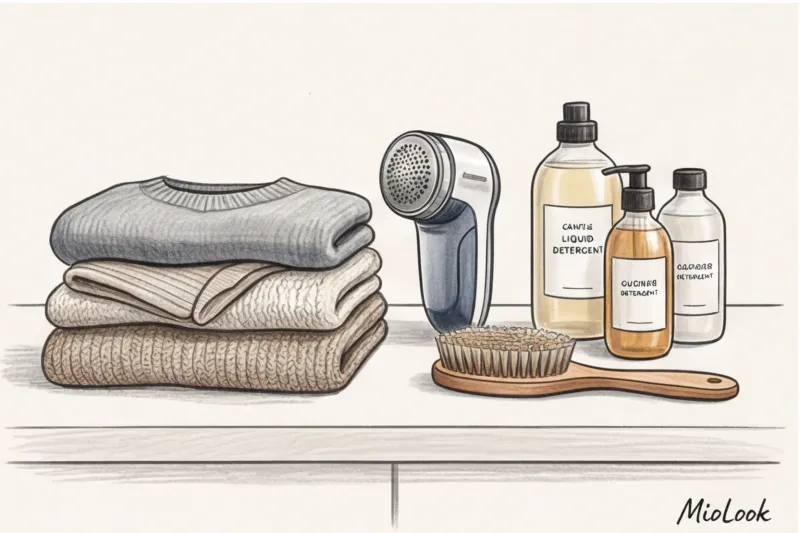
First, forget about detergents for knitwear and dark cotton. The dry granules of the detergent don't fully wash out of the fibers, causing a black T-shirt to turn ash-gray and the fabric to become rough. Use only liquid gel detergents and wash at temperatures no higher than 30 degrees Celsius.
Secondly, knitwear should never be hung on hangers. Their own weight in the closet will stretch them out, causing the hangers to create "loops" on the shoulders. Sweaters, hoodies, and thick long sleeves should only be stored folded on shelves.
And finally, your best investment in style isn't another trendy handbag, but a powerful electronic fabric shaver. Pilling occurs even on the most expensive 100% cashmere—it's a natural property of natural fibers when rubbed. Regularly shaving your sweater in areas prone to friction (underarms, bag sides) will restore it to its store-bought appearance in five minutes.
Casual style is the canvas of your everyday life. Treat choosing a "plain T-shirt" with the same care you would choose an evening dress, and you'll forget about the "nothing to wear" problem forever.