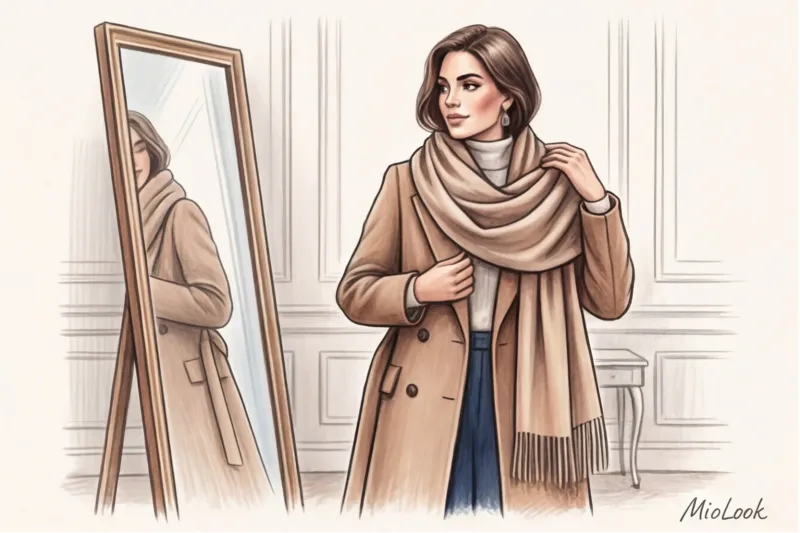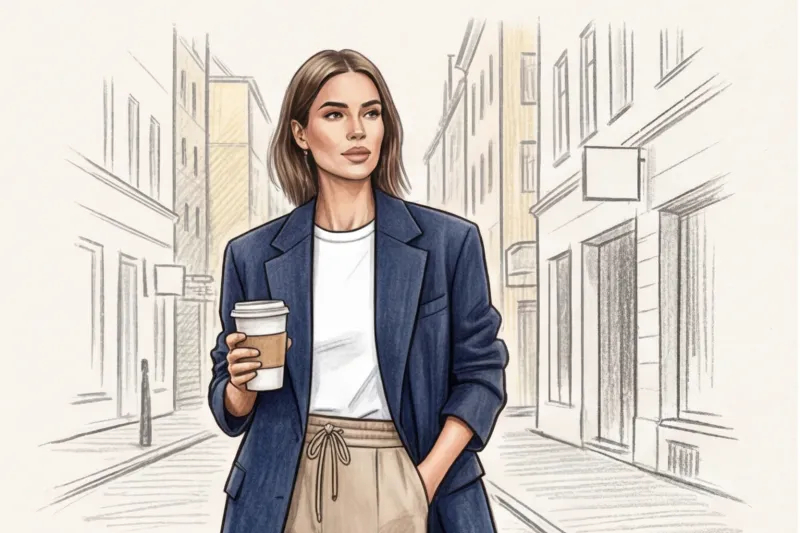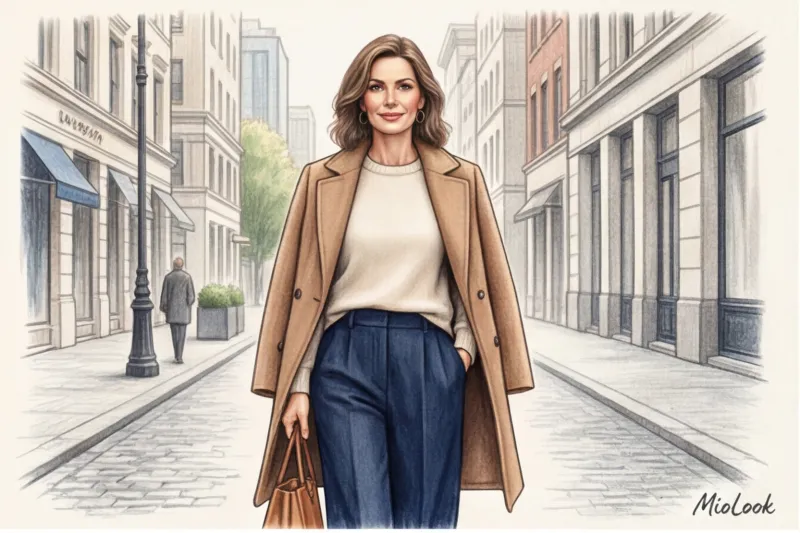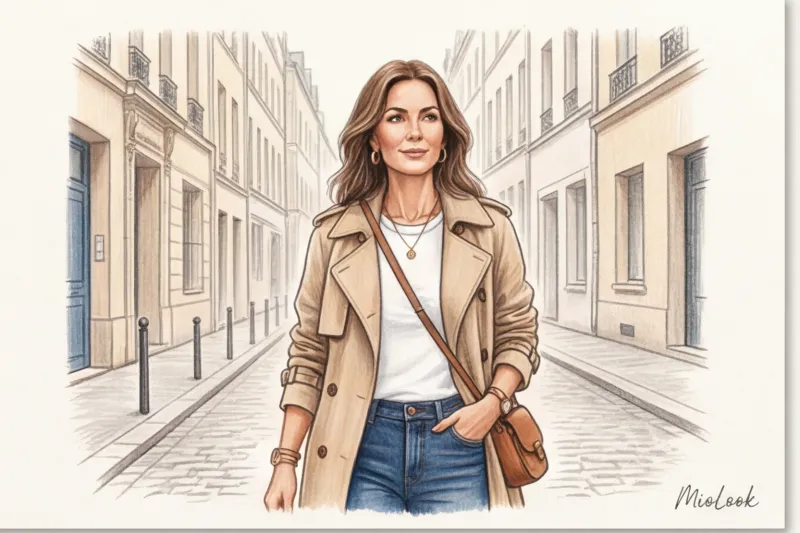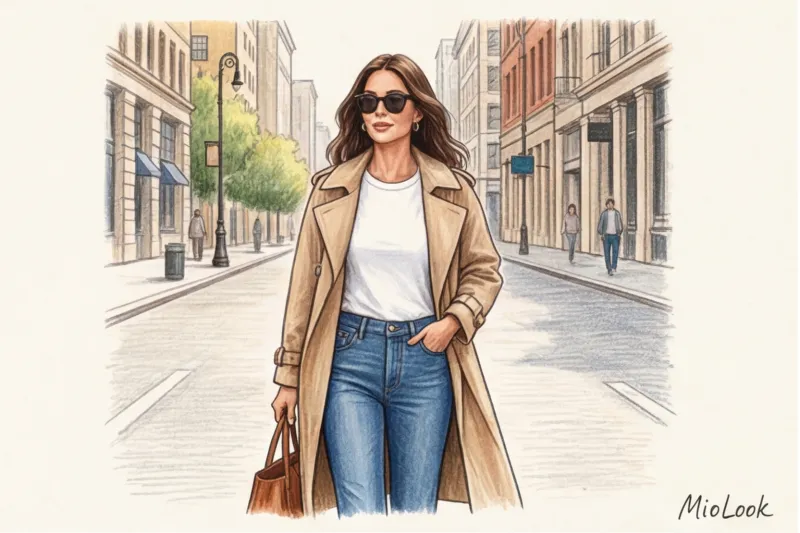
What is casual style for women: the anatomy of flawless casualness
In 14 years of working as a personal stylist, I've learned one client request by heart. At the very first consultation, nine out of 10 women tell me, "Olena, I want to be comfortable, but I don't want to look like I went out in my pajamas." We live at a fast pace, and our clothes shouldn't restrict our movement, but we also need to project confidence and status. It's at this point of pain that true success is born. casual style for women — not just a random collection of basic things, but a well-thought-out aesthetic system.
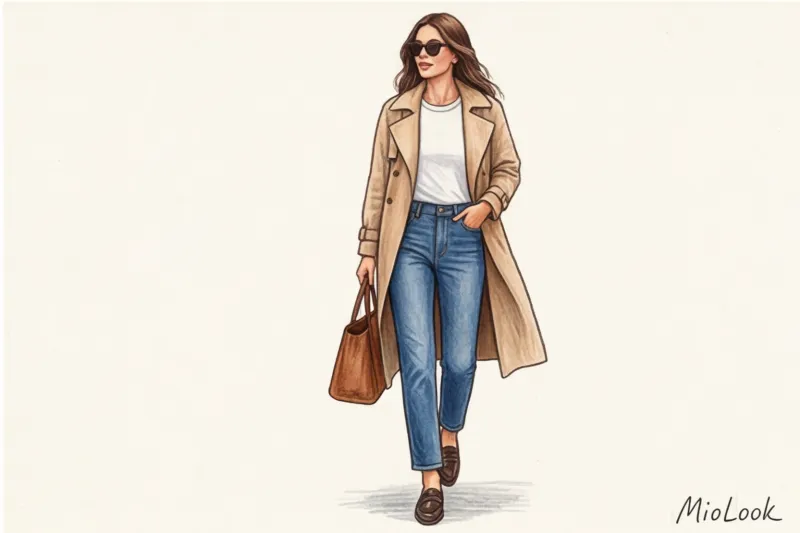
True casual is that golden mean between a strict office dress code and relaxed loungewear. It's important to understand the fundamental difference: "dressing comfortably" and "looking stylish in everyday life" are completely different goals. Throwing on stretchy joggers with the first sweatshirt you find is about basic physical comfort, appropriate for the couch. But wearing straight-leg denim jeans with a cashmere sweater and loafers is about comfort coupled with aesthetics. If you're looking for pure home comfort, it's better to choose the perfect knitted lounge suit , but to get into the city we will need a different strategy.
Our perception of everyday wardrobe has undergone a tectonic shift quite recently, according to a global study McKinsey & Company (2021) The pandemic forever changed the fashion industry: sales of formal business suits plummeted by almost half, giving way to the "work-from-anywhere" concept. We abandoned stiff collars and uncomfortable work shoes en masse. However, the realization soon set in: constantly wearing shapeless knitwear meant losing our composure. Thus, casual evolved. From "lazy weekend wear," it became a full-fledged uniform.
The anatomy of this impeccable casualness rests on three pillars. Remove even one, and the visual magic is lost:
- Relevance. True casual is flexible and easily adaptable. What's appropriate for a Sunday brunch with friends can be transformed in a matter of minutes for a creative office. Simply swap out a relaxed cardigan for a structured blazer, keeping the basics intact.
- Multilayered. This is my go-to styling tool. The "T-shirt and jeans" formula looks flat. But add a contrasting sweater draped over your shoulders or an unbuttoned menswear shirt, and the look gains depth. To avoid buying too much while trying to find the perfect combination, I strongly advise my clients to use smart wardrobe feature in the MioLook app You digitize your items once, and the algorithm shows how they can be combined into multi-layered looks.
- Quality of materials. A simple look lacks complex embellishments, so the texture of the fabric takes center stage. Thin, flimsy viscose will instantly cheapen the outfit. Choose fabrics that look expensive and hold their shape well. Invest in the right cotton, matte silk, or smooth wool. For example, a good basic T-shirt will cost between €30–€50 but will last you for seasons, maintaining the shoulder shape.
The secret to the famous "Parisian casualness" lies precisely in this approach. Looking like you got dressed in five minutes without even looking in the mirror is only possible if every item in your look is impeccably tailored from the start.
The biggest myth about casual: why thin knitwear and shapeless oversize clothes make a look cheap
Have you ever caught yourself feeling incredibly cozy in your favorite soft suit, but trying to avoid looking at the mirrored shop windows on the street? The biggest misconception of our time is that comfort necessarily equals shapelessness. Many sincerely believe that for clothing to be comfortable, it must stretch like an elastic band. But I hasten to disappoint you: comfort has absolutely nothing to do with the percentage of elastane on the tag.
Thin, flimsy knitwear not only looks cheap, it treacherously highlights the slightest unevenness of the silhouette and the contours of underwear. In fact, the secret to true comfort lies in the fit, not in the fabric's ability to stretch indefinitely. A properly constructed shirt made of dense 100% cotton with carefully crafted armholes and darts will give you the same freedom of movement as the notorious viscose turtleneck, while maintaining your status symbol. When the cut takes into account the body's anatomy, the fabric simply doesn't need to stretch.
This brings us to the main pitfall of a relaxed wardrobe: hoodies and joggers. Yes, chunky sweatshirt knitwear is perfect for binge-watching TV shows on the couch or on a long overnight flight. But in an urban environment, this "cozy cocoon" works against you. The soft, frameless fabric visually weighs you down, makes your posture slouchy, and the whole look sloppy in the worst sense of the word. Even if you buy a tracksuit like this for €200, even at a premium price, it will still project the aesthetics of sleepwear on the street, just with an expensive logo.
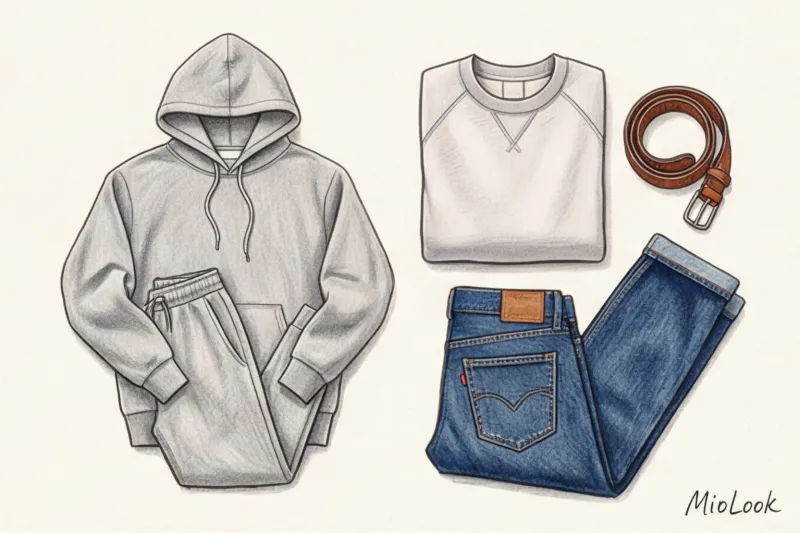
For casual women's style to look sophisticated and appropriate, it must have structure. The rule here is: the more relaxed your look stylistically, the better the garments themselves should hold their shape. Stiff fabrics—heavy, sturdy denim, textured tweed, and shape-resistant poplin—work like an architectural framework. They "pull" the silhouette together, defining clear lines at the shoulders and hips, automatically concealing any nuances you'd like to tone down.
One of my recent clients, a luxurious size L, was terrified of stiff clothing. Her closet was filled exclusively with soft cardigans and skinny jeans with maximum stretch, which she believed saved the situation.
When I suggested she try on a pair of straight-leg vintage jeans made of 100% heavy cotton with no elastane at the fitting, she looked at me with disbelief: "I won't even fit in these!" But as soon as she buttoned them, something I call the magic of the right texture happened. The stiff denim acted like a delicate corset: it smoothed out the hip line, cinched her stomach, and visually lengthened her legs. In the mirror, she saw herself a whole size slimmer, and, to her great surprise, they were perfectly comfortable to sit and walk in, even in the right size.
Micro-advice from a stylist: When shopping for a basic item, crumple the edge of the fabric in your fist for five seconds. If it instantly turns into a chewed-up rag and loses its shape, feel free to leave it on the rail, no matter how attractive the price (even if it's a simple €15 T-shirt). A quality everyday wardrobe always starts with the right materials.
Access to MioLook for €0.99 — one-time payment
A smart AI stylist will select the perfect look.
Get access — €0.99 onceCasual Substyles: Choosing Your Direction
The concept of "casual" is often perceived as a single, monolithic template: jeans, a basic T-shirt, and white sneakers. But in reality, it's a whole universe with different orbits. You can dress casual for a business lunch, a Sunday brunch with friends, or a walk with the dog—but these will be three completely different looks.
Over the years of styling, I've developed a golden rule: the perfect wardrobe starts not with shopping, but with dry math. Before creating a daily capsule for a new client, I always ask her to create a pie chart of her week. We literally calculate hour by hour how much time is spent on meetings, working on a laptop in a cafe, walks with children, dates, or driving. It's this honest analysis of your schedule that helps you accurately choose your dominant style.
The biggest mistake when building a basic wardrobe is buying clothes for the life you dream of, not the one you live. If 70% of your week is spent working remotely and commuting around town, you don't need a dozen silk blouses. You need impeccable athleisure.
Let's explore the main trends in everyday style so you can find the perfect formula to fit your lifestyle.
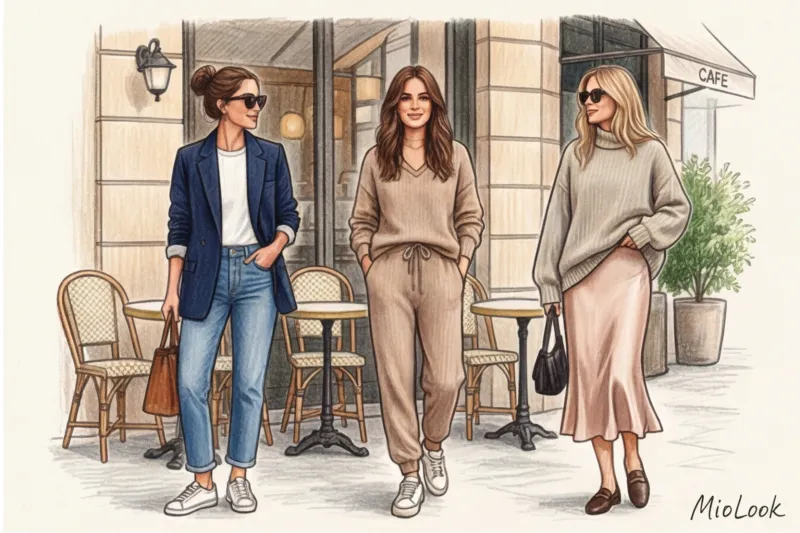
Smart Casual
Smart casual is an intelligent interpretation of everyday style. It's a perfect solution for freelancers, creative industry workers, and those "office Fridays" when strict corporate dress codes are relaxed, but the look should be tailored to reflect one's status.
The secret to this trend lies in a mathematically precise balance: we take one piece from a classic business wardrobe and tone down its office arrogance with relaxed elements. For example, we pair a strict, structured jacket in thick wool not with pleated trousers, but with straight-leg vintage jeans in the right shade of blue. And we leave a classic men's shirt in crisp poplin unbuttoned a couple of buttons and pair it with minimalist leather sneakers or suede loafers.
It's important to remember that smart casual pieces should be of excellent quality. A €30 jacket from a mass-market store with crooked seams will quickly lose its shape and cheapen the entire outfit. It's better to invest in mid-range or premium pieces. We explore the nuances of this smart trend in more detail in our article. article about smart casual.
Practical advice: If you want to try this sub-style on yourself without long fittings, try uploading photos of your jackets, trousers and jeans to MioLook The AI-powered "smart wardrobe" feature will automatically curate dozens of clever combinations from what's already in your closet, saving you time in the morning.
Sport Casual and Street Casual
Many people still believe that athletic wear is only appropriate for the treadmill or the couch. But modern sport-casual is the art of integrating athletic elements into the urban environment without going overboard.
How to wear leggings in the city and look classy? The main rule: always cover the crotch and play with strong volume contrasts. My favorite formula for active women: thick matte leggings (avoid sheer panels or oversized logos), high cotton socks, basic retro-style sneakers (like the New Balance 530), an oversized sweatshirt, and—watch this—a classic, classic midaxi trench coat. A structured trench coat instantly takes your look from "coming back from the gym" to "sauntering around the city." To avoid a sloppy look, pair your sporty casuals in a sophisticated monochrome palette: all-over beige, graphite, or deep chocolate brown.
Street Casual goes even further. Under the strong influence of street fashion in recent years, we've seen a steady trend towards premium streetwear These include oversized hoodies made of heavyweight fleece (400 grams per meter and up—they hold the hood's shape perfectly), bomber jackets with a mannish feel, and cargo pants made of technical matte fabrics. Here, absolute comfort meets a touch of boldness, and limited-edition sneakers are a major investment, often costing more than classic shoes from a luxury brand.
Chic Casual
If you've ever admired the so-called "Parisian casual" style of Jane Birkin or modern icons like Jeanne Damas, then your heart belongs to Chic Casual.
Chic casual is built on refined, tactile textures: natural silk, flowing viscose, the finest cashmere, and high-quality, heavyweight denim. It's the most elegant and feminine of all everyday styles. To add a touch of sensuality to a routine look, simply use a fail-safe styling trick: pair a slip skirt (a silk lingerie skirt cut on the bias) with a voluminous, slightly fluffy chunky knit sweater. The contrast in texture—smooth, cool silk and warm, textured wool—always looks luxurious, sophisticated, and intriguing.
Details and accessories play a huge role here. In extremely simple combinations like "straight jeans and a white T-shirt," it's luxury or high-quality premium accessories that elevate the look. A leather belt with a simple metal buckle, a structured, rigid bag (it's quite possible to find luxurious options in the €200-€400 range from niche European brands), and elegant shoes—for example, square-toe ankle boots or Mary Janes. Don't forget minimalist jewelry: a pair of vintage clip-on earrings or a thin gold chain over a cashmere jumper bring relaxed basics together into a cohesive, well-thought-out ensemble that begs to be admired.
Casual Capsule: 12 Items for 50+ Everyday Looks
I often see the same thing: a woman buys dozens of beautiful items, but in the morning she still stands in front of a full closet, confused. The reason is always a lack of system—the clothes simply don't "communicate" with each other. The mathematics of the perfect wardrobe, taught at the Istituto Marangoni and which I've adapted for everyday life, is based on one ironclad rule: 100% compatibility. This means you can literally pull any top off the hanger with your eyes closed, pair it with any bottom, and they're guaranteed to create a harmonious ensemble.
To create a complete base reflecting casual style for women, we'll need just 12 key elements. This set easily generates over 50 combinations, more than enough for two months without a single repetition.
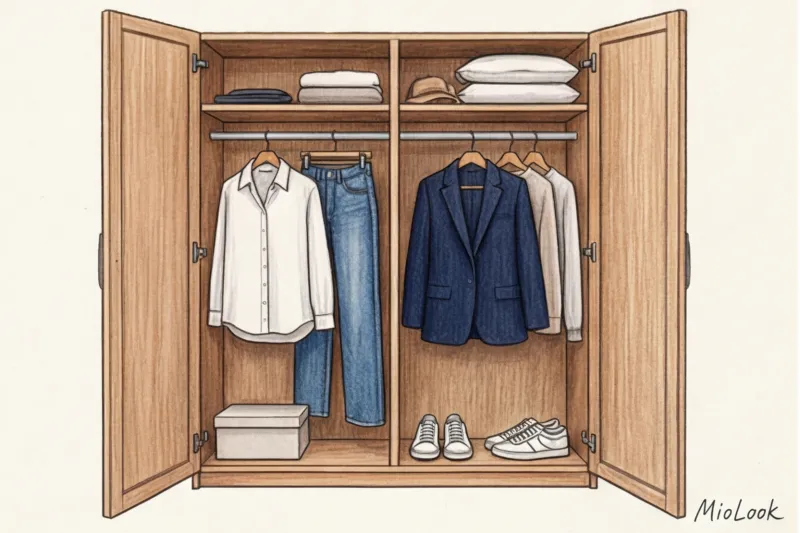
Base layer: the foundation on which everything rests
Without the right foundation, any look, even the most expensive one, will visually fall apart. Our capsule collection is based on three pillars:
- The perfect white t-shirt. Forget thin, translucent knits that cling unflatteringly and reveal the texture of your underwear. A true casual T-shirt is made of heavy cotton—look for a weight of at least 180–200 g/m² on the tag. It should hold the shape of the sleeves and fall straight. Good basic models of this quality typically cost between €30–€50.
- Long-sleeved vest. The classic Breton stripe instantly adds that elusive European casualness to any look. Choose a loose fit in structured cotton.
- Oversized shirt, men's cut. A crisp poplin (pure cotton or a blend with a minimal amount of silk) is the best choice. It can be worn buttoned up, draped over a T-shirt instead of a jacket, or casually tied at the waist.
Bottoms: A Balance of Comfort and Structure
Casual style requires you to be equally comfortable sitting in a cafe, taking a long walk around the city, and driving a car without losing your elegance.
- Straight jeans made of thick cotton (must-have). Look for styles made from 100% denim without elastane. Yes, they may feel unusually stiff on the first day, but this fabric doesn't stretch out at the knees and works like a light corset, cinching the silhouette.
- Palazzo pants with drawstring. The perfect compromise between classic sophistication and homey comfort. It's important that the fabric be heavy and flowing—lyocell, Tencel, or fine suiting wool (marked Super 100s) are all excellent choices.
- Satin midi skirt. The key to a perfect fit is a bias cut. This skirt delicately hugs the hips without bunching up, and serves as a stunning backdrop for texture when paired with a chunky sweater.
The Second Layer: The Architecture of Your Silhouette
It is the second layer that completes the look, gives it geometry and increases the degree of style.
- Structured blazer. A jacket with a crisp shoulder line instantly elevates a relaxed jeans and T-shirt ensemble from the "going out to buy bread" category to the "confident city girl" category.
- Chunky knit voluminous cardigan. Invest in high-quality yarn—a wool blend (merino and cotton) or cashmere. Avoid 100% acrylic, which will pill after the first wash and cheapen the overall look.
- Trench coat or biker jacket. A classic trench coat made of thick, water-repellent gabardine is essential for layered looks, while a matte leather biker jacket adds just the right amount of ruggedness to a delicate satin skirt.
Making the Capsule Work: The Magic of Digitization
Buying the right clothes is only half the battle. You need to wear them regularly, without falling into the same two or three combinations. My favorite modern trick is to use the "smart wardrobe" feature in MioLook to digitize your capsule.
The algorithm is simple: you photograph these 12 items in good daylight and upload them to the app. Artificial intelligence automatically removes the background and acts as your personal pocket stylist, generating outfits. Wake up in the morning, open the app, and there's a ready-made solution: a satin skirt, a basic T-shirt, a leather jacket, and sneakers. This saves at least 15 minutes of getting ready in the morning and completely eliminates the stress of "I have nothing to wear."
Try MioLook
for free
Start creating perfect images with the help of artificial intelligence
Get access — €0.99 onceThe formula for the perfect casual look: the "Complexity + Basics" rule
It's a common situation: you put on a pair of perfectly fitting jeans and a quality basic T-shirt, look in the mirror, and your reflection seems... boring. The secret is that jeans and a T-shirt aren't the whole look. They're just a canvas. The real casual style for women It begins where quality basic clothing meets smart styling.
In professional settings, there's a golden "rule of the third element." Your outfit (basic bottoms + basic top) should always be complemented by a third, finishing piece. This could be a structured jacket, an accent belt with a vintage buckle, or a chunky cashmere sweater casually draped over your shoulders. This third element demonstrates that you're not just dressing for the night, but have put some thought into your appearance.
Contrast of textures: a play with light
If you put together an outfit in a calm, monochromatic palette, it risks appearing flat. The solution lies in the physics of fabrics—the way they absorb and reflect light differently. Never combine identically dull, matte fabrics in the same casual outfit if you want to look classy.
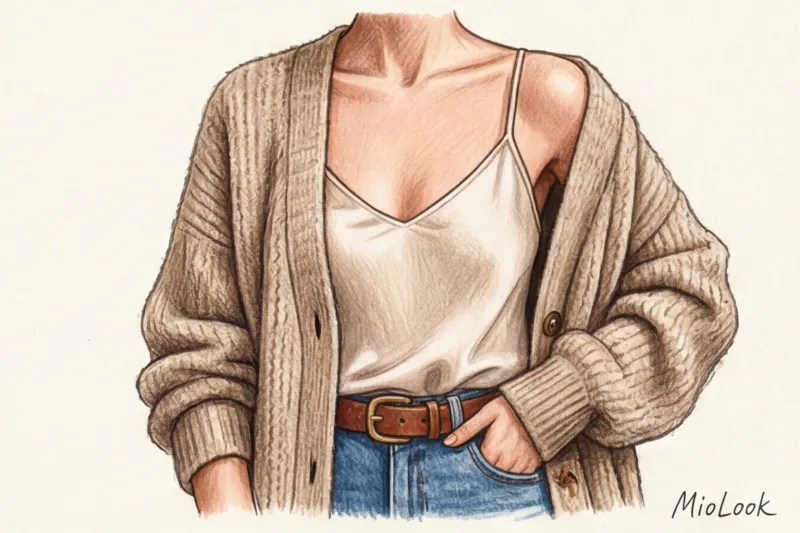
The formula is simple: we always wear matte with shiny, and smooth with fluffy. For example, thick matte denim looks perfect next to flowing silk, and a satin midi skirt (which even in mass-market stores costs around €40–60, but looks premium) requires a voluminous, slightly chunky knit cardigan.
Wrong Shoe Theory: breaking the mold
American stylist Allison Bornstein recently gave a name to a technique fashion insiders have been using for years: the "Wrong Shoe Theory." The idea is to choose a pair of shoes that, by classical logic, would be completely incompatible with an outfit, thereby adding irony and wit to the look.
Wearing a flowing floral dress? Pair it not with delicate ballet flats, but with chunky sneakers or chunky lace-up boots. Putting together a tailored pantsuit? Tone down the formality with minimalist retro sneakers. This deliberate dissonance is the height of casual chic.
Micro-styling: A free look upgrade
Sometimes, to up the style ante, you don't need to buy anything. Just use micro-styling techniques. The famous French tuck (when you casually tuck only the front of your shirt or sweater into your belt) helps define your waist, maintain a relaxed silhouette from the back, and visually lengthen your legs.
Expert advice from Olena: how to roll up your sleeves correctly.The typical way to roll a shirt sleeve upwards looks schoolboyish and constantly slips. I always teach my clients the "Italian method" (Master Roll). Unbutton all the buttons on the cuff. Pull the cuff up in one motion, just below the elbow (the sleeve will turn inside out). Then take the bottom of the inverted sleeve and fold it up, overlapping the cuff but leaving the very top edge (literally 1-2 centimeters) visible. This roll stays in place all day and looks perfectly casual.
To avoid having to keep all these combination formulas in your head, I recommend digitizing your things. By uploading basic items and accessories to the "smart wardrobe" feature in MioLook , you can visually create contrasting textures and try on different "third elements" right on your smartphone screen, saving precious morning minutes.
Shoes and Accessories: What Separates a Stylish Woman from a Teenager
You know where everyday wardrobes often fall apart? The details. You can wear the perfect vintage jeans and an expensive cashmere sweater, but if you pair them with worn-out running shoes and a shapeless backpack, the look instantly loses its status. At that point, relaxed casual style for women turns into the sloppy look of a teenager stuck in puberty.
Shoes are the visual anchor that grounds and ties the entire outfit together. For a functional base, I recommend four fundamental pairs: classic leather loafers with a thick sole, white minimalist sneakers (without flashy logos or colorful accents), Cossack boots for adding a touch of boldness to simple looks, and Mary Jane ballet flats for more feminine occasions. Note: all of these shoes have a distinct shape. It's the rigid frame of the shoe that sends a subconscious signal to others: "This person dressed thoughtfully."
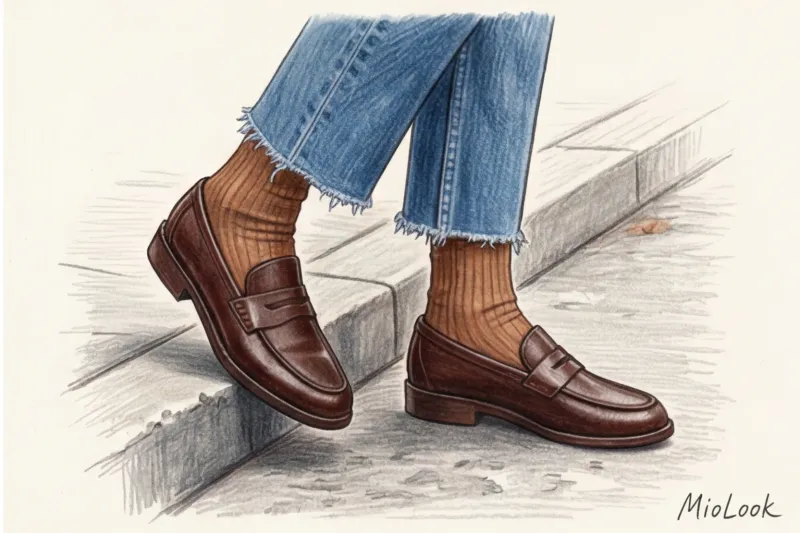
This same principle of silhouette architecture applies to bags. Why does a structured bag save even the most relaxed look? Imagine: you're wearing a voluminous, oversized hoodie and wide-leg knit pants. If you grab a soft shopper bag, you'll look like a shapeless cloud. But add a rigid tote or crossbody bag in a crisp, geometric shape (square, trapezoid) made of thick leather—the silhouette immediately becomes more composed.
Details complete the look. To avoid a bare wrist and décolleté, use a modern jewelry base. A set of smooth, bare-stone basic rings, an anchor chain, and a men's-style watch on a metal bracelet are the bare essentials that make the look look expensive. Incidentally, a watch worn directly over the cuff of a thin sweater is a great styling trick, often used by fashion editors.
This brings us to the most important rule of wardrobe investment. We always skimp on what's closest to the body and invest in what completes the look. You can confidently buy basic cotton tops and t-shirts in the budget segment—they don't last long anyway due to frequent washing. But shoes, a bag, and a good leather belt must be impeccable.
Let's do some math and calculate Cost Per Wear (CPOW) to debunk the myth that quality items are expensive. A pair of high-quality leather loafers from a trusted brand will cost you around €180-€200. With proper care, you'll wear them at least 150 times over a couple of years. That's €1.30 per wear. Cheaper polyurethane equivalents, priced at €40, lose their shape and develop creases after just 15 wears. Their CPO is €2.60. The paradox: quality investment shoes actually cost you half as much.
To understand what kind of accents your base needs, I recommend taking photos of your current bags and shoes and uploading them to MioLook The built-in algorithm will help you create virtual outfits and clearly show you if your everyday combinations are too soft.
Casual style for women 30+, 40+, and 50+: age characteristics
Glossy magazines of the 2000s left us with a toxic stereotype: supposedly, after a certain age, an everyday wardrobe should consist exclusively of tailored trousers and pearl necklaces. Sneakers and ripped jeans are especially hard-pressed—they're traditionally listed among the main fashion taboos for those over 40. As a practicing stylist, allow me to categorically disagree. A well-constructed casual style for women An elegant age does not tolerate artificial boundaries.
Subtly distressed denim looks phenomenal when balanced with a structured tweed jacket. And basic leather urban sneakers (never mesh running ones!) paired with a relaxed pantsuit show you're keeping up with the times, not stuck in a conservative past.
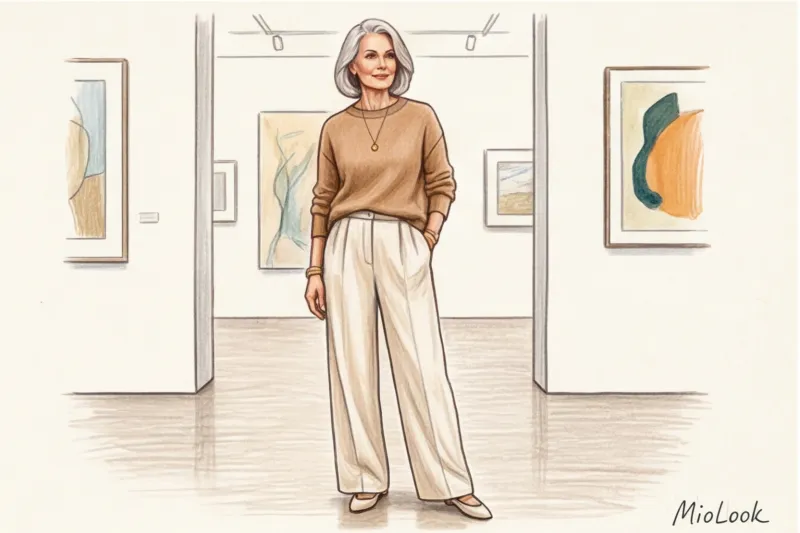
Last month, I conducted a major wardrobe review for Anna, a 45-year-old IT executive. Her shelves at home were filled with hoodies and sweatshirts with large logos and childish prints—a classic attempt to "energize" her weekends. We ruthlessly removed these knits, replacing them with thick cashmere polos and basic V-neck sweaters. The result amazed her: the relaxed feel remained the same, but the visual fussiness was gone. A polo made of premium material offers the same freedom as a sweatshirt, but the neat collar gathers the silhouette and beautifully elongates the neckline.
This brings us to the main evolution of everyday style—the shift from quantity to uncompromising quality. In our twenties, we easily experiment with fast fashion, buying trendy acrylic tops for €15. But after 35, the texture of the fabric becomes your best ally or your worst enemy. Thin, flimsy polyester mercilessly accentuates any signs of aging and is forgiving of your posture. Meanwhile, silk, thick cotton, fine merino wool, and cashmere act like an expensive photo filter. Yes, investing in a quality basic sweater will cost between €150 and €300, but such a piece folds beautifully, breathes, and sets an aristocratic tone for the entire outfit.
It's precisely the impeccable texture and modern cut that help you avoid two polar traps: slipping into "younger" looks or retreating into a faceless "old lady" style. The mistake of an infantile wardrobe lies in directly copying teenage micro-trends. The mistake of an age-appropriate style lies in choosing shapeless silhouettes, fragile viscose knits, and outdated floral prints. Your happy medium is a clear cut architecture: semi-fitted or moderately voluminous pieces that hold their shape but don't constrict the body.
Working with color requires special attention. With age, the natural contrast in our appearance naturally decreases. Therefore, pure neon or bold, bright colors begin to clash with the face—they cast harsh reflections on the skin, highlighting the slightest traces of fatigue, shadows, and uneven skin tone. However, complex, multifaceted shades work wonders. Camel (classic camel), deep khaki, dusty rose, sage, caramel, or milk chocolate—these tones act as a soft softbox, illuminating the face.
To incorporate these elegant shades and textures into your life, you don't need to rush to the mall. Start by creating a visual mood board. I recommend taking photos of your best basic pieces and uploading them to the app. MioLook And virtually try on new, sophisticated colors. This simple step will protect you from impulsive spending and help you invest only in items that will seamlessly complement your updated, high-status casual capsule wardrobe.
A stylist's checklist: how to transition your wardrobe to casual mode without spending too much
According to statistics from the British organization WRAP (2021), the average woman actively wears only 30% of her closet contents. The remaining 70% consists of impulse buys, pre-weight-loss items, and outdated styles. When I'm asked to create impeccable casual style for women, we never start with shopping. We begin with a complete decluttering.
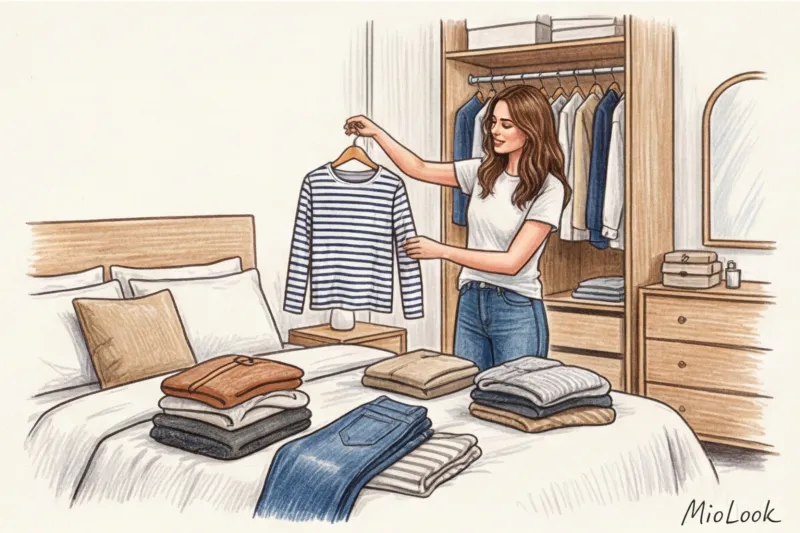
To make your everyday look work for you, not against you, I've prepared a step-by-step plan you can complete in just one weekend.
Step 1: Take inventory of your current closet (three-pile rule)
Pull absolutely every single piece of clothing onto the bed. Yes, even those stored in the back boxes on the top shelves. Your task is to ruthlessly sort everything into three categories:
- "I leave it unconditionally": modern cuts, made from dense fabrics that fit you perfectly and suit your lifestyle right now.
- "In question": Clothes that require repair, dry cleaning, or atelier alterations. Give yourself exactly two weeks to address these issues. If you don't, the item automatically moves to the third category.
- "Giving/Selling": stretched knitwear, faded T-shirts, jeans with outdated decor and “those” hoodies covered in pills.
My main rule when reviewing clothes: if you haven't worn something in over a year, the chances of it fitting perfectly into your updated wardrobe are slim to none. Say goodbye to it without regret.
Step 2: Identifying gaps in the database – creating a shopping list
Analyze the "Keeping" pile. This is often the point where you discover a misalignment: for example, you might have five dressy blouses with intricate prints, but not a single high-quality white T-shirt. Or a whole stack of skinny jeans, but not a single pair of straight-leg, full-length trousers that create a relaxed silhouette.
Create a strict list of what's missing to create harmonious proportions. You don't need a stratospheric budget: excellent structured 100% cotton jeans can be found in mass-market stores for €40-€60, and the perfect men's-style shirt for €30-€50. The key is discipline. Shop strictly according to your list, ignoring trendy, one-time-only items until you've filled the gaps in your wardrobe.
Step 3: Find new combinations from old items (using the MioLook smart wardrobe)
The most common style mistake is wearing the same items in combinations you've memorized for years. To break this pattern, you need to visualize your clothes in a new way. Take photos of the items that pass your filter and upload them to MioLook smart wardrobe.
The app will automatically remove backgrounds from photos and digitize your database. Moreover, the AI will generate dozens of fresh casual outfits from what you have. already exists You'll be surprised how trendy your old oversized cardigan can look if the algorithm suggests pairing it with a satin midi skirt and chunky boots, rather than your usual blue jeans.
Step 4: Test Week – Try on 7 new casual looks
Theory is dead without practice. Choose seven new, unusual outfits in the app for each day of the coming week. Prepare them in advance, planning every detail—including shoes, belts, and bag.
Your task is to put on your planned outfit every morning and take a selfie in the mirror before heading out. In the evening, analyze: was it comfortable? Did the texture contrast work? If by Wednesday you realize you're uncomfortable driving in your new thick trousers, be honest about it. Personal style doesn't tolerate self-doubt; you can simply replace this element with a more adaptable one (for example, trousers with an elastic waistband). This week will become your personal fashion laboratory and will finally fine-tune your stylistic eye.
Everyday casual is, ultimately, a deep respect for your own comfort. It's not about impressing passersby with logos, but about conveying a calm confidence through clean lines, refined textures, and thoughtful nonchalance. Invest the time to create the right system once, and it will serve you flawlessly for years to come.
Guide Chapters
Casual women's bags and accessories: how to complete the look
Just a few well-chosen pieces can transform a basic wardrobe beyond recognition. Learn how to create stylish everyday looks.
Casual for petite women: how to elongate your silhouette
Forget the outdated rule about wearing heels all the time. We'll show you how to use geometry and micro-proportions to look taller in comfortable clothes.
Dressy Casual: How to Dress for a Party
We explore the intricacies of the Dressy Casual dress code with a stylist. Learn how to look appropriate and stylish at any event without going to extremes.
Everyday clothing style for moms: comfort and beauty
Forgotten about style while on maternity leave? Learn how to create a comfortable and stylish wardrobe for active outings with your kids without sacrificing your looks.
Autumn Casual for Women: Formulas for Cozy Looks
Autumn casual isn't just a jeans-and-a-sweater combination, it's a strict math of volume. Learn how to wear warm clothes stylishly and comfortably.
Winter Casual for Women: How to Dress Warmly and Beautifully
Stop choosing between warmth and beauty! Learn how to layer effectively to create a stylish and comfortable winter wardrobe.
Summer Casual for Women: How to Dress Stylishly in the Heat
We're breaking down the key rules of urban fashion for summer. Learn how to look elegant and feel comfortable even at 32°C.
Women's Casual Shoes: What to Wear Besides Sneakers
Sneakers are comfortable, but sometimes your look needs a little extra polish. We'll show you how to replace your athletic shoes to look relaxed and elegant every day.
Casual Style for Plus Size Women: How to Dress Stylishly
Forget shapeless hoodies that only add bulk. Learn how to create a modern, relaxed silhouette with the right textures.
Casual Sports for Women: Style Rules for the City
Learn how to integrate sportswear into your everyday wardrobe without sacrificing elegance. We'll explore the main mistakes and rules for creating stylish urban looks.
Business casual for women: office style without a dress code
The abolition of a strict dress code doesn't mean you're losing your expert status. Learn how to create a stylish office wardrobe using the Power Casual concept.
Casual Style for Women Over 50: Comfort and Status
Casual wear doesn't have to be synonymous with sloppiness. Discover the art of "quiet luxury" and learn to look classy even on the weekends.
Casual Style for Women Over 40: Secrets of Elegance
Tired of shapeless hoodies on weekends? Discover the rules for creating an elegant everyday wardrobe that will highlight your status and beauty.
Smart Casual for Women: A Style Guide and Look Examples
How to dress to look classy without being too formal? We explore the subtleties of smart-casual women's style, common mistakes, and successful combinations.
AI Stylist: An App for Choosing Everyday Clothes
Tired of wondering what to wear every morning? An expert stylist explains how AI technology makes it easy to create stylish looks for every day.
Basic Casual Wardrobe: A List of Everyday Items
Everyday clothes shape your visual status. Find out which quality pieces make up the perfect casual essential for every day.