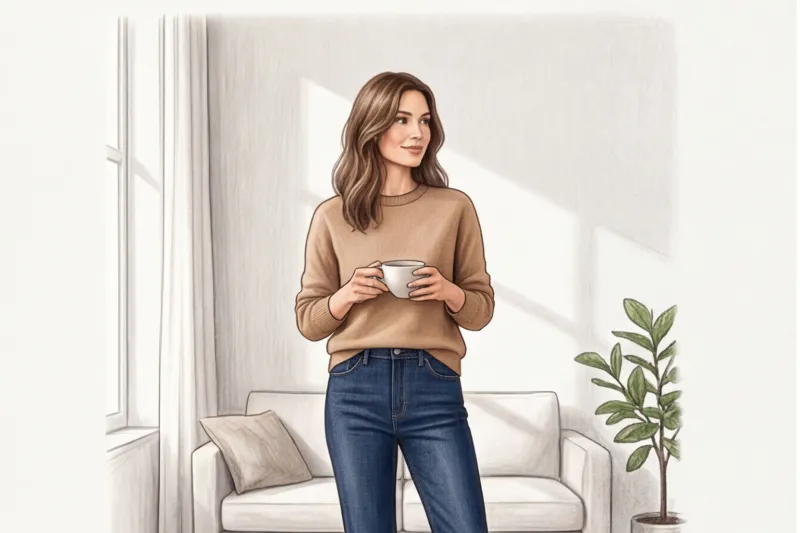
Take a look at your closet right now. I bet somewhere there's a stunning cocktail dress you wore exactly once to a friend's wedding, and some gorgeous shoes waiting for a "special occasion." And what did you wear to coffee this morning? Chances are, it was those same jeans and your favorite, but slightly tired, sweatshirt.
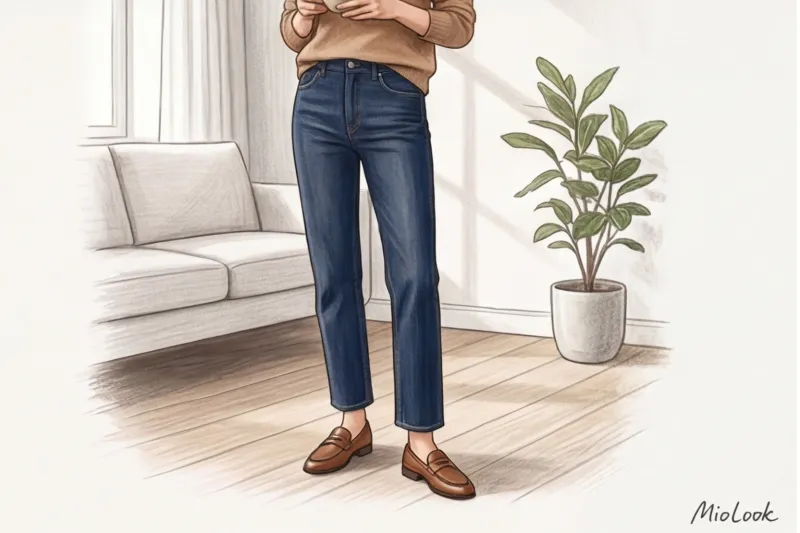
The main paradox I've regularly observed over 12 years as a stylist is that we spend 70% of our lives in relaxed clothing, yet allocate barely 30% of our wardrobe budget to it. This is a fundamental mistake. A 30-year-old woman's everyday wardrobe isn't just about show-offs or things you don't mind getting dirty. It's your calling card, your daily sense of self, and, if you like, a sign of self-respect, regardless of special occasions.
We have already discussed the fundamental rules of conscious consumption in more detail in our The complete guide to creating a status capsule , but today we'll talk about how to take your comfort to a whole new level. Forget "10 must-have" lists—we'll be talking about silhouette architecture and texture quality.
The Anatomy of a 30-Year-Old Woman's Everyday Wardrobe: The End of Compromise
Turning 30+ is a wonderful watershed in fashion. The days of fast-fashion experimentation, when we bought polyester tops for a night out, are over. It's time to consciously develop a personal brand that works for you even on a Sunday morning at the local bakery.
According to the Business of Fashion 2024 report, consumers globally are rejecting flashy logomania in favor of the concept of "quiet luxury," specifically in the casual segment. The sloppy, relaxed style has been replaced by Elevated Casual (elevated casual style). Its essence is to look completely relaxed, yet classy. How to achieve this? The secret lies in the "three textures" rule.
"Any everyday look should combine at least three different tactile sensations. For example: smooth silk, rough wool, and grained leather. It's the difference in texture that gives a look depth and luxury, even if it's comprised solely of gray and beige shades."
This is where the golden rule comes into play. Cost-per-wear (price per outing). A high-quality $250 cashmere sweater that you'll wear 100 times over two seasons will cost you $2.50 per outing. A $40 acrylic jumper from a mass-market store that will pill after three washes and then be destined for the dacha is a waste of money and a ruined mood. Everyday essentials are something you absolutely cannot skimp on.
Your perfect look starts here
Join thousands of users who look flawless every day with MioLook. A smart AI stylist will analyze your items and create a capsule wardrobe.
Get access — €0.99 onceThe Biggest Myth About "The Base": Why Online Template Lists Are Failing You
If you open any standard article about a basic wardrobe, you'll see the same copy-paste list: the perfect white shirt, a crisp trench coat, a pencil skirt. As someone who's spent years observing street style at Fashion Weeks from Paris to New York, let me be clear: for 80% of women, this list is completely useless.
Let's dispel the biggest myth: the classic white poplin shirt. In theory, it looks impeccable. In practice? It's the worst investment in everyday comfort. It wrinkles within five minutes of getting in the car. It requires meticulous ironing. It creates a rigid shell around the body, which clashes with modern relaxedness.
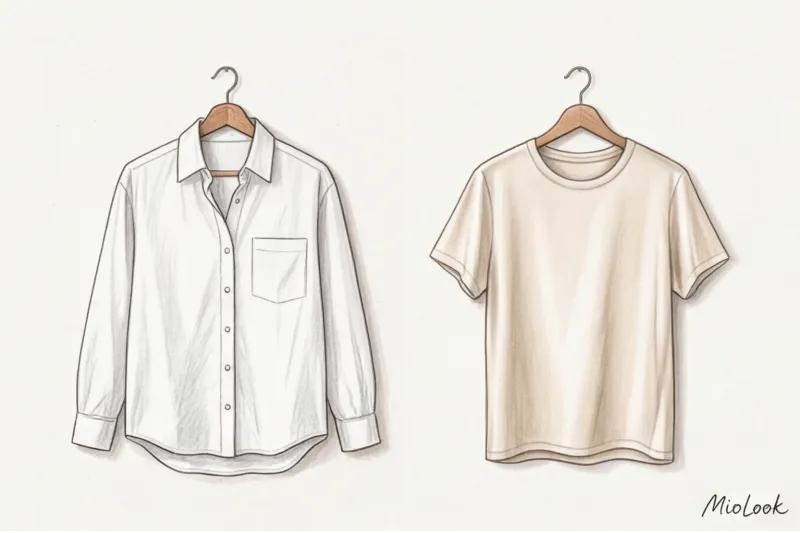
The future of comfortable wardrobes lies in hybrid forms. Rigid structures are giving way to flexible materials. What will replace outdated patterns?
- Instead of a poplin shirt: A dense knit polo made of viscose and silk. The collar provides the necessary structure, but it flows smoothly over the body and requires no ironing.
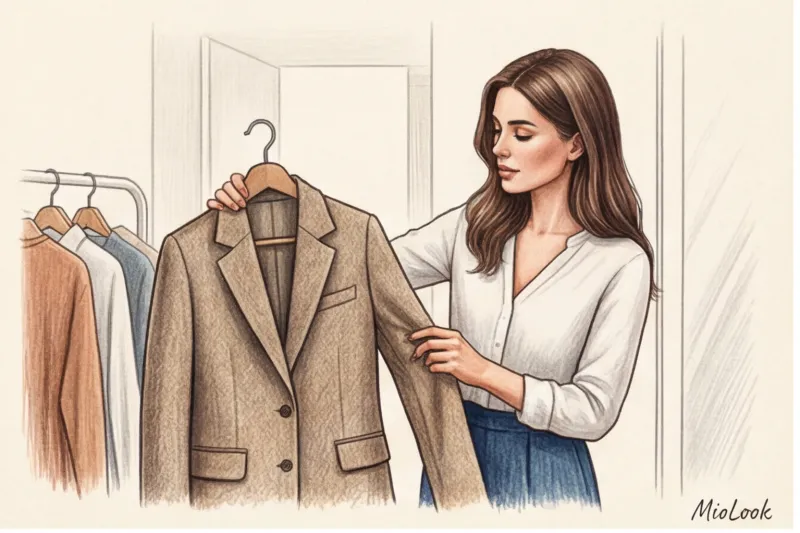
- Instead of a classic blazer: A structured, chunky knit cardigan coat that holds the shoulder line but feels like a cozy blanket.
- Instead of a stiff trench coat: a loose wool robe coat or a voluminous wool-blend shirt jacket.
Of course, there are exceptions. I have to be honest: if you work in a bank with strict business casual dress code , you can't do without strict tailoring. But for free evenings, remote work, and weekends, strictness is your enemy.
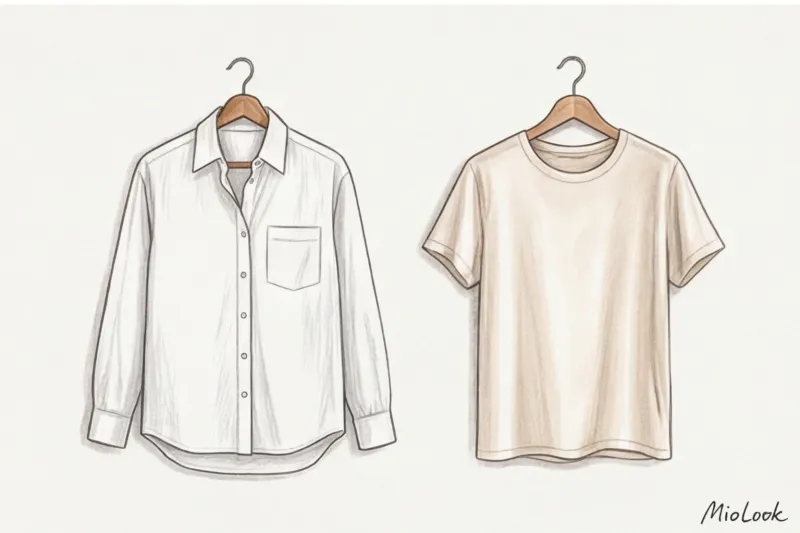
The formula for the perfect silhouette: 3 pillars of a comfortable and stylish look
Historically, comfort hasn't always been synonymous with beauty. Consider Coco Chanel, who revolutionized women's wardrobes simply by introducing jersey, a fabric previously reserved for men's underwear. She liberated women from corsets, proving that elegance needn't be painful.
Today, the architecture of a proper everyday look is built on a balance of volumes. If you choose a voluminous top (like an oversized sweater), the bottoms should be more gathered. Conversely, wide palazzo pants call for a simple, fitted top. Two voluminous pieces at once will create a shapeless silhouette, while two fitted ones will send us straight back to 2010.
Structured knitwear instead of shapeless hoodies
I had a client from Paris who started complaining of apathy after switching to remote work. We audited her wardrobe through a camera, and I saw endless stretched-out hoodies and sweatpants. We replaced them with cashmere suits and thick cardigans. A month later, she wrote that even her posture during Zoom calls had changed. What we wear at home and on walks directly affects our neurobiology.
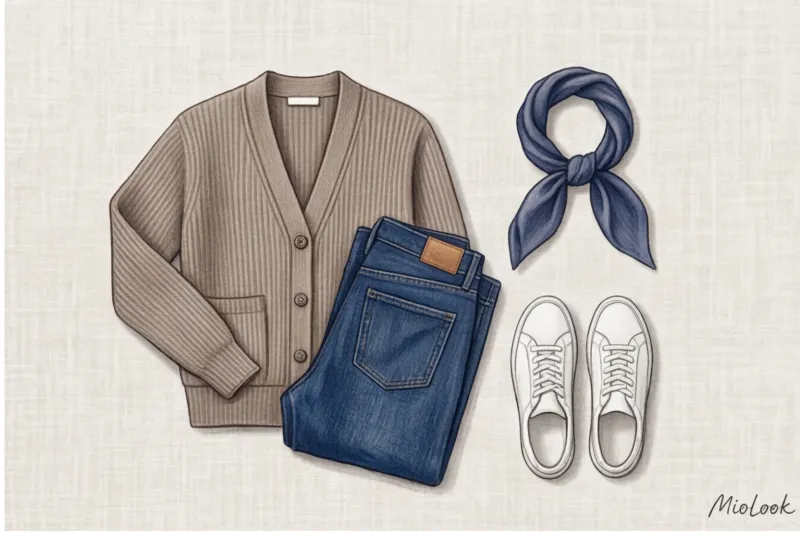
The main rule for urban knitwear is density. When I'm reviewing basic T-shirts, I always hold the fabric up to the light. The ideal cotton T-shirt should be between 180 and 220 g/m². It shouldn't show the contours of your underwear. As for sweaters, avoid labels that say 100% acrylic. Acrylic isn't warm, it attracts static, and it cheapens the look. Look for at least 50% natural fibers: merino, cotton, cashmere, or alpaca.
The Right Denim: An Investment in Fit Without Embellishment
Jeans are the foundation of basics, but this is where the most mistakes are made. Classy denim is always understated. No distressing, embroidery, rhinestones, or faux rips. Choose a solid color (dark wash or a pure blue without yellowing) and a dense fabric.
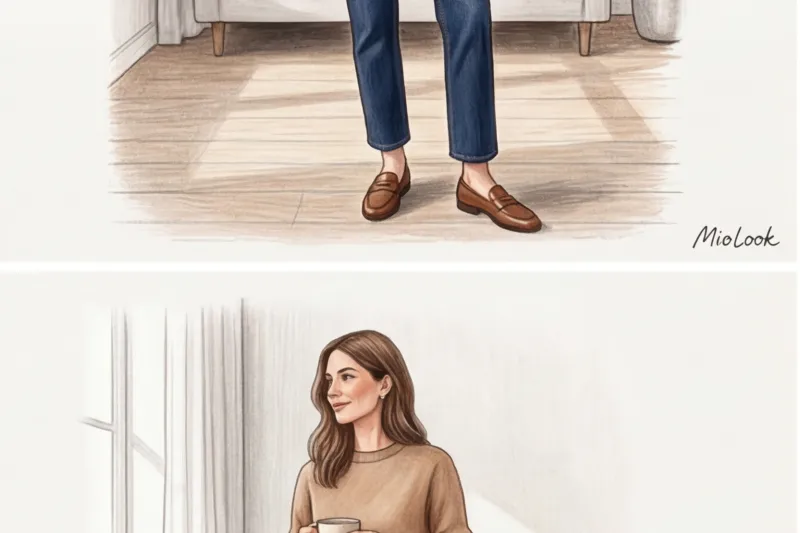
Real denim should weigh at least 12 ounces. Yes, these jeans may feel a bit stiff for the first couple of days, but they'll create the perfect silhouette and, unlike thin stretch jeans, won't stretch out at the knees after your first ride in the car. Save skinny jeans for special looks with tall boots, and for everyday wear, choose a straight or wide-leg fit.
Ready to get started?
Try the MioLook free plan—no commitments required. Digitize your wardrobe and receive daily style tips.
Get access — €0.99 onceShoes and accessories: quiet investments that elevate your look
A McKinsey study (2023) showed the rapid growth of the "affordable luxury" segment, specifically in the accessories category. Why? Because consumers have realized that they can wear budget jeans from Zara and a simple T-shirt from Uniqlo, but if they pair them with an impeccable leather bag and high-quality shoes, the entire look will be perceived as premium.
One of my frequent recommendations to clients is to stop wearing athletic running shoes (with mesh and chunky cushioning) with casual outfits. Replace them with minimalist leather sneakers, suede loafers, or Chelsea boots. This one detail instantly takes the look from "going to the gym" to "hanging out at the galleries."
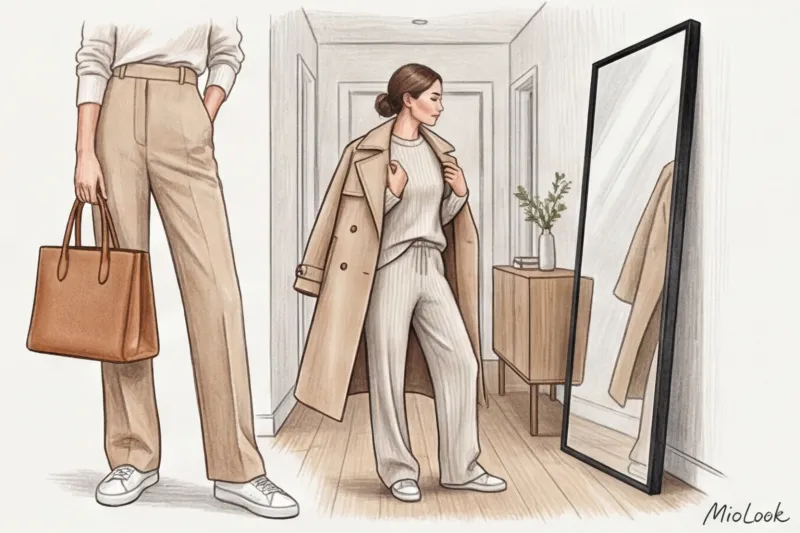
The same goes for bags. Save fabric tote bags for grocery shopping. A woman's everyday wardrobe in her 30s requires structure. A simple leather tote or a soft, yet form-fitting hobo bag without too many accessories is your best bet. Don't forget the power of subtle details: a quality, medium-width leather belt and a minimalist watch or earrings complete the look, bringing it together.
The 3-Second Method: How to Create Stylish and Comfortable Looks in the Morning
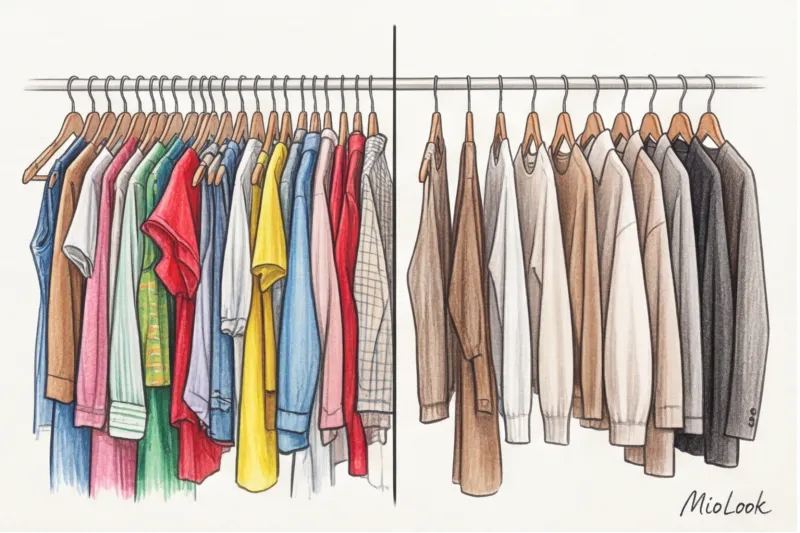
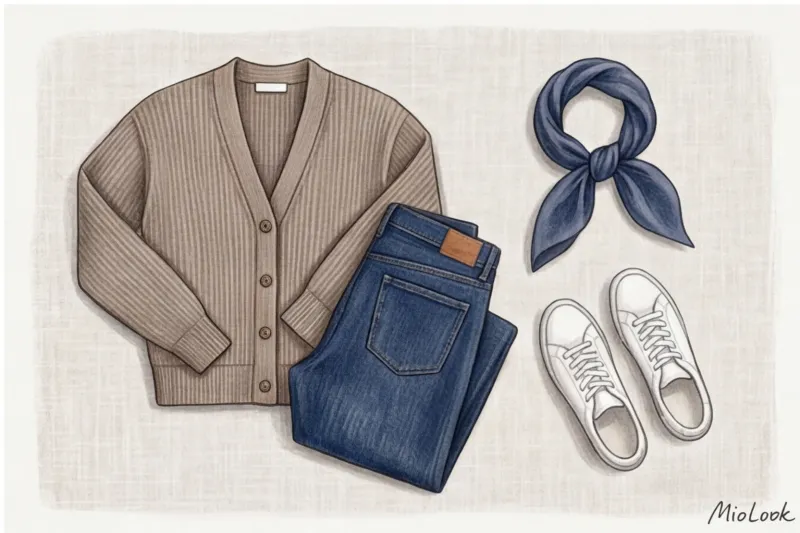
Getting ready in the morning shouldn't be stressful. Professional stylists use the color matrix method. Choose three neutral base colors (for example, camel, navy, or off-white) and one or two accent colors (burgundy or emerald). The beauty of the capsule approach is that you can pull out items from your closet with your eyes closed, and they'll match perfectly.
To save time, create 3-4 foolproof formulas for yourself. For example:
- Formula 1: Straight jeans + silky t-shirt + oversized cardigan + loafers.
- Formula 2: Thick knit midi dress + leather sneakers + oversized trench coat.
- Formula 3: Palazzo pants + knitted polo + ankle boots with a stable heel.
This is where modern technology comes in. If you want to automate this process, I recommend using the "smart wardrobe" feature in MioLook You upload photos of your clothes once, and every morning the AI stylist suggests ready-made combinations based on the weather outside and your preferences. This literally saves you those 15 minutes of sleep we all need so badly.
Try MioLook
A smart AI stylist will create the perfect look for you. Free up your time for more important things.
Get access — €0.99 onceChecklist: A Quick Audit of Your Everyday Wardrobe
Theory is dead without practice. Set aside an hour this weekend to conduct an honest audit of your daily capsule. Be ruthless.
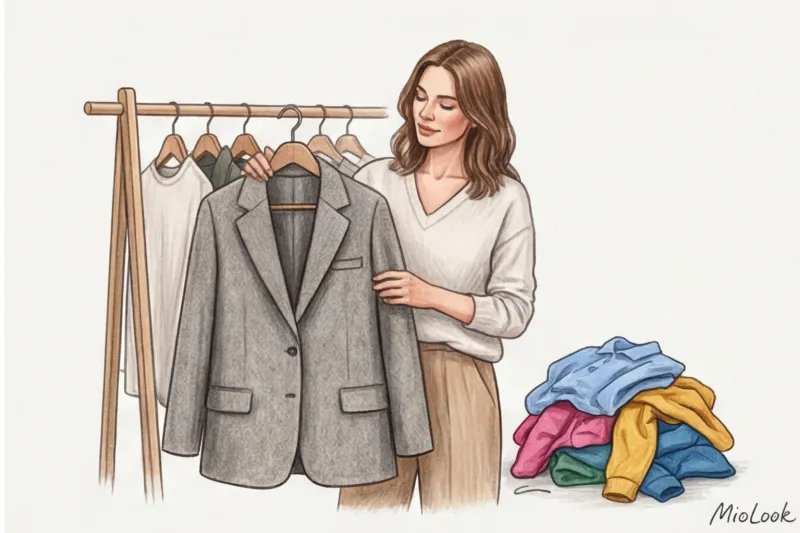
What to remove immediately:
- Things with extended knees or elbows (yes, even for the home).
- Knitwear covered with pilling that cannot be removed by machine (a sign of low-quality yarn).
- T-shirts with childish prints and funny inscriptions, unless this is part of your thoughtful creative uniforms.
- Things that "fit well only if you don't breathe and stand up straight."
What to buy additionally (5 connecting elements):
If your closet is full of clothes but you have nothing to wear, you're missing the "glue." Typically, that means a crisp white crewneck tee, straight-leg blue jeans without embellishments, a quality leather belt, a structured jumper in a neutral shade, and modern, minimalist flats.
Yes, I admit that the minimalist approach I've described for Elevated Casual won't work for everyone. If you're an artist accustomed to expressing yourself through complex deconstruction, Yohji Yamamoto-style layering, or vibrant boho chic, you might find these rules boring. And that's okay. Style is individual.
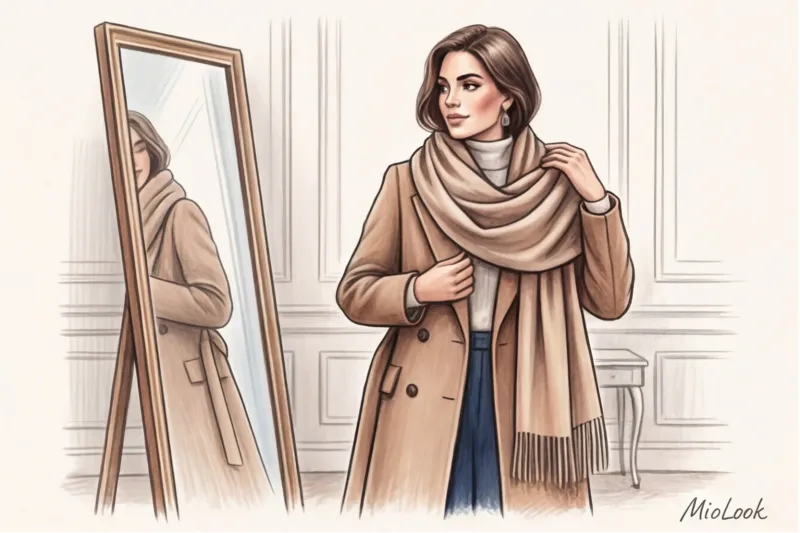
But for most of us, a comfortable and stylish wardrobe is a tool, not an end in itself. A woman's everyday wardrobe in her 30s should serve you well, embracing you with quality fabrics and giving you the confidence to look your best at every moment. Invest in what you live in every day, and your reflection in the mirror will thank you.