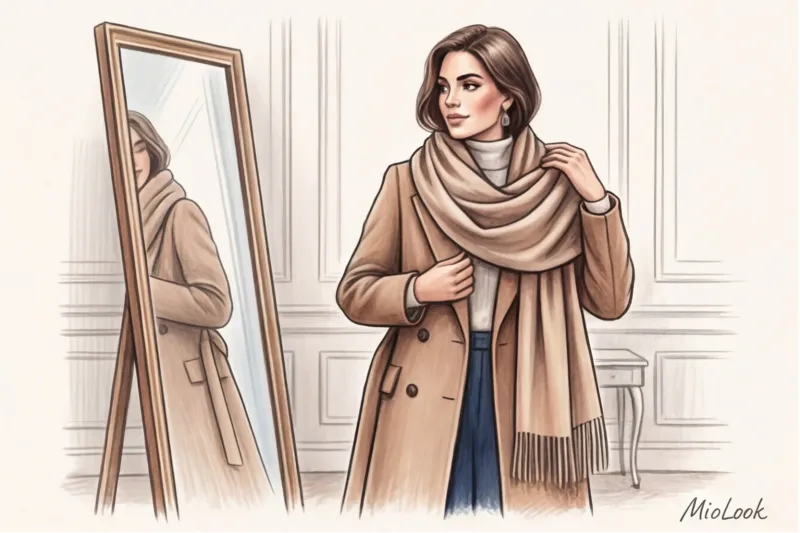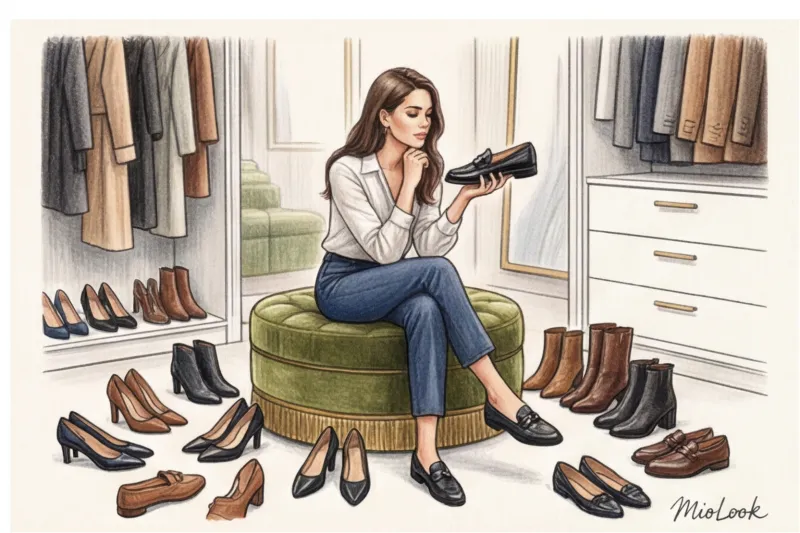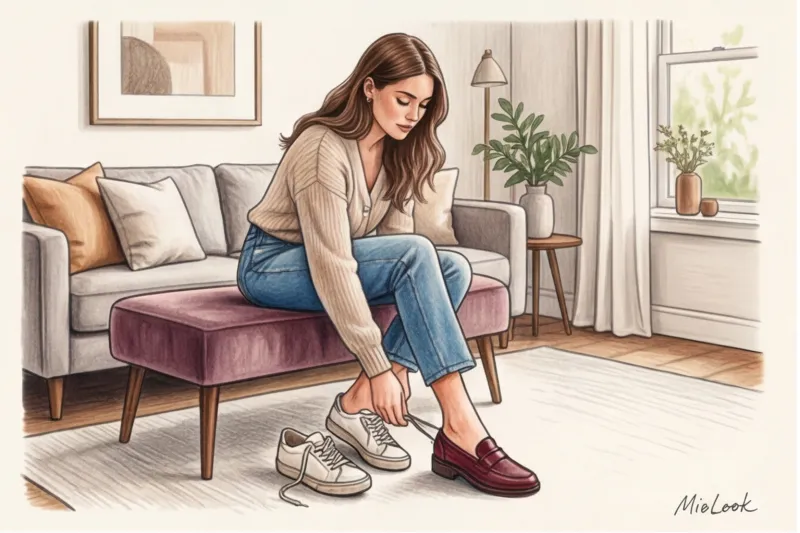
Open your shoe closet. If you're like eight out of ten of my new clients, you'll be greeted by a veritable army of sneakers of every description: from chunky "dad" sneakers to minimalist white trainers. We've become so accustomed to sneakers in recent years that the idea of wearing anything else often provokes an internal rebellion. It seems that comfort and elegance are mutually exclusive concepts.
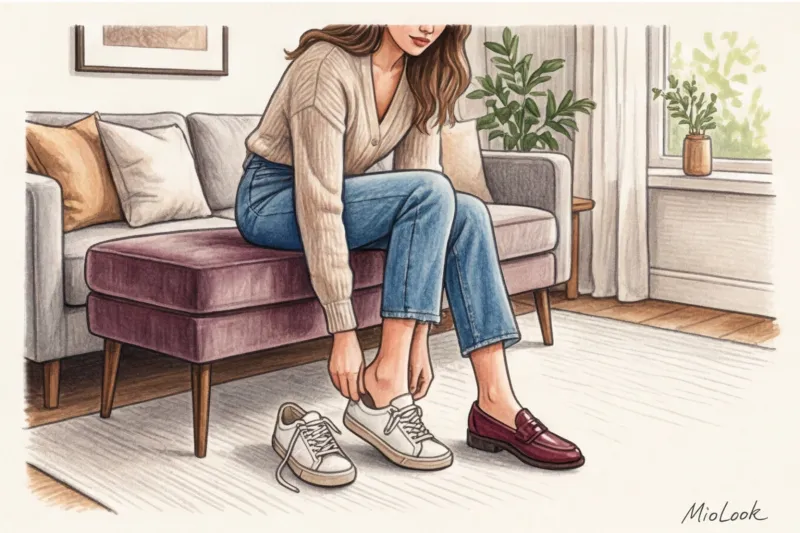
But after 14 years as a personal stylist, I've learned one ironclad rule: shoes set the final tone for an entire outfit. You can buy the most expensive cashmere sweater and a perfectly tailored coat, but pair it with worn-out running shoes and the look instantly loses its luster. True, high-status casual women's shoes are the art of looking relaxed, yet put-together and expensive. We discussed this aesthetic in more detail in our The Complete Guide to Casual Style for Women.
Today, I'm challenging you to take a little sneaker detox and take your wardrobe to the next level with structured, orthopedically correct, and incredibly stylish footwear.
The Comfort Trap: Why Women's Casual Shoes Are More Than Just Sneakers
"Olena, I have a closet full of expensive sneakers, but when I put on dress pants or a silk dress, I feel like an overgrown teenager," was how I began my consultation with Anna, a 34-year-old freelancer. And it's a classic symptom of "sports addiction."
We confuse sport chic with true urban casual. While the former allows for a touch of casualness, the latter demands structure. And here's where an unexpected medical fact comes into play.
The biggest myth of our time is that "sneakers are the most comfortable shoes for the city." In reality, soft soles and the lack of a rigid frame lead to foot strain during long walks on asphalt. And completely flat sneakers are a surefire way to plantar fasciitis.
According to podiatrists, for city walks of 10,000 steps or more, shoes with a heel-toe drop of 1.5–3 centimeters and a firm arch support are ideal. High-quality leather shoes absorb shock, supporting the arch of the foot. This is why the report Business of Fashion (2023) recorded a global decline in sneakers and a return to the "hard shoe" trend. Leather shoes literally change the way you walk: you stop shuffling and start carrying yourself.
Loafers: an absolute staple and the king of everyday style
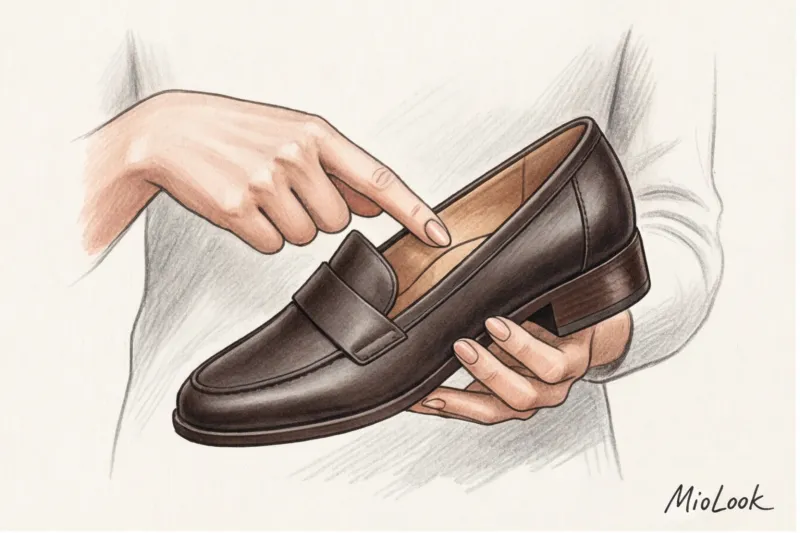
If I were asked to keep only one pair of shoes in my women's wardrobe (besides winter shoes), I would choose loafers without a second thought. They've long since supplanted sneakers in the versatility rankings because they're so versatile.
I always teach my clients the method cost-per-wear (cost per outing). Fabric sneakers for €120 last 1-2 seasons in our climate, losing their shape and color. High-quality leather loafers for €150-200, with proper care, last 3-5 years. Per outing, loafers cost you next to nothing.
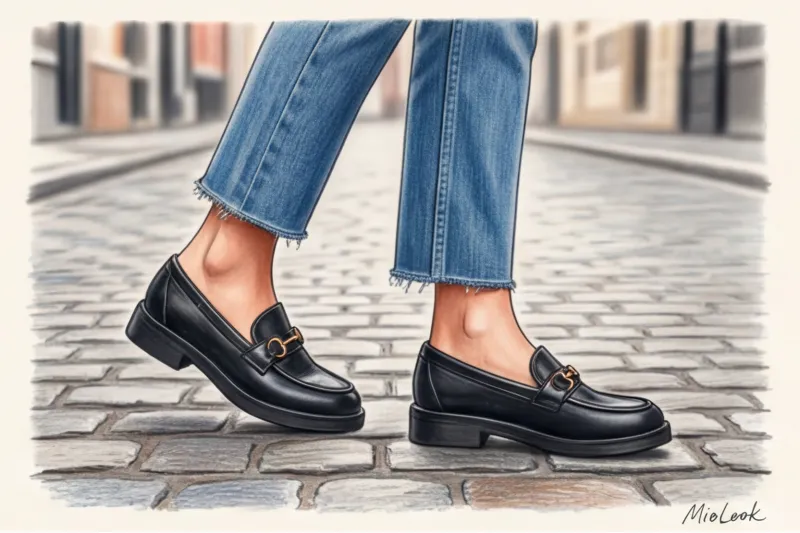
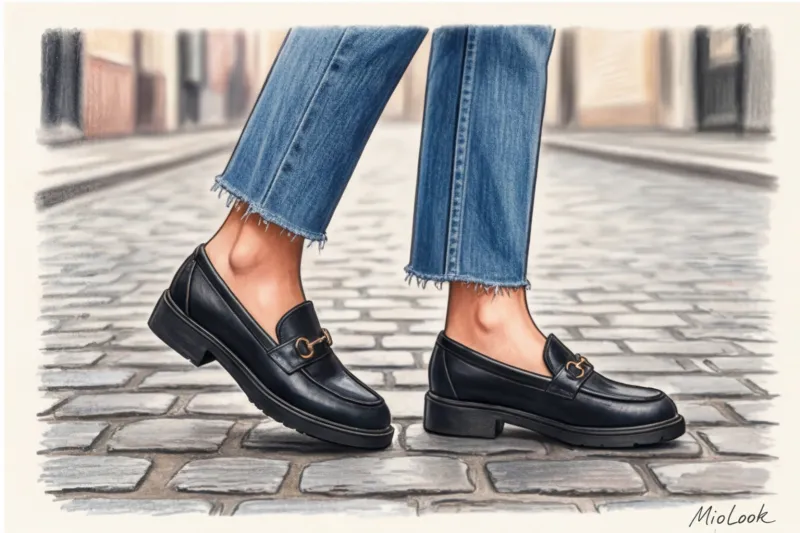
How to wear them? With straight-leg jeans, tailored suits, and even thick knit joggers. The stylist's main secret is open ankle rule Leave 2-3 centimeters of bare skin (or a nice sock) between the hem of your trousers and your shoe. This is the narrowest part of your leg, and showing it off visually lightens your overall silhouette.
Suede or smooth leather: choosing the texture
The texture of the material makes all the difference. Suede works as a tool for reducing formality. Suede loafers in taupe or dark chocolate are softer, more comfortable, and pair perfectly with fall coats.
Smooth leather, on the other hand, is great for contrast. Try pairing a fluffy mohair sweater with smooth, slightly shiny loafers. We covered this technique in detail in the article about combination of textures in clothing As for the sole, a chunky tractor base is still relevant for balancing out bulky uppers (like down jackets), but the classic thin sole is making a comeback as a more elegant and timeless alternative.
Your perfect look starts here
Join thousands of users who look flawless every day with MioLook. A smart AI stylist will find the perfect combinations with your shoes.
Get access — €0.99 onceBrogues, Derbies, and Oxfords: English Aesthetics for Everyday Wear
Many women shy away from lace-up shoes, considering them too "masculine." But it's precisely this masculinity that lies their greatest superpower. Casual women's shoes are built on a play of contrasts.
The difference between them is simple: Oxfords have closed lacing (the most formal), Derbies have open lacing (more relaxed), and brogues are any of these styles with perforations. For a casual wardrobe, I highly recommend Derbies or brogues.
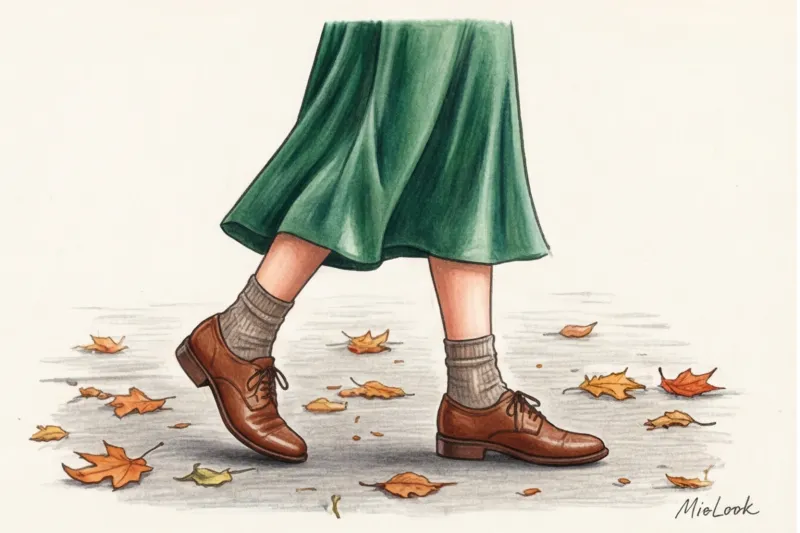
Pair a pair of chunky brogues with a flowing silk midi skirt, and the look instantly becomes sophisticated and intellectual. (By the way, with such delicate fabrics, don't forget choose seamless underwear , so that nothing distracts from the silhouette).
Insider life hack: If the weight of traditional English shoes intimidates you, look for Derby shoes with EVA soles. They look like heavy classics but are as light as a feather. It's the perfect compromise for those who spend hours logging miles around the city.
Chelsea boots: essential casual footwear for women in the off-season
When the temperature drops, Chelsea boots replace loafers. Why do I always recommend them over classic zippered ankle boots? Zippers often cheapen the look of a shoe (especially if the hardware is poorly chosen), while the elastic inserts of Chelsea boots look minimalist and expensive.
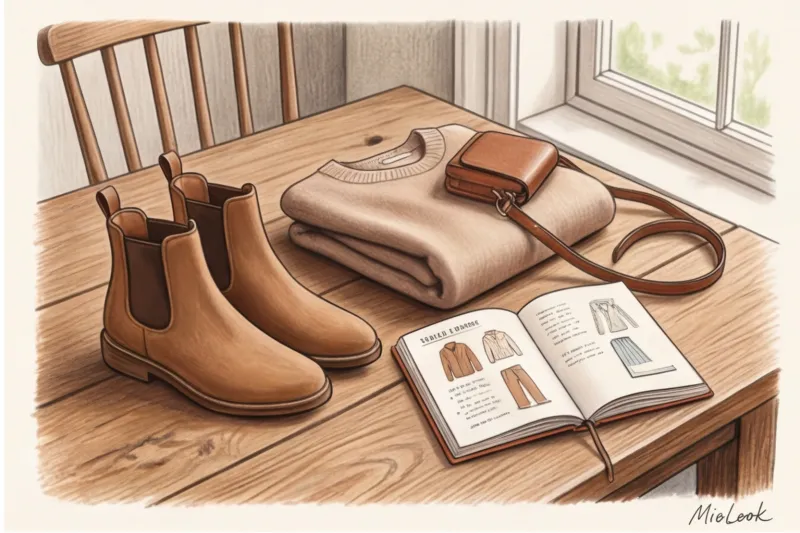
The shaft height is crucial. The right Chelsea boots should end 2-3 centimeters above the ankle bone and fit snugly. A wide shaft, where the trousers tuck into the "bubble," visually cuts off the leg and makes it look bulkier. Chelsea boots are ideal for layering with trench coats, oversized scarves, and heavy jeans.
Ballet Flats 2.0 and Mary Janes: How to Avoid the "House Slipper" Effect
Ballet flats are back in fashion, but forget those round, soft, bow-adorned slippers from the 2010s that made any foot look like a pancake. The modern evolution of ballet flats is all about geometry and structure.
Mary Janes (with one or more straps on the instep) and slingbacks (with an open heel) are reigning supreme these days. They're replacing sneakers in warm summer weather, adding a touch of French chic to any look.
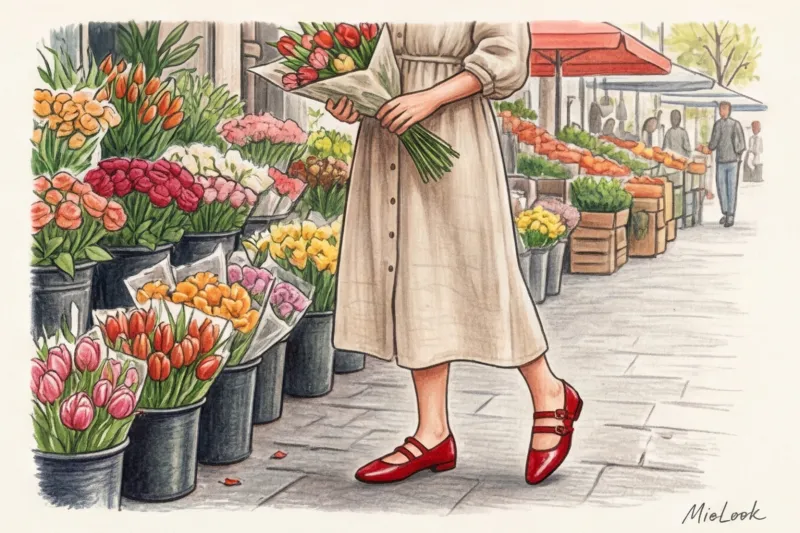
But here lies the main danger. Ballet flats with cardboard-like, completely flat soles are merciless to your feet. As an expert, I must warn you: always look for models with a kitten heel of at least 1-1.5 centimeters. Look for an elongated, slightly square, or pointed toe—these visually elongate your height, unlike a round toe, which cuts off the length of your legs.
Stylist's formula: a capsule of 3 casual shoe pairs
A client once approached me with a request: "I want to throw out all 15 pairs of cheap, uncomfortable shoes I own and buy just a few that go with everything." We put together a capsule collection of just three pairs for her (the budget was about €400 for everything), and this formula covered 90% of her needs from spring to fall.
Here is the checklist:
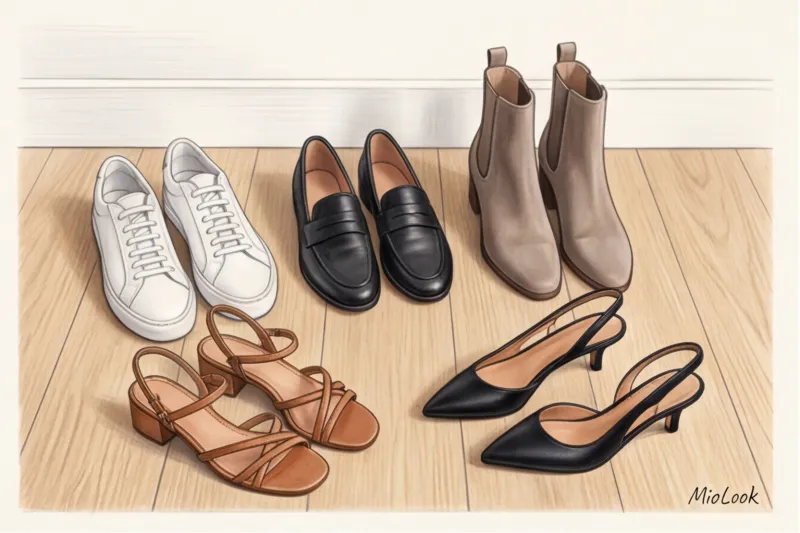
- Pair #1: Structured base. Loafers or derbies made of thick, smooth leather are your go-to for the office, meetings, and stylish weekends.
- Pair #2: Insulated Comfort. Chelsea boots or simple Cossack shoes with a stable heel for rain and cold weather.
- Pair #3: Easy alternative. Slingbacks, mules or Mary Janes for hot days and romantic dresses.
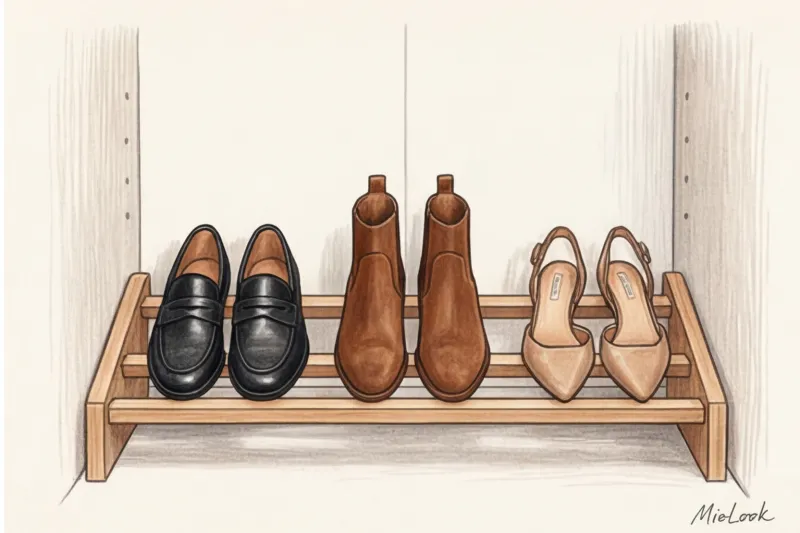
Let's talk color. According to the PANTONE Color Institute and fashion show analytics, black is no longer the only synonym for "universal." Swap black shoes for shades of deep burgundy (cherry red), dark chocolate, or caramel. They pair with denim and basic colors much more elegantly and sophisticatedly than stark black.
Ready to get started?
Try the MioLook plan for free—no commitments required. Create your perfect shoe capsule collection right in the app.
Get access — €0.99 onceHow to Break in Hard Shoes: Secrets Boutiques Don't Tell You
I'll be honest with you: there are situations where this approach doesn't work If you're planning a 20-kilometer hike in the mountains or a full day of running around a forest park with a toddler, leather brogues won't cut it. In these situations, sneakers are clearly superior. In all other urban scenarios, the discomfort of new leather shoes is temporary.
High quality smooth leather should It should be stiff for the first couple of days. It molds to the anatomy of your foot, so it fits like a glove. Here are my personal rules for surviving this period:
- No bare feet. For the first 3-4 outings, wear shoes with thick cotton socks.
- Professional chemistry. Buy a good shoe stretcher spray. Apply it generously to the inside of your shoes (especially the seams) 5 minutes before going out.
- Wooden blocks (shape holders). They not only smooth out creases after wearing, but also slightly stretch the leather if you insert them immediately after taking off warm shoes.
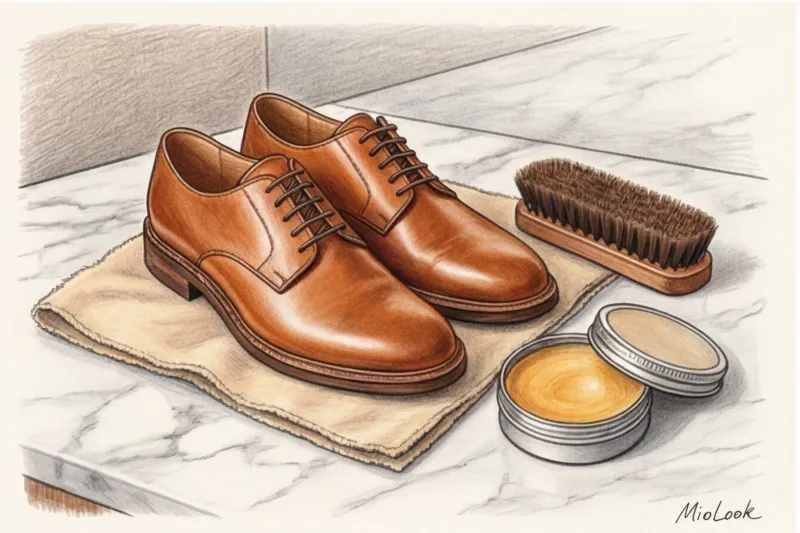
And one last piece of advice from a practitioner: if you bought shoes with leather soles, be sure to take them to a shoe repair shop and have them fitted with a thin rubber sole. This will protect the expensive leather from abrasion on the pavement and prevent you from slipping on wet tiles.
By putting your sneakers away and embracing classic silhouettes, you'll notice a remarkable transformation. You'll feel more confident, put-together, and elegant, even if you're wearing simple jeans and a white T-shirt. And that's the true magic of casual style.