Autumn Casual for Women: The Math of a Smart Layered Wardrobe
Last October, I conducted a detailed audit of 50 client wardrobes. Do you know what 80% of these completely different women had in common? Each one had a stunning, expensive chunky knit sweater on her shelf that she'd never worn outside. The reason was simple: it physically wouldn't fit through the tight sleeves of her favorite coat, and if it did, it made her arms look like clumsy sausages.

We're used to perceiving women's autumn casual as an intuitive combination of jeans and knitwear. But in reality, it's a strict math of volume and temperature regulation. We've already discussed the philosophy of relaxed chic in more detail in our The Complete Guide to Casual Style for Women , but today I want to look at the engineering side of the issue - how to look stylish without looking like a cabbage.
In textile engineering, there's the concept of Clo—a unit of measurement for the thermal insulation of clothing. It's been scientifically proven that two thin layers with an air gap between them yield a higher Clo than one thick, tightly fitting layer. According to consumer behavior research from WGSN (2024), modern city dwellers experience up to 10 sudden temperature changes per day (street, subway, taxi, office, cafe). That's why the "one warm jacket for all occasions" concept no longer works. You need a modular system.
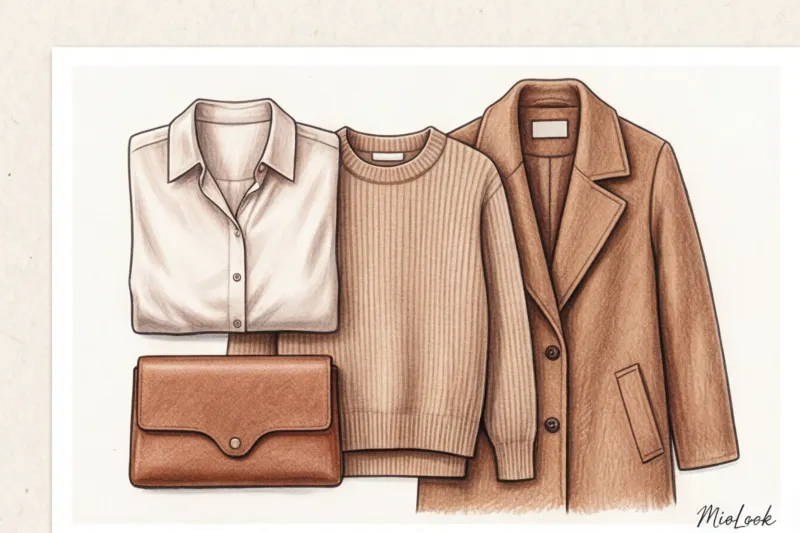
The three pillars of autumn comfort: a coat, a trench coat, and the perfect sweater.
According to the Pareto rule (80/20), these three elements account for 80% of your successful demi-season looks. A fall wardrobe doesn't require an endless supply of items; it does require the right lengths and silhouettes.
Why have short, thigh-length jackets almost completely disappeared from current casual style? They visually "cut" the silhouette at the widest point of the figure and limit the choice of underlayers (a long sweater peeking out from under a jacket looks untidy). The modern uniform is midi and maxi lengths. They elongate the height, protect from the wind, and allow you to hide absolutely any length of skirt or dress underneath.
How to choose a coat that will fit over bulky knitwear
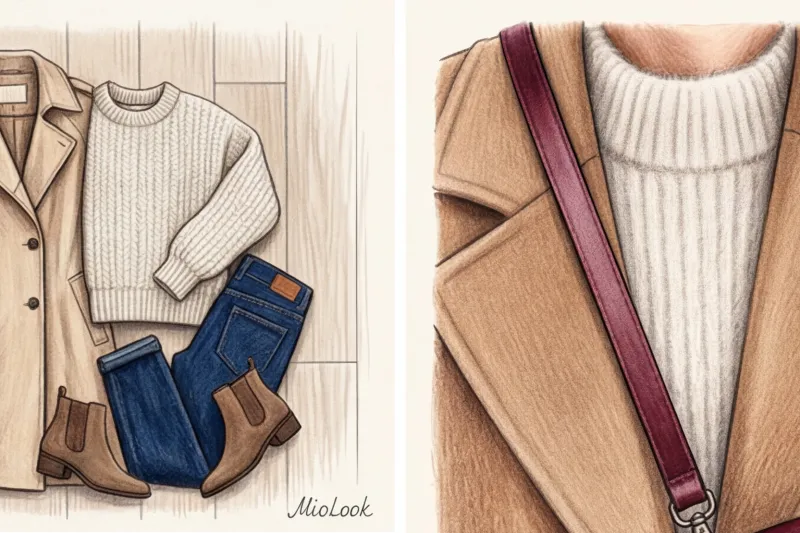
The main secret of practicing stylists: when buying a coat, measure not only the chest circumference but also the armhole width. A coat with a classic, stiff set-in sleeve is the main enemy of layering. The fixed seam will simply cut into your armpits as soon as you put on anything thicker than a silk blouse.
Look for a raglan cut or a dropped shoulder—they distribute the fabric tension diagonally and allow for freedom of movement. As for the composition, I recommend finding a balance. In the €150–€300 price range, the optimal formula is 70–80% wool and 20–30% high-quality nylon. The problem is that 100% wool in mass-market clothing often quickly loses its shape, while nylon thread acts as invisible reinforcement, preventing the fabric from deforming.
Trench Coats in Cold Weather: Life Hacks for Extending the Season
Let's be honest: a classic cotton trench coat in its purest form is the worst outerwear for typical autumn weather with its chilly winds. Without strategic layering, it's just a pretty windbreaker that collects condensation and leaves you shivering.
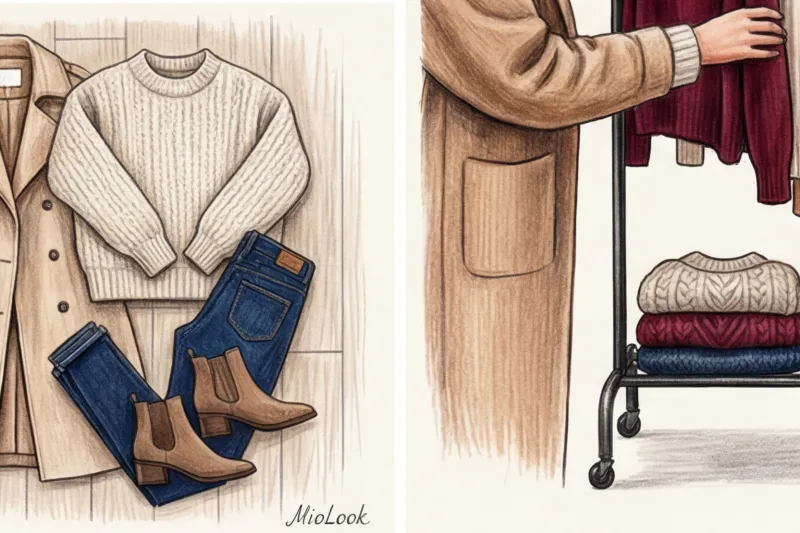
I was angry with my wardrobe for a long time: my Cost Per Wear for expensive trench coats was terrible because I only wore them for two weeks in September. Things changed when I introduced hidden layers. An ultra-thin down vest (literally 2-3 mm thick) worn underneath and basic 100% merino wool baselayers can extend the wearing season of a beige trench coat for at least 6 weeks.
But there is an important exception here: This life hack absolutely DOESN'T work with fitted trench coats made of thin, softly flowing fabric. A down vest underneath will create unsightly bulges and visually add a few extra pounds. This only works with thick, shape-resistant cotton gabardine.
Access to MioLook for €0.99 — one-time payment
A smart AI stylist will select the perfect look for your figure and the weather outside.
Get access — €0.99 onceTexture Math: Why Your Sweater Look Looks Boring
Often, women create looks that are perfect in terms of color, but somehow appear flat and uninteresting in the mirror. The answer lies in texture. I always teach my clients this rule: if you're wearing a monochrome outfit, you must break it up with contrasting fabrics.

Smooth should work with fluffy, matte with shiny. For example, pairing a thick cotton trench coat with a smooth cotton shirt is boring. But wearing a fluffy mohair or angora sweater under matte gabardine is a statement piece. A smooth, slightly glossy leather crossbody bag over textured cashmere or a combination of leather and knitwear They always look expensive because the materials reflect light differently.
The thickness of the yarn is also critical. Thin, flimsy, tight-fitting knits (especially viscose) mercilessly cheapen the look and offer no warmth. Opt for "chunky knit"—a voluminous, textured knit that traps air and holds its shape.
5 ready-made formulas for autumn looks for every day
Every morning, the modern woman makes dozens of micro-decisions. Save your time with ready-to-use capsule formulas. You can pre-pack them on a rail or save them as a digital lookbook in the app. MioLook to get dressed in 3 minutes.
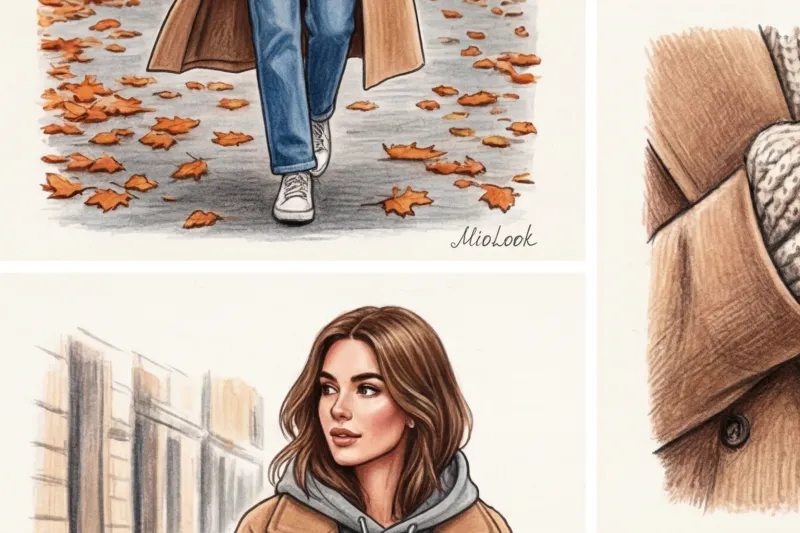
Formula 1: Relaxed Chic for Strolls and Brunches
Compound: Maxi wool coat + cashmere or thick cotton suit (joggers and hoodie) + chunky sneakers.
The secret to this formula is the contrast between a relaxed, sporty base layer and a tailored top layer. To prevent the silhouette from becoming baggy, be sure to add a structured, rigid crossbody bag—it will visually gather your figure and define your waist.
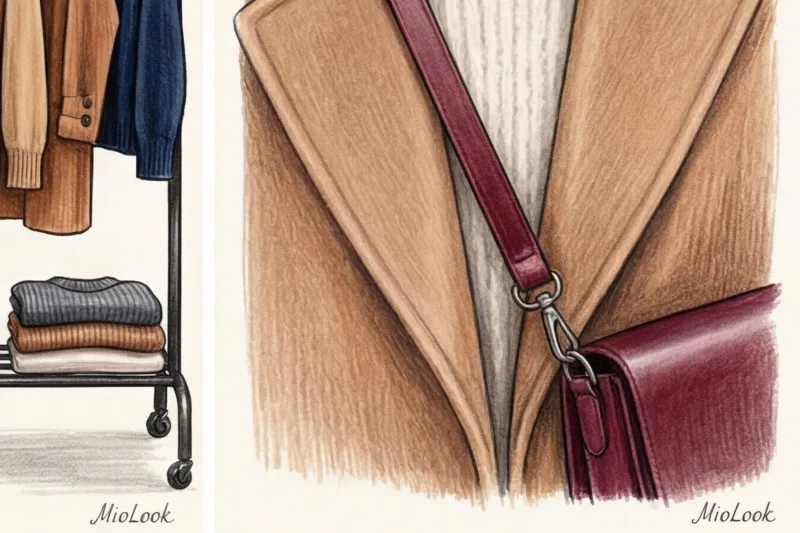
Formula 2: Smart Casual for Meetings and the Office Without a Dress Code
Compound: Oversized trench coat + ribbed turtleneck sweater + straight-leg thick denim jeans + thick-soled loafers.
The perfect solution for a Friday dress code. Color scheme is key: replace the usual black and white monochrome with a combination of caramel, deep burgundy, and rich blue (indigo). If it's cold outside, the same formula can be used. pairing a long coat with a sweater.
Additional formulas for your lookbook:
- Formula 3 (On a Date): Oversized leather aviator jacket + midi knit sweater dress + thigh-high tube boots.
- Formula 4 (For an active day): Quilted shirt coat + oversized hoodie + stirrup leggings + ankle boots with a stable heel.
- Formula 5 (Insulated Classic): Cropped pea coat + wide wool trousers with arrows + thin cashmere jumper paired with a silk scarf.
Your perfect look starts here
Join thousands of users who look flawless every day with MioLook's intelligent tips.
Get access — €0.99 onceHidden Threat: The Main Mistake That Ruins Your Stuff
Glossy magazines often showcase beautiful layered looks, but practicing stylists know the dark side of this aesthetic. One of the main problems with fall wardrobes is "sleeve friction."
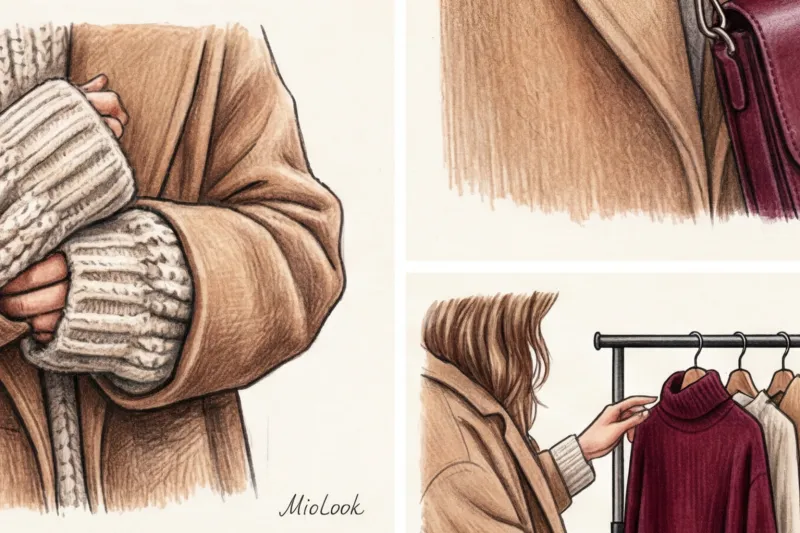
If you're struggling to squeeze a chunky knit sweater into a tight coat sleeve, you're not just feeling uncomfortable. The coarse yarn acts like sandpaper against the delicate viscose lining of your outerwear. After a single season of heavy wear, the lining around the armholes is guaranteed to rip to shreds.
Here's some more basic information that will change your shopping habits: a 100% acrylic sweater will lose its shape and become permanently pilled after just 5-7 washes. Meanwhile, a high-quality wool-cashmere blend, with proper care, will last 5+ years. The only rule is to never store heavy knitwear on hangers in the closet! A good sweater weighs between 600 grams and a kilogram, and its shoulder seams will stretch and deform under its own weight in just a couple of weeks.
Checklist: How to digitize your fall wardrobe and forget about the "nothing to wear" problem
The most frustrating thing about the fall season is buying an expensive item and discovering you have nothing to wear it with because the fit and texture don't match. To avoid this, digitize your inventory.
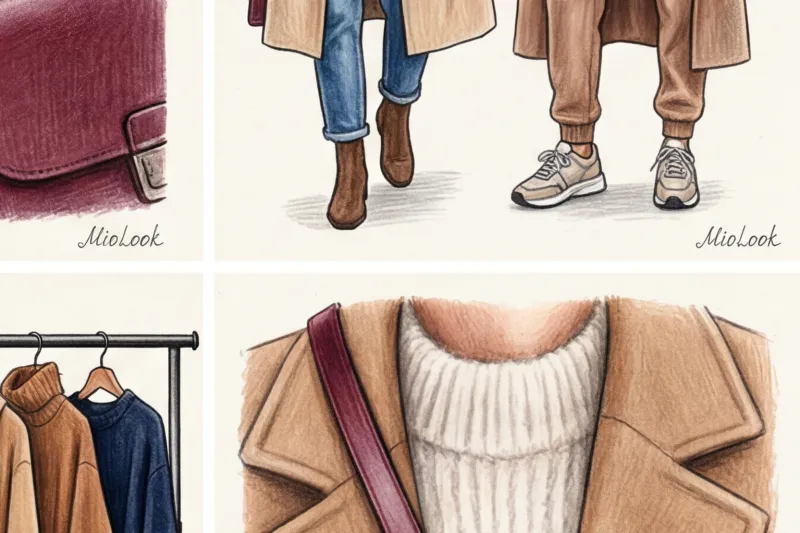
Spend one evening photographing your outerwear, all your knitwear, and basic bottoms. Upload it to MioLook and analyze compatibility.
When planning new purchases, use Cost Per Wear math. If you invest in a luxurious basic coat for €400 and wear it 120 days a year for three years, the cost per wear will be only €1.10. However, an impulse purchase of a trendy one-day sweater for €60, which you wear exactly three times before washing it, will cost you €20 per wear. It's clear where to invest your budget.
Stop thinking in terms of "just pretty things." Modern autumn casual is a well-coordinated ecosystem, where each layer serves its own purpose. Stop squeezing bulky items into tight sleeves, invest in a discreet down vest, and start managing your comfort like a pro. Your confidence directly depends on how freely you can move in your clothes.