Did you know that the average woman spends about 15-20 minutes each morning staring pensively into her open closet? Over the course of a year, that's almost four full days. Four days of your life wasted thinking, "I have nothing to wear," even though the shelves are literally bursting with clothes.
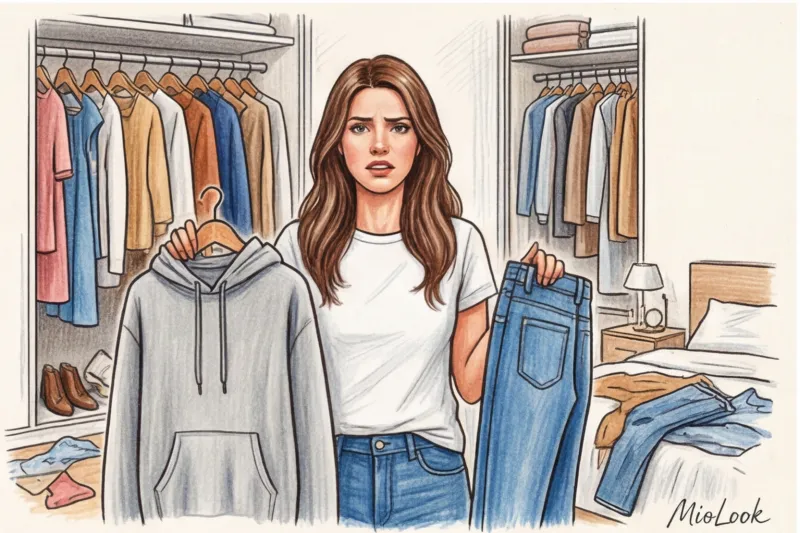
I'm Elena Kovalenko, a practicing stylist with 14 years of experience. Over the years, I've sorted through hundreds of wardrobes and noticed one paradoxical thing: the hardest thing for us isn't getting ready for an evening gala dinner or a strict office dress code. It's the everyday, everyday casual that we struggle with the most. Putting together a relaxed yet put-together look (we wrote more about the anatomy of this impeccable casualness in our The Complete Guide to Casual Style for Women ) turns out to be a problem with an asterisk.
This is where it comes into play an app for choosing everyday clothes It's commonly believed that virtual stylists are only needed for creating complex looks for special events. In fact, their main superpower is their routine. Today, I'll tell you how to integrate artificial intelligence with your real-life lifestyle to put wardrobe paralysis behind you once and for all.
The Comfort Trap: Why Do We Need Digital Intelligence in the Closet?
According to a large-scale McKinsey study (2021), after the pandemic, consumers' focus has shifted completely from formal office attire to conscious casual wear. We crave comfort, but we're also wary of slipping into a hoodie-and-leggings uniform. This has led to the phenomenon of "wardrobe blindness."
Statistics are relentless: the Pareto principle applies, whereby we wear 20% of our clothes 80% of the time. We become accustomed to three or four safe patterns and end up going in circles.
"My client Marina had 15 great sweaters and 10 pairs of jeans in her closet. But every Tuesday, she wore the same dark blue H&M pullover and straight-leg blue jeans. Her brain simply refused to generate new neural connections for outfit selection in the morning," a stylist's experience suggests.
What does AI do? It's free of our emotions and habits. The algorithm takes your basic items and suggests unobvious combinations you never even considered. It views your wardrobe as a mathematical matrix, where a light blue shirt can be worn not only as a base layer under a jacket, but also as a top layer over a T-shirt, or as a cape dress for a warm summer evening.
Preparing the Foundation: How to Digitize a Casual Wardrobe Without Stress
There's a golden rule in the IT industry: "Garbage in, garbage out." If you upload worn-out, out-of-shape items to an app, even the smartest algorithm will create an image of a tired summer resident.
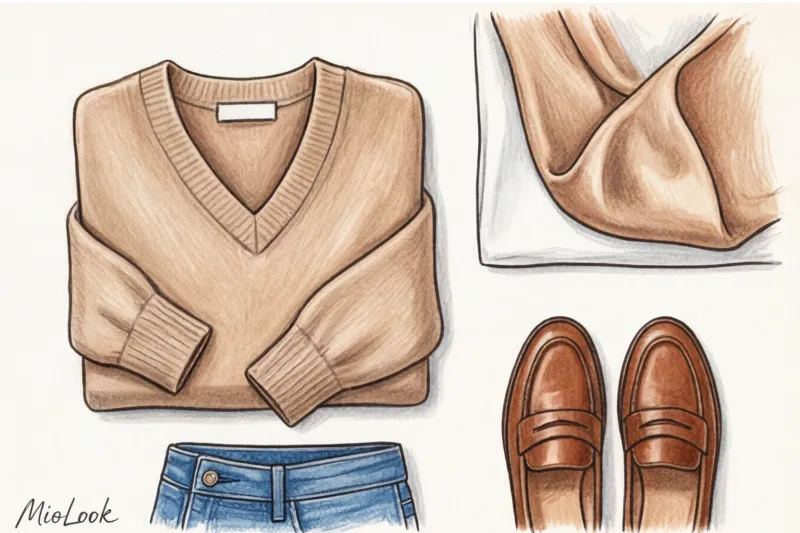
Digitizing a basic wardrobe (usually 30–40 items) takes only a couple of hours, but saves years of morning thinking. Before picking up the camera, use the three-stack method: "keeping," "putting away/giving away," and "doubting." Photograph only the first stack.
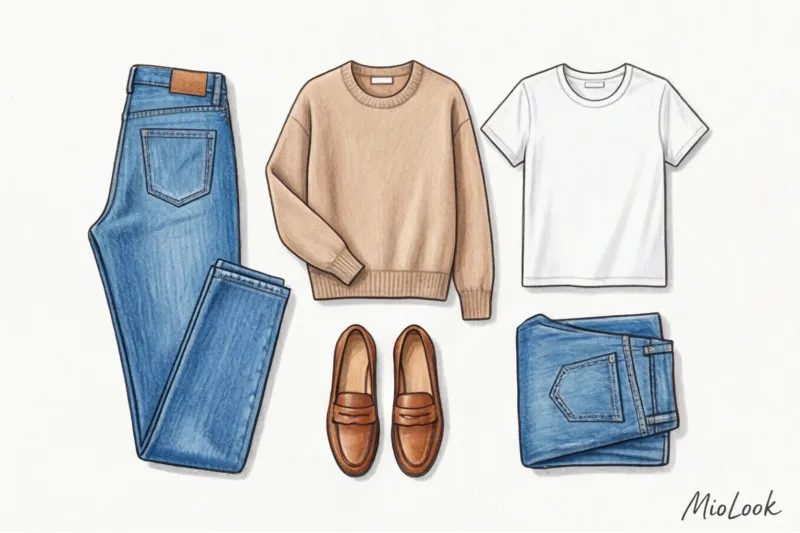
For a casual wardrobe, it's crucial to start with outerwear and flat shoes (loafers, sneakers, Chelsea boots). They set the tone for a casual look. My personal life hack: photograph items in daylight against a contrasting background (for example, light-colored laminate). This way, the algorithm will more accurately cut out the silhouette and recognize the shade.
Secrets of loading basic things into a neural network
Don't be lazy with tags. A basic white T-shirt made of heavy cotton (180 g/m² and above) and a thin viscose tank top are two completely different pieces in terms of the overall look. Note the season and fabric weight.
Another common mistake is lumping all denim pants into a single "jeans" category. The algorithm needs to understand the shape. Mom jeans, straight waders, and relaxed wide-legs all have different proportions. Be sure to specify the fit.
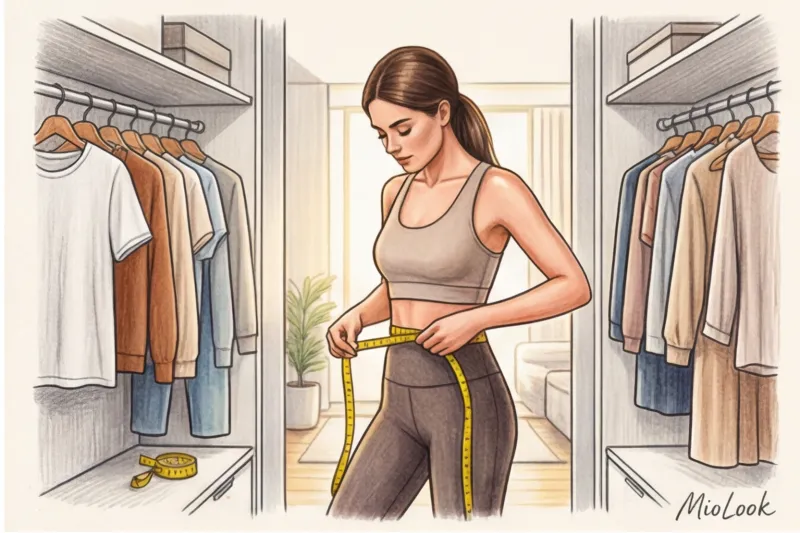
Training an AI Stylist: Your Personal Casual Code
The algorithm doesn't know how you live until you tell it. When setting up your profile in the app, be as honest with yourself as possible.
If you work from home 80% of the time and spend weekends walking your dog in the park, you don't need AI to create outfits with silk blouses and tailored trench coats. Set lifestyle percentages: for example, 60% smart casual, 30% relaxed sporty chic, and 10% going out with friends.
Access to MioLook for €0.99 — one-time payment
A smart AI stylist will create the perfect everyday look from your existing items in just a few seconds. Forget about the "nothing to wear" problem.
Get access — €0.99 onceBe sure to use the "stop list" feature. I had a client who complained that the AI was suggesting "too youthful" and oddly layered looks. We looked into her settings and discovered that she'd accidentally selected "grunge" instead of "minimalist" when registering. Once we corrected that and added crop tops (which she never wore) to her stop list, the magic happened.
From Chaos to Smart Capsule: How Algorithms Assemble Images
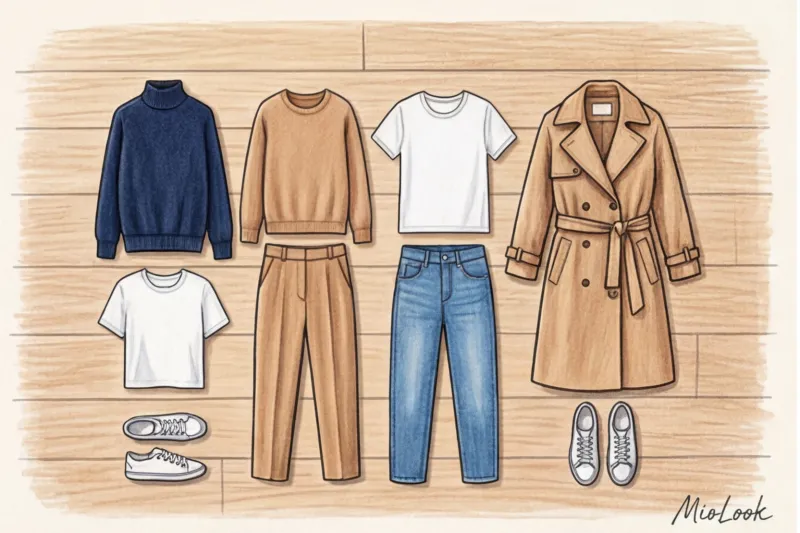
How does the formula for the perfect casual look work, according to the smart app? It's always a balance: Base + Accent + Texture The AI takes your neutral straight jeans (the base), adds a bright sweater (the accent), and suggests a suede bag (the texture).
Break your digital closet into micro-capsules:
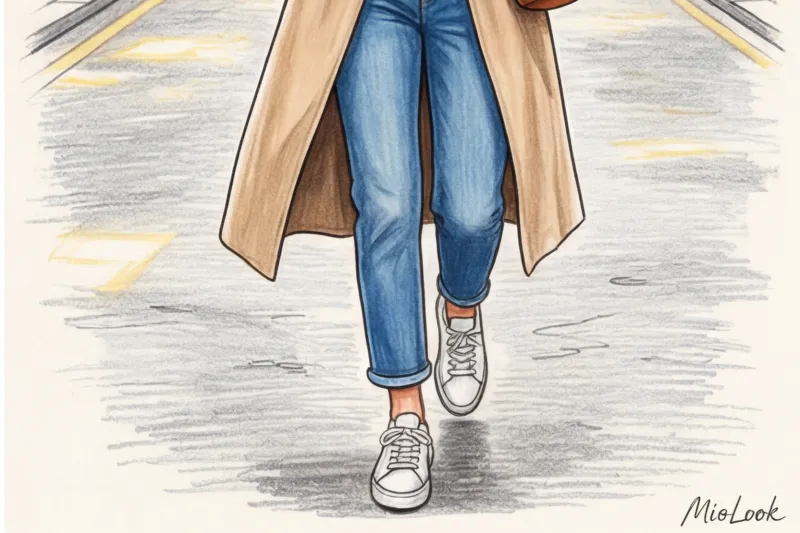
- Weekend capsule: joggers, hoodies, voluminous down jackets, sneakers.
- Smart casual for meetings: jackets, unworn jeans, basic t-shirts, loafers.
- Flight capsule: knitted suits, comfortable sweatshirts.
The most valuable AI feature for me as a stylist is analyzing wardrobe gaps. The app analyzes what's missing to tie disparate pieces together. Sometimes, buying one high-quality caramel-colored leather belt (in the €50-€80 range from brands like Massimo Dutti) or the right basic sneakers unlocks 15 new looks from old pieces. This is the kind of targeted shopping that saves money.
What Artificial Intelligence Doesn't See: Where Your Inner Stylist Comes In
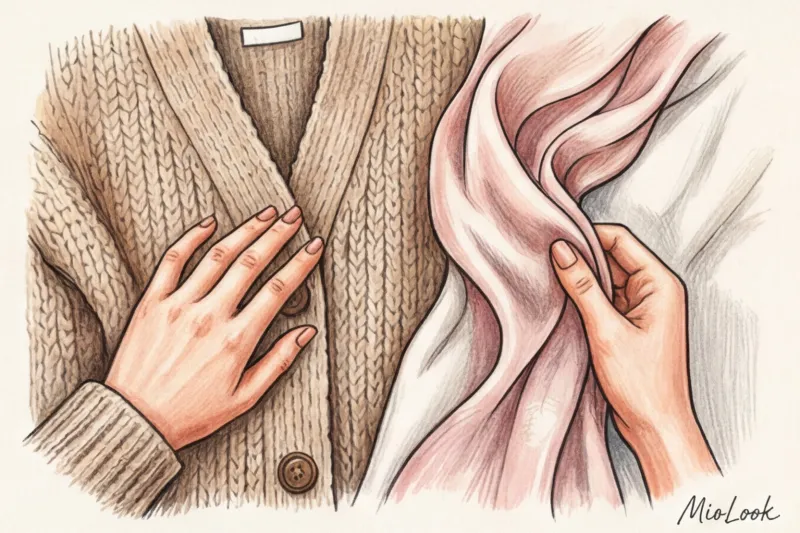
Let's be honest: technology isn't omnipotent. When delegating style to a machine, it's important to understand its limitations. After 12 years of working with various platforms, I've learned one thing: AI doesn't sense fabric.
An algorithm might perfectly match an olive wool sweater with a cream silk skirt. On the screen, it looks like a Vogue look. But in reality, the sweater might be too rough and cling to the delicate silk, causing discomfort. It's up to you to judge the feel and density.
The second blind spot is microclimate. The AI will look at the weather forecast (+5°C) and suggest a turtleneck, a thick shirt, and a wool coat. Visually, it's a great layering scheme. But it won't take into account that you'll have to ride for 40 minutes on a crowded, hot subway, where you'll simply fry in such an outfit.
And finally, the state of things. The neural network remembers your favorite Zara T-shirt just as you photographed it a year ago. It doesn't know that the collar has stretched out or that there's pilling on the side. Final quality control is always yours.

Checklist: Your First Month with a Smart Casual Wardrobe
To make your everyday outfit app truly effective, don't try to digitize your entire life overnight. I suggest clients follow my proven process:
- Week 1: Digitize just 30 of your favorite items you're currently wearing (including shoes and bags). Start compiling everyday looks from them.
- Week 2: Play with the algorithm. Request three unusual combinations that you would never wear yourself. Try them on at home in front of a mirror. You'll be surprised how often the AI gets it right.
- Week 3: Analyze your statistics. Use the app to see what items you haven't worn in the last three weeks. It's time to admit you don't need those neon bike shorts.
- Week 4: Mindful shopping. Open the recommendations section and purchase just the 1-2 items the app suggests to complete your capsules.
The main thing you should take away from working with a virtual stylist is that it's not an attempt to shift responsibility for your appearance to a machine. It's about using a smart tool that will free your mind from the morning routine and restore the joy of how you look every day.