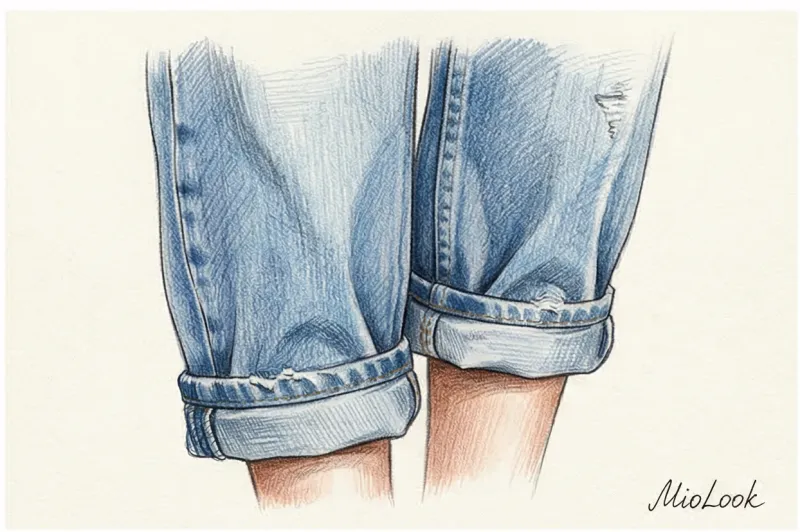
What are boyfriend jeans?
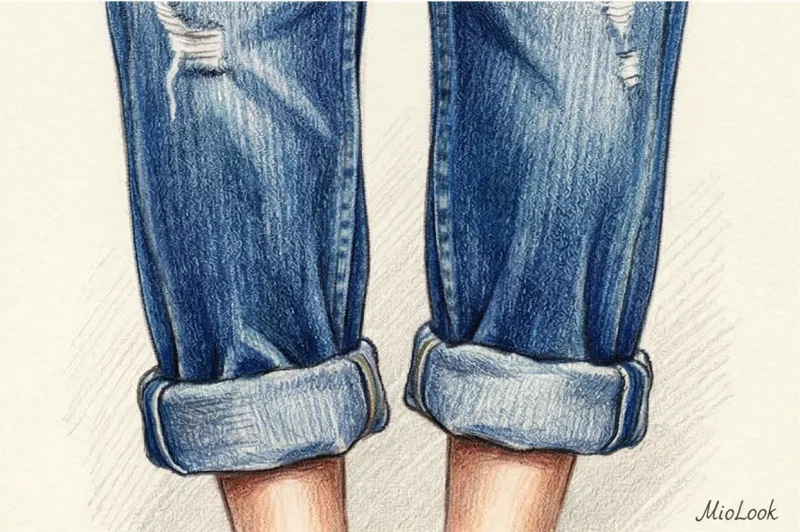
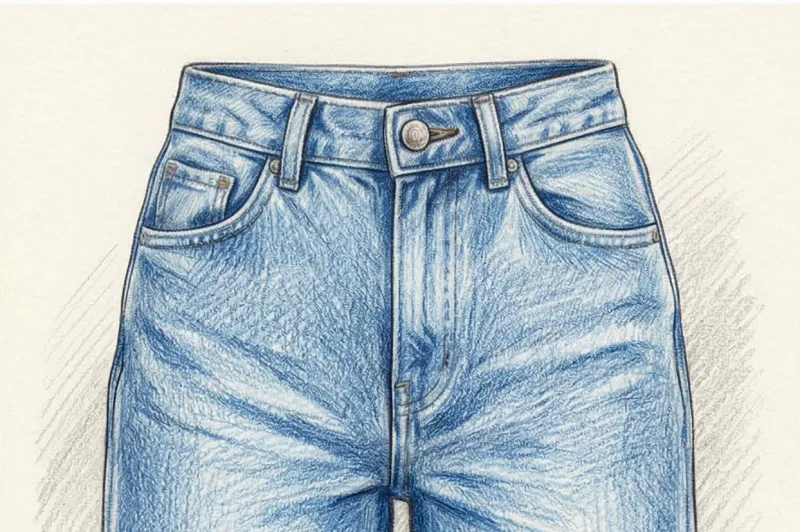
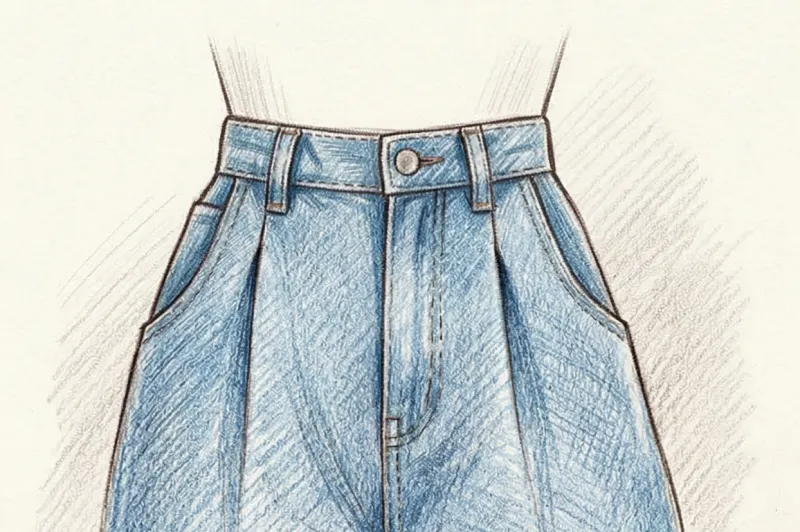
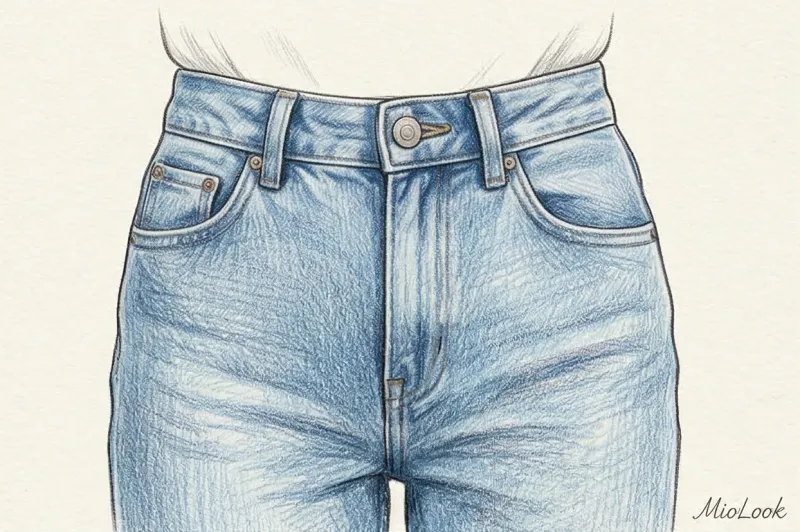
Boyfriend jeans These are women's denim trousers with a loose fit, creating the visual effect of a garment borrowed from a men's wardrobe. The style's name directly references the English word "boyfriend."
The trend gained widespread popularity in the late 2000s. It emerged as a comfortable alternative to tight-fitting skinny jeans, when celebrities began appearing in public wearing deliberately oversized men's jeans. The main aesthetic goal of this cut is to create a relaxed, slightly casual look, built on the striking contrast between the massive male silhouette and the female figure.
Distinctive features
Classic boyfriend pants are characterized by a low or mid-rise waist. They have extra volume in the hip area, and the legs themselves are straight or slightly tapered.
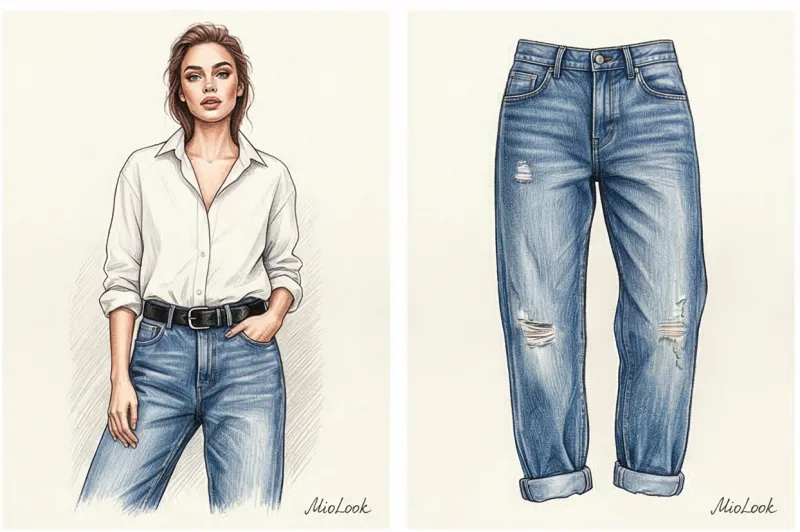
Traditionally, this style is worn in a cropped version. The leg hems are often rolled up several times, creating tight cuffs to reveal the narrowest part of the leg—the ankle. The pants are made from heavy, classic denim, made from 100% cotton. The absence or minimal amount of elastane allows the pants to maintain their characteristic baggy shape and not stretch out at the knees.
For visual design, elements of artificial aging are often used: scuffs, through cuts, raw edges and the effect of faded fabric (vintage wash).
What to combine with
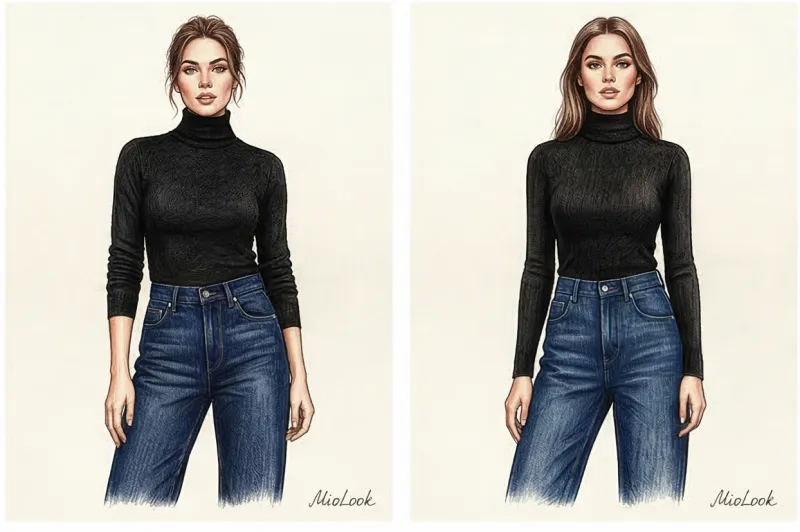
Since the bottom half of a boyfriend outfit tends to be voluminous, it's recommended to create a balanced silhouette. For the top, it's best to choose a fitted or structured piece. Fitted turtlenecks, basic tailored tees, or tailored jackets with accentuated shoulders are ideal for this purpose.
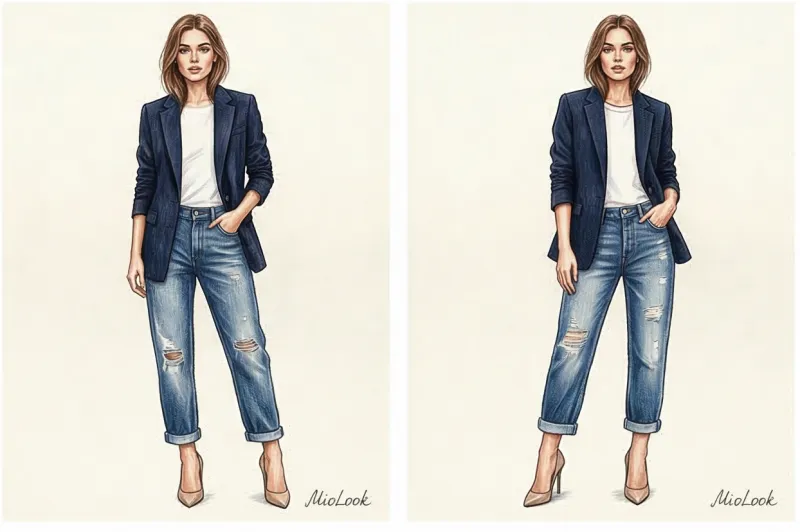
To create a striking stylistic contrast, baggy jeans are often paired with elegant high-heeled shoes: classic pumps or sandals with thin straps. For more relaxed, everyday looks, the style pairs harmoniously with simple white sneakers, loafers, or brogues.
An important styling technique is to accentuate the waistline. Using a leather belt or a top partially tucked into the waistband helps define the figure's proportions, preventing a shapeless silhouette.