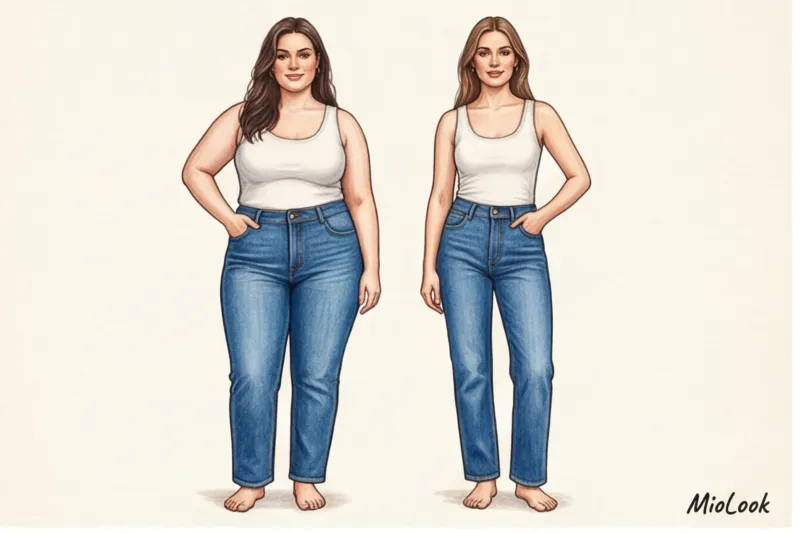
In my 12 years as a fashion journalist and stylist, I've seen women cry in the fitting room hundreds of times. And in 90% of cases, the cause wasn't extra pounds, but poorly cut jeans. We're used to blaming our bodies for the waistband that sticks out at our backs and the fabric that cuts into our hips. But let's be honest: the problem isn't you. The problem is the generic factory patterns that are sewn onto flat 2D mannequins to save fabric.
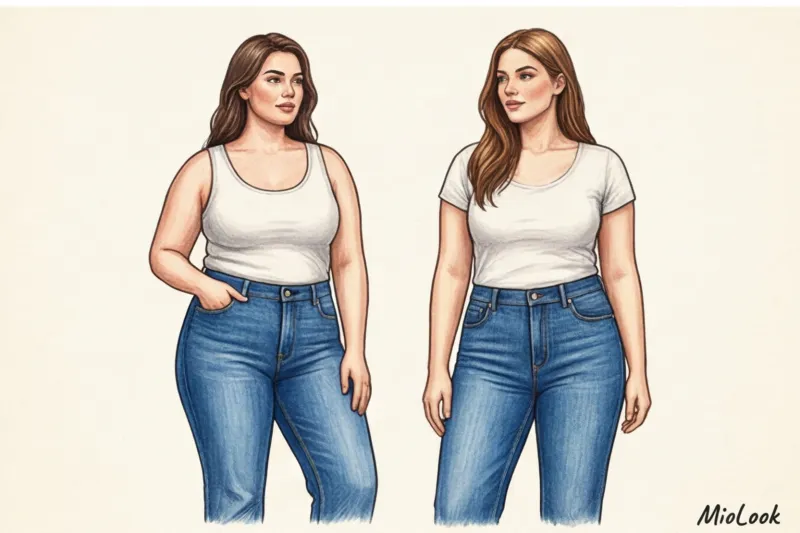
The question is, How to choose jeans according to your body type , has become overgrown with so many stereotypes that it's time to do a spring cleaning of our wardrobe habits. We talked in more detail about a systematic approach to things in our A complete guide to creating a basic wardrobe based on your body type Today, we'll apply an engineering approach to denim. Forget about being a pear or an apple. We'll be talking about hip architecture, darts, and fabric physics.
Forget the "apple" and "pear" shapes: Why the old rules for choosing jeans don't work
The popular typology of female figures based on fruit names isn't just an archaism from glossy magazines in the 2000s; it's a harmful concept. It forces us to mask so-called "flaws" instead of working with the body's geometry. Mass-market brands, churning out millions of pairs a month, use patterns designed for some average standard. Their goal is to optimize fabric cutting at the factory, not to accentuate the curve of your lower back.
One of my clients, Anna, spent five years exclusively buying oversized sweaters to cover her hips. She was convinced she had an "unconventional, problematic figure"—her jeans either didn't meet at the hips, or you could fit your fist through the waistband at the back. When we replaced the straight-yoke jeans in her wardrobe with deep V-yoke jeans, the "problem" disappeared in an instant. Her figure remained the same, but the garment's design changed.
The shift from visual deception to an architectural approach means we stop hiding and start analyzing proportions. In the €50 to €150 range, you can find the perfect pair of jeans if you know where to look.
The Anatomy of Denim: How to Choose Jeans Based on Your Body Type and Pelvic Geometry
The key parameter when choosing trousers is not your size chart, but your waist-to-hip ratio. This determines the desired back cut of your jeans.
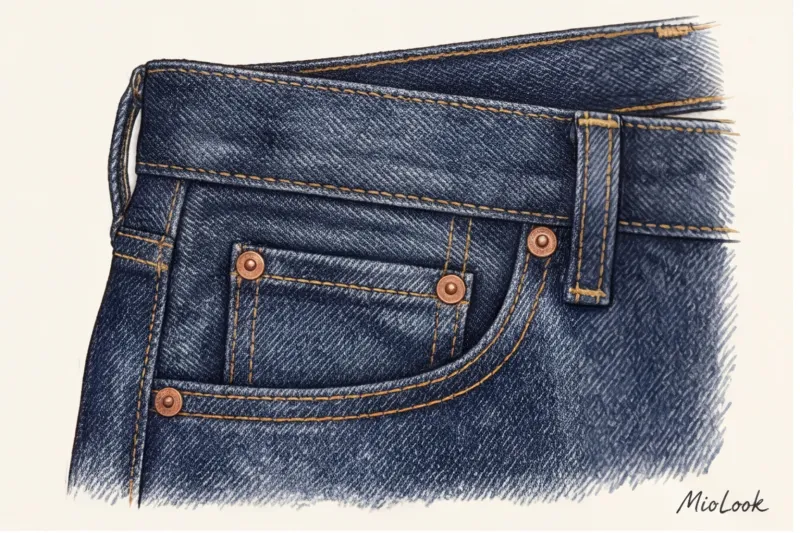
Look at the back of any pair of jeans. Between the waistband and the pockets, there's a horizontal or V-shaped seam—the yoke. In clothing design, it functions as a dart, creating volume for the buttocks:
- Straight yoke: Creates a flatter silhouette. Suitable for narrow hips and boyish figures.
- V-shape: A classic that creates a beautiful, rounded silhouette. The deeper the "t-shirt," the more hip volume it can accommodate without leaving a gap at the waist.
- Inverted yoke: visually adds volume, often used in push-up models.
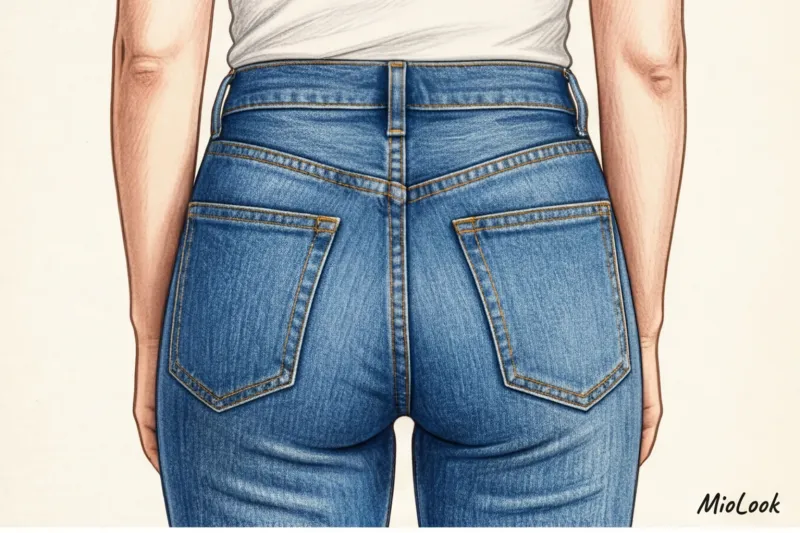
"Pockets are an optical illusion. Widely spaced, shallow pockets will visually make your hips appear half as wide and flat. The ideal pocket should be proportionate to your buttocks and angled slightly toward the center."
Access to MioLook for €0.99 — one-time payment
A smart AI stylist will select the perfect look based on your proportions and help you organize your wardrobe.
Get access — €0.99 onceRise: Finding Your Natural Line
The denim industry has clear standards for rise height, measured in inches across the front seam:
- Low: less than 8 inches.
- Mid (Average): 8-9 inches (approximately 20-23 cm) is the safest zone for 80% of women.
- High: 10 inches or more (25 cm).
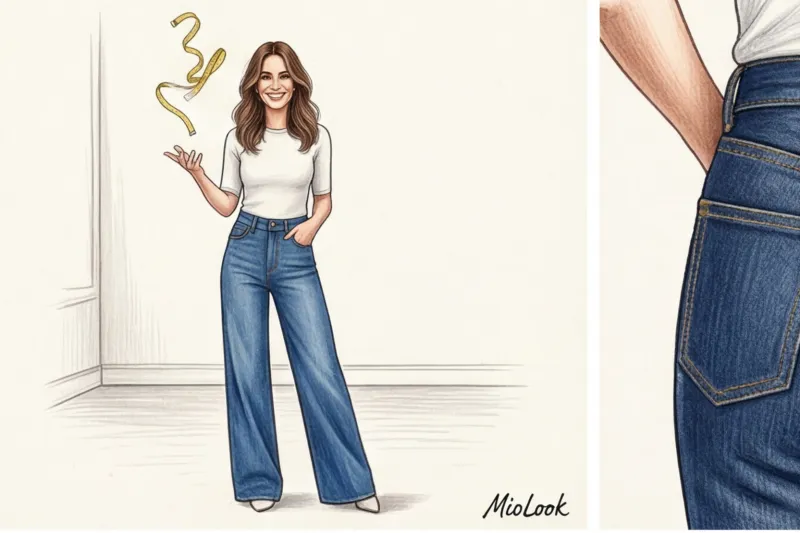
Herein lies the main trap: fashion magazines have been telling us for years that high waisted dresses lengthen legs and suit everyone. This is wrong. If you have a short torso or a narrow chest, jeans with an 11-12" rise will "eat" your waist, creating a rectangle-like appearance. To find your ideal fit, use a tape measure from your crotch to your natural waistline (the narrowest part)—this is your ideal rise.
Fabric Matters: 100% Cotton vs. Elastane in Your Basic Wardrobe
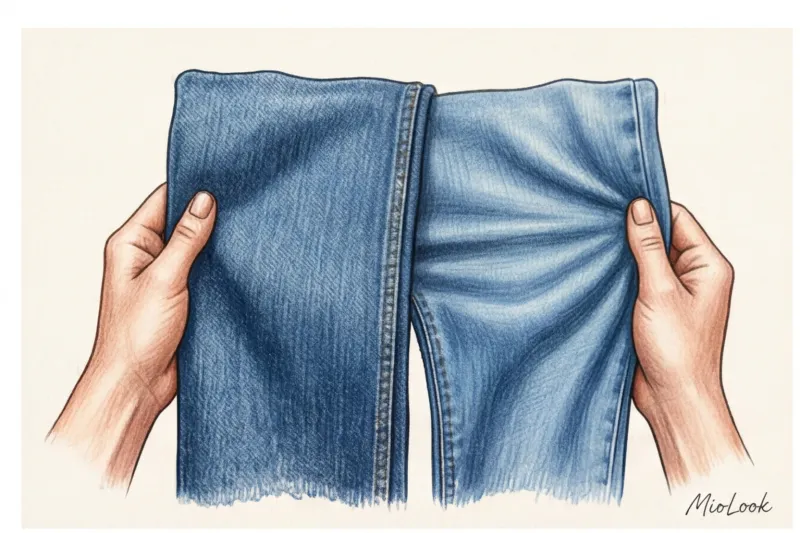
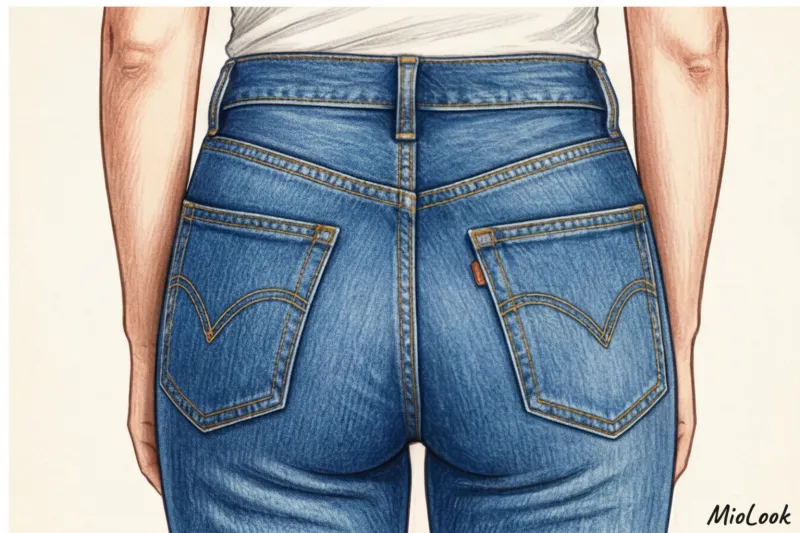
The most harmful and counterintuitive advice I hear is: "Curvy girls need stretchy jeans." This is a complete myth. Thin denim with an elastane content of 3% or more (so-called jeggings) is the worst investment in a basic wardrobe. It clings to the body like a second skin, highlighting every unevenness, and loses its shape after the third wash.
Let's take a look back at history. The Levi Strauss & Co. archives contain records of the creation of the first women's jeans, Lady Levi's (Lot 701), in 1934. They were made of dense 100% cotton (Rigid Denim). And you know what? They fit impeccably.
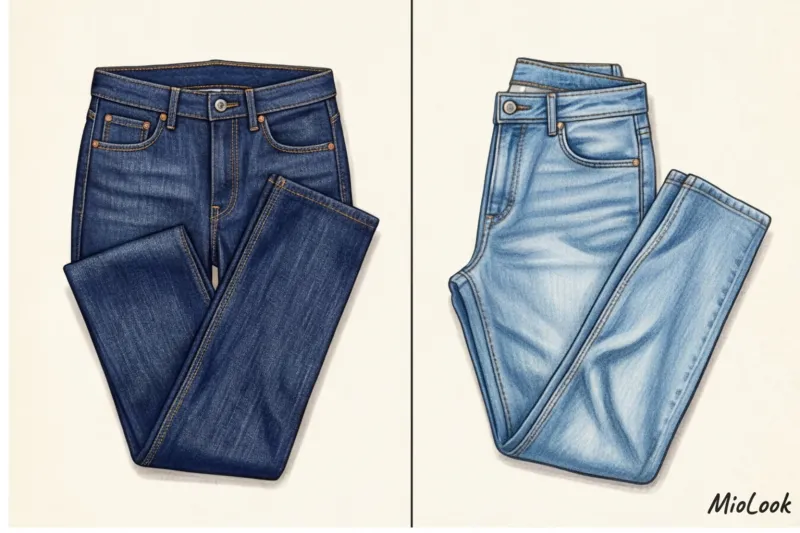
The physics of 100% cotton (twill weave) is such that the stiff fabric acts like a corset. Under the influence of your body heat, the dense denim breaks in exactly where it needs to (hips and knees), while maintaining structure at the waist and stomach. My golden formula for basic jeans if 100% cotton is too stiff for you: 98-99% cotton and only 1-2% elastane This will provide a light, dynamic comfort while preserving the architecture of the piece.
A Guide to Basic Silhouettes: Adapting Trends to Your Personal Proportions
According to the analytical agency WGSN (2024), the global trend has finally shifted from skinny jeans to relaxed silhouettes. But it's important to be able to filter these trends through the prism of your own body shape.
Straight and Mom Jeans: Who Do They Really Suit?
Model Straight — a true wardrobe staple. The main rule: the width of the pant leg at the bottom should be in harmony with the width of your hips. If the leg is too narrow, your hips will appear larger.
But with Mom-jeans (High-waisted, loose at the hips, tapered at the bottom) should be used with caution. Due to the specific cut of the front, they often create an optical bubble in the lower abdomen area. If you don't like this effect, choose straight styles without a tapered fit.
Wide Leg & Palazzo: How to Avoid Drowning in Volume
A strict rule of architectural balance applies here: if there's a lot of volume at the bottom, the waist must be firmly defined. Wide-leg jeans don't tolerate compromises in length. You can't wear the same pair of wide-leg jeans with sneakers and heeled ankle boots. You'll have to choose one shoe and trim the length so the leg is exactly 1 cm short of the floor.
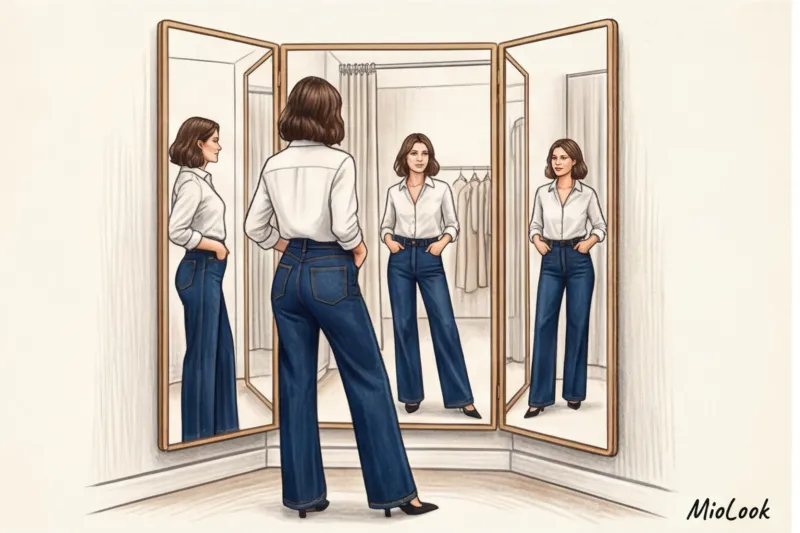
Bootcut & Flare: The Return of Classic Proportions
Bootcuts (flared from the knee down) are a brilliant way to balance wide hips. By widening at the bottom, they restore the hourglass proportions. The secret to a chic look: the bootcut should cover the shoe almost completely.
Your perfect look starts here
Not sure what to wear with wide-leg jeans? Upload them to MioLook, and the algorithm will suggest dozens of stylish combinations for your items.
Get access — €0.99 onceJeans in a business wardrobe: a status staple for the office
Can jeans look classy? Yes, if they're the right jeans. For a business casual dress code, choose a solid color (Dark Wash or Raw Denim) with no fraying, groin wear, or ripped edges.
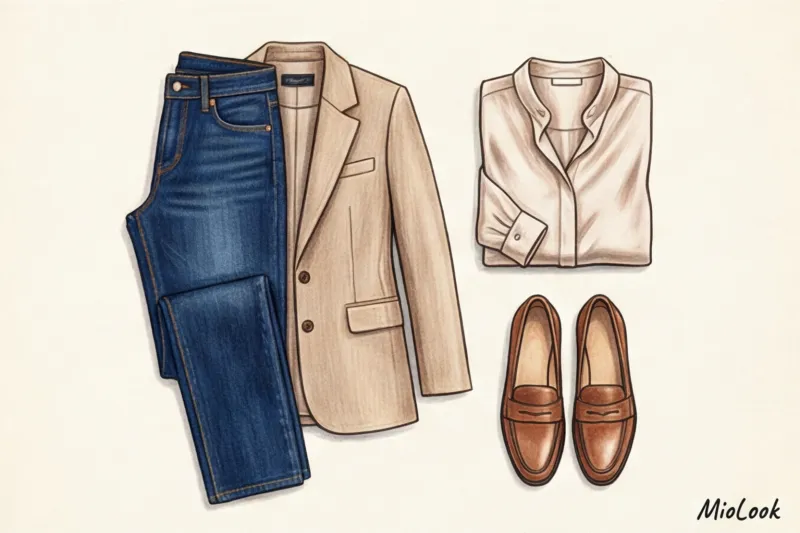
I often recommend Raw Denim (jeans made from untreated cotton in a rich indigo color) to my clients for the office. Their stiffness allows them to hold a crease almost like classic wool trousers. Look for styles with a straight cut, hidden or minimalist hardware, and stitching that matches the fabric (rather than contrasting red thread). Paired with a structured jacket and a silk blouse, these jeans, even for a modest €60, look premium.
Stylist Checklist: 5 Strict Fitting Room Tests
Over the years of shopping support, I've developed a strict fitting protocol. Never buy jeans without performing these five tests:
- Two Finger Test: Place two fingers inside the waistband at the small of your back. If they're difficult to insert, you've got the right size. If your palm fits easily, look for a style with a deeper V-shaped yoke; otherwise, you'll be constantly tugging at your pants.
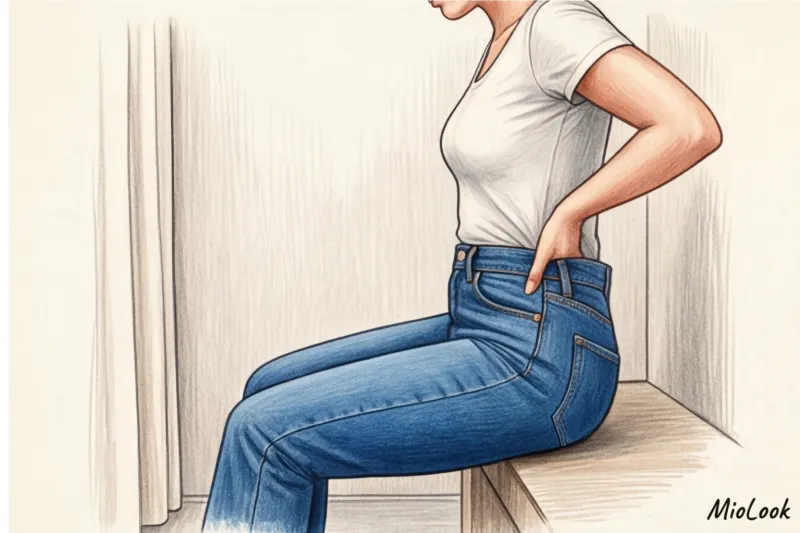
- Dynamic test: Be sure to sit on the ottoman in the fitting room. Check that the tight belt doesn't dig into your stomach painfully and that your lower back isn't exposed.
- Kink test: Pay attention to your groin area. If you see horizontal, stretched folds (called "cat whiskers") there, your jeans are too tight in the hips or the fit is too flat for your anatomy.
- Checking the side seam: Stand up straight. The side seam should run straight down. If it twists forward at the shin, the garment is cut with a grain line (a common problem with fast fashion brands). The seam will always twist; it can't be fixed with an iron.
- Rear view rating: Turn your back to the mirror. The pockets should be positioned at the fullest point of your buttocks, not below them (otherwise, you'll create the effect of a sagging back).
Conclusion: Your Personal Formula for the Perfect Jeans
Finding the perfect pair of jeans for your body type isn't about hunting for a specific style from a must-have list. It's about finding a mathematical match: the right rise + the right yoke + quality, stiff denim.
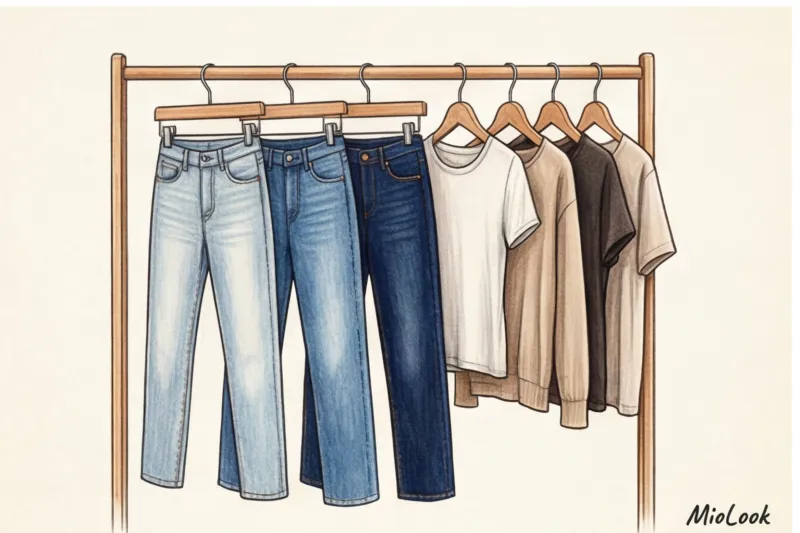
Stop buying up fleeting mass-market trends. It's better to spend two weeks trying on fifty pairs and find that one, unique fit that will last for years. Remember the most important rule of style I teach all my clients: clothes should serve a woman, hiding flaws in the design, not a woman who exhausts herself trying to squeeze into a poorly cut piece of fabric.