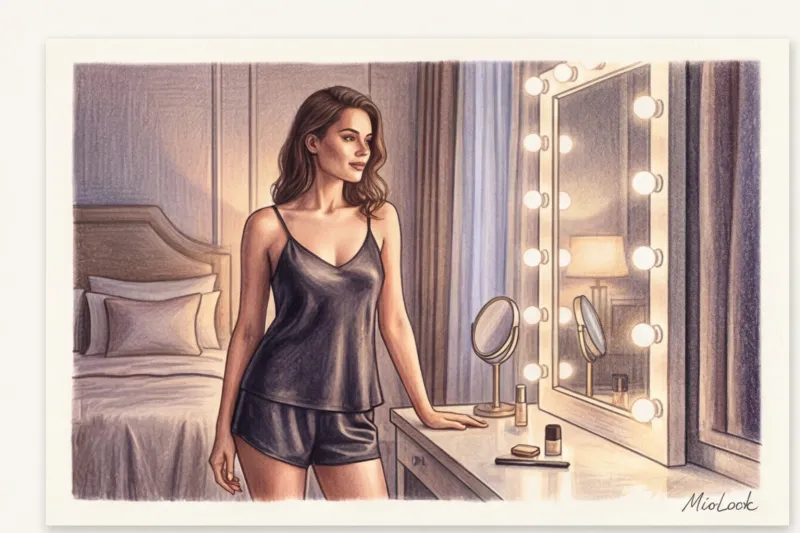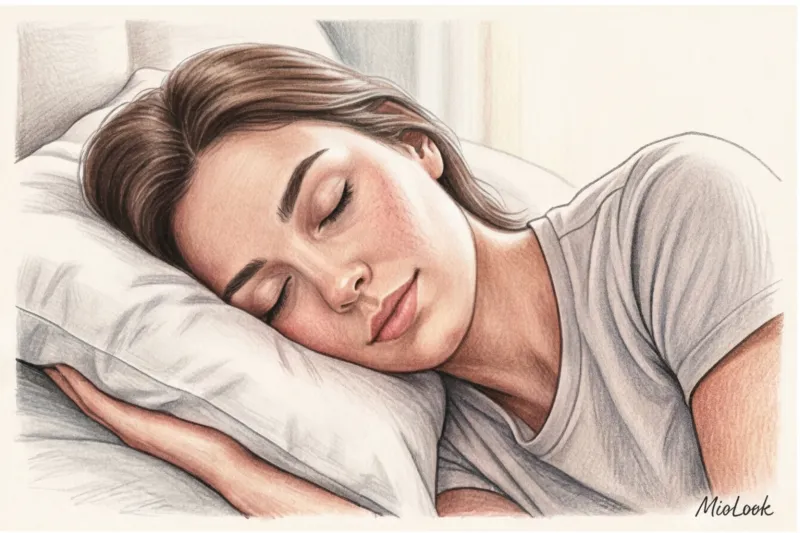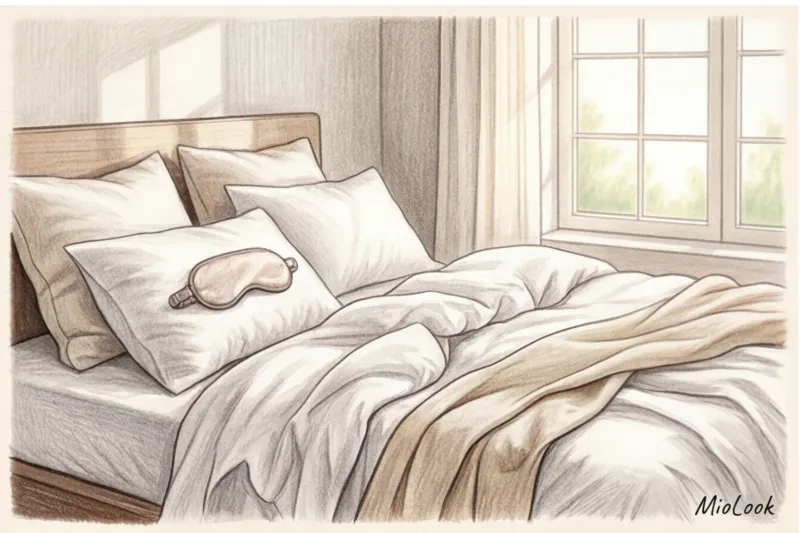
Did you know that your body releases 200 to 250 ml of moisture overnight? That's a whole glass of water. Now ask yourself: where does all this moisture go while you sleep? As a personal stylist, I often hear from clients that choosing sleepwear is a secondary concern. "What does it matter? No one's seeing me!" they say, pulling on an old, stretched-out T-shirt. But there is a difference, and it's colossal.
I'm Isabella Garcia, and after 12 years of working with women's wardrobes, I've realized one indisputable truth: what you sleep in directly impacts how you look in the morning. It's not just about aesthetics, but also about physiology. From a health and sleep perspective, the debate about what's best for women to sleep in continues. We covered this topic in more detail in our A complete guide to choosing pajamas for healthy sleep , and today I want to examine this topic through the prism of style, dermatology, and personal comfort.
Ready to rethink your nighttime habits? Let's figure out what's really happening to your body under the covers.
The Naked Sleeping Myth: Is Sleeping Without Clothes Always Healthy?
"Sleep naked—it prolongs youth!" scream the headlines of glossy magazines. The logic is compelling: the absence of constricting elastic bands improves circulation, and the body cools down faster. According to the National Sleep Foundation (2024), our body temperature needs to drop slightly to produce melatonin and enter the deep sleep phase. Going naked seems like the perfect solution.
But there's a catch that fashion bloggers won't tell you. I often talk to dermatologists when I help clients with sensitive skin choose their basic wardrobe. And here's their insider tip: if you sleep naked, those 200 ml of sweat and dead skin cells are absorbed directly into your sheets and mattress.
"A mattress is a sponge. Without an intermediate layer of clothing, moisture and sebum create the perfect breeding ground for bacteria. The result? Sudden breakouts on the back, shoulders, and chest—so-called bacne."
Of course, there are exceptions. Sleeping naked really works well for those who sweat minimally and have an ideal bedroom temperature (strictly 18-19°C), provided they change their bedding every three days. But for most of us, thin, breathable clothing made of natural fibers acts as a necessary moisture-wicking buffer. It draws sweat away from the skin and allows it to evaporate, protecting your pores.
Your perfect look starts here
Join thousands of users who look flawless every day with MioLook. Our AI stylist will help you sort through not only your everyday wardrobe but also your home wardrobe.
Get access — €0.99 oncePajamas: A cozy spacesuit for deep sleep and beautiful mornings
Changing into pajamas is a powerful psychological anchor. When you shed your street clothes and put on a nice pair of separates, your brain receives a clear signal: "The stress is over, we're safe, we can relax."
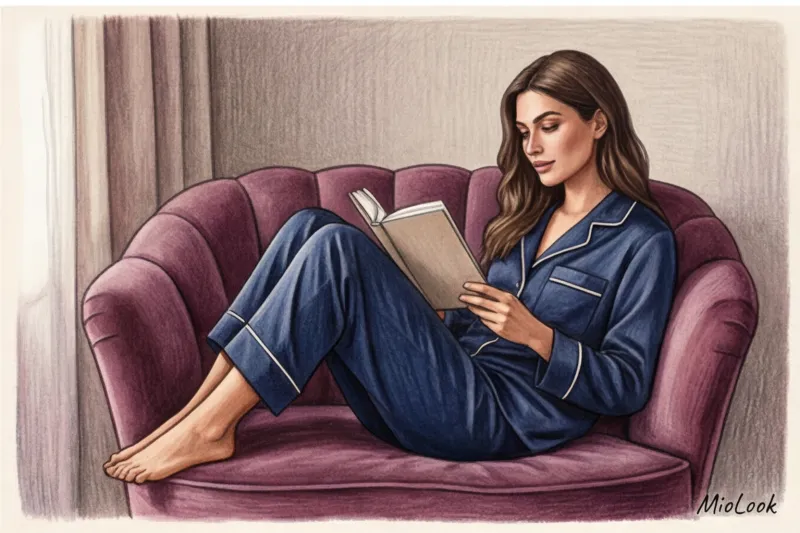
One of my clients, a top manager at an IT company, had been complaining for a long time about morning puffiness and a bad mood. While sorting through her wardrobe, I peered into her sleep drawer. It contained thick knit tank tops with tight armholes and old shorts with stiff elastic. We threw them out that same day and replaced them with three loose-fitting sets: one made of flowing cupro and one made of organic cotton. A month later, she wrote to me: "Isabella, I no longer wake up with a rumpled face, and my husband compliments me on how homey I look every morning." The secret was simple: we removed the pressure on the lymph nodes.
If you prefer pajamas, here are formula for the ideal set , which I have derived over the years of practice:
- Oversize cut: Pajamas should be 1-2 sizes larger than your usual clothes. The air between the fabric and your body is the best insulator.
- Soft fixation: No tight elastic bands. Just a wide, soft waistband or a drawstring that can be tied loosely.
- Friction protection: On hot nights, Bermuda shorts or wide-leg trousers protect the inner thighs from friction and irritation.
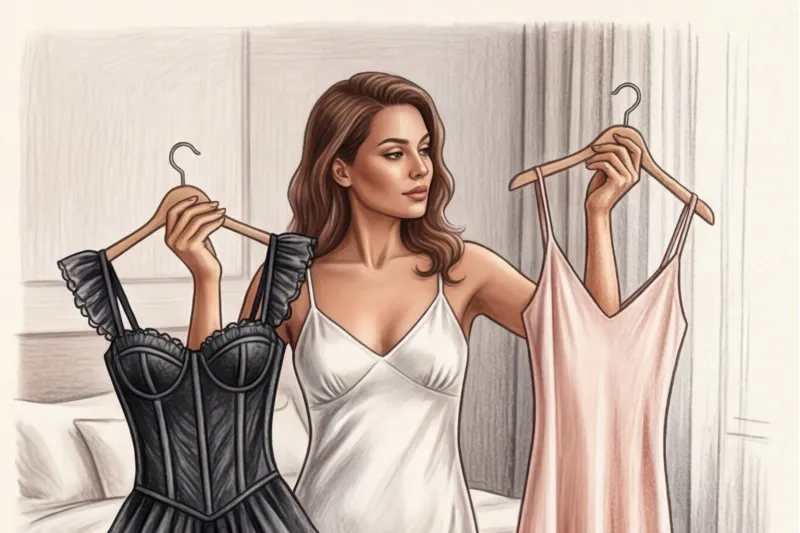
Nightgown: Femininity, Freedom, and Mediterranean Chic
For me, a nightgown is the quintessential Mediterranean aesthetic. There's something incredibly cinematic about waking up in flowing fabric, throwing on a robe, and stepping out onto the balcony with a cup of espresso. But aesthetics shouldn't conflict with physiology.
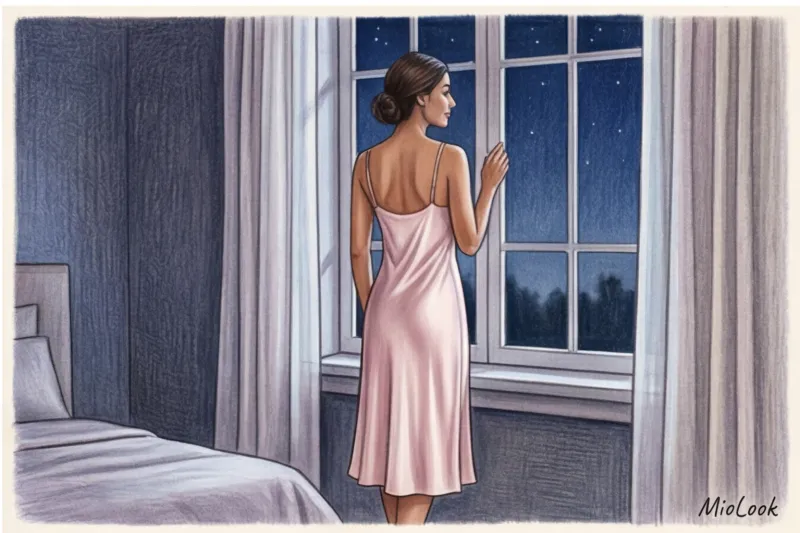
A nightgown is ideal for those who always feel hot at night. The lack of fabric on the legs ensures maximum ventilation. However, women often make the same mistake here: buying tight and too-long styles. Have you ever noticed how a long, straight nightgown wraps around your legs at night, turning into a noose when you toss and turn?
My stylist rule: Never buy straight-cut shirts. A-line or bias-cut shirts are best. Bias-cut shirts allow the fabric to stretch and follow your body's movements without creating tension. The length shouldn't fall below mid-calf, otherwise you risk getting tangled in it while you sleep.
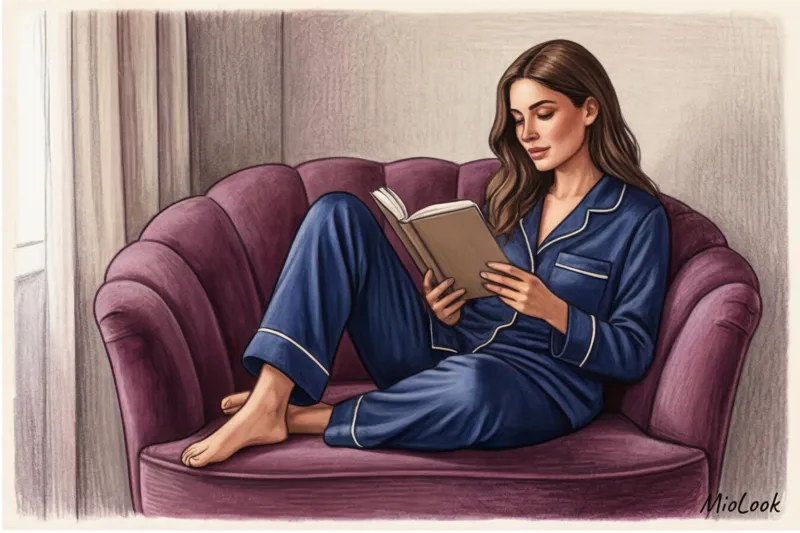
What's best for women to sleep in: choosing based on skin type and season
Let's answer the main question as concretely as possible. There is no one-size-fits-all clothing option. The choice of what is best for a woman's sleep depends on the microclimate of your bedroom (the ideal bed temperature should be around 28–30°C) and the condition of your skin.
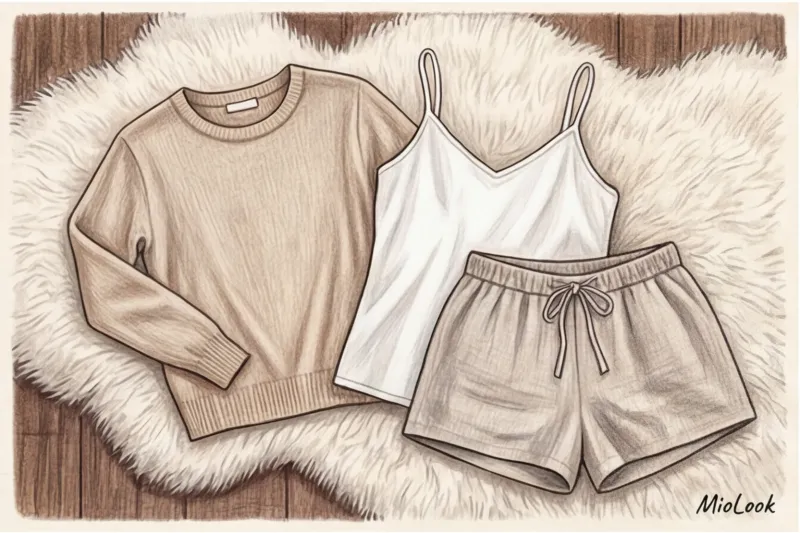
Formula for hot summers (or if you're prone to sweating)
Silk top with thin straps + French linen shorts.
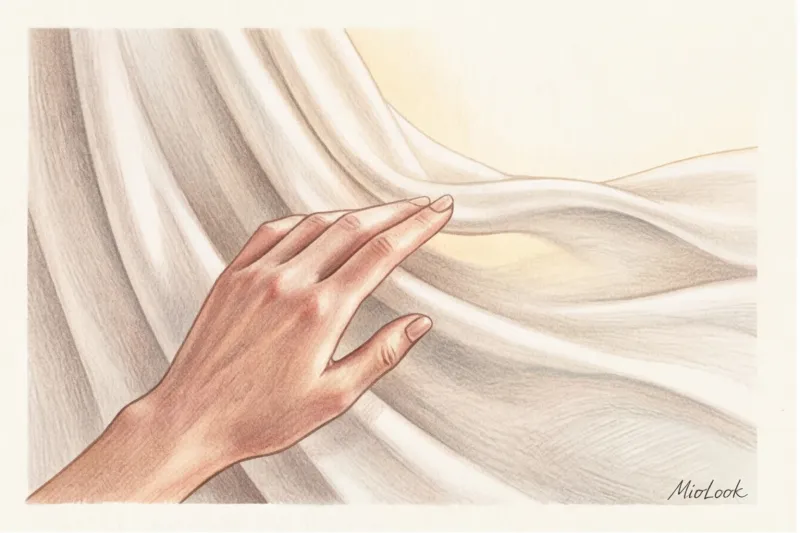
Natural silk has incredible hygroscopic properties, and linen cools the skin by 2-3 degrees compared to cotton. Living in Spain, I personally tested various options in the August heat (when the air conditioning couldn't cope), and it was linen with a density of about 140 g/m² that felt like a gentle breeze.
A formula for cold winters (or if you have cold feet)
A set of thin merino (thermal wear) or flannel + loose joggers.
Fine, premium merino wool (such as that found in brands like Intimissimi or COS, where prices range from €60–€120) doesn't itch. It creates the perfect, dry microclimate: it keeps you warm without making you sweat under a heavy down duvet.
Solution for sensitive skin
If you have atopic dermatitis, acne, or just very sensitive skin, forget about lace and even silk (it can generate static electricity). Cellulose-based fabrics are your choice. I strongly recommend paying attention to environmentally friendly modern materials. For example, tencel (lyocell) — is an absolute must-have. It's smoother than cotton, absorbs 50% more moisture, and has a natural antibacterial effect. It'll be just as comfortable. modal fabric , which remains soft even after 50 washes.
Access to MioLook for €0.99 — one-time payment
A smart AI stylist will create the perfect look not only for the office but also for cozy evenings at home. Keep your capsule collections in one place.
Get access — €0.99 onceThe Main Enemy of Nighttime Beauty: Fabrics You Need to Get Rid of Today
My professional pet peeve is seeing stunningly beautiful 100% polyester negligees in stores for €30 to €50. Buying such a thing is a crime against your own skin.
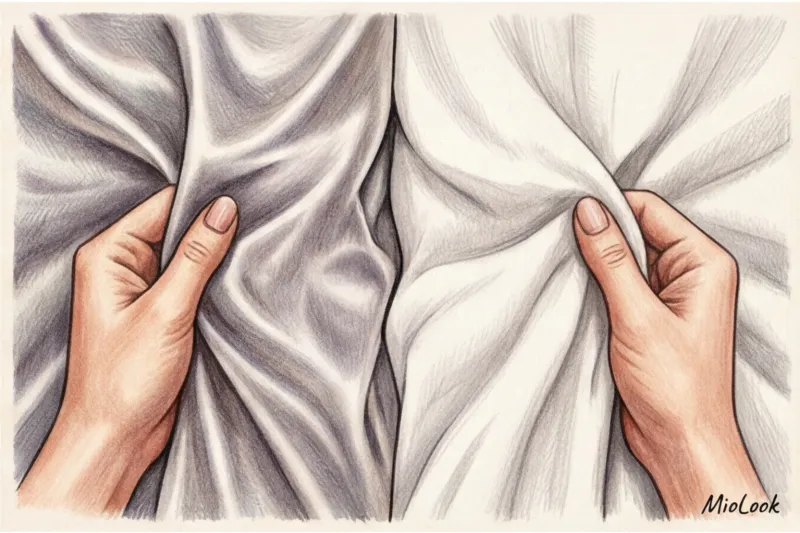
The problem is that synthetic materials retain up to 90% of your body heat. This creates a greenhouse effect. Your body tries to cool down and enter rapid eye movement (REM) sleep by producing sweat, but the moisture has nowhere to go. You start tossing and turning, your sleep becomes shallow, and you wake up feeling groggy.
What else should you immediately get rid of in your sleep wardrobe:
- Rigid lace and appliques. If you wake up with a lace imprint on your thigh or chest, it means your microcirculation and lymph flow suffered all night. Save the complicated, sexy ensembles for short, romantic evenings. Sleep in smooth fabrics.
- Knitwear with a high content of elastane. Tight-fitting clothing (like yoga leggings) constricts blood vessels. This is a surefire way to puffy legs and face in the morning.
- Massive buttons and thick seams. Especially on your back. While sleeping, you put pressure on these areas with your own body weight, which leads to microtrauma to the skin and impaired circulation.
A Stylist's Checklist: How to Assemble a Sleeping Capsule
Just like your main wardrobe, your sleepwear should be organized. I advocate the "sleep capsule" concept. To give your clothes time to "rest" and restore their moisture-wicking properties (especially wool and silk), you need at least 3-4 sets per season.
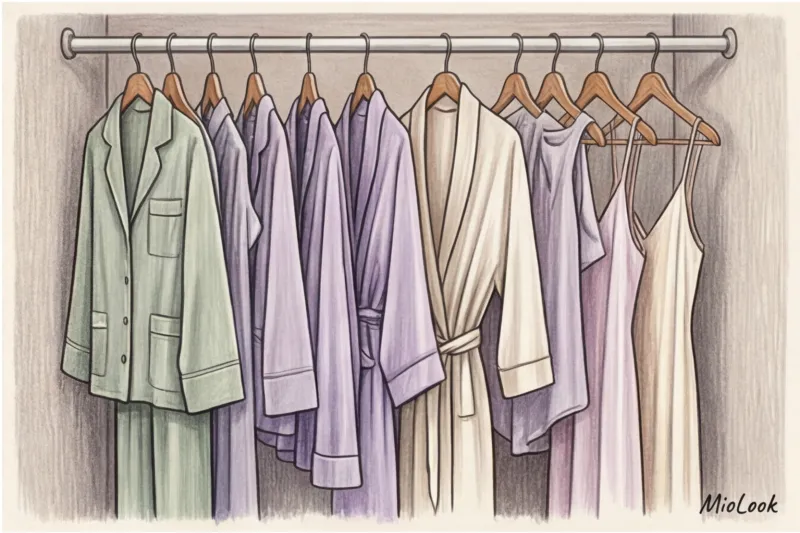
Here are three steps to the perfect nighttime wardrobe that you can implement right in the app. MioLook , creating a separate category “Home”:
- Choose a calming palette. Color psychology works even in the dark (through associations when putting on clothes). Avoid neon, acid, and alarming red shades. The best choices for the nervous system are dusty sage, deep navy, lavender, ecru, and pearl gray.
- Follow the layering rule. The capsule should contain one warm set (trousers + long sleeve), two light ones (shorts + top/shirt) and one universal robe made of thick cotton or waffle fabric (from €40 from brands like Zara Home) to throw on on cool mornings.
- Establish proper care. Silk and bamboo lose their breathability if washed with harsh detergents containing enzymes. Use only liquid detergents for delicate fabrics and wash at 30°C.
Summary: Your Ideal Night Out Scenario
So what's the best way for a woman to sleep? The answer lies in a mindful approach to your body. There's no single law prohibiting sleeping naked or requiring you to wear tight pajamas. There are only rules for the right microclimate: you shouldn't be too hot, your skin should breathe, and your blood vessels shouldn't be pinched.
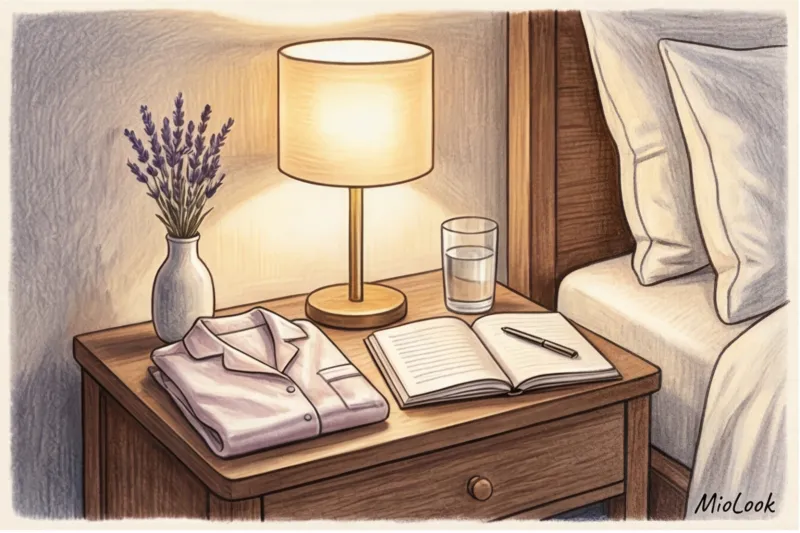
Remember: sleepwear isn't something you wear out when your clothes aren't ready for the street anymore. It's an investment in your nervous system health, smooth, blemish-free skin, and that morning energy boost.
Tonight, as you're getting ready for bed, open your loungewear drawer. Look at it with the eyes of someone who loves themselves. If you're looking at itchy synthetic shirts or your husband's stretched-out T-shirts, feel free to recycle them. You deserve to fall asleep in luxury and comfort, even if no one's watching.