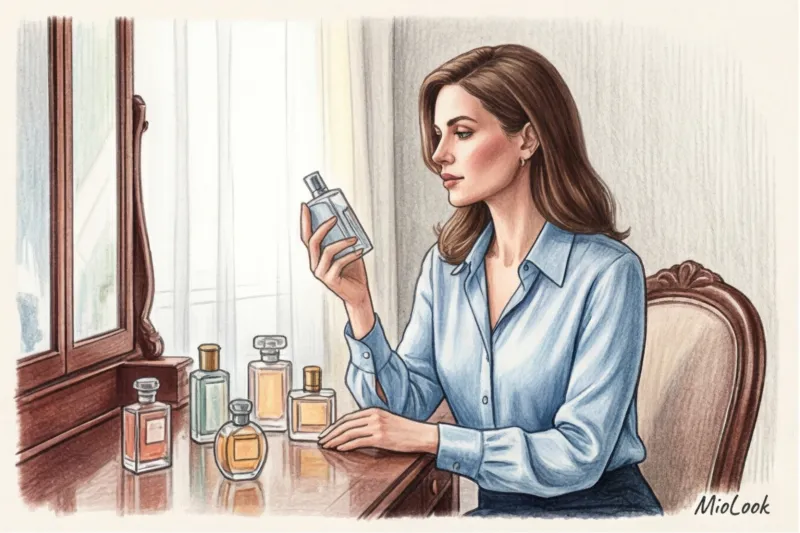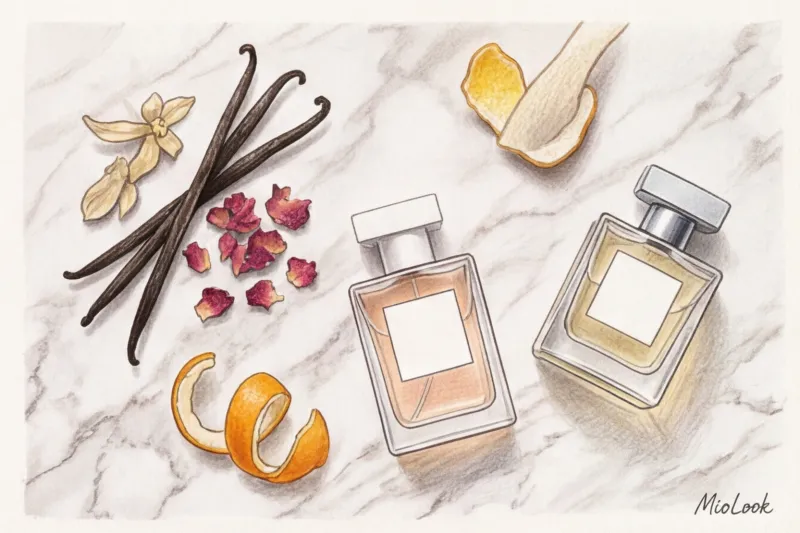
Over my 12 years as a stylist, I've seen the same scene time and again: a woman buys an impeccably tailored business suit, wears it to an important meeting, and... ruins the whole look with a heavy, suffocating trail of evening perfume. She wears it to the office in the morning simply because "it cost €300, so I have to use it." Recently, a client—a young executive at an IT company with a casual dress code—came to me. She dreamed of a prestigious fragrance, but her perfume budget was only €70. Instead of buying a dubious counterfeit or a single, run-of-the-mill bottle of mid-range perfume, we took a different approach. We selected three high-quality, affordable women's fragrances and learned how to layer them. Literally a week later, colleagues started asking if she was wearing Le Labo.
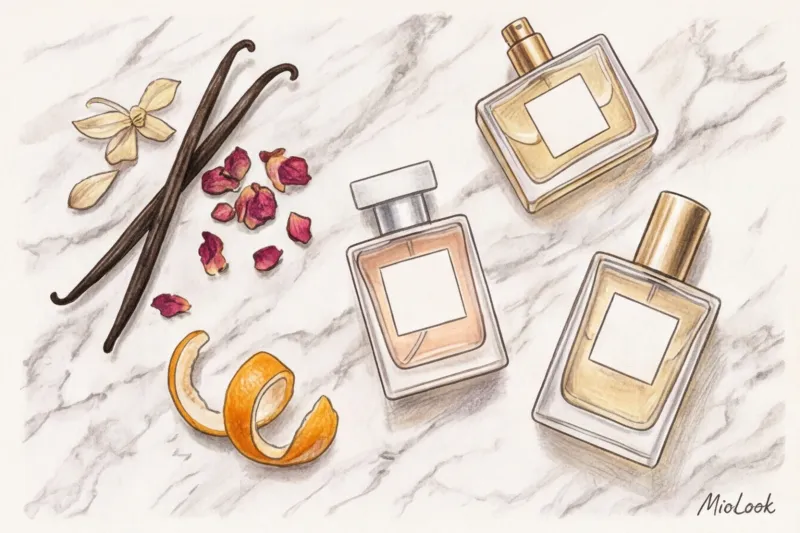
We've written in more detail about why the concept of "one expensive fragrance for life" is hopelessly outdated in our a complete guide to creating a perfume wardrobe Today I'll show you the inside story of the perfume industry: how to create a well-thought-out fragrance capsule that smells like a million bucks, using mass-market and less-obvious brands.
The Anatomy of a Price: Why Budget Women's Perfumes Can Feel Expensive
Let's dispel the biggest myth of perfumery right away: a high price doesn't always guarantee the uniqueness or quality of the ingredients. According to an industry report Grand View Research (2023), the cost of the perfume composition itself (the so-called "juice") in the luxury segment rarely exceeds 10-15% of the bottle's retail price. What do we pay the other 85% for? The massive glass bottle, the brand name, the fee for the Vogue cover ambassador, and the massive advertising campaigns.
Moreover, the industry's renowned "noses" often work on two fronts. The brilliant Francis Kurkdjian, who created the iconic Baccarat Rouge 540 and currently serves as Dior's chief perfumer, once developed fragrances for Elizabeth Arden and the mass-market brand Kenzo. Jo Malone has created a stunning line. Emotions for fast-fashion giant Zara.
"The chemistry of modern fragrances is such that synthetic molecules like ambroxan or Iso E Super cost mere pennies, but they're what create that 'expensive', diffuse sillage. These molecules smell exactly the same whether they're in a €250 bottle or a €30 bottle," notes independent perfume critic Chandler Burr.
Budget brands actively use the principle trickle-down (trend leakage): as soon as a hit appears in a niche, mass-market manufacturers buy similar synthetic bases from the same chemical companies (Givaudan, Firmenich) and release their own versions. These aren't counterfeits—they're clever adaptations.
Your perfect look starts here
Join thousands of users who look flawless every day with the MioLook smart wardrobe.
Get access — €0.99 onceThe Longevity Myth: Why You Shouldn't Judge a Perfume by Its Time on Your Skin
The most common complaint I hear is, "These budget women's fragrances are bad because they wear off within three hours." This is a dangerous misconception. A fragrance's longevity depends solely on the physics and molecular weight of its ingredients, not on the price tag.
Light notes—lemon, bergamot, aquatic, green tea—have a low molecular weight. They physically can't last longer than 2–4 hours on the skin. Even if you buy a citrus cologne from Tom Ford for €300, it will evaporate by lunchtime. Meanwhile, heavier molecules—vanilla, musk, patchouli, amber—will last for days, even in a €15 body spray.
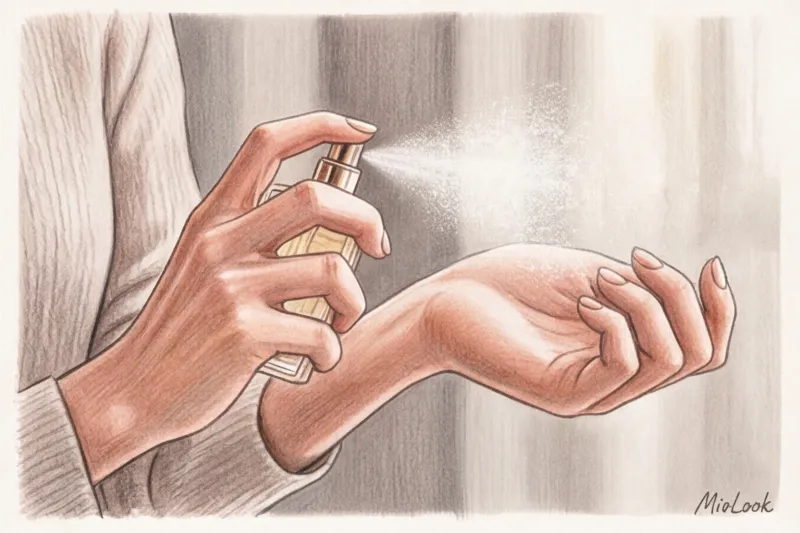
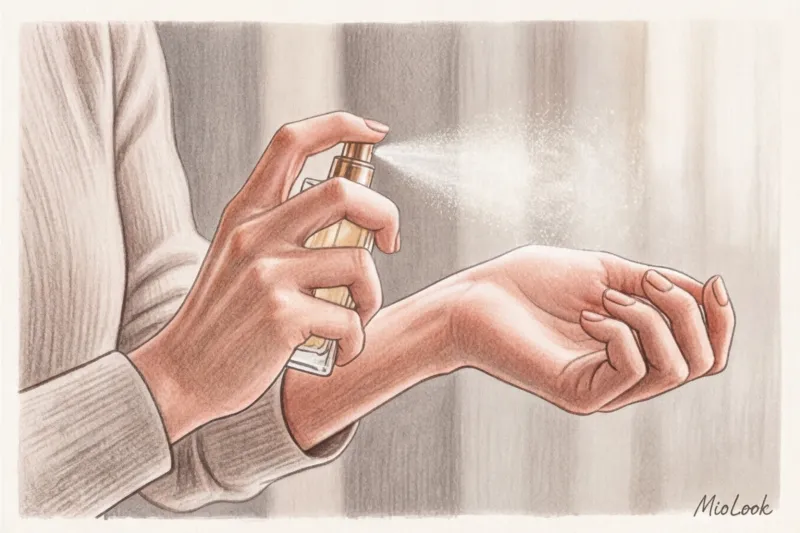
In my experience, the longevity of a fragrance is a huge plus for a fragrance wardrobe. Imagine: at 8 a.m., you apply a light green scent for a morning meeting. By 3 p.m., it fades gracefully, leaving you free to apply a more potent fragrance before an evening date, without showering or creating a cacophony of mixed scents on your skin. This is the freedom to control your impression.
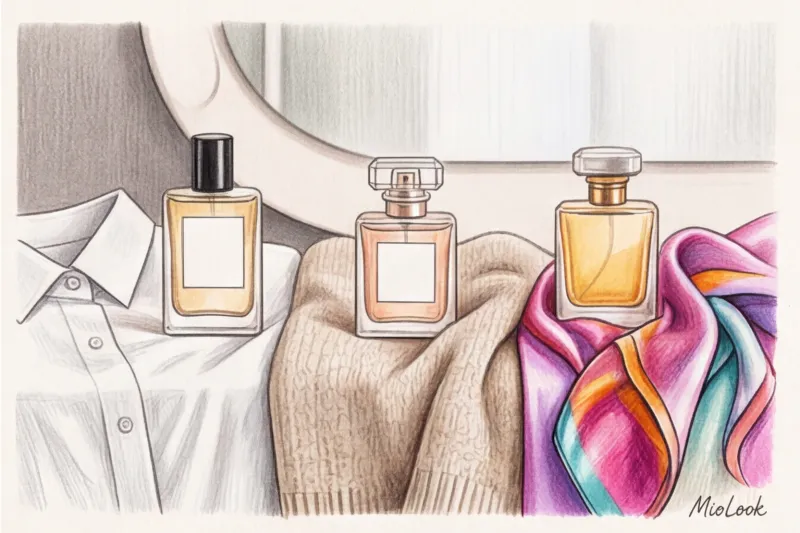
Fragrance Capsule: Building a Budget-Friendly Perfume Wardrobe
Just like we put together a basic outfit, we need to cover three basic life situations. Three well-chosen €25 bottles are a hundred times more effective for your image than one €200 status fragrance worn inappropriately.
"White Shirt": a scent for the office and Zooms
This is your invisible business suit. The scent should convey purity, composure, and respect your colleagues' personal boundaries. Ideal characteristics: white musk, green tea, cotton, light powder, or the scent of expensive soap. It creates an aura of well-groomedness, not a femme fatale sillage. Look for such compositions in the personal care fragrance categories.
Cashmere Sweater: Comfort, Dates, and Evenings
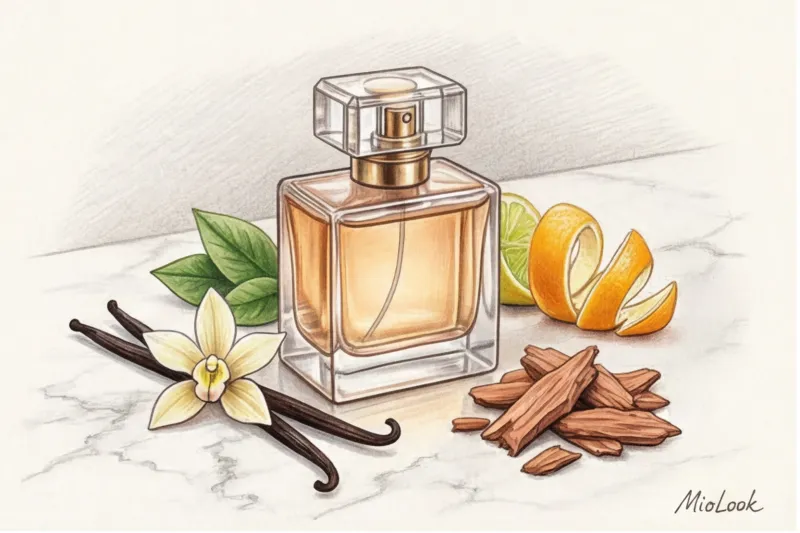
A fragrance for weekends, get-togethers with friends, and dates when you crave a touch of softness. Characteristics: warm spices, amber, sandalwood, and vanilla.
Stylist's advice: When choosing a budget-friendly sweet fragrance, avoid overt notes of praline, caramel, and cotton candy. In inexpensive versions, these often sound flat and childish. Instead, opt for woody bases—we wrote about them in detail in the article about woody perfume for women.
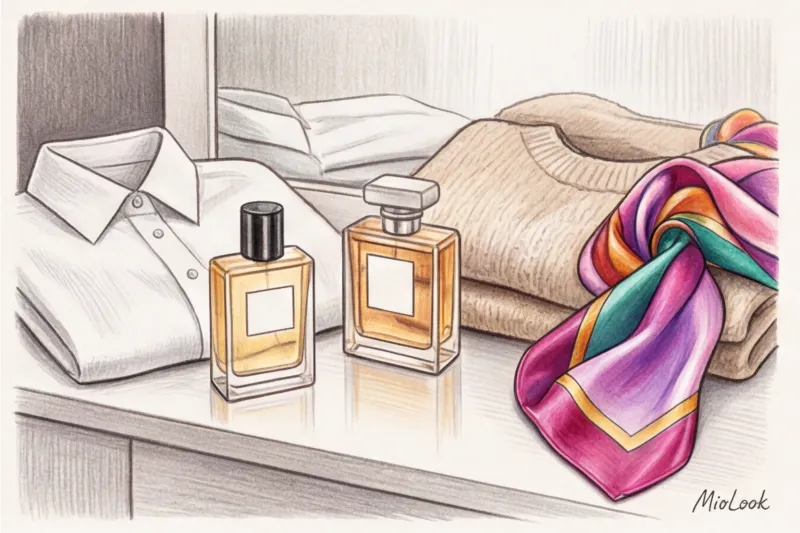
Silk Scarf: An Accent Fragrance for the Weekend
Here you can indulge in boldness: bright fruity notes, spices, unusual florals. The beauty of a budget wardrobe is that you can buy a trendy bottle "for one season" (for example, the currently fashionable cherry or pistachio) for €20, play with it, and forget about it without regretting the money spent.
Access to MioLook for €0.99 — one-time payment
A smart AI stylist will analyze your appearance and select the perfect capsule wardrobe to suit your needs.
Select imagesWhere to Find Pearls: 4 Categories of Affordable Fragrances with a Luxurious Smell
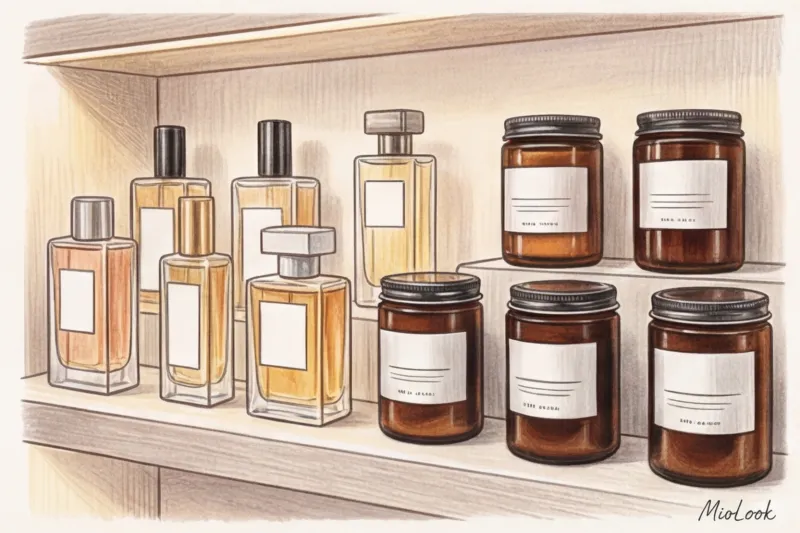
If you're looking for truly high-quality, affordable women's perfume, forget about anonymous stands in underground passages. Focus on four proven categories, priced between €15 and €50.
- French pharmaceutical brands. Brands like Nuxe, Caudalie, and Roger & Gallet produce stunning, minimalist compositions. Their fragrances are often created by renowned perfumers and smell very natural. Price: €30–€45.
- Arabian perfumery. Don't confuse them with cheap oil-based knockoffs. Authentic Middle Eastern brands (Lattafa, Afnan, Armaf) are currently experiencing an incredible boom in the West. They produce fragrances with phenomenal longevity and rich aromas in luxurious bottles. Their average price: €25–50.
- Collaborations between fast-fashion giants. The lines of Zara (especially those created in collaboration with Jo Malone), Massimo Dutti and COS often hide true masterpieces of minimalism for a modest 20–35 €.
- Budget classic. "Old school" mass-market fragrances, whose formulas have been tried and tested for decades. Bottles of Lalique, Elizabeth Arden (the famous Green Tea line), or Cerruti can be found on sale for €20–€30, yet their compositions rival many modern niche launches.
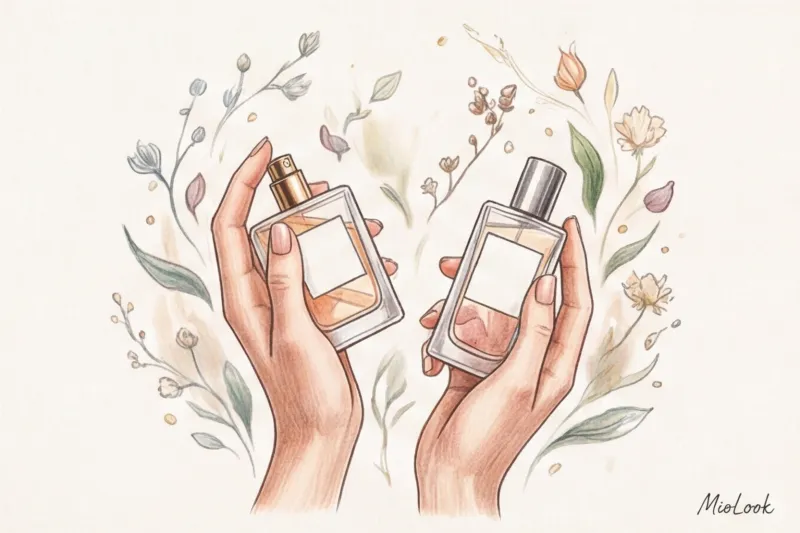
The Art of Layering: How to Create a Unique Niche from Two Budget Bottles
Layering is a favorite technique among perfume stylists. It involves layering one scent on top of another, creating your own unique, third version. It's the perfect solution for budget-conscious perfumers.
One of my clients loved the scent of vanilla, but a cheap vanilla spray from a mass-market store for €12 smelled like baking soda on her. I suggested she buy a budget men's cologne with harsh notes of vetiver and black pepper (around €18). We applied vanilla as a base and sprayed the austere vetiver on top. The result exceeded all expectations: the bitterness of the pepper cut through the pastry-like sweetness, and the vanilla softened the men's cologne. The result was a luxurious, expensive unisex fragrance with a woody-sweet trail for only €30.
The main rule of leering: Mix only "simple" mono-fragrances. The ideal combination is "heavy base (resins, vanilla, wood) + fresh top (citrus, tea, light florals)." When it does NOT work: Never try to mix complex vintage chypres or multi-component floral bouquets—you'll end up with a muddled, heavy mess that will give you a headache.
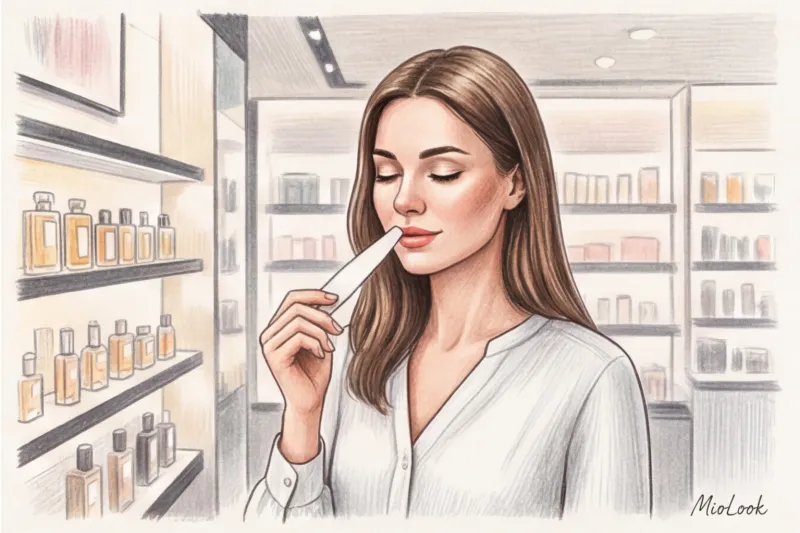
Checklist: How to Properly Test Budget Perfumes Before Buying
While a consultant at an upscale boutique might explain the pyramid scheme to you, at a mass-market store you're left to your own devices. To avoid disappointment, follow these three rules:
- The first 10 minutes rule. Never judge an inexpensive perfume by the first whiff. Budget brands often skimp on the quality of the alcohol base, so the onset can be abrupt. Apply the fragrance to a blotter, let it sit for 15 minutes, and only after the alcohol has evaporated should you evaluate the composition.
- Beware of "cheap musk". This is the biggest blind spot for beginners. Many cheap perfumes start off beautifully with flowers, but after four hours, an unpleasant base (usually due to the use of cheap musk, galaxolide) remains on the skin, smelling like stale laundry or dust. This is why the scent Necessarily You need to wear it on your skin for a full day before purchasing a full bottle.
- Leather vs. fabric. Budget fragrances often contain a high percentage of synthetics, which don't always unfold beautifully on hot skin. If you like a perfume but it smells flat on your skin, try spraying it on your hair or clothes. On fabric, the molecules retain their original scent much longer.
Ready to redesign your style?
Try MioLook's free plan—upload photos of your items, and artificial intelligence will curate dozens of stylish combinations for you.
Get access — €0.99 onceLooking and smelling expensive is a matter of eye and technique, not the size of your bank account. Stop chasing bottles with exorbitant price tags if they're out of your budget. It's better to put together a clever capsule of three harmonious fragrances for €80, cleverly pairing them with your own. well-groomed face and a refined style. Ultimately, your fragrance should tell a story about you, not about how much money you spent at the perfume boutique.