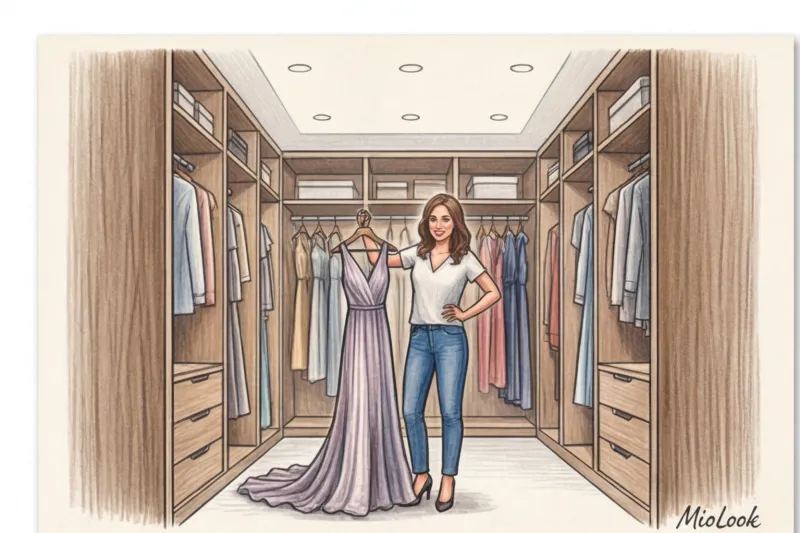
Do you know where most disastrous interior storage solutions begin? With a pretty picture. As a practicing stylist, I regularly see the consequences of bedroom closets being designed solely by a furniture designer, not by someone who needs to put together a stylish look in fifteen minutes at 7:30 a.m. the next day.
We have already discussed the fundamental stages of design in more detail in our The complete guide to the perfect walk-in closet layout In this article, we'll focus specifically on the bedroom: how spatial geometry affects the durability of expensive fabrics, why standard closets consistently ruin your jackets, and how to achieve "visual silence" in the main relaxation area.
The Myth of the Perfect Glass-Enclosed Bedroom Wardrobe: Why Pinterest Lies
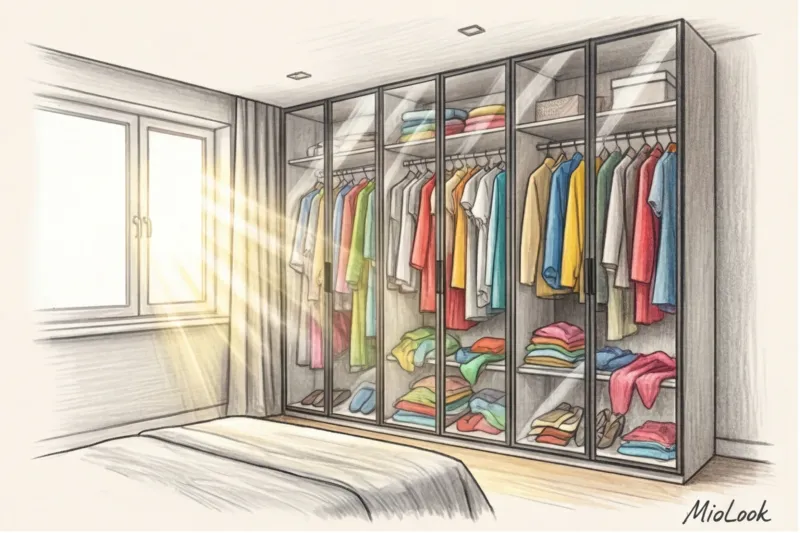
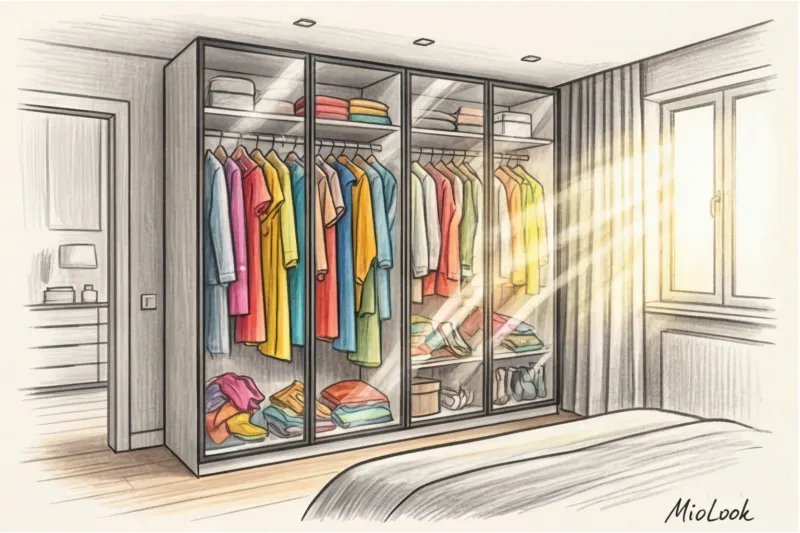
Transparent tinted glass fronts with integrated lighting look phenomenally luxurious. But there's a catch: they only look good in an empty showroom or if you're storing exactly five perfectly steamed items of clothing in the same color scheme on the rod. In real life, this is one of the worst solutions for a bedroom.
First, there's the overwhelming visual noise. According to research by WGSN (2024), visual clutter and distractions in the sleep area directly correlate with anxiety levels and decreased quality of rest. When, instead of a relaxing interior, you fall asleep to a motley mix of T-shirts, jeans, and belts, your bedroom turns into a warehouse.
Secondly, ultraviolet radiation is a silent pigment killer. I had a telling case: a client in an executive position spent around €10,000 on a luxurious glass dressing room opposite her bedroom window. The result? In just one bright summer, the shoulders of her Max Mara cashmere coats and navy blazers were hopelessly faded. Regular furniture glass (unless it's specialized, expensive, museum-quality UV filters) offers absolutely no protection from the sun's rays.
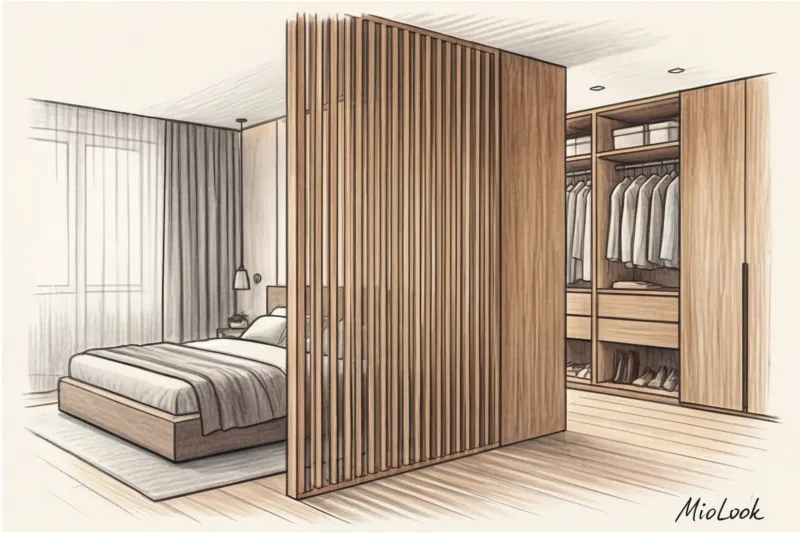
A bedroom wardrobe should adhere to the rule of "visual silence": close the doors or slide the partition closed, and you find yourself in a zone of absolute peace, where nothing reminds you of unironed shirts or wrinkled trousers.
Access to MioLook for €0.99 — one-time payment
A smart AI stylist will select the perfect look.
Get access — €0.99 onceWardrobe Analytics: Where Planning Really Begins
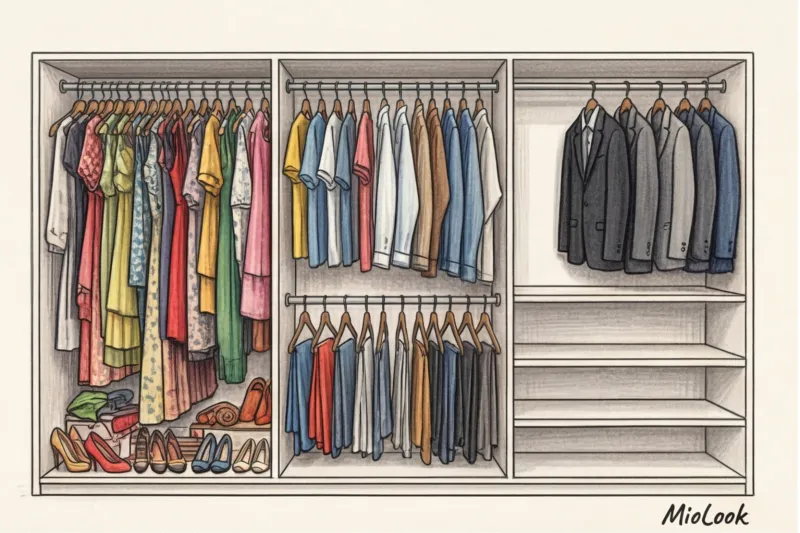
The biggest and most expensive mistake my clients make is calling a surveyor before a full inventory is completed. The problem is a conflict of interests. A cabinetmaker thinks in terms of the symmetry of MDF sheets; it's important to them to draw beautiful, even squares for the sections. But you need real space for 15 pairs of tall shoes, a collection of oversized sweaters, and long silk skirts.
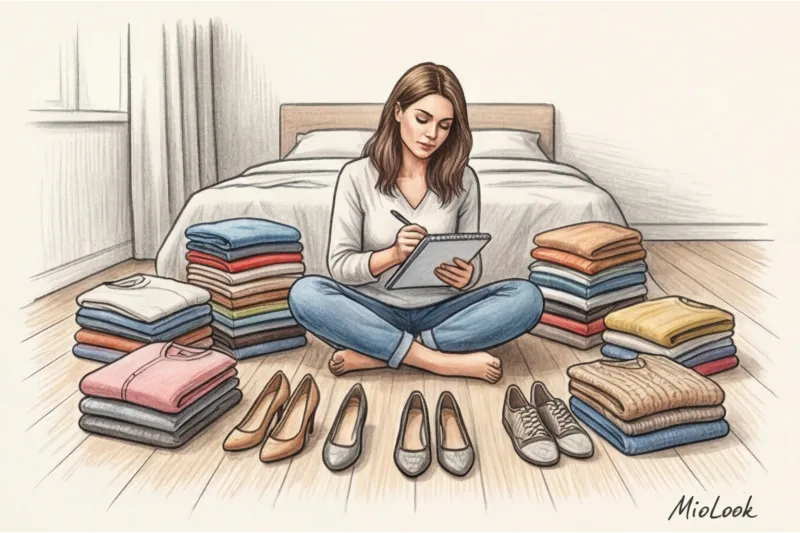
Before sketching, do a thorough "digitalization." Write down the exact number of shoes, long dresses, and jackets. For this, the virtual closet function is incredibly convenient. MioLook — you will be able to see the actual composition of your base in units and categories, rather than trying to estimate volumes by eye.
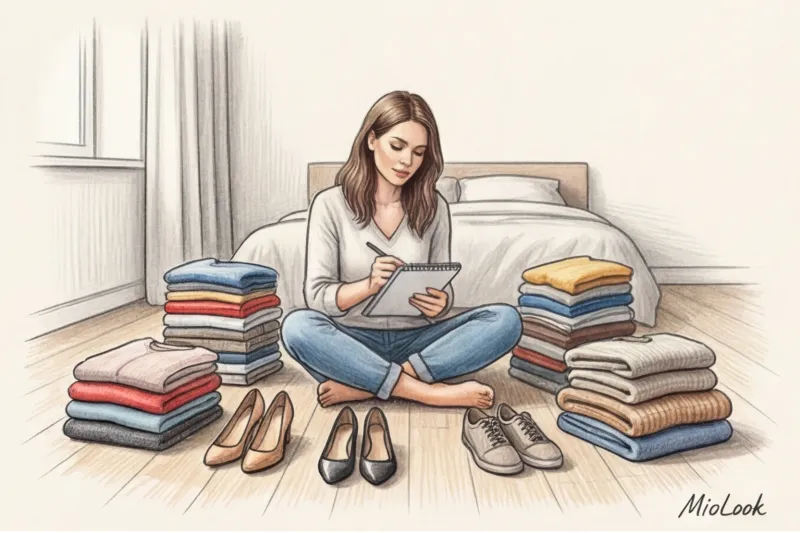
One time, my client's cabinet makers designed perfect geometric shelves 25 cm high. It looked perfect on the drawing. But our pre-order digitization revealed that she absolutely needed at least 40 cm high sections to store her collection of fedoras and wide-brimmed straw hats. Had we not calculated this in advance, the hats would have been sitting on the cabinet, collecting dust.
Dimensions of things that furniture makers forget about
Write down these numbers before going to a furniture store; they will save your items from deformation:
- Length of floor-length dresses and trench coats: A minimum height of 150–160 cm from the rod to the bottom shelf is required. Otherwise, hems will lie untidily and wrinkle, requiring daily steaming.
- High boots and over-the-knee boots: The lower sections should be at least 50 cm high so that the shaft stands straight (creases are fatal for soft leather).
- Shoulder width: Standard women's hangers are 40–42 cm, but men's suits and oversized women's jackets (for example, from COS or Massimo Dutti) require hangers of 45–47 cm.
Bedroom Walk-In Closet: 4 Smart Zoning Techniques
How to incorporate a large storage system into a room without disrupting its proportions? Here are four proven architectural scenarios with their pros and cons:
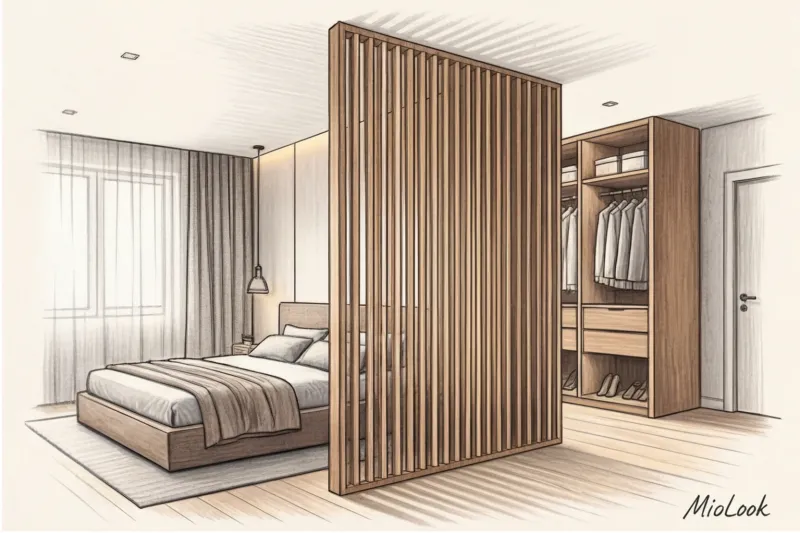
- Zoning with partitions (slats and frosted glass). Vertical wooden slats (baffles) are a great compromise. They allow natural light and air to reach items while visually blurring the clutter of clothing. Installing such a partition will cost an average of €400–€900, depending on the wood species.
- U-shaped and L-shaped layouts in niches. If the bedroom layout allows, closets are recessed into niches and painted to match the walls, making them "invisible." A critical rule of ergonomics: the minimum aisle width between rows is 80 cm. Anything less, and you won't be able to comfortably reach the lower drawers. The ideal standard is 100 cm.
- Island zoning. This design places the headboard not against the wall, but closer to the center of the room, with its back serving as a physical boundary for the dressing area. This is an incredibly effective solution for elongated rectangular bedrooms.
- Walk-through wardrobe (en-suite). A transition area between the bedroom and bathroom. Logistically, it's perfect: wake up, shower, get out, and get dressed right away. But I must warn you of a limitation: this option will NOT work if you have poor ventilation. Humidity from the bathroom slowly but surely kills natural silk and promotes mold growth on leather shoes.
Your perfect look starts here
Join thousands of users who look flawless every day with MioLook.
Get access — €0.99 onceMorning Routine: Planning Your Look According to the "Stylist's Triangle"
According to McKinsey analytics, women can spend up to 15-20 minutes daily simply searching for the right item if their closet logistics are disrupted. I design my closets strictly according to the order in which items are worn. This is the "stylist's triangle" rule.
The algorithm should mimic your physical actions: first, underwear (drawers at arm's length, approximately 70-80 cm from the floor) → then base layers like tops and t-shirts → then top layers (shirts, jackets on a rod at eye level) → finally, accessories. If you want to learn more about building a functional base, check out our A guide to creating a casual capsule wardrobe.
My professional secret, which surprises many clients, is to arrange items from the same capsule vertically (in a single column from top to bottom), rather than stretching them horizontally across the entire length of a huge wardrobe rod. The human brain scans information in blocks. A vertical block of "jacket + blouse + trousers" is processed as a complete outfit in a second.
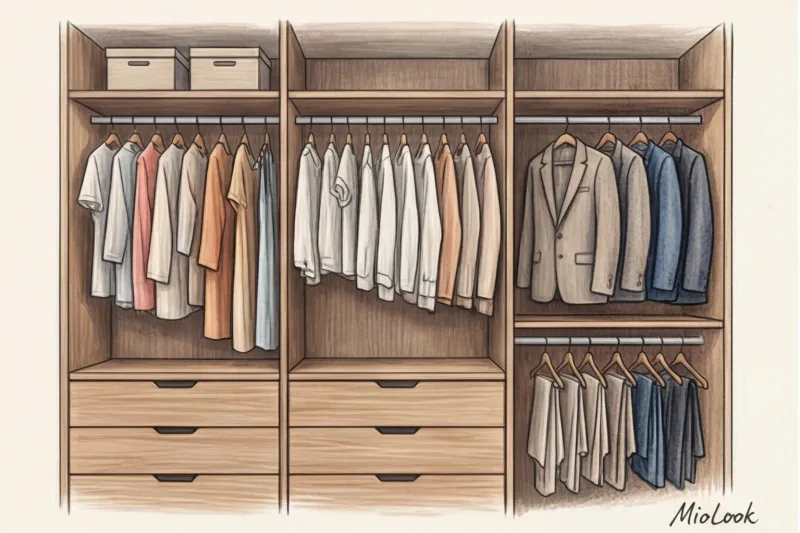
And the most important thing that's forgotten in 90% of projects is the "drop zone." This is a special hook, a floor-standing valet, or a small section for items you've worn only once. They're not clean enough to hang next to your washed white shirts, but not yet dirty enough to throw in the washing machine. If you don't include this space in the design, the back of your bedroom chair will quickly take over.
Light and Air: The Hidden Killers of Your Clothes
As a certified colorist, I constantly see the same pain: a woman applies makeup and chooses clothes in the cozy, warm light of her bedroom (around 2700K), then steps outside into natural light. Suddenly, her foundation turns out to be downright orange, and her "black" pants actually have a dark blue undertone, clashing starkly with her black jacket.
The lighting inside the dressing area should be neutral white (4000K). But that's not all. Ask your electricians for high-color-rendering-index (CRI) strips. According to the Pantone Color Institute, a light source must have a CRI greater than 90 to accurately assess color. Only with these values will burgundy not appear brown, and dark green will not appear gray.
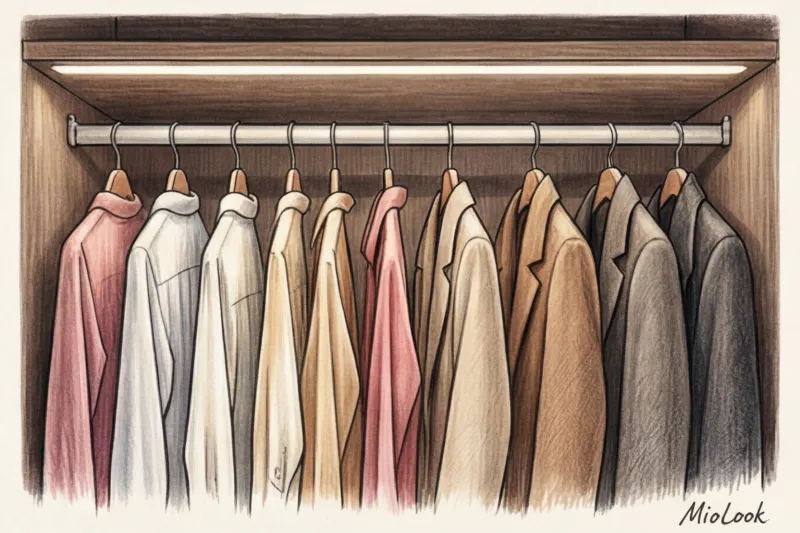
The second invisible enemy is stagnant air. A closed walk-in closet in the bedroom, separated by a solid door and lacking its own forced-air ventilation, will develop a characteristic musty odor within a few months. Furthermore, clothes moths love dark, unventilated spaces with piles of natural wool. Air exchange here is just as important as in the kitchen.
Checklist: 5 Fatal Mistakes When Designing a Bedroom Wardrobe
Take a screenshot of this cheat sheet and check the drawings against it before signing the contract at the dealership:
- The depth of the sections is less than 60 cm. A typical attempt to save space. With a depth of 50-55 cm, the sleeves of your shirts and jackets will get caught in sliding doors or rub against hinged doors every day. The ideal depth for outerwear is 65 cm.
- Lack of sockets inside the storage system. A handheld steamer, a lint-removing machine charger, and a smart lighting base all require power outlets. Place at least two power outlets 100–120 cm above the floor.
- Too high booms without pantograph. If the bar is installed higher than 210 cm, you'll need a furniture lift. Reaching on tiptoe for a silk blouse, risking breaking the hanger, is a dubious pleasure.
- Storing knitwear on hangers. Heavy cashmere sweaters and cardigans inevitably stretch out at the shoulders under their own weight, permanently losing their shape. They require shelves or pull-out mesh baskets. We covered this in more detail in the article. on the proper care and storage of knitwear.
- Lack of closed drawers for underwear. Storing linens on open shelves in fabric organizers is a magnet for dust, which is always abundant in bedrooms due to lint from bedding and blankets. Linens require only closed, pull-out drawers.
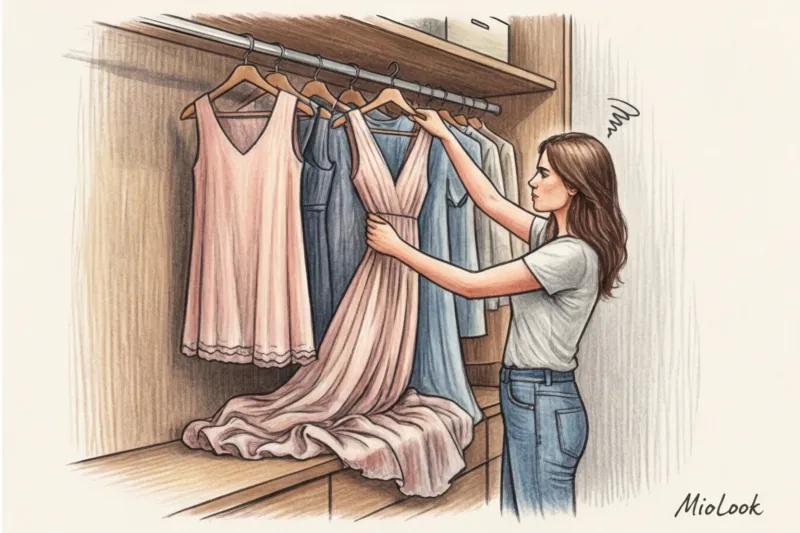
When designing a bedroom closet, keep this in mind: you're not building a backdrop for a beautiful photo shoot, but a practical machine for living. It should work flawlessly on a foggy morning when you're in a hurry and can't find a basic turtleneck. Invest time in digitizing your items, respecting the physical dimensions of your clothes, and don't skimp on quality lighting—then your closet will become a source of confidence, not daily stress.