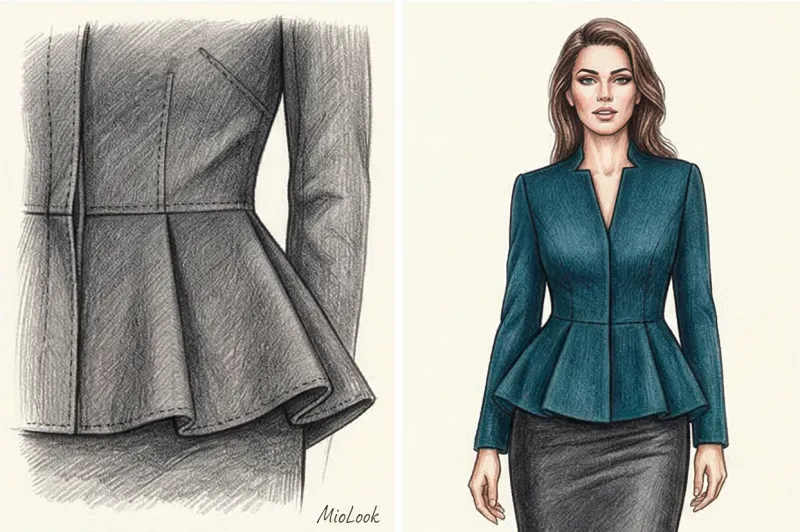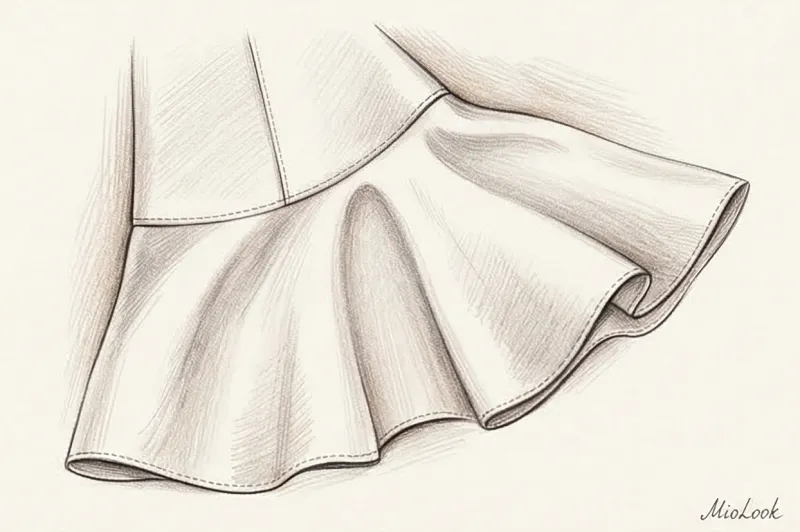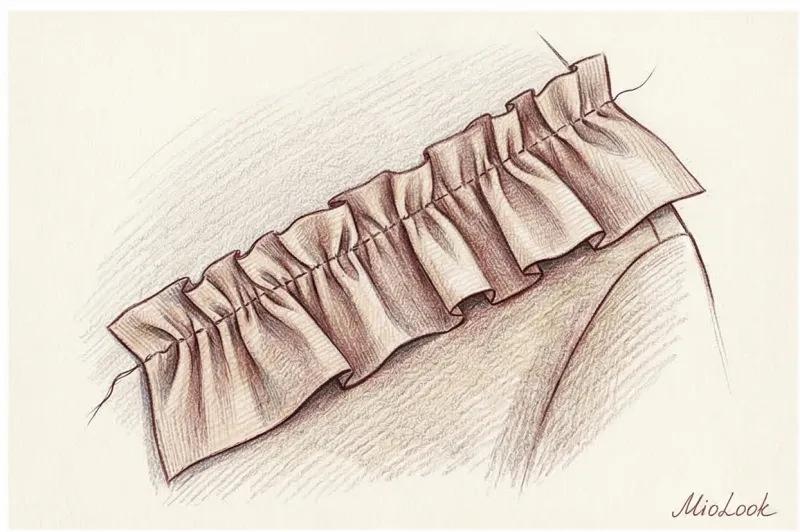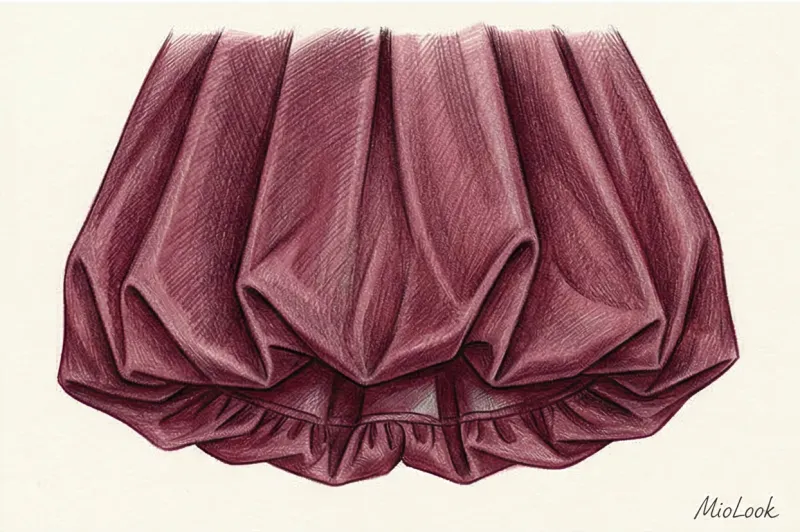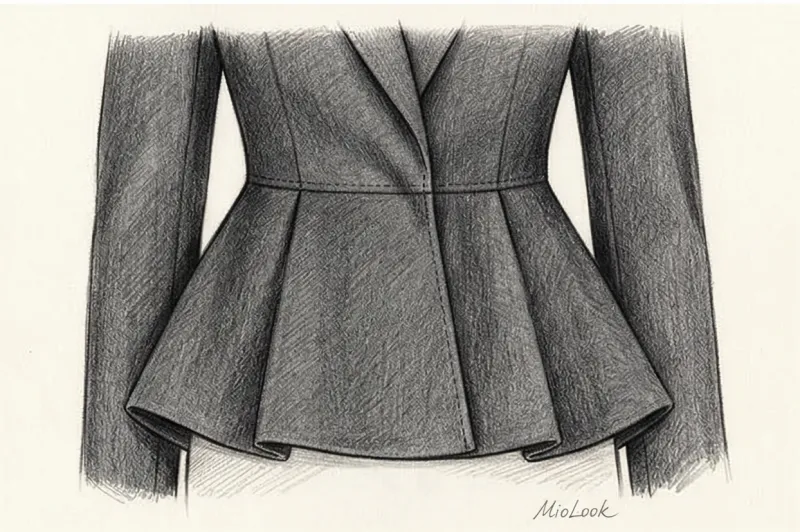
A peplum is a short, gathered or pleated strip of fabric attached at the waistline of a garment. This flared detail varies in length from a subtle ruffle to a structured flounce crafted from dense wool, cotton, or leather. Designers use it to create an hourglass silhouette.
What Is a Peplum in Fashion?
The term frequently appears when discussing tailored garments that emphasize the waist. At its core, this design element serves a highly specific architectural function. By cinching the narrowest part of the torso and flaring out over the upper hips, it manipulates visual proportions. This technique corrects the figure, adding curves where desired while masking the actual line of the hips. Modern iterations appear on blouses, blazers, skirts, and even dresses, offering a versatile tool for building a structured wardrobe.
The History Behind the Peplum Silhouette
Historically, this distinctive flared element originates from the traditional national costume of the Basques, a people indigenous to the region spanning the borders of Spain and France. The original garments featured a similar overskirt detail that provided both practical ease of movement and a distinct aesthetic.
The transition from regional dress to high fashion occurred thanks to Cristóbal Balenciaga. Drawing inspiration from his Spanish roots, Balenciaga integrated this structural detail into haute couture. However, the silhouette achieved massive global popularity in the late 1940s through Christian Dior. Dior made it the cornerstone of his iconic New Look collection. The legendary Bar Jacket, characterized by its sloped shoulders, cinched waist, and dramatic padded peplum, redefined post-war elegance and cemented the design as a timeless classic.
Main Types of Peplum Designs
Contemporary clothing design offers several cutting options for this element, each serving a different aesthetic and functional purpose.
- Classic Peplum: This version features a soft, gathered frill that creates smooth, fluid volume. It lends a romantic, feminine touch to blouses and lightweight dresses. The classic cut moves naturally with the body and is typically crafted from silk, chiffon, or fine cotton.
- Architectural Peplum: Also known as a structured peplum, this type relies on dense, shape-retaining fabrics such as heavy wool, tweed, or gabardine. It often incorporates crisp pleats, sharp angles, or a geometric cut. You will most frequently see this variation on tailored business jackets and formal coats.
- Asymmetrical Peplum: An asymmetrical cut features a hemline that is longer at the back or dips sharply on one side. This uneven detail visually elongates the silhouette and injects a sense of modern dynamism into the outfit. It works exceptionally well for evening wear and avant-garde tops.
- Removable Peplum Belt: This is a stand-alone accessory rather than an integrated garment part. Crafted from rigid materials like thick leather or heavy canvas, it functions as a wide belt with an attached frill. You can wear it over basic clothing, such as oversized shirts or simple sheath dresses, to instantly transform the silhouette.
Key Characteristics of Peplum Styles
Understanding the physical properties of different designs helps in selecting the right garment for specific occasions and seasons.
| Type | Typical Material | Fit and Structure | Best Season |
|---|---|---|---|
| Classic | Silk, chiffon, fine cotton | Soft, fluid, gathered volume | Spring, Summer |
| Architectural | Heavy wool, gabardine, tweed | Rigid, pleated, geometric | Autumn, Winter |
| Asymmetrical | Crepe, satin, mixed blends | Uneven hem, dynamic drape | All seasons |
| Removable Belt | Leather, heavy canvas | Structured, adjustable fit | All seasons |
How to Style Peplum Tops and Jackets
The fundamental rule for styling these garments is maintaining a strict balance of volumes. Because the top half of your silhouette flares out dramatically at the waist, the bottom half must remain simple, streamlined, and form-fitting.
For a professional or formal environment, jackets and tops with this flared detail pair perfectly with a classic pencil skirt. This combination mirrors the traditional mid-century silhouette, creating a polished look suitable for business meetings or evening events. The fitted skirt anchors the volume of the top, ensuring the body's natural lines are not lost.
For casual, everyday outfits, pair a flared top with straight-leg trousers, tapered pants, or skinny jeans. The contrast between the voluminous waist and the narrow leg creates a modern, flattering shape. An asymmetrical cotton top over dark, slim-fit denim offers a comfortable yet highly put-together weekend look.
When selecting footwear, classic pumps remain the optimal choice. The added height enhances the elongating effect of the tailored waist. If you prefer flat shoes, elegant flats with a pointed toe are highly appropriate, as the pointed shape helps visually extend the line of the legs.
What to Avoid When Wearing a Peplum
Certain combinations disrupt the carefully constructed proportions of this silhouette. It is highly recommended to avoid wearing flared tops with wide palazzo pants, long relaxed maxi skirts, or full A-line skirts.
Pairing volume on top with volume on the bottom adds unnecessary visual weight to the lower half of the figure. This mistake throws off the body's natural proportions, making the wearer appear shorter and wider than they actually are. Always let the waist detail be the focal point of the outfit by keeping the accompanying pieces understated and close to the body.