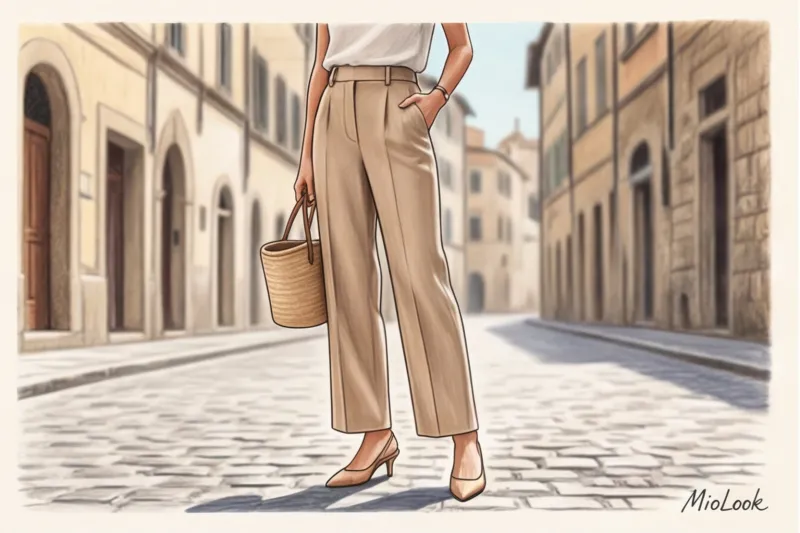
Let's be honest: there's nothing more pathetic than a girl in a stunning summer dress who limps because her feet are sore and raw. On a hot July day, fashionable but plastic sandals become instruments of torture. Why do we keep making this mistake? Because when buying, we often evaluate the image, not the design. Every season fashionable shoes spring summer dictates new rules, but over 12 years of working as a stylist, I have learned to look at shoes through the prism of biomechanics and cost-per-wear.
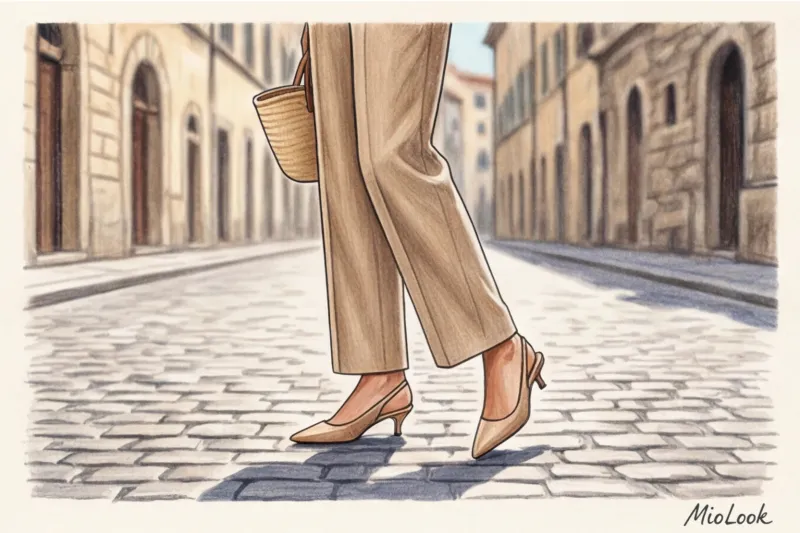
We talked about the global design changes in more detail in our The complete guide to shoe trends , and today we'll talk about how to choose a summer pair that will not only garner compliments but also keep your feet healthy.
Macrotrends vs. Microtrends: How to Choose Fashionable Shoes for Spring and Summer
The difference between an impulse purchase and a smart wardrobe investment lies in understanding trend cycles. Microtrends include clear plastic toes, oversized Bratz-style platforms, or neon laces. They last a maximum of one season.
I was once sorting through a client's wardrobe and found 14 pairs of brightly colored, mass-market sandals with an average price tag of €40. Almost all of them had been worn just once. This is a classic mistake. If you calculate the cost-per-wear, it turns out that high-quality leather sandals for €200–250 that you wear for three summers in a row cost a fraction of the price.
According to McKinsey & Company's "State of Fashion 2024" report, consumers globally are tired of fast fashion and are embracing the concept of "quiet luxury"—things that last. A rule I teach my clients is: before you buy, ask yourself: "Will I be able to wear this in three years?" If the answer is no, leave the pair on the shelf. Cheap shoes can ruin even the most expensive linen suit, because they provide the visual weight and geometry to the entire look.
Architecture of Comfort: Why Materials Are More Important Than Style
Herein lies the biggest and most dangerous misconception of our time. A common myth holds that it's better to wear eco-leather in summer—it's supposedly lighter and more environmentally friendly. In fact, 85% of so-called "vegan leather" on the mass market is simply polyurethane (PU) or polyvinyl chloride (PVC).
What happens to your feet in polyurethane sandals at 25°C? A greenhouse effect occurs. The plastic blocks your feet's thermoregulation, preventing sweat from evaporating, increasing friction, and hello, deep blisters. Counterintuitively, you'll stay much cooler in high-quality suede in the summer than in thin synthetics.
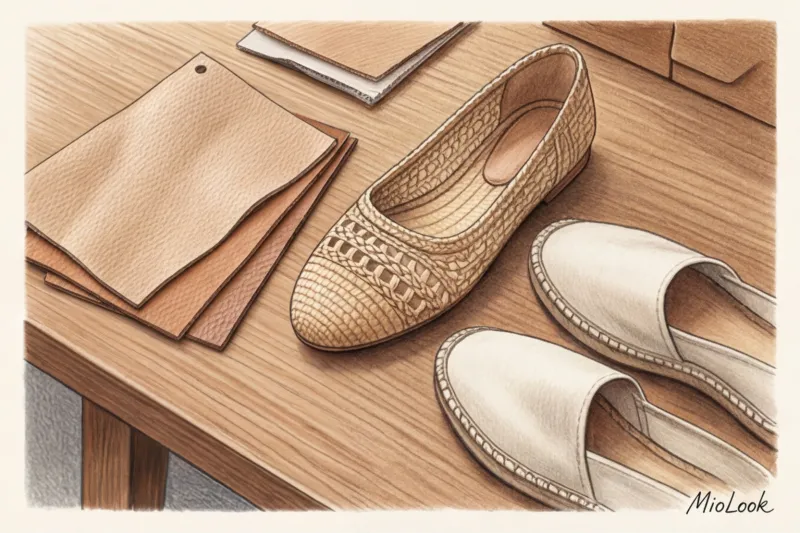
"Foot health during the summer directly depends on the ability of materials to wick away moisture. We strongly recommend against wearing shoes made of non-breathable synthetic materials for more than two hours at a time," warn experts from the American Podiatric Medical Association (APMA).
Look for shoes certified by the Leather Working Group (LWG), a standard for sustainable vegetable-tanned leather. How can you tactilely test a shoe's breathability right in the store? Lightly press your fingernail on the insole. Genuine leather will leave a micro-indentation that will quickly smooth out, while polyurethane springs back like rubber. And remember: even if the upper is leather and the lining is synthetic, the shoe still won't breathe.
Your perfect look starts here
Join thousands of users who look flawless every day with MioLook. Our smart AI stylist will find the perfect combinations for your new shoes.
Get access — €0.99 onceMules and clogs: a triumphant return to wardrobes
Mules (backless shoes) have come a long way from the house shoes of the French aristocracy to a major street style hit. Today, they've moved from the status of a microtrend to an absolute summer staple.
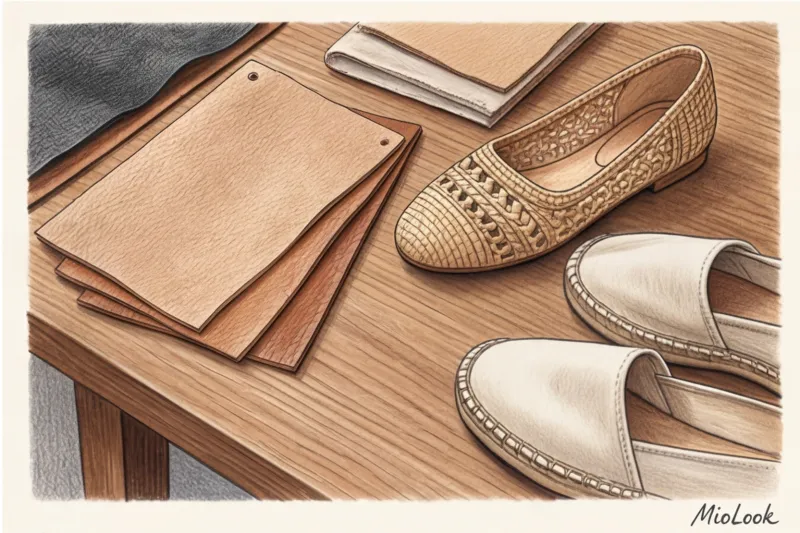
But mules have one critical problem: stability. A few years ago, while visiting a small tannery in Milan, I watched a master last maker at work. He explained that proper mules are designed with an offset center of gravity. If the instep angle is incorrect, you'll slap your heel like you're wearing flip-flops, and your toes will reflexively curl in an attempt to hold on to the shoe. This is a recipe for calf cramps.
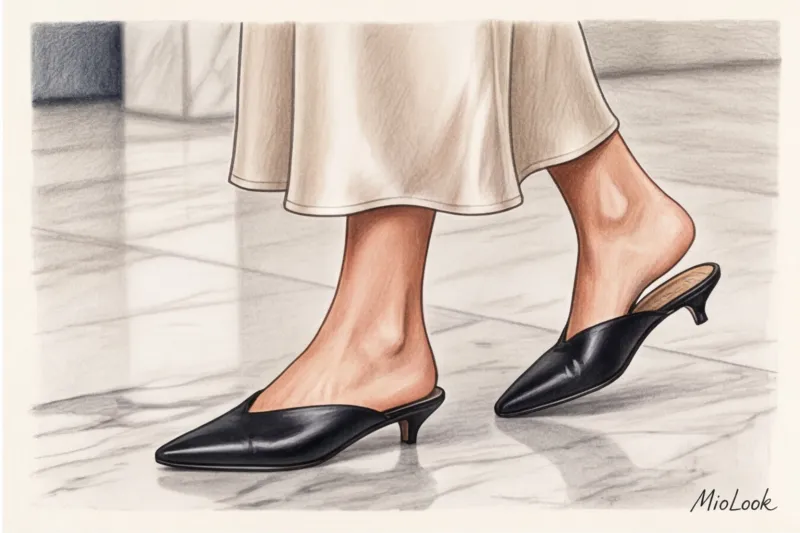
Practical advice: When trying on shoes, take a quick step forward. If the shoe tries to fall off, it's the wrong size or the last is poor. What to wear with the right mules? They look brilliant with wide-leg linen trousers, creating a relaxed silhouette, or with silk midi skirts for a contrasting texture.
Minimalist sandals and nude shoes
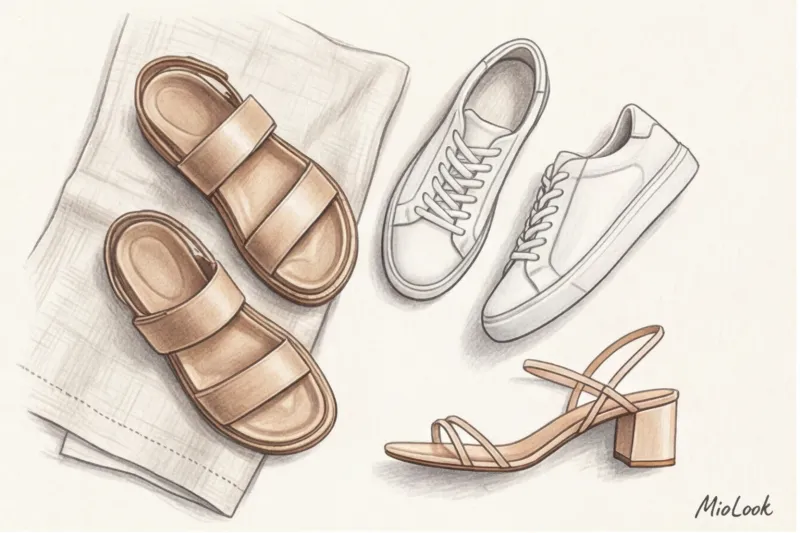
The 90s aesthetic brought back the "naked shoe"—sandals with ultra-thin straps, often with a tiny kitten heel (3–5 cm). It's the perfect fashionable shoes spring summer for a capsule wardrobe, as it is practically invisible and does not draw attention to itself.
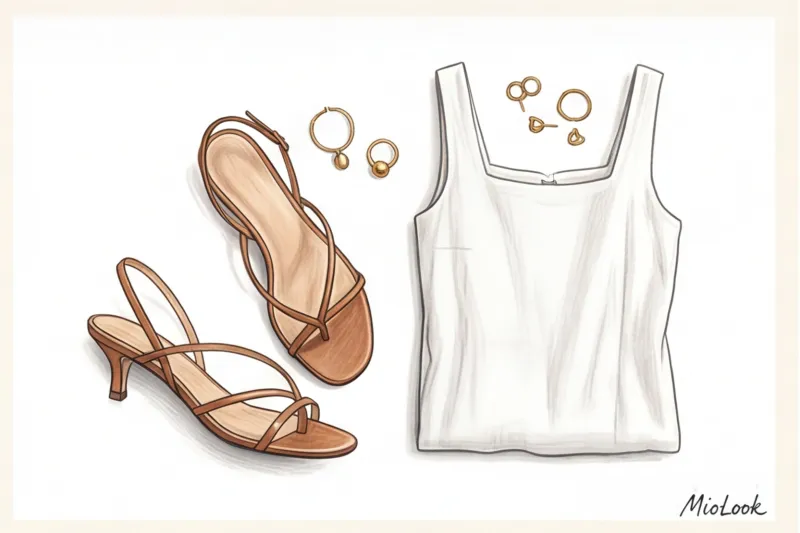
However, there are some caveats. Thin straps are tricky. In my practice, many clients have complained that by evening, these sandals dig into their skin, cutting off circulation. This should be avoided.
- Strap width: For everyday wear, choose straps that are at least 8 mm wide.
- Location: If you have large ankles or are prone to swelling, absolutely avoid straps that cut horizontally across the narrowest part of your leg. Opt for styles with a V-shaped weave at the instep—they visually elongate your leg.
- Color: Thin black straps on light leather look rough and cut off the silhouette. Ideal choices for summer are nude shades that match your skin tone, or delicate metallics (matte silver, champagne).
Ready to update your wardrobe?
Try the MioLook free plan—no commitments required. Upload photos of your items, and the app will create dozens of stylish summer capsule collections.
Get access — €0.99 onceSlingbacks and loafers: status footwear for the warm season
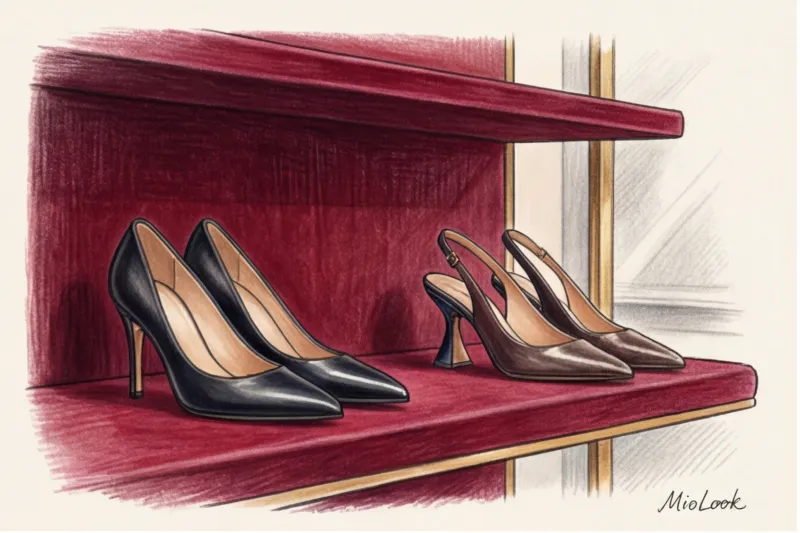
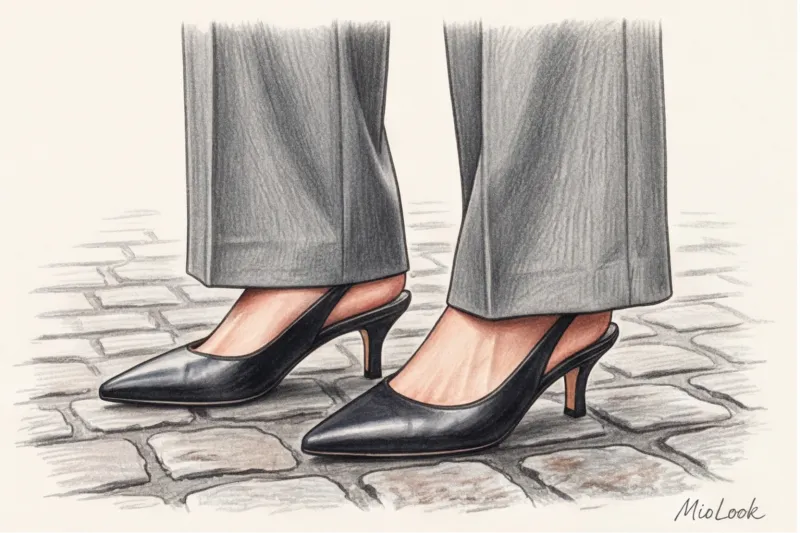
When the dress code prohibits wearing sandals to the office, slingbacks (closed-toe shoes with a strap on the heel) and summer versions of loafers come into their own. They're the perfect compromise between formality and weather-appropriate comfort. We wrote about integrating formal elements in detail in our article about Office Siren and Corpcore style.
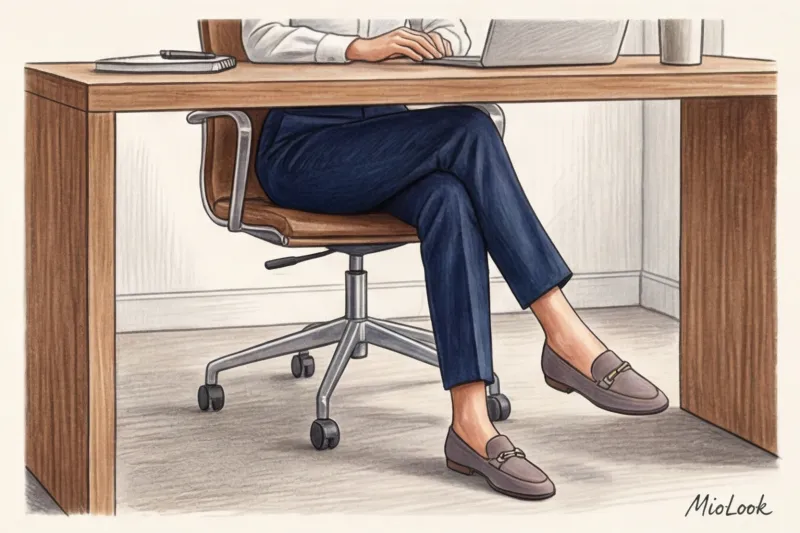
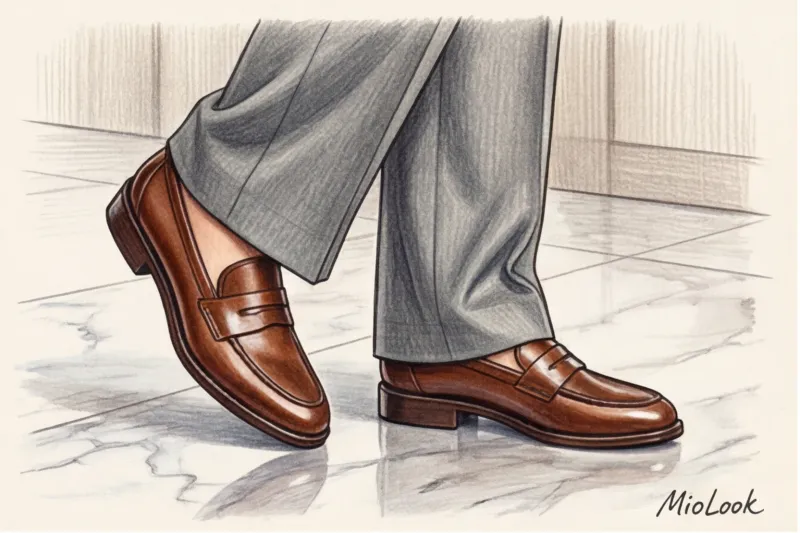
When choosing summer loafers, look for unstructured models—they lack a rigid molded heel and thick lining. They're most often made of soft suede or woven leather. In the €100–€180 range, you can find excellent options at Massimo Dutti or niche Portuguese brands.
A common question from clients: how to wear closed shoes in the summer, from an etiquette standpoint? Slingbacks and summer loafers are worn barefoot (or with invisible cotton toe caps cut deeper than the shoe's hem). No visible nylon socks—they instantly cheapen the look.
Ballet Flats and Mary Janes: A Flat Walk Without Harming Your Posture
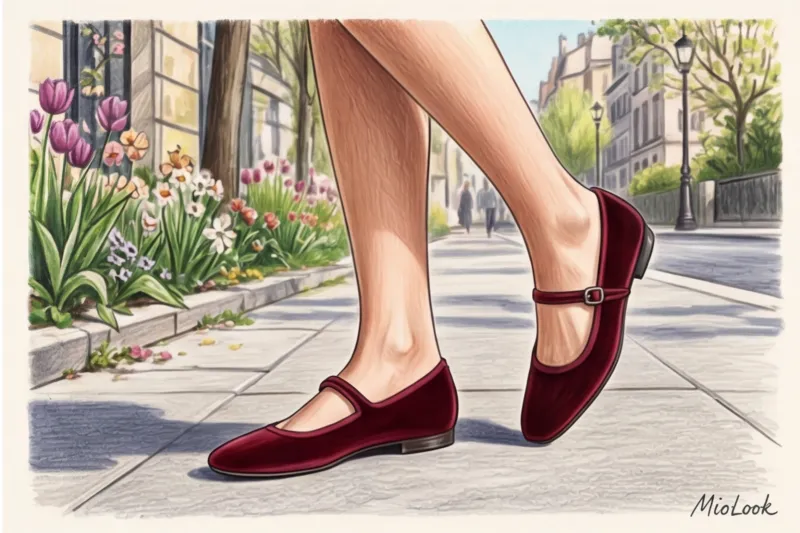
Ballet flats are experiencing a renaissance: mesh flats, satin, and square- or extremely pointed-toe styles are all the rage. Mary Janes (with their webbed insteps) add a touch of Parisian chic to any look.
But to avoid looking like a kindergarten graduate in Mary Janes, they need to be styled with contrast. Instead of wearing them with fluffy floral dresses, pair them with tailored straight-leg jeans with a raw hem or menswear-inspired palazzo pants.
There's also a hidden medical risk. According to the APMA, regularly wearing completely flat shoes without arch support (zero-drop) is the leading cause of plantar fasciitis in women under 40. This causes the arch of the foot to sag, increasing the impact load on the spine. If you're buying ballet flats, check to see if they have a hidden wedge of at least 1–1.5 cm. If the sole is as flat as a sheet of cardboard, immediately invest in orthopedic gel insoles for arch support.
Style that is always with you
Try MioLook for free: A smart AI stylist will find the perfect look for your new ballet flats or mules in just two clicks.
Get access — €0.99 onceChecklist: 5 Signs of Quality Summer Shoes Before You Buy
As an expert who regularly conducts purchases and evaluates the quality of collections, I've developed a strict inspection algorithm. Before taking a pair to the checkout, run it through this checklist:
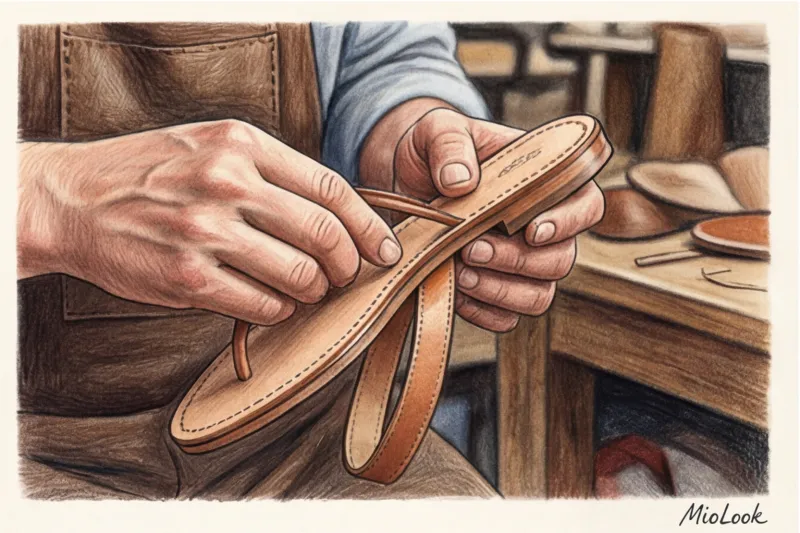
- Bending test (rule of thirds): Bend the shoe. It should bend easily and evenly across the front third (where your toes bend when you walk). If the sole is hard or bends in the middle, leave it at the store.
- No traces of glue: Carefully inspect the joint between the upper and the sole. Good shoes (even those in the €70–€100 range) shouldn't have any shiny glue stains. This is a sign of cheap, high-volume assembly.
- Quality of fittings: Rub the buckle. You'll sweat in the summer, and cheap painted plastic will peel or oxidize within two weeks. The hardware should be brass or stainless steel.
- Anatomy of the insole: In summer shoes, the insole acts like a sponge. It should be made of genuine vegetable-tanned leather or suede. A glossy synthetic insole means wet, slippery feet.
- Heel balance: Place the shoe on a level table and lightly tap it with your finger. If the heel wobbles and the shoe falls over, the alignment is off. This type of shoe will cause back pain.
A summer wardrobe doesn't require a huge number of shoes. Three or four well-designed pairs are enough to cover everything from the office to an evening stroll along the embankment. And remember: no hot trends are worth the tears from blisters. Choose architecture and comfort, and apparel MioLook will help you masterfully incorporate these right investments into your everyday looks.