Over 14 years of working as a personal stylist, I've thrown hundreds of "perfect white shirts" and beige trench coats into trash bags. My clients bought them because that's what they were told in the latest glossy magazine. The result? The item hangs with the tags on for years, taking up space and causing guilt. Forget everything you've read about rigid rules. Yours basic wardrobe and shopping list should serve your lifestyle, not abstract fashion dogmas.
We have provided more details on where to start in our A complete guide to sorting out your wardrobe before shopping This is the foundation. You can't build a house on a swamp, and you can't make a shopping list without understanding what treasures (or skeletons) are already hiding in your closet.
After the analysis: why a basic wardrobe and a shopping list are inseparable
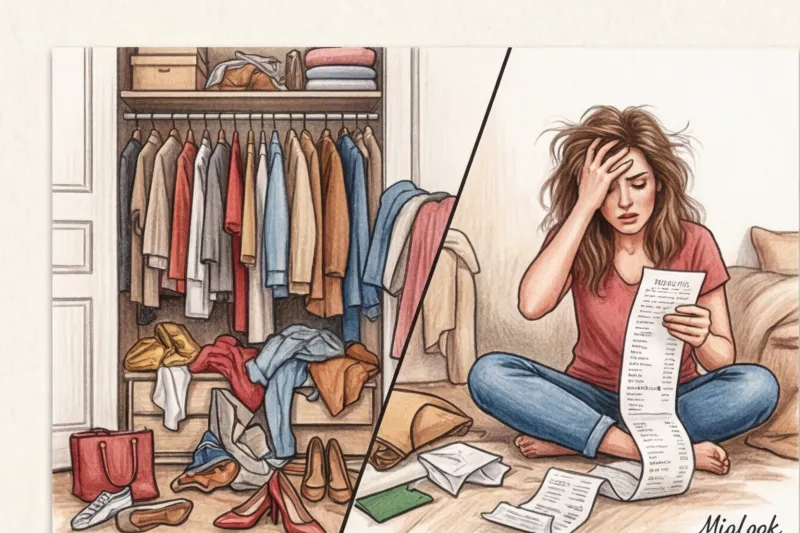
According to a large-scale study by WRAP (2024), the average woman regularly wears only 20% of her clothes. The remaining 80% are impulse buys, "slimming" outfits, and duplicates. Have you ever noticed the phenomenon of blind duplication? It's when you buy your fifth pair of blue jeans because you feel like you have nothing else to wear.
In my experience, eight out of ten problems with the notorious "closet full, nothing to wear" are solved not by buying statement blouses, but by filling the gaps in basic bottoms. In 2024, basics aren't boring gray-and-black uniforms. They're an architectural canvas for your style. The math of a wardrobe is unforgiving: basics should make up 60-70% of the total wardrobe for the remaining 30% of trendy and bold pieces to truly shine. Just 12 well-chosen basics offer over 40 unique combinations.
To eliminate blind duplication, I always recommend that clients digitize their closet. The easiest way to do this is MioLook — you immediately see what you're objectively missing, and the shopping list forms itself.
The Myth of the Ideal Base: How to Adapt a Universal List to Your Needs
Let's debunk the biggest style myth: everyone needs a classic, stiff white shirt. It's a lie. For 50% of women (especially those with soft features and below-average contrast), heavy, crisp white cotton close to the face is the worst investment. It highlights even the slightest imperfections in the skin, makes the face look pale, and adds unnecessary bulk to a figure with a prominent bust. If this is your case, swap it for a cream silk blouse or a high-quality, heavy, ecru long-sleeve top.
Instead of looking for a "specific item," look for a "function." I had a client, Sasha, an IT freelancer. She bought a classic office blazer and pencil skirt because they were on her "must-haves" list. Of course, she never wore them while on calls from home or to a coffee shop.
"Don't buy clothes for the life you dream of. Buy clothes for the life you live every day."
Map out your time. If you spend 70% of your time with the kids at the playground or on your laptop at home, your "light structured top" isn't a shirt, but a perfect hoodie made of premium cotton and without logos.
Access to MioLook for €0.99 — one-time payment
A smart AI stylist will select the perfect look for every day, taking into account your real wardrobe.
Get access — €0.99 onceWardrobe Essentials: A Shopping List for the Perfect Tops
The golden rule of wardrobe logistics that I hammer into the heads of every client: 3:1 rule For every bottom, there should be at least three matching tops. People remember us by our appearance. You can wear the same perfectly fitting pants all week, changing only the tops, and no one will notice the repetition.
The secret to luxurious looks lies in texture. Avoid flimsy knits. Opt for thick cotton, viscose with added elastane, smooth wool, and silk. How to look expensive on a budget — this is primarily a question of the correct fabric density.
Structured and soft uppers: what to include on your checklist
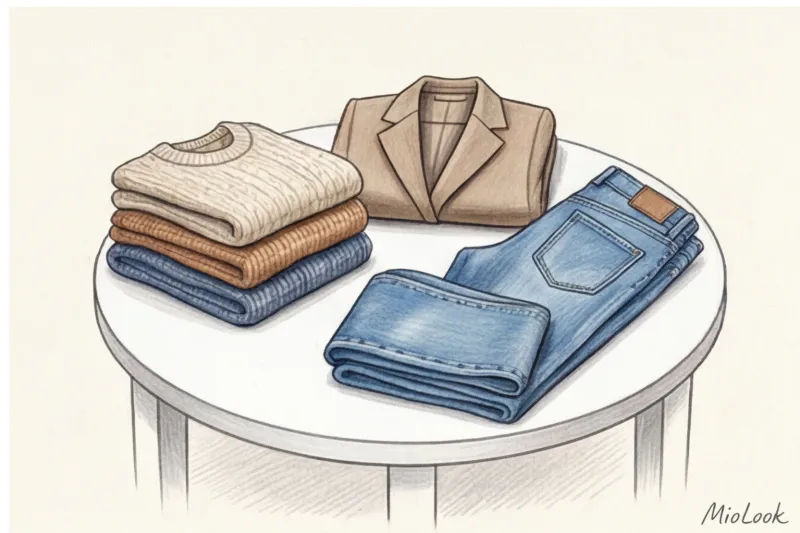
Divide tops into two categories. Structured ones hold their shape and create a sculpted silhouette. Soft ones are form-fitting and comfortable.
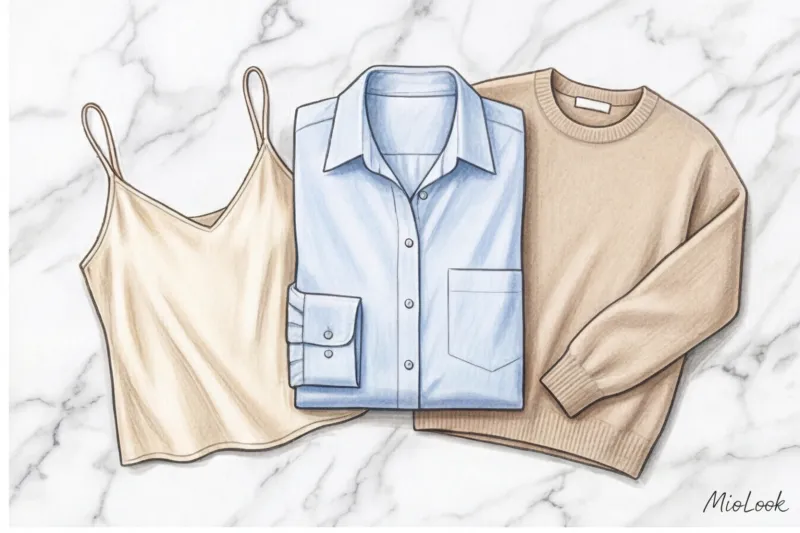
- Structured: A loose-fitting men's shirt (cotton or linen). Colors: white, light blue, pinstriped, or ecru.
- Soft: Two perfect T-shirts (white and black/graphite). My professional secret: look for cotton with a weight of at least 180 g/m². The texture and color of the underwear should never be visible through the T-shirt.
- Knitwear: A thick long-sleeve or turtleneck made of merino wool. A loose-fitting cashmere sweater.
Foundation of the look: choosing basic bottoms
Finding the perfect pair of jeans or trousers is hell, I know. It's the hardest, most energy-consuming part of shopping. But it's also the one that yields the best results. If the trousers don't fit well, no €500 cashmere sweater will save the look.
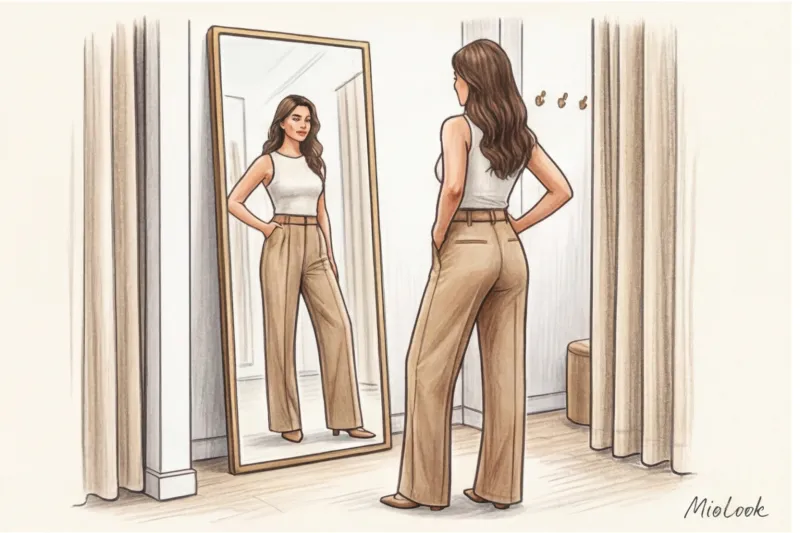
What should be on the list:
- Basic jeans: Straight or slightly wide leg. High or mid rise. Strictly no fraying, holes, or unnecessary embellishments. Solid color: deep indigo, graphite, or classic blue.
- Full length trousers: The pleats at the waist do a great job of hiding your tummy, and the full length that falls onto your shoes adds a phenomenal amount of height.
- Basic skirt: A midi-length slip skirt (lingerie style) with a bias cut or a straight skirt made of a dense texture (denim, leather).
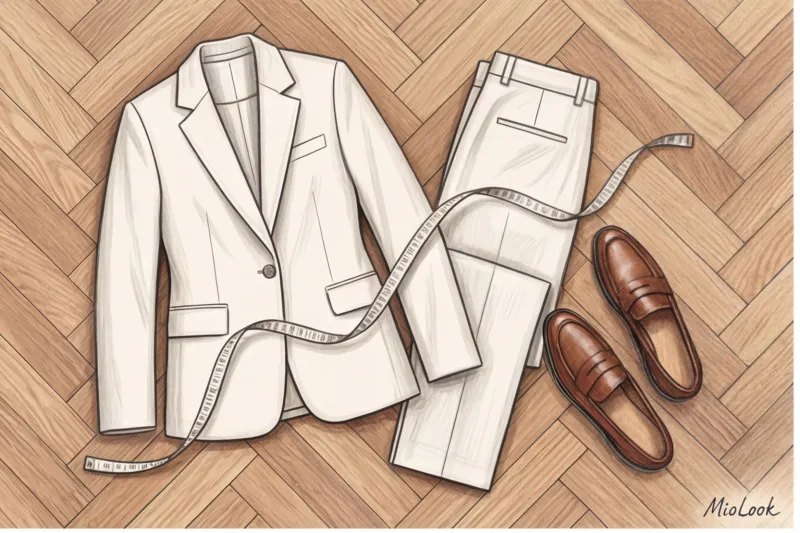
Stylist's secret: The length of your trousers is crucially dependent on your footwear. You can't wear the same wide-leg trousers with stiletto heels and flat sneakers—either way, you'll end up looking like you're sweeping the pavement or looking shot. If you've found the perfect trousers and wear both shoe types, buy two identical trousers and tailor them to different heel heights.
Your perfect look starts here
Join thousands of users who look flawless every day and save time with MioLook.
Get access — €0.99 onceSecond Layer and Outerwear: Style Architecture
A second layer (jackets, cardigans) acts as an architectural framework. It visually shapes the figure, adds layering, and completes the look. A simple T-shirt and jeans are an incomplete idea. Throw on the right jacket over it, and you're ready for a high-profile meeting.
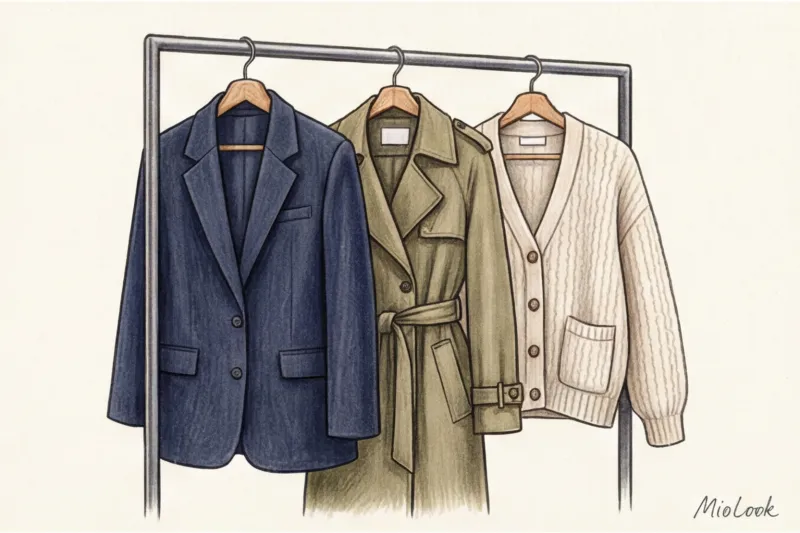
How to choose the perfect jacket? Look for an oversized or semi-fitted (masculine) cut. The main fit criterion in the fitting room is the shoulder line. The shoulder seam must be impeccable. Sleeve length or waist width can be easily and inexpensively adjusted at a tailor, but altering the shoulders is a budget disaster.
For casual looks, a thick-knit cardigan is a great alternative to a jacket. For the outdoors, you'll need a trendy below-the-knee trench coat, a wrap coat, or a straight, double-breasted wool coat. Midi is the most versatile length, covering the hem of any skirt or dress without throwing off the proportions.
Accessories and Shoes: The Mediterranean Secret of Luxury
I adore the Mediterranean approach to style. An Italian or Spanish woman might wear the simplest white T-shirt from a mass-market store for €15 and some regular Levi's. But her shoes, bag, and glasses will always be impeccable. Accessories are what elevate simple basics to luxury. Don't skimp on this.
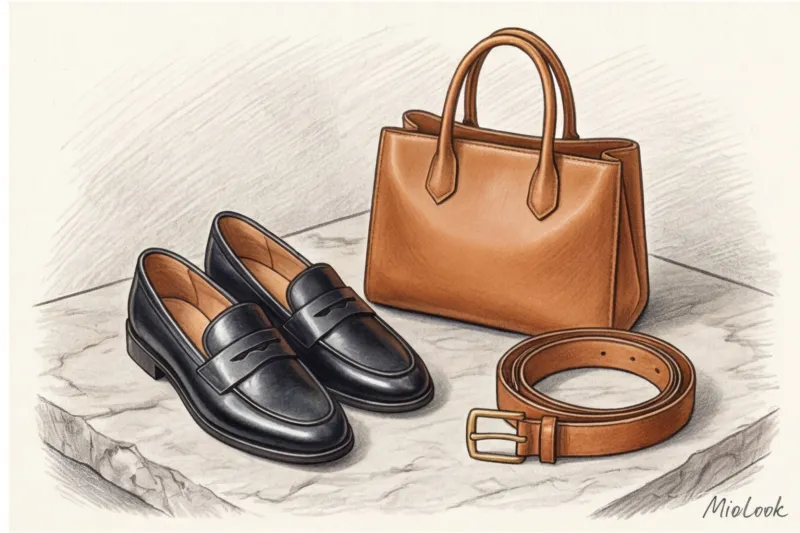
The minimum footwear includes:
- White minimalist sneakers (leather, no flashy logos).
- Shoes that look expensive: loafers or oxfords made of good leather.
- Ankle boots with a stable last for the demi-season.
- Simple pumps or slingbacks with a small heel (kitten heel).
Bags are divided into two categories: a rigid form (tote) for weekdays (it should fit a laptop and documents without deforming the edges) and a soft crossbody for weekends. Choose bags Without an abundance of shiny hardware—cheap gold is instantly noticeable. The finishing touch is a medium-width leather belt (2.5-3 cm) with a matte buckle. It visually pulls together even the most casual look.
Checklist before checkout: 5 questions that will save your budget
Emotions are the enemy of a good wardrobe. I've seen hundreds of cases where women bought impractical items simply because of the magical red "-70%" price tag. To avoid this, always ask yourself these five questions before you checkout:
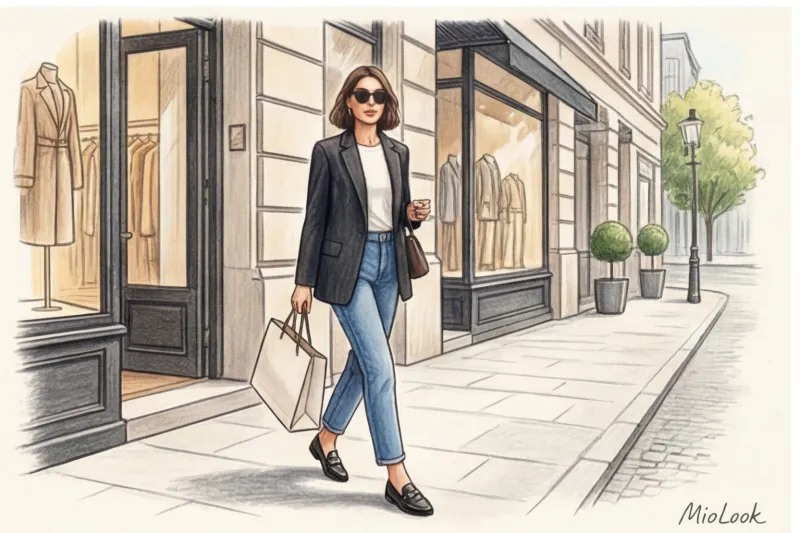
- Can I create at least 3-4 looks with this? And from those things that already exists in my closet right now, not the ones I plan to buy someday.
- What is the Cost Per Wear metric? The formula is simple: divide the price of an item by the expected number of wears. A pair of high-quality leather loafers for €200 that you'll wear 200 times (CPW = €1) is cheaper and more affordable than a pair of trendy €50 sandals worn once to a friend's wedding (CPW = €50).
- Does the treatment fit my lifestyle? If a basic sweater requires dry cleaning only and you don't have the time or budget, it will end up sitting dead in the laundry basket.
- Am I comfortable? Sit on the ottoman in the fitting room. Raise your arms. Bend over. Clothes shouldn't be your enemy.
- Is this on the list? Or is this an impulsive reaction to a discount?
A basic wardrobe isn't a constraint, it's a liberation. When you have a solid, functional foundation, getting ready in the morning takes 10 minutes, and your feeling of confidence lasts all day. Invest in quality, consider your Cost Per Wear, and remember: the most expensive item in your closet is the one you never wear.