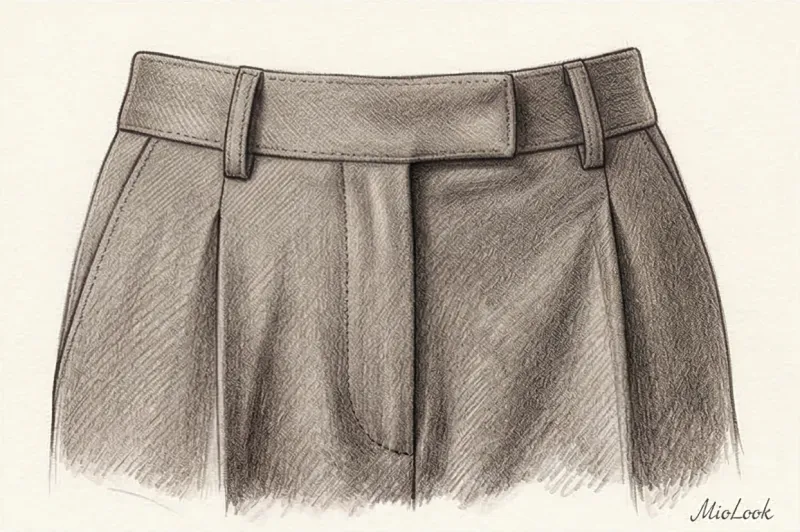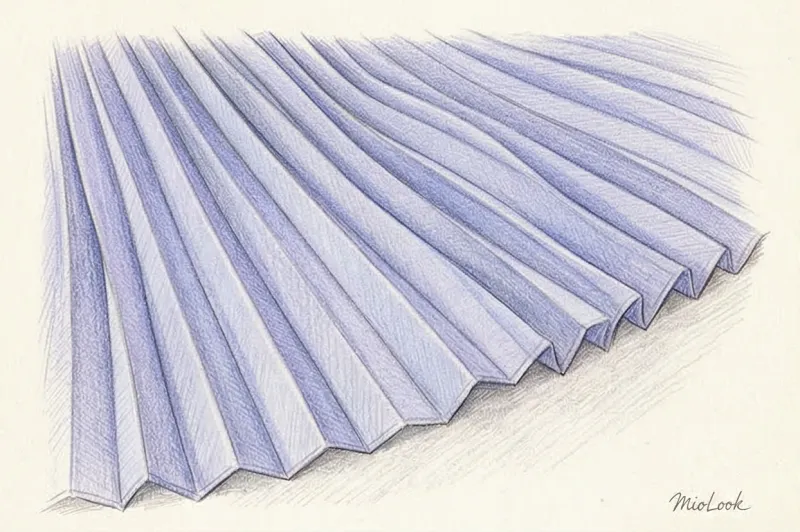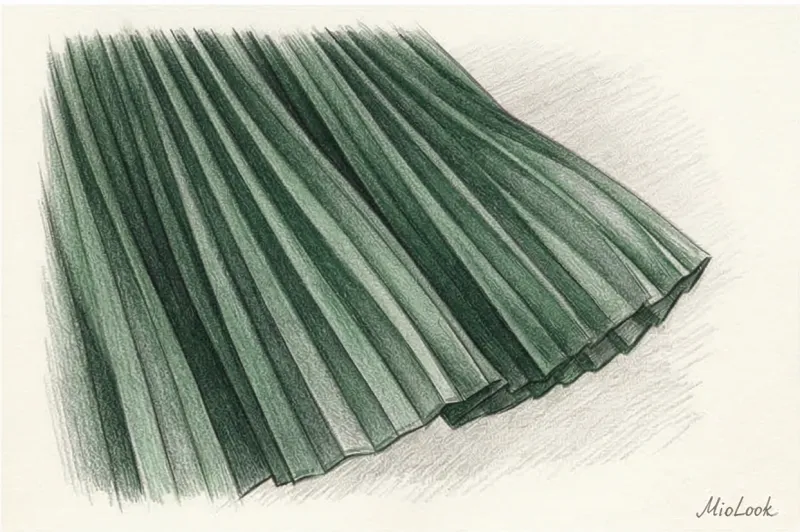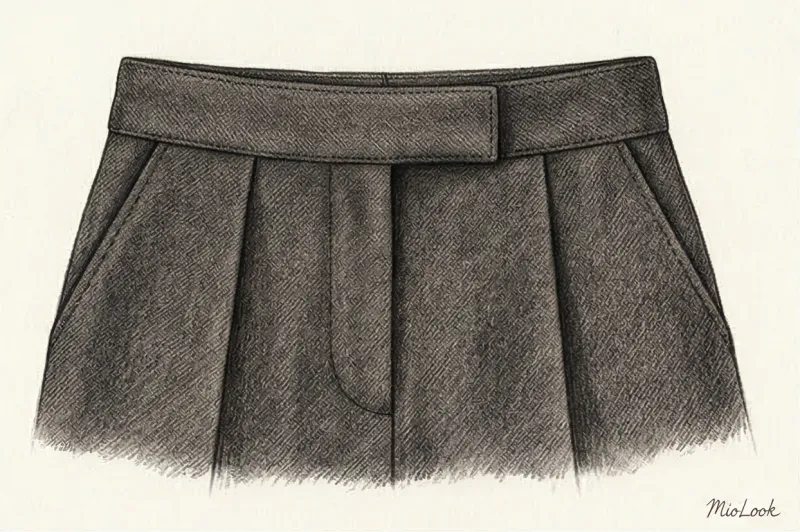
What is a box pleat?
Bow fold - is a type of double-sided fold in which two folds of fabric are directed in opposite directions from each other.
On the front side of the garment, it forms a protruding flat rectangle. In English terminology, this cutting element is called box pleat , which translates as "box fold." The back side is a mirror image of the front side and is a counter fold, with the folds facing each other.
This design is created at the cutting stage. It is machine-stitched at the top—at the waistband of a skirt, trousers, or under the yoke of a shirt—after which the fabric falls freely downward.
Distinctive features
The box pleat adds architectural structure and volume to the garment. It widens the silhouette at the bottom, creating fullness, without creating unnecessary bulk at the waist or seam.
Unlike single pleats, a box pleat has strict symmetry and establishes a clear vertical rhythm throughout the garment. This design element also serves a functional purpose. A single pleat is often used to ensure freedom of movement without losing shape. A classic example is the design element beneath the yoke on the back of men's and women's shirts.
Box pleats require a careful choice of material. They look best on medium- and heavy-weight, shape-resistant fabrics. Wool, heavy cotton, linen, and taffeta hold well both firmly pressed and softly folded.
What to combine with
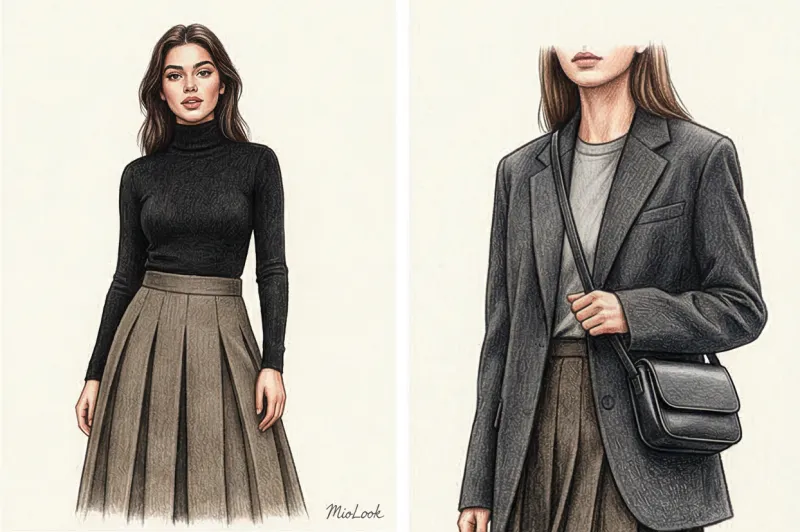
Skirts with box pleats create a vibrant, voluminous hem. This cut is perfectly balanced with fitted tops: smooth turtlenecks, thick knit bodysuits, or fitted cropped jackets.
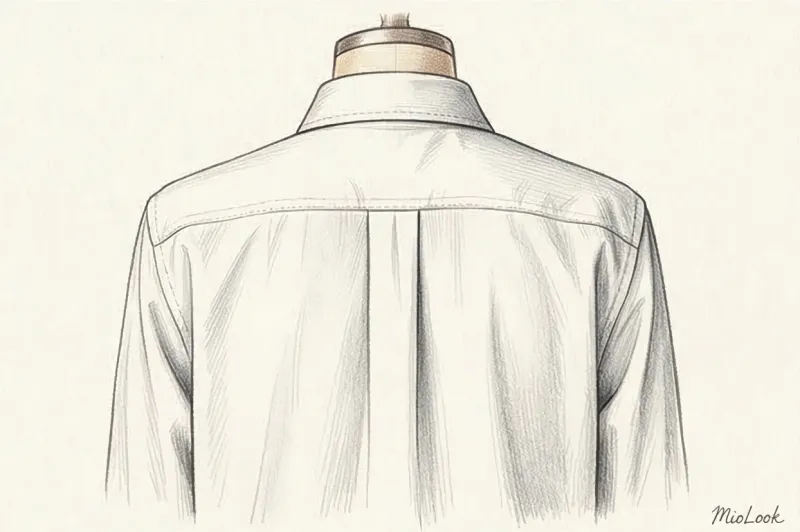
Miniskirts with wide, box-like pleats, characteristic of the preppy aesthetic, are styled with oversized cardigans, polo shirts, and chunky-soled leather loafers. Loose-fitting shirts with a single back pleat are a wardrobe staple. They pair with straight-leg, classic trousers with a crease, straight-leg jeans, or a tailored pencil skirt, creating a comfortable, office-ready silhouette.
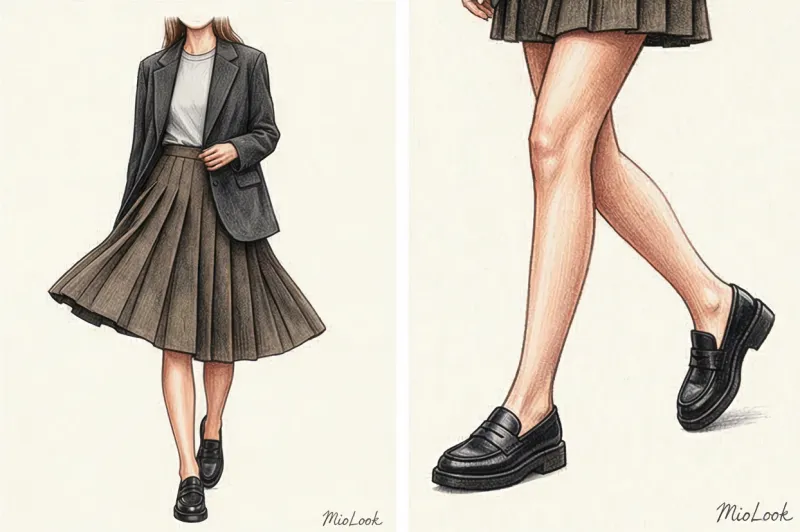
In A-line dresses, box pleats are often used to create hemlines. These styles call for simple footwear—minimalist pumps or ballet flats. Minimizing decorative details allows the architectural design to remain the main focus.