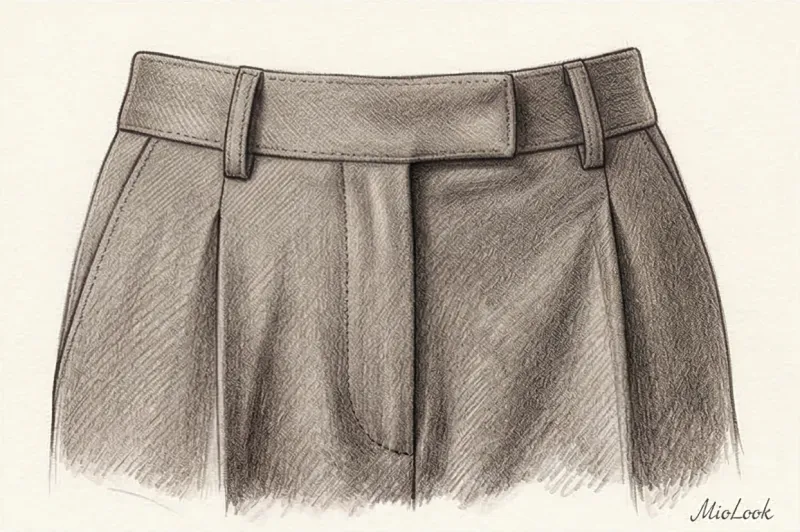
What are trouser pleats?
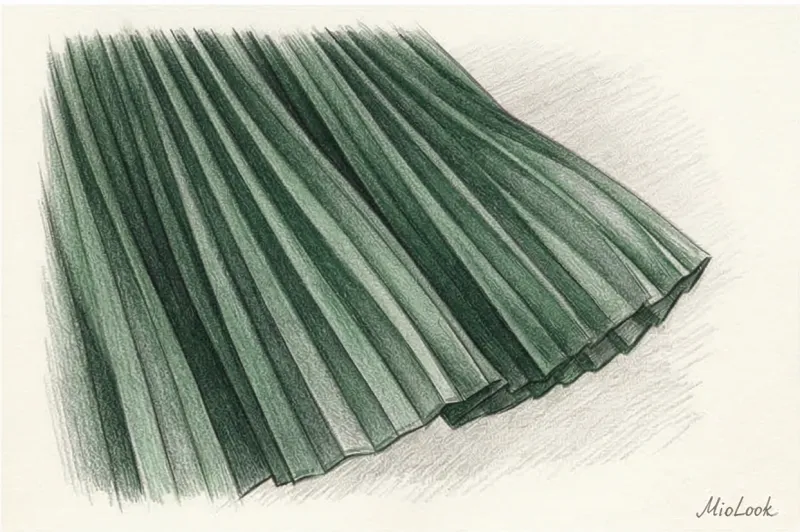
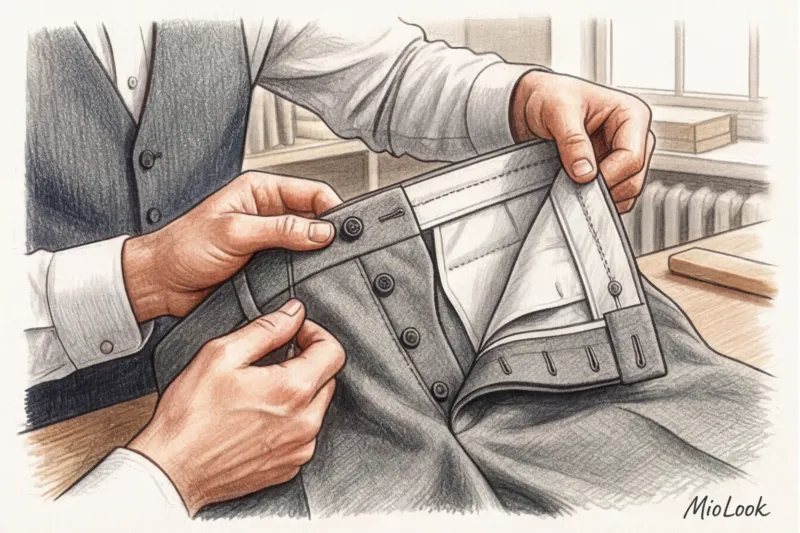
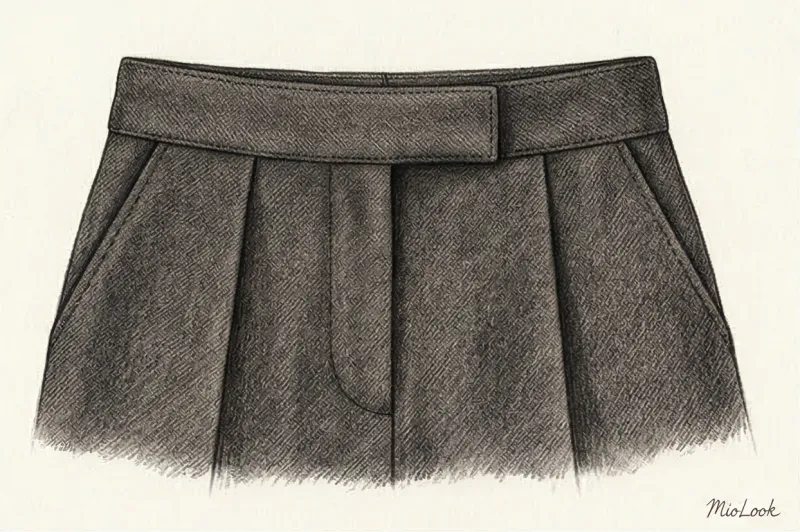
The pleats on the trousers are folds of fabric folded and fixed at the waist, directed vertically downwards.
The main function of this design element is to create additional volume and a loose fit around the hips while maintaining a snug, precise waistline. A pleat differs from a dart in that the fabric is not sewn along the entire length from the inside out. Instead, it is folded and secured only at the top near the waistband, allowing it to flare out freely.
Historically, this detail appeared in the classic men's suit to ensure comfort while sitting. Later, the element migrated to women's wardrobes as an effective silhouette-shaping tool.
Main types
Depending on the direction of pleat placement, there are straight (English) and reverse (Italian) tucks. Straight tucks point inward, toward the fly, while reverse tucks point outward, toward the side pockets.
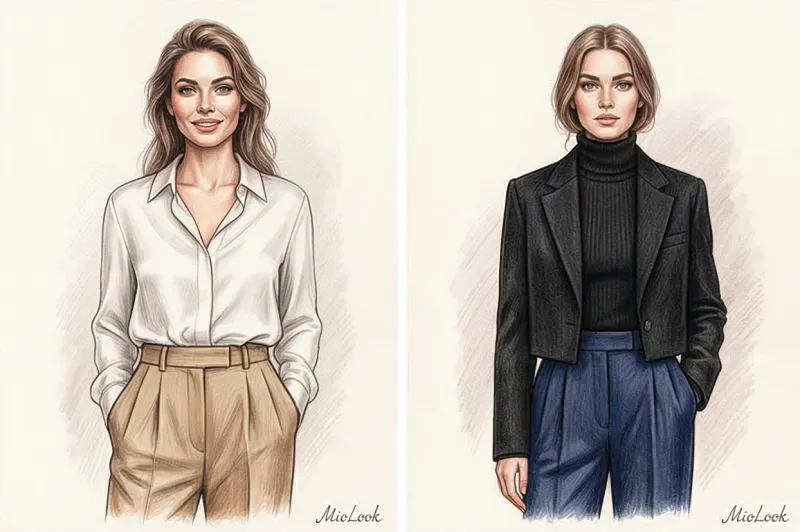
Depending on the number of pleats per leg, trousers are classified as single or double. Single pleats provide minimal extra volume and are ideal for basic everyday wear.
Double pleats consist of one deep and one shallow pleat placed side by side. They create a distinctly retro silhouette with wide hips and a sharp taper, typical of banana and carrot cuts.
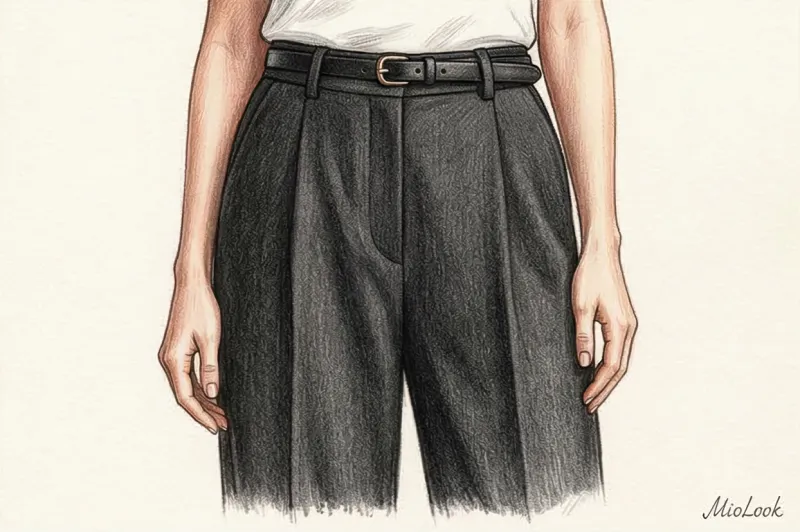
Depending on the depth of the gathered fabric, elements can be shallow or deep. Shallow folds take up 1-2 cm of fabric and are primarily decorative, while deep folds (up to 4-5 cm) create a pronounced drapery.
What to combine with
Pleated trousers require a defined waist. Shoulder garments, such as shirts, blouses, turtlenecks, or thin sweaters, are tucked in to show off the tailoring.
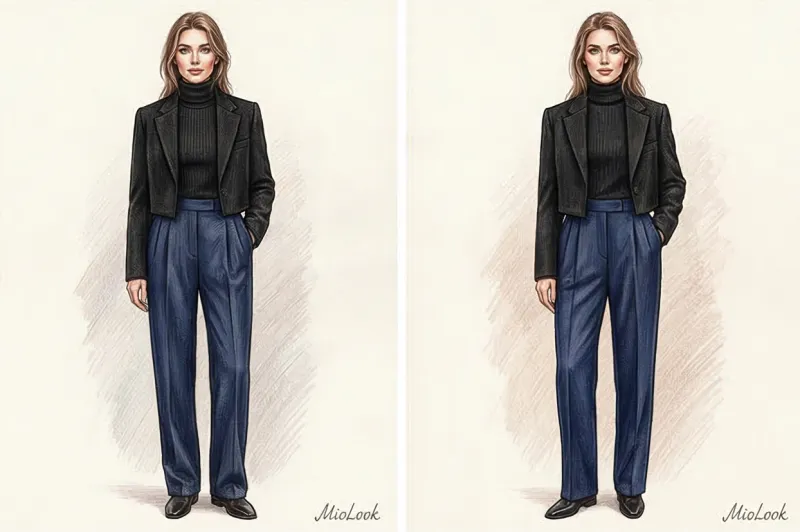
To maintain harmonious figure proportions, wear a cropped top layer with these trousers. Crop jackets, waist-length jackets, or short cardigans are ideal.
Long jackets and coats with pleats are worn open. This helps avoid creating extra visual bulk around the midsection.
The look is completed with a structured, medium-width leather belt. This accessory further accentuates the transition from the narrow waist to the voluminous hips, which is inherent in the trousers' design.