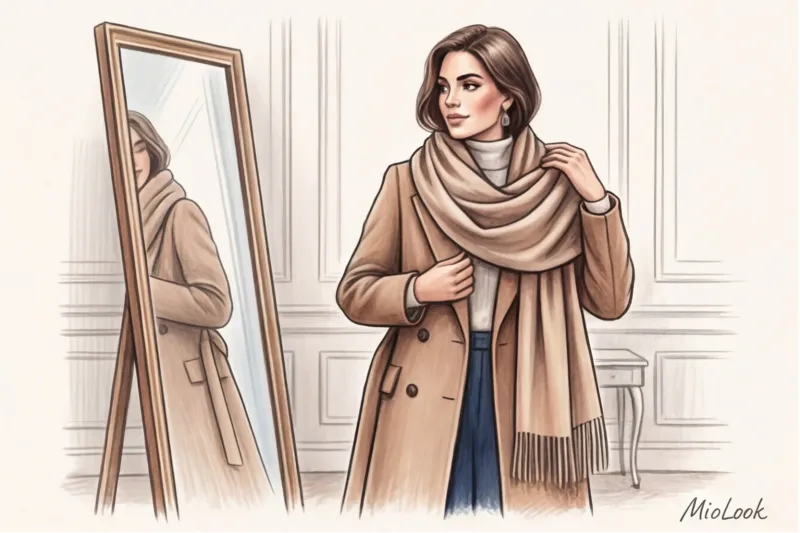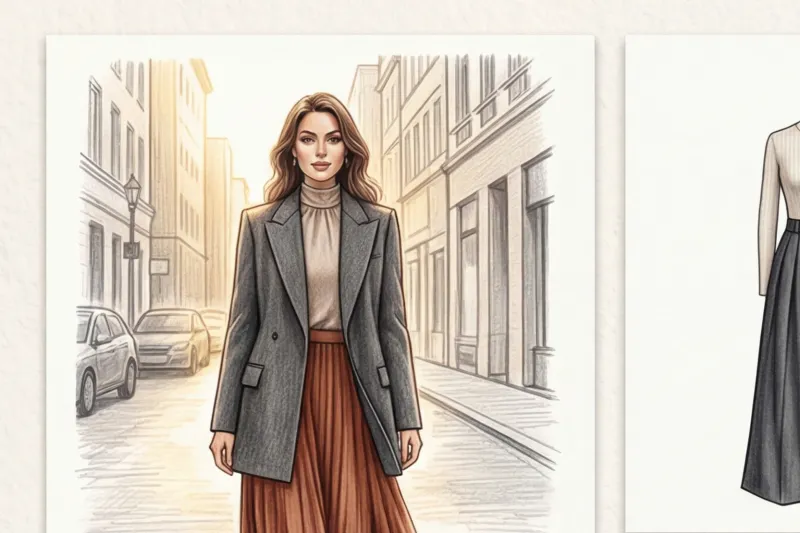
Have you ever noticed that as soon as a woman decides to dress more revealingly, mass-market clothing immediately offers her shapeless robes? For many years, it was believed that the only way to conceal the body's contours was to drown in meters of excess fabric. But in 12 years of working as a stylist, I've become convinced of the opposite: the more body area you cover, the more precise and architectural the cut should be.
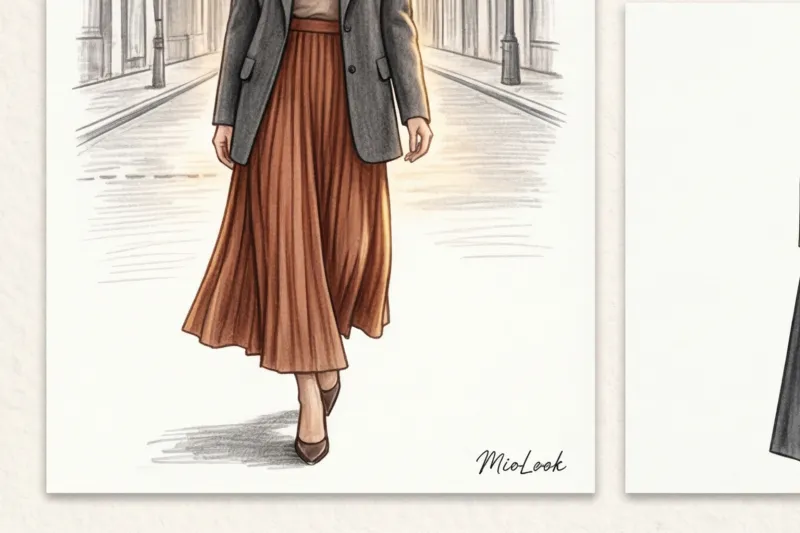
Today, the term "modest fashion style" doesn't mean an attempt to become invisible. It's the conscious creation of a personal "style armor" that makes you feel protected but looks confident and sophisticated. We've already written about the technical aspects of creating such looks in our complete guide. Layering: How to Stylishly Cover Your Figure In this article, we'll explore how textiles and tailoring are changing the rules of the closed-weave wardrobe.
Modest Fashion and Style: Why You Don't Need to Hide Behind Oversized Clothes Anymore
The modest fashion industry has long since expanded beyond a niche religious demand. According to McKinsey's State of Fashion report (2024), this segment has become a global market worth over $300 billion. Leading luxury houses are creating exclusive capsule collections not only for the Middle East but also for the global consumer.
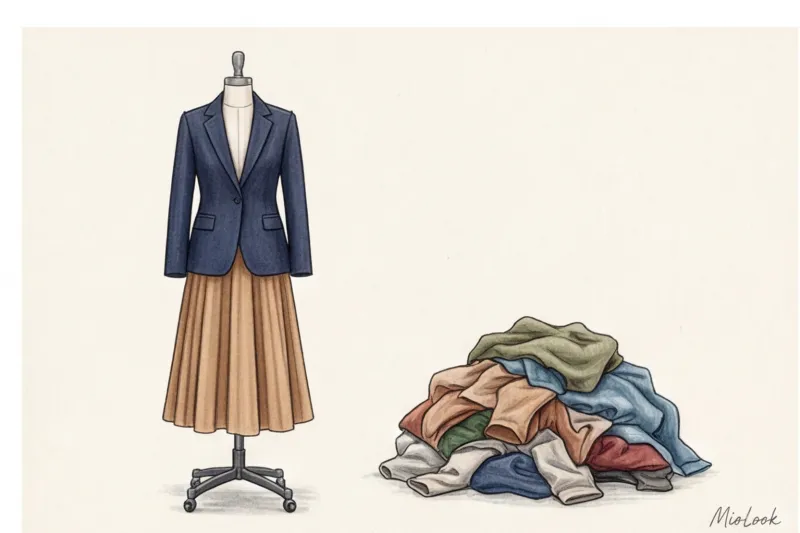
The main myth I have to combat at every other consultation is: "To hide your figure, you need to wear oversized clothes." This is a fatal mistake. Completely exaggerated, shapeless volumes don't hide flaws; they absorb Your silhouette is distorted and visually adds at least 5 kilograms. When you wear a tent dress, the brains of those around you automatically construct a volume equal to the width of the dress itself under the fabric.
"The desire to dress modestly is often dictated less by religious or strict ethical rules than by the need for psychological comfort. We need distance between the body and the outside world, but this distance must be aesthetically pleasing," says Sophia Müller.
Silhouette architecture: how to cover the body while maintaining proportions
In revealing clothing, the architecture of the look is often determined by the body itself: the waistline, exposed collarbones, or wrists. In modest fashion, the concept "structural stress" If your body is completely covered, the clothing itself must take on the role of architect.
Instead of clinging to the figure, fabric should create distinct, defined lines. This is why quality tailoring is so important. A cheap maxi skirt with an elastic waistband makes a look sloppy. An A-line skirt with precise darts and a tight waistband creates an optical illusion: it highlights the waist without revealing the contours of the hips.
Balance of Volumes: The Golden Rule of a Closed Wardrobe
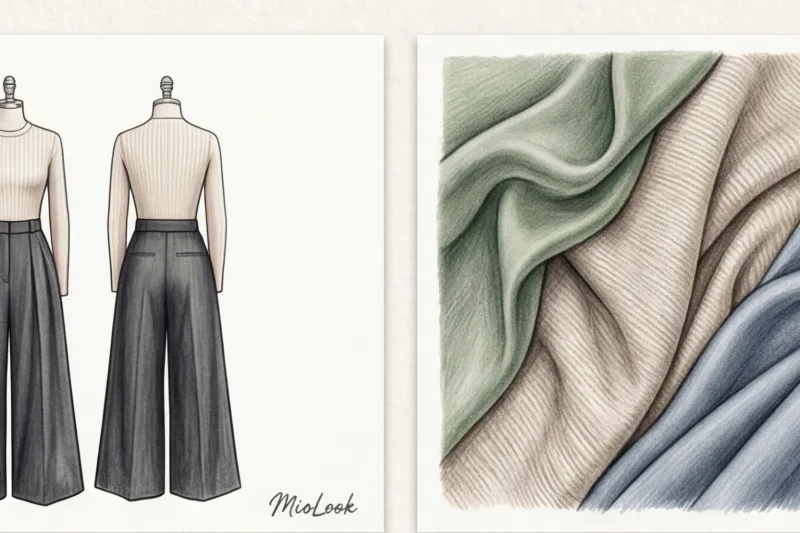
To prevent a closed outfit from turning into a monolithic block, use the rule "one spacious thing" If you're wearing flowing, wide-leg palazzo pants, pair them with a more structured, form-fitting top (like a jacket with defined shoulders). Conversely, a voluminous blouse with puffed sleeves is best balanced with a straight maxi skirt in heavy denim or suiting fabric.
You can define your waist implicitly, without cinching belts. A great technique is color blocking or a cropped, structured jacket (hip-length) worn over a long dress. This breaks up the vertical line and restores the correct proportions to the figure.
Your perfect look starts here
Join thousands of users who look flawless every day with MioLook. A smart algorithm will help you create a capsule wardrobe of your items.
Get access — €0.99 onceFabric Science: What to Wear When Your Skin Is Almost Covered
One of my clients, Amina, decided to switch completely to a closed wardrobe. At our very first meeting, she complained: "Sofia, I'm suffocating. I'm constantly hot and sweating, even though it's only 20°C outside." We opened her closet, and the problem became obvious. There were stunningly beautiful floor-length dresses hanging there, but they were all made of 100% heavyweight polyester.
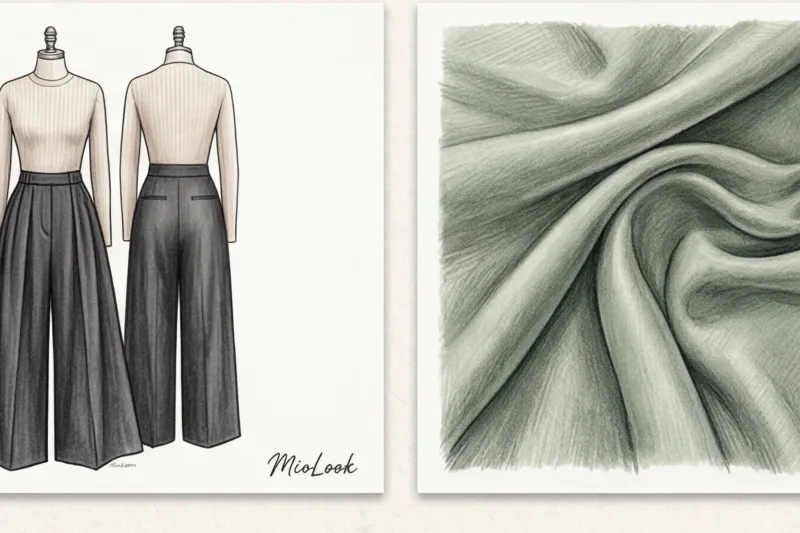
This is a critical mistake. When clothing covers 90% of the skin surface, breathability of textiles becomes the number one priority Polyester and acrylic create a greenhouse effect: moisture doesn't evaporate, but remains between the skin and the fabric. This is why heavy, chunky acrylic sweaters are the worst choice for a modest wardrobe. They add bulk and disrupt body temperature regulation.
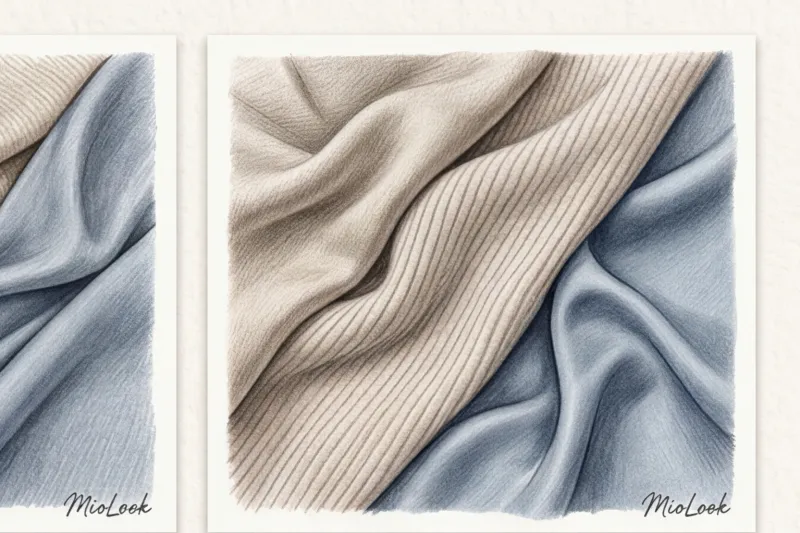
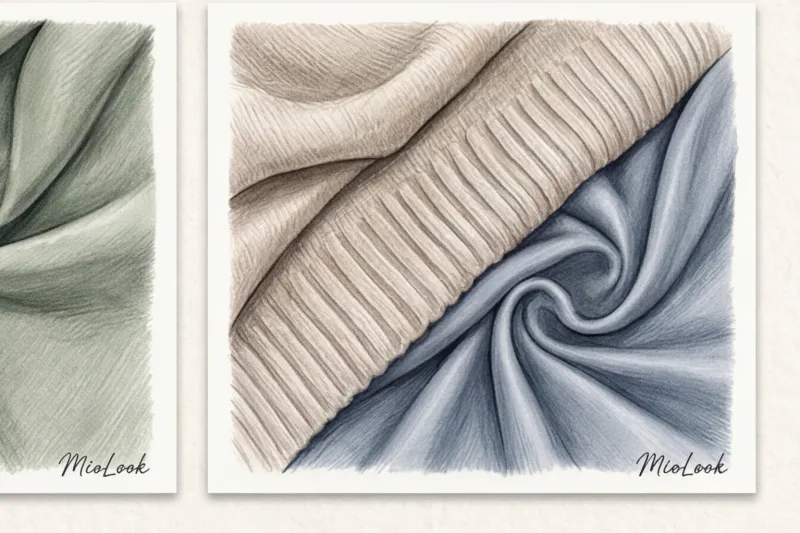
Eco-friendly and breathable alternatives for modest looks
If cotton seems too wrinkle-prone, consider next-generation regenerated cellulose fibers. Tencel (Tencel/Lyocell) and cupro are ideal fabrics for high-necked dresses and blouses. According to textile labs, Tencel provides 50% better moisture control and breathability than standard cotton.
- Cupro: Often called "vegan silk," it flows beautifully, doesn't stick to your feet when you walk, and feels pleasantly cool against your skin.
- Fine Merino wool Unlike cheap acrylic, merino wool is a natural temperature regulator. A thin merino turtleneck will keep you comfortable on a chilly morning or in a heated office.
Always read the ingredients: look for items that contain no more than 5-10% synthetics (elastane, nylon), purely to maintain shape.
Smart Layering: Adapting Open-Ended Clothing to Cover-Ups
You don't have to give up your favorite strappy dress or deep V-neck vest to dress modestly. The secret lies in micro-layering.
Japanese corporation Toray Industries, a leader in the development of smart textiles, has proven that warmth and comfort depend not on the thickness of the fabric, but on its structure. For base layers, use ultra-thin, high-tech fabrics less than 1 millimeter thick. For example, a smooth turtleneck made of a 120 g/m² modal blend can be worn under a silk slip dress—it will cover your arms and neck without creating rough folds at the waist.
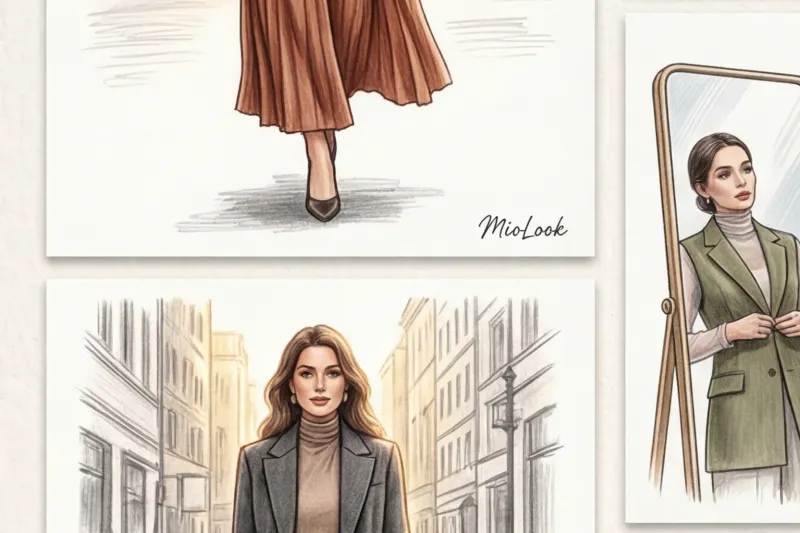
Another great look: a crisp poplin shirt layered under a sleeveless dress or a tailored sundress. If you're unsure how these layers will work together, try taking photos of the items and uploading them to MioLook — a smart AI stylist will show you how to skillfully combine an open top with the right base layer without upsetting the proportions.
A Modest Capsule: 5 Investments for a Trendy Wardrobe
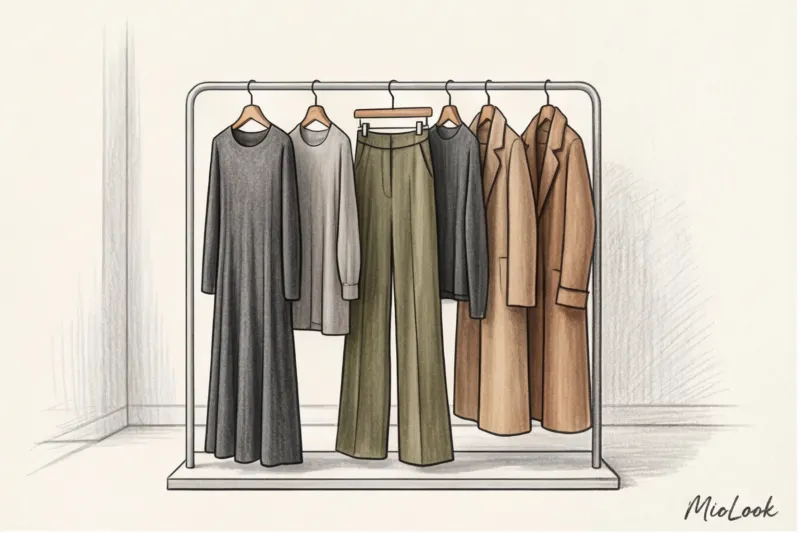
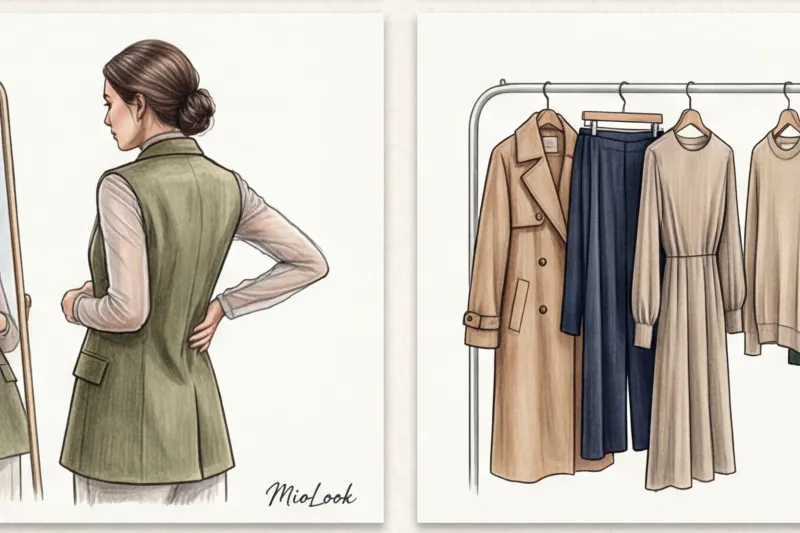
A modest wardrobe doesn't require hundreds of items. It does require a strategic approach to shopping. Here are 5 items that will form the foundation of your fashion capsule:
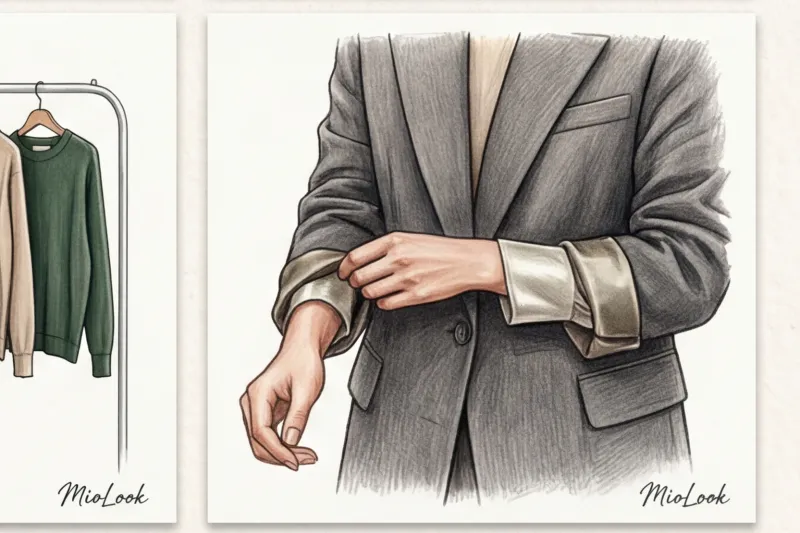
- Long structured jacket. The length should cover the hips. Choose a thick suiting wool or viscose blend. It instantly ties any flowing look (for example, wide trousers and a loose blouse) into a strict vertical line.
- Palazzo trousers with pleats. The pleats at the waist add extra volume to the hip area, allowing the trousers to fall smoothly without clinging to the buttocks as you move.
- Maxi skirt with bias cut. Unlike straight skirts, fabric cut diagonally flows gracefully around the silhouette, widening towards the bottom. But be careful (this is important!): If you have a pronounced apple-shaped figure with a fuller midsection, a bias-cut skirt can accentuate this. In this case, be sure to pair this skirt with a jacket or a long, untucked shirt.
- Opaque basic turtleneck made of thick viscose. The perfect canvas for layering. Important: it shouldn't be see-through, even when pulled tightly on your elbows.
- Midi or maxi shirt dress made of thick cotton. Wear it buttoned up as a dress on its own, or unbuttoned (as a light coat) over a top and loose trousers.
Access to MioLook for €0.99 — one-time payment
Create your perfect, modest capsule wardrobe. Artificial intelligence will analyze your items and suggest dozens of new combinations.
Get access — €0.99 onceChecklist: 4 Mistakes That Make a Closed Look "Deaf" and Boring
Even if the clothes fit perfectly, a completely covered look can look flat, like a uniform. To avoid this, check these four points:
Mistake 1: Ignoring invoices
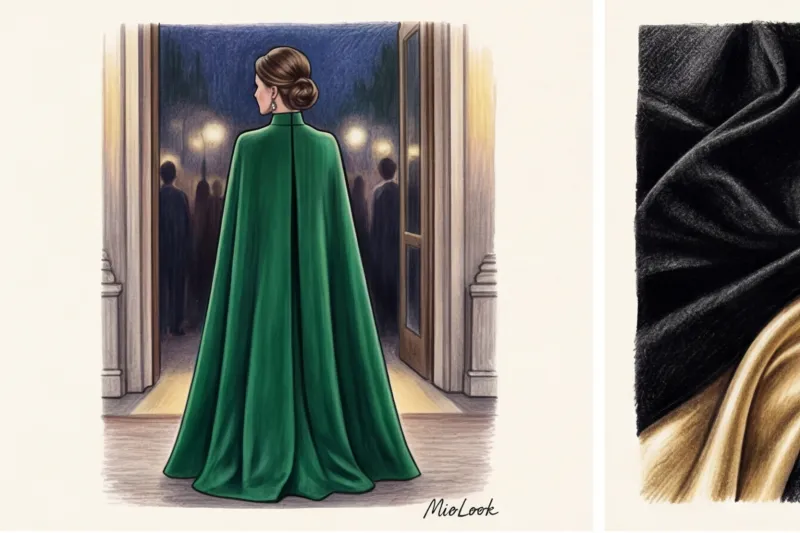
Dressing head to toe in matte cotton is a surefire way to boredom. The brain is drawn to the differences in texture. Mix smooth and textured: a silk blouse with coarse wool trousers, matte knitwear with a leather belt or bag, cupro with cashmere.
Mistake 2: Forgotten crop points
When the body is covered, accessories cease to be mere additions—they become the main focal points. A chunky, structured bag, statement earrings, or pointed shoes peeking out from under wide-leg trousers set the rhythm of the entire outfit.
Mistake 3: Wrong underwear
This is something rarely discussed, but it ruins 90% of expensive looks. Flowing, high-coverage fabrics (especially cupro, fine wool, and silk) reveal even the slightest imperfections: the elastic bands of regular panties or the texture of a lace bra. Under high-coverage clothing, underwear should be completely invisible—choose seamless, laser-cut styles with a smooth texture.
Mistake 4: Fear of color
Many people mistakenly believe that modesty equals drabness. However, color institutions like PANTONE prove year after year that deep, monochrome palettes enhance status. Instead of black or pale beige, try creating a sophisticated look in rich, jewel-toned shades: deep emerald, burgundy, sapphire, or dark chocolate. In modest fashion, color is the safest way to express individuality.
Ultimately, modest fashion isn't about giving up style, but rather about enhancing it. It takes more skill to look luxurious while remaining fully covered, but the results are always worth it. Choose smart fabrics, invest in tailored cuts, and remember: your clothes should serve you, not you, them.