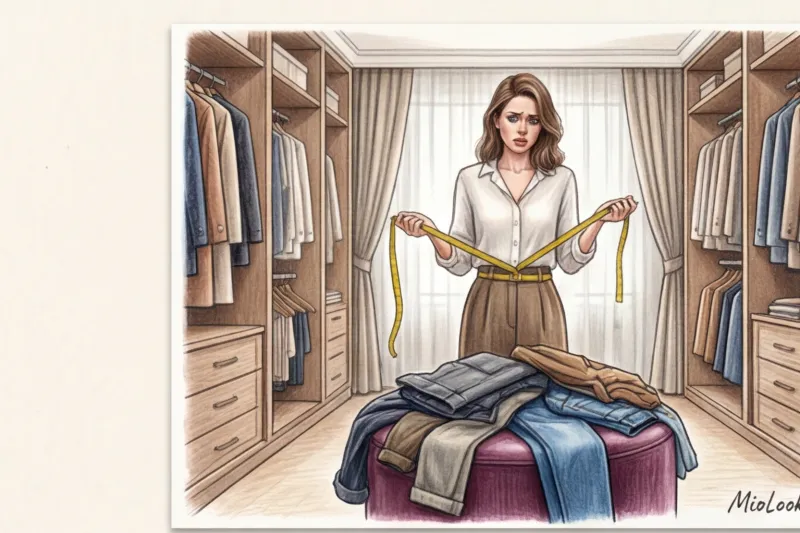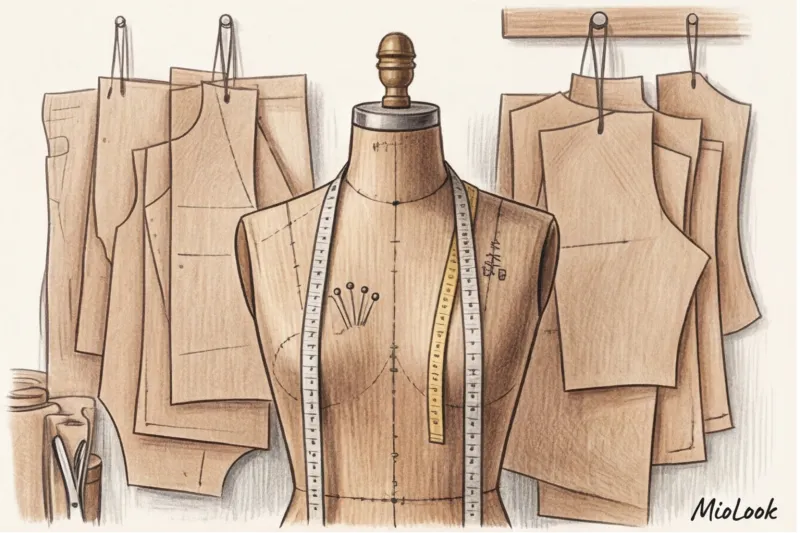
Have you ever ordered a premium jacket in your usual size, waited with bated breath for it to arrive, only to find it fits like a shapeless sack when you put it on? You look in the mirror and habitually blame yourself: "I must have gained weight" or "My shoulders are unconventional." Spoiler alert: it has absolutely nothing to do with your figure. As a practicing stylist, I see women lose confidence every day due to simple, factory-related laziness.
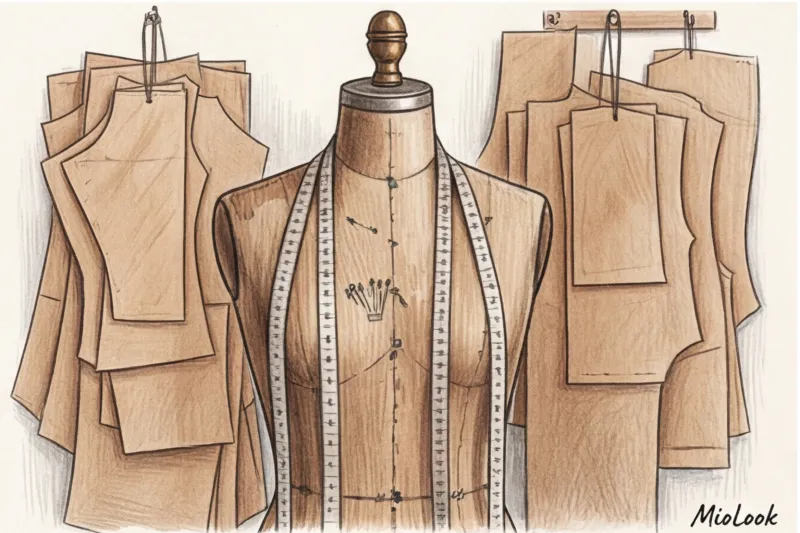
Today virtual clothing try-on online — This isn't just a fun toy to see if "this shade of green suits you." It's a powerful mathematical tool that exposes the biggest lie of the mass market—the illusion of a standard size. The industry has historically maintained a rigid monopoly on the "M" size pattern, designed for a height of 170 cm. If your measurements deviate even a centimeter, the lottery begins. By the way, if you're tired of struggling with the standard grid, we've covered this phenomenon in more detail in our complete guide to the best brands and clothing lines in Plus-Size, Petite, and Tall sizes.
Let's explore how artificial intelligence is changing the game, allowing you to invest in your wardrobe without fear or endless returns.
The Illusion of the Perfect Pattern: Why We Constantly Get Size Wrong
To understand the value of digital technology, you need to visit a factory. When a mass-market brand creates a new dress style, it sews a perfect sample in a size S or M. Then, a process of linear scaling (grading) takes over. Instead of recalculating the proportions of the living body for a size L or XL, designers simply add 2–4 centimeters to the edges of the pattern.
Researchers at the Fashion Institute of Technology (2023) proved that linear grading inevitably disrupts the garment's geometry as it increases in size. The bust becomes wider, but the armholes somehow drop, and the darts move toward the armpits. A garment that fit perfectly in a size S becomes a boxy robe in a size L.
Add to this the phenomenon of vanity sizing. Brands deliberately change labels for marketing purposes: what was a size 40 ten years ago is now labeled as a 36 to make the customer feel slimmer. The end result is chaos.
According to the extensive McKinsey State of Fashion (2024) report, up to 80% of clothing returns in e-commerce occur solely due to improper fit, and not due to defects or unsatisfactory color.
Endless returns eat up your time. When you order three sizes of a Massimo Dutti coat, you freeze your card between €600 and €1,000, waste a weekend waiting for the courier, and then process the return. A high-quality digital algorithm eliminates this financial and time drain.
Your perfect look starts here
Join thousands of users who look flawless every day with MioLook. The smart algorithm takes into account every nuance of your figure.
Get access — €0.99 onceVirtual Clothing Try-Ons: How Neural Networks Solve the Fit Problem
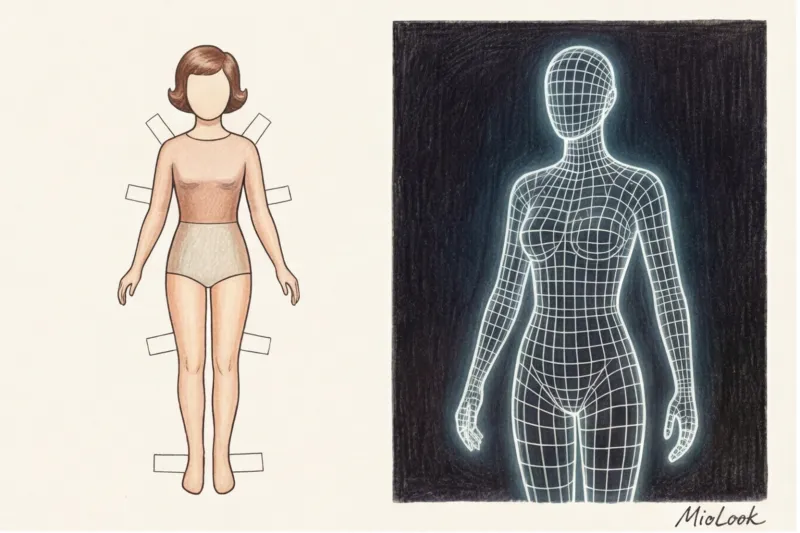
It's commonly believed that virtual fittings work like the paper dolls of our childhood: a flat image of clothing superimposed on a flat photograph of a person. Five years ago, that was certainly the case. Modern AI models operate fundamentally differently—they think like Swiss tailors.
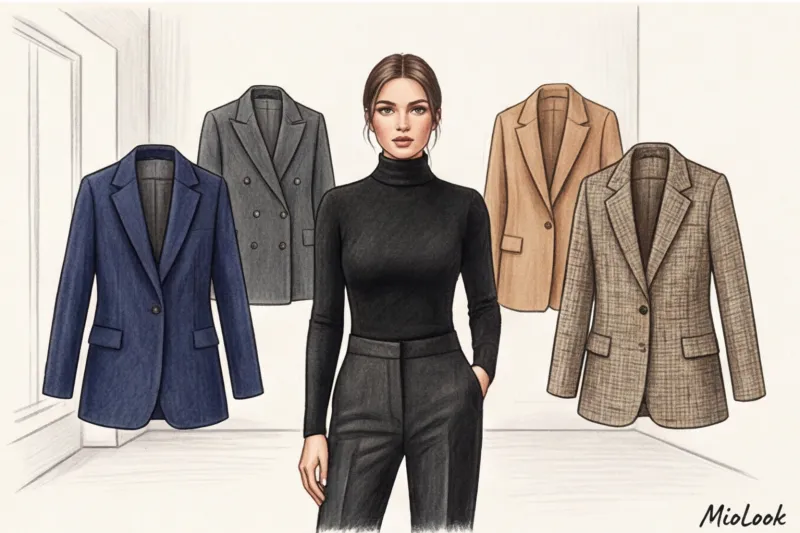
The algorithm doesn't just read your waist measurements (90-60-90 means nothing to a tailor). It analyzes your body structure: the depth of your lower back, the height of your hips, the slope of your shoulders, and the distribution of your waist measurements. Two women with the same hip measurement of 100 cm will look completely different in the same jeans if one woman's waist is concentrated in her buttocks, while the other's is concentrated in her "saddlebags."
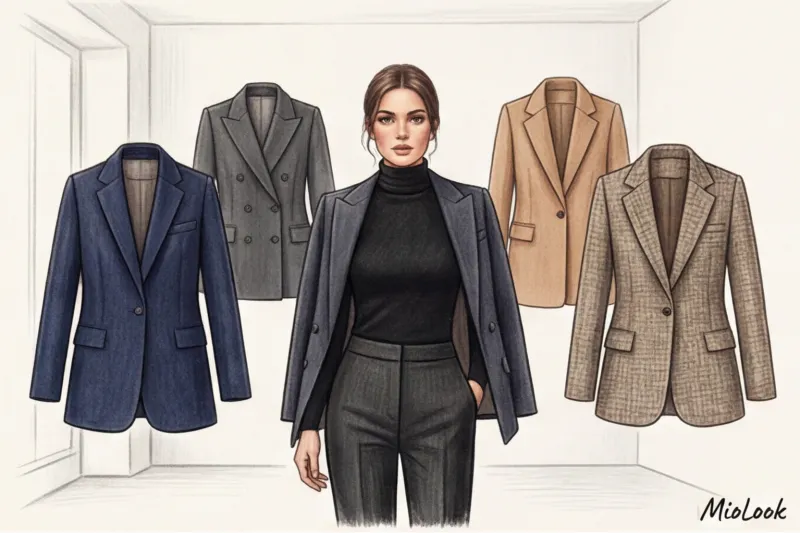
I had a client who was looking for a pair of wide-legged palazzo pants made of heavy viscose for an interview at an IT company (where the dress code was casual, but a classy look was required). She always bought a size 38. However, the app's algorithm, after comparing a digital twin of her figure with the fabric tension map of the specific COS pants, showed that at a size 38, the fabric would stretch unattractively in the crotch area, distorting the creases. The AI recommended a size 40. We followed her advice—and the pants fit perfectly, with that luxurious, flowing drape the designer had envisioned.
Algorithm vs. Brand Labeling: Who to Trust?
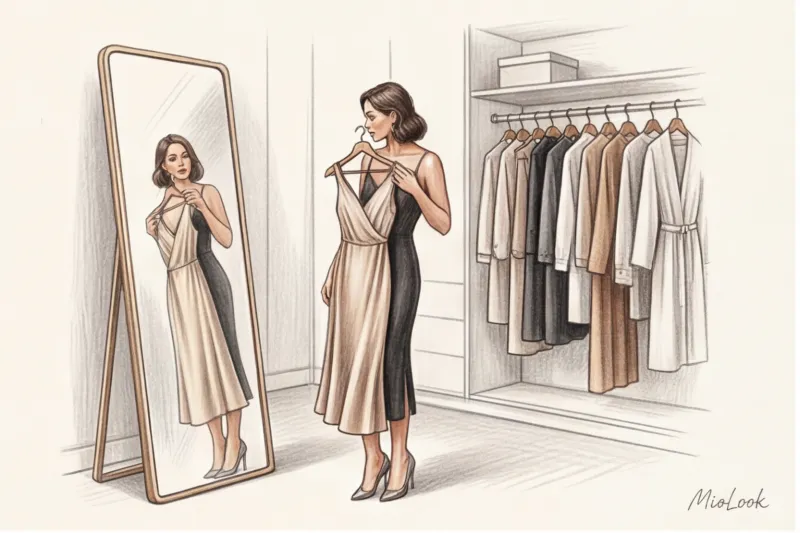
The most common fear my clients have is: “The system suggests me a size L, but I’ve been wearing an M my whole life!” If you use advanced tools, such as online virtual clothing try-ons, MioLook , trust the math, not the letters on the tag.
- Ignore the ego: No one but you will see the size on the tag, but everyone will see how the item stretches on the back.
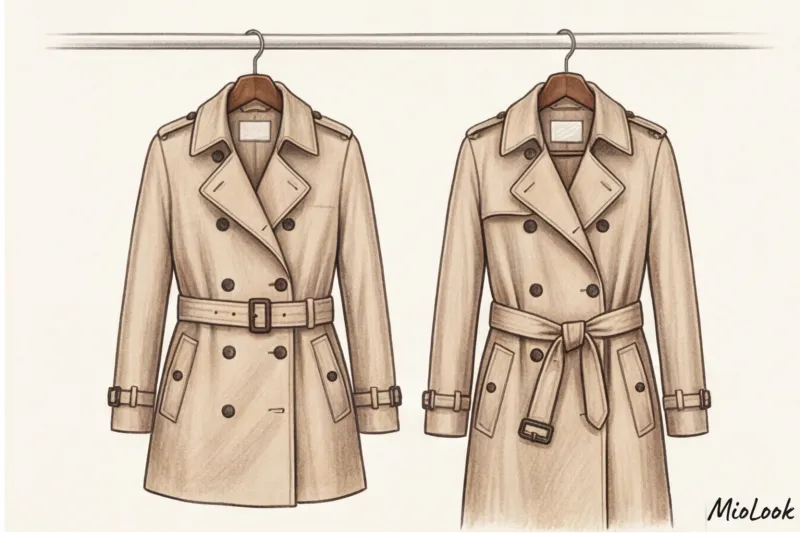
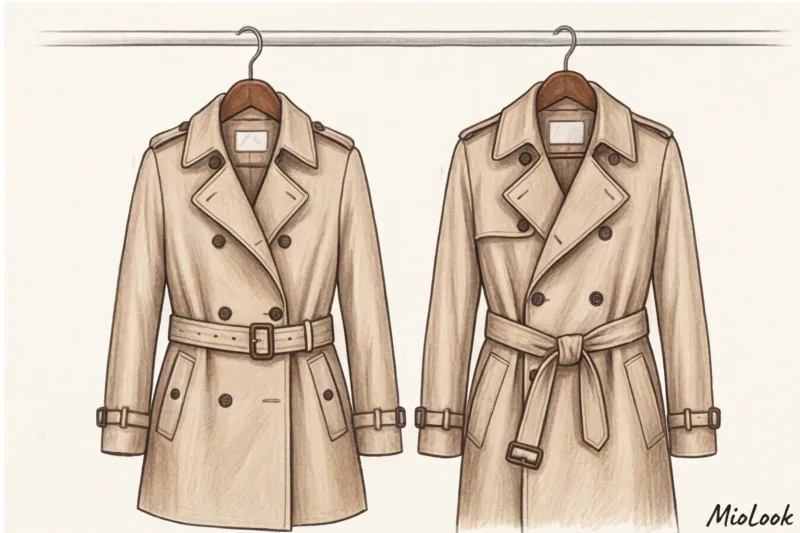
- Change of size: AI often helps you understand that you need a different proportion, not a different size. For example, it recommends buying a trench coat from the Petite line so that the pockets and waistline are in their natural positions.
Risk-Free Investing: How AI is Saving Luxury Shopping
While a €20 T-shirt from Zara can be a bit of a bummer, buying status items online has long been considered Russian roulette. Complexly cut wool coats, cashmere sweaters, and structured jackets require millimeter-precision shoulder placement.
Last year, a client approached me wanting to invest in a classic double-breasted Loro Piana coat priced at approximately €3,800. She found it in an international online boutique but was terrified of ordering it: returning the luxury item from abroad would have cost her approximately €150 in tax and shipping, not to mention the stress. We ran her measurements through a virtual shoulder fit analysis system. The system revealed that, due to her slightly sloping shoulders, the classic set-in sleeves of this style were a dead giveaway—they bunched up. We promptly switched to a raglan sleeve style. The investment was saved.
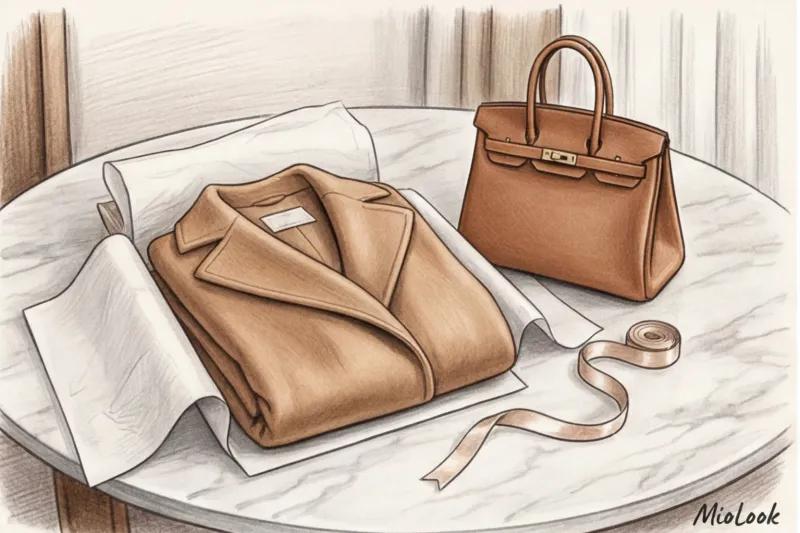
This is where the cost-per-wear principle comes into play. A €300 sweater that fits perfectly and is worn 60 times per season costs you €5 per wear. An €80 sweater that's tight in the armholes and is worn twice costs you €40 per wear. Precise AI fit directly increases the frequency of wear, making your wardrobe truly intelligent.
Ready to get started?
Try the MioLook free plan—no commitments required. Create your capsule and see how AI curates the perfect looks.
Get access — €0.99 onceWhat neural networks can't do (yet): the limitations of digital stylists
As a professional, I have to be honest: virtual fitting isn't magic, and it has its own blind spots. In some respects, AI still falls short of human experience.
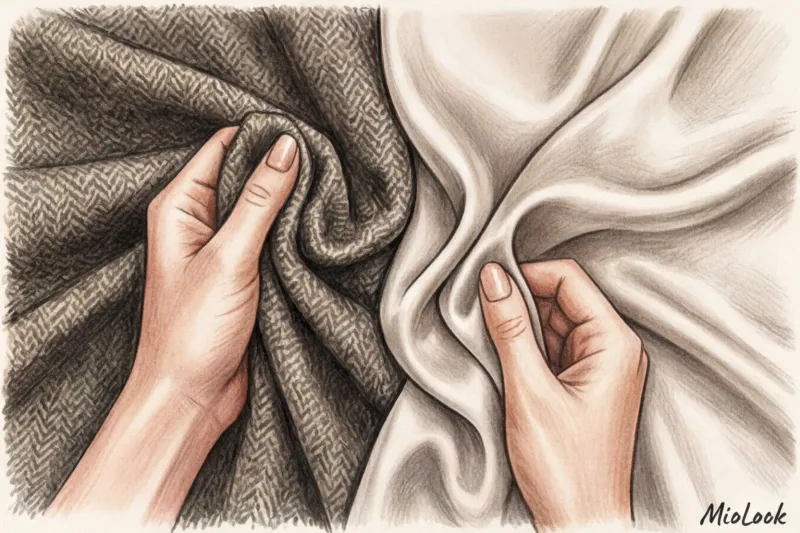
Tactility and density of fabric. A neural network is great at calculating volumes, but it can't account for how a particular piece of fabric drapes. While an algorithm can predict the fit of 100% wool trousers, a heavy, dry Italian tweed will move completely differently than a soft, loose blend, even if the patterns are identical.
Individual comfort threshold. This is something that defies calculation. AI sees that the jacket fastens at the waist with 2 centimeters of room and says, "Perfect fit." But it doesn't know that you hate even the slightest feeling of constriction and are psychologically comfortable only in oversized clothing.
Micro-asymmetry. Uneven shoulder heights or mild scoliosis (which affects 80% of adults) may require the intervention of a tailor. AI can select the correct base jacket size, but the left sleeve length will still need to be adjusted by 1.5 cm in a tailor's shop.
Checklist: How to Use AI to Choose the Perfect Size
A digital stylist's recommendations are only as accurate as the data you feed them. Over 12 years of experience, I've noticed that 9 out of 10 women take their measurements incorrectly. Here's how to avoid the algorithm getting it wrong.
- Correct base: Always take measurements (or take photos for the AI) wearing basic, smooth underwear that you plan to wear underneath. Avoid push-up bras if you're buying a silk blouse and wearing a soft bralette underneath. A padded bra can add up to 4 cm to your bust measurement.
- Shadow Trap: If the algorithm asks you to upload a photo, stand facing a natural light source (such as a window). Harsh overhead artificial light creates deep shadows under the breasts and stomach, which some neural networks interpret as additional volume.
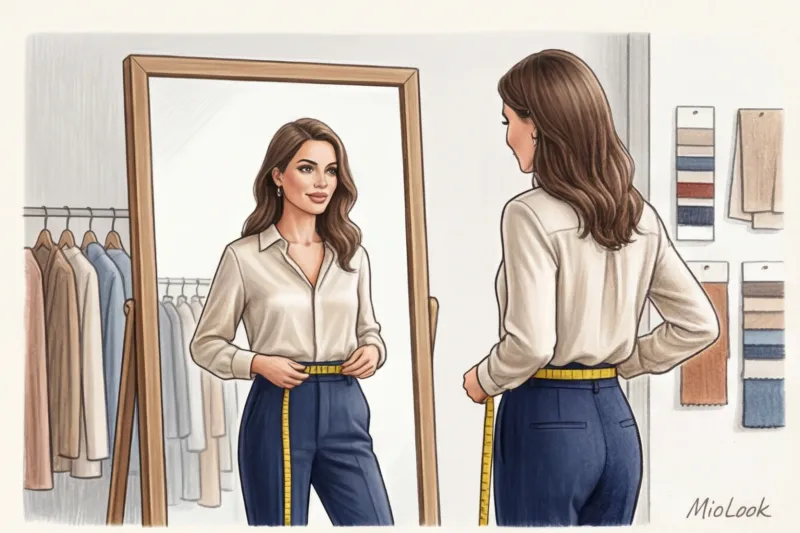
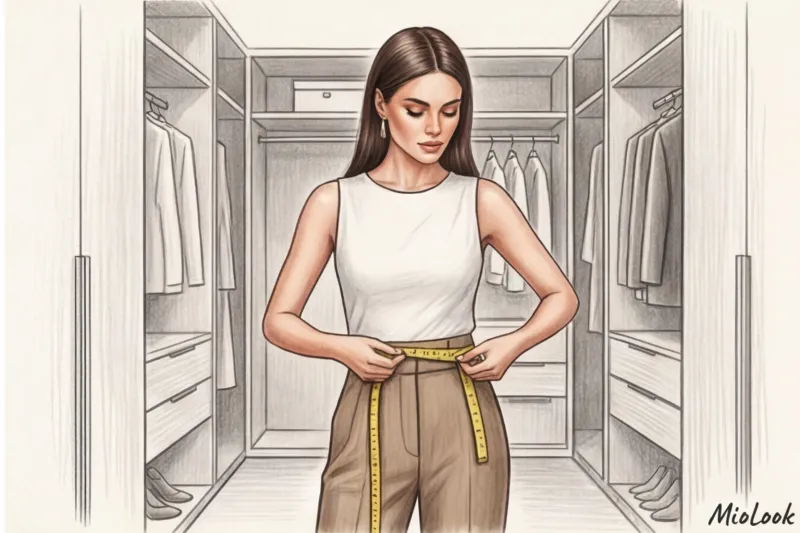
- Horizontal tape: The measuring tape should be strictly parallel to the floor. If the tape slips down your back while measuring your chest, you'll have an error of 2-3 cm. Don't suck in your stomach or pull the tape too tight—it should be snug, but not pressed against your skin.
- Check Garment Measurements: Always distinguish between body measurements and garment measurements. If your chest measurement is 90 cm and your shirt's chest measurement is 92 cm, it will be tight. For a looser fit, a shirt should have a chest measurement of approximately 100–104 cm.
Stop asking yourself, "What size am I?" You don't have a size. You have a unique body architecture, measured in centimeters and proportions. Virtual fitting teaches us the cardinal rule of premium style: clothes should serve your body, not your body, which should try to squeeze into patterns devised by marketers to optimize manufacturing costs.