Artificial Intelligence and the End of the Age of Intuition
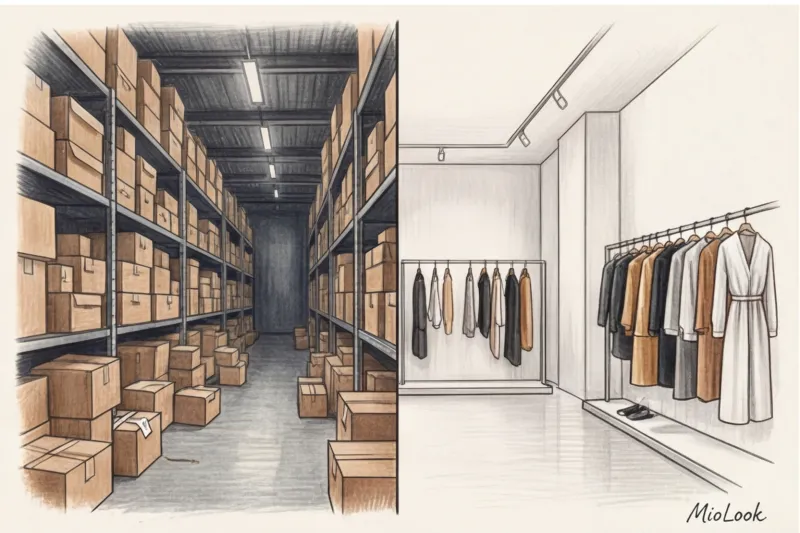
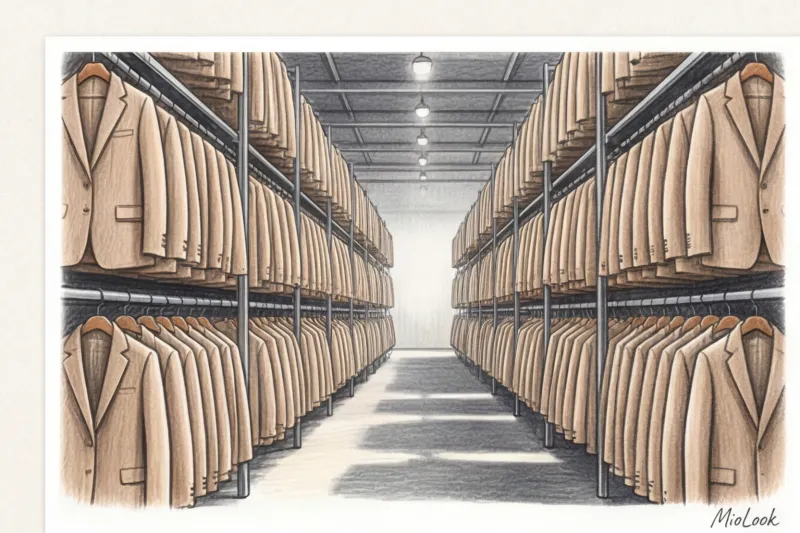
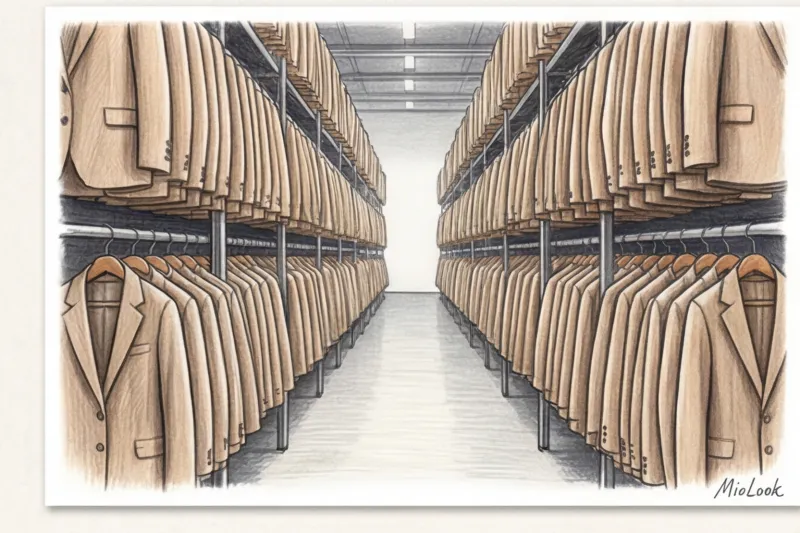
Do you know what a fashion brand owner's worst nightmare looks like? It's not a scathing review in a glossy magazine or a social media scandal. It's a hangar on the outskirts of town, filled to the ceiling with boxes containing tens of thousands of "perfect" basic shirts that no one wants to buy. In my 12 years as a stylist and consultant, I've seen this scene far too often. That's why today forecasting demand for clothing — this is not just a trendy IT term, but a question of brand survival.
Most articles about AI in retail are written by IT professionals for IT professionals. They juggle terms like "machine learning" and "neural networks," forgetting the most important thing: the clothes themselves, the cut, and how a woman wants to feel in a new jacket. We've already covered the evolution of this approach in more detail in our The complete guide to analytics for the fashion business Today, I want to talk to you as a stylist: how algorithms are saving designers' creativity and translating buyers' ephemeral intuition into precise, ruthless numbers.
Why old procurement methods and the "eternal base" no longer work
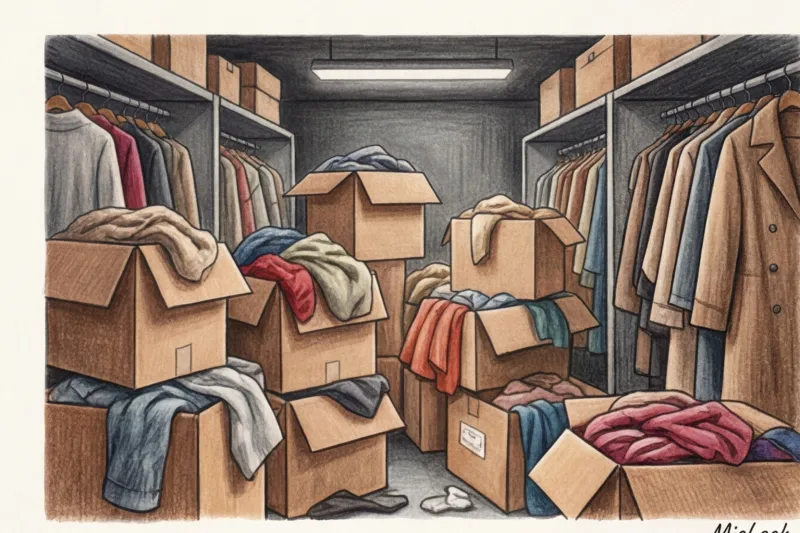
Just five years ago, the system seemed foolproof: a buyer goes to Milan shows, watches the catwalk, relies on his expertise, and orders a batch. Today, this intuitive model is critically flawed. According to the McKinsey State of Fashion (2024) global report, up to 30% of the world's clothing never finds a buyer, ending up in landfills or ovens. The anatomy of this overstock (overproduction) is always rooted in human error.
Let me tell you a story from my consulting practice. I had a client—a wonderful mid-range brand—that decided to go for "safe classics." They produced a huge batch of fitted jackets in a high-quality wool blend, investing around €50,000. The logic was ironclad: classics always sell. But they failed to anticipate the looming micro-trend of exaggerated oversize, which a couple of months later, thanks to Balenciaga, swept the mass market. The jackets became dead weight.
"The myth of the safe basic is the biggest trap in the fashion business. A basic white T-shirt in 2019 and a basic T-shirt in 2024 are two completely different items, with different neck widths, cotton weights (today we're looking for 180 g/m² and up), and shoulder seam drop."
Buying a basic wardrobe blindly, without digitizing the micro-shifts in silhouettes, is a surefire way to bankruptcy. Intuition can no longer keep up with the speed of changing trends.
Access to MioLook for €0.99 — one-time payment
A smart AI stylist will select the perfect look based on current trends and your preferences.
Get access — €0.99 onceHow does algorithmic clothing demand forecasting work?
The industry is rapidly moving from rigid seasonal collections (spring-summer, fall-winter) to flexible ones data-driven drop models. The brand releases a small capsule, analyzes the reaction, and only then scales up production. But how do neural networks know exactly what to release?
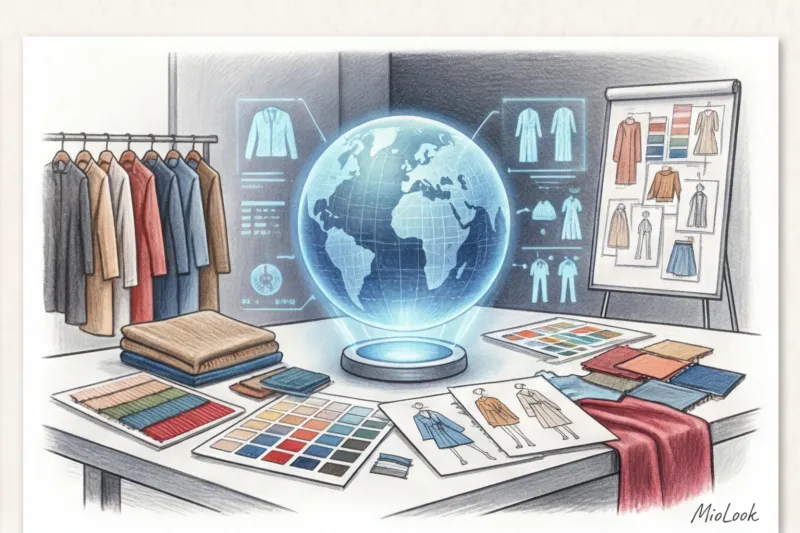
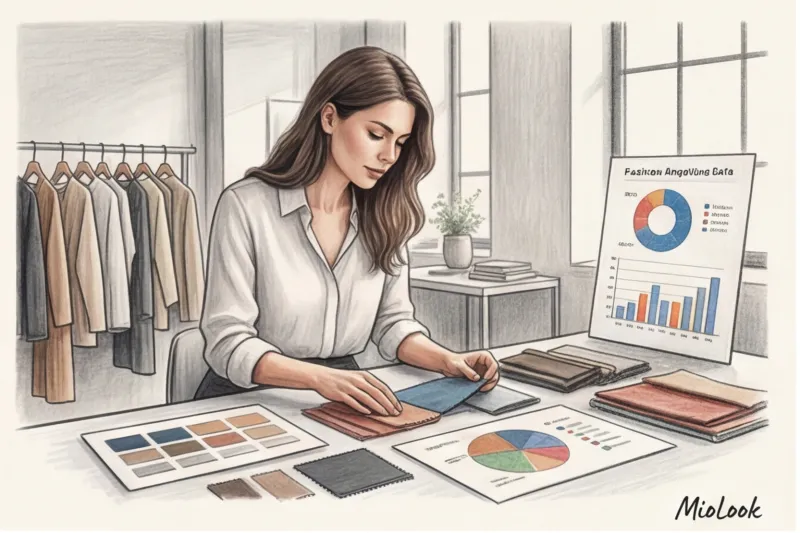
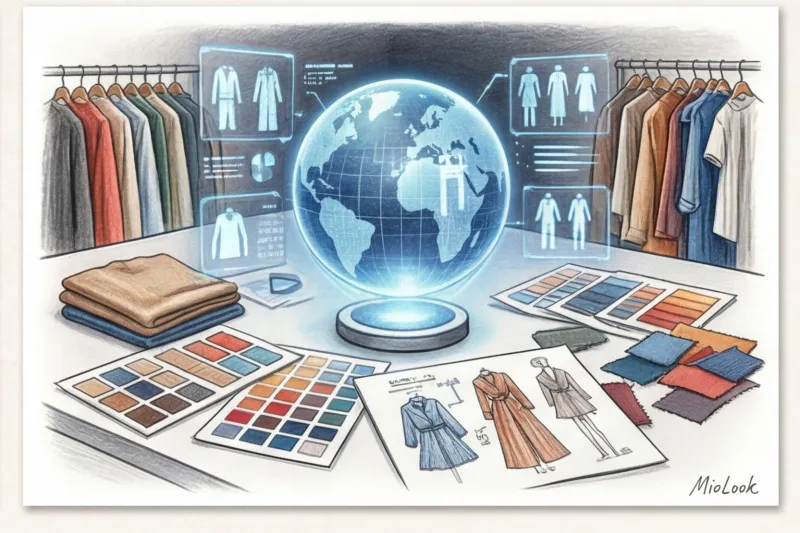
The answer lies in Computer Vision technology. Predictive analytics leaders like Heuritech scan millions of photos on social media every day. AI doesn't just see "a girl in a dress." It breaks down the image into molecules: it recognizes the specific PANTONE shade, the texture of the fabric (silk or heavy linen), the collar shape, and the hem length down to the centimeter.
From Macro Trends to Micro Signals: What We're Missing
Working with private clients on wardrobe reviews, I've noticed an interesting pattern: women's requests for new silhouettes precede the arrival of these items in mass-market fashion by two to three months. Clients start asking for "something less form-fitting" or "I want to bring back the emphasis on the waist" even before Zara updates its display.
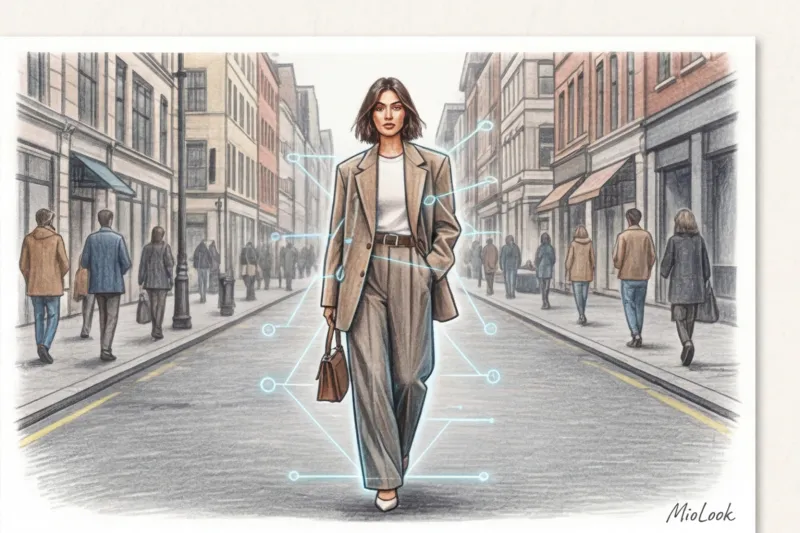
Artificial intelligence captures these signals on an industrial scale. Algorithms brilliantly distinguish between macro-trends (for example, the global focus on eco-friendliness and natural fabrics) and micro-signals (the return of burgundy in shoes). Moreover, mathematical models can predict the "burnout rate" of a trend. They will accurately tell a buyer whether it's worth investing in leopard print for the entire year, or whether this micro-trend will die out in a month, and it's better to limit it to just one. an accent blouse in a business capsule.
Metrics instead of guesswork: what parameters does AI predict?
When you integrate apparel demand forecasting into your business, you stop guessing. Machine learning generates specific metrics that directly impact margins.
Here are three key areas where AI performs better than any focus group:
- Optimal depth of the size grid. Forget the standard 1-2-2-1 distribution (one XS, two S, two M, one L). The same McKinsey report proves that a regional approach to sizing reduces inventory by 15-20%. In one region, you need to sew more XL sizes, while in another, you should focus on petite sizes.
- Color preferences by geolocation. Why do graphite and black asymmetrical cuts sell out instantly in Berlin, while warm pastel shades and neon are the order of the day in Madrid? AI analyzes local demand and helps distribute inventory between stores so that the desired color is in the desired city.
- Predictive pricing. The algorithm calculates the ideal starting price (say, €120 instead of €150) at which the item will be completely sold out. to The start of forced seasonal sales. You earn more through turnover without eroding your brand's prestige with 70% discounts.
Your perfect look starts here
Join thousands of users who look flawless every day with MioLook. Digitize your wardrobe in just a few clicks.
Get access — €0.99 onceAI Analytics Implementation: A Step-by-Step Plan for a Fashion Brand
I often hear from local brand owners: "Isabella, we don't have millions of euros for our own neural networks; that's only for giants like H&M." That's another myth. Elements of AI analytics can be implemented at any level. Here's my checklist to get started:
- Audit of current data. AI feeds on information. Collect all historical data on sales, returns, and defective items for the past three years. Even if it's just hundreds of disparate Excel spreadsheets right now, it's a goldmine. By the way, by analyzing reasons for returning clothes , the algorithm often finds errors in patterns.
- Integration of external data. Connect to available SaaS platforms for trend-watching (for example, WGSN or more affordable analogues) and set up search query analytics in your region.
- Team synchronization. The most difficult stage. You'll have to teach a creative director who "sees things this way" to communicate with a data analyst who operates on dry conversions.
Designers' Fears: Will Artificial Intelligence Kill Creativity?
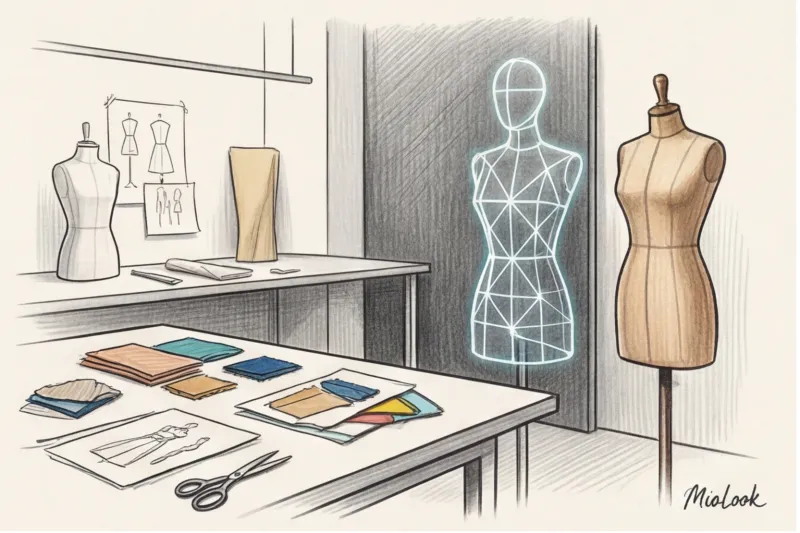
There's often a fear swirling behind the scenes at fashion houses: if we only sew what the machine tells us to, fashion will become unbearably boring. But let's be honest. AI isn't a designer. It's a highly accurate commercial compass.

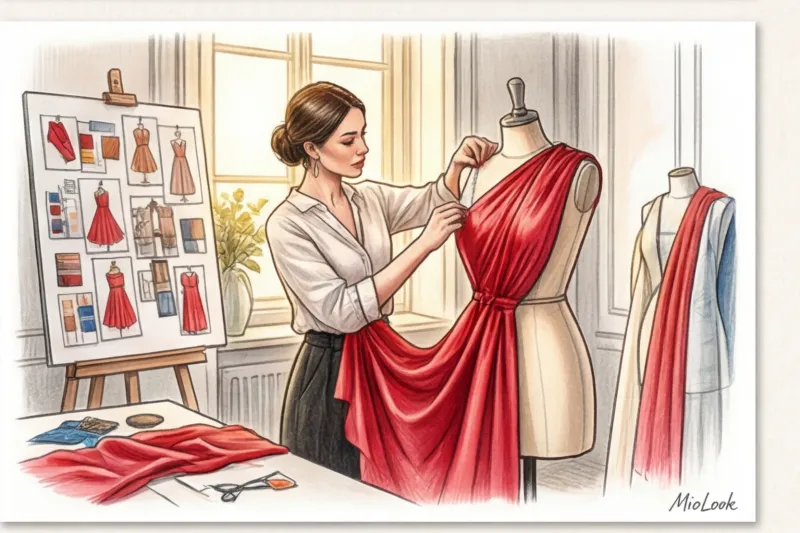
I always tell my design clients: algorithms take away the routine. They tell you with pinpoint accuracy how many black palazzo pants and basic long-sleeved T-shirts you need to make to cover the bills and studio rent. With this financial cushion, you gain absolute freedom to create those brilliant, whimsical statement pieces that will make fashion history.
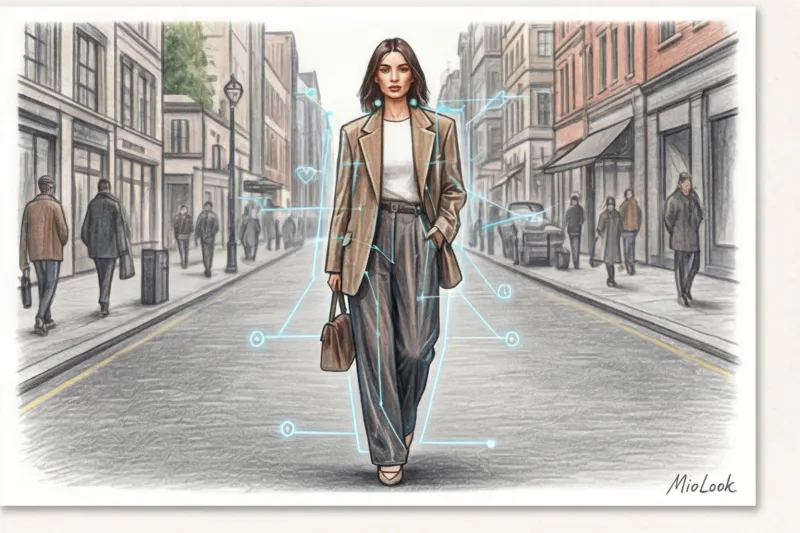
Fair Limit: When does predictive analytics NOT work? It's powerless if you're launching a completely avant-garde, niche product, or a completely new aesthetic that hasn't yet appeared in the visual field. AI analyzes the past and present to predict the near future. It can't predict the emergence of, say, Christian Dior and his New Look in 1947.
The Future of Retail: Hyper-Personalization and Zero-Waste Fashion
We are on the threshold of amazing changes. Accurate forecasting of clothing demand leads us to the main goal of the decade – truly sustainable, zero-waste fashion. This is a paradigm shift: from mass production "at random" to the model of "we produce only what people are sure will buy."
Investments in predictive analytics technologies and personalization in e-commerce Today, this isn't a tribute to the latest technological fad. It's the only way to survive in the fashion market of the future, where the cost of fabric, logistics, and labor is rising every day.
As a stylist who works with real women's wardrobes every day, I see only positives in this. The fashion of the future isn't endless rows of identical, ill-fitting clothes. It's about perfect tailoring, no landfills of unsold polyester dresses, and clothes that meet real, digitalized needs. Ultimately, true style isn't about producing a million things, but about creating that one perfect piece that will create a lineup.