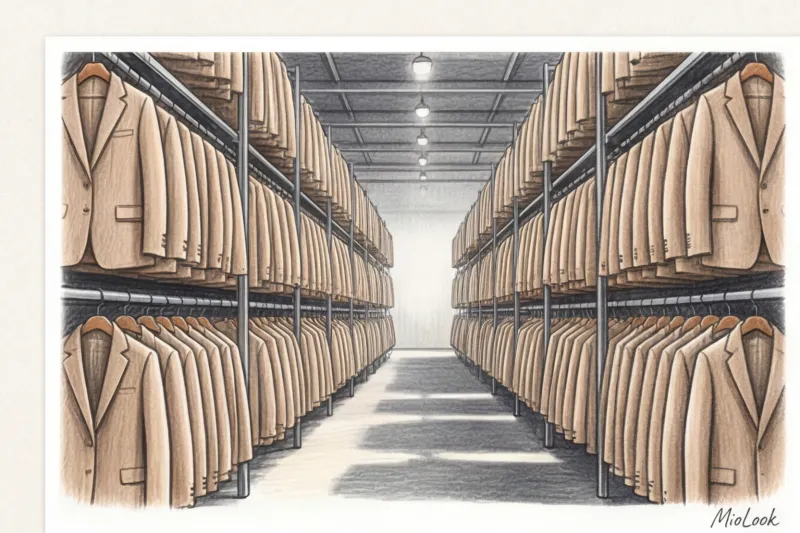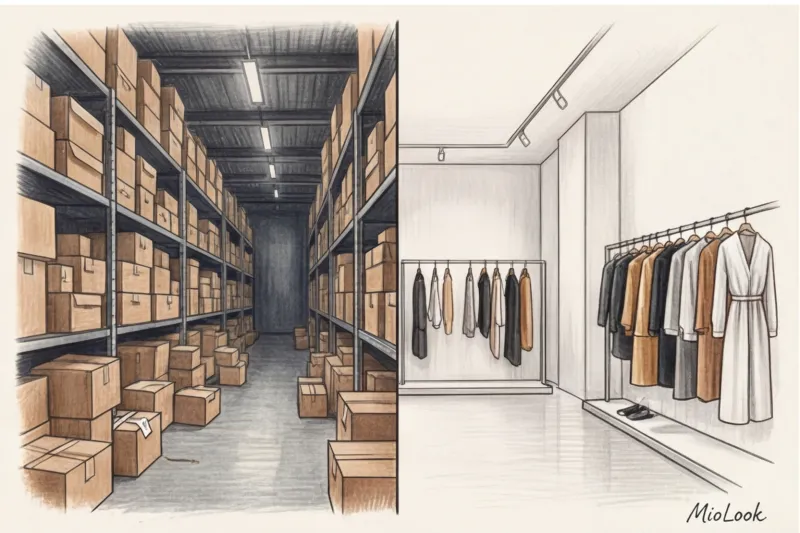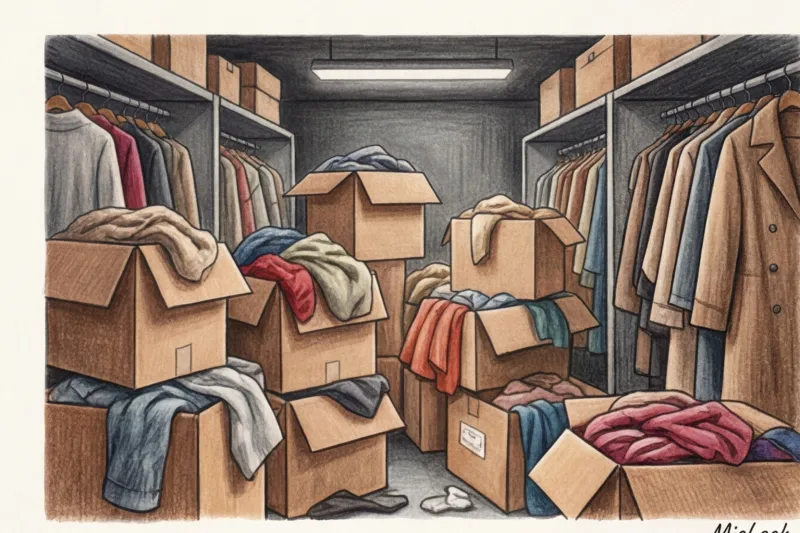
A few years ago, a local brand owner I knew showed me his warehouse. We stood between rows of boxes brimming with seemingly perfect, basic white T-shirts. About 50,000 units were sitting idle. Why? The brand had produced a batch of fitted, crew-neck silhouettes just before the market finally took over the trend for heavy cotton and oversized, off-the-shoulder cuts. Budgets were frozen, and seasonal revenue plummeted.
We've covered in more detail how technology is changing the industry at the macro level in our The Complete Guide to Analytics for Fashion Business: AI and Trend Forecasting But today I want to talk about practice. As a stylist and consultant, I regularly see brands blowing their budgets due to a blind faith in "intuition."
Today AI for fashion retail This isn't some abstract "digital transformation" for IT corporations. It's a clearly understandable survival tool. We'll examine algorithm implementation not in the language of dry integrators, but from the perspective of those who work with things, warehouses, and real clients every day.
Why Buyer's Intuition No Longer Works: The Industry's Main Pains
For a long time, the fashion industry relied on romanticism. Buyers would travel to Milan shows, touch fabrics, get inspired, and base their purchases on their own vision. In the era of slow trends, this worked. Now, such an approach is a surefire way to cash flow shortfalls.
The main problem with modern retail is overstock. According to McKinsey & Company's "The State of Fashion" (2024) report, approximately 30% of clothing produced globally ends up in landfills or gathering dust in warehouses due to simple planning errors. Money trapped in unsold items is literally killing local brands.
Many brands try to hide from microtrends by trapping themselves in "eternal basics." It seems like blue straight jeans or a beige trench coat will always be in demand. In 14 years as a stylist, I've learned a hard lesson: there are no timeless basics. Lapel widths change, the rise of trousers shifts 2 centimeters higher or lower, the density of denim changes. The human brain isn't capable of detecting these micro-shifts before they become mainstream. But an algorithm can.
Where to Start with AI Implementation: A Step-by-Step Plan for Fashion Businesses
The first thing to understand is that you don't need to build your own ChatGPT for millions of euros. There are already affordable SaaS solutions on the market for mid-sized businesses. But no amount of algorithmic magic will work if your source code is a mess.
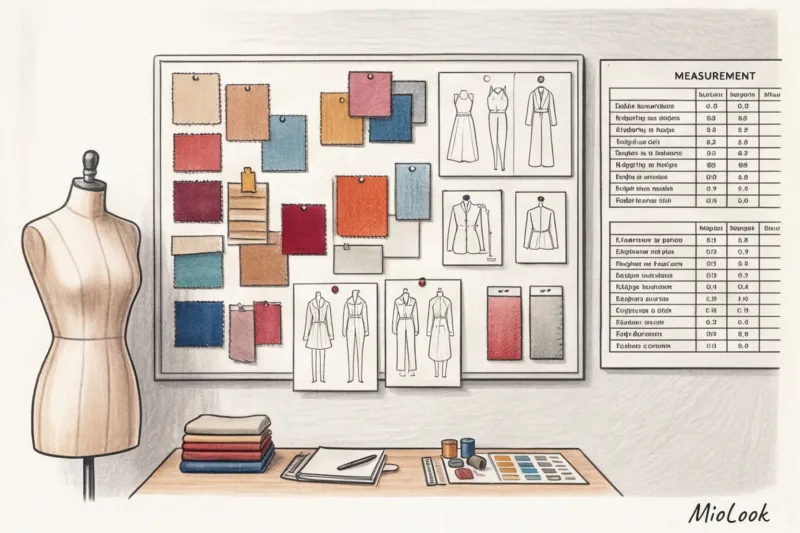
Step 1: Digitizing the past. Artificial intelligence feeds on data. If your Excel spreadsheet lists items like "Masha Red Dress," the neural network doesn't recognize that product. For the algorithm to start finding patterns, the database must be standardized to a single, strict standard.
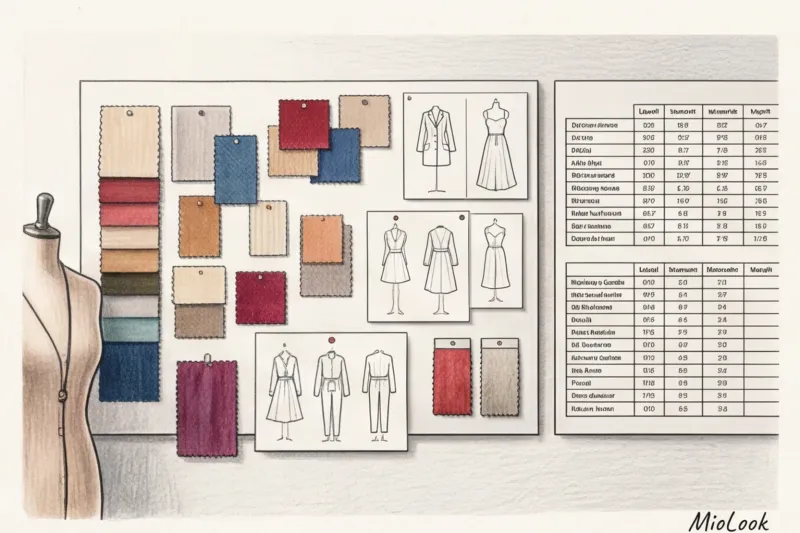
Step 2: Deep tagging of the assortment. This is a critical point. From a stylist's perspective, a "red dress" is nothing. Why did they buy it? Because of the color? Because of the style? For AI to understand the reason for sales, the product must be clearly labeled: Dress, A-line, midi length, cool red undertone, 100% viscose, hidden back zipper Only then will the system understand that demand has fallen not for the color red in general, but specifically for the miniskirt in this shade.
Step 3: Pilot launch. Don't try to analyze your entire product range at once. Launch a pilot project on a narrow, clearly defined category—for example, just outerwear or just denim. See how the numbers change over the course of one season.
Optimize visual content with AI
Use MioLook's smart algorithms to create perfect images and increase conversion in your store.
Get access — €0.99 onceData Preparation: The Foundation of Predictive Analytics
Before launching algorithms, conduct a rigorous audit of your current databases: receipts, purchase history, loyalty program usage. There's one counterintuitive detail here.
I often notice that brand owners only look at sales charts. In reality, data on returns is much more important If an item is returned with the "wrong size" label, AI can help determine what exactly went wrong: whether the pattern is out of alignment at the armhole or the fabric has shrunk too much after washing. We wrote about this in detail in the article Clothing returns to online stores: how to reduce the percentage.
How AI Saves Budgets: Three Key Use Cases
Once the data is prepared, AI for fashion retail begins to recoup the investment. Here are three real-life scenarios where math beats intuition.
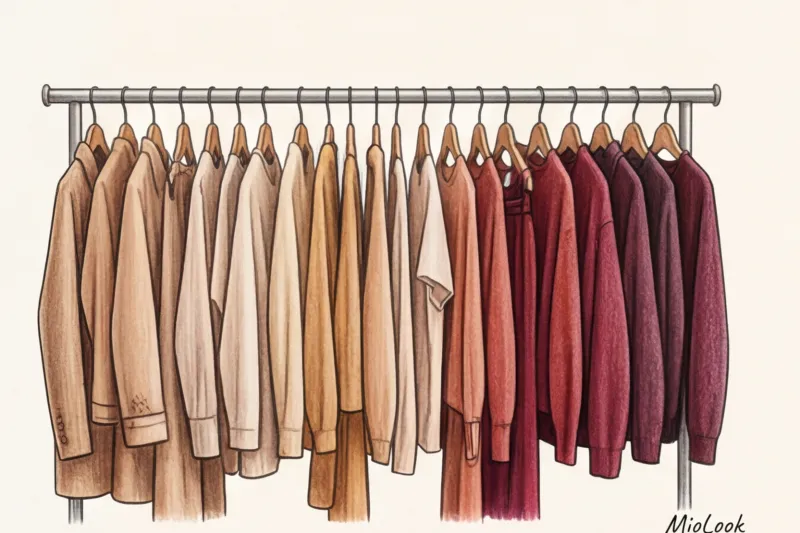
Scenario 1: Calculating the depth of the dimensional grid. The days when buyers ordered sizes based on the principle of "one XS, two S, two M, one L" are gone forever. AI analyzes regional body types. For example, the algorithm will show that a store in Scandinavia should shift its size range toward M-XL and longer sizes, while for the Asian market, it should increase its purchase of XS-S. No more "stuck" extreme sizes.
Scenario 2: Dynamic Pricing. This is my favorite tool. What's better: offering a 15% discount mid-season or marking down an item by 70% at the end, just to clear out inventory? According to a McKinsey study (2024), AI-powered dynamic pricing increases fashion brands' margins by 5-10%. The software automatically predicts when interest in an item is waning and offers a minimal but sufficient discount to stimulate sales.
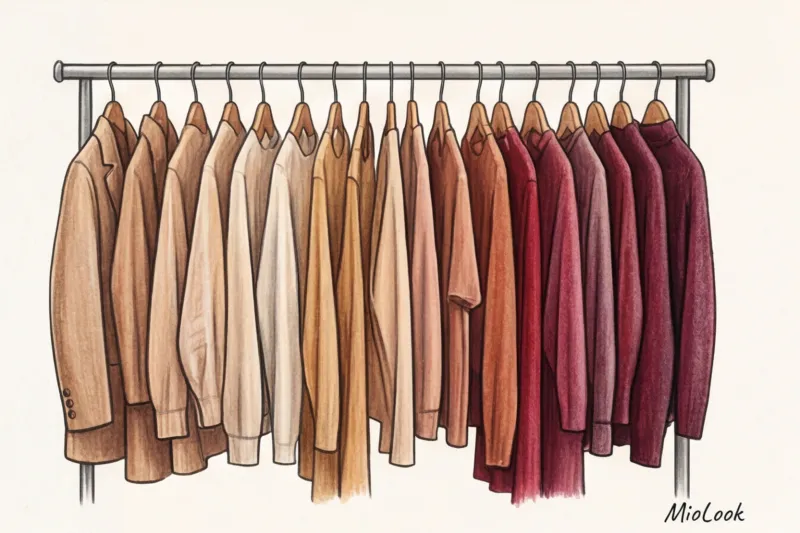
Scenario 3: Managing Capsule Collections. Algorithms are brilliant at analyzing combined purchases. The system can tell merchandisers that customers most often try on this wool jacket (€120) with a basic turtleneck (€40). Put them on the same rail, and the average order value will automatically increase. Incidentally, we discussed the principles of creating such matrices in the guide. Capsule Wardrobe: A Complete Guide to Creating One.
Success Metrics: How to Calculate ROI from AI Analytics
Implementing technology costs money, and businesses need to understand how they're getting their money's worth. Don't judge effectiveness by abstract terms like "it's become more convenient." Focus on three hard metrics.
- Sell-through rate (STR) — full-price sell-through rate. This is your key KPI. If you previously sold 40% of your collection at full price, and with AI, you now sell 45%, that's a colossal victory. For a brand in the mid-price segment (€50 to €150 per item), a 5% increase in STR often pays for an annual software subscription in one month.
- Markdown Reduction (forced markdown percentage). The more accurate the demand forecast, the fewer items survive until the final "everything for €10" sale.
- Inventory turnover. How quickly your investment in fabric and sewing turns back into cash in your account.
Important limitation: Don't expect instant miracles. Artificial intelligence needs time to learn. A reasonable timeframe for payback is two full seasons (for example, spring-summer and fall-winter). Estimating ROI a month after launch is pointless.
Embed an AI stylist on your website
Find out how technology personalization in e-commerce and MioLook algorithms increase the average bill.
Try MioLookMyths and Reality: Will AI Take Over Creative Directors' Jobs?
Designers and buyers still fear that neural networks will put them out of work. As someone in the industry, I want to disprove this popular misconception. AI won't kill creativity. On the contrary, it will take away the routine.
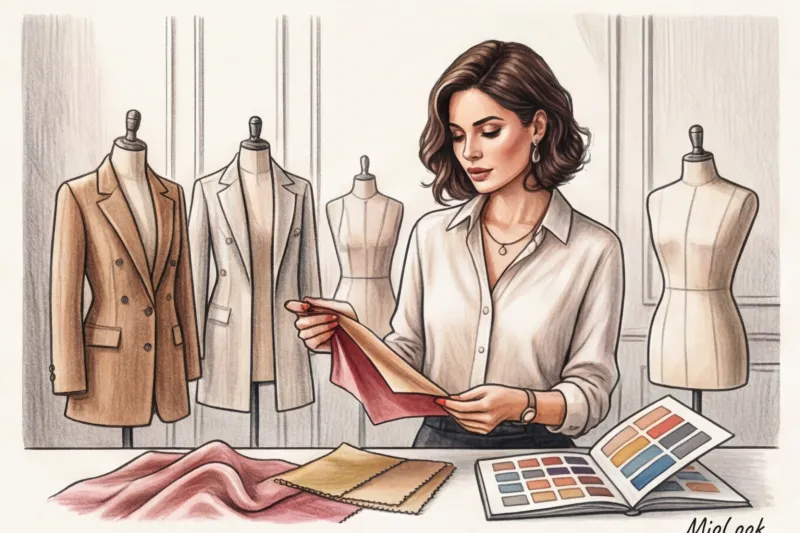
"AI doesn't invent new styles out of thin air. It merely analyzes, with mathematical precision, people's reactions to existing elements. A machine won't create a new Christian Dior New Look, but it will accurately predict how many skirts of that silhouette you'll be able to sell next May."
It's a stunning symbiosis of human and machine. The algorithm creates a "safety corridor" for the brand, showing which colors, sizes, and fabric compositions are guaranteed to bring in money (according to Business of Fashion statistics for 2023, the accuracy of such AI forecasts reaches 85-90%, compared to 50-60% for traditional buyers). And within this safe corridor, the designer can create without fear of bankrupting the company with their creative impulses.
The buyer's competencies are simply changing. They are no longer "trend hunters" with keen intuition. They are becoming analysts and curators who direct creative work toward commercial success.
Checklist: Is Your Brand Ready for AI Integration?
Before rushing to innovate, let's do a checkup. Implementing AI won't work (and will only waste your energy) if your business isn't structurally prepared for it. Here are five points I use to check brands:
- SKU volume and turnover: If you produce 15 models per year in small batches (capsules of 30-50 units), a well-tuned Excel spreadsheet will suffice. AI becomes essential when the number of SKUs (unique items) exceeds hundreds, and batches number in the thousands.
- Status of accounting systems: Is your cash register integrated with accounting systems (MyWarehouse, 1C, Shopify)? If receipts are printed on paper, the AI has nowhere to draw data from.
- History Depth: Do you have digitized sales data for at least the last 1.5–2 years?
- Ready for tagging: Is your team willing to spend a month rewriting product cards to include silhouette, texture, and fit parameters?
- A culture of trust in numbers: The hardest part: Is your head designer or buyer willing to forego purchasing fuchsia fabric if the algorithm shows that this color isn't selling well to your audience?
If you answered "yes" to most of these questions, your business is ready to take things to the next level. Algorithms relieve owners and stylists of a huge amount of anxiety. You no longer have to guess—you start to know for sure.
Technology is changing not only retail but also how we personally interact with our wardrobes. In the app MioLook We use algorithms to analyze things and create perfect capsules for real life, saving you time every morning.