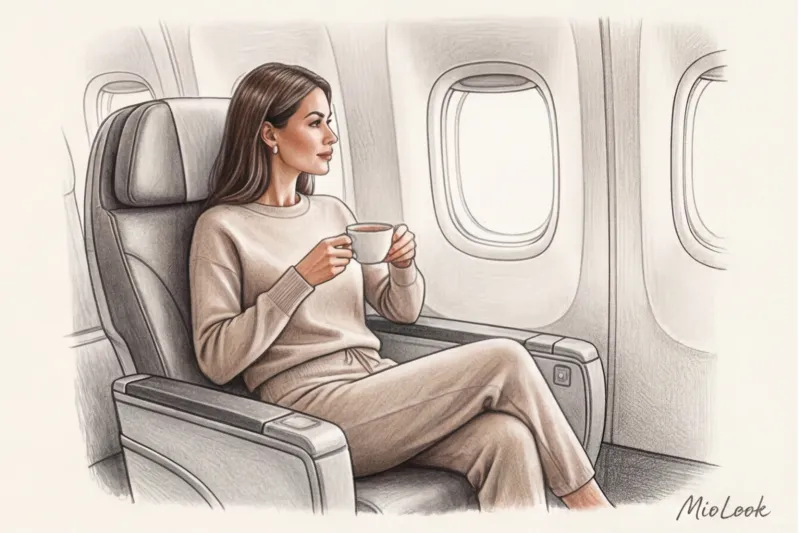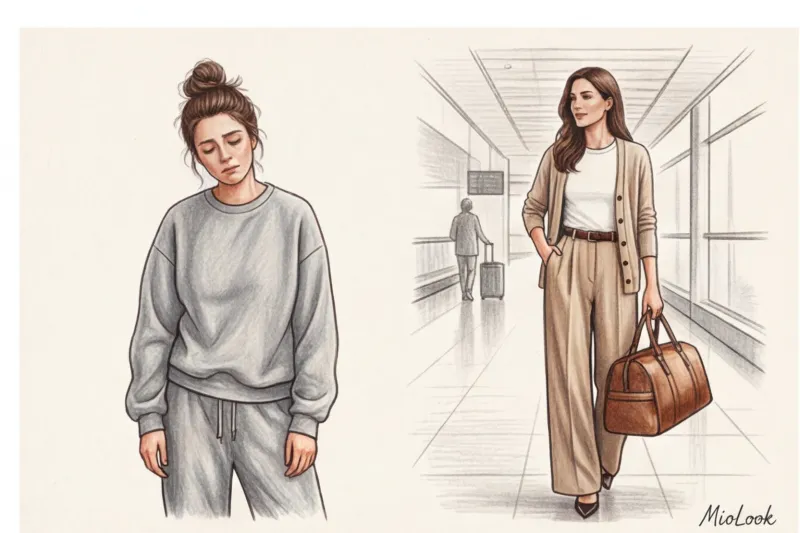
Picture this: you're exiting the airport terminal after a long flight. The hustle and bustle is all around you, and a long-awaited vacation or important business trip awaits. But instead of feeling confident, you're frantically tugging at your clinging T-shirt and trying to smooth out the deep creases in your pants caused by sitting for so long. Sound familiar?
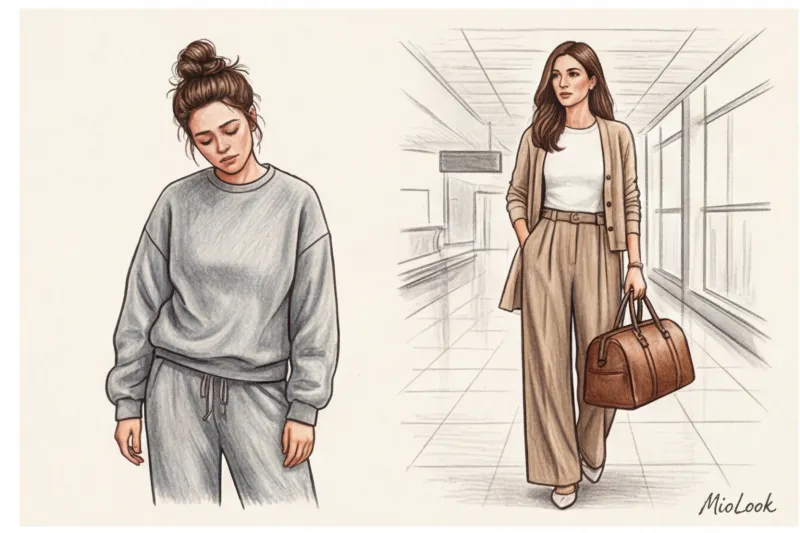
Over 12 years of working as a personal stylist and packing dozens of clients for business trips to London and vacations on the Amalfi Coast, I've realized one thing. The most common packing mistake is going to extremes. Women either pack 100% linen and spend half their vacation at the hotel ironing board, or they dress head to toe in sportswear, sacrificing elegance for comfort.
But the right one wrinkle-resistant travel clothes — it's not a compromise. It's simply knowledge of materials science. We've covered the psychology of the perfect suitcase in more detail in our The Complete Guide to Travel Clothing , and in this article I'll share the formula for the perfect fabric that will survive any transatlantic voyage.
The 'Travel Uniform' Myth: Why Wrinkle-Resistant Travel Clothes Don't Have to Be Sportswear
For years, the fashion industry has been telling us that comfortable travel requires baggy hoodies, shapeless joggers, or tech wear. I strongly disagree.
One of my clients, a top manager at an IT company, spent a long time flying on business trips in her favorite, but faded, velour suit. "Katarzyna, I just have to be comfortable sleeping in my seat!" she'd say. We replaced her suit with a fine merino set and flowing palazzo pants made of thick Tencel. On the very next Emirates flight, a flight attendant, appreciating her status look (resort elegance or resort elegance ), offered her a free upgrade to business class. Coincidence? Possibly. But how we look in transit sets the tone for the entire trip.
"Specialized hiking pants for €200 are great for the mountains. But they look out of place in the lobby of a five-star hotel or a Michelin-starred restaurant. Invest in mass-market products with the right composition, not in hiking gear."
Comfort doesn't equal sloppiness. The secret lies not in the oversized cut, but in the physical properties of the fibers from which your clothes are woven.
Your Perfect Vacation Wardrobe
Try MioLook for free: A smart AI stylist will select the perfect travel capsule based on your preferences.
Get access — €0.99 onceThe Anatomy of the Right Fabric: What to Look for on Labels in Mass-Market Stores
Many people dread the word "synthetic" like fire, obsessively searching for 100% natural ingredients on labels. But pure cotton or viscose without additives guarantees you'll look worn out right at the check-in counter.
According to the Textile Exchange 2023 report, adding just 5–10% elastane, polyester, or polyamide to natural fibers increases a fabric's ability to recover its shape by 70%. When I put together a vacation capsule with clients at Zara, COS, or Massimo Dutti, we always seek this perfect balance.
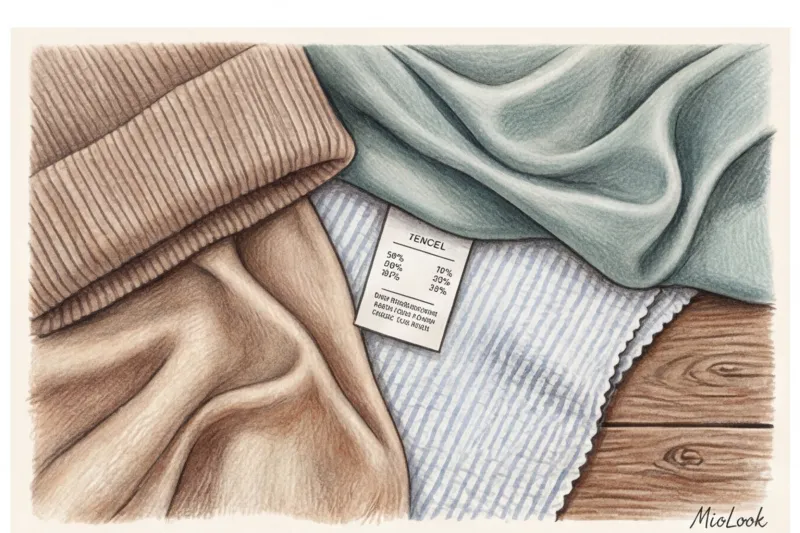
Innovative fibers: Tencel, Lyocell, Cupro and Modal
If I had to choose just one material for my travel wardrobe, it would be Tencel (aka Lyocell) This is a new-generation cellulose fiber. It breathes like cotton, flows like silk, and yet has phenomenal elasticity.
- Tencel / Lyocell: The king of the suitcase. Heavyweight Tencel trousers at Massimo Dutti will set you back around €70–€90. They'll last longer and look considerably more expensive than nylon travel pants for €200. The only caveat: Tencel may shrink slightly when washed in hot water.
- Cupro (Cupro): Often called "vegan silk," cupro is the material you'll find if you're looking for an evening slip dress you can grab from the bottom of your suitcase, shake out, and wear to dinner.
- Modal (Modal): Basic 100% cotton t-shirts quickly lose their shape. A 50% cotton/50% modal t-shirt will stay perfectly flat even after sleeping on a plane.
Natural fabrics that forgive everything
Not all nature is wrinkled. There are materials whose structure is designed to favor the traveler.
Fine merino wool Research shows that merino wool can absorb up to 30% of its own weight in moisture while remaining dry to the touch (unlike cotton, which becomes damp at 7%). It's the perfect thermoregulator for the temperature fluctuations between a hot airport and the freezing cold of an air-conditioned airplane cabin.
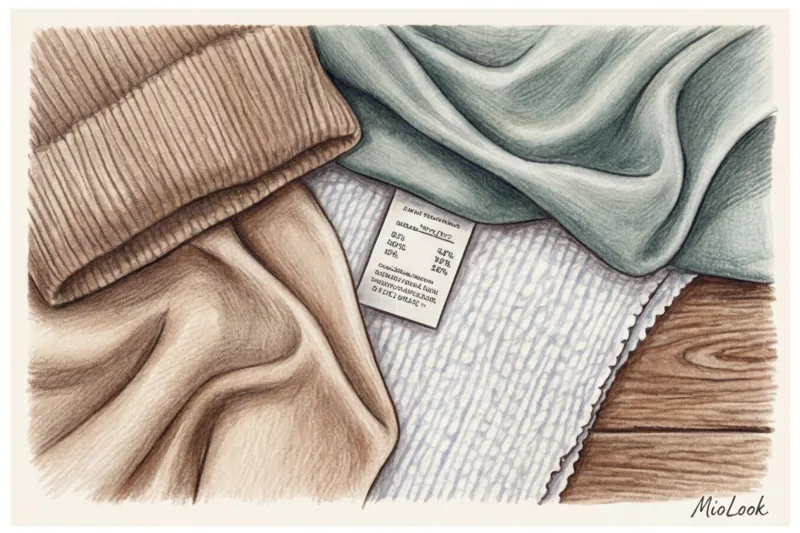
Blended flax You can wear linen without looking like you've been sleeping in it for three days. Look for the right proportions: no more than 50-60% linen, with the remainder being viscose (lyocell) and elastane. This linen retains its elegant texture but eliminates any hard creases.
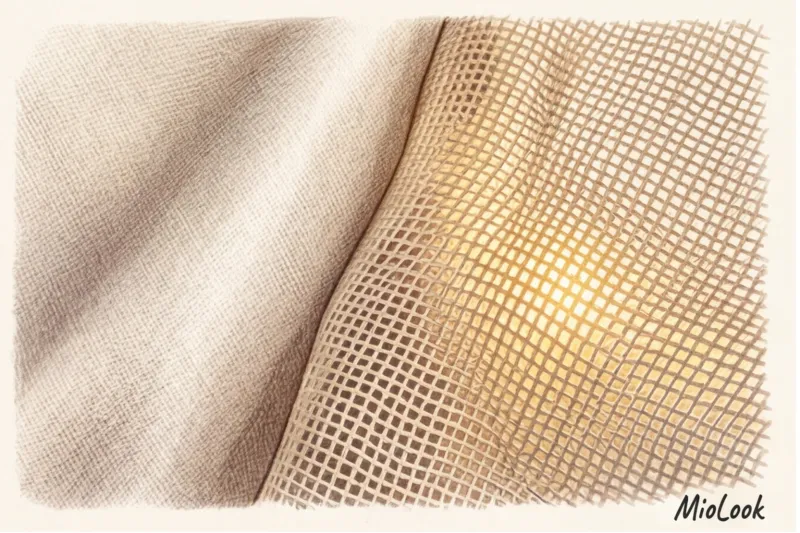
Textured fabrics Crinkle, pleat, muslin, and seersucker. This is a brilliant invention of the textile industry. Fabric where the "wrinkle" is part of the factory design is physically impossible to ruin in a suitcase.
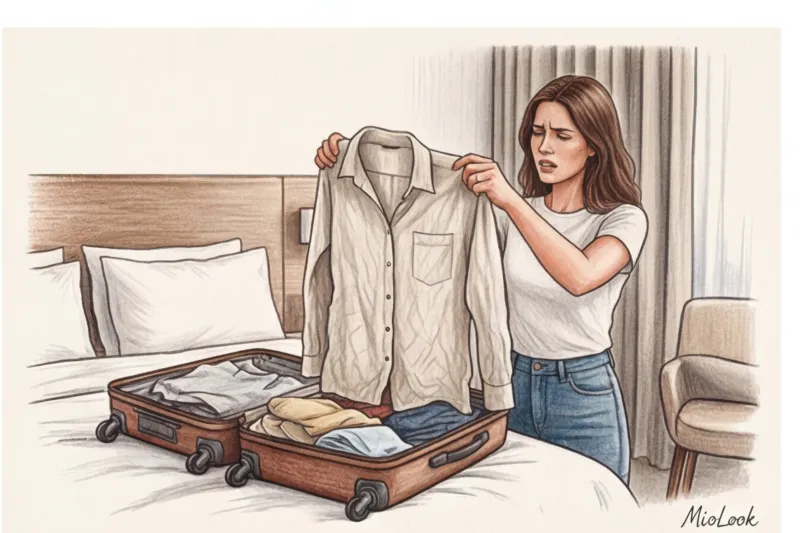
Suitcase Checklist: Fabrics That Wrinkle on the Way to the Airport
To choose high-quality fabrics , you need to know your enemy. I constantly see the same mistake girls make before vacation: buying cheap summer sundresses made of thin 100% viscose from mass-market stores (often in the 20-40€ range).
100% fine viscose — the traveler's worst enemy. As soon as you sit down in a taxi, deep, hard creases form in the crook of your elbow, in your groin, and behind your knees, which can only be removed with a powerful steamer.
Thin cotton poplin (classic shirting fabric). Save crisp white shirts for the office. Poplin quickly loses its luster in a suitcase.
100% cheap polyester Yes, it doesn't wrinkle at all. But it does create a greenhouse effect. In hot climates or on a stuffy airplane, polyester blocks heat loss from the body. You won't be wrinkled, but you will be exhausted and covered in sweat.
Forget about suitcase chaos
Digitize your wardrobe with MioLook. Plan your travel outfits in advance and pack only what you'll actually wear.
Download the appA capsule without an iron: 5 things I took out of my suitcase and put on
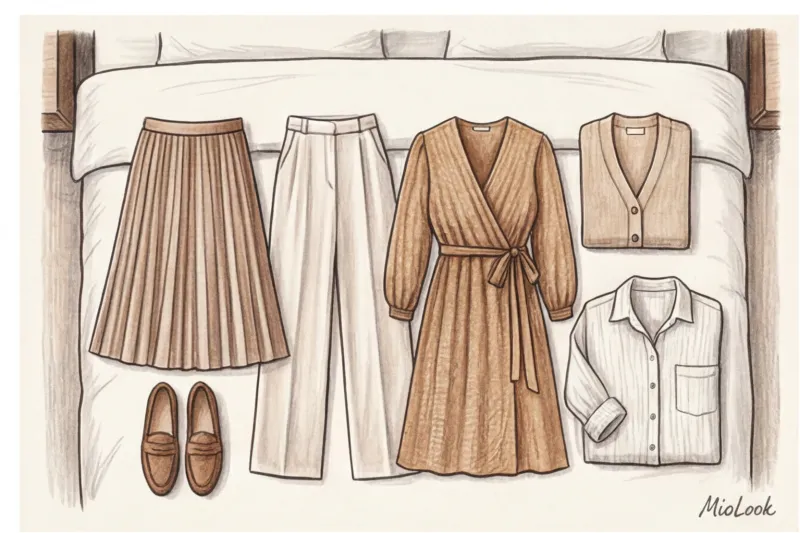
A good vacation capsule is built on the principle of maximum variability with minimal bulk. Here's my tried-and-true formula of 5 items that will cover 80% of your vacation needs if you're packing the perfect basic wardrobe.
- Tencel palazzo pants with drawstring. Replace your joggers with these. They're comfortable for sleeping on a plane, and paired with a silk top, they're perfect for evening wear.
- Midi length pleated skirt. Pleating is baked-in folds. This skirt takes up minimal space (it can even be rolled up) while maintaining its architectural shape.
- Wrap dress made of thick knitwear (jersey) or crepe. A versatile soldier. The knit is stretchy and wrinkle-resistant, and the wrap-over design allows you to adjust the fit after a heavy dinner.
- Shirt made of textured cotton (crinkle/muslin). It can be worn buttoned up with a skirt, thrown over a swimsuit at the beach, or used as a light jacket in the evening.
- Cashmere or merino cardigan. Statement layering. Takes up little space, doesn't wrinkle, and protects against drafts.
Packing secrets from a stylist: how to fold clothes so they don't wrinkle
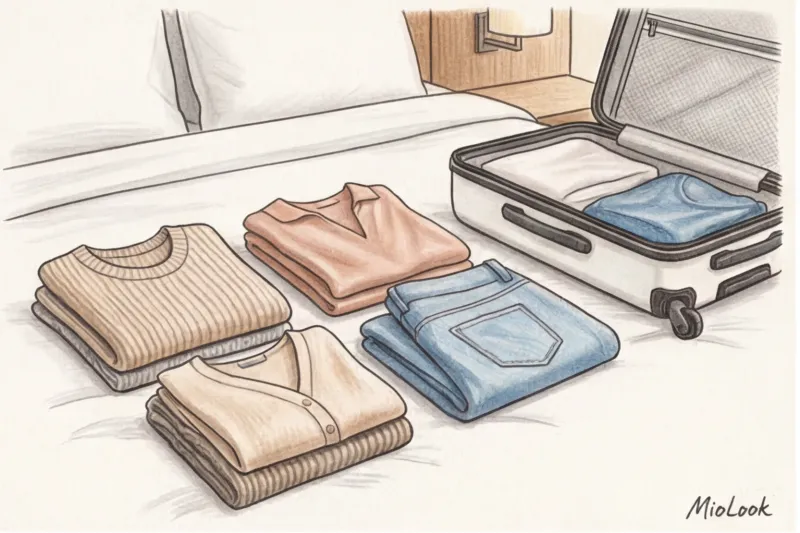
There's a popular myth floating around the internet: "Roll your clothes using the rolling method and they won't wrinkle." This is a dangerous misconception. I can state this responsibly: rolling only works for jeans, thick T-shirts, and underwear. For structured clothing (jackets, blouses, and trousers with creases), rolling is fatal—you'll create hundreds of micro-creases.
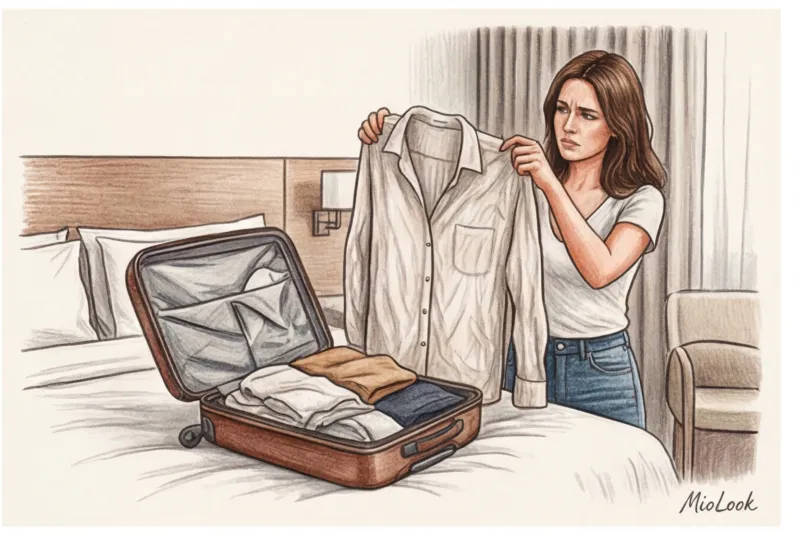
Premium boutiques and experienced personal shoppers use the method Bundle.
The method involves wrapping delicate items around a dense core. Place a cosmetic bag or a stack of folded underwear in the center of the suitcase (this is your "core"). Then, take dresses and shirts and gently wrap them around the core, without creating any sharp folds. Avoiding sharp corners during folding ensures wrinkle-free results.
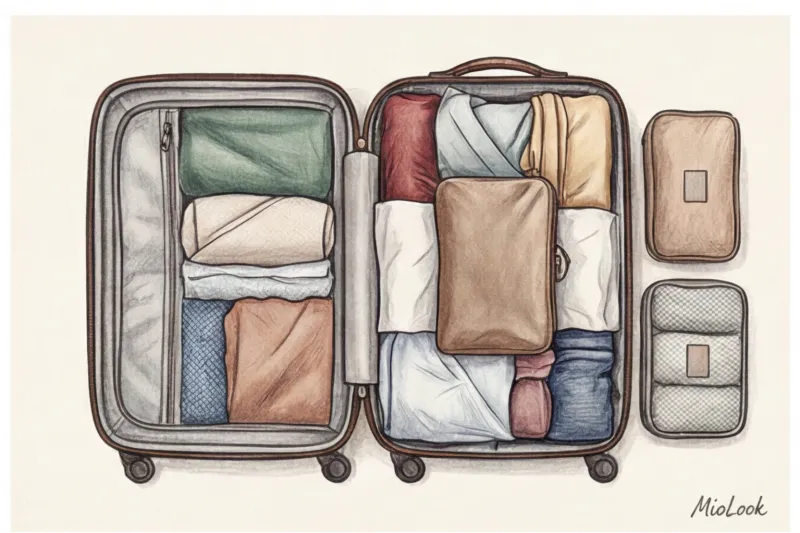
The second insider secret is tissue paper Have you ever noticed how expensive designer items are delivered? Every fold is lined with thin paper. The paper reduces friction between fabrics (it's the friction in a suitcase that causes deep creases). Simply place sheets of paper between layers of clothing, and the results will amaze you.
As for packing cubes, they're a great organizing tool, but only if you don't overfill them. A packed cube turns into a compactor that will mercilessly crush everything inside.
Checklist: Checking Your Wardrobe Before a Trip (the "Fist Test")
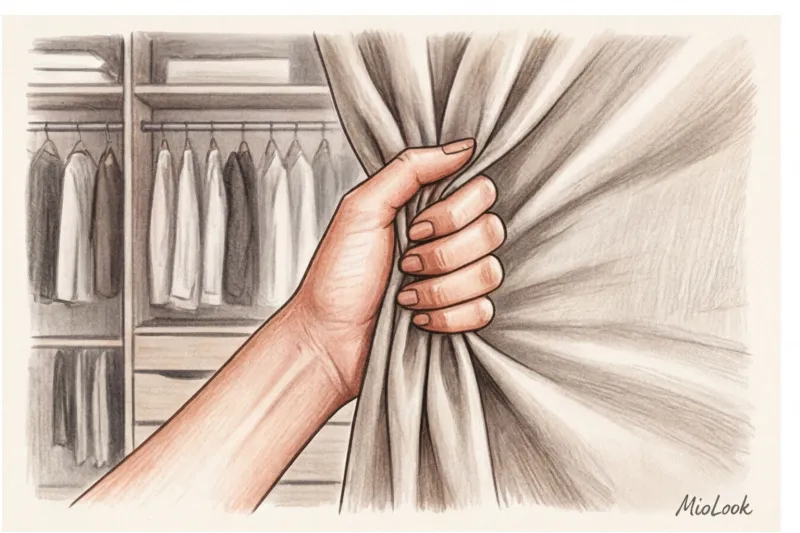
Before putting an item in a suitcase, I have clients do a "fist test" right in the fitting room (or at home, near their closet). It takes 10 seconds, but saves hours on vacation.
- Take the edge of the fabric (preferably near the hem or leg).
- Squeeze it tightly in your fist and hold for exactly 10 seconds.
- Release and run your warm palm over the fabric.
If the creases remain and don't smooth out before your eyes, the item stays at home. No compromises.
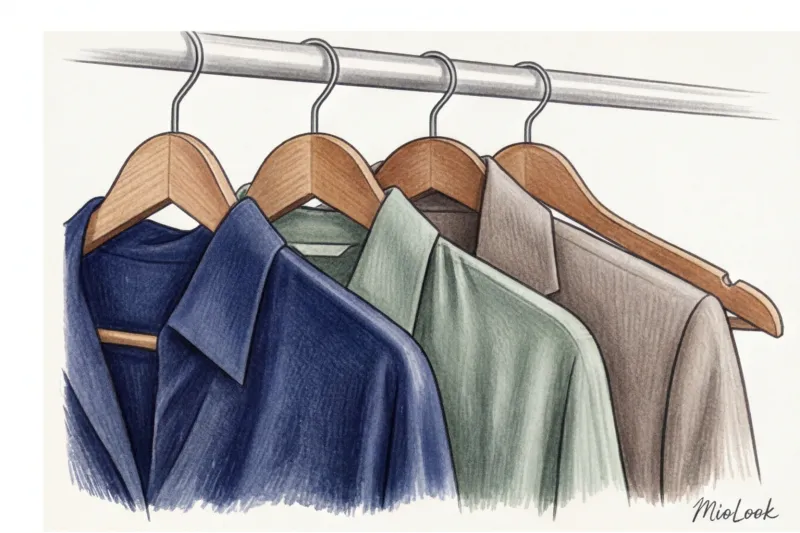
When packing, apply the 80/20 rule. Let 80% of your luggage consist of basic, well-blended fabrics (Tencel, Cupro, heavyweight knits, Merino). Reserve a maximum of 20% for statement pieces made of silk or linen that will require a light steaming before dinner.
Remember: a well-chosen wardrobe works for you, not you, who's servicing it on your day off. Choose smart fabrics, fly in comfort, and step off the plane like you just left a spa, not a cramped economy seat.