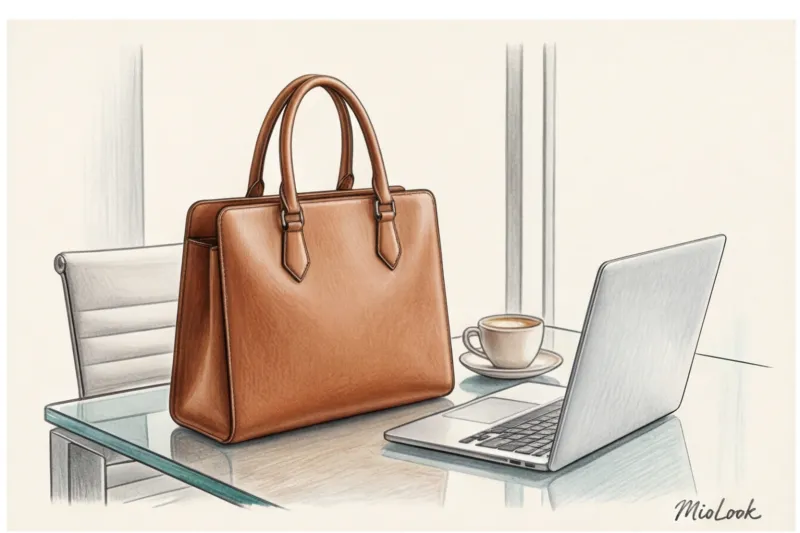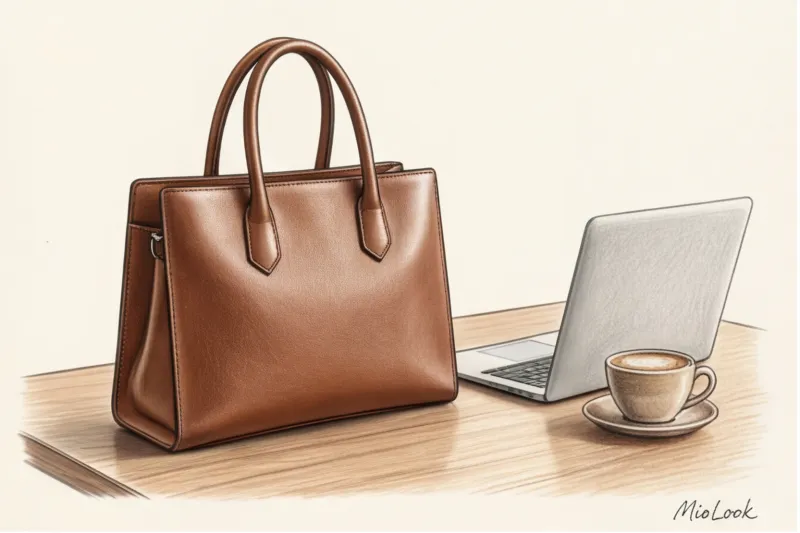
Do you know what most often ruins my clients' perfectly polished looks? No, it's not worn-out heels or a wrinkled shirt. It's a shapeless, tired-looking bag with a heavy laptop dangling forlornly inside. We can spend hours choosing the perfect fit for a wool jacket, but if you're holding a shapeless "bag" with worn-out handles, the magic of status crumbles instantly.
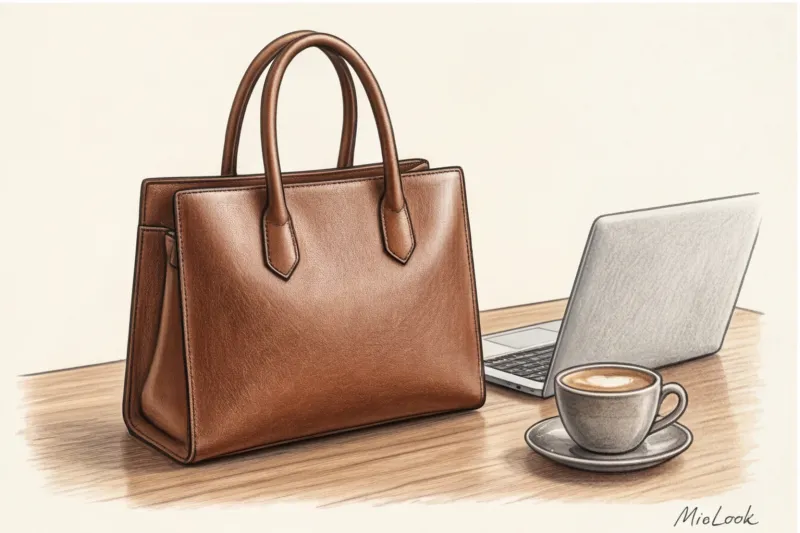
Researchers from Princeton University (2006) proved that it takes a tenth of a second to form a first impression. In the business world, a strict "framing effect" is at work: accessories either elevate a basic look to a premium level or mercilessly cheapen an expensive suit. We've already discussed how accessories shape perceptions of your competence in our comprehensive guide: Status accessories for women: bags, shoes, watches.
The Anatomy of Status: Why a Leather Business Bag Is Worth the Money
The concept of conscious consumption in a business wardrobe is extremely pragmatic. As an expert in textiles and sustainable fashion, I always say: it's better to have one flawless bag for the next five years than five compromised options for each season. This isn't just a question of aesthetics; it's about the ecology of your closet and your budget.
The psychology of shape perception is unforgiving. A rigid, architectural bag subconsciously conveys to your interlocutor your composure, reliability, and structured approach to business. Soft, relaxed lines are perfect for Sunday brunch, but at a boardroom, they come across as sloppy.
Cost Per Wear Formula for Accessories
When I create a business capsule wardrobe with my clients, I always have them calculate Cost Per Wear (CPW). The formula is simple: divide the cost of an item by the expected number of days of use.
A $500 leather business bag worn 250 workdays a year for three years costs you 66 cents a day. An $80 mass-market bag that will lose its shape after four months and need replacing will cost you the same 66 cents, but will still look cheap every day.
The hidden costs of cheap bags aren't just the faux leather that wears out quickly in the cold. They include handles that come off at the most inopportune moment, broken zippers, and, most importantly, a loss of your presentable appearance.
Access to MioLook for €0.99 — one-time payment
A smart AI stylist will select the perfect look for every day and help calculate the return on your wardrobe.
Get access — €0.99 onceThe Biggest Myth About Luxury Bags: Why Softness Doesn't Equal Durability
Here we come to the most dangerous misconception. Glossy magazines have conditioned us to associate luxury with "incredibly soft, buttery" leather. For gloves or an evening clutch, yes, that's wonderful. But for a business bag, softness is your worst enemy.
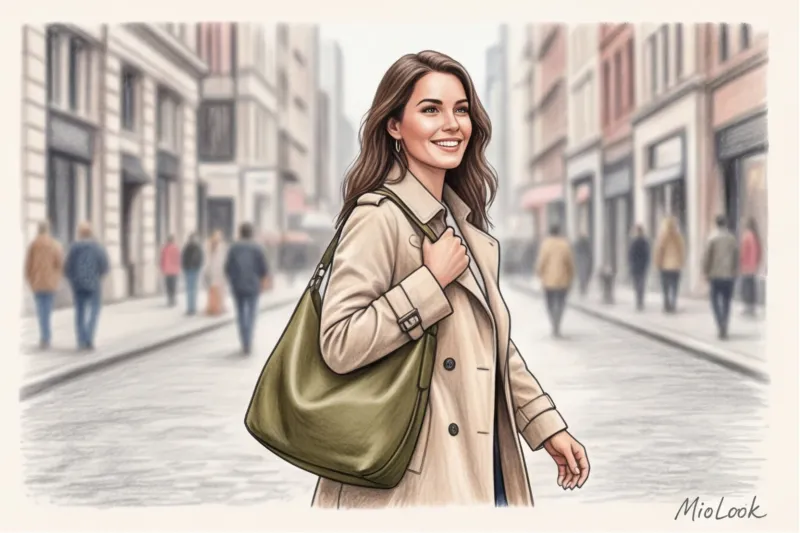
One of my clients, a top IT manager, decided to treat herself to a promotion and bought a stunning hobo bag from a renowned French house made of the softest lambskin. The bag cost as much as a used car. The result? After three months of carrying a 14-inch MacBook and a daily planner, the bottom sagged, the corners frayed, and the bag itself resembled a deflated balloon. Lambskin isn't designed to withstand gravity and the sharp edges of gadgets.
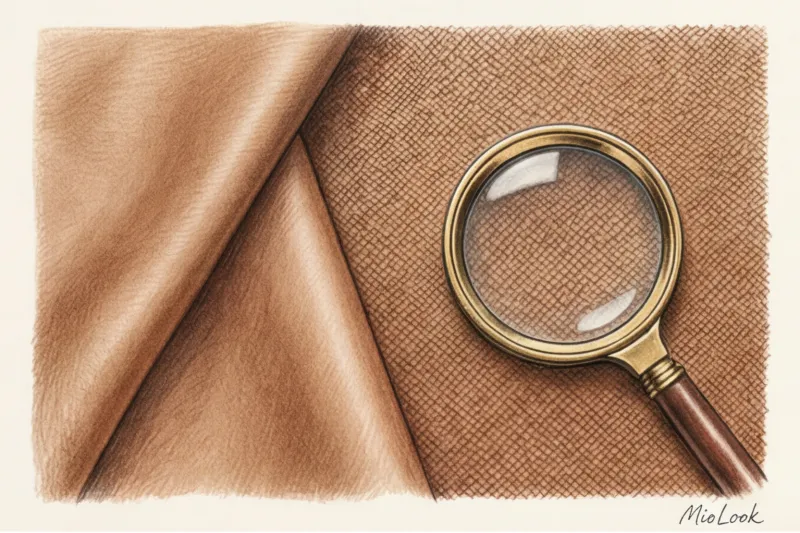
Skin types that can withstand daily stress
If you need a workhorse that will keep its cool in a crowded business center elevator and on an airplane, look for the right texture:
- Saffiano, Epsom, Palmellato: These are hot-stamped leathers with a special wax coating. They are tough, moisture-resistant, and virtually impossible to scratch with fingernails or keys.
- Full-grain smooth leather: The most expensive and durable top layer of the hide. It's heavier, but it doesn't crack over time and instead develops a luxurious patina. Limitation: It will show scratches and therefore requires polishing with wax.
For environmental friendliness and durability, pay attention to the tanning method. Most bags on the market are chrome-tanned (fast, cheap, and toxic). But if you find a bag made of vegetable-tanned leather, don't hesitate. According to tannery standards, such products last on average 30-40% longer with proper care.
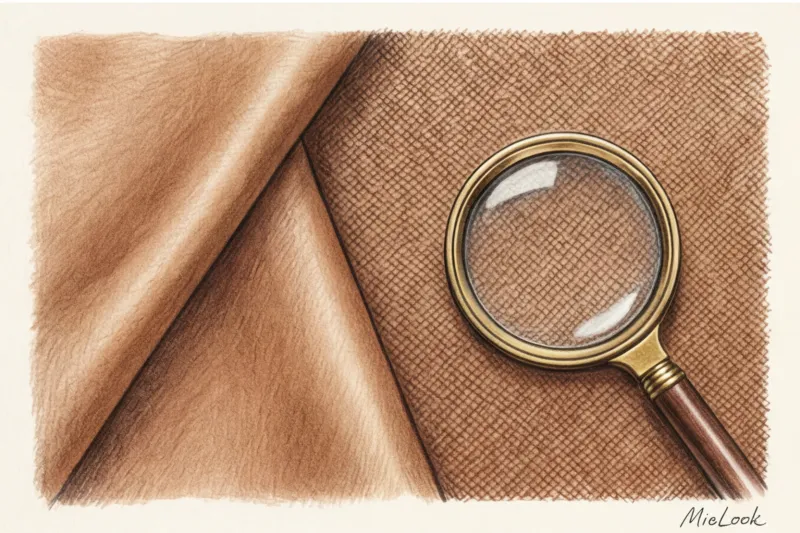
Stylist's Checklist: How to Check the Quality of a Bag Before Buying
A brand on the façade means nothing if the assembly technology isn't right. Over 12 years of working with textiles and leather, I've developed a habit: when I walk into a boutique, I don't look at the logo; I look at the seams and edges.
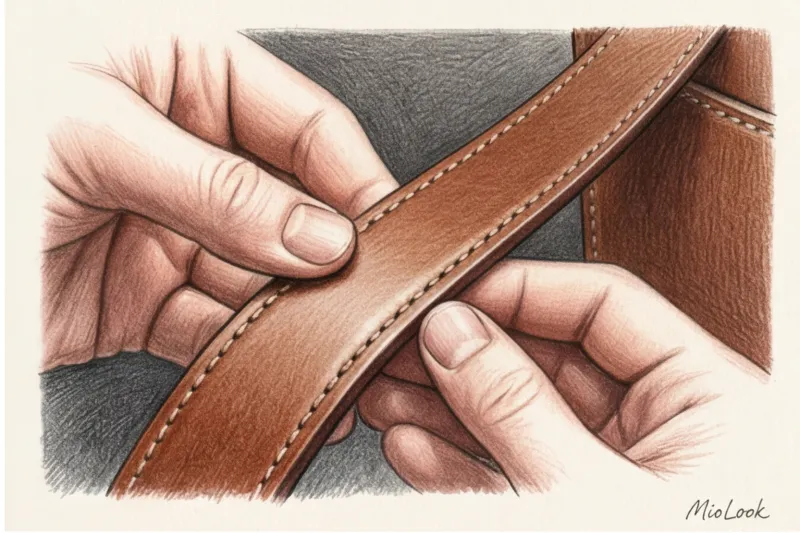
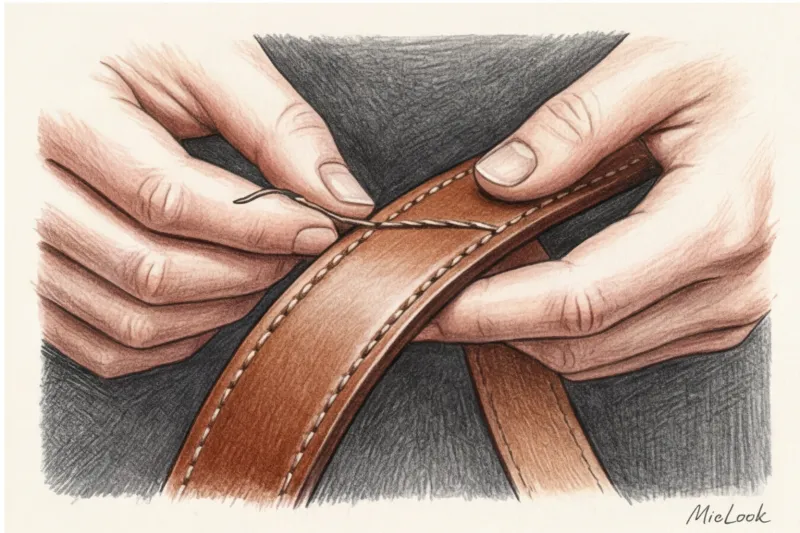
1. Stitch density (SPI - Stitches Per Inch)
Premium quality is measured at 8 to 10 stitches per inch (2.54 cm). The smaller and more even the stitches, the stronger the construction. Mass-market products rarely have more than 5-6 stitches, which can cause the thread to fray quickly.
2. Tactile edge test
The edge is the finished edge of the leather on the handles and sides. Run your finger along it. It should be completely smooth, moderately firm, but not "plasticky." If the edge sticks to your fingers or has air bubbles, the paint will crack within a couple of months. This is the first sign that the manufacturer cut corners on the finishing.
3. Lining
Thin, rustling polyester will tear under a keychain within six months. Look for dense cotton twill, linen, or microsuede (Alcantara). A light-colored lining is preferable to a dark one—it makes it much easier to find what you need in low light.
Hardware: Invisible status indicator
Pay attention to the bottom: it should have metal feet (dimples). These protect the leather from dirt and scratches when you place the bag on the floor in a restaurant or meeting room.
Zippers should slide silently. Look for YKK Excella or Riri engravings on the puller—these are the gold standard for hardware. As for metal, premium zippers use a PVD electroplated coating, which won't peel for years, unlike cheap coatings that turn red with the first rain.
Architecture and Ergonomics: A Form That Holds the Face
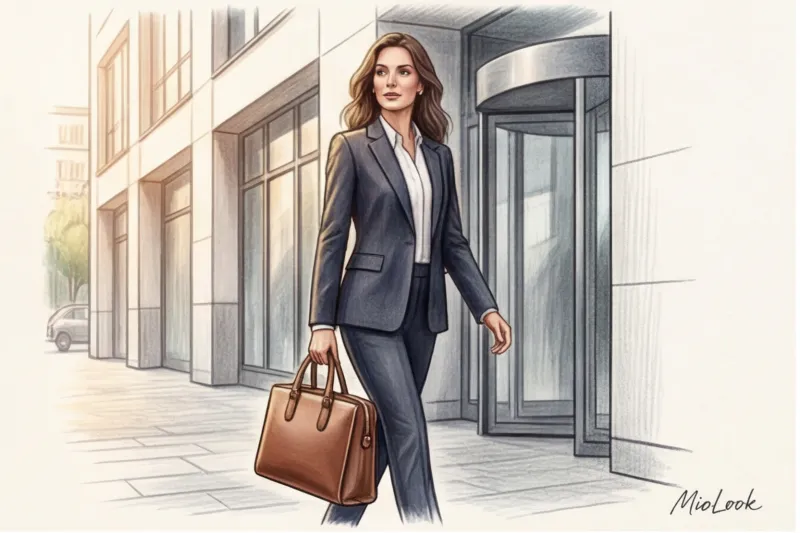
The choice of model directly depends on the strictness of your dress code. For business formal, a rigid briefcase or structured tote is ideal. For smart casual, a satchel or dome bag is acceptable.
But the most important factor is weight. According to ergonomics research, an empty business bag should weigh no more than 800–1000 grams. If a thick leather bag alone weighs 1.5 kg, add a laptop (1.3 kg), charger, cosmetic bag, and a bottle of water. The result is almost 4 kilograms on one shoulder, which is guaranteed to lead to poor posture and back pain.
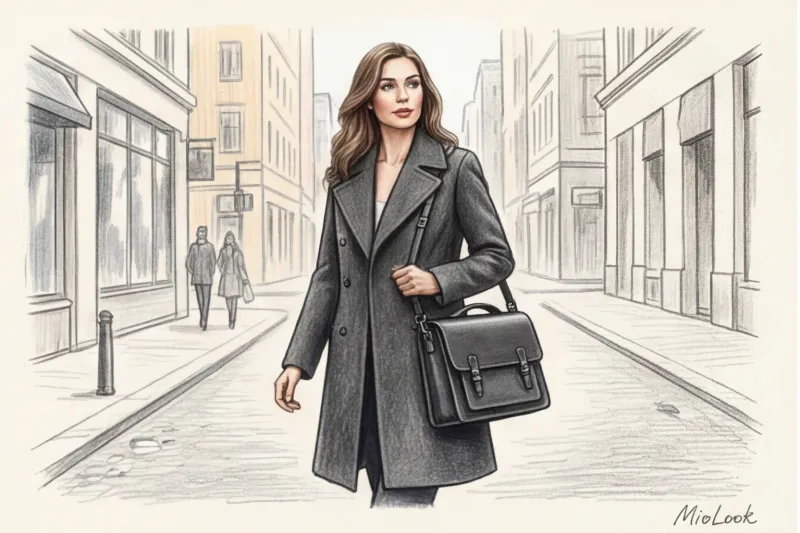
Internal organization is also critical. One large compartment is a mess. You need a built-in, padded laptop sleeve and a rigid divider. Also, always check the handle length (drop handles): they should allow you to comfortably sling the bag over a bulky fall coat or trench coat, not just over a thin silk blouse.
Your perfect look starts here
Join thousands of users who look flawless every day with MioLook. Upload your accessories to your virtual wardrobe.
Get access — €0.99 onceCaring for your investment: How to extend the life of your leather business bag
An eco-friendly approach to fashion isn't just about buying the right items, it's also about caring for them properly. You can extend the life of a leather bag by 2-3 times simply by following these three rules.
Firstly, leather is a porous material that dries out. Every three to four months, the bag should be cleaned with a special lotion and treated with a moisturizing leather balm (based on beeswax or lanolin). This will prevent creases from appearing at the folds.
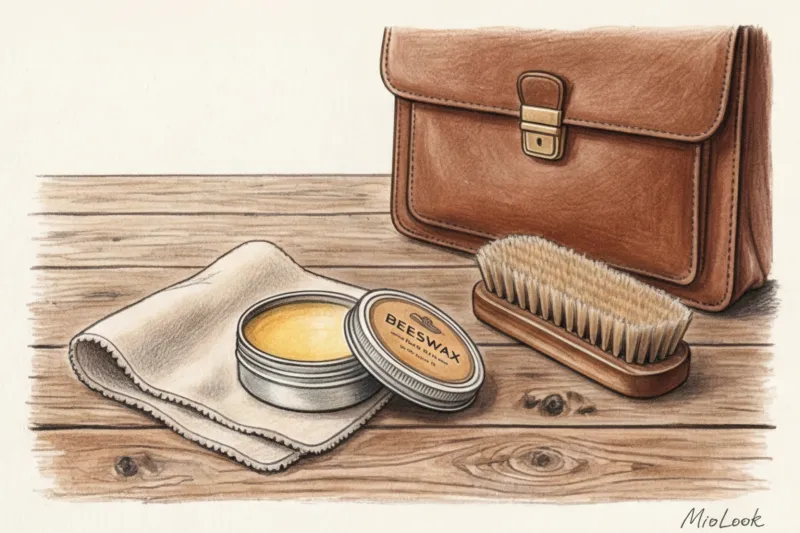
Secondly, proper storage. Never throw an empty bag in the closet. Be sure to stuff it with acid-free paper (or special pads) to keep its shape, and store it in a breathable dust bag. No plastic bags—leather needs to breathe.
Third, if you're caught in heavy rain, blot the bag with a dry cotton cloth and leave it to dry at room temperature. Never place it near a radiator or heater—the leather will instantly dry out, shrink, and become permanently misshapen.
Alternatives to heavy luxury: where to look for quality basic models
In recent years, the business environment has undergone a tectonic shift. Large logos, flashy monograms, and recognizable patterns (logomania) have become considered bad form in serious business. They draw attention away from your expertise and toward your wallet, which is often inappropriate.
The focus is on "quiet luxury." I strongly recommend my clients pay attention to mid-range brands and niche artisan labels. Many of them (for example, Polène, Strathberry, and local European manufacturers) produce their products in Ubrique, Spain, or Tuscany, Italy—in the same factories as the LVMH conglomerates, but without the 300% premium for the brand name.
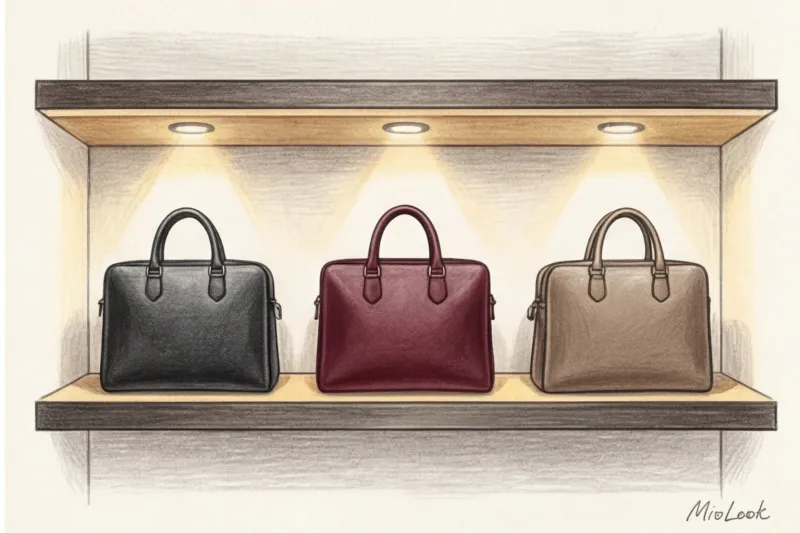
By the way, to understand whether such a minimalist bag will fit into your working days, I recommend using smart wardrobe feature in MioLook You can add a photo of a potential purchase and see if it matches at least 5-7 outfits from your current items. This is a great way to avoid impulsive spending.
The perfect business bag isn't a status symbol. It's a matter of strict mathematics: a rigid shape that can support the weight of gadgets, thick, textured leather, and precise ergonomics. Find a model that meets these three criteria, and it will build your reputation for years to come.