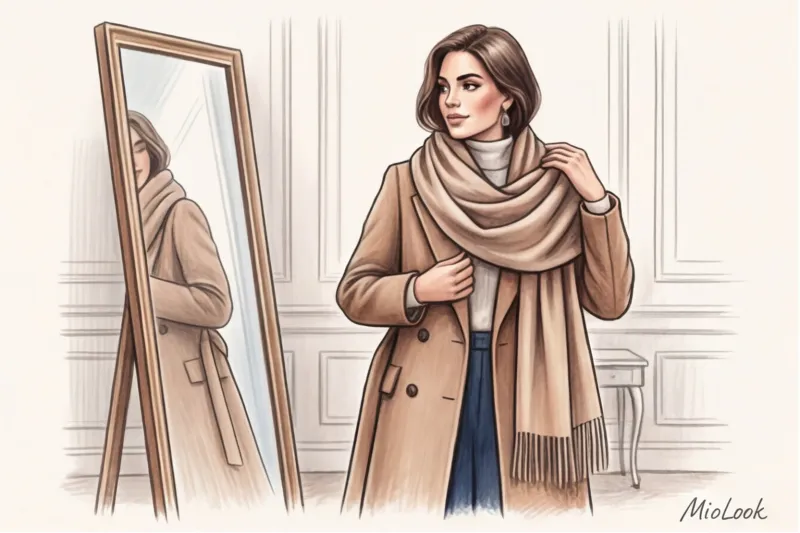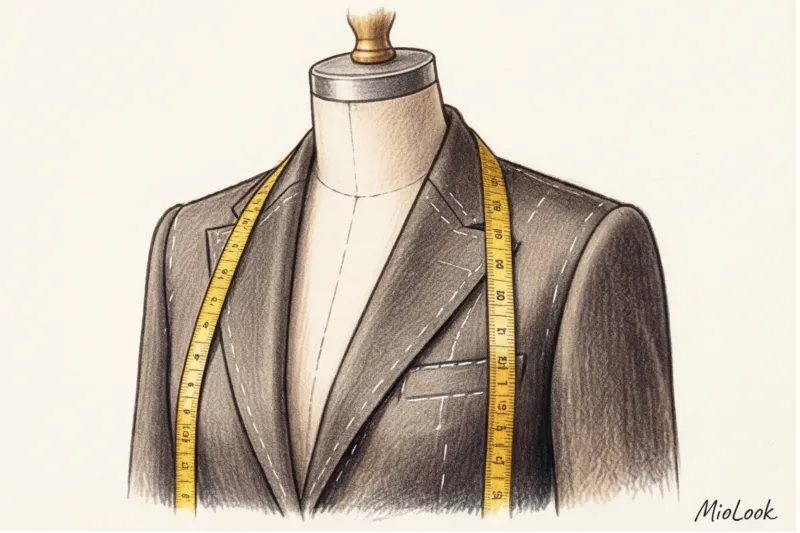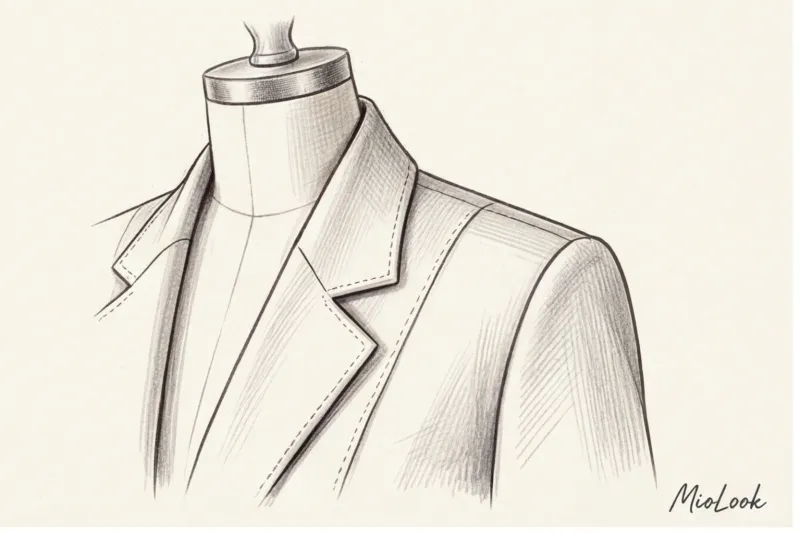


"Just buy a basic black suit and a white shirt," goes the most popular and, at the same time, most harmful advice from the glossy magazines of the 2000s. As a practicing stylist and certified colorist, I physically wince when I hear this phrase. A classic black suit is not a universal base. It's a complex, demanding tool that, if handled incorrectly, will visually eat away volume, highlight every wrinkle, and make you look like an employee of a luxury cleaning service rather than an executive.

In this article, we'll examine the women's business pantsuit not as a boring uniform, but as a matter of cut architecture and clever color scheme. I'll show you the math behind the correct silhouette and explain why deep, complex shades enhance your credibility much better than black. We've already covered the global dress code rules in more detail in our The Complete Guide to Business Attire for Women , but today we will focus exclusively on the suit.
Women's Business Pantsuit: From Uniform to Soft Armor
Business attire has come a long way from the rigid, oversized power dressing of the '90s with its oversized shoulders to today's "soft armor." Today, the right suit should have an architectural yet flexible cut. It no longer screams, "I play by men's rules." It says, "I'm competent and confident."
Why is this so important? Let's look at the data. A large-scale study by Coqual (Center for Talent Innovation) on the concept of executive presence revealed an interesting fact: presentability acts as a primary filter. Before you even open your mouth in a meeting or interview, your suit has already communicated your status to the audience. The right fit and color convey competence nonverbally.
The Anatomy of a Perfect Cut: The Mathematics of a Jacket and Trousers
The most common mistake I see on the streets of business districts is trying to wear hyper-oversized clothes to a formal office setting. Oversized clothes in a corporate environment should be considered. A suit is meant to correct proportions, creating the correct geometric silhouette, not hide your figure in a shapeless sack.
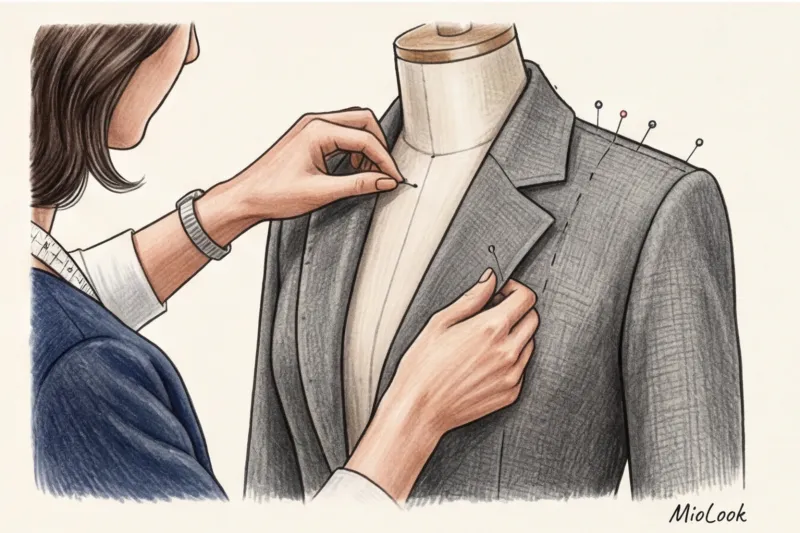
Adapting the London Savile Row tailoring standards for women's tailoring, there's a golden rule: a suit should respect the curves of your body, without being tight. There should always be some air between the fabric and your skin.
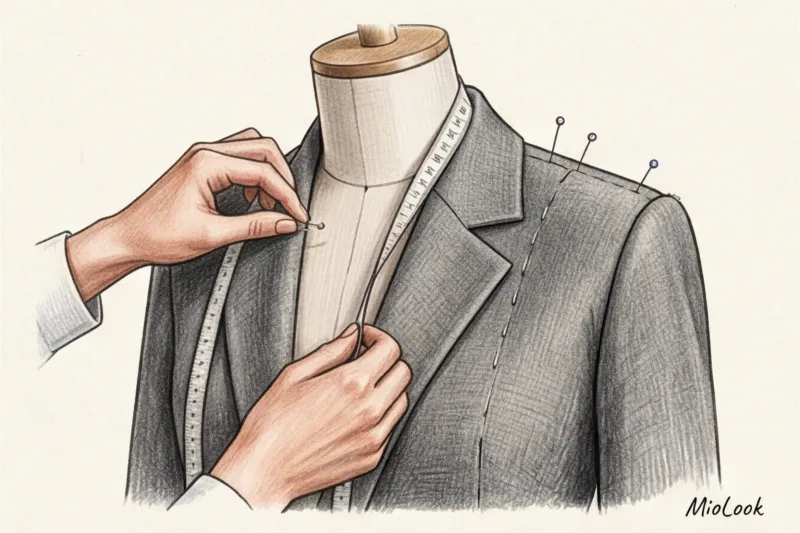
Jacket: Shoulder girdle, lapels and the correct length
Let's start with the shoulder line. The width of the shoulder seam should end exactly where your shoulder physically ends, or extend a maximum of 1-1.5 centimeters if you have a structured shoulder pad. This creates a horizontal, status-defining line. If the shoulder is hanging, you'll get the "jacket-off-the-shoulder" effect, or, worse, the silhouette of an American football player.
Lapel width is a secret tool for image makers. Remember this simple ratio: lapel width should complement your facial features. Large, expressive features require wider lapels (at least 8 cm). Small, pointed features will be lost behind wide lapels—choose narrow lapels.
The length of a jacket, in its classic form, should cover the widest part of the hip. The point where the back vent ends should not be visible when you stand up straight.
Trousers: fit, pleats, and current leg length
Let's look at three basic styles: palazzo trousers (wide from the hip), straight culottes, and tapered cigarette trousers. If you spend eight hours a day at your desk, your best friend is high-waisted trousers with pleats (folds of fabric at the waist).
Why pleats? When you sit down, the fabric stretches across your stomach and hips. The pleats open, giving you the necessary inches of freedom, so the pants don't dig into your body. Straight-leg trousers without pleats are only suitable if they contain some elastane.
The correct length depends on the shoe. For straight trousers, the classic "trouser break" rule applies—the leg should rest on the instep of the shoe, creating exactly one crease. Palazzo trousers should almost completely cover the heel, leaving 1-2 centimeters to the floor. Cigarettes end exactly at the ankle bone.
Access to MioLook for €0.99 — one-time payment
A smart AI stylist will select the perfect business look and help you put together a capsule wardrobe.
Get access — €0.99 onceColor and Status: Why Black Is a Mistake for a First Purchase
Now let's bust the biggest myth. A black pantsuit is the worst investment for a basic wardrobe. Yes, I'm completely serious.
Firstly, cheap black is always shiny and betrays the low quality of the fabric. Secondly, black visually absorbs light and casts harsh shadows on the face. According to statistics from my practice, about 70% of women with a Slavic (non-contrasting) appearance look tired and unhealthy in pure black, unless they are wearing heavy foundation and bright lipstick.
A striking example from my practice: a client, a financial director, approached me. She complained that her colleagues perceived her as too rigid, which was preventing her from getting a board seat. Her wardrobe consisted of tight black sheath suits made of a heavy blended fabric. We replaced them with flowing crepe suits in shades of dark plum and graphite. Her aggression instantly decreased. The deep colors retained her status and authority, but made her look more approachable and sophisticated. Four months later, she received a promotion.
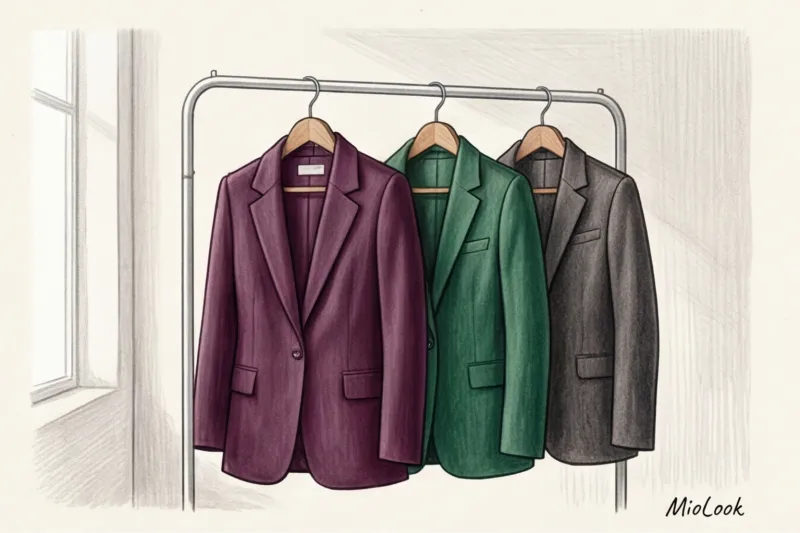
A smart basic palette for different color types
What to replace black with? Turn to deep, complex shades, which, according to the Pantone Color Institute, are associated with stability and intelligence.
- Dark base: graphite gray, deep blue (navy is the perfect alternative to black), bitter chocolate, dark plum, pine green.
- Light base: Camel, taupe, milky white, or undyed wool. Avoid pure white—it gives off a bluish, sterile, medical-grade glow under fluorescent lights in an office.
When are bright colors appropriate in a corporate environment?
If the dress code allows, a bright suit is a great tool for performances. However, there's a "one-accent" rule: if the suit is bright (emerald, burgundy, terracotta), the cut should be as simple as possible, without unnecessary details, and the first layer (top) and shoes should be completely neutral.
For Friday Business Casual, a powder-colored or muted blue suit can be “calmed down” with white sneakers and a simple cotton T-shirt.
Fabric Decides Everything: What's Really Worth Investing In?
No tailoring, no matter how ingenious, can save a suit made of 100% cheap polyester. Let's calculate the wardrobe math using the "Cost per Wear" rule.
Let's say a polyester suit costs $100. It will pill, become shiny, and lose its shape after 10 washes/cleanings. The cost per wash is $10. A high-quality wool suit costs $500. You'll wear it for at least 5 years (about 200 washes). The cost per wash is $2.50. Wool is always a better value.
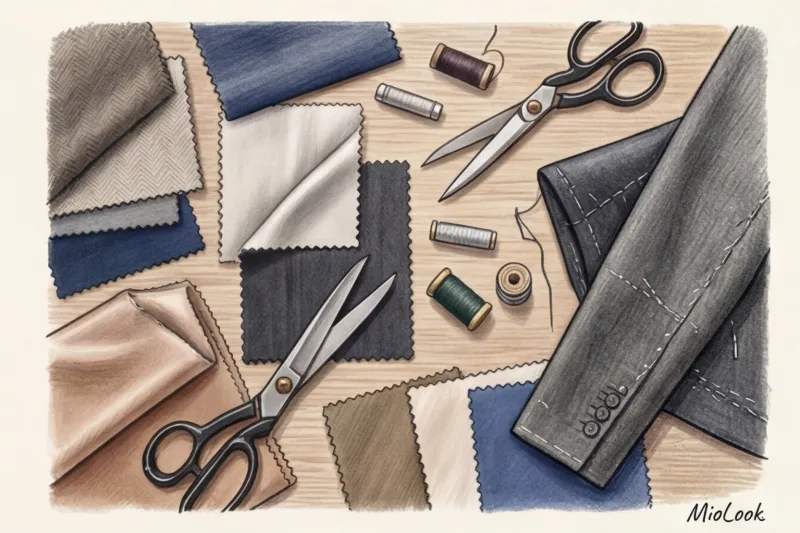
Look for "super 100s" or "super 120s" on wool tags. This indicates the thickness of the thread. This fabric is thin, smooth (not itchy), yet durable—the perfect balance for the office. Elastane content should be no more than 2-4%, just to ensure comfortable movement.
Check the lining separately. If the suit is made of good wool but the lining is polyester, you'll feel like you're in a greenhouse. The lining should be viscose, cupra, or at least acetate.
Stylist's Life Hack: The Fist Test
How can you tell if a suit will wrinkle right in the store? Firmly squeeze the edge of a jacket or trousers in your fist, hold for 10 seconds, and then release. If the fabric immediately straightens out with almost no marks (the threads are well twisted), buy it. If a distinct wrinkle remains, your trousers will look unkempt after an hour of sitting in the office.
Your perfect look starts here
Join thousands of users who look flawless every day with MioLook. Digitize your wardrobe in just two clicks.
Get access — €0.99 onceWhat to Wear with a Women's Business Pantsuit: From Formal to Smart Casual
A good suit should pay for itself, working in a variety of situations. The art of styling lies in mastering the first layer and accessories.
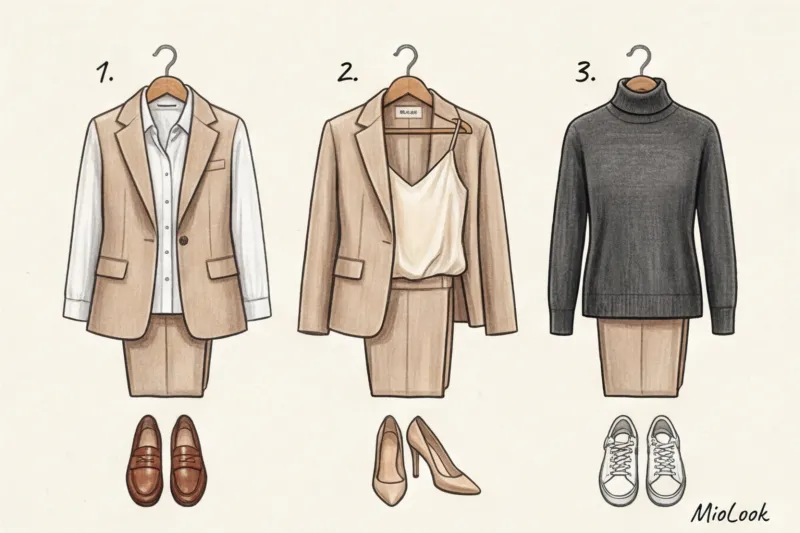
First layer: not just a classic white shirt
A shirt is a classic, but it often adds unnecessary formality. What to wear instead?
- For status output (Formal/Boardroom): Silk tops and camisoles with V-necks. Silk paired with matte wool creates a luxurious contrast of textures.
- For winter smart casual: Fine cashmere turtlenecks. A graphite-colored suit paired with a camel-colored turtleneck looks incredibly elegant.
- For creative agencies and IT: Basic T-shirts. These should be heavyweight cotton (at least 180 g/m²) that holds its shape and isn't see-through, with a crew neck.
If you have difficulty visualizing these combinations, you can upload a photo of your suit to MioLook — the built-in AI stylist will instantly suggest dozens of first-layer options from your virtual database.
Shoes and accessories: finishing touches
Save classic stiletto pumps for special occasions. The modern office environment demands a confident stride. Loafers, brogues, oxfords, and derbies—men's footwear—are phenomenally feminine in a formal suit.
Can you wear a suit with sneakers? Yes, but there are rules. Sneakers should be minimalist (white or beige, without any heavy embellishments or mesh), and trousers should be the right length, not bunched up at the tongue. Choose a tote bag to serve as a formal anchor for the look.
Fitting Checklist: 5 Tests Your Suit Should Pass
Sales associates often gloss over fit details just to close the sale. Based on hundreds of fittings with my clients, I've identified five essential tests you should conduct right in the fitting room:
- Hug test. Button up your jacket, raise your arms, and hug your shoulders. If the fabric at your back is flapping and your movement is restricted, the jacket is too small in the armholes, even if it appears to fit.
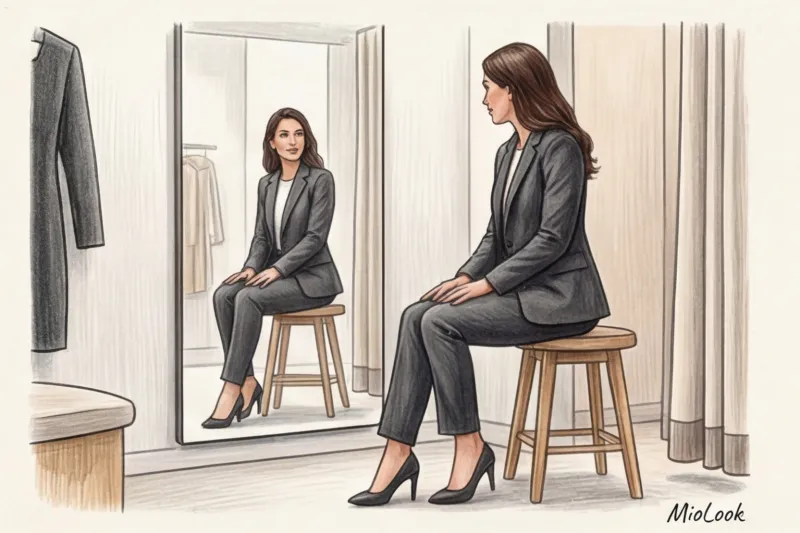
- Stool test. Never buy pants without sitting in them. Find a pouf in the fitting room. The pants shouldn't be too tight in the groin, and the pockets shouldn't stick out like elephant ears.
- Collar test. The jacket collar should fit snugly against the back of your neck. If there's a gap between your neck and the jacket big enough to fit your palm, the pattern isn't right for your posture.
- Buttoned test. When the jacket is fastened with one (top) button, the fabric forms an "X." However, there should be no hard horizontal folds or tension lines extending from this button.
- Checking pockets and vents. This isn't a size test, but a test of etiquette. A new, high-quality suit always has its pockets and back vent stitched crosswise. Don't forget to rip them out at home! But if you have active hips, it's best to leave your trouser pockets stitched—this will keep them flat and slimming.
Status Care: How to Preserve the Architecture of a Suit for Years
A suit is an investment. And like any investment, it requires maintenance. The main rule for extending the life of your wool "armor" is to give it a rest. Don't wear the same wool suit two days in a row. The fibers need 24 hours to restore their shape and release absorbed body moisture.
Forget about frequent dry cleaning. Chemical solvents destroy the natural fibers and adhesives that hold the lapel in place. Suits should be cleaned once or twice a season. The rest of the time, spot cleaning and steam treatment are the only options. A steamer is your best ally. It kills bacteria, eliminates odors, and smooths out creases without direct contact with a hot iron (which can make wool look cheap and shiny).
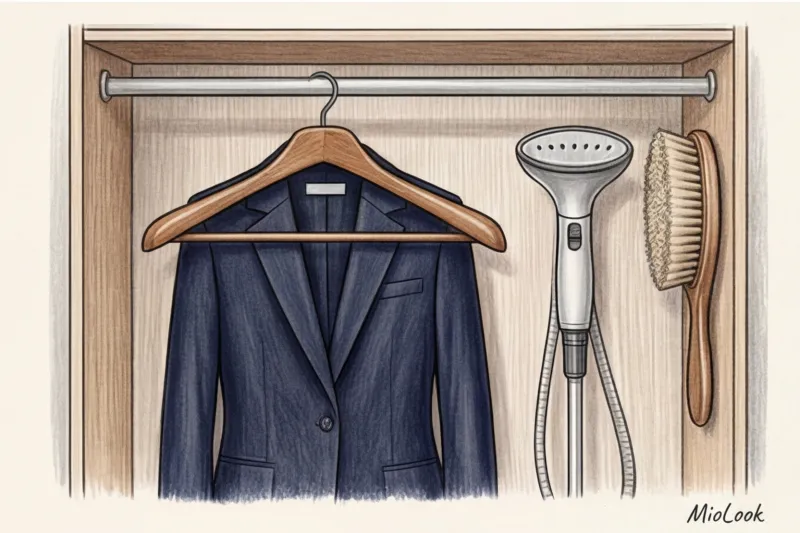
Lastly, invest in the right hangers. Never hang a jacket on thin metal or plastic hangers from a dry cleaner—they stretch the shoulder line. Use only wide wooden or plastic hangers with flared ends.
A women's business suit is more than just work attire. It's your nonverbal voice. Choose it wisely, treat it with respect, and it's sure to reciprocate your feelings in your next career negotiations.