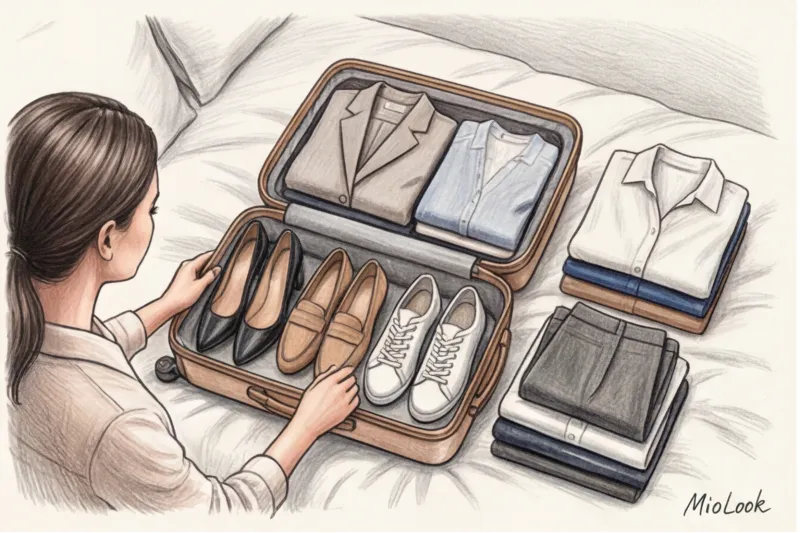
After 14 years as a personal stylist and nearly a decade of flying to Fashion Weeks with carry-on luggage only, I've learned one harsh but true lesson: the wrong shoes can ruin not only your look but also your career. Airports are unforgiving, and swollen feet from a long flight tolerate no compromise.
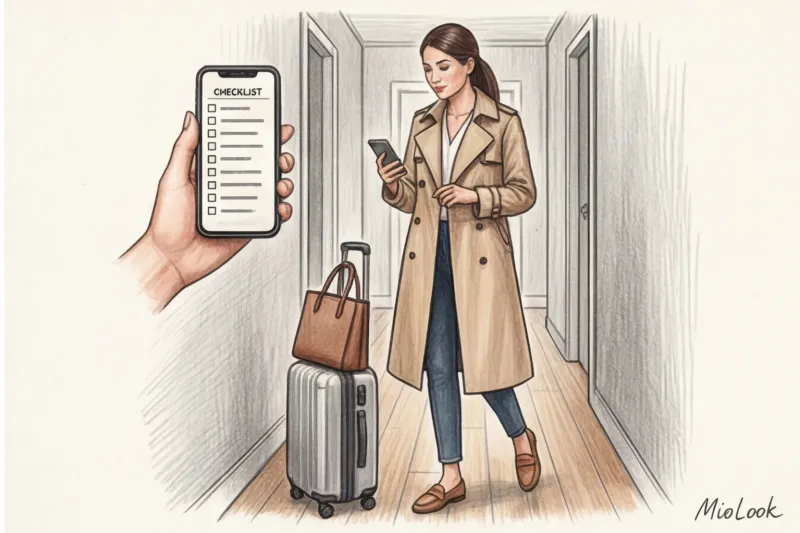
Have you ever experienced that situation where you realize right before stepping off the plane that you'll have to check your suitcase, only to have it lost somewhere between connections upon arrival? That's why ditching your baggage is the gold standard of modern executive wardrobes. I've written more about creating a checklist for such trips in our The Complete Travel Capsule Guide But today we'll take a closer look at the most difficult and heaviest part of any suitcase.
Let's be honest: choosing the right footwear for a women's business trip isn't just a matter of aesthetics. It's about logistics, physiology, and your personal comfort under tight deadlines.
Carry-on Luggage Math: How Many Pairs Do You Really Need?
"Olena, I'm only going for three days. Will two pairs be enough or should I take a fourth just in case?" I hear this question from clients every week. My answer is always the same: strict The Three Pairs Rule One pair on you during the flight, two in your suitcase (cabin-size).
Why carry-on luggage? According to a global report SITA Baggage IT Insights 2024 Baggage loss and delays on connecting flights remain a critical risk factor for business travelers. If you're flying to important meetings, your wardrobe is essential. Period.
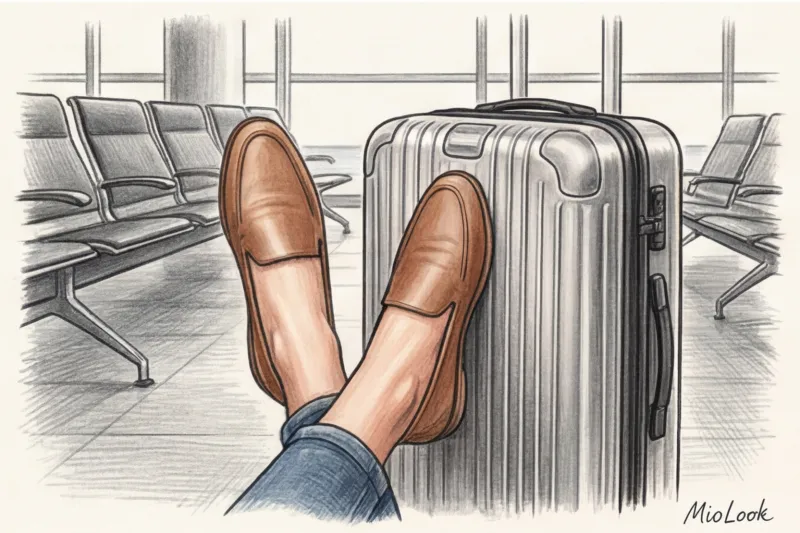
Shoes are the heaviest element of the capsule. A pair of classic sneakers weighs around 800-900 grams, while leather pumps or minimalist loafers weigh only 400-500 grams. By carefully choosing three pairs, you can save up to 1.5 kg, which is crucial for low-cost carriers and strict European airlines. My personal rule for flights: "I carry everything I own with me, and every gram should be worth it."
Flight Shoes: The Biggest Mistake Everyone Makes
The internet often recommends, "Wear your heaviest, bulkiest shoes on the plane to save space in your suitcase." I strongly disagree with this approach. It's counterintuitive, but chunky sneakers are the worst choice for a business traveler.
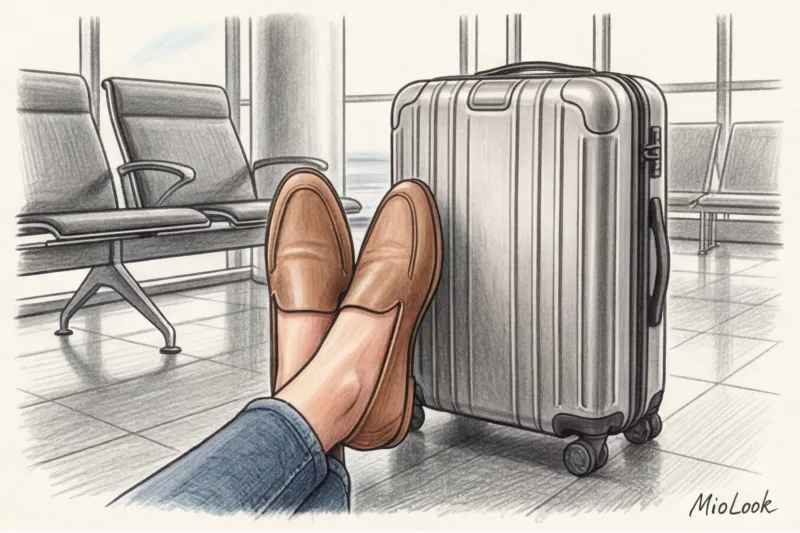
First, security. Slip-on shoes, like soft loafers, save you time and hassle at security. You don't hold up the line or have to bend over awkwardly trying to unlace your sneakers.
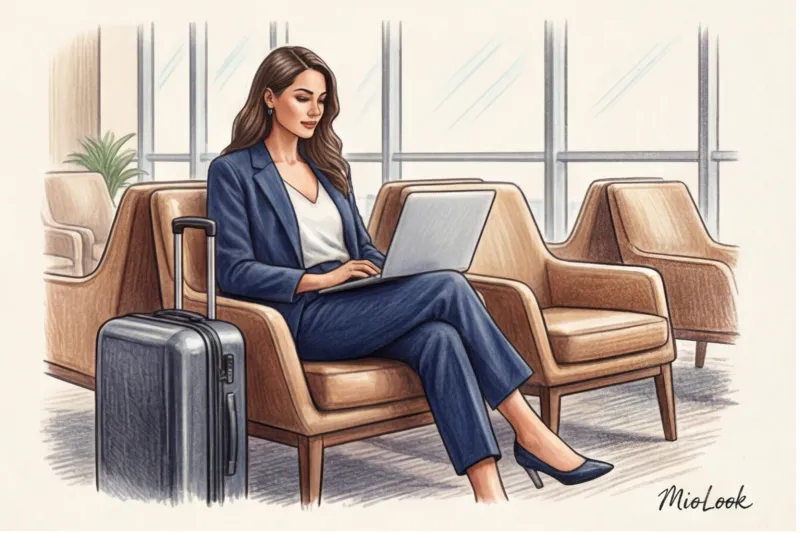
Secondly, networking. It's easy to meet potential partners or colleagues from another country in an airport lounge or even on a plane. Your travel image should be at least 70% business.
Your perfect travel wardrobe
Forget about pre-packing stress. A smart AI stylist will help you create a capsule wardrobe where every item works for you.
Get access — €0.99 onceThe problem of leg swelling at altitude
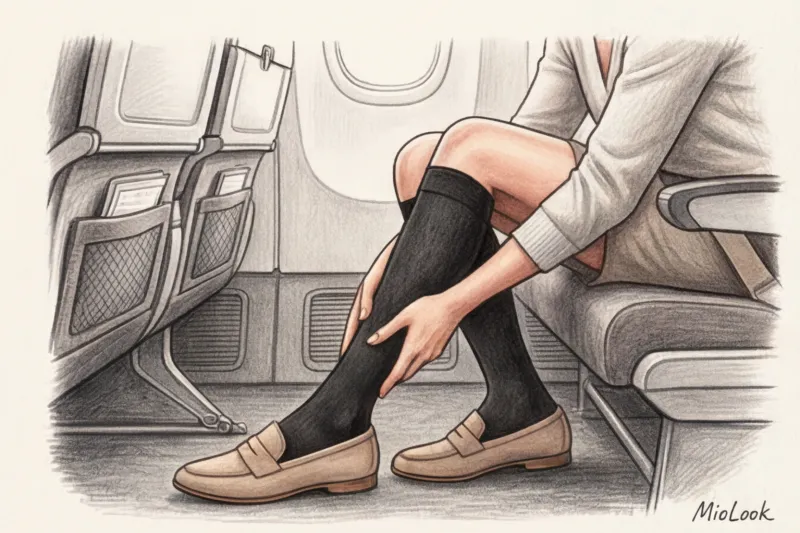
I'll never forget my client Anna, a top IT manager, flying from London to Dubai. She decided to save time and flew straight from the plane wearing a pair of hard, patent leather Prada pumps. After the seven-hour flight, her legs were so swollen due to the physiological pressure drop (edema—in-flight edema) that she couldn't walk from the taxi to the conference room. She had to urgently buy a pair of no-name ballet flats in the hotel lobby.
"Due to the decrease in atmospheric pressure in the airplane cabin and prolonged sitting, venous outflow slows, which inevitably leads to an increase in foot size by 0.5–1 size," confirm sports orthopedists.
The materials of your flight shoes should be forgiving of these changes. Soft nappa calfskin, suede, or models with hidden elastic inserts are ideal.
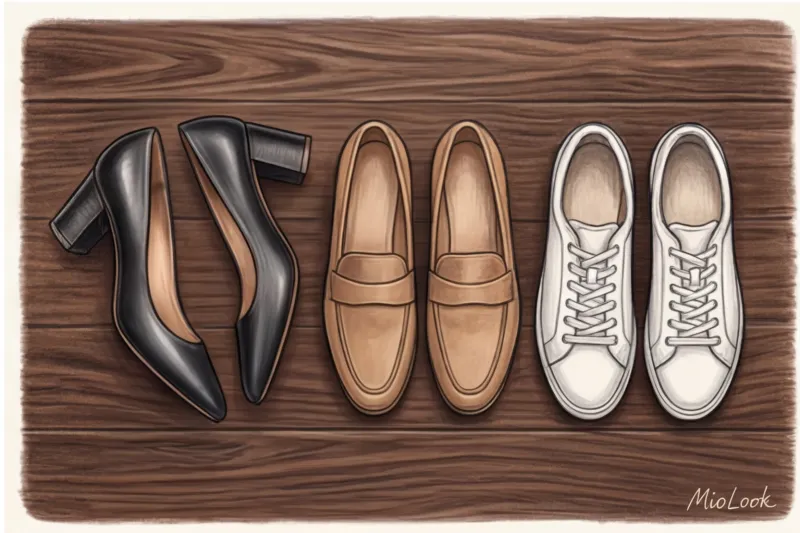
The Perfect Business Trip Shoes for Women: A Checklist of the Essential Three
So, what shoes should you get to be ready for anything? The secret lies in interchangeability. Each pair should perfectly complement at least two, and preferably three, outfits. When we upload clients' wardrobes to the smart planning feature in MioLook We always test this principle: if shoes only go with one dress, they stay at home.
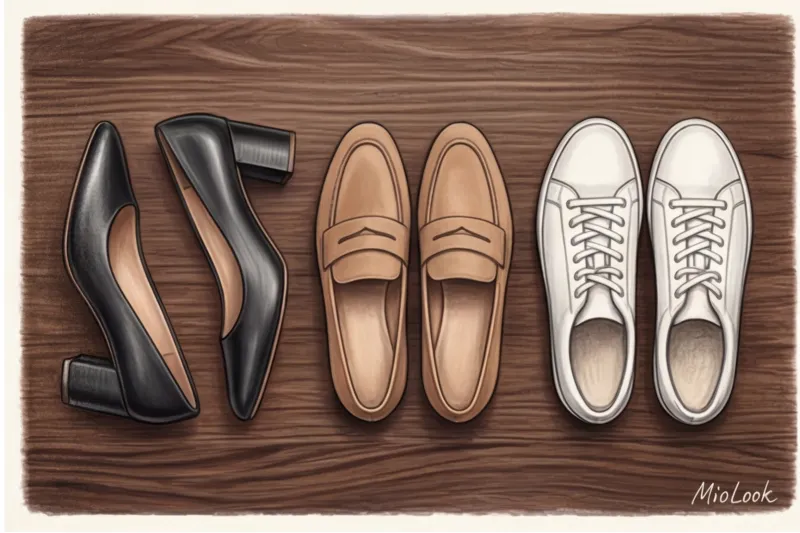
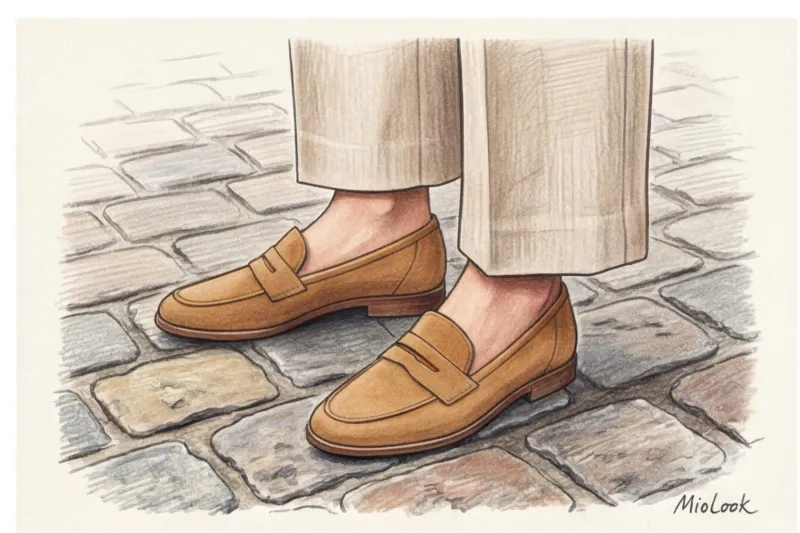
Pair #1: Status loafers or oxfords
- Function: Flights, smart-casual meetings, informal dinners with colleagues, long walks through terminals (and in hubs like Frankfurt or Dubai, a passenger's walking distance can be up to 2.5 km).
- What to look out for: Flexible sole. Avoid large metal embellishments (chains, buckles) to prevent them from clanging on the metal detector.
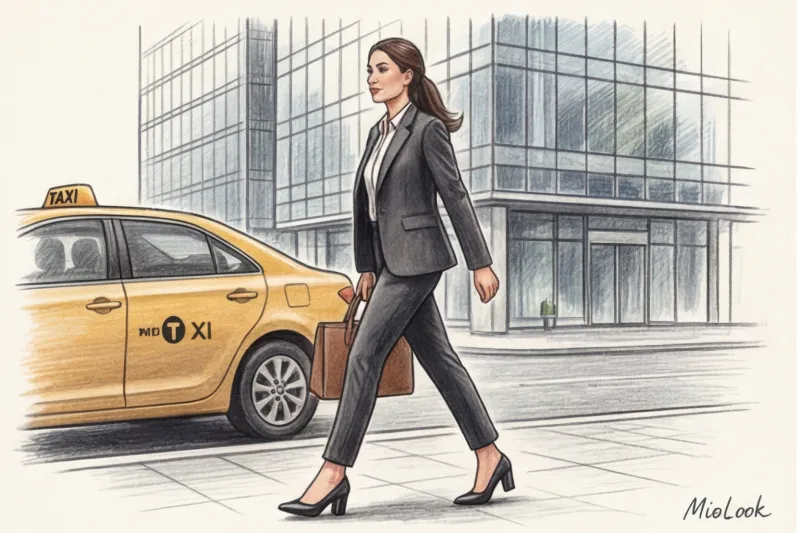
Pair #2: Classic pumps with a stable heel
- Function: Official meetings, presentations, board meetings, business dinners.
- Stylist's secret: Forget about stiletto heels. Replace them with block heels (a stable heel of 5-7 cm). In factories, in business centers with marble floors, or on the cobblestones of European capitals, you'll feel confident, not like you're balancing on your toes.
Pair #3: Elegant, minimalist sneakers
- Function: Evening walks around the city, long trips to sites (factories, warehouses), force majeure.
- Selection criteria: Smooth matte leather, simple (all white or black), absolutely no sports logos or neon accents. These shoes, in the basic premium segment (for example, at COS or Massimo Dutti, cost €100-150), look appropriate even with a relaxed-fit pantsuit.
From the Airport to the Boardroom: Shoe Etiquette Around the World
Style doesn't exist in a vacuum. What works brilliantly in Google's California office will raise eyebrows among its more conservative partners in the City of London or Tokyo.
One of the main no-nos, still relevant in strict business environments (like the Board of Directors level), is open toes and open heels. Even if you're flying to Singapore or Madrid in the middle of August, mules and sandals are still considered business etiquette. Closed-toe slingbacks are an alternative, but only if the host's dress code leans toward business casual.
Be sure to consider the climate when choosing your texture. Suede loafers look great in dry Rome, but if you're being sent to autumnal London or Hamburg, smooth leather will be your salvation. (To be fair, this advice doesn't apply if your business trip involves visiting construction sites or oil rigs—certified safety footwear, usually provided on-site, is king there.)
Ready to get started?
Try the MioLook free plan—no commitments required. Upload your items and let AI create stylish outfits for your next trip.
Get access — €0.99 onceHow to pack shoes to save space and avoid damage
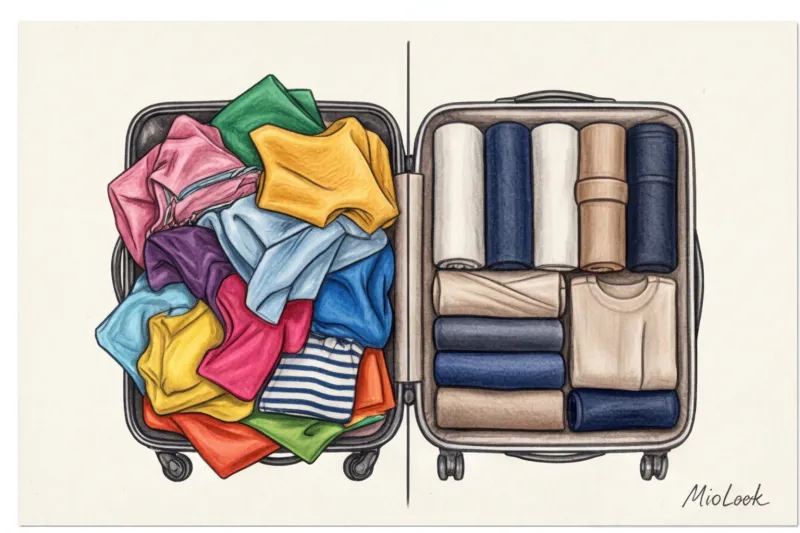
As a professional wardrobe manager, I know that packing a suitcase is like Tetris. Here are three key rules that will keep your shoes in shape and your clothes clean:
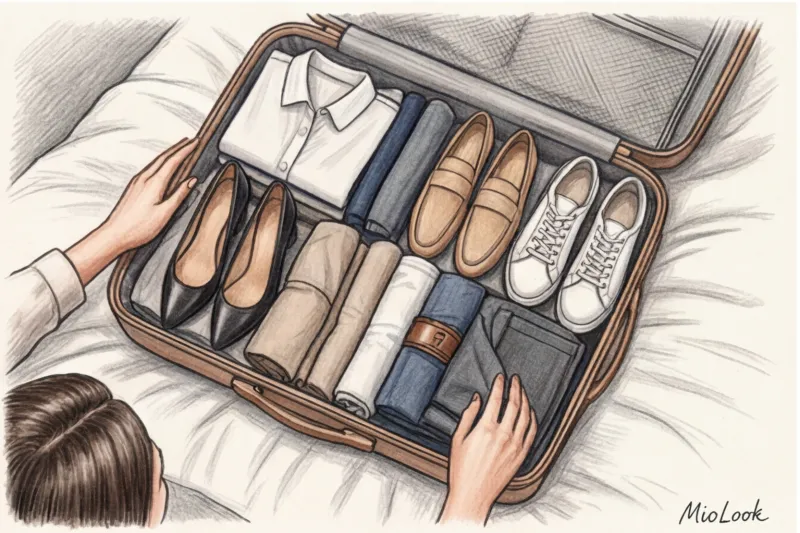
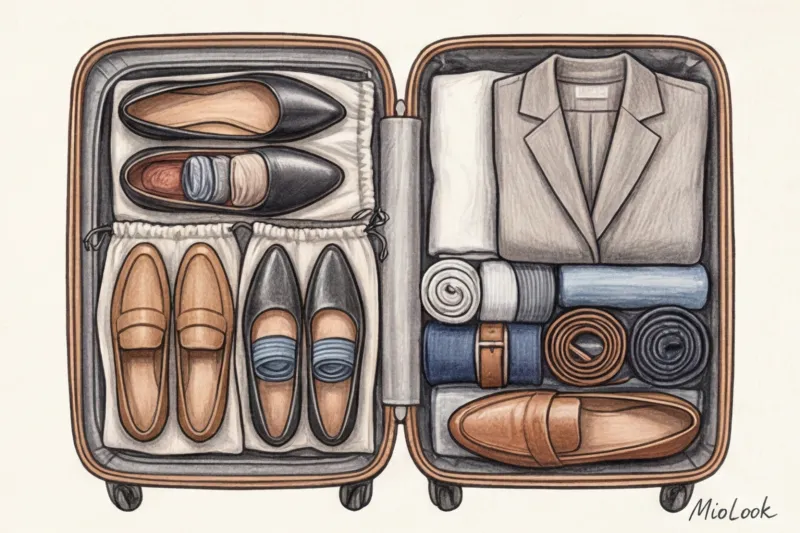
- Gravity works for you: Shoes should always be placed at the bottom of the suitcase, as close to the wheels as possible. Otherwise, when you place the suitcase upright, the heavy shoes will crush your ironed shirts.
- Use voids: Tightly stuff rolled-up socks, tights, charging cables, or rolled-up leather belts inside your shoes and loafers. This kills two birds with one stone: it saves precious carry-on space and acts as a free shoe tree, preventing the toes from collapsing.
- Fabric, not plastic: Never transport leather shoes in plastic bags. Leather needs to be able to breathe, otherwise, condensation may form in the hold due to temperature fluctuations (even if you have carry-on baggage, which is sometimes collected at the ramp). Use only cotton dust bags.
Checklist: Making sure your shoe capsule is ready for flight
Before you close your suitcase, run through this final checklist. It's saved my clients dozens of times.
- Dimensions test: Make sure you have your heaviest pair (loafers or sneakers) planned for when you travel.
- Technical inspection: Check the heels and preventative maintenance on your pumps 3-4 days before departure. Looking for a shoemaker in a strange city before a conference is a dubious pleasure.
- Ambulance: Pack a silicone-impregnated express sponge or special wet wipes for leather in your suitcase pocket. In slushy weather, they'll save your reputation in 15 seconds before entering the office.
- New shoe rule: Never, under any circumstances, take a pair of unworn shoes on a business trip! Test-drive any new pair in normal city conditions at least three days before the trip, walking at least 5,000 steps in them.
A business trip is always stressful, full of negotiations, jet lag, and results-driven work. Footwear should be your reliable ally, not your source of pain. Pack a basic three-piece outfit (loafers, pumps, and sneakers), ensure they're comfortable, and you'll never have to worry about what to wear tomorrow morning in a strange city again.