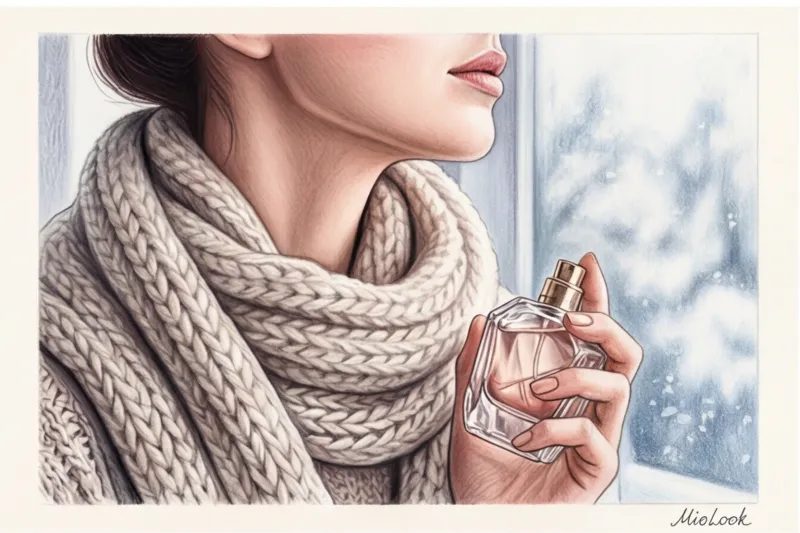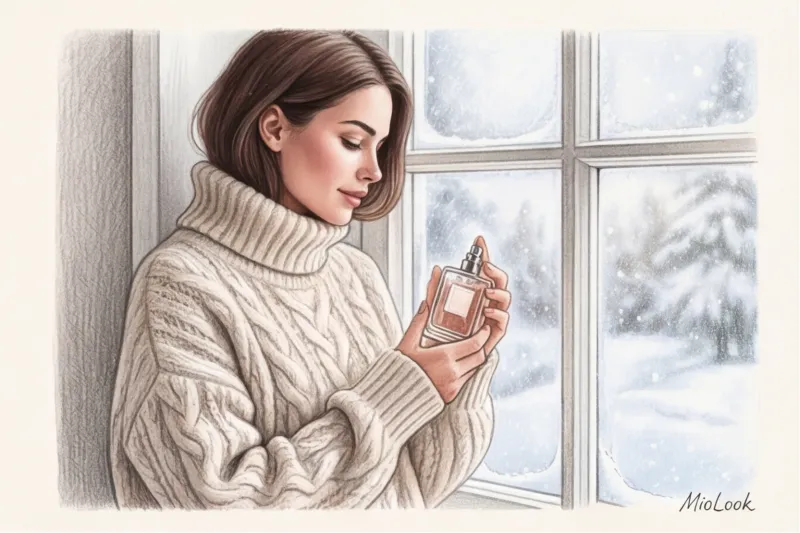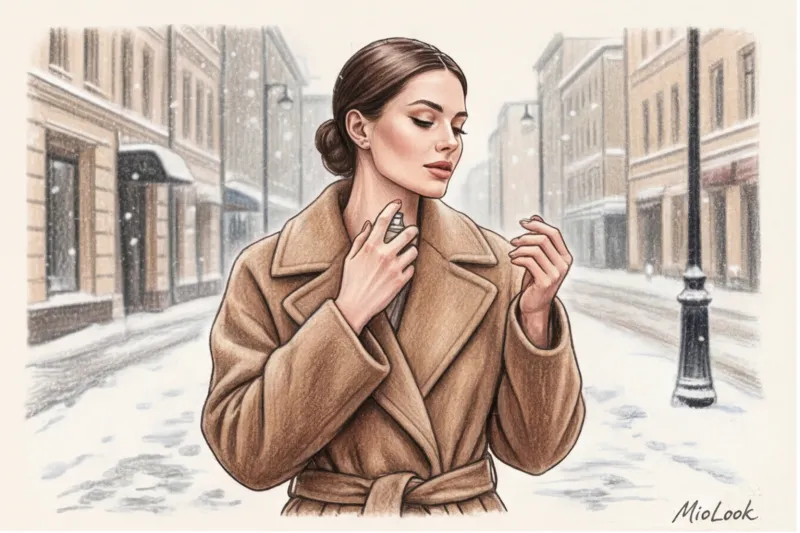
Two years ago, a client of mine brought me a flawless Loro Piana baby cashmere turtleneck in tears for a consultation. The collar had a stubborn, indelible yellowish-brown stain. The culprit wasn't coffee, but a generous spray of an expensive niche perfume based on tobacco absolute and dark resins. This story cost her thousands of euros, but it was a great lesson: a winter fragrance wardrobe requires not only special scents but also a completely different approach to handling them.
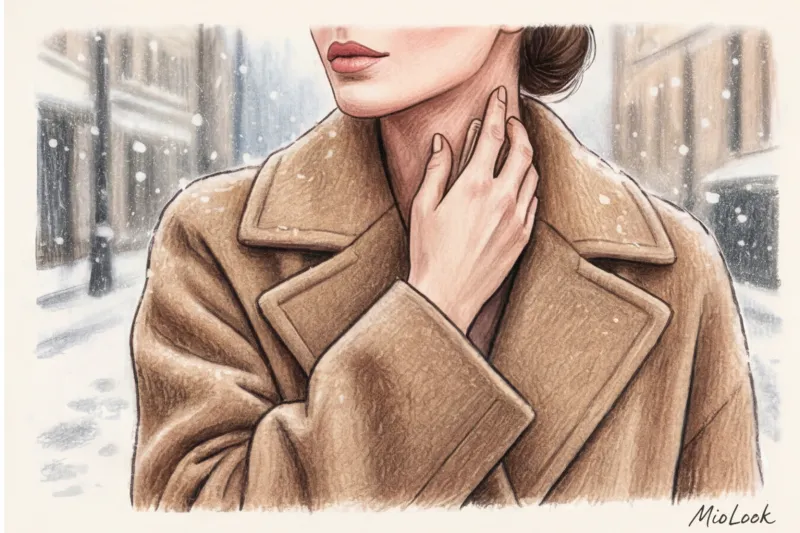
I, Giulia Rossi, always tell my clients: fragrance is your invisible cashmere. It's the finishing touch that can elevate a simple look to the level of "quiet luxury" or irrevocably cheapen it. When choosing niche perfumes for women's winter We're looking for more than just a pleasant scent. We're looking for an olfactory cocoon that can withstand sub-zero temperatures and blend seamlessly with the textures of heavy wool, thick silk, and genuine leather.
We discussed in more detail the basic differences between selective and luxury mass market in our the complete guide to niche perfumery Today, we'll explore the anatomy of the ideal winter fragrance for a woman of status.
The Physics of Cold: Why Our Perfume Wardrobe Needs a Replacement in Winter
Have you ever noticed how your favorite summer citrus cologne starts to sound flat and prickly in winter, disappearing without a trace on the way to the car? It's not a fake or an olfactory issue. It's pure physics.
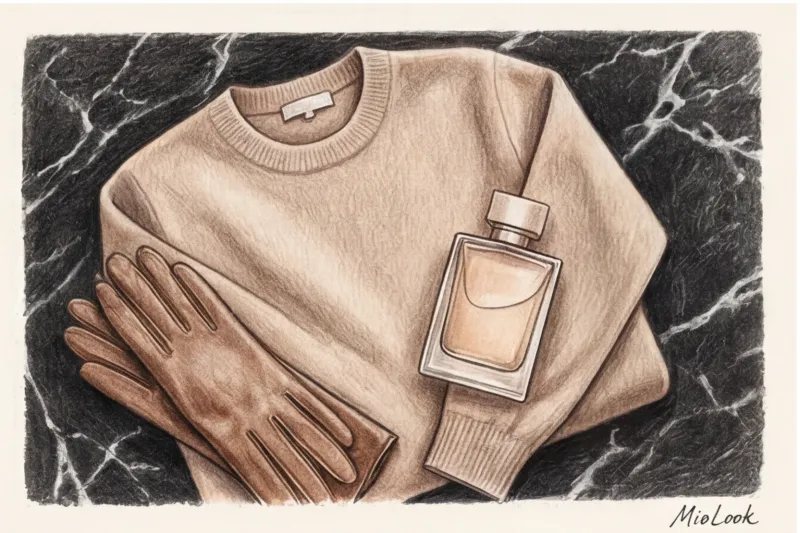
According to research by The Fragrance Foundation (2023), at temperatures below 0°C, the volatility of alcohol and essential oils decreases dramatically. The top notes of the olfactory pyramid—bergamot, neroli, and light floral accords—literally "freeze" on cold skin. Instead of the expected two hours, they evaporate in 15 minutes.
The great perfumer Dominique Ropion often emphasizes in his interviews that the architecture of a winter fragrance should be built on heavy base molecules. Amber, musk, incense, oud wood, and viscous resins evaporate slowly. They create that warming sillage effect.
"In winter, I always recommend my clients invest in Extrait de Parfum (perfume, 20-40% aromatics). Unlike the usual Eau de Parfum (15-20%), extracts sit closer to the skin, smell more dense, and don't disintegrate in the cold."
Olfactory Cashmere: Niche Winter Perfumes for Women as an Investment in Your Look
Imagine a woman in a perfectly tailored, yet inexpensive, camel-colored wool coat. Add to this look the trail of a complex, selective fragrance with notes of suede and saffron. The visual "value" of her outfit instantly skyrockets. The perfume works like a high-status bag or a Swiss watch.
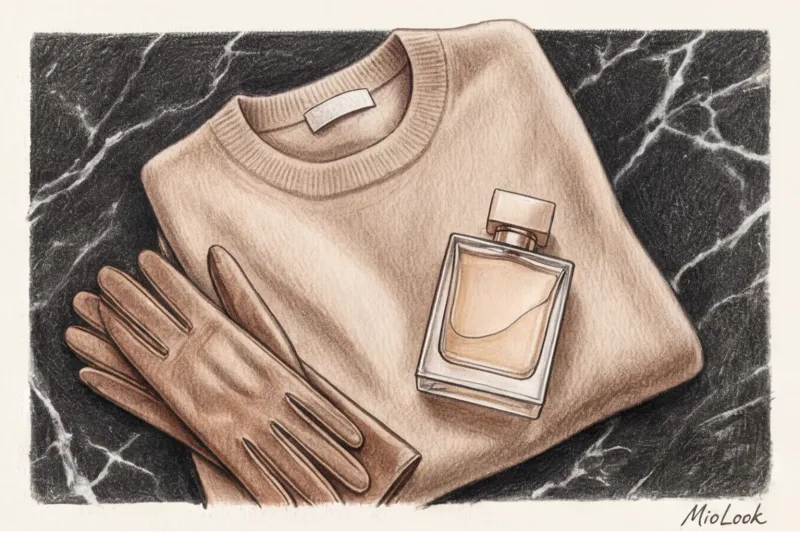
Mass-market fragrances often betray themselves in winter with a flat sound: synthetic musks become piercingly soapy in the cold. Niche fragrances, however, utilize natural absolutes that pulsate and shimmer depending on your body temperature and the surrounding environment.
Your perfect look starts here
Join thousands of users who look flawless every day with MioLook. A smart AI stylist will help you choose a wardrobe to match your new fragrance.
Get access — €0.99 oncePremium leather and dry wood: a choice for everyday business
When I was putting together a fragrance wardrobe for a top manager before her winter assignment in Geneva, we completely avoided floral arrangements. Strict business casual, where heavy English wool suits predominate, calls for a protective fragrance.

Pay attention to compositions with dominant sandalwood, Virginia cedar, dry vetiver, and subtle suede. These notes convey competence, confidence, and create an elegant distance. They don't shout about themselves, but they make everyone listen to your every word in the conference room.
Complex gourmand and spice: intellectual comfort
"Intellectual gourmand" is ideal for informal gatherings, theater outings, or fireside dinners. It's not the scent of a corner pastry shop. It's bitter almond, tonka bean, dark chocolate with a hint of pink pepper, and cherry pits.
Resins such as frankincense, myrrh, and benzoin give this gourmand its prestigious quality. They remove excess stickiness, making the fragrance deep, meditative, and truly luxurious.

The "Sweet Syrup" Myth: Why a High-State Woman Avoids Plain Vanilla
Here we come to the most common winter misconception. Nine out of ten women, when the cold weather sets in, instinctively reach for overtly sweet, cloying bottles "to warm up." This is a fatal style mistake.
An excess of ethyl maltol (a synthetic molecule that smells like cotton candy and praline) combined with heavy winter clothing creates a suffocating effect. Now imagine walking into a heated office from the cold wearing such a perfume. Your colleagues are guaranteed to get a headache, and your look instantly loses its elegance, descending into childishness.
Does this mean vanilla is off-limits? Absolutely not. But a woman of status chooses vanilla beans, dry, unsweetened, or even slightly smoked vanilla with woody overtones. It warms you up without turning you into a walking dessert.
Access to MioLook for €0.99 — one-time payment
A smart AI stylist will select the perfect look, taking into account your preferences, color type, and even your favorite perfume notes.
Get access — €0.99 onceThe Art of Application: How to Pair a Heavy Perfume with Your Winter Wardrobe
Let's return to the ruined Loro Piana turtleneck. Many niche perfumes (especially extracts) contain high concentrations of natural oils and resins, which produce a rich, dark color. When sprayed on light-colored cashmere, silk, or fine wool, they leave oily stains that no dry cleaner can remove.
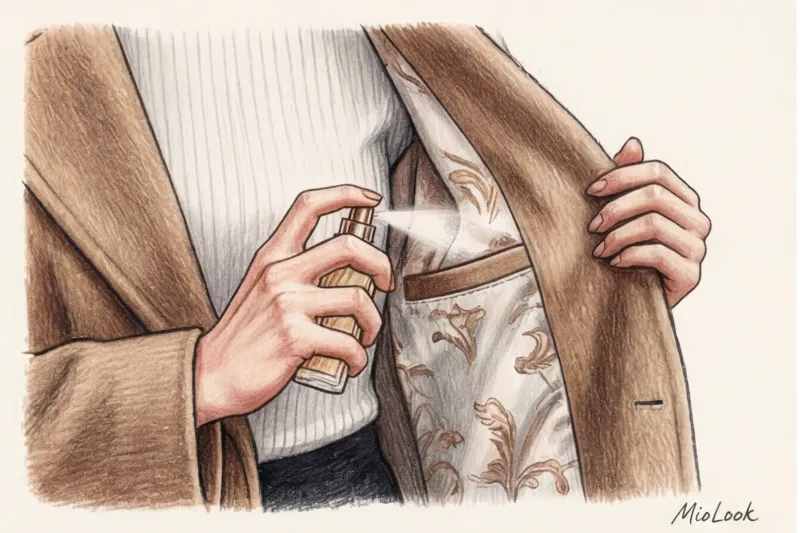
To ensure your scent lasts a long time and doesn't ruin your clothes, follow these three winter application rules:
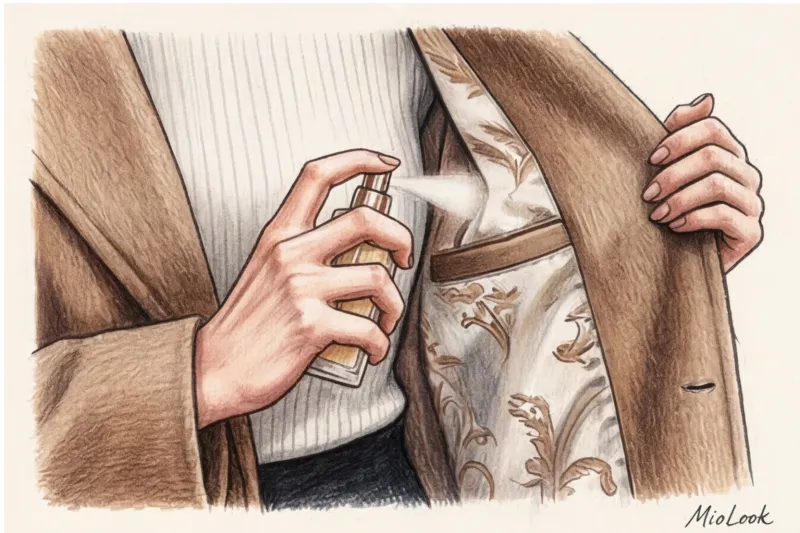
- Use a lining. Spray dark liquids only on dark silk or viscose outerwear linings. Fur, thick wool, and leather are excellent scent retainers, able to retain base notes for weeks.
- Avoid temperature shock. Never apply perfume a minute before going out into the cold. The sudden temperature change "breaks" the fragrance pyramid, and the scent may release an unexpected sour or metallic note. Apply perfume 20-30 minutes before going out.
- Cloud rule. For the heaviest niche compositions (oud, animalic), spray upward and let the cloud settle. This will distribute the fragrance in micro-droplets throughout your hair and shoulders, without creating a suffocating stain.
A Stylist's Checklist: How to Choose and Test Your Winter Fragrance
Purchasing a niche is an investment. To avoid a bottle gathering dust on a shelf and causing a migraine, the selection process must be thoughtful.
First of all, never judge a winter fragrance by a paper blotter. Paper is dead. Resins, musks, and woods only reveal themselves on hot skin. Spray the fragrance on your wrist and leave the boutique.
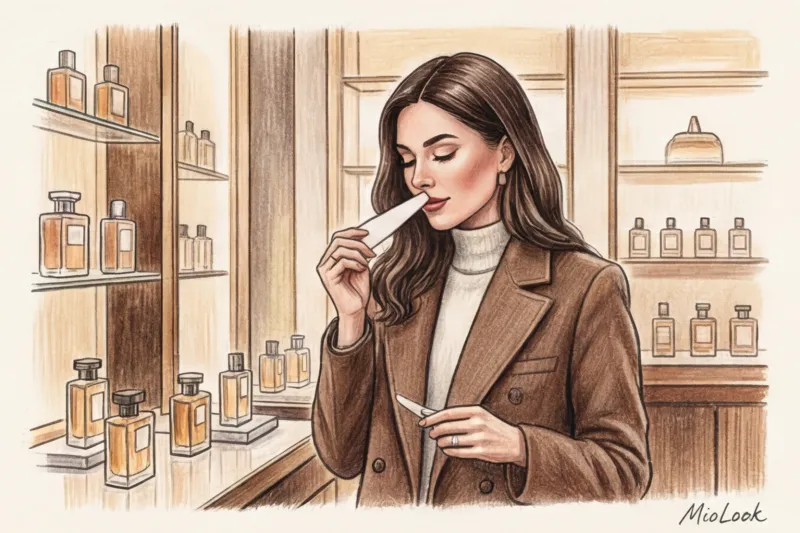
Secondly, do a test drive, both indoors and outdoors. Go out into the cold, walk for 15 minutes, and then go into a warm café. It's when your skin suddenly warms up that the perfume reveals its true colors. Assess the sillage—has it become toxic or harsh in the warmth?
Fair warning: This testing method may not work if you have physiologically "cold" skin. On icy hands, the heavy resins may not open up, freezing into a prickly accord. In this case, your solution is to apply the perfume to your décolleté (where the skin is always warmer) or to the back of your neck under your hair.
Ready to get started?
Try the MioLook plan for free—no commitments required. Organize your wardrobe and create iconic looks in just a few clicks.
Get access — €0.99 onceFinally, make sure the fragrance fits into your wardrobe. If you wear austere minimalism and architectural tailoring, a lush oriental rose with patchouli will create a clash. Your perfume should speak the same language as your coat.
Winter perfumes are a no-brainer. Find your perfect woody or resinous accord, and you'll notice how your posture changes as you wrap yourself in your favorite scarf on a frosty morning.