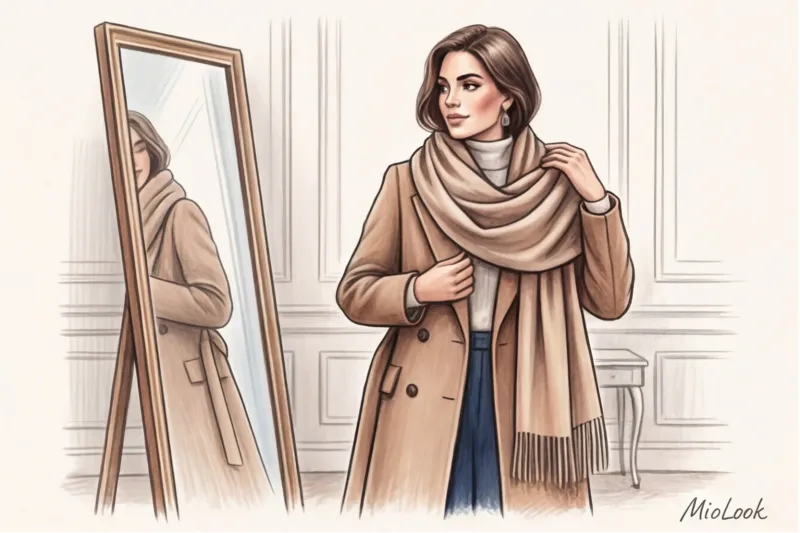
February. Paris. A piercing wind gusted outside the Grand Palais before the latest fall/winter collection show. I stood in a crowd of fashion editors and street style photographers, trying to hold my phone with frozen fingers. Next to me, colleagues shivered in their luxurious, yet utterly unwarm, oversized wool sweaters. It was that season, observing industry insiders, that I finally realized: warmth depends not on the thickness of the fabric, but on the laws of physics. Smart layering in winter clothing — this isn't an attempt to wear half a closet. It's thoughtful architecture.
We've already covered how outdoor aesthetics and technological fabrics have integrated into high fashion in more detail in our complete guide to Winter sporty style and sporty-chic looks But today I want to talk about the fundamental rules of cold weather survival. How can we translate mountaineering gear principles into an elegant urban wardrobe? How can we remain fragile and graceful when it's -20 degrees outside?
The Architecture of Warmth: Why Layering in Winter Is a Physics, Not Just a Trend
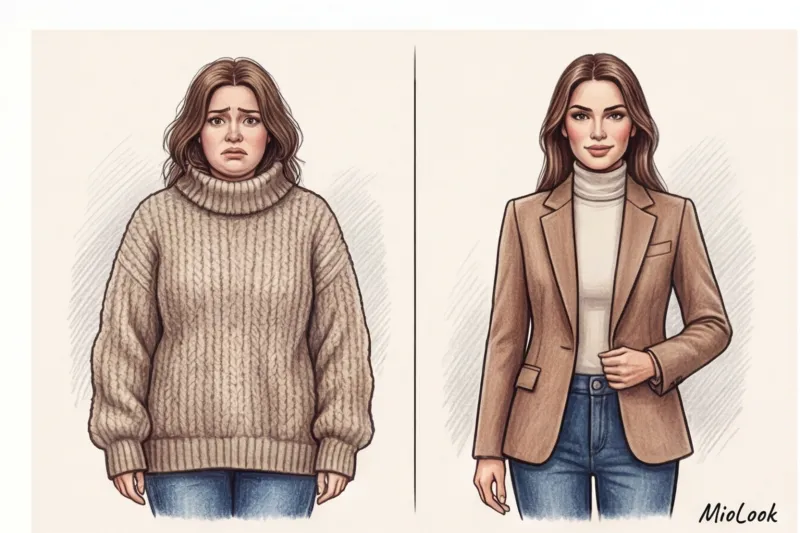
In my practice, eight out of ten clients who come to me for a winter wardrobe review make the same mistake. They buy gigantic chunky knit sweaters and try to squeeze them under classic coats. The result? Restricted movement, a rumpled appearance, and, paradoxically, a constant feeling of cold.
In textile engineering, there's a concept called CLO (Clothing Insulation Index), which measures the thermal insulation of clothing. Researchers' data reveal something surprising: 2 millimeters of high-tech insulation (such as Primaloft or Thinsulate) retain heat more effectively than 10 millimeters of standard wool knit. Why? Because it's not the fabric itself that insulates, but the air trapped between the layers.
"Three thin layers with a gap of air between them will always keep you warmer than one thick sweater. Air is your main insulator"—I repeat this principle to every client.
The Base Layer Mistake: Why Cotton Will Freeze You
The most dangerous winter styling myth is the belief that wearing a cotton T-shirt under a sweater will protect you from the cold. Cotton has a fatal property in winter: it instantly absorbs moisture (for example, when you enter a warm subway or office) and takes a disastrously long time to dry. According to research by thermal underwear manufacturers, damp cotton accelerates body heat loss by up to 50%.
Step outside in a damp cotton T-shirt—and you're guaranteed to get an icy shell. The only true choice for a base layer (that "second skin") is the finest merino wool, natural silk, or high-quality synthetics (a blend of polyester and elastane), which wick moisture away from the body, keeping you dry.
The Three-Layer Rule in Urban Environments: Adapting Outdoor Technologies
The ECWCS (Extended Cold Weather Clothing System) layering system, originally designed for extreme conditions, has now been brilliantly adapted to the gorpcore trend and urban minimalism. How does this work in practice if you're going to brunch downtown rather than climbing Everest?
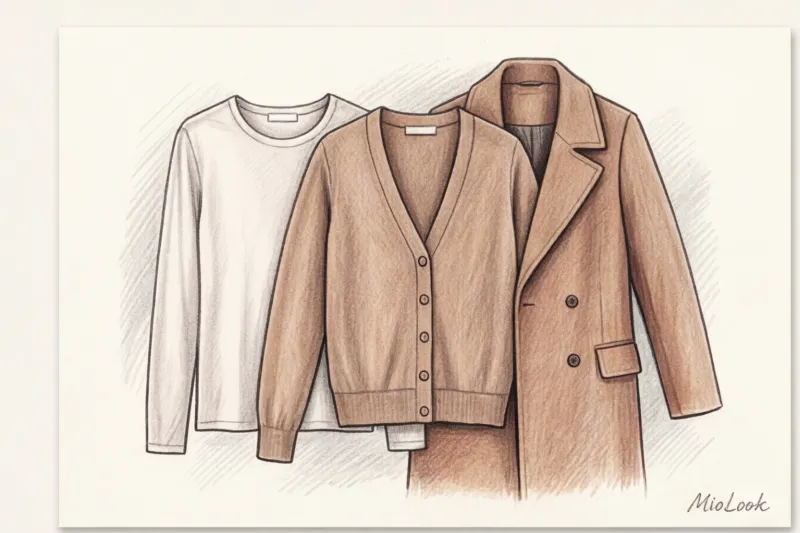
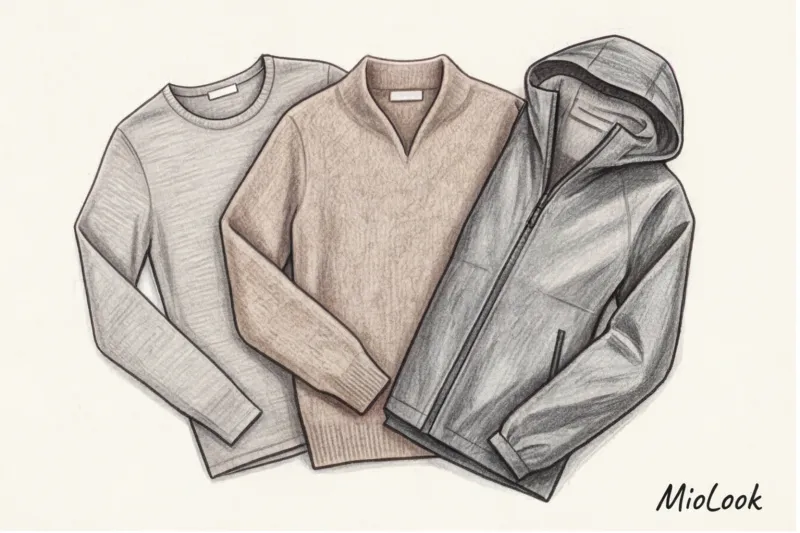
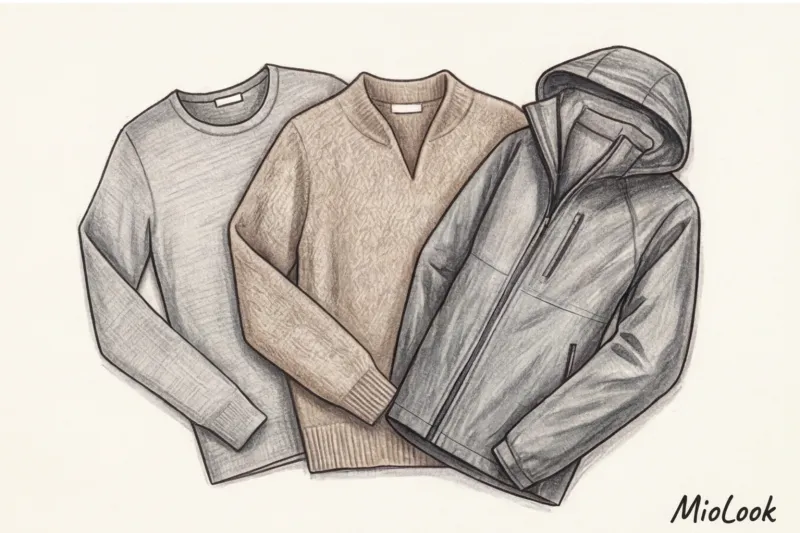
- Layer 1 (Base): Moisture removal. A thin merino turtleneck (such as one from the basic COS or Uniqlo line), a long-sleeved silk top, or technical thermal underwear. The main rule is that the item should fit snugly.
- Layer 2 (Insulator): Heat retention. This is where airiness comes into play. It could be a loose, heavy denim shirt, a cashmere jumper, a thin fleece pullover, or a structured wool cardigan.
- Layer 3 (Shield): Protection from the elements. Your barrier against wind and sleet. A wool coat with a windproof membrane lining, a heavy trench coat over an ultra-light down jacket, or a voluminous shearling coat.
Access to MioLook for €0.99 — one-time payment
A smart AI stylist will create the perfect layered look from your clothes.
Get access — €0.99 onceThe Illusion of Slimness: How to Layer Clothes Without Adding Visual Pounds
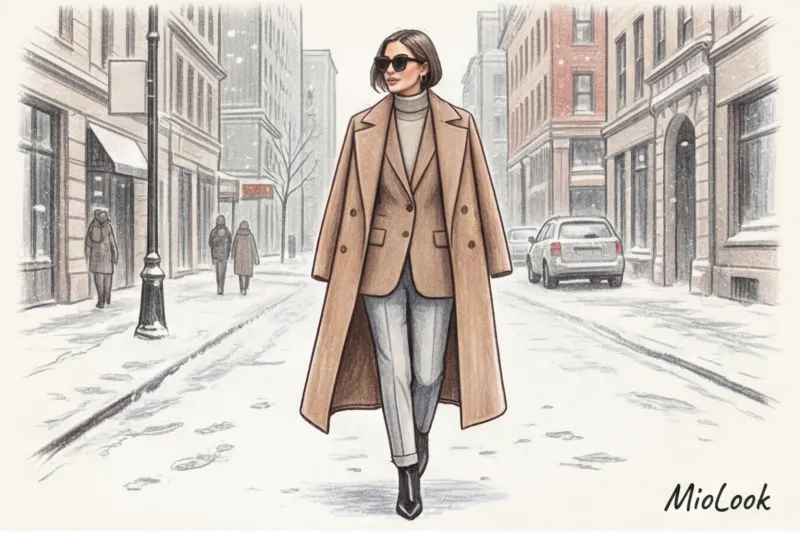
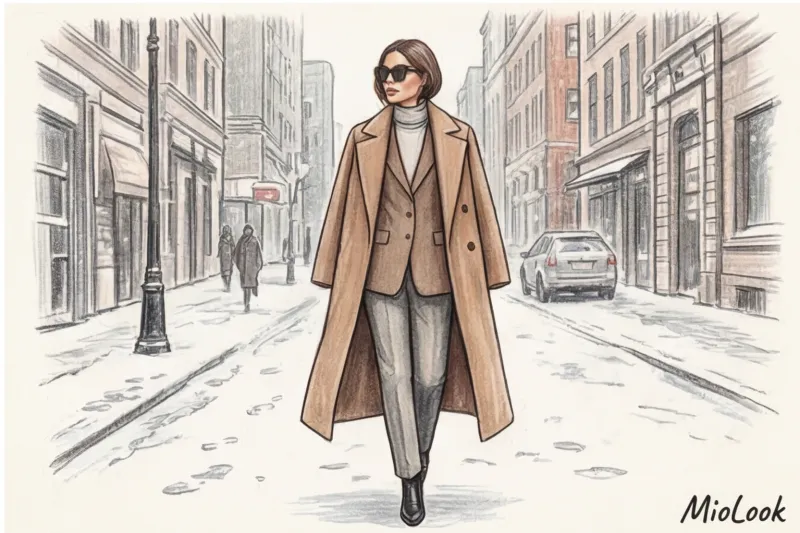
The main fear of layering is the fear of looking "cabbage." To avoid this, stylists use the rule of verticals and play with lengths. Each subsequent layer should be either noticeably longer or shorter than the previous one. If the hem of a shirt, the hem of a sweater, and the hem of a jacket all end in a straight line (especially at the widest part of your hips), you'll visually add a couple of sizes to your figure.
My favorite professional trick: when layering, leave the top layers unbuttoned. An unbuttoned jacket under an unbuttoned coat creates two strong vertical lines that elongate your silhouette, making you appear taller and slimmer.
Play of textures: matte versus glossy
If you wear a wool turtleneck under a wool cardigan and a wool coat over it, the look will be dull and heavy. The secret to luxurious styling lies in the contrasting textures.
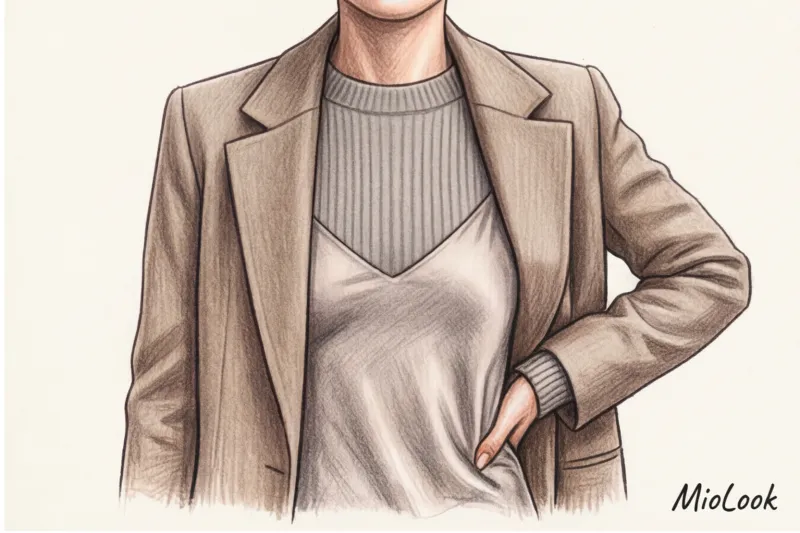
Try the formula: smooth + fluffy + dense. For example, a smooth silk shirt, layered with a fluffy mohair jumper, and a thick matte leather jacket. The contrast in texture draws the eye around the look, creating depth without adding bulk.
Discreet micro-layers: bibs, detachable collars and ultra-thin down jackets
One of my clients, a top manager at an IT company, absolutely didn't want to part with her favorite autumn trench coat made of thick gabardine until December. The solution was micro-layers—a brilliant invention of modern fashion.
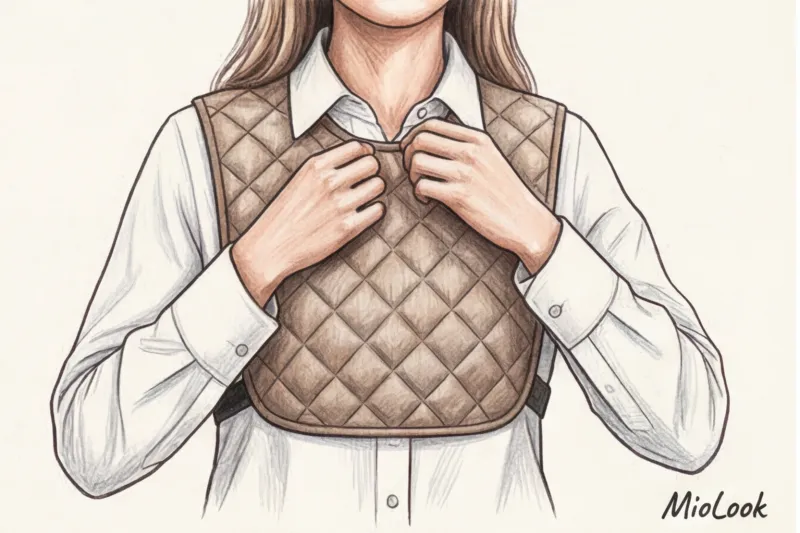
The chest and neck are the areas that cool the fastest. Instead of wearing a thick sweater that wouldn't fit through the tight sleeves of a trench coat, we used a quilted bib. It keeps these critical areas warm while leaving our arms free.
Ultra-light down vests are another must-have. But they come with a significant limitation, often overlooked by glossy magazines. This does NOT work if your coat or jacket is tailored to fit your figure (slim fit silhouette). If there isn't at least five centimeters of space between your body and the coat, the down jacket will shrink, lose its insulating properties (the air will escape), and you won't be able to raise your arms.
Your perfect look starts here
Join thousands of users who look flawless every day with MioLook.
Get access — €0.99 onceWinter Office Layering: How to Maintain a Strict Dress Code in -20°C
What if you work in a bank or law firm where fuzzy sweaters and fleece are unacceptable? '70s aesthetics and a reimagining of men's wardrobe come to the rescue.
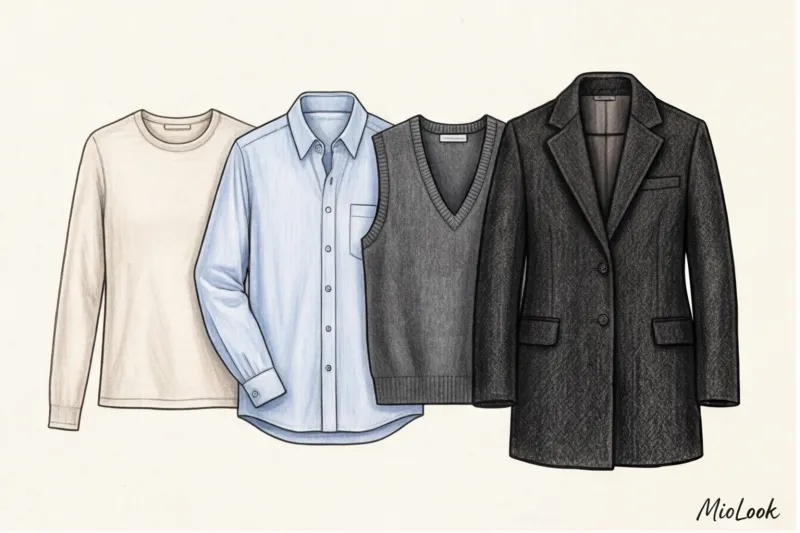
A basic office look is a sheer cashmere turtleneck worn under a tailored men's shirt or classic jacket. It looks incredibly classy and sophisticated. If the dress code allows for a little more casualness, swap out your usual jacket for a structured wool suit vest over a silk blouse.
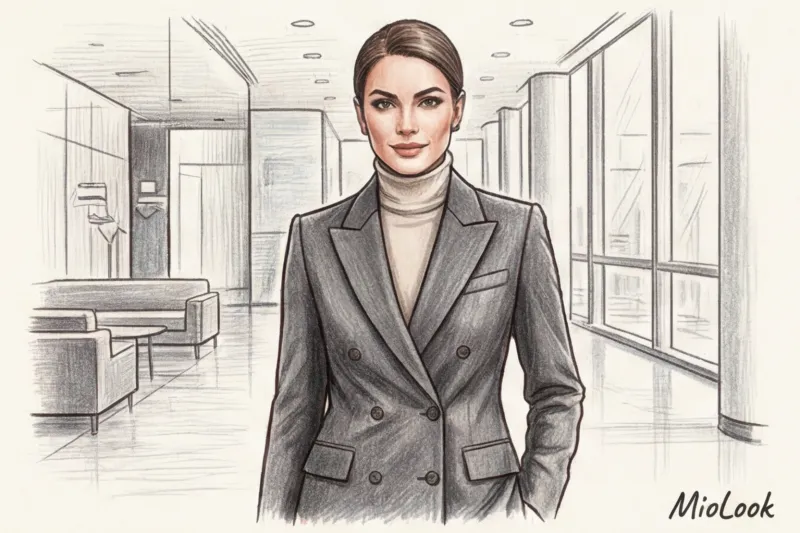
By the way, winter is a great time to experiment with accessories, which can also serve as an extra micro-layer. Elegantly tied silk scarf in business style will protect your neck from drafts in an open space, and properly selected bright accents in a business look will distract attention from the forced multi-layeredness.
Checklist: How to Create the Perfect Layered Look
Let's move from theory to practice. Tomorrow morning, when you open your closet, try putting together a look using this algorithm:
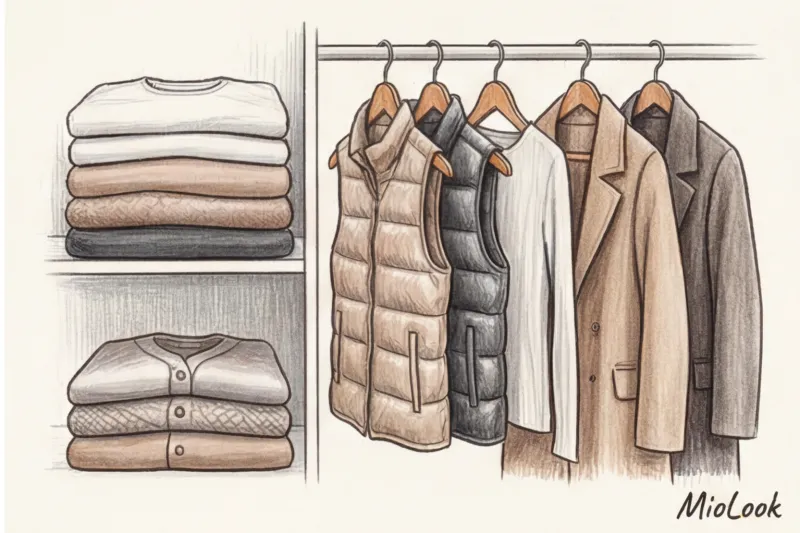
- Step 1: Fitted base. Put on a thin merino turtleneck or a long-sleeved viscose-elastane top. Make sure the fabric doesn't bunch up.
- Step 2: Air in-between layer. Add a loose, heavy cotton shirt or a thin cashmere V-neck jumper. The cuffs of the base layer can peek out slightly from under the second layer.
- Step 3: Structuring layer. Put on a men's-style jacket, a thick cardigan, or a leather shirt jacket. Leave this layer unbuttoned to create vertical lines.
- Step 4: Outerwear. Complete the look with an oversized coat or a loose down jacket that doesn't restrict shoulder movement.
Ready to get started?
Try MioLook's free plan—upload your wardrobe and let AI create the perfect layered looks for you.
Get access — €0.99 onceSummary: Elegance without sacrifice
According to McKinsey's 2024 Fashion Industry Report, consumers have finally abandoned the "beauty requires sacrifice" mentality in favor of functional comfort. And smart layering is the ultimate proof of this.
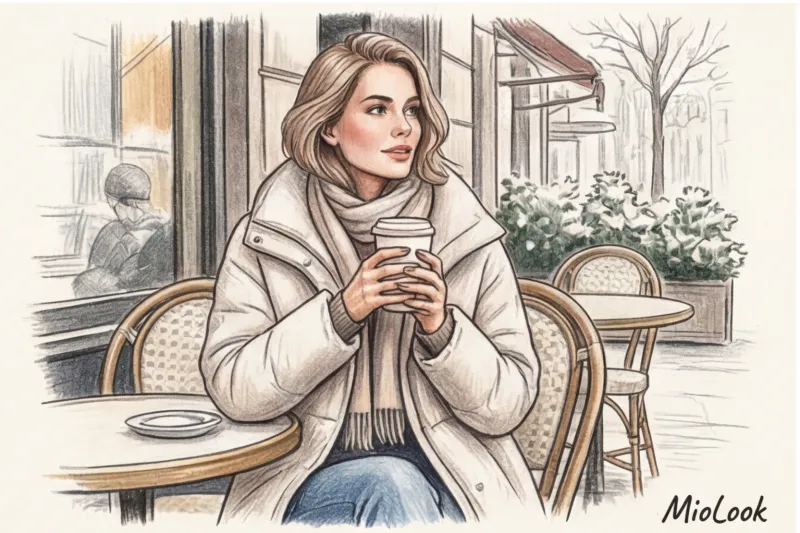
Masterful layering is a sign of great stylistic acumen. Invest in high-quality, high-tech base layers, experiment with contrasting textures, and remember: true luxury is feeling warm, cozy, and looking like you just stepped out of the pages of French Vogue.