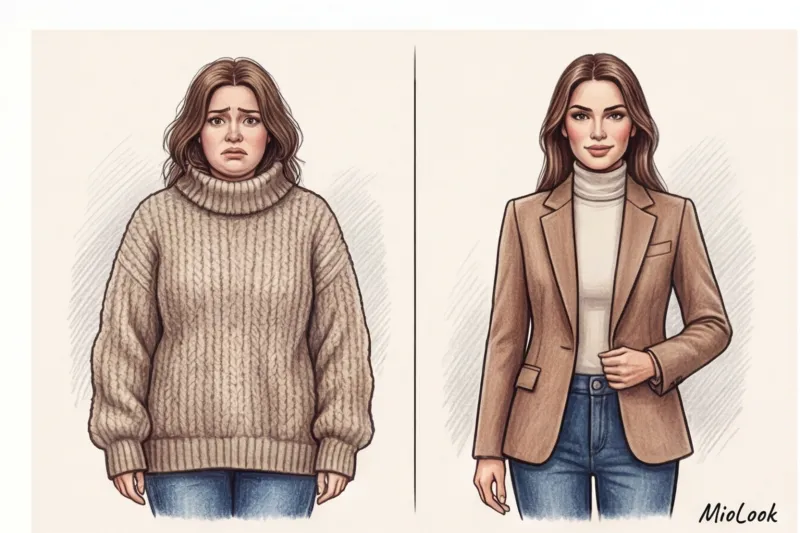
Picture this familiar scene: you put on your thickest sweater, wrap yourself in a voluminous down blanket, step outside into the freezing cold, and realize two things. First, the piercing wind still blows through this structure. Second, the reflection in the shop window shows someone who has visually gained at least two sizes. Sound familiar?
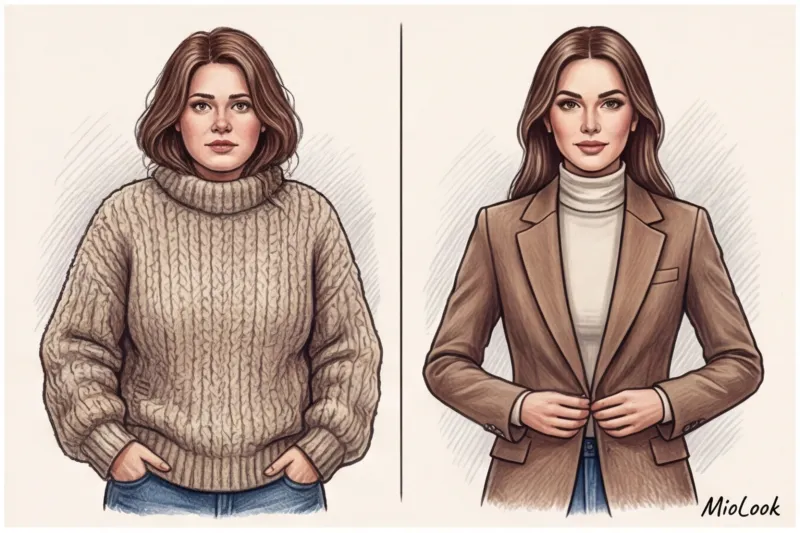
The main winter myth I fight year after year is: "To stay warm, you need thick clothes." In reality, thick, loose yarns let cold air pass through perfectly, while bulky items deform the figure. The secret to elegant wintering lies in a completely different approach—the right way. layering in winter clothing , based on the physics of tissues, not on their thickness.
Last year, I put together a winter capsule collection for a client in Berlin. She complained that she felt like a "clumsy penguin" in winter. We ruthlessly replaced her two shapeless, hyper-oversized down jackets with a system of thermal silk, fine merino, and a structured wool coat. The result? A visual 10 kilograms less and absolute comfort at -10°C. We wrote more about the global shift from baggy pieces to clean lines in our complete guide to The main fall/winter clothing trends: how to dress stylishly Today, we'll explore the mechanics of smart insulation in practice.
Cabbage Syndrome: Why Classic Layering Makes You Look Fat
Most online articles recommend simply "wearing a shirt under a sweater." In practice, this often results in a bunched-up look: the collar sticks out crookedly, a bulge forms on the stomach, and the sleeves are impossible to bend without effort.
The main mistake is combining several thick and loose textures. Chunky knit sweaters, beloved by many, are the real enemies of a slim silhouette. Let's do the math: one chunky knit sweater adds 15-20 mm of volume to the figure all around. Meanwhile, three layers of regular, dense, yet thin fabrics (silk + merino + smooth wool) add only 4-5 mm.
According to the analytical agency WGSN (2024), the 'hyperoversized' macro trend has officially ended. It has been replaced by 'structured comfort'—a return to architectural silhouettes, an emphasis on the waist, and a defined shoulder line, even in winter wardrobes.
You don't need to cocoon your body to stay warm. It's time to bring back the architecture of your silhouette.
Access to MioLook for €0.99 — one-time payment
A smart AI stylist will select the perfect look based on your proportions and weather conditions.
Get access — €0.99 onceThe Three Layer Rule Reimagined: Layering in Winter Without the Bulk
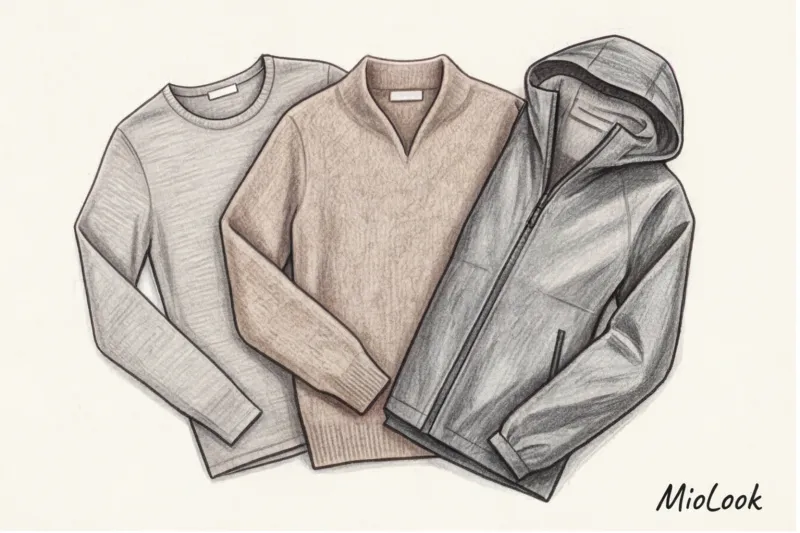
Everyone's heard of the three-layer rule for travel: moisture wicking, warmth, and wind protection. But wearing a fleece under a ski jacket to the office is a bad idea. For elegant urban casual, this principle needs to be deconstructed.
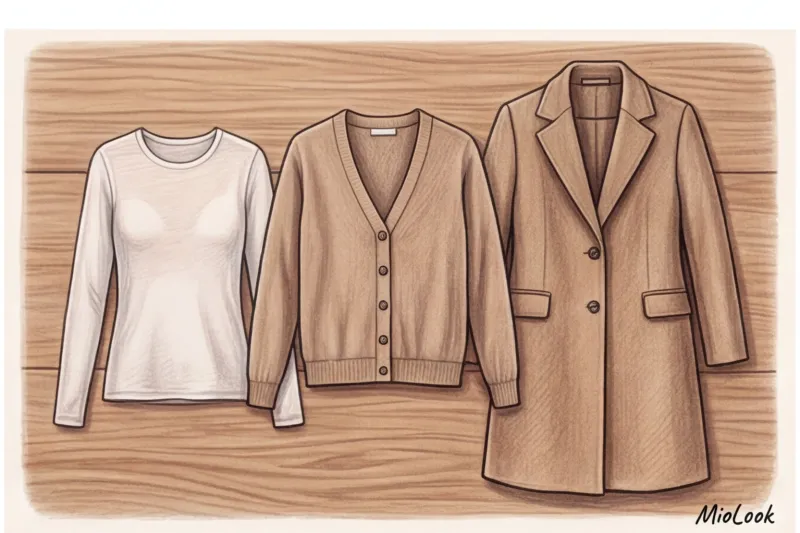
The secret to warmth lies not in the clothes themselves, but in the air spaces between them. Still air is the best insulator. An important rule for stylists: the density of each subsequent layer must be strictly less than the previous one If you wear a loose T-shirt under a tight jumper, the folds will inevitably show through.
Base layer: micro-fabrics and smart thermal underwear
Let's start with the basics. Forget cotton in winter—it absorbs moisture, takes a long time to dry, and starts to make you feel cold. Your choice is an "invisible" base: silk tops, the finest merino wool, or viscose-spandex turtlenecks.
I personally tested two popular options under a strict office dress code. Uniqlo's Heattech thermal underwear (the basic synthetic line) works great for active walks. But if you need to sit in a heated office and then step out into the cold, it can cause overheating. Intimissimi's thermal silk and wool line was much more effective for the city: natural fibers are phenomenal at regulating body temperature.
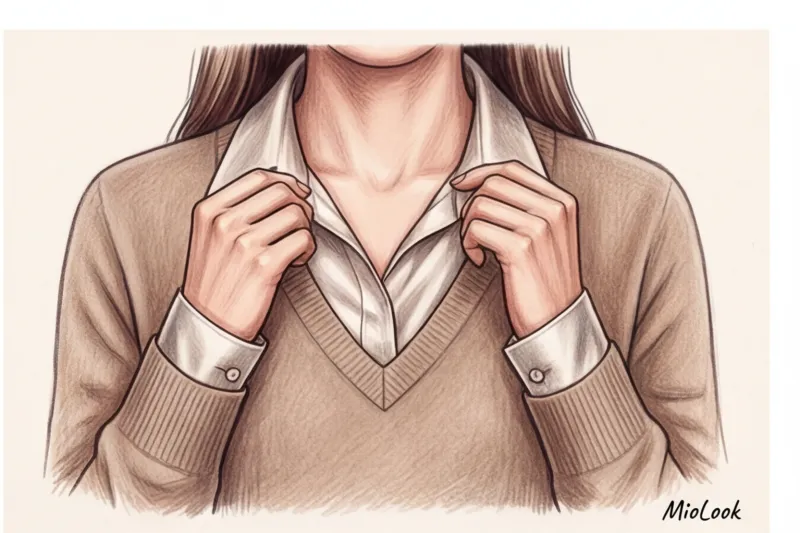
Fair limitation: A tight, lightweight knit base layer works flawlessly only if it's hidden. I don't recommend wearing such pieces solo—they highlight every subtle nuance of your figure and the texture of your underwear.
Insulating Layer: Structure Instead of Formlessness
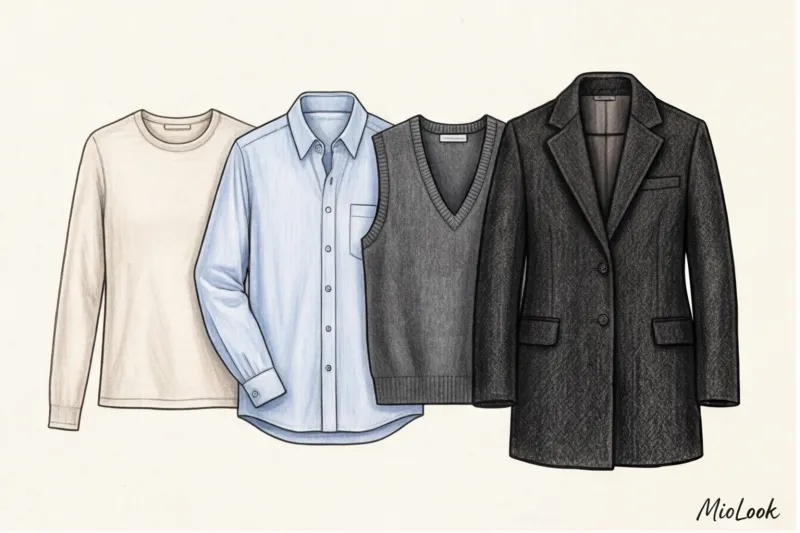
This is where a thick yet lightweight knit comes into play. Instead of a loose sweater, choose a smooth-knit cardigan, a wool vest, or a structured jacket. Shoulder pads and a fitted cut act as "armor" that instantly shapes your posture.
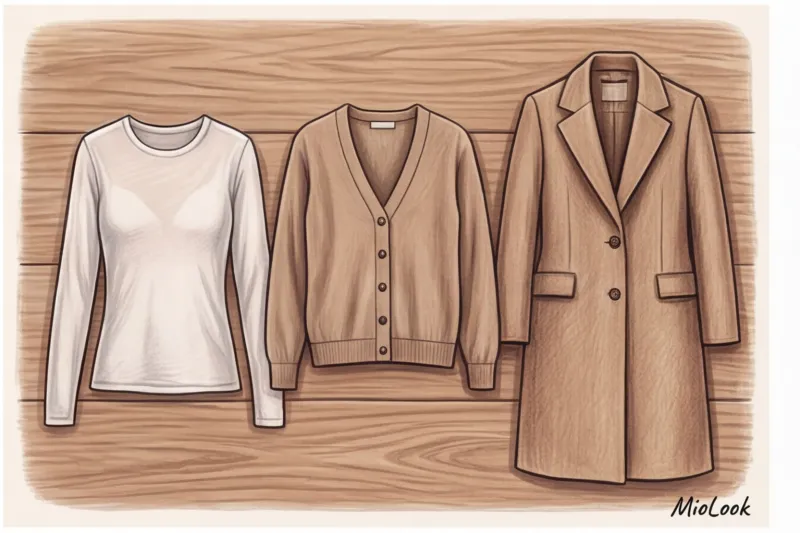
Pay attention to the composition: 100% merino wool warms three times better than a bulky sweater containing 60% acrylic.
Protective layer: outerwear with a clear silhouette
Moving on from caterpillar-style down jackets to long, draped maxi coats, the below-calf length works in your favor: it creates a continuous vertical line that elongates your height. It's that cinematic drama sorely missing from your winter routine.
An important technical detail: when buying a coat, pay attention to the armholes. Choose a raglan sleeve or a slightly dropped shoulder to ensure your structured middle layer (jacket) doesn't restrict arm movement.
Your perfect look starts here
Join thousands of users who look flawless every day with MioLook. Create your winter capsule online.
Get access — €0.99 onceFabric Physics: A Stylist's Secret to Preventing Wrinkles in Clothes
During consultations, clients often complain, "I wear a shirt under a sweater, and my sleeves ride up all day, and everything bunches up on my back." This happens because of a clash of textures.
In physics, there's a concept called the coefficient of friction. In styling, it sounds like this: We put the smooth one under the matte one, the sliding one under the rough one If you wear a cotton shirt (matte) under an acrylic sweater (rough), they will cling tightly to each other. You won't be able to lift your arm without the sweater pulling the shirt along with it.
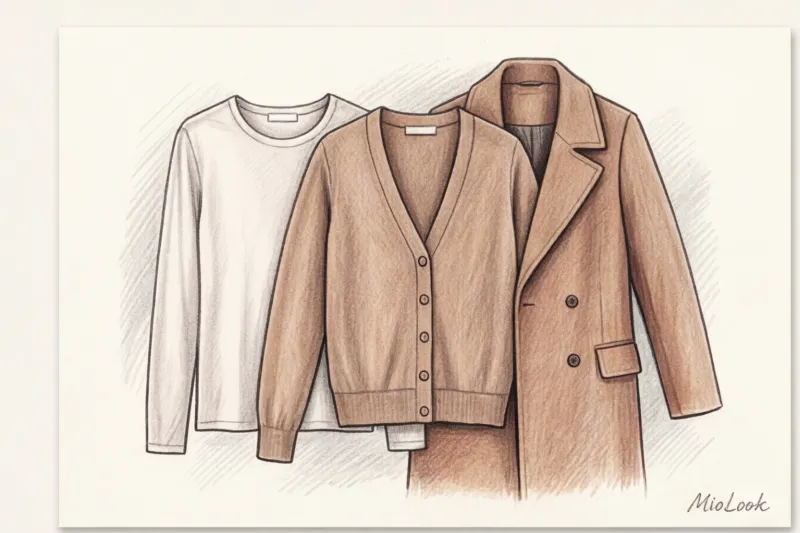
- The perfect couple: A silk or viscose blouse under a cashmere sweater. Silk will glide over your body, and cashmere will glide over silk.
- Perfect Couple 2: a thin, smooth turtleneck under a tweed jacket.
- Catastrophe: Wear fleece under a wool sweater with a fuzzy texture. The Velcro effect is guaranteed.
Visual Illusions: How to Elongate a Silhouette Using Layers
Optics and geometric cuts can work wonders. Layering in winter is the perfect tool for color-correcting your figure.
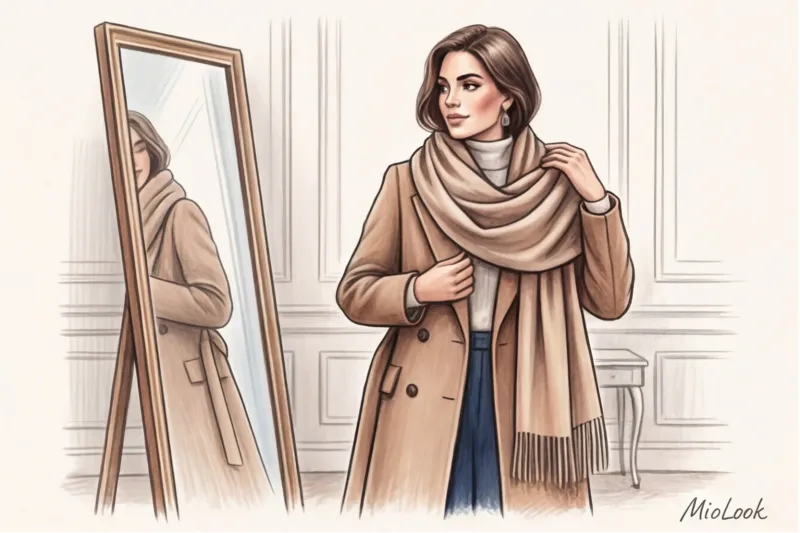
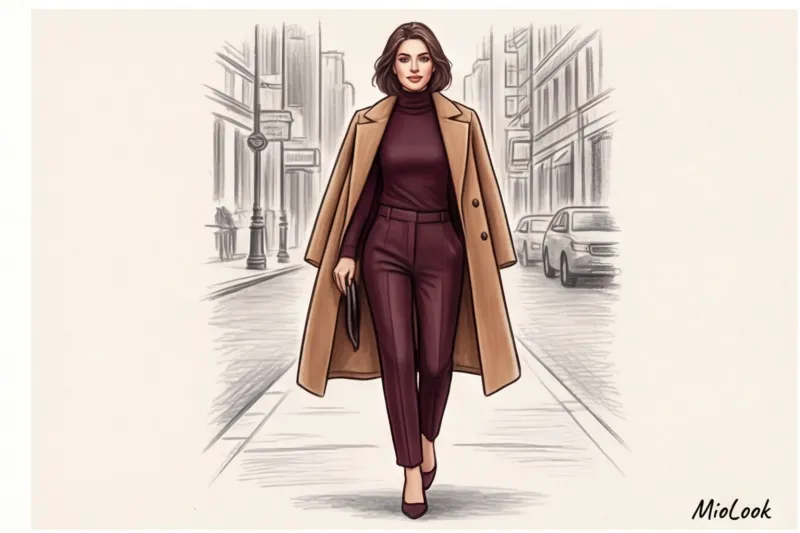
Use the "inner column" technique. Wear a turtleneck and trousers in the same deep color (for example, dark chocolate or burgundy). Layer a contrasting coat (camel or gray melange) over it and leave it unbuttoned, if the weather permits, or slightly wrapped. Two contrasting vertical lines from the coat will literally "cut" excess volume on the sides, leaving only a narrow strip of the inner color.
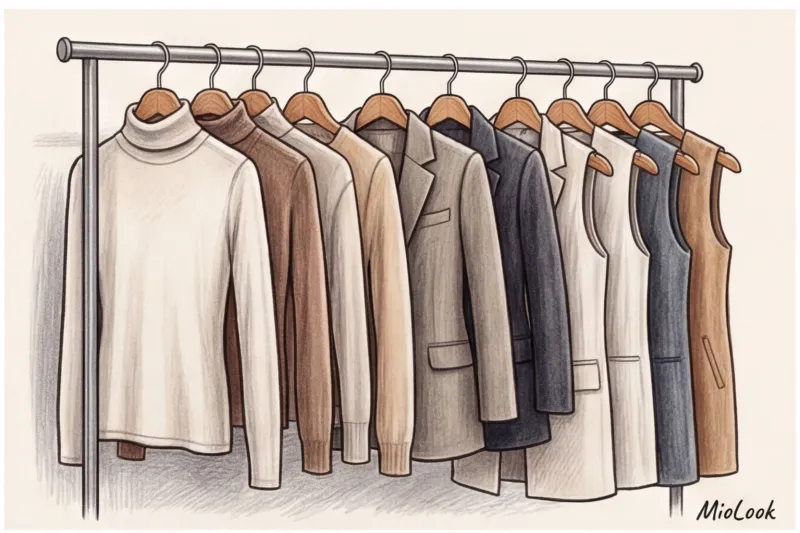
Recall the Saint Laurent Fall/Winter 2024 shows: Anthony Vaccarello masterfully shifts the emphasis, using V-neck cardigans over buttoned-up silk blouses, emphasizing the waist with wide belts over knitwear. Layered lengths (a cropped sweater with 5 cm of an elongated shirt peeking out from underneath) also break up the monolithic silhouette, adding a dynamic touch.
Ready to get started?
Try MioLook's free plan—no commitments required. Upload your items, and the AI will create stylish layered outfits.
Get access — €0.99 onceEuropean mass market: what and where to buy for smart layering
As a practicing personal shopper, I know exactly which stores are worth looking for the right layers, and where we're simply overpaying for the brand. An analysis of current collections reveals a clear distinction.
- Zara: We go here for the middle layer—structured jackets with accent shoulders. But it's best to avoid the knitwear section: 80% of their bulky sweaters are made of squeaky acrylic, which doesn't provide warmth, but rather creates a sauna-like effect.
- Massimo Dutti: The perfect investment for a base and insulating layer. Their 100% merino wool turtlenecks are ultra-fine yet incredibly warm. This is a case where the price (around mid-range) completely justifies the quality.
- COS and &Other Stories: The kings of minimalism. Here you need crisp poplin shirts for the second layer and thick wool vests. COS patterns are designed to always leave the right amount of air between the body and the fabric.
Katarzyna's Checklist: How to Create a Warm and Slimming Look in 5 Minutes
I love practicality. If you're standing in front of your closet and don't know where to start, use this algorithm. And if you're unsure about how to combine things, you can always upload photos of them to MioLook to try on the image virtually.
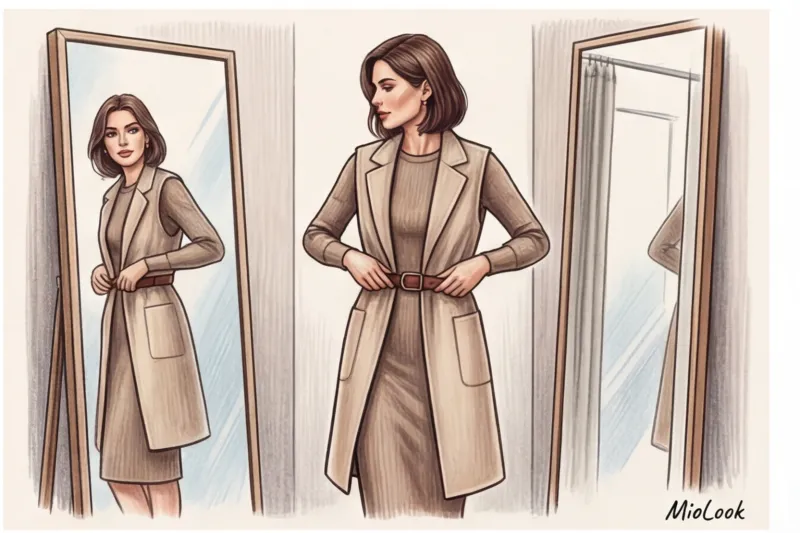
- Step 1: Fitted base. Put on a thin viscose or silk turtleneck/top. It should fit like a second skin.
- Step 2: Structural element. Add a thick cotton shirt (smooth) or a thin merino cardigan.
- Step 3: Fixing the waist. Tuck the hem of your shirt into high-waisted trousers or wear a leather belt over your cardigan. Don't let things hang loose.
- Step 4: Protection. We put on outerwear of a straight or fitted cut of maxi length.
- Step 5: Comfort test. Raise your arms up, bringing your shoulders together in front of you. There shouldn't be any pulling sensation. If there is, you've violated the tissue sliding principle (the coefficient of friction is working against you).
Instead of a conclusion: winter elegance is discipline and structure
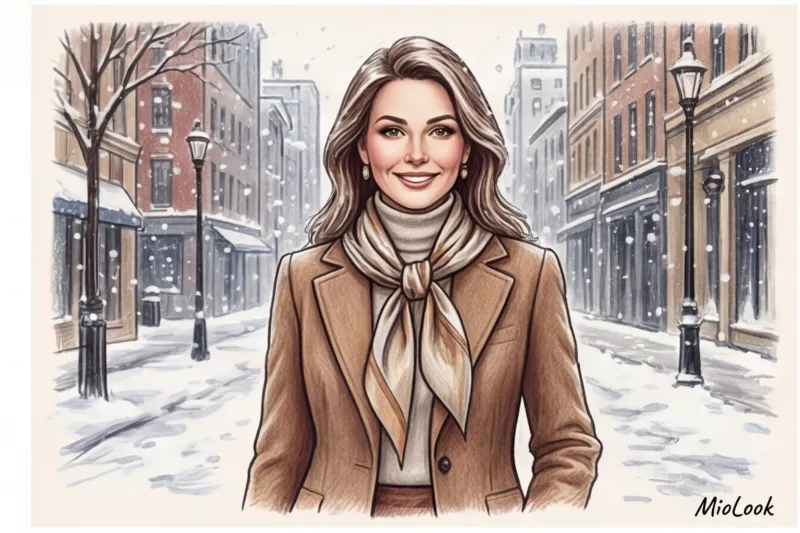
Remember the key: warmth isn't provided by the thickness of a single garment, but by the right number of thin layers, their natural composition, and the air between them. The shapeless clothes we so love to pull on in the cold winter actually drain our energy and rob us of self-confidence. Structure in clothing acts as an external support for the psyche—when our shoulders are back and our silhouette is composed, we feel completely different.
Take stock of your winter wardrobe this weekend. Keep only the pieces that work for you, slide over each other, and provide warmth without adding extra weight. Start applying the three-layer rule tomorrow, and you'll be surprised how elegant true winter can be.