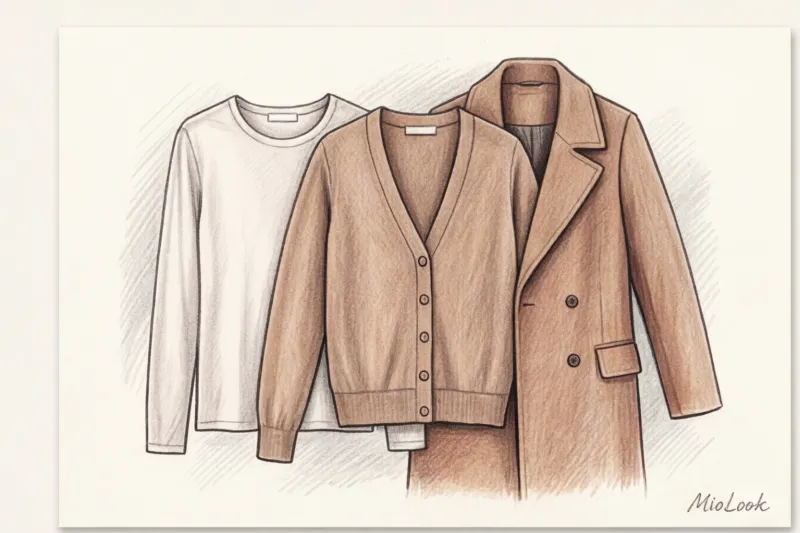
Have you ever wondered why you can walk for hours in a thin, technical ski suit at -15°C, but in a luxurious wool coat, with the thickest chunky knit sweater underneath, you start shivering after just ten minutes of waiting for a taxi? As a textile expert and stylist, I constantly encounter the same misconception: we rely on the thickness of the fabric to keep us warm, not on physics. Smart layering in outerwear - it's about working with air and friction, not just layering on all the warm stuff that fell out of the closet.
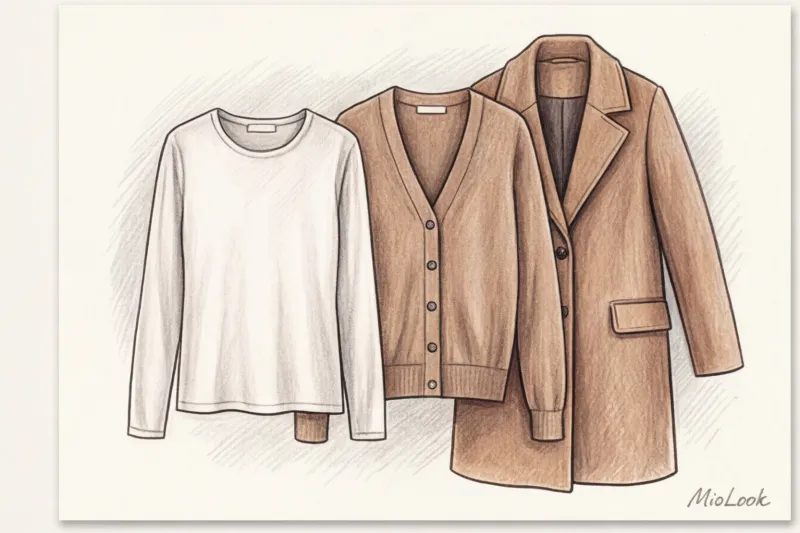
We've covered more details on how to choose the right basis for such stylistic experiments in our The Complete Guide to Basic Outerwear: Putting Together a Smart Capsule Today, we'll explore the anatomy of a warm yet elegant silhouette that won't turn you into a clumsy snowman.
The Architecture of Warmth: The Anatomy of Proper Layering in Outerwear
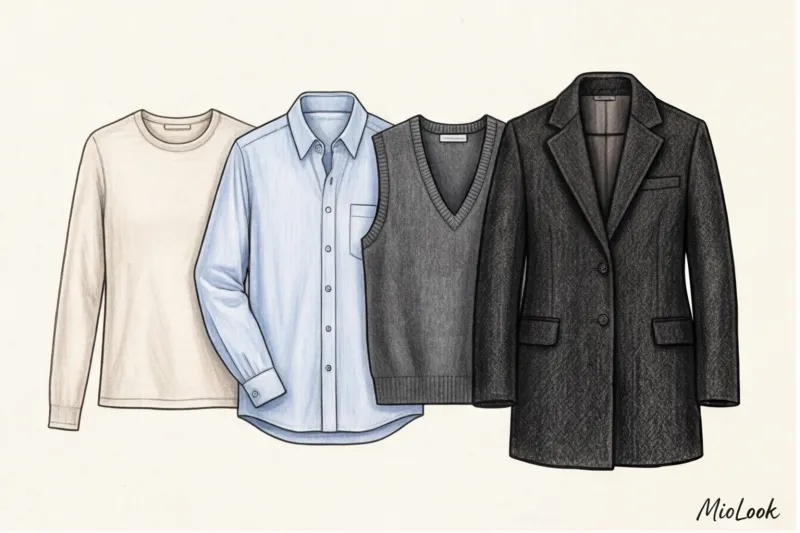
Professional climbers and outdoor gear designers have long since developed the ideal formula for surviving the cold: the three-layer rule (base, mid, outer). My job as a stylist is to adapt this rigorous pragmatic approach to the urban wardrobe, where aesthetics are just as important as warmth.
The secret lies in the fact that the best thermal insulator in nature is still air. According to research by the Hohenstein Institute (2023), which studies the physiology of clothing, an air gap between three thin layers retains 40-50% more heat than a single solid layer of similar weight. Each layer in this system performs a specific function.
Base and insulating layers: microclimate without bulk
The most common mistake I see when sorting through winter wardrobes is using a cotton T-shirt as the first layer. Cotton is hygroscopic: it quickly absorbs even the slightest sweat (like when you're on the subway), but dries extremely slowly. As a result, the damp fabric clings to your body, and as soon as you step out into the cold, it begins to rapidly cool you down.
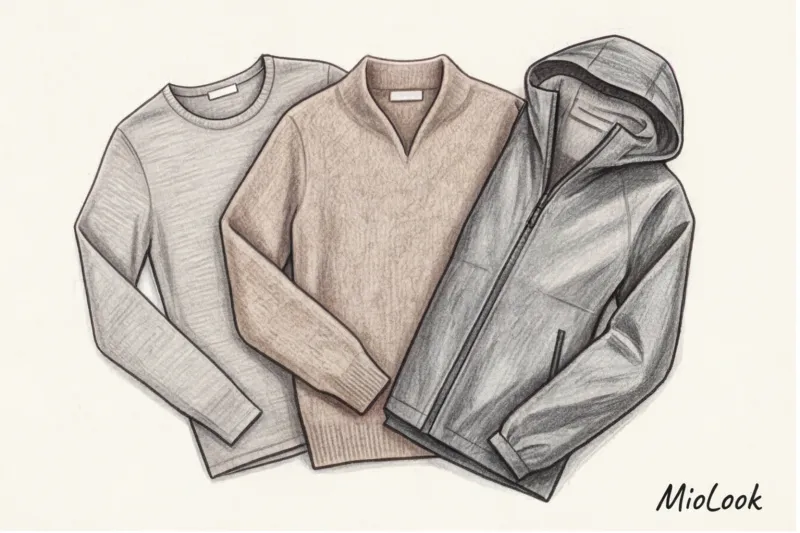
The ideal base layer should wick away moisture and retain warmth. For the city, I recommend:
- The finest merino wool (fiber thickness 16-19 microns) - it does not itch at all and works as a natural climate control.
- Thick silk - a surprisingly warm material for the first layer that glides perfectly.
- Modern thermal underwear Made from a blend of synthetic fibers with added wool (look for modal or lyocell for softness).
The insulating (middle) layer is responsible for trapping that warm air. This is where cashmere, thick but smooth knits, or thin wool jackets without a stiff lining come into play.
Access to MioLook for €0.99 — one-time payment
A smart AI stylist will create the perfect layered look based on your wardrobe and the weather.
Get access — €0.99 onceThe Biggest Mistake: Why Wearing a Thick Sweater Under a Coat Works Against You
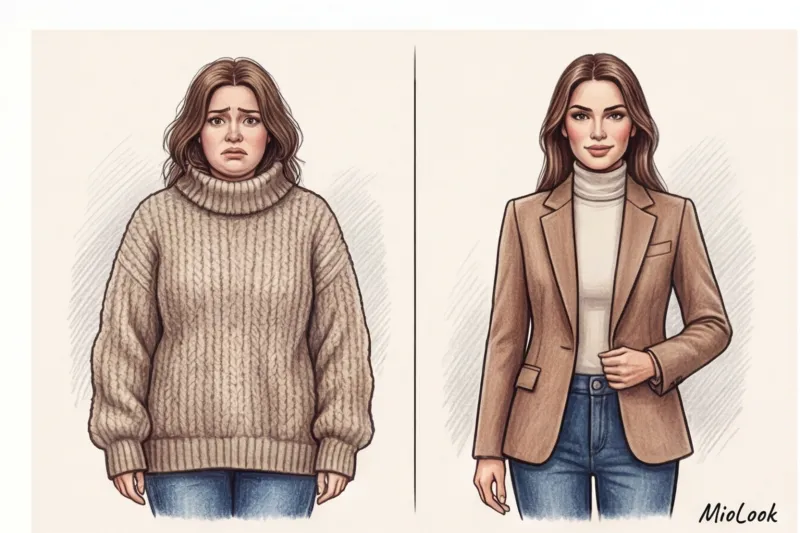
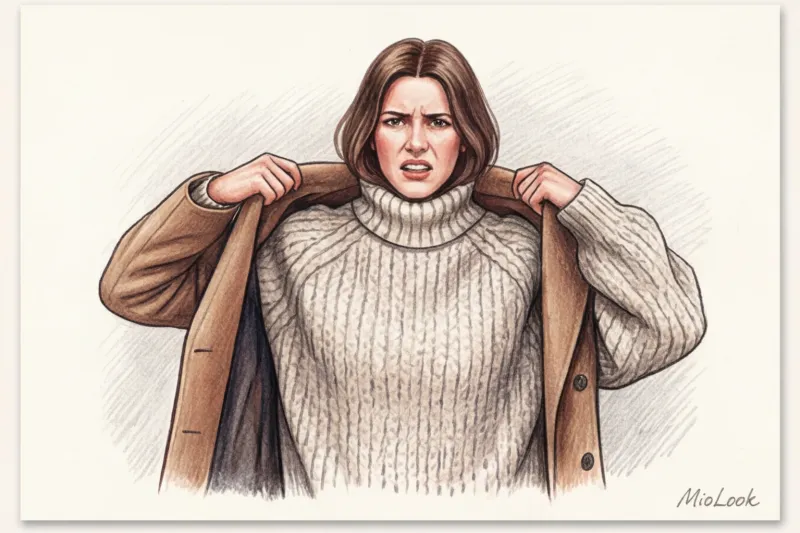
In my experience, one in three clients has bought a classic double-breasted coat two sizes too big just to squeeze their favorite oversized chunky knit sweater underneath in the winter. The result is always disappointing: on days when the sweater isn't needed, the coat hangs sagging, and the shoulder line slumps.
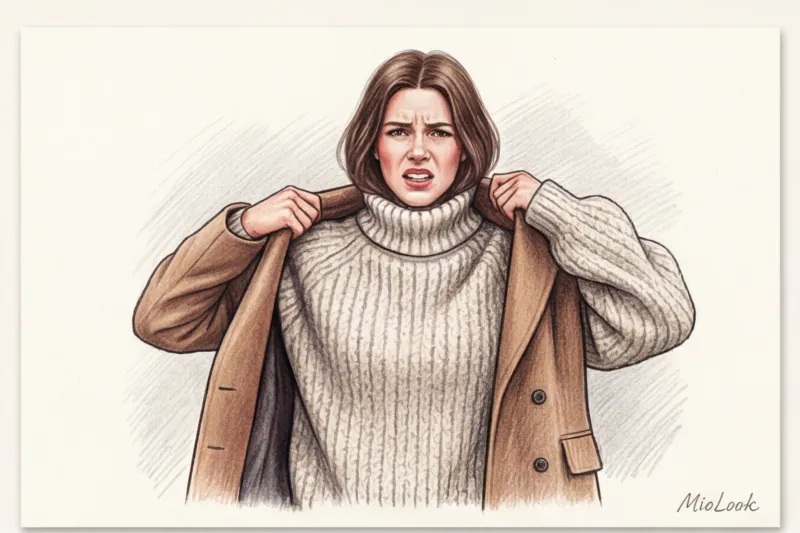
But the worst part is, wearing a thick sweater under a coat is the worst way to stay warm. Sounds paradoxical? Let's turn to textile physics. A large knit means large gaps between the loops. Unless your outer layer (coat) is a completely windproof membrane, wind easily penetrates the coat's fabric. When you move, the stiff fabric of the outerwear acts like a pump, pushing warm air out through the large loops of the sweater and pulling cold air in. This creates so-called "thermal bridges."
"Two thin, smooth wool sweaters layered on top of each other will keep you one and a half times warmer than one chunky, country-knit sweater of the same weight, while maintaining a graceful silhouette."
Moreover, bulky knitwear creates critical tension in the armholes. You literally can't lift your arms to adjust your scarf or grab a handrail. The loss of geometric shape and restricted movement are too high a price to pay for the illusion of warmth.
Textile Mathematics: How to Combine Textures to Maintain Freedom of Movement
Layering outerwear requires an understanding of the coefficient of friction of fabrics. Why does it sometimes feel like layers are literally "stuck" inside each other, making you feel like you're in a straitjacket?
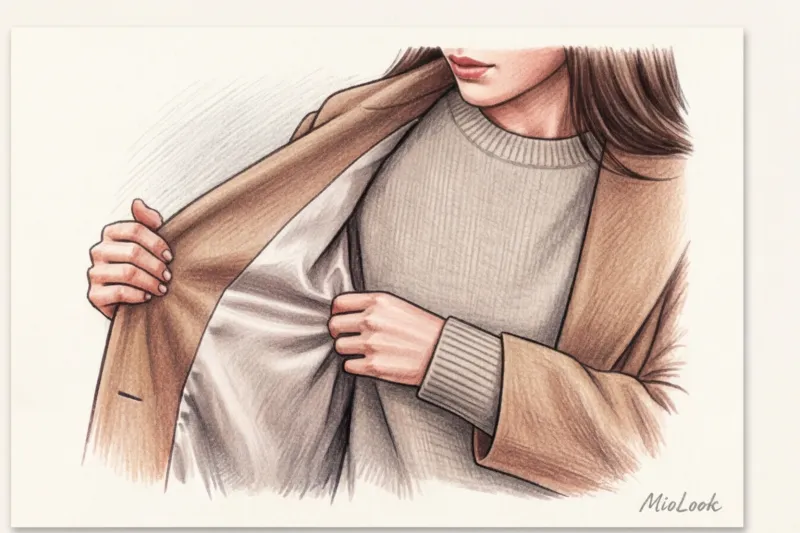
Wool fibers contain microscopic scales. When you layer matte fabrics (for example, a wool cardigan over a flannel shirt, followed by an unlined wool coat), these scales interlock like Velcro. Ergonomic studies show that a combination of 100% wool and 100% cotton reduces shoulder mobility by 30%.
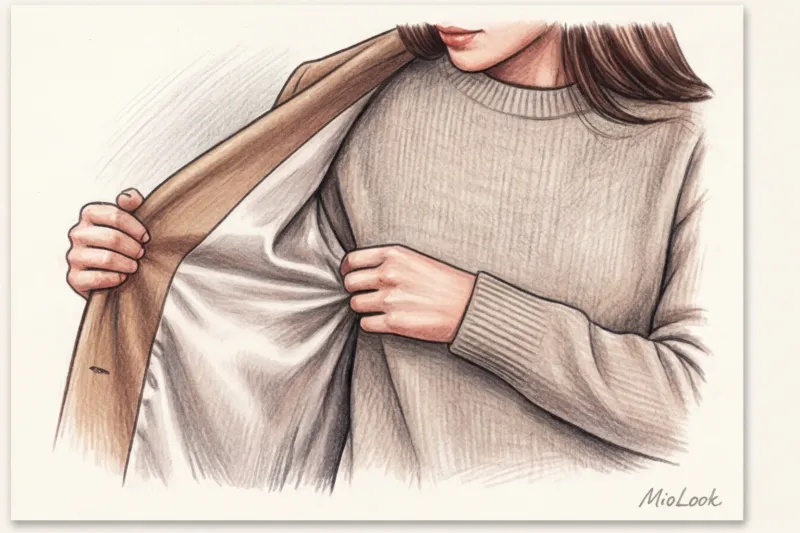
Sliding rule: Each subsequent layer should be smoother on the inside than the previous one on the outside. This is why the quality of the lining in outerwear is critical.
Avoid coats with 100% polyester linings—they not only static your hair and clothes, but also create a greenhouse effect. Look for the lining's composition. cupro or thick viscose. These materials have a silky texture, allowing the coat to glide smoothly over any, even the fluffiest, mohair sweater. To avoid having to remember all these rules, you can load your items into MioLook app — the algorithm will help you create outfits that not only look stylish but are also comfortable to wear.
Your perfect look starts here
Join thousands of users who look flawless every day with MioLook. Digitize your wardrobe in just a few clicks.
Get access — €0.99 onceHidden Layers: Stylists' Secret Weapon for the Off-Season
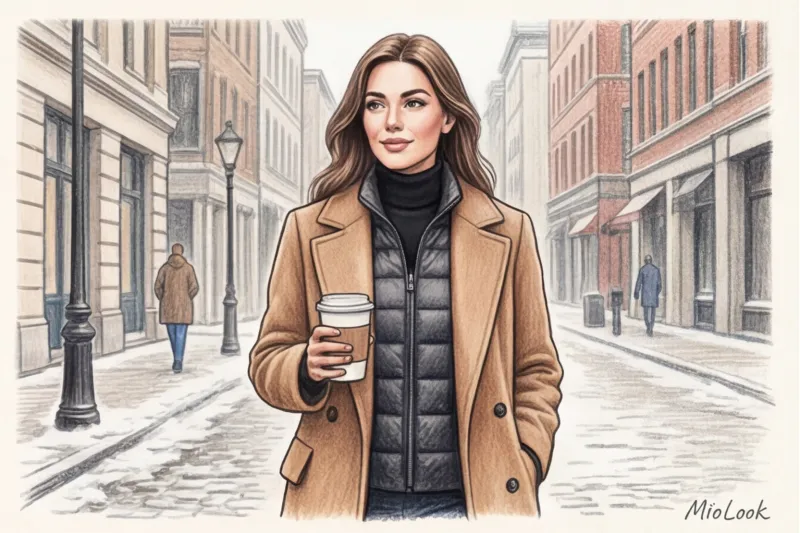
One of my favorite professional techniques, which we constantly use on fall/winter lookbook shoots (when models have to stand in the cold for hours in a light coat), is the integration of hidden technical layers. This technique allows you to wear your favorite fall trench coat or lightweight wool coat even in subzero temperatures.
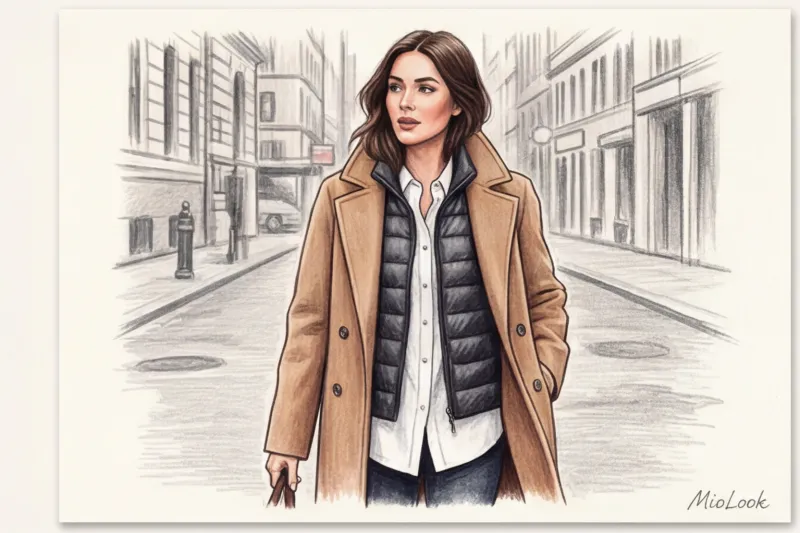
We're talking about ultra-thin down jackets (Ultra Light Down - ULD) and quilted linings. Modern models weigh about 150 grams and pack into a tiny pouch, yet still provide a level of insulation comparable to a good winter jacket.
How to properly mask the technical layer:
- Choose down vests or jackets with a V-neck (many models have hidden snaps that allow you to fold the collar inward). This will prevent the down jacket from showing through an open coat collar.
- Color matters. If you want to completely conceal a layer, choose a tone that matches your outerwear. If you want to make a statement, use contrast (for example, a matte burgundy vest under a camel coat).
- Matte textures look more refined than glossy ones. Shiny nylon will cheapen the look if it accidentally peeks out from underneath expensive cashmere.
Important limitation: This life hack won't work if your trench coat fits snugly or is made of a thin, flowing fabric (like summer lyocell) that will reveal the textured quilting of your down jacket. The top layer should always hold its shape.
Visual layering: how to create a complex and prestigious look
There's a huge difference between "putting on all your warm clothes because it's -20°C" and "creating a stylish ensemble." The latter concept requires visual play. As the analytical agency WGSN notes in its macrotrends report (2024), the aesthetic of "quiet luxury" has finally evolved into "sophisticated functionality," where every visible edge of clothing is carefully considered down to the millimeter.
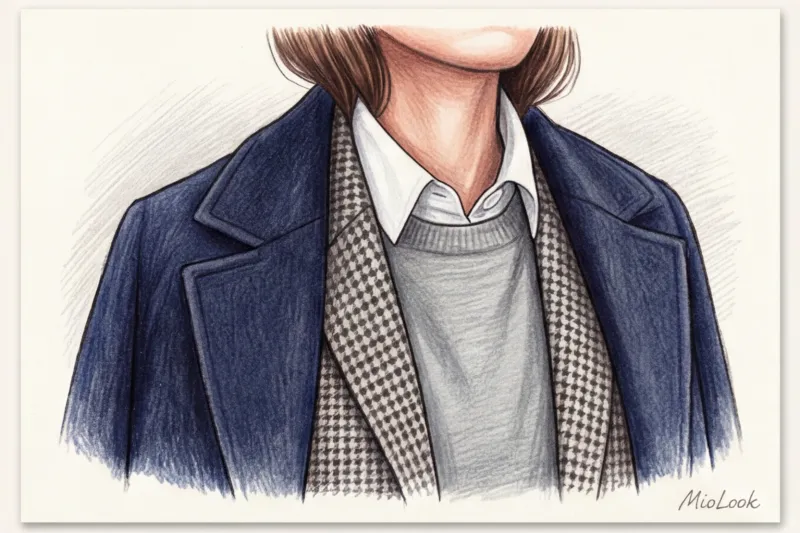
To make layering your outerwear look expensive, play with lengths and textures:
- Cuffs: Let the jacket sleeve peek out 1.5-2 centimeters from under the coat sleeve, and a thin strip of white shirt from underneath. This creates a clear rhythm.
- Collars: A raised shirt collar under a crew neck jumper, framed by the lapels of a coat, is a classic that always brings the look together.
- Accent Top Layers: Instead of your usual scarf, try a cashmere bib, a voluminous hood, or even a thin wool sweater tied over your coat with a knot at the chest (a technique beloved by street style influencers at Fashion Week).
Ready to get started?
Try the MioLook free plan—no commitments required. Upload your items and receive ready-made stylish look formulas every day.
Get access — €0.99 onceChecklist: Checking Your Layered Look Before You Go Out
I always give my clients this step-by-step self-check after a wardrobe review. Before leaving the house in a complex outfit, do a one-minute self-check in front of a mirror.
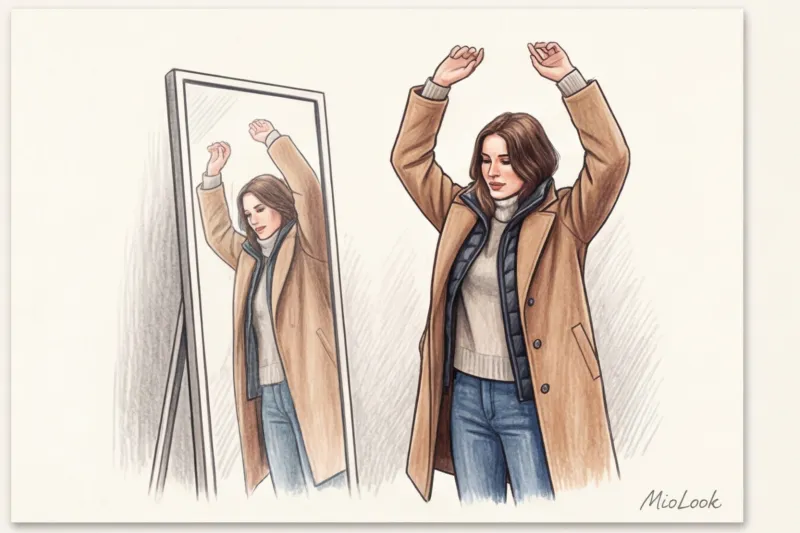
- Mobility test (hug test). Wrap your arms around your shoulders, mimicking a tight hug. Then raise your arms up. If the back of your coat is so tight that the seams are bursting, and the sleeves have slipped down to your elbows and won't go back up, you've chosen the wrong thickness of the inner layers.
- Checking the temperature balance. Imagine walking into a warm café or shopping mall. Can you elegantly remove one layer (like a jacket) without ruining the entire look? Proper layering is always self-contained—each layer should look complete.
- Silhouette assessment. Stand up straight and look at your shoulders. If the shoulder seam of your coat is raised or bulging due to the shoulder pads of your inner jacket, your look will look sloppy. Ideally, choose inner layers with a soft, sloping shoulder line under your outerwear.
The art of warmth isn't a competition over the thickness of the yarn. It's an intelligent process of working with materials, where fine silk, clever tailoring, and the simple physics of air protect against the cold better than any shapeless armor. Put together your looks thoughtfully, pay attention to the backing fabrics, and then winter will no longer be a season of compromises between style and comfort.