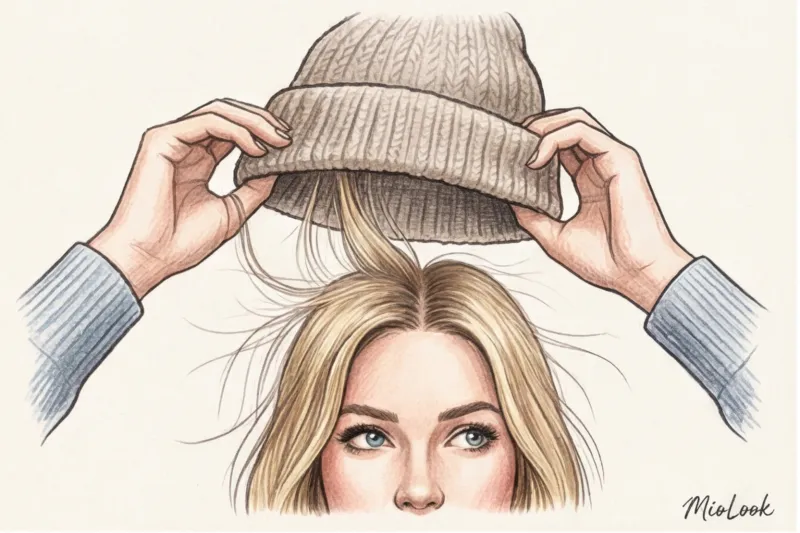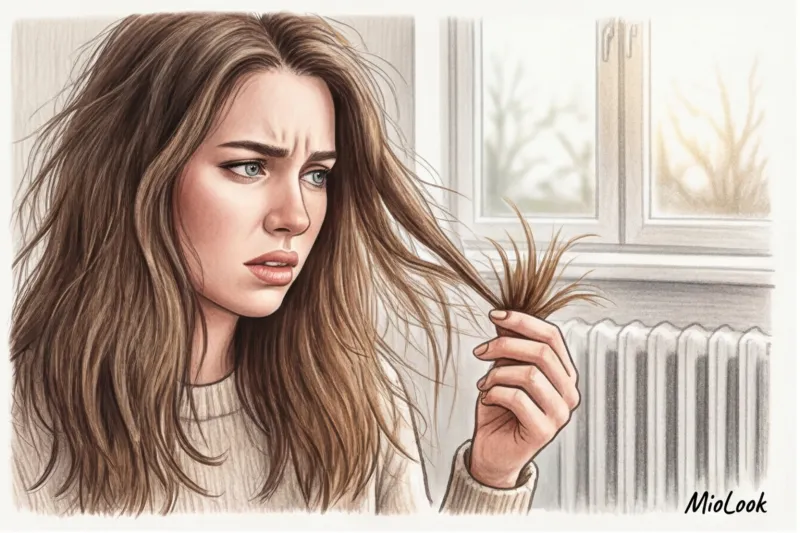
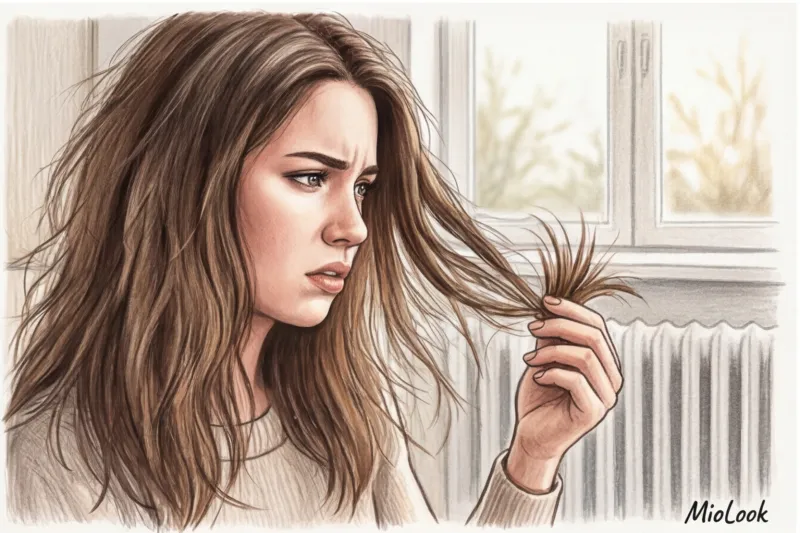
It's December, minus ten degrees outside. My client Anna walks into the studio, takes off her luxurious wool hat... and we both stare at what's left of her morning hairdo. Her hair is standing on end with static, and the ends look like they haven't been trimmed in at least a year. Sound familiar? Every year, with the onset of cold weather, I, as a stylist, hear the same cry from the heart: "Darina, why has my trusted premium conditioner stopped working?"
The answer lies not in the shampoo brand, but in cruel physics. When choosing hair care in winter , we often make one fatal mistake: trying to "feed" hair strands with dense fats where they need regular water. We discussed the architecture of the routine in more detail in our complete guide: Proper hair care for perfect styling , but winter requires special, almost surgical adjustments. Let's explore how dew point, central heating, and lipid freezing can ruin your hairstyle, and what to do about it.
The Anatomy of Winter Dryness: Why Your Winter Hair Care Routine Won't Work
Imagine a typical winter day. You step out of your warm apartment (22°C) into a freezing cold street (-10°C), then take the subway or get in your car, and then spend eight hours in the office with the radiators blasting. These temperature swings, with an amplitude of 30–40 degrees, literally crack the hair cuticle.
According to research by the International Society of Trichoscopy (2023), air humidity in intensively heated rooms drops to a critical 15–20% in winter. For reference, this is the humidity level of the Sahara Desert! Healthy hair is 10–15% water. When you find yourself in such an "office desert," a merciless process of osmosis begins: your hair begins to rapidly lose its internal moisture to the dry surroundings.
"It's the loss of internal water molecules, not a lack of oils, that makes hair stiff and unruly in winter. Even a 2% loss of moisture from the cortex critically impacts the hair's ability to hold its shape."
As a result, your perfect morning brushed hairstyle falls apart by lunchtime. Your hair becomes flat, dull, and rough to the touch.
The Biggest Myth: Why Oils Damage Hair in the Cold
The most harmful piece of advice that still permeates glossy magazines is: "In winter, use more pure oils for nutrition." This is fundamentally wrong, and here's why.
Last year, a client came to me complaining that her hair was starting to break off mid-length. It turned out she'd bought expensive pure argan oil and was liberally applying it to her dry ends right before going outside to "protect them from the cold." This is a classic mistake: misunderstanding the difference between hydration (water) and nutrition (fats).
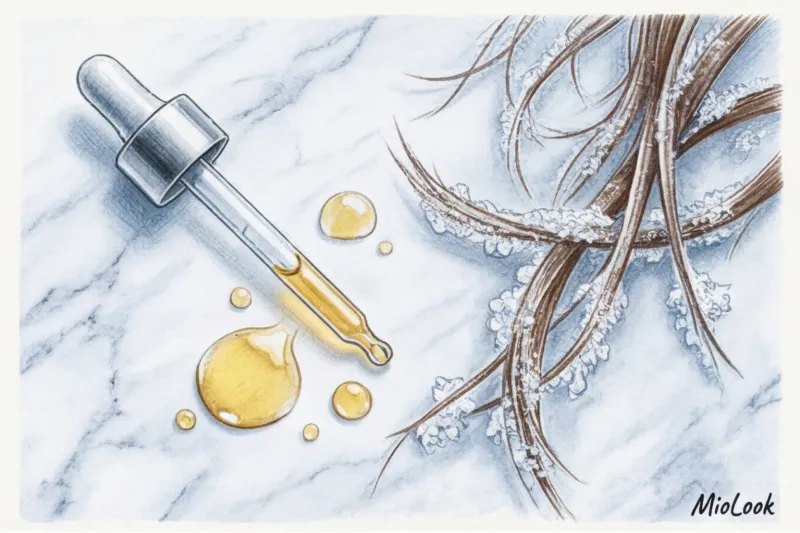
Oils do not moisturize They don't contain a drop of water. They create an occlusive (locking) film. If you apply oil to hair already dehydrated by winter heating, you're simply sealing the dryness inside. But the worst happens outside.
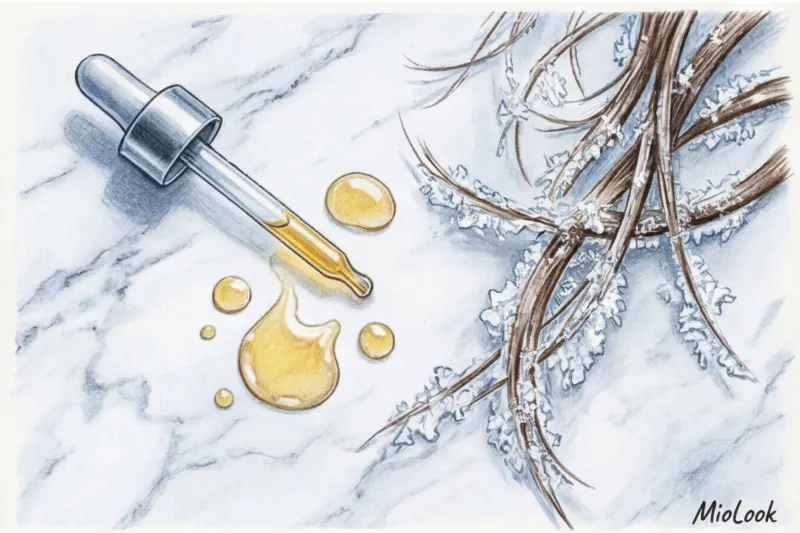
According to the laws of chemistry, pure lipids (especially coconut, argan, and shea butter) have a high crystallization temperature. In freezing temperatures, they simply harden. Elastic, flexible hair, generously coated with such oil, turns into a fragile glass rod in the cold. One awkward movement of the scarf, and it breaks.
Your perfect look starts here
Join thousands of users who look flawless every day with MioLook. A smart AI stylist will customize your skincare routine and style.
Get access — €0.99 onceHydration vs. Nutrition: Creating the Right Winter Base for Perfect Styling
To keep your hair alive and strong old mane style Even in January, we need to change our approach to reading product labels. We need a balance of humectants (components that attract water) and light occlusives (components that retain that water without causing it to freeze in the cold).
According to the Institute of Personal Care Science (2022), the ideal winter formula should follow the layering principle: water first, then a light "lid." Look for the following in the ingredients of your leave-in creams:
- Humectants: Glycerin (in moderation), hyaluronic acid, aloe vera juice, and panthenol will draw moisture into the cortex.
- Light occlusions: Squalane, ceramides, and fatty alcohols (Cetearyl Alcohol) don't freeze as aggressively in cold temperatures as pure base oils, but they reliably retain humectants.
The problem of heavy mass-market masks
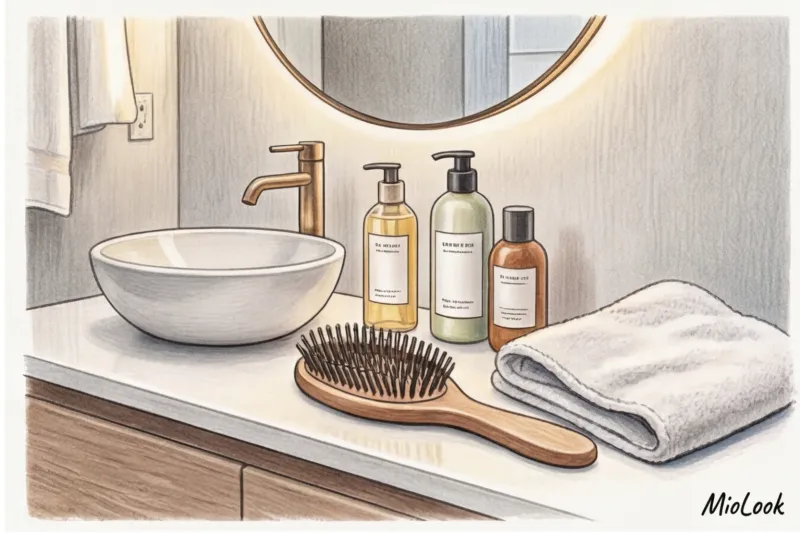
Why can't I just buy a nourishing mask at the supermarket for €5-10 and solve the problem? In my experience, 8 out of 10 clients who complain about lack of volume in winter use exactly these types of products.
Budget masks labeled "Winter Protection" or "Intensive Nourishment" are often based on heavy, cheap film-forming agents (such as high-molecular-weight dimethicone in enormous concentrations) and mineral oil. In the shower, your hair may feel incredibly smooth, like silk. But the harsh reality sets in when you blow-dry it: you're left with dull, overloaded "icicles" lacking natural movement.
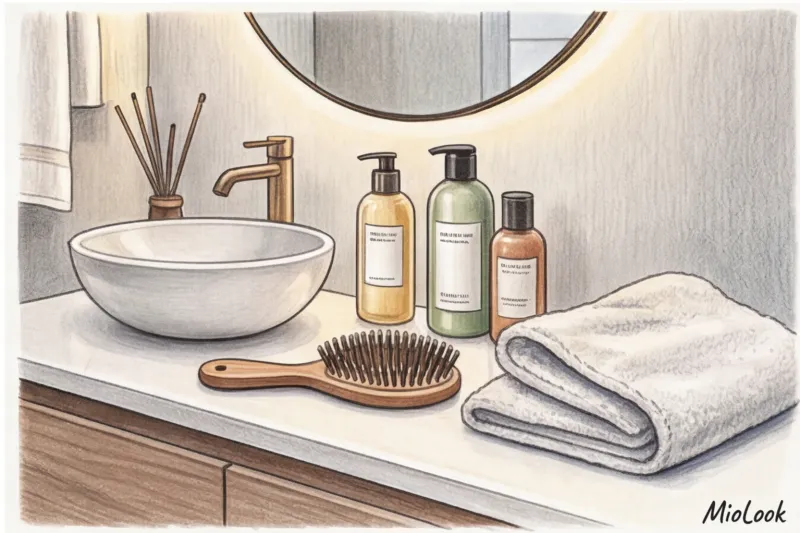
A silicone-laden base ruins the effectiveness of any styling product, even the most expensive one. Hair becomes too heavy to hold root volume and too slippery for texturizing spray to grip the cuticle.
Static Electricity: Emergency Help and Prevention
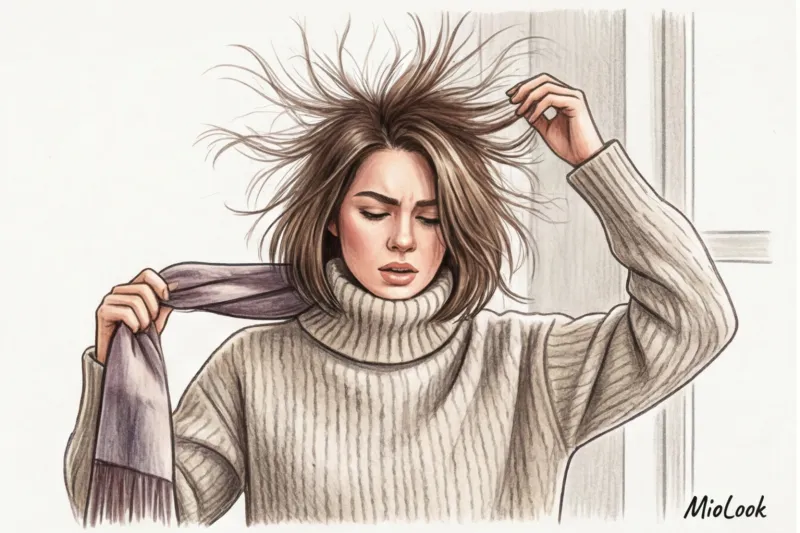
For owners layered haircuts The problem of static is particularly acute—the different lengths of hair strands cause them to literally fly apart. Hair becomes "static" due to the physics of friction against synthetics and wool, coupled with the depleted lipid layer of the cuticle. Dry hair is an ideal conductor of static.
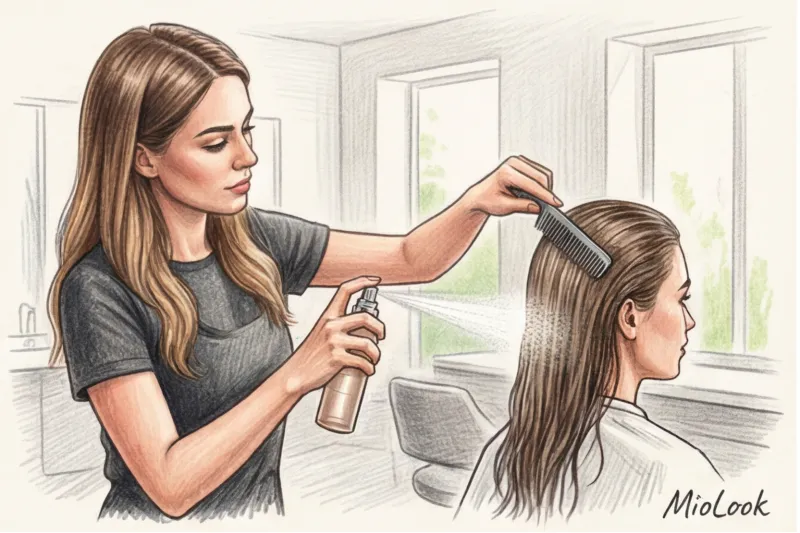
A common “grandmother’s” tip is to spray your comb with hairspray and run it through the lengths. Please, do not do that! Most classic hairsprays contain denatured alcohol, which instantly evaporates any remaining moisture. You'll get rid of static for 15 minutes, but by evening, your hair will be like straw.
What do we use behind the scenes on winter photo shoots when a model takes off her sweater and her hair stands on end?
- Moisturizing primer cream. Rub a pea-sized amount of lightweight leave-in cream between your palms and gently smooth through your hair. This instantly eliminates static without making strands stick together.
- Antistatic sprays without alcohol. Yes, they exist in the professional segment (the price usually ranges from 15–30 €).
- Ionization. A hair dryer with an ionic function actually works because negatively charged ions neutralize the positive charge accumulated in the hair.
Hats, scarves, and friction: how to save your cuticles and hairstyle
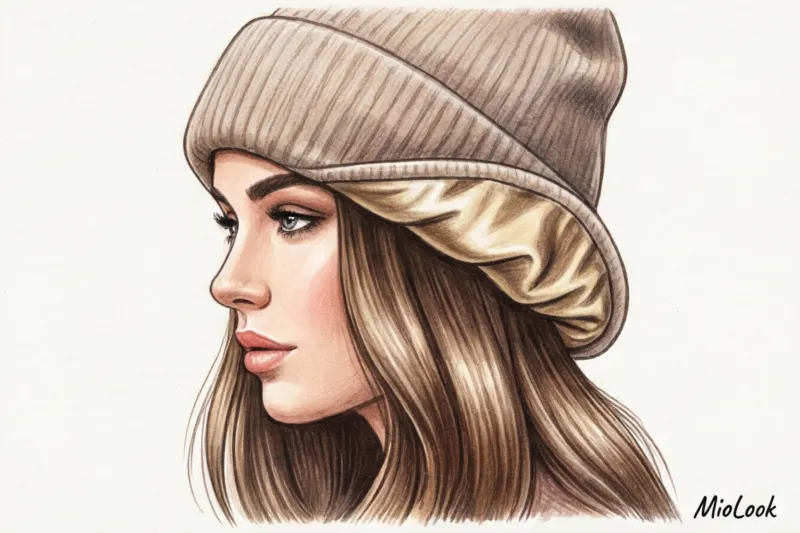
Even the most thoughtful chemical treatments won't save your hair if you expose it to harsh mechanical damage. Friction from the coarse wool of a scarf, the acrylic collar of a down jacket, or a knitted hat physically wears away the cuticle, leading to split ends.
My main secret and recommendation to all clients with hair lengths from a bob and below is silk-lined beanies. These look like a regular, stylish wool or cashmere hat, but the inside is lined with smooth, natural silk. A silk-lined beanie will cost you around €40–€60, but it will save you hundreds of euros on salon-repaired ends. Silk doesn't trap moisture and doesn't create static friction.
I'll be honest, this advice has its limitations. If you have fashionable short haircut (For example, an ultra-short pixie), a silk lining won't solve the main problem—scalp sweating under the hat. For short hair, it's more important to use dry shampoo preemptively, applying it to clean roots before leaving the house.
How to properly tie long hair under outerwear? Never leave it loose over a scarf in freezing temperatures. Gather your hair into a low, very loose bun at the nape of your neck, securing it with a soft silk scrunchie. When you get to the office and take it down, you'll still have natural, soft waves and root volume.
Ready to get started?
Try the free plan in the MioLook app—no commitment required. Organize your winter wardrobe and find the perfect hairstyle in one click.
Get access — €0.99 onceChecklist: Step-by-Step Winter Hair Care
To put all this theory into practice, I've put together an algorithm you can start using the next time you wash your hair. This plan will ensure your hair stays flawless even at minus twenty degrees.
- Cleansing: reducing aggressiveness. Switch to shampoos with mild surfactants (such as those based on Sodium Cocoyl Isethionate). However, don't forget to use a deep-cleansing shampoo (DCS) every 10-14 days to remove the silicone buildup from winter leave-in products.
- Preparation: layering. After washing, pat your hair dry with a microfiber towel. Apply a hydrating spray (with aloe or panthenol), then seal it with a drop of lightweight cream or serum with ceramides on the ends.
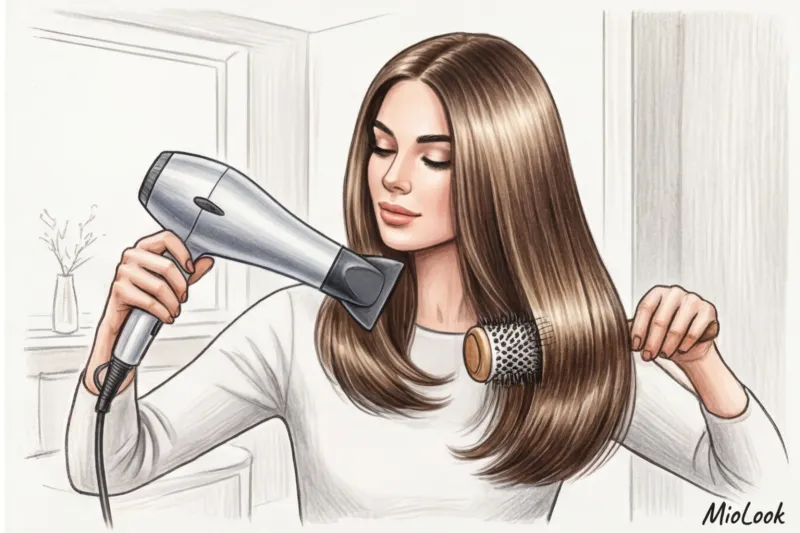
- Drying: the 100% rule. In winter, going outside with even slightly damp hair is strictly prohibited! Water trapped in the cortex expands in the cold, physically tearing the hair from the inside. Blow dry your hair until it's 100% dry.
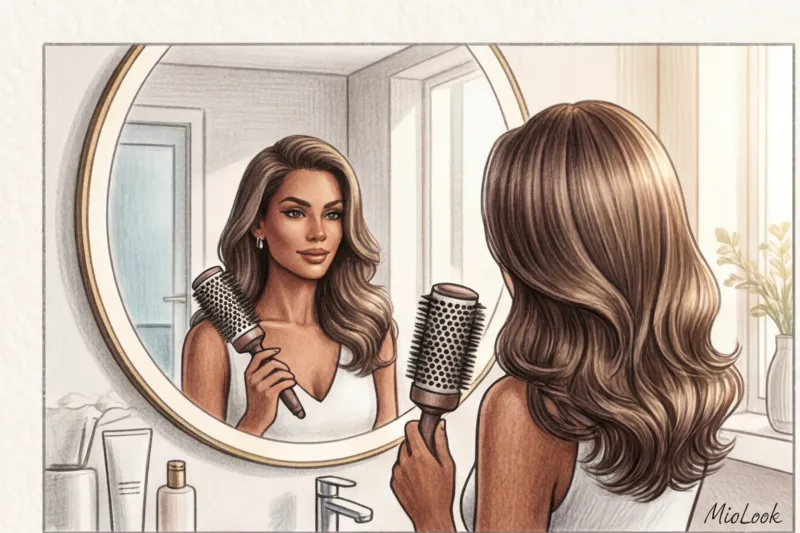
- Styling with anti-frizz function. Before using a brush or flat iron, apply a heat protectant containing anti-humidity shields. These create an invisible, weightless shield that prevents office dryness from draining your hair.
Winter hair care isn't about an abundance of heavy, greasy masks bought at the mass market, but about smart, strategic moisture retention. Replace your heavy, freezing oils with a smart balance of humectants and gentle occlusives. Stop fighting winter and start adapting to its laws—and you'll see your hair respond with vibrant shine and long-lasting volume tomorrow.