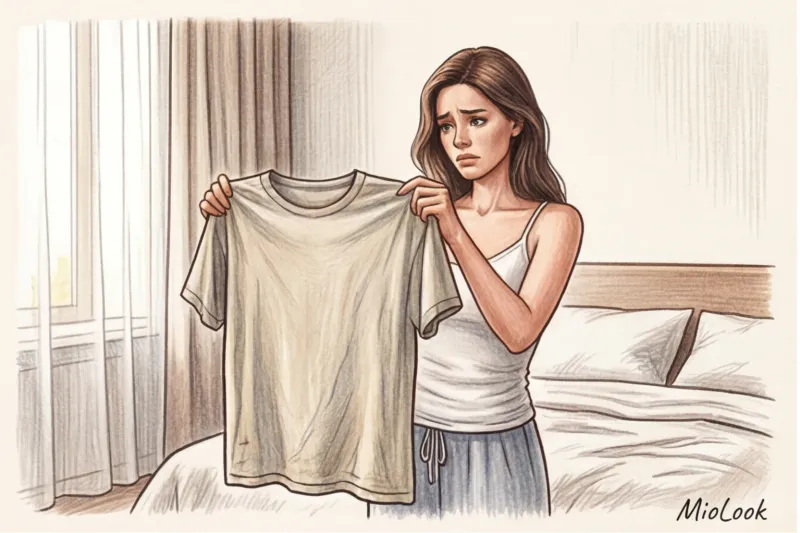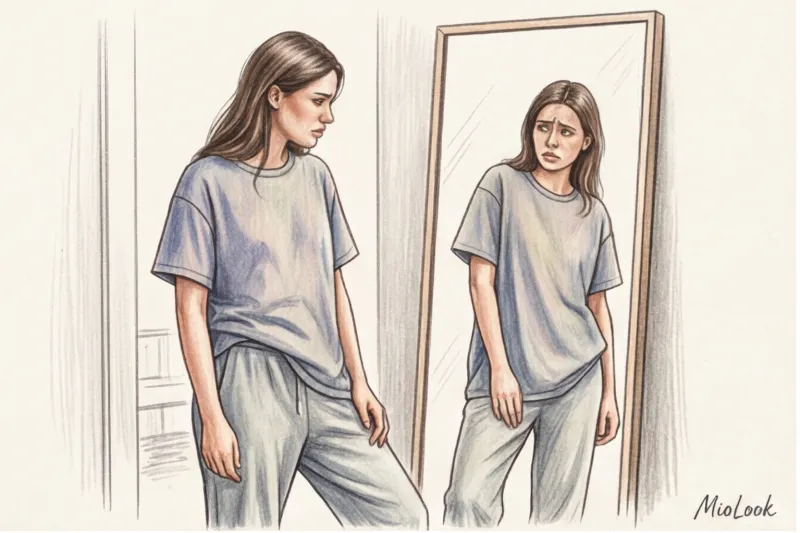
Picture a typical scene: the doorbell rings. The courier has delivered your long-awaited delivery, and you're frantically rushing down the hallway, trying to find a cardigan to cover the stain on your faded T-shirt and the stretched-out knees of your sweatpants. Sound familiar? In 12 years of working as a personal stylist, I've seen hundreds of luxurious dressing rooms where thousand-euro dresses sat alongside washed-out, homemade "horrors" that clients simply "felt sorry to throw away."
Let's talk frankly. That, Why you shouldn't wear old clothes at home — this isn't a question of esotericism or attracting mythical "poverty energy." It's a matter of rigorous mathematics, cognitive psychology, and basic self-respect. We discussed the architecture of the ideal vacation base in more detail in our The complete guide to creating a stylish home capsule , but today I want to analyze the psychological and financial trap of wearing old clothes.
The Postponed Life Syndrome: Why Old Things Have No Place on the Couch
Most women intuitively create what's known as a "Frankenstein wardrobe." Any item that's no longer presentable for the street (pilling, a stubborn stain, a loose neckline) is consigned to a shelf at home instead of the trash. And at that moment, a psychological trap snaps shut.
The excuse is always the same: "Nobody can see me!" But by broadcasting this message, you're sending a clear signal to your brain: you don't deserve to look good just for yourself.
"Clothing doesn't just change how others see us, it changes how we see ourselves and how our brains function."
In 2012, researchers from Northwestern University (Adam Hajo and Adam Galinsky) introduced the term into scientific circulation enclothed cognition (clothed cognition). Their research has proven that clothing directly impacts the wearer's cognitive processes. Wearing stretched, shapeless, old clothes literally, at a neurobiological level, lowers your productivity, energy level, and self-esteem. You enter a "tired and apathetic" mode, even if you've just woken up.
Tired of visual noise in your closet?
Digitize your wardrobe with MioLook and let AI create stylish capsule collections from your items—for both home and office.
Get access — €0.99 onceThe "Too Bad to Throw Away" Trap: The Hidden Cost of Faded T-Shirts
We often develop emotional attachments to fabrics. A T-shirt from a concert ten years ago, a favorite sweater from our college days. But let's be honest: more often than not, we keep old clothes out of a false sense of thrift.
I had a revealing case in my practice. My client, Anna, a top manager at a fintech company with a salary of over €5,000, showed up at our first online consultation wearing a washed-out gray T-shirt with a permanent yellow stain on the chest. At work, she was a business shark in impeccable suits, but at home, she was a Cinderella. When I asked her why she wore it, her answer was typical: "It's a shame to throw it away; it's still in good condition, and the environment is already suffering."
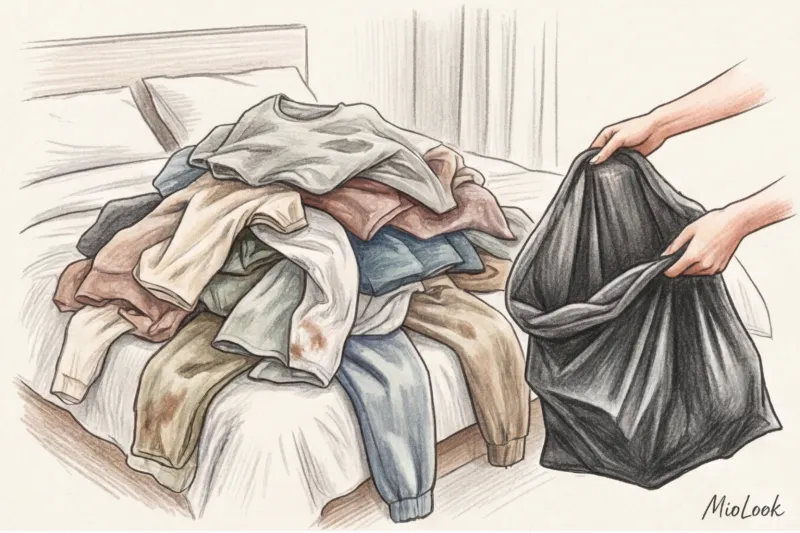
This is one of the most toxic myths of modern consumption. Wearing old clothes is not environmentally friendly. True eco-friendliness means donating worn-out items to a textile recycling center and buying three or four durable items made from high-quality blended fabrics for your home. Turning your body into a landfill for worn-out items is self-punishment that has nothing to do with caring for the planet.
The 3-Second Rule: What the Mirror and Your Loved Ones See
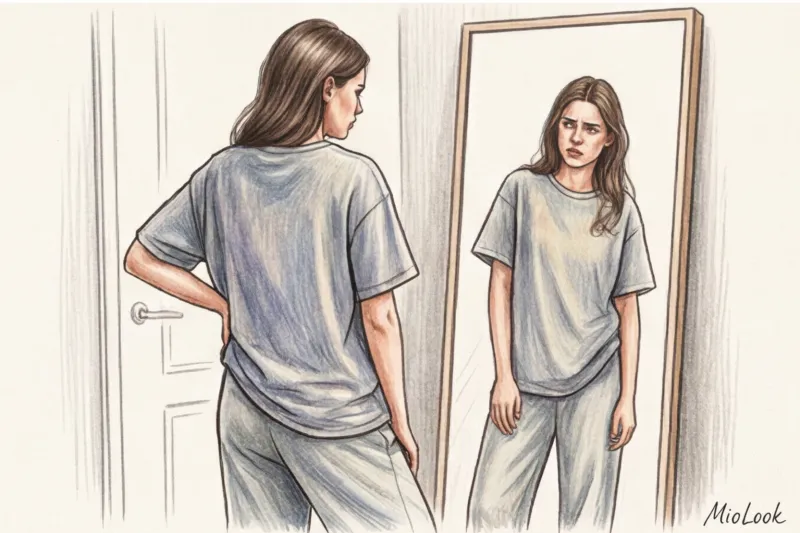
Consider why you avoid looking in the hallway mirror when you go to the kitchen for water? Your brain registers your reflection in a split second. Seeing an untidy figure creates micro-stress that accumulates throughout the day.
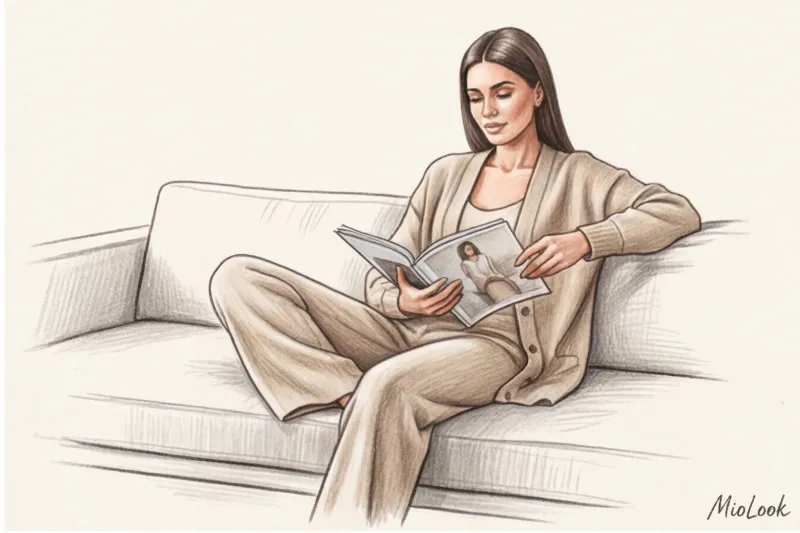
Moreover, your appearance at home is a visual trigger for your loved ones. Your partner and children form their attitudes toward you largely through visual cues. Aesthetically pleasing, clean home clothes convey self-esteem, which is automatically picked up by others.
Ruthless Math: Why a New Home Wardrobe Pays Off
When I offer my clients a lounge suit for 80–120 euros, I often encounter resistance: “Spend that much on something I’ll just sit in on the couch?” So we grab a calculator and do the math. Cost-per-wear (cost of one output).
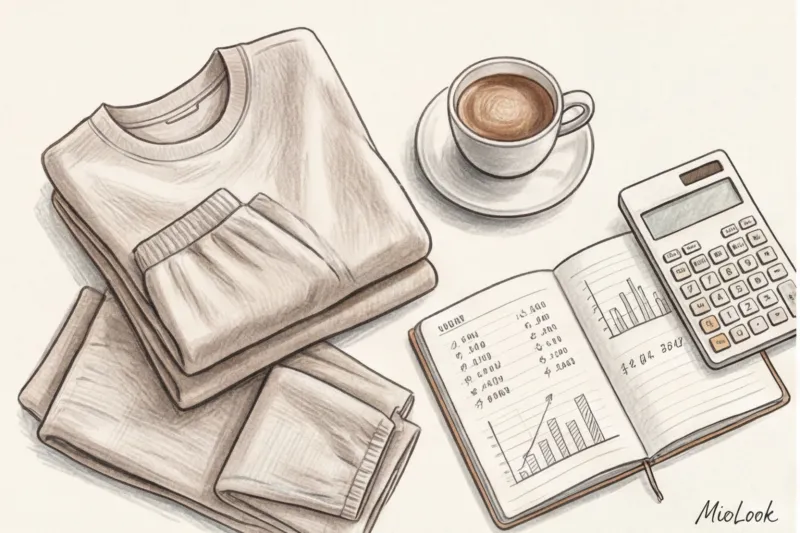
Let's compare:
- Accent jacket from Zara: Price: 100 euros. You'll wear it to the office or to dinner a maximum of 10 times per season. CPW = 10 euros per exit.
- A high-quality lounge set (trousers and a long sleeve) from Oysho: Price: 80 euros. According to the Global Time Use Survey, modern Europeans spend more than 60% of their non-working time at home. You'll wear this set at least three times a week, or about 150 times a year. CPW = 0.53 euros per exit!
Investing in loungewear pays for itself the fastest. It's the most cost-effective purchase in your closet, ensuring your comfort every evening.
The Anatomy of a Perfect Base Layer (And Why Silk Pajamas Are Overrated)
When you search "aesthetic home style" on Pinterest, you'll inevitably stumble upon girls in silk pajamas with feather sleeves or snow-white 100% cashmere. Forget it. It's only pretty in pictures.
As a practicing stylist, I've tested dozens of brands and formulas. Natural silk is a disaster at home. Every drop of water when washing dishes leaves a stain, it's chilly on the skin in winter, and requires dry cleaning or hand washing. 100% cashmere for the couch will wear through at the elbows after exactly six weeks.
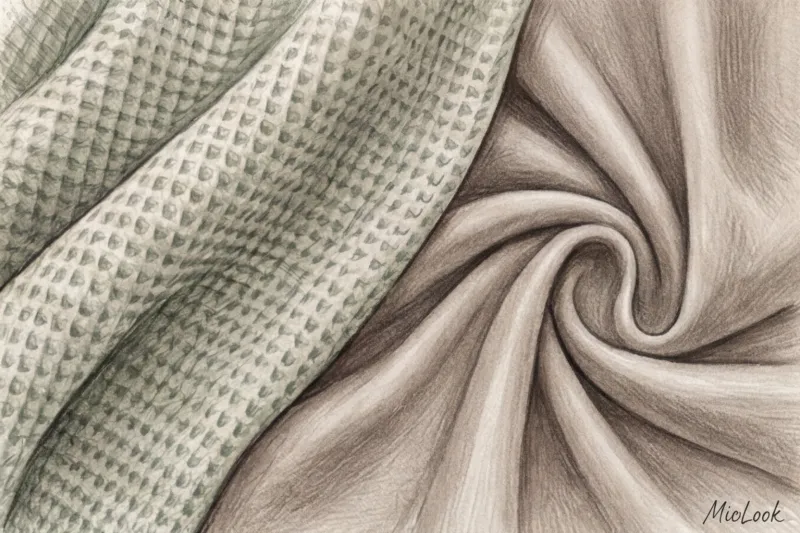
Here are the materials that really work for home base:
- Modal and Tencel: Artificial fabrics made from natural materials (eucalyptus, beech). They're softer than cotton, flow smoothly, retain their color after 50 washes, and are highly breathable.
- Waffle knit: It looks textured, hides minor imperfections of the figure, and does not require ironing.
- Blended knitwear (French terry): Cotton with 15-20% polyester and 5% elastane. Don't be afraid of synthetics in your home clothes—they're what keep your knees from stretching out the first weekend.
Where to look: Ideal basic lines are now made by Massimo Dutti (Loungewear collection), COS, Oysho and the basic departments of Uniqlo.
Ready to update your wardrobe, but afraid of making the wrong choice?
Upload photos of your favorite items to MioLook, and our smart algorithm will show you what items from your current collection they will pair best with.
Get access — €0.99 onceWorkshop: How to Declutter a Home Shelf in 15 Minutes
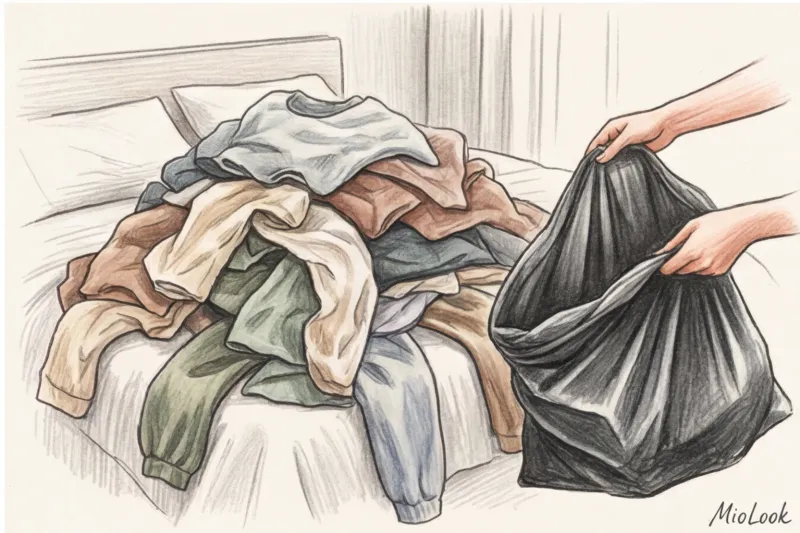
Do you have 15 minutes right now? Open your loungewear drawer. Lay everything out on the bed and ask each item 5 tough questions:
- Are there any stains on it that won't come out (even small ones)?
- Are your elbows or knees extended?
- Has the fabric lost its original color (black has become gray, white has become yellow)?
- Courier test: Are you ready to open the door right now to a courier, a nice neighbor, or friends who suddenly dropped by looking like this?
- Do you feel attractive in it?
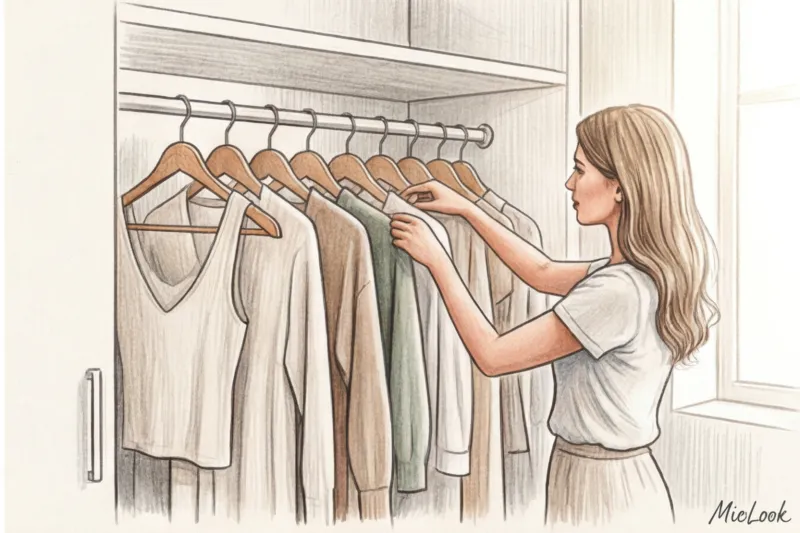
If the answer to at least one of the first three questions is “yes,” or to the last two questions “no,” the item must leave your home.
Reservation: Of course, this rule doesn't apply if you're renovating, painting walls, or replanting flowers on the balcony. Dirty work requires special clothing. But this is your work uniform , and not things for evening relaxation.
All worn-out T-shirts and trousers can be taken to recycling bins (often found in H&M stores or at city textile collection points).
Putting together a capsule: 5 things that will replace a mountain of junk.
You don't need a lot of home essentials. A capsule wardrobe works even better here than in an office wardrobe. Just four or five well-chosen pieces in a cohesive color scheme (I recommend elegant shades: taupe, sage, graphite, deep blue, and chocolate) will replace 20 old T-shirts.
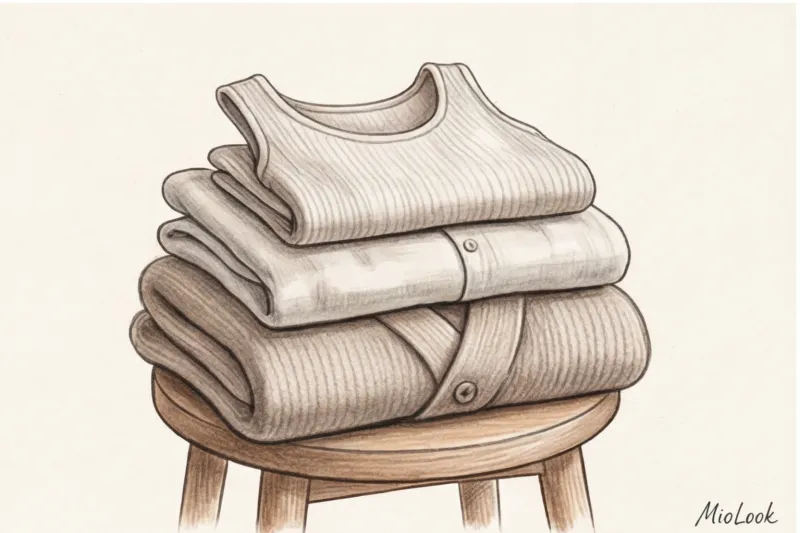
Here is the minimum working base from a stylist:
- Straight cut knitted suit: wide palazzo pants (never joggers with a tight elastic waistband!) and a loose long sleeve top.
- Shirt dress: Made of thick cotton, linen, or muslin. Perfect for leisurely Sunday breakfasts.
- Chunky knit cardigan: Replaces a washed-out fleece robe. Throw it over a long sleeve when it's chilly—it's looks expensive and status.
- Correct footwear: Throw away those worn-out pom-pom slippers. Leather mules, orthopedic Birkenstocks, or minimalist felt slippers instantly tie the look together.
Stop putting off a beautiful life. You're not a draft, and your time at home isn't a pause between "real" events. Bag up all the old clothes you're wearing without joy today and take them out of the house without regret. Believe me, your self-esteem will thank you tomorrow morning.