Several years ago, I conducted an experiment: I assembled a focus group of 20 of my clients and asked them to blindly test 50 fragrances. There was one condition: the bottles were hidden, with no names or brands revealed. The results surprised even me: 80% of the women chose deep woody-tobacco and oud compositions, completely unaware that these fragrances are marketed strictly as "masculine" in traditional retail.
This blind test perfectly illustrates the main illusion of the modern beauty industry. We're used to thinking that women are supposed to smell like vanilla, praline, and rosebuds, while men are supposed to smell like sea breeze and sawmills. But when we peel back the marketing hype, it turns out our noses choose something completely different. We've covered the fundamentals of selection and how these stereotypes were formed in more detail in our complete guide. Niche Perfumery: Where to Start.
Today I want to talk about why unisex fragrances niche This isn't a fashion fad or an attempt to please everyone. It's a return to a perfume norm where scent functions as a functional element of your capsule wardrobe, not as a gender marker.
Marketing Myth: Who Invented Gender in a Bottle and Why
Let's be honest: there are no "masculine" or "feminine" scents in nature. Moroccan rose absolute smells like a rose no matter who inhales it. As the legendary perfumer Jean-Claude Ellena so aptly noted:
"Molecules have no gender. Dividing scents into masculine and feminine is like saying that only men can eat rare steak or only women can eat peaches."
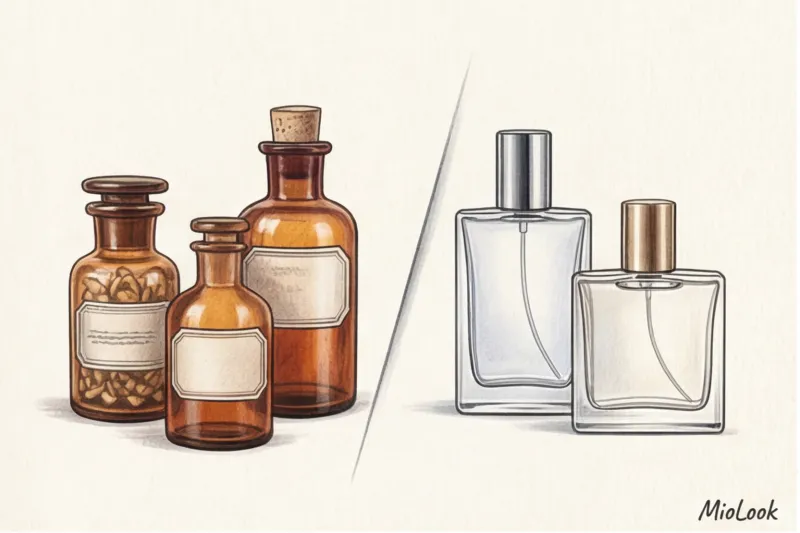
Historically, perfumery has always been universal. Napoleon Bonaparte adored violet water and consumed liters of citrusy colognes that today would seem downright "girly." The first conscious move toward abstract perfumery—Jicky, released by Guerlain in 1889—was worn by both men and women. It boldly blended lavender with vanilla and animalic notes.
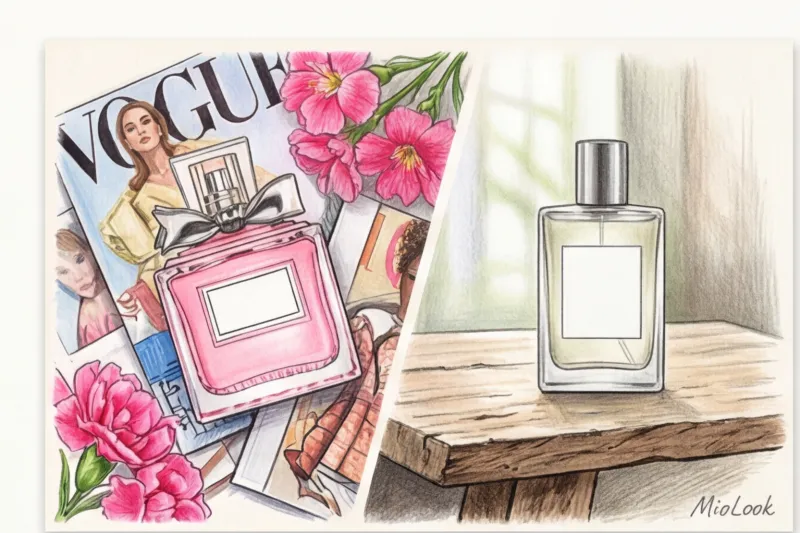
So where did this division come from? The answer is simple: from the offices of American marketers in the 1950s. After World War II, there was a need to stimulate consumption. Selling a single, universal bottle for the whole family became unprofitable. The industry artificially divided the shelves into "pink" and "blue" to force consumers to buy twice as much. Flowers and sweets were delegated to women, while wood, moss, and aquatic life were reserved for men.
Access to MioLook for €0.99 — one-time payment
A smart AI stylist will create the perfect look and help you integrate your perfume into your capsule wardrobe.
Get access — €0.99 onceSkin chemistry matters more than labels: how unisex fragrances work
According to The Fragrance Foundation's 2023 data, over 70% of new releases in the select segment are gender-neutral. And this isn't just a social issue. The main reason is physiological.
Unisex niche fragrances are created with the idea that the final ingredient in the composition is the person themselves. Our skin is a chemical laboratory. Men's skin is, on average, 0.5 degrees warmer than women's, it's denser, has more active blood circulation, and has a different pH level (men's are typically more acidic, shifted 0.5 units lower).
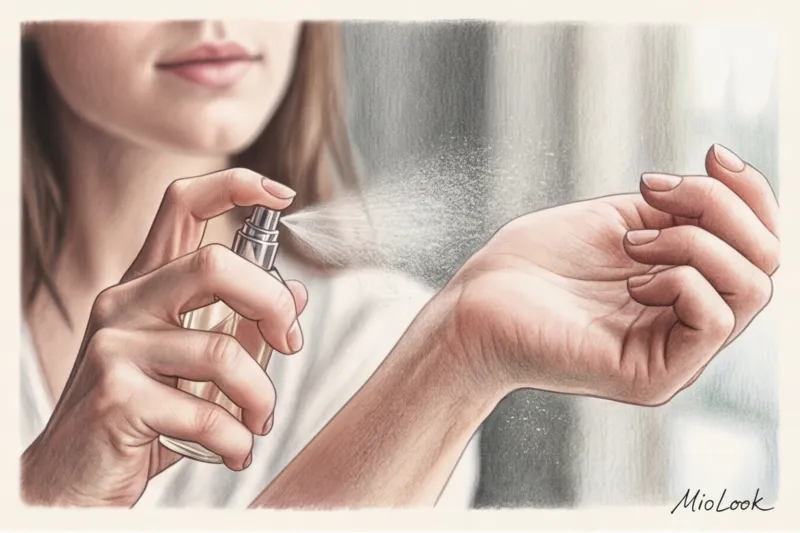
What does this mean in practice? If you apply the same dense, tuberose-and-spicy fragrance to a man and a woman, the results will be diametrically opposed. On a man's hot skin, the florals will instantly "burn out," giving way to a voluminous, rugged, woody-spicy base. On a woman's cooler skin, the same composition will sound crisp, austere, and floral.
But there is an important limitation here that consultants often keep quiet about: This rule of predictable development doesn't apply if you have so-called "hot" skin (closely spaced blood vessels) and live in a humid subtropical climate. In such conditions, even the driest and most austere vetiver can unexpectedly become sugary and yield a sticky sweetness. Therefore, blindly buying based on reviews is the worst strategy.
Olfactory Wardrobe: Fragrance as a Personal Branding Tool
As a personal stylist, I constantly tell my clients: perfume is your invisible jacket. It enters the room a second before you and remains there long after you leave. Choosing a scent shouldn't be based on the principle of "I'm a girl, I need flowers," but rather on your social role and goals.
Imagine this: you show up to a challenging negotiation in an impeccable three-piece wool suit, your hair perfectly coiffed, but you smell like cotton candy and strawberry syrup. Cognitive dissonance arises. Your visual image conveys expertise and distance, while your olfactory image conveys childishness and a desire to please. Sweet "compotes" literally destroy your professional image.
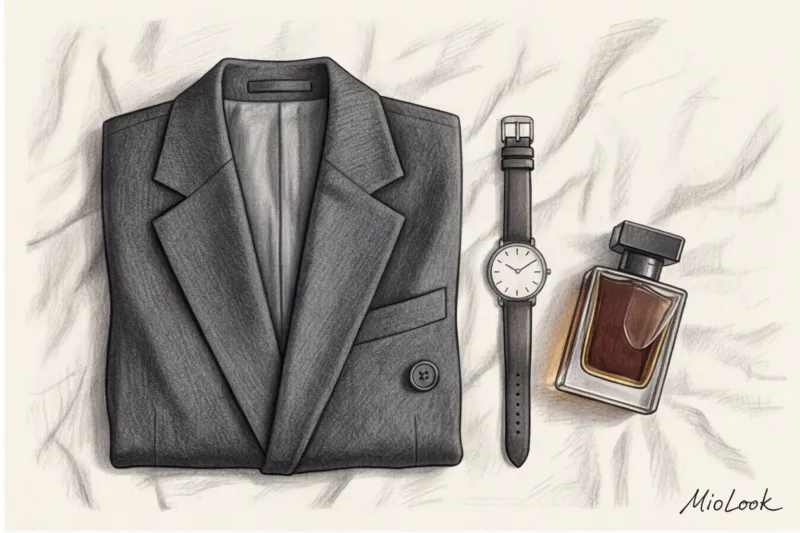
That's why when we put together a digital wardrobe in an app MioLook I always recommend that clients take photos of their bottles and add them to their collection. This helps them visually assess how their perfume complements their outfits. You should have a business, casual, and evening fragrance capsule.
Breaking Stereotypes: Masculine Notes for Women's Confidence
Thinking that only fruit suits women is as absurd as saying we can't wear pantsuits. True femininity and fragility often shine brightest in contrast.
One of my clients, the CFO of a large IT company, had long complained that at board meetings (which were mostly attended by men), her ideas were often overruled or dismissed on the first try. We completely overhauled her wardrobe, eliminating soft knitwear in favor of structured jackets, but the finishing touch was perfume. I suggested she replace her usual luxurious floral scent with a crisp, dry vetiver with notes of black pepper and cedar.
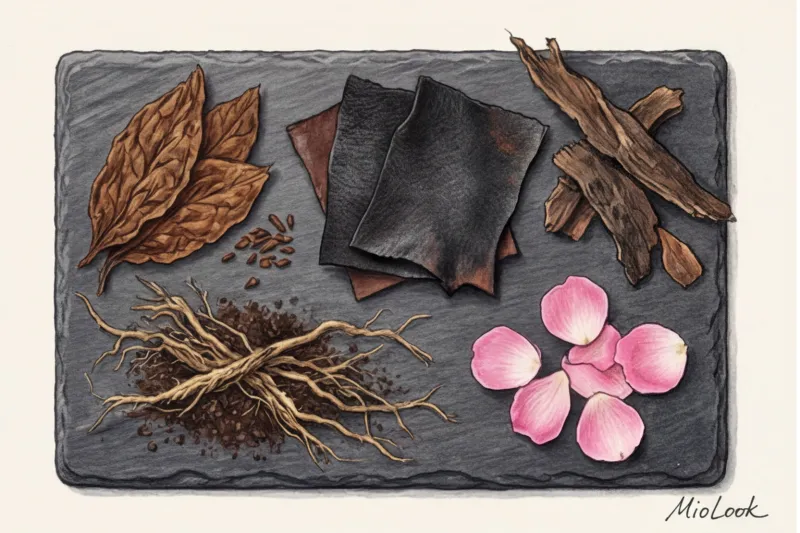
The result? A month later, she wrote to me: "I feel like I'm wearing armor in it. When I walk into a meeting room, my back straightens automatically." The flowing silk blouse, paired with a crisp, woody perfume, creates the image of a strong yet elegant woman who is impossible to ignore.
Your perfect look starts here
Join thousands of users who look flawless every day with MioLook. Sync your clothes and fragrances in one app.
Get access — €0.99 onceHow to Choose Your First Niche Unisex Fragrance: A Step-by-Step Guide
If you've decided to break free from gender stereotypes, you'll need a clear strategy. Forget everything you learned in the beauty supply stores. Here's a perfume stylist's workflow:
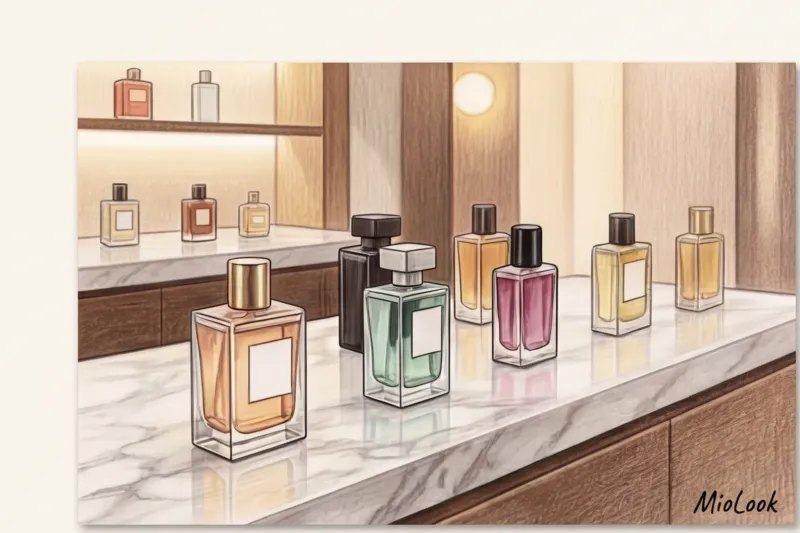
- Practice blind testing. Ask the consultant not to name brands or show you the bottles. Our brains are lazy: upon seeing a black matte cube with the words "Oud & Leather," you'll immediately decide it's "too masculine," even without listening to the composition.
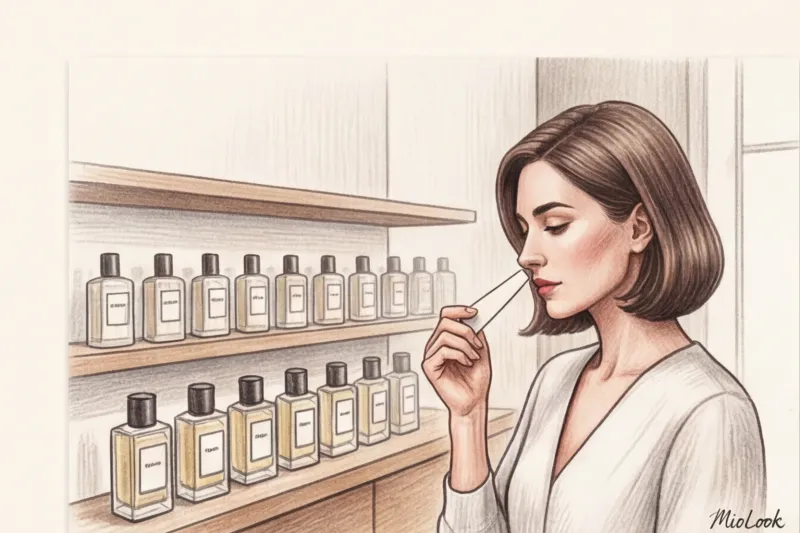
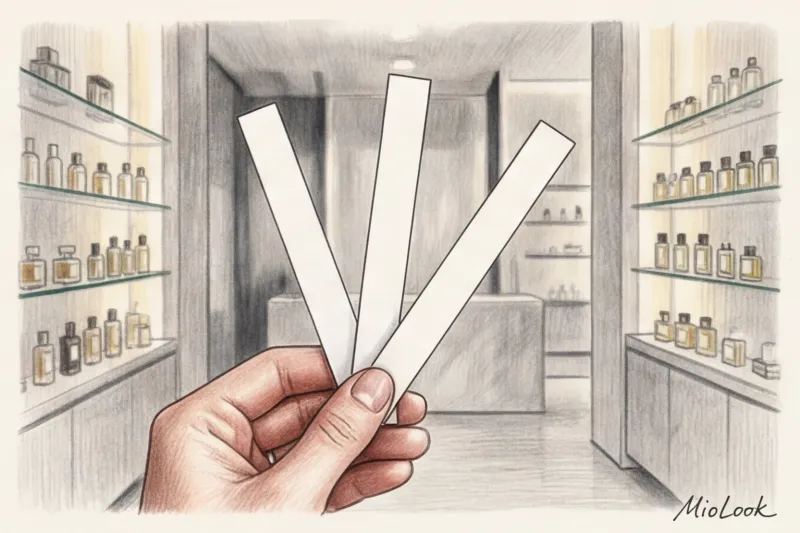
- Test on skin only. A paper blotter is a dead material. It's only needed to filter out profiles you're clearly uncomfortable with. A blotter has no temperature, and it lacks a lipid layer. What sounds flat on paper can reveal incredible depth on your wrist.
- Conduct an 8-hour crash test. Niche perfumes are long-lived and change with the times. Spray the scent on your collarbone or wrist and leave the store. Observe how it wears in an air-conditioned office, outdoors, or at lunch. Does it give you a headache by evening?
Rookie mistakes when testing selective perfumes
The industry is full of myths that prevent us from making the right choices. Let's look at the most critical mistakes I see every time I walk into a perfume boutique.
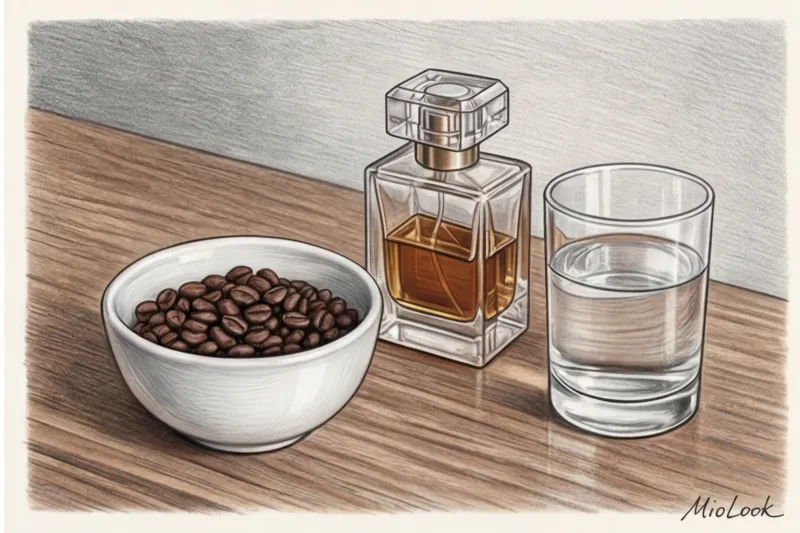
The Coffee Bean Myth. Have you noticed those coffee cans in stores? Ignore them. Coffee doesn't "cleanse" your olfactory receptors. On the contrary, it's a strong, dense olfactory irritant that only worsens your already tired nose. It's like trying to reset your taste buds after eating cake by eating a spoonful of hot mustard. If your nose is tired, drink a glass of clean water or go outside for 10 minutes.
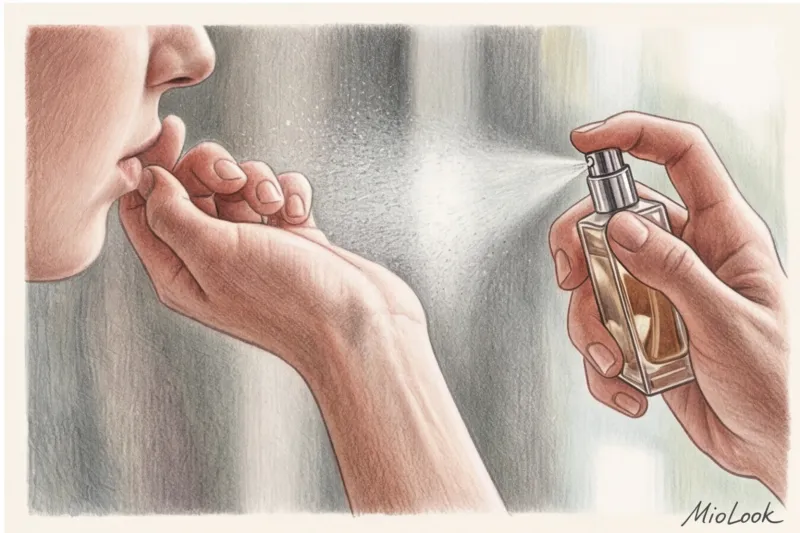
Rubbing perfume on your wrists. "Listen to how it unfolds!" many people say, aggressively rubbing one wrist against the other. Never do this. Friction increases the skin's temperature locally and literally breaks the fragile molecules of the top notes (citrus, light florals). You're simply crumpling the fragrance's melody, making it sound muddy.
Purchase in the first 15 minutes. In mass-market fragrances, top notes are made as vibrant and appealing as possible—it's called "selling at first sniff." In niche fragrances, things are more complicated. What smells like medical bandages or damp earth for the first 10 minutes can transform into luxurious suede with a hint of raspberry within an hour. Give the scent time.
Checklist: Assembling a Basic Perfume Wardrobe Without Gender
To avoid having random bottles piling up on your shelf, I recommend building your perfume base using the same principles as your basic wardrobe. You'll need three functional areas:
- "White Shirt" (Morning / Office / Sports). This is the scent of purity without invading anyone's personal space. Look for compositions based on white musk, neroli, bergamot, or green tea. They create the feeling of just stepping out of the shower in a crisp shirt.
- "Strict Suit" (Focus / Negotiations / Distance). A protective scent. Dry woods, vetiver, orris root, or light incense work perfectly here. These notes convey composure, intelligence, and establish an invisible distance between you and your interlocutor.
- "Evening Out" (Dating / Casual). It's time for textured, warming, and inviting compositions. Resins, amber, cherry pits, tobacco, alcoholic notes (rum or cognac), and spices. These are scents that invite you to come closer.
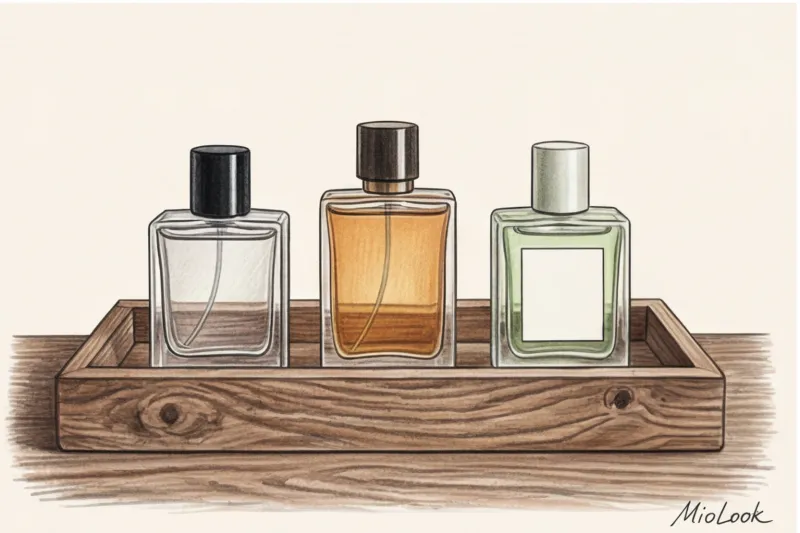
Gender divisions in perfumery are simply boundaries drawn by last-century marketers. Your style, your confidence, and your personal brand are too multifaceted to fit neatly into a "women's only" or "men's only" category. Choose a fragrance the same way you choose the perfect jacket: it should fit you perfectly, no matter where you find it.