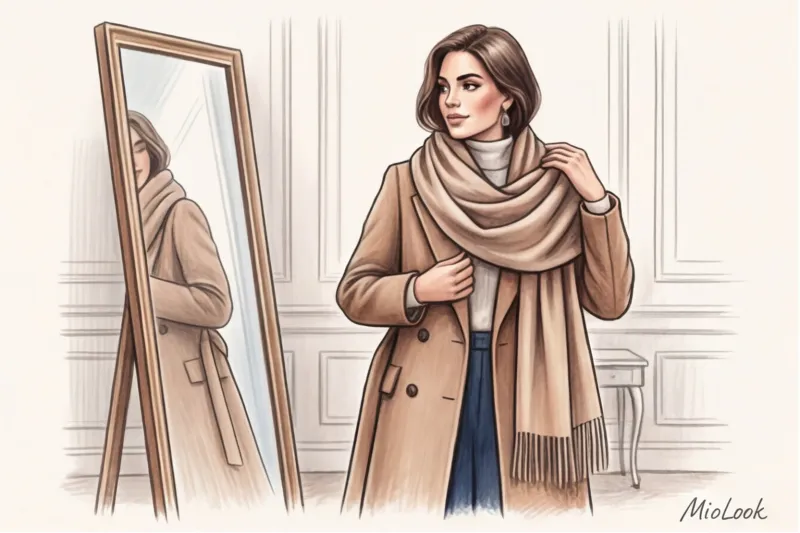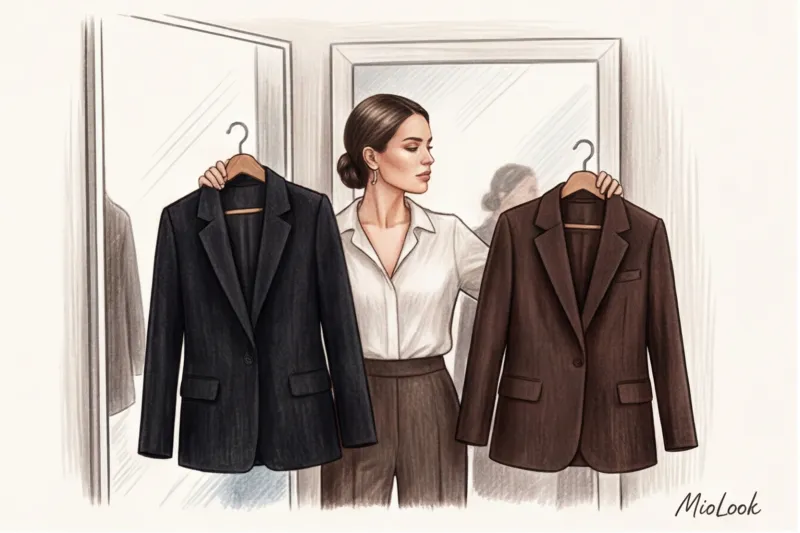

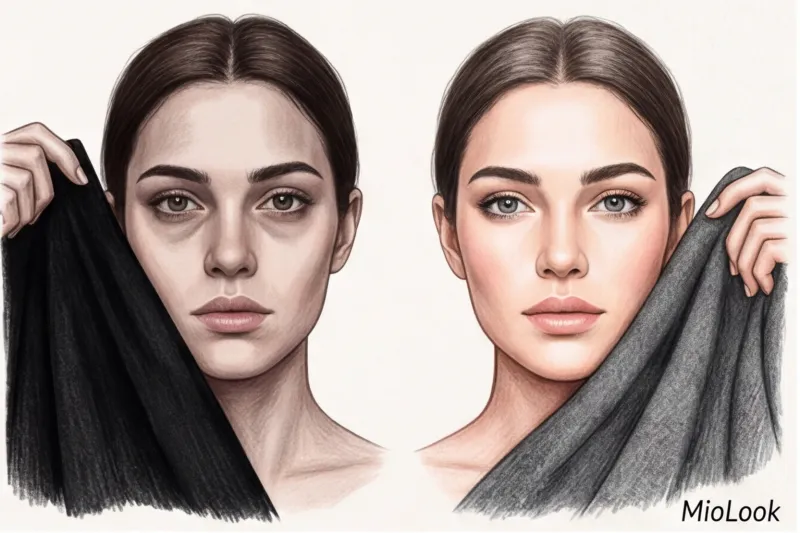
Open your closet and count how many items are strictly black and crisp white. Five? Ten? Half your wardrobe? Now imagine that 80% of them are visually aging you right now, highlighting signs of fatigue and dulling your complexion. It sounds like a defying of all fashion rules, but as a certified colorist and image consultant, I encounter this every day.
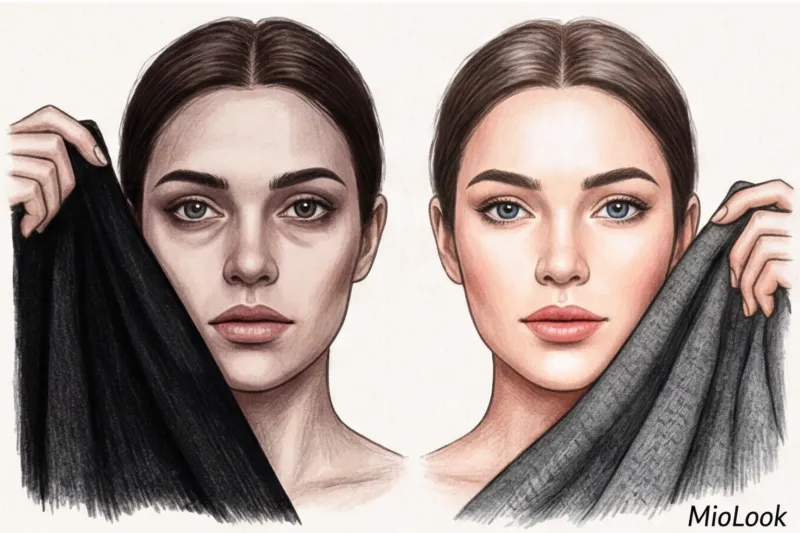
For decades, glossy magazines have been telling us that black is slimming and a white shirt is the ultimate must-have , which refreshes any appearance. We're used to thinking of these two colors as a "safe base." But when it comes to the portrait area (the area around the face), this "base" often works against us. Before we begin to understand why this happens, it's important to understand your natural features. We discussed this in more detail in our a complete guide to the 12 color types of appearance.
In this article, I propose to forget about stereotypes. We'll explore the physics of color, conduct a couple of at-home tests in front of a mirror, and select your own personal, truly luxurious base palette.
Fashion's Biggest Myth: Why Black and White Are Not 'Universal Basics'
Let's start with the crown jewel of the celebration—the "little black dress." Coco Chanel, who gave the world this concept, had a contrasting appearance that truly suited deep black. But what worked for Mademoiselle Coco isn't universal.
From a color science perspective, black and white can hardly be considered colors in the conventional sense. According to Albert Munsell's classical color theory (created back in 1905, but still the standard in color theory), color is measured in three dimensions: hue, saturation, and value. Pure black and optical white are extreme, extreme points on the value axis. They lack nuances. They have no midtones.
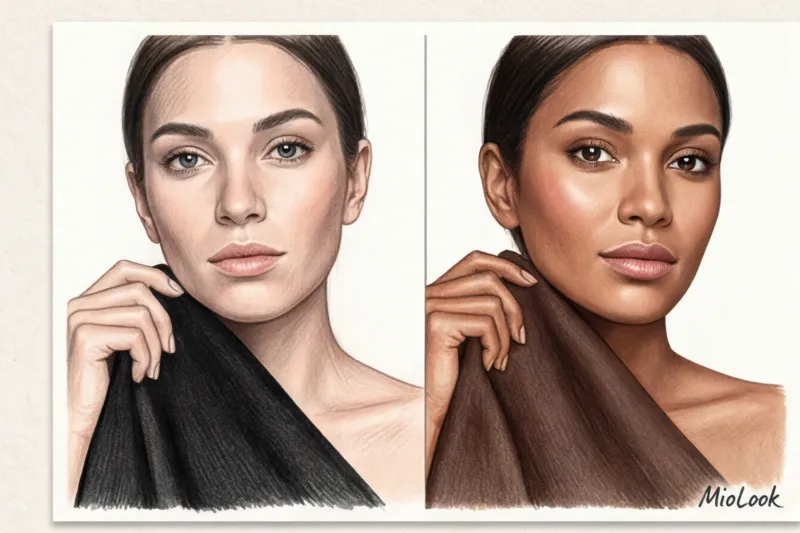
How does this work in practice? According to the PANTONE Color Institute, deep black absorbs up to 97% of light. When you wear a solid black turtleneck, the fabric doesn't reflect light onto your face. Instead, it acts like a black hole, absorbing the skin's luminosity and casting micro-shadows. As a result, nasolabial folds appear deeper, under-eye circles appear darker, and facial contours lose definition. It's like a bad Instagram filter, only in real life.
"The habit of buying black is a cultural pattern, not a stylistic necessity. We hide behind black, hoping to become invisible, but the paradox is that on most women it looks harsh and alien."
And another painful fact: black is NOT a slimming color by default. Yes, dark shades visually reduce volume, but pure black creates a heavy, monolithic silhouette. If the fabric is thick and matte, you risk turning into a clearly defined, dark rectangle, where every line of your figure is emphasized with merciless harshness.
Access to MioLook for €0.99 — one-time payment
A smart AI stylist will select the perfect look based on your color type and appearance.
Get access — €0.99 onceWho really suits black clothing (and how to check for yourself)
Clients often ask me: so Who suits black in clothes? Really? The answer lies in your natural contrast level. Pure black, without exception, is ideal only for those with cool, high-contrast colorings—Deep and Pure Winter.
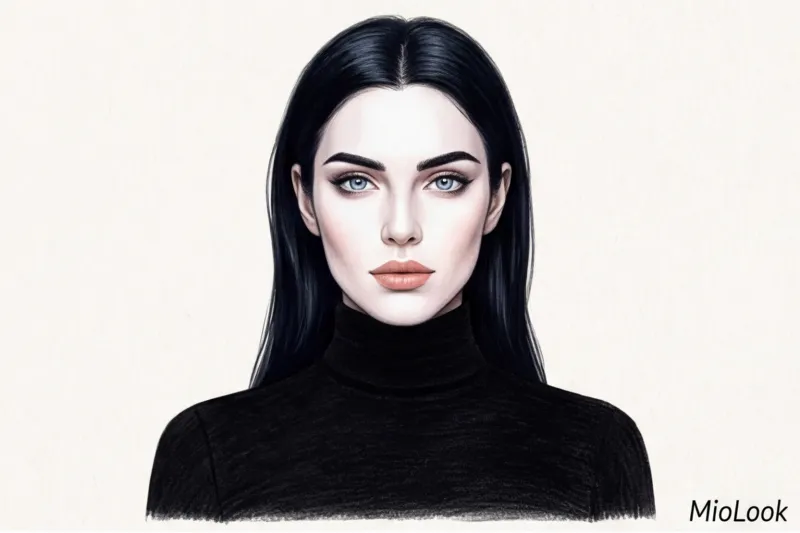
These girls naturally have porcelain or cool olive skin, dark hair without a hint of red, and bright, clear whites of their eyes. For them, black works like a luxurious picture frame: it doesn't steal the show, but rather brings out their natural vibrancy.
For fair-haired individuals (blondes, light browns with warm undertones), black often creates a "gothic" effect. The face appears sickly pale against the black spot, or, conversely, takes on a sallow tone.
Practice: Chin Test from a Stylist
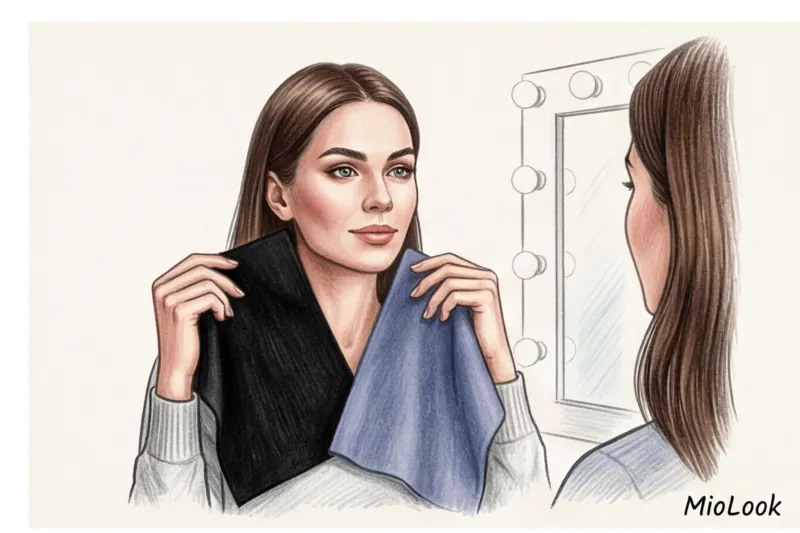
To find out if this is your color, I always perform my favorite "chin test" on my clients. You can do it at home right now:
- Remove your makeup and stand by the window in natural daylight (no yellow lamps!).
- Take a jet black item (smooth texture) and place it firmly on your neck, right under your chin.
- Look only at the line of the lower jaw in the mirror.
If you notice that your facial contours are "sagging," your chin is looking heavy, or there's a gray shadow under your cheekbones, take your photo immediately. Black is not recommended for portrait photography.
The Perfect White: Who Suits the Pure White Color?
The situation with white is even more interesting. In stores, we most often encounter "frozen white" or optical white. The secret of the chemical industry is that optical white is enhanced with a blue pigment (remember how grandmothers bleached their sheets with "blueing"). This color literally radiates coldness.
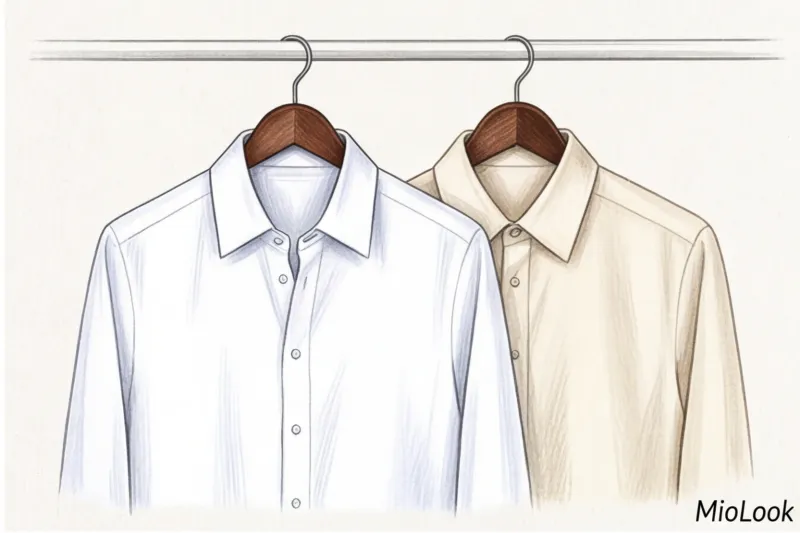
About 70-80% of women with Slavic complexions have muted or warm coloring. Our skin, hair, and even tooth enamel have a slight warm undertone. When you apply a shimmering optical white to such a complexion, a dirty contrast effect occurs.
I had a telling case in my practice. I was preparing a client for a presentation at a major IT conference. She insisted on an expensive, crisp white shirt—she wanted to look "high-status and fresh." Everything looked fine during the studio fitting, but when she stepped onto the stage under the powerful spotlights, the shirt began to glare. The blue pigment of the fabric reflected off her face, mingling with her warm skin tone, and in the video, the client looked like she had high blood pressure—her face appeared red and inflamed. Since then, optical white has been my number one no-no for speakers.
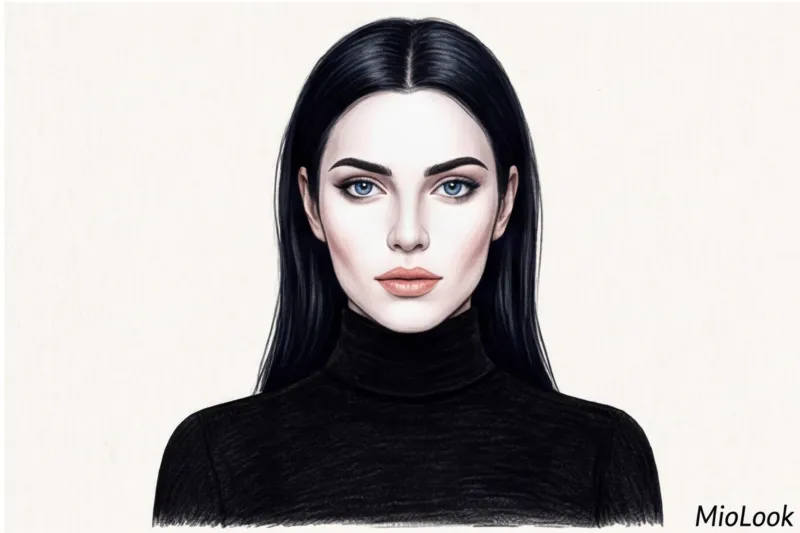
Moreover, too sharp white on a soft exterior often evokes strong associations with the uniform of a medical worker or a chef, completely killing the feeling of “expensive” style.
What to Replace Black With: Luxurious Alternatives for 12 Color Types
Building a wardrobe doesn't mean giving up dark pieces. The key lies in the concept of "your black." This is the darkest and deepest shade in your personal palette, which provides the same rigor and shape as classic black, while complementing your skin tone.
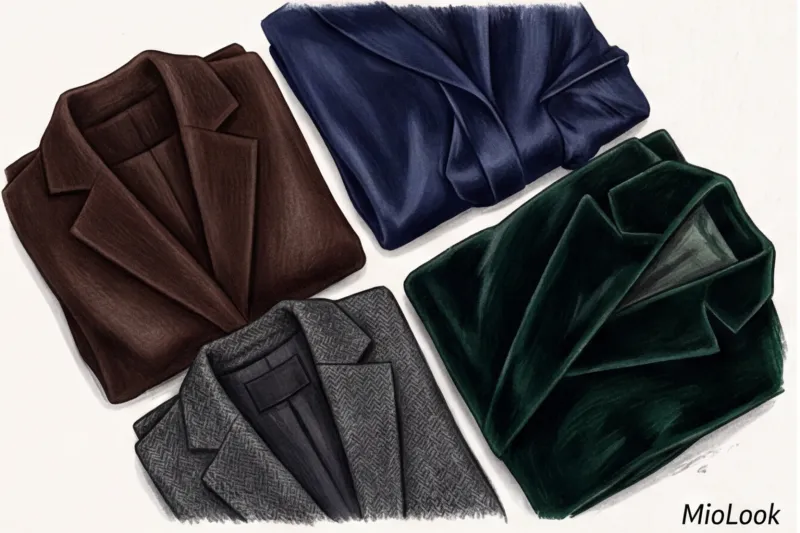
For light and soft skin types (Summer and Light Spring)
Your appearance is built on undertones. Classic black will simply crush you. Your ideal basic dark shades:
- Graphite and wet asphalt. An ideal alternative for office suits. It maintains the necessary distance and formality without casting harsh shadows.
- Navy (deep blue). The absolute king of the business wardrobe. According to color psychology research, navy evokes more confidence than black and always looks elegant.
- Cool taupe (grey-brown). Indispensable for knitwear, cashmere sweaters and autumn coats.
For warm and deep skin tones (Autumn and Warm Spring)
Golden or peach skin can look tired against a black background. You're looking for rich, saturated, and "delicious" shades:
- Dark chocolate and espresso. For the 2024/2025 season, Lyst analysts have dubbed brown "the new black," and they're absolutely right. A brown leather jacket or trousers on a warmer skin look 10 times more expensive than black.
- Deep coniferous and olive. They create an incredibly beautiful contrast with brown or green eyes.
- Eggplant and Marsala. Your choice for evening wear. These colors look truly aristocratic in silk and velvet.
Your perfect look starts here
Tired of guessing which shades suit you? Let artificial intelligence do the work. Join thousands of users who look flawless every day with MioLook.
Get access — €0.99 onceWhat to replace white with: from ivory to ecru
With white, temperature and texture rule. To find your perfect light shade, let's do a quick test. Look at the veins on the inside of your wrist in daylight.
If your veins appear slightly greenish, your undertone is warm. Your choice:
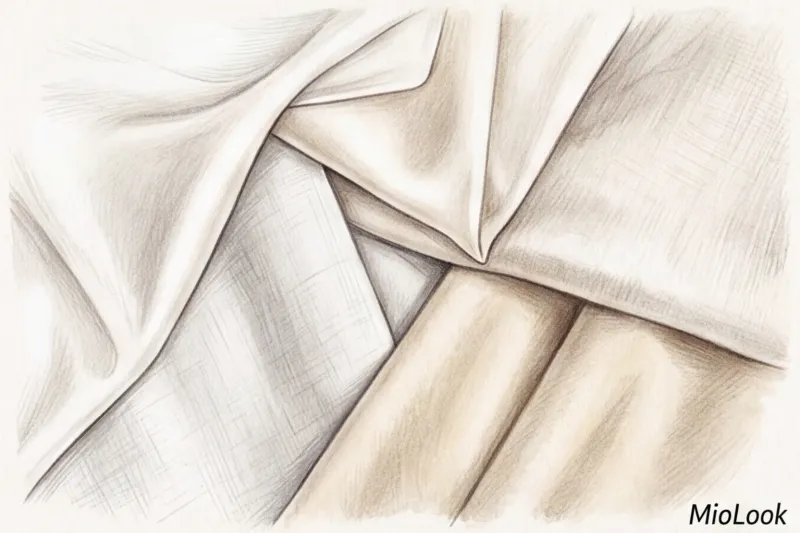
- Ivory and cream. They contain a drop of yellow, which instantly makes the skin look more tanned and healthy.
- The color of baked milk and champagne. They look especially luxurious in silk blouses.
If your veins are clearly blue or purple, your undertone is cool. Choose:
- Pearl and off-white. This is a white that has had its harsh blue filter removed, leaving a soft purity.
- Icy blue or soft lavender. A great alternative to a white shirt in a strict office dress code.
An important nuance: The texture of the fabric dramatically changes the perception of white. A shiny ivory satin silk reflects light and illuminates the face. However, a matte 180 g/m² cotton (a standard, good T-shirt) in the same shade can look simply like a washed-out old garment. If you're choosing warm whites for matte textures, choose a slightly richer color, such as ecru.
What to Do If You Love Black But It Doesn't Suit You (A Stylist's Guide)
I'll be completely honest here. I'm a Soft Summer (muted, cool type). Black makes me look haggard and dark-eyed. But does that mean it's not in my wardrobe? Of course it is. Sometimes, you just have to wear the perfect black tuxedo.
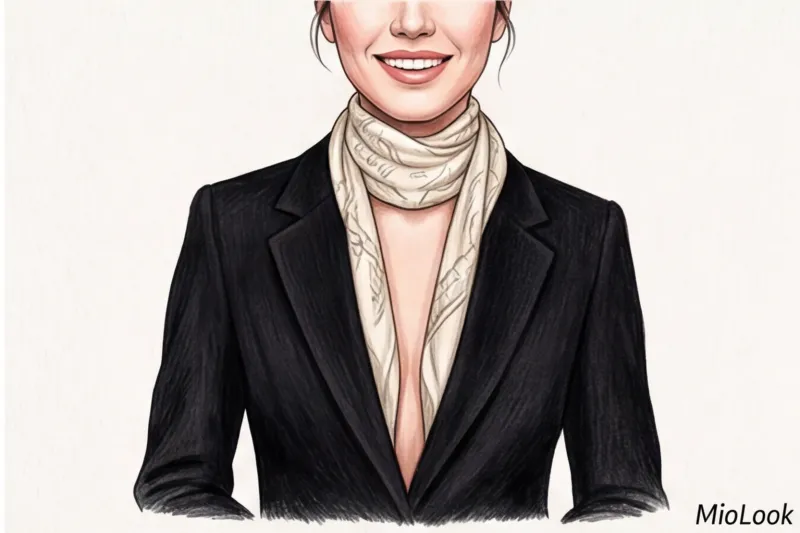
For such cases, I have 4 ironclad rules on how to “tame” a color that doesn’t suit you:
- The "buffer zone" rule. Our goal is to move the dangerous color away from the portrait area (face and neck). Do this with a deep V-neckline that reveals the collarbones. Or use a scarf or a shirt collar in your ideal shade. This small color barrier will save your complexion.
- Makeup secrets. If you're wearing black, your makeup should be more intense than usual. A pure color requires a blank canvas: use a heavier foundation (to conceal shadows cast by clothing), the right cool-toned highlighter, and a slightly brighter lipstick. Black can eat up makeup, so don't be afraid to overdo it.
- A play of textures. This is my favorite exception to the rule. A thick, opaque black drape, jersey, or neoprene works like a monolith. But translucent black chiffon, fine lace, or organza work differently. Your skin shows through, and black stops being a solid, heavy blob, becoming airy and soft.
- We're taking it down. Pants, skirts, belts, shoes, and bags can be absolutely any color. Anything below the bust line doesn't affect how fresh or tired your face looks.
Checklist: Building a Basic Wardrobe Without Black and White
Giving up familiar colors often causes panic. It seems like your wardrobe will simply fall apart without black pants and a white shirt. In reality, it's only just beginning to come together into a truly prestigious, "expensive" capsule wardrobe.
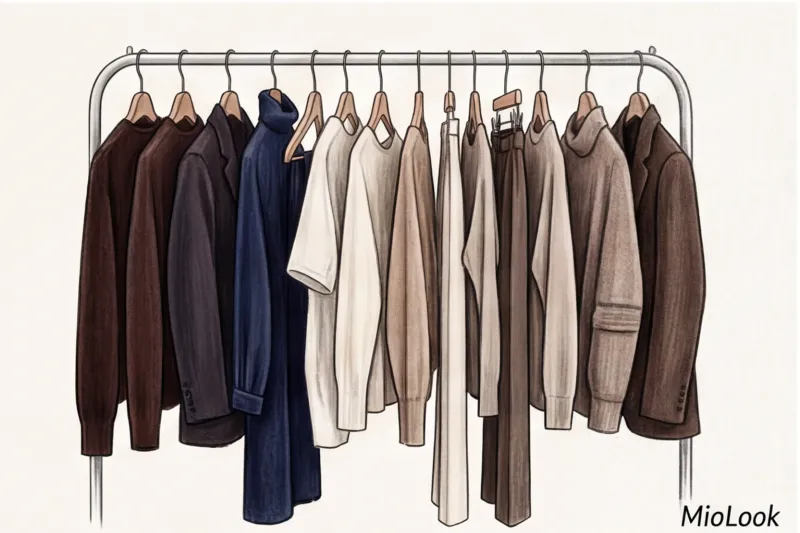
Where to start the change?
- Step 1. Audit of the portrait zone. Get out all your black turtlenecks, T-shirts, and jackets. Put aside the ones that hang close to your face. Don't throw them away, just stop wearing them solo—add light-colored tops as a base layer or statement jewelry.
- Step 2. The first smart investment. If you need a new jacket or coat, avoid black as a matter of principle. Try a deep navy or dark chocolate shade. I guarantee you'll get more compliments on your complexion on the first day than you'll get in a whole year of wearing black.
- Step 3. The rule of tonal harmony. The beauty of black substitutes (blue, graphite, chocolate, emerald) is that they combine beautifully. Black, in complex combinations, often looks harsh, like a marker on watercolor. But the combination of a dark blue jacket, graphite trousers and a cream silk blouse creates a complex, multifaceted look in the style old money.
Clothes are just a tool. The color of the fabric should complement your natural beauty, highlight your eyes, and even out your skin tone, not force you to apply an extra layer of concealer. Allow yourself to step outside the usual black-and-white thinking, and you'll see your wardrobe sparkle with completely new colors.
Ready to get started?
Try the MioLook free plan—no commitments required. Start creating perfect looks with AI right now.
Get access — €0.99 once