Beanie Hat: Why This Style Has Become an Absolute Essential (and Who It Suits)
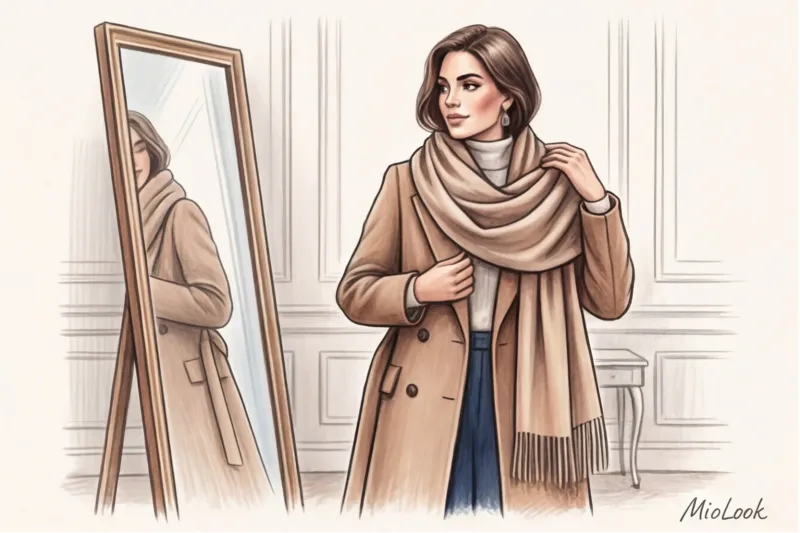
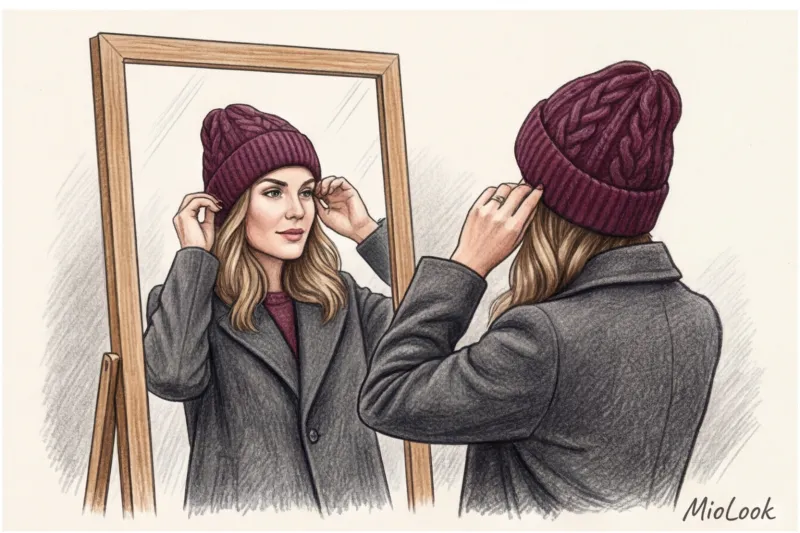
It's a familiar scene: you're standing in front of the dressing room mirror, pulling your hat down almost to your eyebrows, carefully tucking all your hair behind your ears, looking at your reflection, and sighing, you pronounce the verdict: "I look like an egg. Hats don't suit me at all."
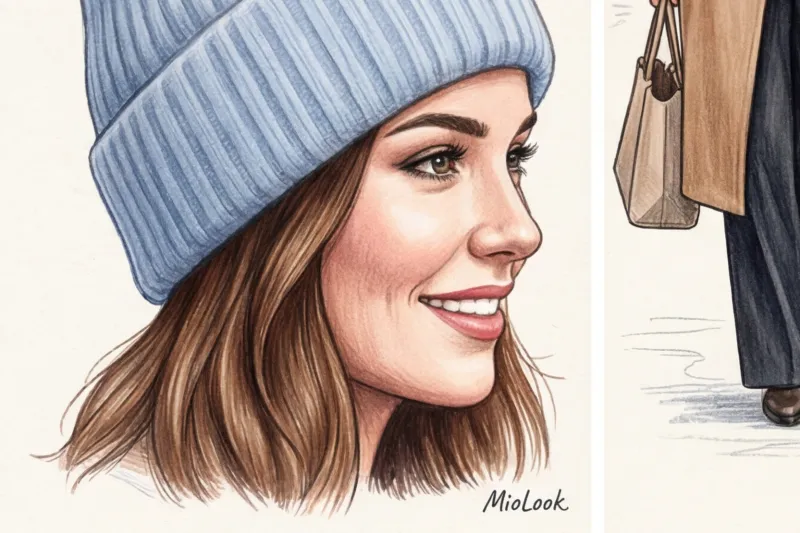
Over 12 years of working as a personal stylist and colorist, I've heard this phrase from hundreds of women. And every time, my response was the same: you just don't know how to prepare your hair. More precisely, you use your hat as a utilitarian warmth blanket, not as a tool for correcting proportions. If you ask me, Who suits a beanie hat? (that same simple knitted style without pom-poms, rhinestones, or unnecessary embellishments), my answer will be categorical: it suits absolutely every woman. The whole secret lies in the correct volume and the precise color selection right at the face.
The beanie has long ceased to be an accessory exclusively for skiers or skaters. It has displaced complex berets, snoods, and felt hats precisely because of its adaptability. I wrote in more detail about why we're so afraid of headwear and how to overcome this fear in our complete guide to the art of face framing And today we'll break down the mechanics of an ideal bean into molecules.
Access to MioLook for €0.99 — one-time payment
A smart AI stylist will select the perfect look based on your proportions and color palette.
Get access — €0.99 onceThe main myth: we forget about “face type” and learn to work with volume
For decades, glossy magazine articles have been telling us: "If you have a round face, wear asymmetrical shapes; if you have a square face, avoid sharp lines." Forget it. When choosing soft knitwear, dividing faces into geometric shapes is completely meaningless.
Instead, we'll turn to science, specifically the Müller-Lyer law (an optical illusion of length and volume perception). The way our face looks when wearing a hat depends not on natural features, but on the lines we create around it. The main mistake I regularly see is creating a "bald spot effect."
One of my clients, Marina, had refused to wear hats for almost 10 years, believing her cheekbones were "too wide." It turned out she was simply buying thin, sleek hats and hiding all her hair beneath them. We replaced her hat with a tightly folded one, loosened her hair, and her face became twice as graceful.
The Lapel Rule: How to Correct Proportions
Thin, clinging beanies without a turn-up are a counter-trend, harshly emphasizing the bulk of the lower jaw and visually enlarging the nose. Why? Because against the small, fabric-covered head, all facial features appear larger.
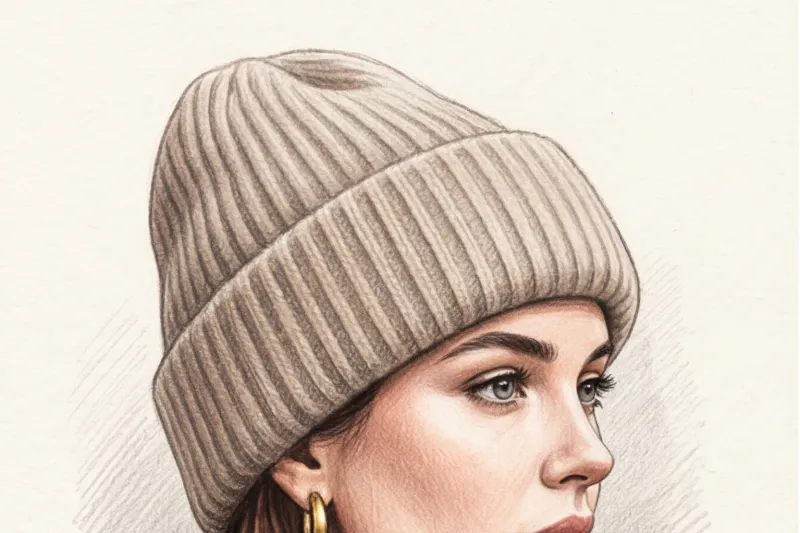
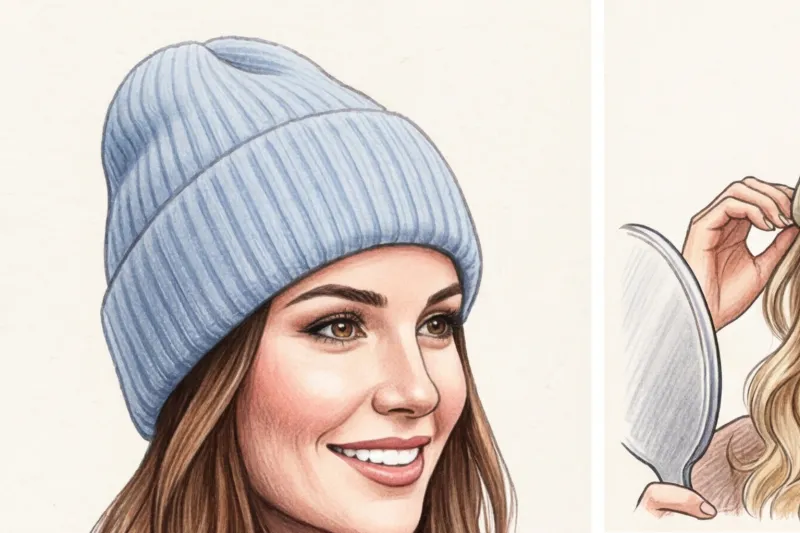
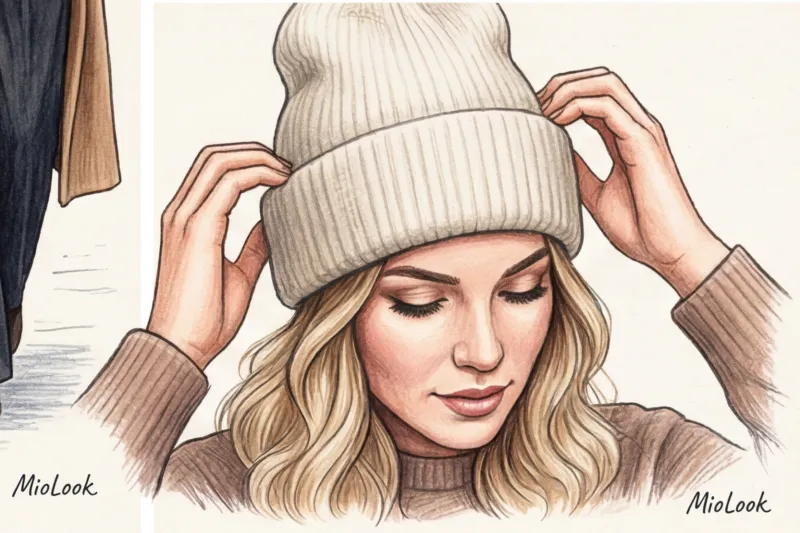
Your best friend is beanie with a wide, tight cuff (optimally 6–8 cm) This extra layer of knitwear creates the desired horizontal line above the eyebrows. According to the laws of proportion, if the top of the head appears fuller, the lower jaw automatically appears narrower and more defined.
Hair Magic: How to Avoid the "Mushroom Effect"
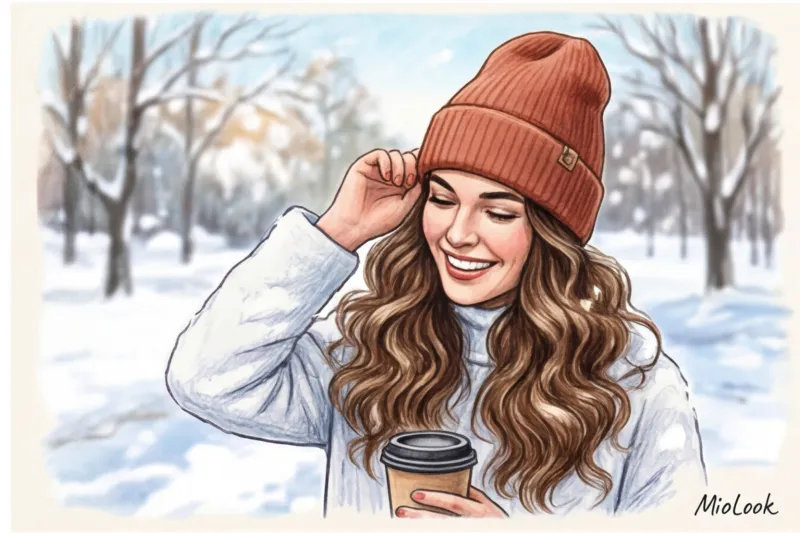
Never, never, never tuck all your hair behind your ears when wearing a beanie. Hair is your natural contour. Let a few strands fall loose at your cheekbones. If you have long hair, let it hang loose over your shoulders.
What about those with short haircuts (pixie or bob)? The rule of texture applies here. Before going out, apply a little salt spray or texturizing paste to your bangs or side strands. Wear your hat so that the textured, slightly tousled strands peek out from under the flap. This creates movement and prevents your head from looking disproportionately small in relation to your winter down jacket.
Your perfect look starts here
Join thousands of users who look flawless every day with MioLook. Upload your items and receive ready-made capsules.
Get access — €0.99 onceColor is everything: how to choose the right shade for a beanie
As a certified colorist, I often repeat: a hat is your personal photographic reflector. It sits close to your face and can either erase the traces of a sleepless night or add five years to your appearance. Forget the "match your hat to your jacket" rule. A hat should match your skin tone and eye color.
Why a black hat is your worst enemy in winter
It's time to consign the stereotype that "a black hat is basic and flattering on everyone" to the dustbin of fashion history. A deep black color right next to the face acts as a magnifying glass for all signs of aging. According to the laws of physics, black absorbs light. On a cloudy winter day, a black beanie will cast harsh shadows on your face, highlighting nasolabial folds, dark circles under the eyes, and even the slightest redness.
If you adore dark shades and your complexion (for example, "Deep Winter") can handle them, replace black with sophisticated alternatives: deep navy, dark chocolate, rich emerald, or warm graphite. They provide the right contrast without draining the life out of your face.
Win-win shades for any color type
According to the Pantone Color Institute's annual reports, light, dusty shades in portraits provide the greatest "visual lifting" effect. What should you look for in stores?
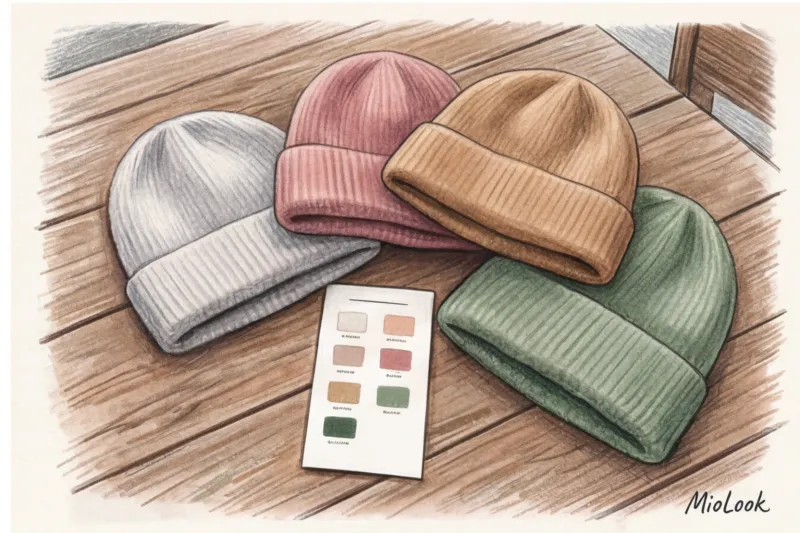
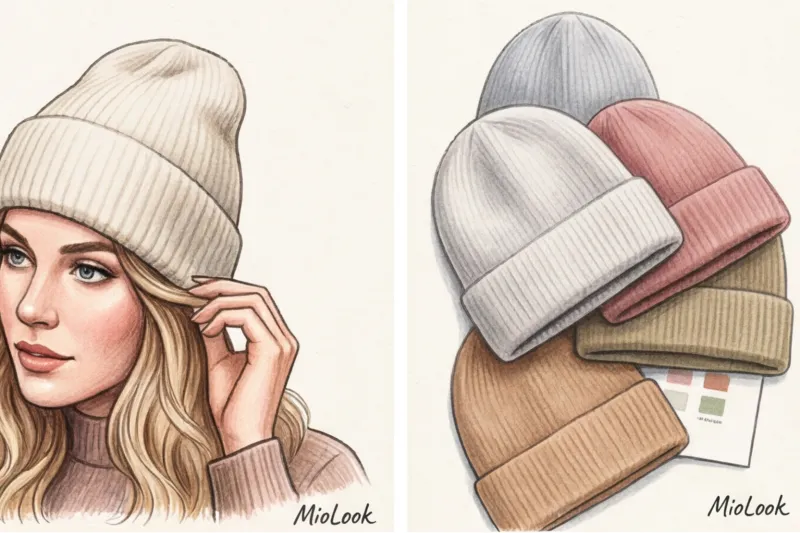
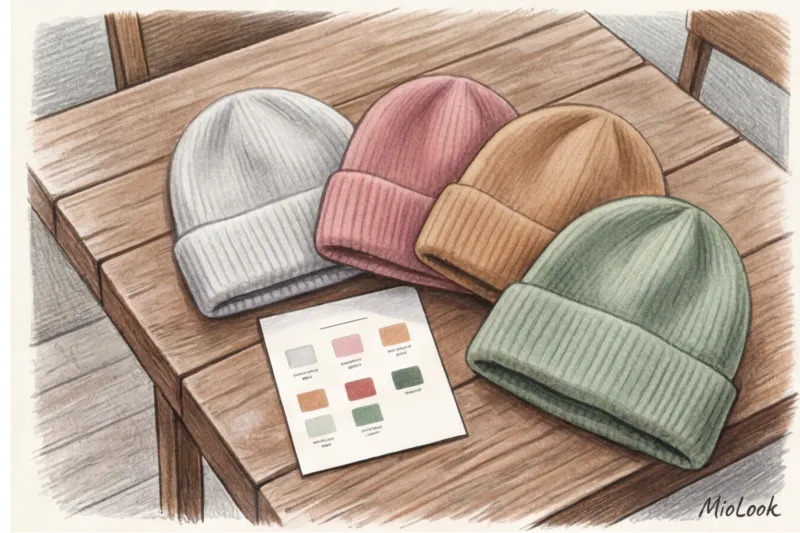
- Pearl gray and ecru: an ideal base instead of snow-white (which emphasizes the yellowness of tooth enamel).
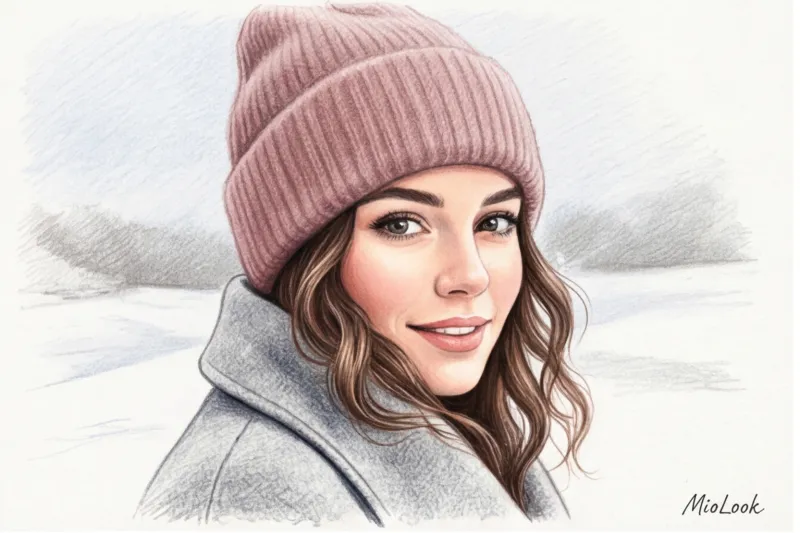
- Dusty Rose: instantly adds a rosy glow to your face, saving you from dull, sallow skin.
- Soft camel and sage: They beautifully highlight green and brown eyes.
What to wear with a beanie: from a down jacket to a formal coat
Modern fashion embraces eclecticism. A 2024 study by Lyst found that searches for pairing classic outerwear with sports accessories increased by 45%. A beanie is no longer just a companion to a ski jacket.
But there's a strict rule regarding textures: please don't buy ready-made matching hat and scarf sets made from the same yarn. This technique is hopelessly outdated and greatly cheapens the look. Assemble the set yourself, playing with the differences in texture.
Beanie in a business wardrobe (yes, you can do that!)
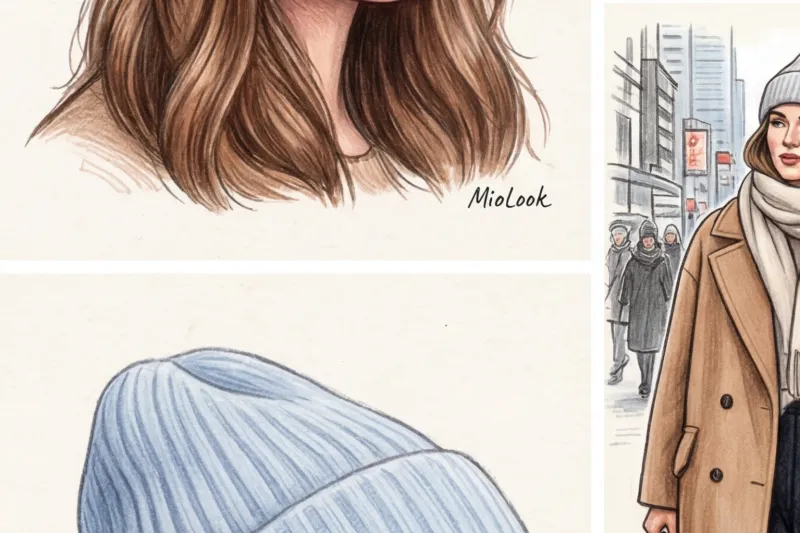
Imagine wearing a structured, double-breasted coat in heavy wool (perhaps over a business suit) and layering it with a basic beanie in smooth cashmere. This instantly takes the edge off the pretentiousness. A look in style smart casual It becomes more relaxed and European. It looks as if you didn't bother dressing up, but simply threw on some stylish clothes and ran out to do some errands.
Casual and sporty chic: a play on contrasts
For voluminous puffer jackets and down blankets, choose a chunky knit beanie. Layering works great here: a hoodie peeking out from under an oversized coat, a bright accent beanie, and chunky sneakers. The key is to ensure the hat's volume is proportionate to the jacket's volume. A tiny, thin beanie paired with a gigantic down jacket will make you look like a lollipop.
Ready to get started?
Try the MioLook plan for free—no commitments required. Create your winter capsule now.
Get access — €0.99 onceA Stylist's Checklist: How to Choose the Perfect Beanie in the Store
No matter how beautiful the color of a hat, cheap fabric will give itself away the first time it snows. When you enter a store, always check the label.
- Compound: Avoid hats with more than 30% acrylic. Acrylic is a squeaky plastic. It creates a greenhouse effect (your head sweats but stays cold), statics your hair so much that it stands on end, and becomes pilly after two weeks. Look for at least 70% merino wool, alpaca, or cashmere. A good basic merino hat will cost you between €40 and €80.
- Knitting density: Pinch the flap with your fingers. It should spring back and return to its shape. If the knit is loose and "flows" down your arms, the hat won't hold the proper volume around your face.
- Crown planting: The shape depends on the seams at the crown. For round, soft features, it's best to choose a beanie that fits softly at the back. If you want to visually elongate your height and add a touch of daring, choose a style with a stiff, slightly raised crown (called a cosset beanie).
Fair Limit: The only time you should be careful with a very bulky, thick-knit beanie with a double cuff is if you're petite (up to 155 cm) with very delicate features. In this case, the extra volume could overwhelm you. Choose a medium-weight yarn.
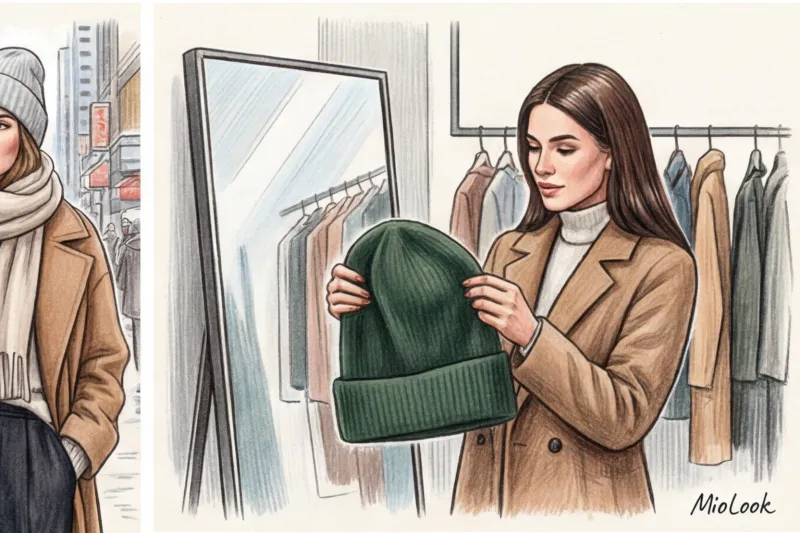
Let's sum it up: your step-by-step plan for incorporating beanies into your wardrobe
So, we've established that the question of "who suits a beanie hat" is settled once and for all. It suits you. To make it work, just remember the three pillars of proper styling: A 7-8 cm wide flap for volume correction, a light, refreshing shade that works as a lifting effect, and strands of hair released near the face.
My advice: don't put it off. Take a look through your winter wardrobe today. Get out your hats. Get rid of those black acrylic "socks" that make your face look tired. Try on a beanie with a tight cuff, pull it back slightly to expose your forehead, let out your bangs or side bangs—and you'll see a completely different, fresh, and modern silhouette in the mirror.