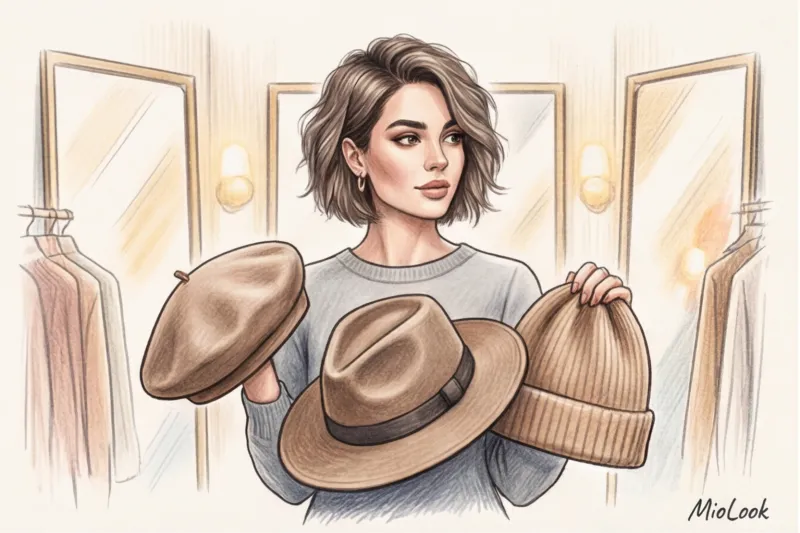
The Art of Framing: Why We're Afraid of Hats and How to Choose a Headpiece Without Stereotypes
"I hate hats; they make my face look stupid and round." In my 12 years as a personal stylist, I've heard this phrase hundreds of times from the most beautiful women. We walk into a boutique, you grab the first style you see from the shelf, pull it down to your eyebrows, automatically tucking all your hair behind your ears, and... the reflection in the mirror is a complete stranger. Sound familiar? The question of how to choose a hat often turns into a real ordeal precisely because of such typical fitting accidents.
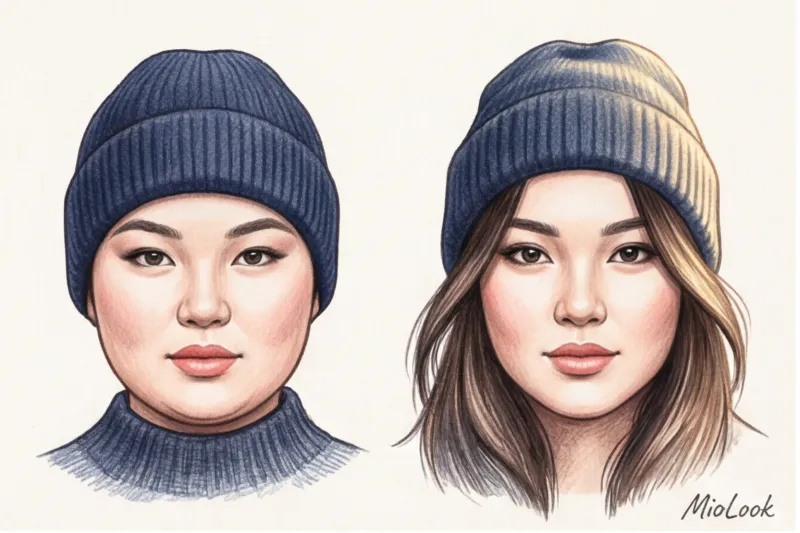
When women come to me and say, "I look like a mushroom in hats," we start not with the shape of the hat, but with how they wear their hair. Just let a few strands of hair out near their cheekbones—and magic happens.
The problem isn't with your face, but with an optical illusion. The main enemy of a stylish winter or fall look is the "bald spot effect," which we create for ourselves by burying our hair under knitwear or felt. The face loses its natural frame, and the jawline appears heavier.
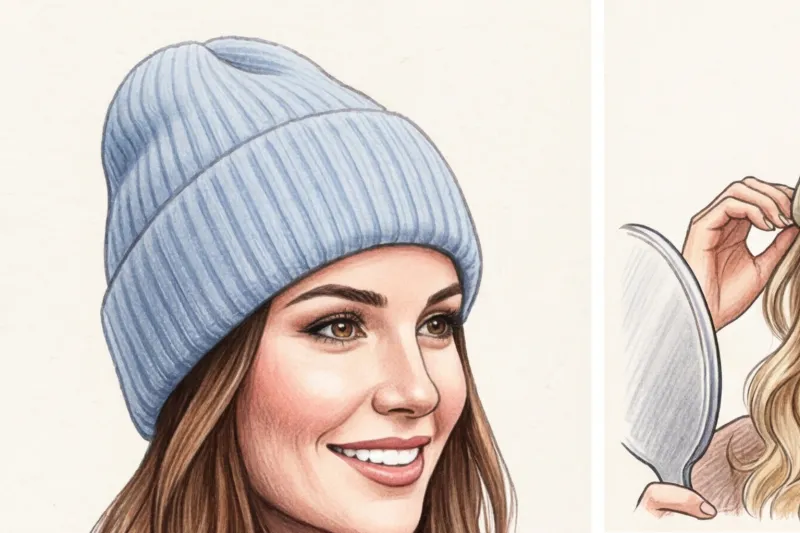
A hat is in the most critical portrait area. It acts as a photographic reflector, and this rule cannot be ignored. Choose an earthy, unflattering shade of khaki or a dull black near the face, and the accessory will instantly highlight under-eye circles, fatigue, and nasolabial folds. Even a basic €30 beanie in the right, refreshing shade (for example, pearl gray, camel, or dusty rose) will do more for your appearance than a €300 designer hat whose color clashes with your skin undertone. I discussed in detail how the color palette near the face affects the perception of age in an article about What clothes make a woman look older?.
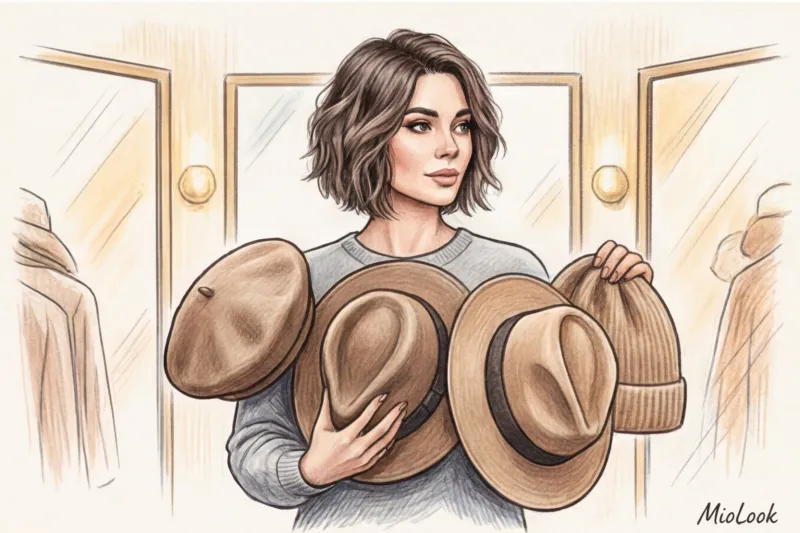
Finally, let's debunk the main styling myth that has been perpetuated in magazine after magazine for decades. Forget strict geometric shapes and the agonizing attempts to match a model to a specific face shape (oval, square, triangle). According to modern styling academies, this approach is hopelessly outdated. Our eyes perceive not geometric shapes, but overall proportionality.
A wide-brimmed hat will crush a petite woman not because she has a round face, but because it's out of scale with her height and shoulder width. To stop buying things that end up sitting on the shelf for years, start by analyzing your proportions. I recommend uploading a photo of your outerwear to MioLook — this way you can clearly assess what volumes and textures your wardrobe requires before you even go to the store.
A stylist's formula: how to choose a headdress based on your figure's scale and proportions
Have you ever wondered why that gorgeous hat that looked perfect on a mannequin or in your social media feed suddenly looks like you're wearing someone else's in the dressing room mirror? Most often, we start by criticizing our faces, but the real problem lies in the geometry of the body. As a stylist, I always emphasize: the architecture of a flawless look begins with a proper assessment of your own proportions.
I have a fail-safe tool I developed while working with clients before the Milan shows. It's my signature formula: "Shoulder Volume + Clothing Volume = Required Headwear Volume" By ignoring this equation, you risk ruining even the most expensive outfit.
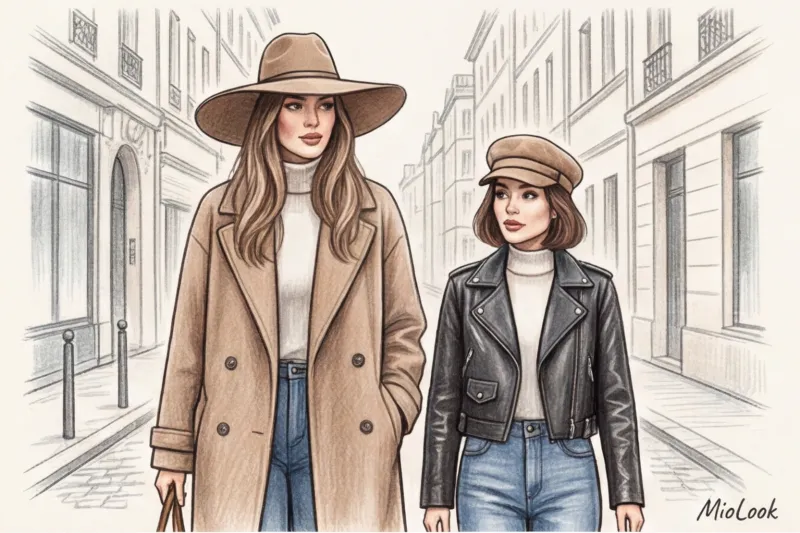
Let's put this math into practice. Let's start with petite girls up to 160 cm tall. For shorter women, the strictest rule of proportionality The brim of a hat should never extend beyond the shoulders. Wearing an overly wide hat will visually shorten your height, make your silhouette heavier, and hide your neck. For a petite figure, a brim of up to 5-6 cm is ideal. A compact fedora, a neat, structured cap, or a simple Panama hat will accentuate your natural fragility and elongate your height.
The exact opposite situation occurs for tall women (170 cm and above). Their most common fashion mistake is a fondness for small, tight-fitting, finely knit hats. On a tall, statuesque figure, such a micro-hat creates the optical illusion of a "pinhead." The body appears overly monumental, and the head disproportionately small. Tall women desperately need visual weight at the top: hats with brims of 8-10 cm, voluminous earflaps, or thick beanies with a wide lapel (at least 7 cm) will harmoniously balance the long vertical line of the body.
But even the perfect accessory for your height will lose its meaning if you don't consider the volume of your outerwear. Choosing a hat directly depends on what you're wearing. Imagine a trendy oversized puffer jacket—it visually adds at least two sizes to your shoulders. If you add a thin silk scarf or a narrow hat to this massive base, your head will visually "disappear" against the backdrop of your puffy shoulders. A puffer jacket requires a proportionate solution: chunky knit balaclavas, puffy hoods, or hats made of thick, textured yarn are all appropriate.
Conversely, a classic single-breasted wool coat with a straight cut would simply collapse under the weight of a giant fur hat. The coat's minimalist cut calls for structured elegance—a medium-stiff felt hat or a classic beret in thick wool would be ideal here.
Access to MioLook for €0.99 — one-time payment
A smart AI stylist will select the perfect look based on your proportions and outerwear.
Get access — €0.99 onceThe influence of texture on the perception of appearance
While scale determines the overall proportions of the figure, the texture of the material directly influences your portrait area. Choosing the wrong fabric can highlight signs of fatigue, while the right texture acts like professional lighting in a photo shoot.
Smooth textures include natural silk, the finest cashmere, and expensive smooth felt (incidentally, a basic hat made of high-quality felt today will cost between €150 and €300). These materials have a delicate satin finish. They are designed for women with classic, symmetrical, and calm facial features. The smooth surface requires a "blank canvas"; it doesn't distract attention and adds a distinctly aristocratic touch.
But what if you have a contrasting and expressive appearance? Large facial features, thick, unruly eyebrows, a mop of curls, or a piercingly bright eye color can clash with overly regular, smooth fabrics. Your secret weapons are loose knits, bouclé, corduroy, and fluffy faux fur. Their uneven texture absorbs light, creating a complex and beautiful play of shadows around the face. A voluminous Panama hat made of textured bouclé or a hat made of fluffy mohair instantly adds life and dynamism to the portrait area and harmonizes with your natural expression.
Winter Chic: How to Choose a Headwear for Cold Weather (Without Ruining Your Hair)
Winter isn't a reason to choose between warmth and a beautiful hairstyle. According to the International Association of Trichologists (2023), the main cause of hair breakage, dullness, and static during the cold season isn't frost, but rather simple friction against synthetic fabrics. Therefore, we'll begin our discussion of winter wardrobe with a hard and fast rule: say a firm "no" to mass-market 100% acrylic hair products.
Acrylic yarn creates an aggressive "greenhouse effect" on the scalp, disrupting the hydrolipidic balance. After removing such a hat, your hair not only loses volume, but also stands on end from static electricity. If you decide... How to choose a hat For a long-lasting, healthy-looking merino wool blend, look for one with 10–30% polyamide. This synthetic additive is needed solely to reinforce the yarn, ensuring the garment maintains its shape and doesn't stretch out after the first wet snow. Luxurious cashmere blends are an alternative. Insider trick from stylists: If you have porous hair or a sensitive forehead, take your favorite knitted hat to a tailor and ask for a smooth, natural silk lining. Silk doesn't absorb moisture from the hair cuticle, preventing kinks and preserving the structure of your hairstyle.
Let's move on to the architecture of shapes. The most basic item in the winter arsenal is a beanie, but the devil, as always, is in the millimeters. Thin, loose, finely ribbed knitwear, tightly clinging to the skull, visually "flattens" the head and instantly cheapens even the most carefully designed outfit. The ideal beanie should have a thick, voluminous cuff, 7 to 10 centimeters wide.
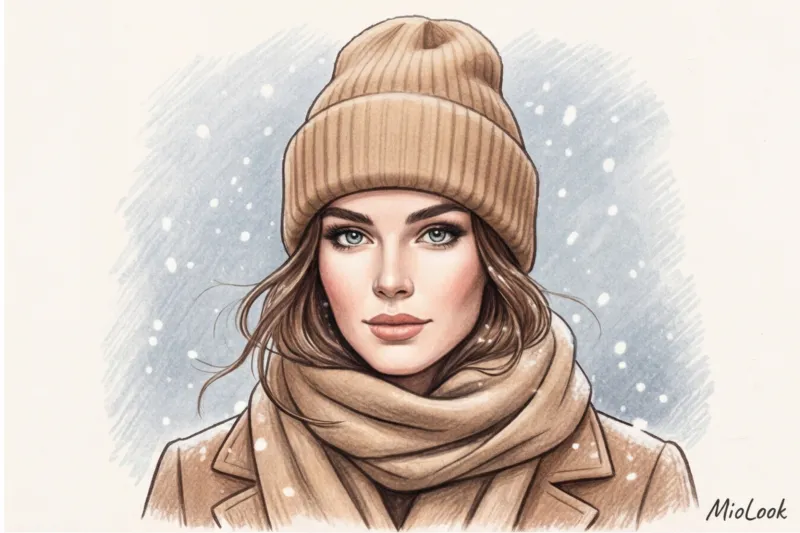
Why is the width of the lapel so critical? It's pure geometry: a wide horizontal line at forehead level creates a massive frame. Against this deliberate volume, your lower third of your face, cheekbones, and jawline are perceived by others as much thinner and more graceful.
What about women whose main aesthetic pain in winter is a flattened head? My answer: hoods and balaclavas. They're a stunningly elegant and functional alternative to classic hats. The right hood drapes loosely around the neck, creating a secure warmth cocoon, but it also softly covers the head without putting pressure on the crown.
- Style bonus: When you enter a café or the subway, you don't have to remove the hood completely and hold it in your hands. Simply fold it back like a hooded sweatshirt, maintaining a seamless look.
- A successful formula: A sleek wool-blend bonnet + a double-breasted midi coat + chunky-heeled ankle boots = a sophisticated silhouette with a touch of Scandinavian minimalism.
If you're tired of the basic simplicity and want to add some texture to your winter routine, consider faux-fur ushankas. Your biggest fear is looking ridiculous in one, like you're going ice fishing. The secret to urban adaptation of the ushanka lies in a bold play on contrasts. Never pair a fluffy, voluminous ushanka with an equally shapeless, oversized down jacket.
For a luxurious look, combine complex textures with sleek, clean lines. An ushanka hat pairs beautifully with a simple leather down jacket, a sheepskin aviator, or a classic men's wool coat. High-quality faux-fur models (such as those with imitation sheared sheepskin) that don't resemble a plush toy typically range from €80–€150.
To avoid making a mistake with the proportions when buying such an accent item, I recommend taking photos of your main winter jackets and uploading them to MioLook and create collages of potential headwear. Smart wardrobe tools will clearly show you whether a fur coat will clash with the collar of your outerwear even before you check out.
Demi-season elegance: hats, berets and silk scarves
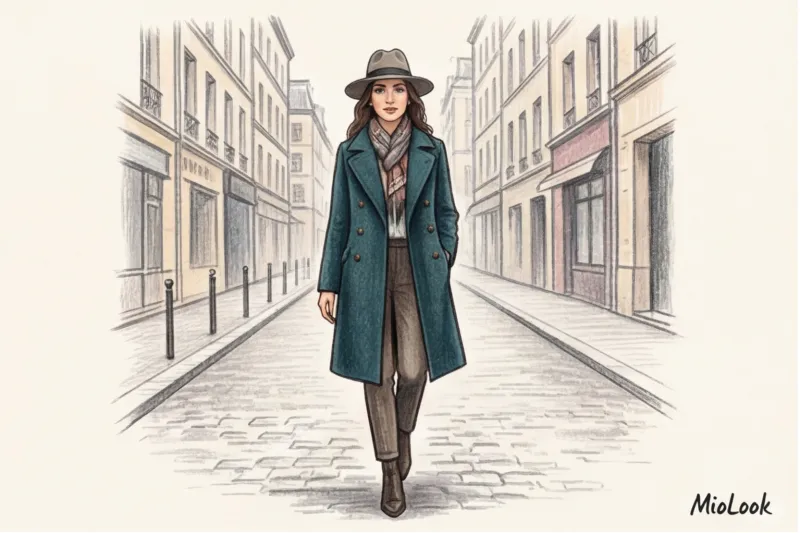
The off-season is the time when your wardrobe demands maximum sophistication. Remember those scenes from old European films where the heroine emerges from a café into a drizzling spring rain? She's not wearing a shapeless knit hat, but a perfect beret or flowing scarf. Spring and early fall are the time when we can finally afford to wear hats not for survival in subzero temperatures, but purely for style and aesthetics.
Berets: How to Avoid the "Schoolgirl" Effect
Let's start with the most insidious accessory. Why insidious? Because the line between Parisian chic and the tired schoolgirl look is incredibly thin. The main mistake I regularly see on the street is trying to pull the beret too far down on the forehead, completely covering the hairline and ears. This "schoolgirl" fit instantly kills the natural volume of the face and makes the look heavy.
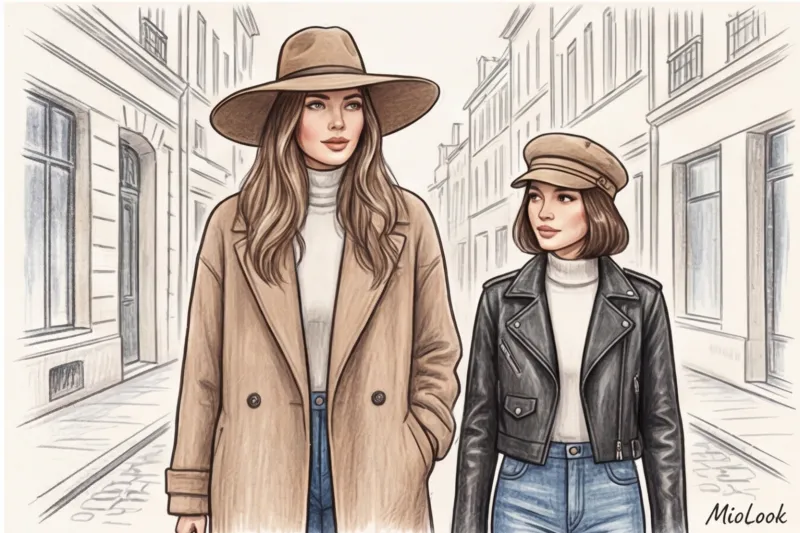
How to wear a beret the Parisian way? The secret lies in geometry: you need asymmetry and open forehead For a proper fit, the brim of the beret should be a couple of centimeters above the hairline. Slide it to one side at about a 45-degree angle. The goal is to create a slightly casual look. Always leave a few strands of hair loose around the face; it's the contrast between the crisp line of the felt or wool and the lively texture of the hair that creates the perfect effect. je ne sais quoi.
Silky bob in Old Money aesthetics
If a beret seems too bohemian, consider a silk bob. In recent seasons, the Old Money aesthetic has deservedly brought the classic silk scarf back into the everyday wardrobes of city dwellers.
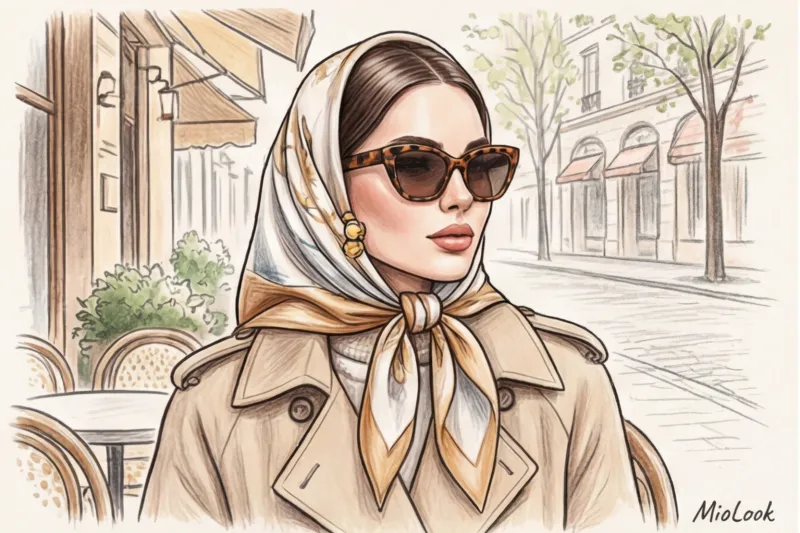
There's nothing more cinematic and yet practical for a windy spring day than this tried and true formula: loose beige trench coat + silk bob tied under the chin + chunky sunglasses This styling trick not only protects your hair from humidity but also instantly elevates the overall look. Important: to prevent the silk from slipping through your hair, secure it with a pair of bobby pins at the nape of your neck. A high-quality basic scarf with a hand-rolled edge can be found both in luxury houses (from 350 € on average) and in premium lines of mid-segment brands in the 50–80 € range.
Felt hats: an investment in status and a test of quality
Now let's move on to the heavy artillery of elegance—felt hats. A classic fedora with a medium brim or a more compact trilby are more than just a one-season purchase; they're a true investment in your personal image.
Many women are afraid of hats, believing they look too theatrical. My professional advice: to counteract this pretentiousness, never wear a formal fedora with overly classic, buttoned-up garments. Pair it with a relaxed cashmere sweater, an oversized leather bomber jacket, or a suede jacket.
Here, it's important for me to turn on the strictest criticism mode: cheap felt always gives itself away and ruins the entire look. According to the standards of legendary Italian hat makers (such as the famous factories in Alessandria), genuine, high-quality felt made from rabbit or beaver down has a unique shape memory.
When purchasing, be sure to check crown stiffness test Gently squeeze the material between two fingers: a good hat should spring back softly under your hand and bounce back instantly. If the felt is stiff and feels hard to the touch, or, conversely, easily wrinkles, leaving creases like cheap cardboard, return it to the shelf immediately. A quality basic fedora that will last for decades will cost around €150–€250, and it's a completely worthwhile investment.
If you're unsure whether a hat or a bright scarf will fit into your current wardrobe, don't rush into a decision. Browse your spring coats and trench coats in MioLook image visualization function Artificial intelligence will help you see in advance how harmoniously a new crown shape or bob print will pair with your usual silhouettes.
Try MioLook
for free
Start creating perfect images with the help of artificial intelligence
Get access — €0.99 onceSummer Heat: How to Choose Headwear for the City and Resort
According to the World Health Organization, when the UV index exceeds 3, our skin requires active protection. But let's face it: we don't reapply SPF cream every two hours, as dermatological guidelines dictate. At this point, a summer hat ceases to be just a pretty accessory and becomes a medical necessity.
Research in aesthetic dermatology (2023) proves that hats with brims of at least 7 cm block up to 70% of UV rays reaching the upper third of the face and neck. This is your most reliable physical barrier against photoaging and unwanted pigmentation.
However, not every straw hat is a long-term investment. Every summer, I see the same thing: girls impulsively buy cellulose (essentially compressed paper) hats from mass-market stores for €15–20. Yes, they look impressive in the display case, but the first light rain or careless packing in a suitcase turns such a hat into a shapeless lump. If you really think about it, How to choose a hat For several seasons to come, look for 100% raffia on the label.
The fibers from the leaves of the Raphia farinifera palm tree possess remarkable elasticity. A high-quality raffia hat (in the range of €80–€150) will survive any journey in the bottom of your luggage. Simply steam it upon arrival, and it will instantly regain its original shape.
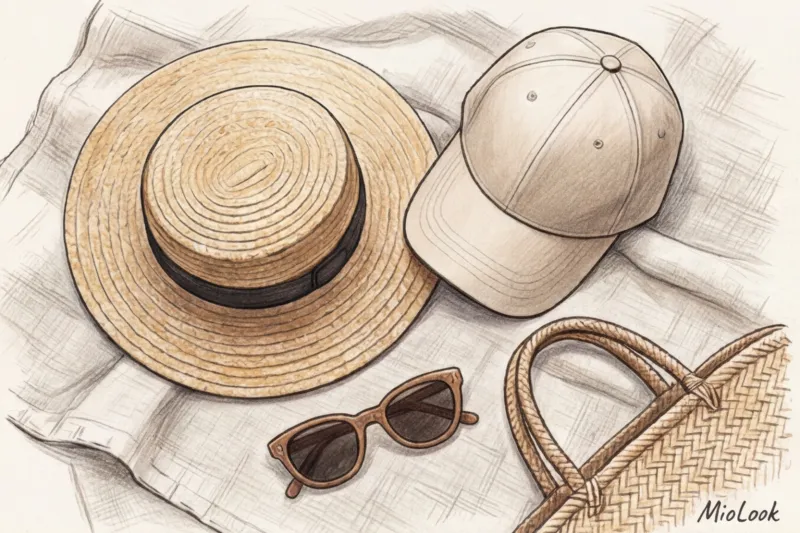
Now let's look at style. Summer hats are strictly divided into relaxed resort styles and put-together city styles. Straw boaters, Panama hats, and fedoras all carry completely different visual codes:
- Boater: A boater with a flat, cylindrical crown and a straight, stiff brim. It's the perfect choice for the concrete jungle. Thanks to its strict geometry, the boater pairs beautifully with three-piece linen suits and graphic dresses.
- Fedora: A classic with distinctive dents on the crown. It adds a touch of masculinity and daring to the look, pairing perfectly with oversized, loose-fitting white shirts and Bermuda shorts.
- Panama: We're talking about the traditional Ecuadorian headdress made of toquilla straw. It's the most flexible and breathable material, but in the city it often looks too casual. To counteract this "beachy" vibe, pair the Panama hat with decidedly urban pieces—for example, a thick safari dress or palazzo pants.
But what about those who find straw too romantic? For a fast-paced everyday life, there's nothing better than the aesthetics of sporty chic. Baseball caps and flat caps have long since transcended the confines of running tracks and tennis courts.
My favorite and absolutely foolproof formula that I put together for my clients: "Basic baseball cap + structured jacket + minimalist top + loafers" The secret to this technique lies in the contrast of textures and meanings. A tailored jacket (especially a straight men's cut) elevates the silhouette and sets a work-ready tone, while a cap instantly counters any unnecessary pretentiousness, making the look lively and ironic. The main rule is to choose caps made of thick cotton twill in deep shades without large, flashy slogans.
To avoid wasting precious minutes in the morning trying to find the perfect balance between formal linen and sporty cotton, take photos of a few successful outfits beforehand. Save these formulas in the app. MioLook , you'll create your own personal capsule cheat sheet: just a couple of taps on your smartphone, and your flawless look for a hot day in the city is ready.
Business dress code: is headwear appropriate for an expert?
According to international protocol standards, the line between elegance and a gross violation of business etiquette is incredibly thin. In my corporate style master classes, the question of How to choose a hat For the business community, this always sparks heated debate. Let's get this straight.
The classic Debrett's etiquette guide clearly divides women's headwear into utilitarian and decorative. If your voluminous wool hat serves solely to protect you from the cold, you must remove it as soon as you step into an office, restaurant, or conference room. But if we're talking about an architectural part of an ensemble—for example, a stiff pillbox hat, a neat fedora, or an intricately tied silk scarf—the rules change. Such an accessory is considered jewelry, and protocol allows a woman to wear it during daytime business meetings or formal indoor events.
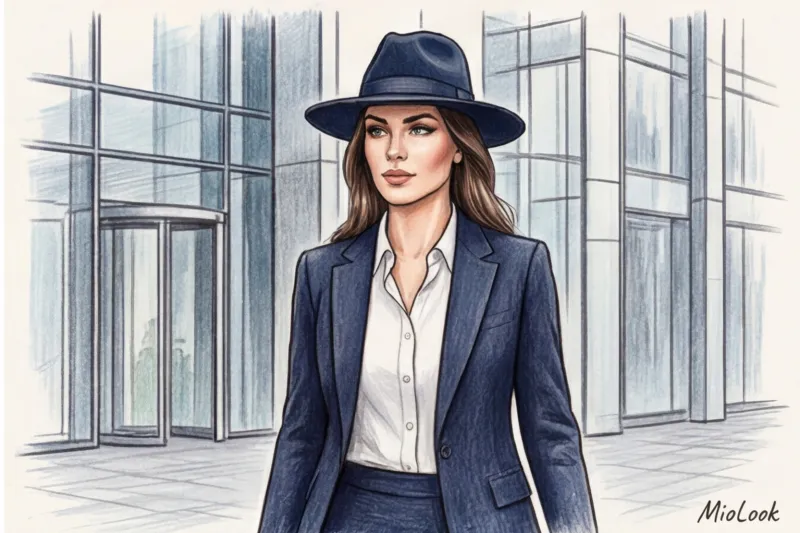
When it comes to outerwear, pairing it with a formal business coat or suit is unacceptable. Spoiler alert: a knit beanie with a pom-pom is a total no-no for anyone building a serious personal brand. Such details instantly devalue the cachet of cashmere or the perfect cut of your shoulders. Opt for a simple, tightly knit, logo-free paddle beanie or a structured hat. The budget for the right business accessory typically ranges from €100–€250, as the material is crucial—100% cashmere, smooth merino, or thick rabbit felt.
Your ideal image
it begins Here
Join thousands of users who look flawless every day with MioLook.
Get access — €0.99 onceDressing for public appearances outdoors is a separate challenge. When preparing top managers for winter television interviews, I always consider how texture plays on camera. To look classy, avoid fluffy mohair and shapeless snoods: the camera will visually blur the contours of your head and make your look untidy. Your choice is a tight-fitting cashmere hat in deep shades (navy, graphite, camel) or a medium-brimmed hat. The main secret: make sure the brim doesn't cast a deep shadow over your eyes in daylight, otherwise the viewer won't see your gaze. To assess how your ensemble will look in advance, I recommend putting together a capsule collection of outerwear and accessories. MioLook — the smart wardrobe function will clearly show you the harmony of your proportions even before going out to the press.
A practical checklist: 5 steps to choosing a hat in a store
According to the analytical agency Retail Insights (2024), hats consistently rank among the top three accessories for the percentage of "blind" purchases—items we buy impulsively and then never wear. The scenario is always the same: we run into a boutique, grab a style we like, glance in a small table mirror, and head to the checkout. Then we're disappointed that the purchase makes us look older or disfigured. As a practicing stylist, I completely break this pattern during shopping tours. Here's my strict algorithm that will once and for all solve the problem of choosing a hat and save you from wasted money.
Step 1: Correct context. Never go shopping in a thin cardigan if you're looking for a winter base layer. Wear the outerwear you plan to layer with it. Your silhouette changes depending on your layers: a neat cashmere hat that looks perfect with a lightweight sweater will make your head look disproportionately small when paired with an oversized puffer jacket.
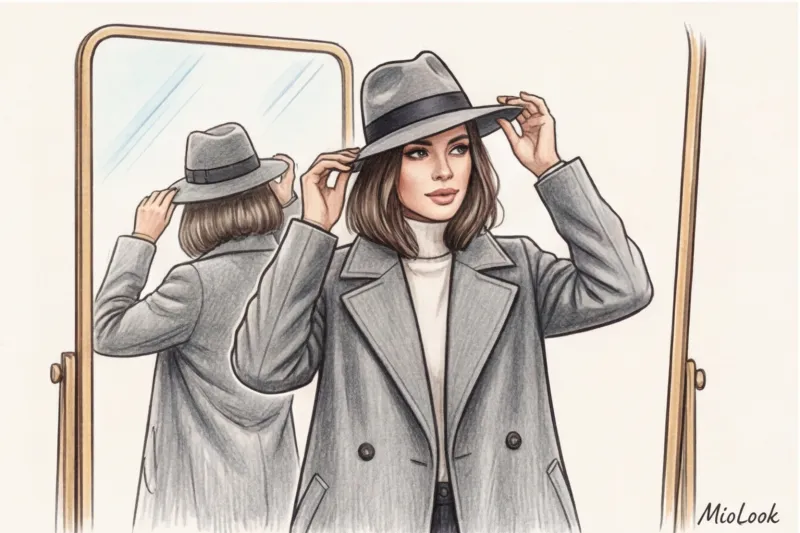
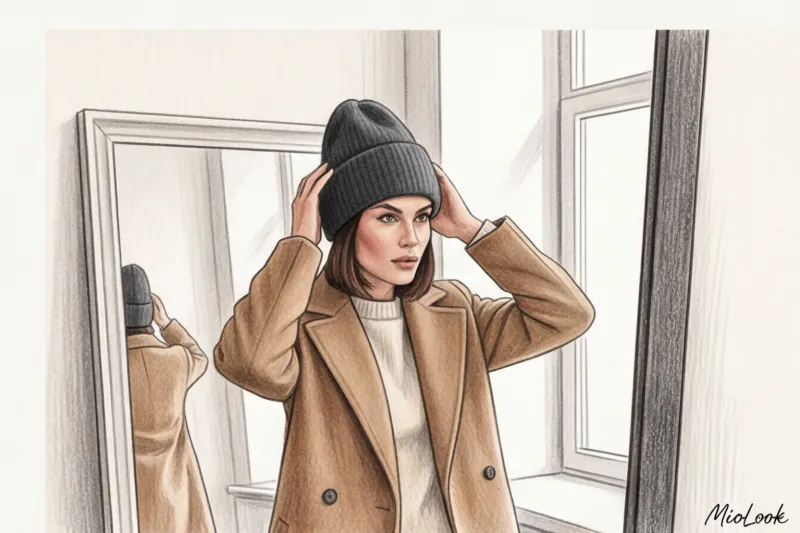
Step 2: Scale and full-length mirror. The worst thing you can do is judge yourself by your collarbone. Put on the accessory, button up your coat or jacket, and be sure to take a few steps back. After assessing the overall look, remove the outerwear to check its proportions against your full-length figure (use a full-length mirror). The accessory shouldn't appear too bulky for your basic silhouette when you remove the voluminous jacket indoors.
Step 3: Hair architecture. In fitting rooms, I regularly see the same mistake: women pull on a hat or cap, automatically tucking all their hair behind their ears. This instantly creates the infamous "bald spot effect" and rounds out the cheeks. Correct your hairstyle immediately: always let strands of hair out near your face, and don't tuck your hair behind your ears under the hat. Hair acts as a buffer, softening the harsh contrast between the edge of the fabric and your skin. Even if you have an ultra-short haircut, texture your bangs and sideburns.
Step 4: Daylight. Lighting in shopping malls often casts an aggressive yellow or deadly white spectrum. Color testing should be ruthless: put on the item and approach a display case or step into a foyer with natural light. Apply it to your face in daylight—if your skin turns gray, shadows appear under your eyes, or your nasolabial folds appear deeper, you're not looking for the right shade. Look for your undertone: some people need a warm camel, while others prefer a cool taupe.
Step 5: Physiological comfort. Leave your chosen hat on your head and walk around the room for exactly two minutes. Checking the fit is a matter of your health. If a red mark remains on your forehead after two minutes, the size is too small and will cause headaches and poor circulation. Don't expect the crown of a felt hat or the tight knit of a cap to "stretch out." The average price for a quality hat ranges from €80 to €350, which is too expensive for something that causes physical pain.
To avoid getting lost in the sea of options, I always advise clients to take photos of their successful finds right in the fitting room (always full-length) and upload the shots to MioLook app At home, over a cup of coffee, you can visually try on a new hat or hood with different jackets from your virtual wardrobe and make an informed decision.
To conclude our long discussion about hats, I want to emphasize one key point: there are no "wrong faces." What's wrong is the wrong scale, the wrong shade, or a hasty fitting. Treat this accessory not as a necessary protection from the elements, but as a luxurious tool of self-expression that puts the final, confident finishing touch to your look.
Guide Chapters
How to Choose a Summer Hat: Tips from a Style Expert
Tired of buying hats that end up collecting dust on the shelf? Let's debunk the main myths about choosing summer headwear and learn how to find the perfect accessory.
Winter Hats for Women Over 40: Styling Tips
Think hats don't suit you? We'll break down common styling mistakes and help you choose the perfect winter hat to brighten your face.
What to wear with a women's baseball cap in spring and fall
A baseball cap isn't just a lazy morning cover-up, it's a powerful tool for sporty-chic style. We'll explore how to incorporate a cap into everyday urban outfits.
What to wear with a hood: introducing the main winter trend
Forget about ruining your hairstyle with a hat! We're breaking down the biggest winter trend: the difference between a bonnet and a balaclava and how to stylishly incorporate them into your everyday looks.
How to Wear a Beret: Stylish Ideas
Forget movie cliches! We'll explore modern formulas and styling techniques that will help you stylishly incorporate a beret into any basic wardrobe.
How to keep your hair looking its best under a hat: secrets to volume
We reveal the secrets of runway stylists: how to maintain perfect hair volume even after a thick winter hat. Learn how to create a bouncy, spring-like hairstyle.
How to choose the color of a hat: advice from a colorist
Do you buy dozens of hats but still find yourself wearing a hood? Learn how to choose the perfect shade that will refresh your complexion without accentuating fatigue.
Stylish hats for short hair: fall-winter
A short haircut doesn't mean you have to forgo stylish accessories in the cold. A personal stylist's advice will help you find the perfect headwear.
How to Wear a Hat with Bangs: Stylists' Tips
Worried about ruining your hairstyle with a hat? Discover stylist secrets to help you maintain perfect bangs under any winter hat.
Who suits a beanie hat and how to wear it correctly
A beanie hat is a universal accessory that suits absolutely every woman. The key is to know the secrets to choosing the right volume and color.
The Perfect Hat for a Fur Coat: Trends and Anti-Trends
A tone-on-tone fur hat is a major anti-trend that will add 15 years to your age. Find out how stylists pair headwear with luxurious fur coats and faux fur.
What hat to wear with a down jacket: stylist tips
We'll discuss the main mistakes made when choosing winter accessories with a stylist. Learn how to pair a hat with a down jacket and maintain the perfect proportions.
Stylish Headwear for a Coat: Stylist Tips
An ill-fitting hat can ruin even the most luxurious coat. We'll tell you how to choose the right accessory to look stylish and classy.
How to choose a hat for your face shape: stylist tips
Convinced that hats just don't suit you? A personal stylist debunks this myth and shares her secrets for choosing the perfect headwear.
Trying on hats online: how to choose a headdress from a photo
Why hats often don't sell in stores, and how technology is solving this problem. Learn the secrets of choosing the perfect headwear from a photo.