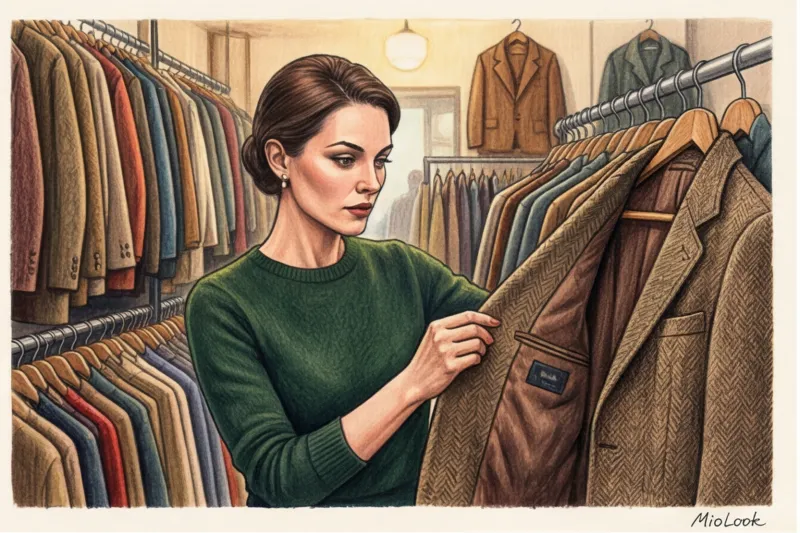
Over the past three years, I've analyzed over 500 of my clients' secondhand purchases when creating personalized capsule wardrobes. Do you know what mistake I make 80% of the time? Women come to vintage stores for the basics—plain turtlenecks, T-shirts, and skinny jeans. And that's the worst strategy possible.
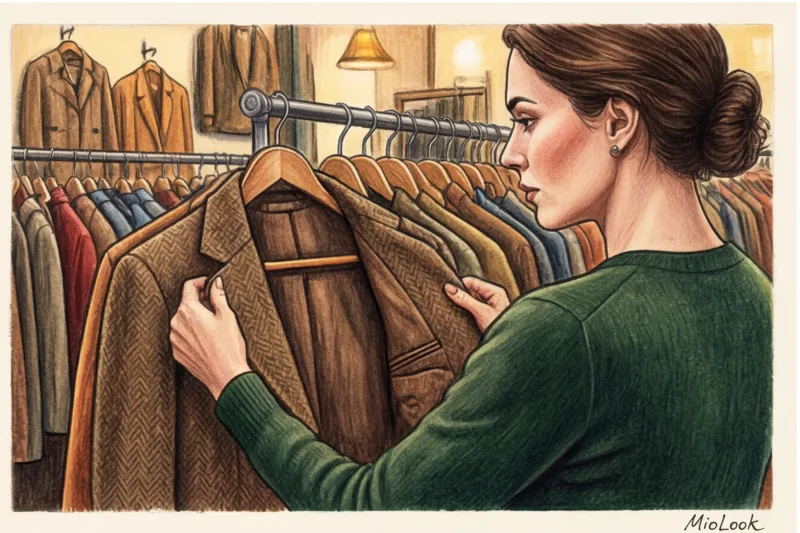
We have already discussed the correct search algorithms in more detail in our The complete guide to second-hand shopping But today I want to put aesthetics aside and look at your wardrobe through the eyes of a chemical engineer. We'll explore the degradation of elastane, the breakdown of shoe glue, and discover why modern mass-market resale items are physically "dead."
Intelligent Resale: Why We're No Longer Looking for Cheapness
According to McKinsey's 2024 data, the global resale market is growing three times faster than traditional retail. Second-hand clothing has finally ceased to be a "poor man's store" and has become a secret weapon for top managers and stylists. This isn't due to cost savings, but to the catastrophic decline in the quality of modern clothing.
Textile industry research shows that since the early 2000s, thread twist standards for mass-market products have fallen by almost half. This is why a modern €60 sweater starts to pill after the third wash—its fibers are simply not twisted tightly enough.
"When you buy vintage '90s clothing, you're getting a quality that's now only available in the premium segment, priced at over $500 per item. The architecture of old patterns was built for decades of wear, not just one season."
Digitizing clients' capsules in an app MioLook I always see one pattern: it is precisely carefully selected vintage finds that become the true DNA of personal style, around which the entire modern base is built.
Green Light: What to Look for in Vintage Stores
The golden rule of resale is: buy what is unreasonably expensive to produce today You should be interested in complex designs, high-density weaving, and expensive fittings like Riri Swiss zippers or natural horn buttons.
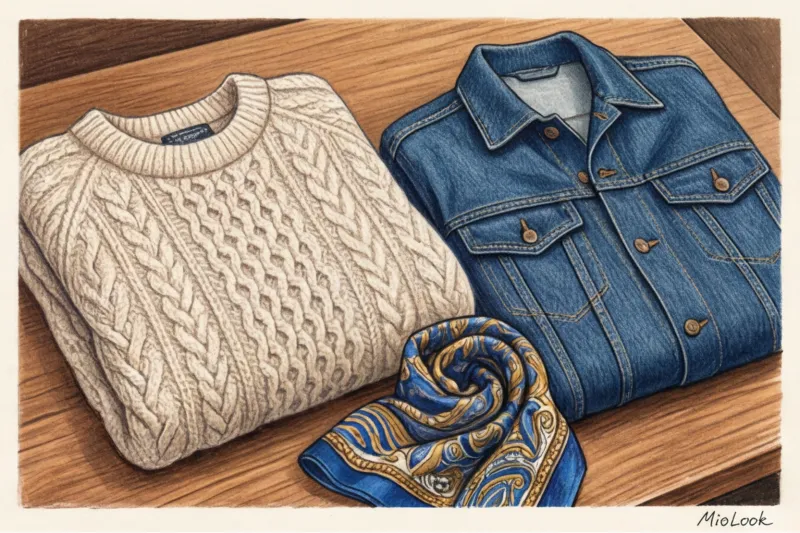
Outerwear and jackets of complex cut
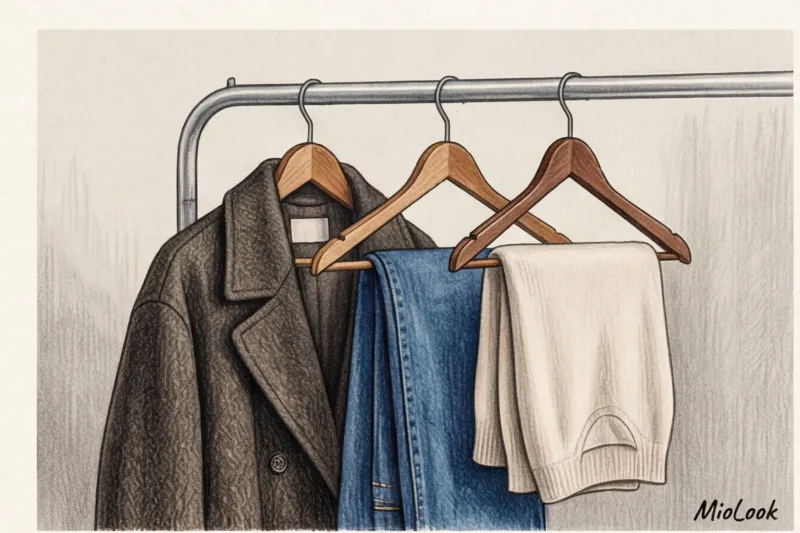
Heavy gabardine trench coats, 100% wool coats without acrylic, and tweed jackets are the absolute pinnacle of secondhand shopping. Pay attention to the shoulder construction. Men's jackets from the 80s and 90s featured horsehair linings and thick shoulder pads that hold their shape for decades. Modern fast fashion uses cheap interlining that bubbles after the first dry cleaning.
Old-school denim and natural silk
If you're going for jeans, then only choose the iconic Levi's 501s, made from 100% cotton and at least 14 ounces. They shouldn't have any stretch. This denim ages beautifully, fits your body shape, and never stretches out at the knees.
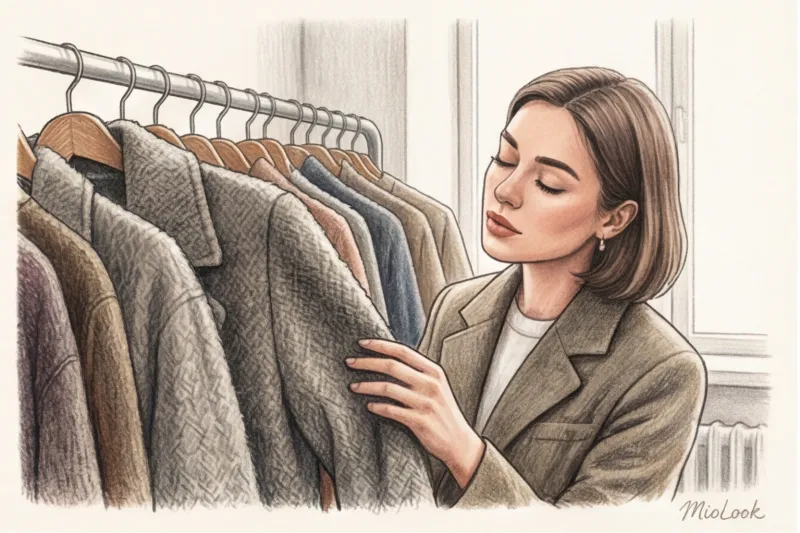
When it comes to silk blouses, learn to distinguish between genuine vintage silk and polyester by feel. Genuine silk quickly absorbs body temperature and feels warm in your hands, while polyester always feels cool and glassy.
Your perfect look starts here
Join thousands of users who look flawless every day with MioLook. A smart AI stylist will help you incorporate vintage finds into your wardrobe.
Get access — €0.99 onceRed flag: what should you never buy at a second-hand store under any circumstances?
Let's put aside the platitudes about other people's energy and analyze this list of taboos based solely on the laws of physics and the chemistry of materials. Here's a list of things you should avoid buying at a second-hand store, even if the item looks new and is selling for next to nothing.
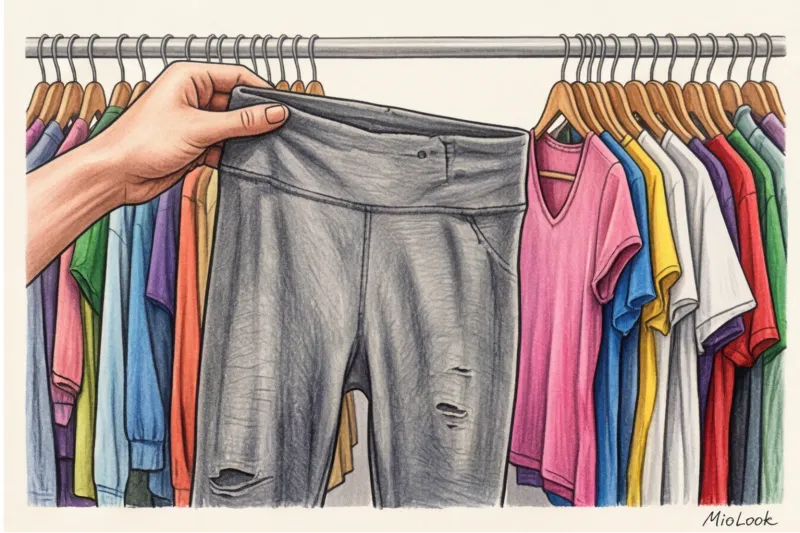
Items containing elastane and spandex (skinny, sportswear)
It's counterintuitive, but basic turtlenecks, leggings, and stretch jeans are the worst investments in resale. Elastane (also known as spandex or lycra) is a polyurethane polymer. It's susceptible to chemical degradation. According to textile manufacturers, elastane loses up to 40% of its elastic properties after 3-4 years. even without wearing , simply from contact with oxygen.
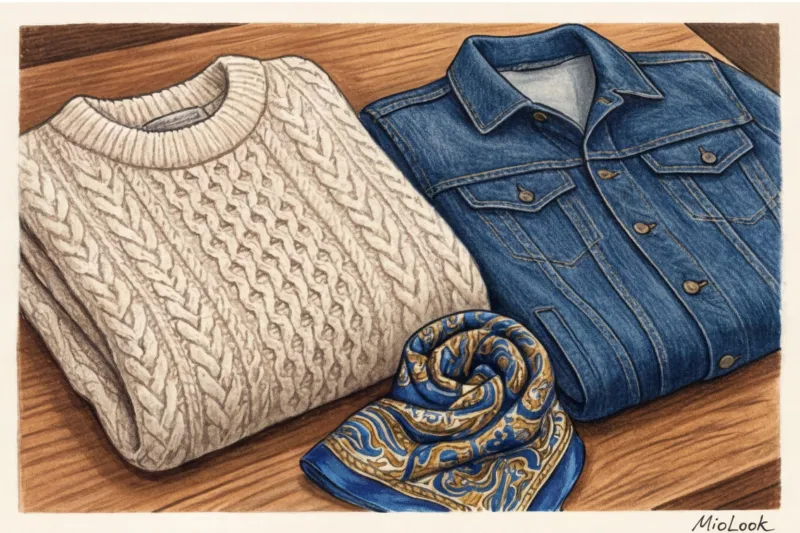
And if the item has been worn, washed in hot water, or exposed to human sweat (which is acidic), the polymer inside the fabric is already dead. Used skinny jeans may look fine on a hanger, but after two weeks of wear, they'll be a shapeless sack.
Fresh mass-market (Zara, H&M of the last 3-5 years)
It's a surprising paradox: a no-name brand from 1998 will last longer than a Zara blouse from the 2022 collection. Today, 65% of mass-market clothing is made of low-quality synthetics. Why does modern fast fashion even end up in second-hand stores? Most often, it's because the item has already lost its marketability: micro-pilling, crooked side seams, faded dye. Don't waste your money on this.
Underwear, swimwear and headwear
Beyond the obvious degradation of the elastic, there's a serious medical concern. Data from industrial dry cleaners confirms that standard formalin steam and gas treatments, used on second-hand items, kill dust mites and most bacteria, but don't always eliminate the spores of specific fungi (especially on swimsuit gussets).
Furthermore, polyurethane foam bra cups are permanently deformed to fit the original wearer's anatomy. You'll never get a perfect fit.
Gray area: items that require a stylist's expertise before purchase
There are certain items that can be the crown jewel of your collection, or a source of disappointment. Here, you need to realistically assess the cost of potential repairs.
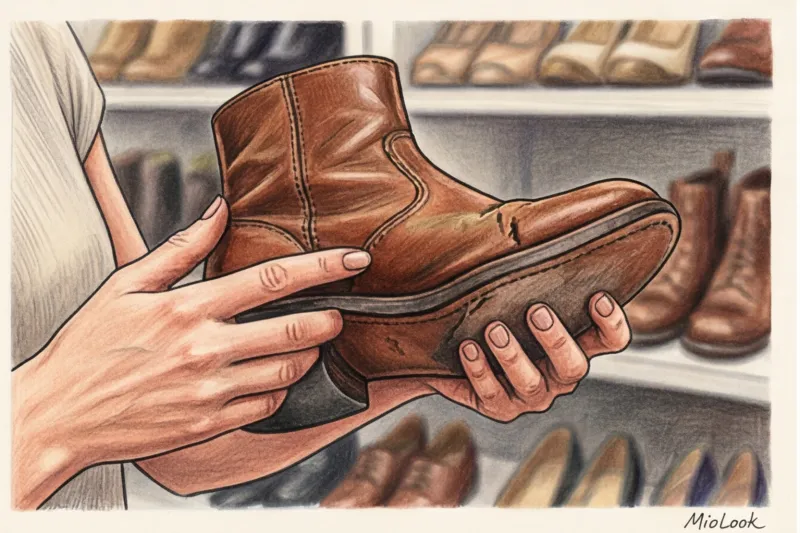
Vintage Shoes and Bags: The Dried Glue Trap
A case from my experience: a year ago, a client happily brought in "perfect" vintage Prada loafers for 40 euros for a wardrobe review. An hour into our shopping mall walk, the soles literally crumbled into black dust right on the escalator.
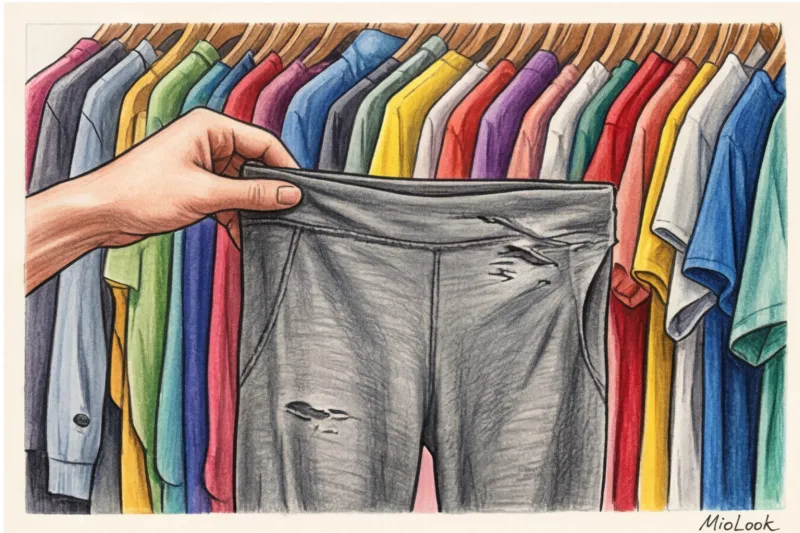
This phenomenon is called polyurethane hydrolysis. Moisture from the air penetrates the structure of the shoe glue and sole, breaking the chemical bonds. Visually, the shoe appears intact, but the material inside has already rotted.
Rules for buying vintage shoes: Buy only shoes and boots assembled using the Goodyear welt or Blake method (where the leather sole is sewn to the upper with thread). Ignore any glued sneakers or shoes with polyurethane wedges.
Clothes with defects: what can be saved and what can't
I always allow clients to buy luxurious wool coats with torn buttons or a torn lining at the seam - these can be repaired at the tailor's for next to nothing.
But there are defects that cannot be salvaged: a shiny elbow on a wool suit (the hair structure is damaged), a sweat-yellowing collar on silk (sweat has burned out the dye), and a ingrained, specific second-hand smell on synthetics (natural fabrics are easy to wash, polyester holds on to odor molecules tightly).
Ready to get started?
Try MioLook's free plan—no commitments required. Upload your items and let the AI create dozens of new outfits.
Get access — €0.99 onceA practicing stylist's checklist: how to inspect an item before the checkout
To avoid disappointment, take these four physical tests right in the store. It only takes one minute.
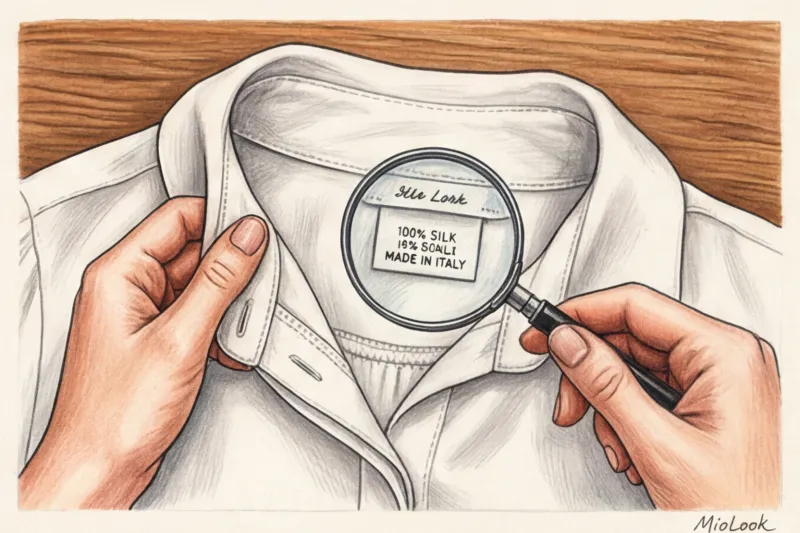
- Tensile test: Gently tug on the cuffs or collar of a knitted garment and release. If the fabric doesn't immediately return to its original shape, but instead begins to ripple, the garment is dead.
- Transmission test: Hold a wool sweater or cashmere scarf up to a bright lamp. Look for micro-tears in the fibers and thinned areas—these are moth marks that will turn into holes after the first wash.
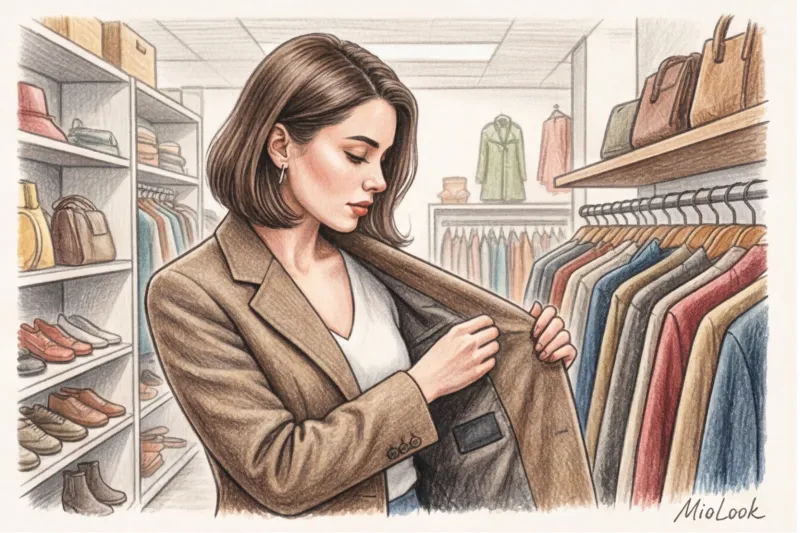
- Hardware test: Weigh the button in your palm. High-quality items from the 80s and 90s typically had buttons made of metal, mother-of-pearl, or horn (they're heavy and cool). A weightless plastic button on a vintage jacket means it's been altered, or the item was originally cheap.
- Checking the seams: Fold a T-shirt or dress exactly in half. If the side seam is slanted forward or back, the fabric was not cut along the grain (a typical sign of a cheaply made garment). After washing, such an item will become even more slanted.
Of course, this checklist won't save you if the item simply doesn't suit your coloring or body type. But it's guaranteed to save you from buying textile trash.
Results: Integrating Finds into a Modern Capsule Wardrobe
The biggest mistake beginners make is dressing head-to-toe in vintage. Unless you're working as a costume designer on a period film, use the rule of balance: no more than one clearly vintage item per look.
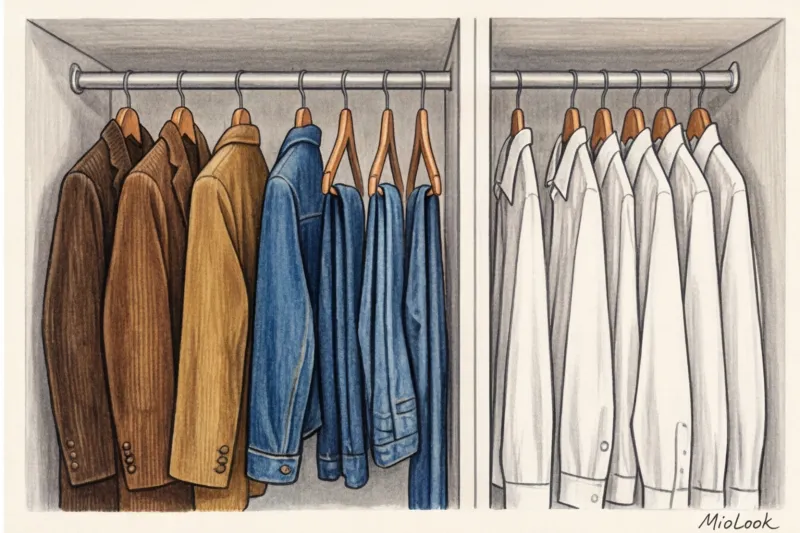
Wide-leg men's trousers from the '90s work perfectly with a fitted modern bodysuit and technical sneakers. A heavy, oversized tweed jacket is perfect over simple white T-shirts and trendy straight-leg jeans.
For this mix to work flawlessly, it needs to be controlled. Take a photo of your new find and upload it to MioLook and see how the algorithm suggests pairing it with your modern essentials. This visualization helps you understand whether this Yves Saint Laurent jacket truly fits into your life, or whether it's destined to hang in your closet like a museum piece.
Mindful shopping isn't about chasing logos on dusty shelves. It's about a deep understanding of materials, the ability to read a piece's architecture, and knowing when to say a firm "no."