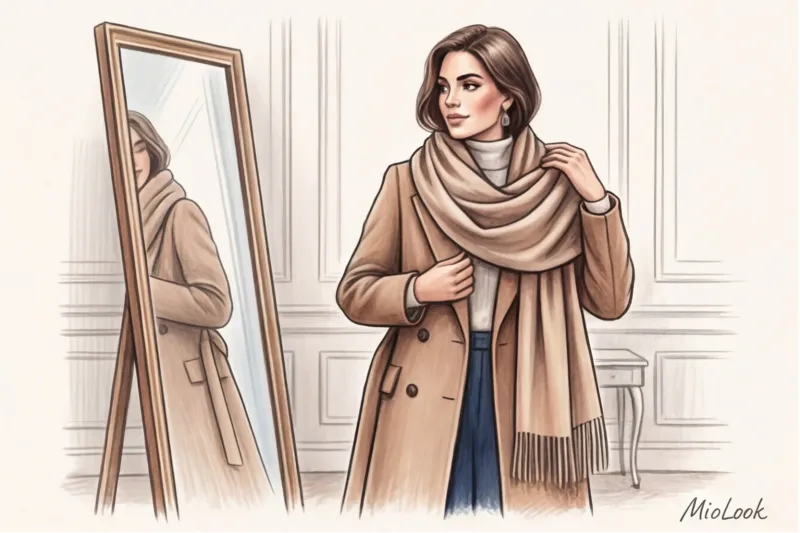
One day, a client—a top manager at a large corporation—came to me for a wardrobe review. She proudly pulled out a €500 designer jacket from its case, a spur-of-the-moment purchase at an outlet store. The problem was, it fit terribly: the thin fabric wrinkled treacherously at the sleeves, and the lapels didn't hold their shape at all. That same day, we found her an architectural blazer at COS for €90 that looked like a million bucks. Why is this happening?
Because the price tag doesn't guarantee status. It's not the brand that cheapens a product, but the flimsy texture, poor fit, and hidden structural defects. If you want to understand, which cheapens the image In fact, you need to learn to read the "anatomy" of things. We've covered the basic principles of style in more detail in our A complete guide to creating a status wardrobe in adulthood And today, as a practicing stylist, I'll show you 7 specific mistakes and traps of the mass market that mercilessly destroy your elegance.
Mistake 1: Flimsy textures and a lack of "architecture" (the main thing is that it cheapens the image)
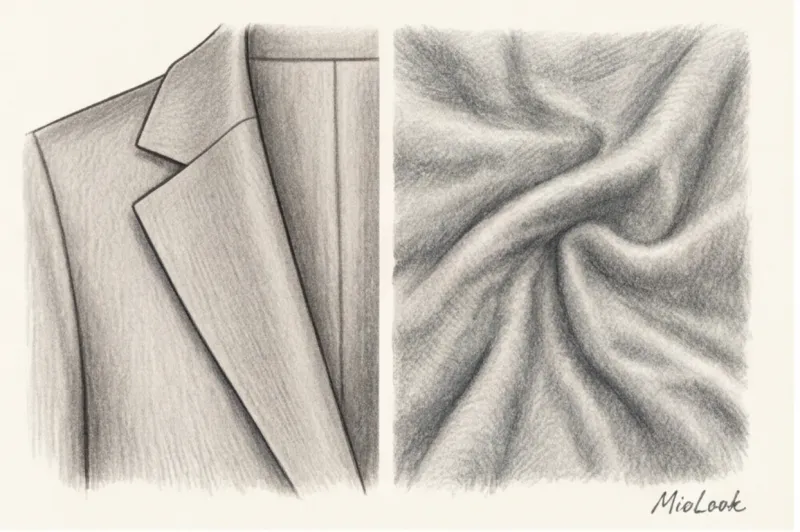
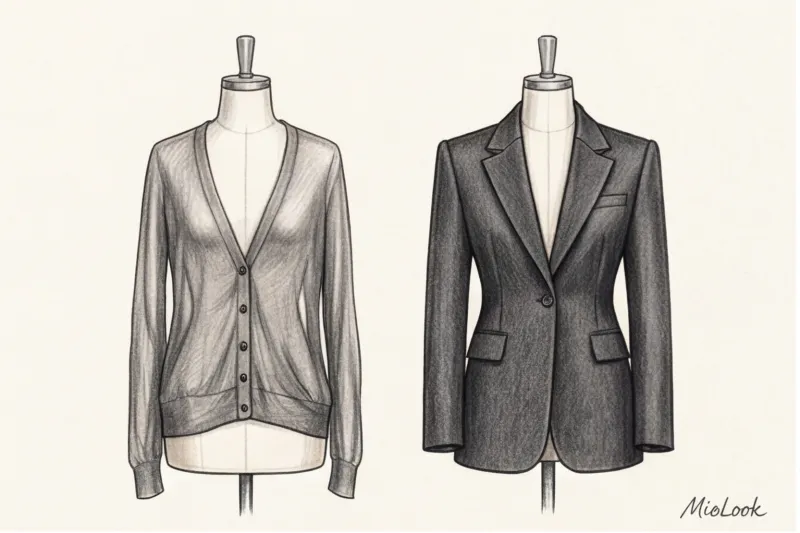
The difference between an expensive and a cheap item often comes down to one criterion: does the garment "lay" on the body or does it "hold" the silhouette? Thin viscose knitwear that clings to every fold and sags under its own weight is your worst enemy. It accentuates the slightest nuances of the figure and immediately betrays the low cost of production.
According to the analytical agency WGSN (in its 2024 report), "visual calm" has become a global trend in business and casual fashion. This means clean, uncluttered lines. To achieve this effect, you need a proper shoulder line and a high fabric density. The technical standard for high-end suits is a density of at least 250 g/m².
"An architectural object rebuilds your figure. A flimsy one merely takes the shape of your imperfections."
In my experience, when we replace clients' thin jackets with structured styles from the H&M Premium Quality or Massimo Dutti lines, their posture is visually straightened. Little life hack: Always check that the collar holds its shape when you lift it. If it falls, leave the item in the store.
Access to MioLook for €0.99 — one-time payment
A smart AI stylist will select the perfect look based on your wardrobe.
Get access — €0.99 onceMistake 2: Plastic hardware and shiny zippers
Have you ever noticed how shiny yellow zippers and overtly plastic "gold" buttons instantly betray a brand's skimping? Mass-market fashion always skimps on hardware—it's a law of production.
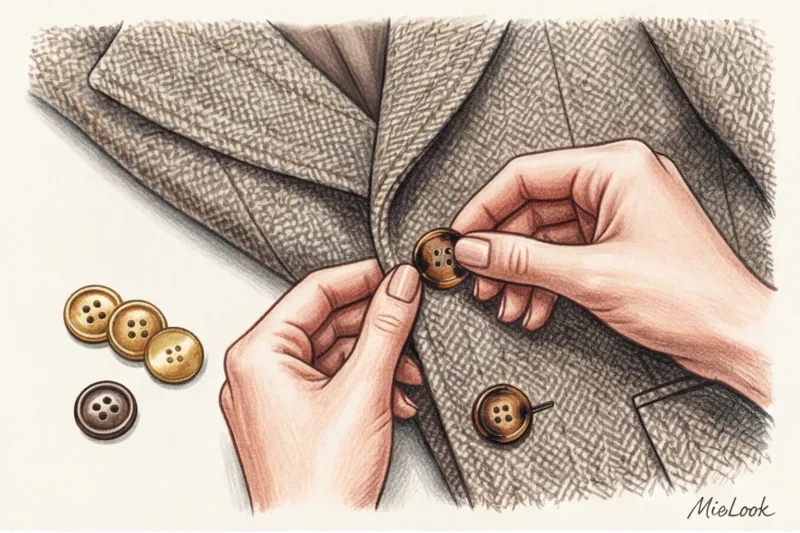
I often use this trick: before my clients' important business trips, we buy a perfectly tailored jacket from Zara for €40-€50 and take it to a tailor. There, we cut off the plastic monstrosity and sew on high-quality buttons (horn, mother-of-pearl, fabric-covered, or matte metal) for €10. Visually, the cost of the garment triples. The fine hardware isn't flashy; it subtly complements the texture of the fabric.
But there is a fair limitation here: This advice won't work if the jacket has crooked seams and a cheap, squeaky 100% polyester lining. Hardware can only save a garment with good basic architecture.
Mistake 3: Violating proportions and “shortening” the silhouette
The mathematics of style doesn't forgive sloppiness. The wrong length of wide-leg pants disrupts the geometry of the entire body. If palazzo pants end at the ankle, they visually chop off the leg and make you look squat. Wide-leg pants should cover your shoes, leaving exactly 1–1.5 centimeters from the floor.
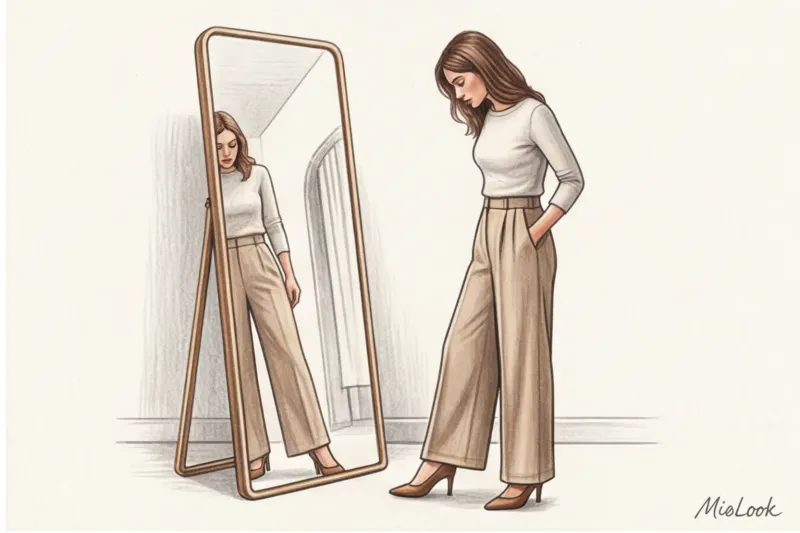
Did you know that wearing the same wide-leg trousers with both flat sneakers and heels is impossible? The difference in heel height will ruin the perfect hem. You'll have to choose: either pair the trousers with loafers/sneakers or with stilettos. There's no such thing as a one-size-fits-all approach.
Contrasting horizontal lines (for example, a white belt on black pants with a white shirt) cut the figure in half. To avoid visual chaos, use monochrome combinations or the golden ratio (a top-to-bottom ratio of 1:2 or 1:3, rather than 1:1).
Mistake 4: Inappropriate shine (satin and lurex) in everyday wardrobe
My counterintuitive advice, which often surprises new clients, is that I strictly forbid cheap, shiny satin blouses, but I absolutely allow high-quality matte crepe polyester. Why? Because cheap shine is a disaster for daylight.
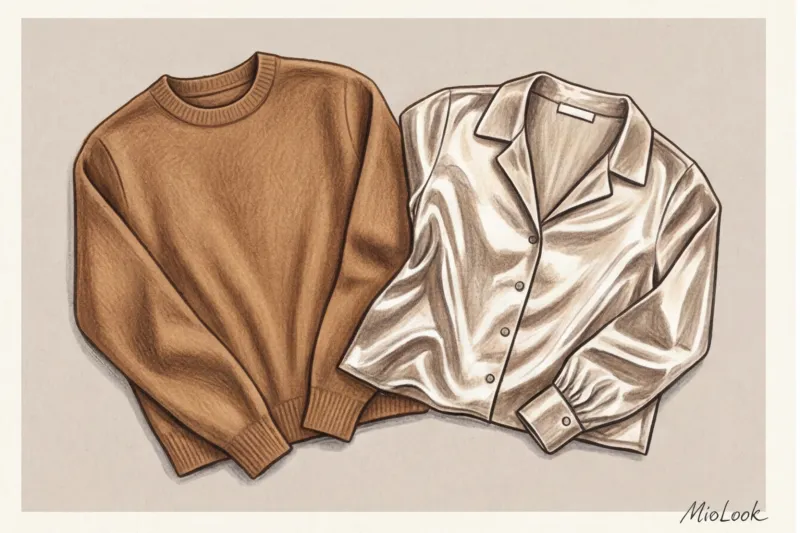
Cheap satin creates creases with just a touch of a fingernail, becomes staticky, and creates the "you're wearing a nightgown" effect. Matte finishes always absorb light, no matter the circumstances, and look more expensive than shiny ones.
If you want to incorporate complex silk or satin textures into your daytime look, be sure to tone down their aggressiveness. Pair a silk skirt not with an equally shiny blouse, but with a voluminous matte cashmere sweater or a chunky wool.
Your perfect look starts here
Join thousands of users who look flawless every day with MioLook. Digitize your wardrobe in minutes.
Get access — €0.99 onceMistake 5: Treacherous underwear lines
Remember this moment: a luxurious, light-colored pantsuit, perfectly coiffed hair... and then the seams of your panties or the textured lace underneath your thin turtleneck are clearly visible. It instantly ruins the magic.
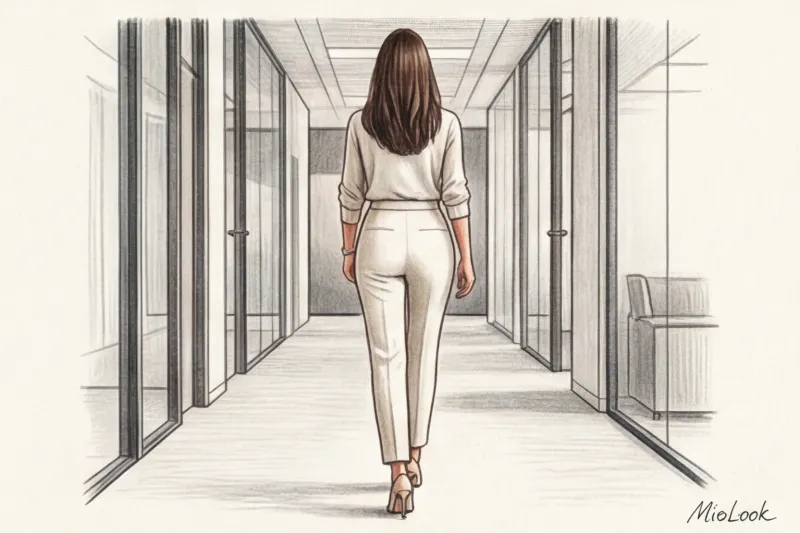
We recently saved an executive client's look before an important conference by simply changing her lingerie. She'd invested hundreds of euros in silk shirts, but was wearing white lace bras underneath. Remember: white underwear under a white shirt looks neon. This is a major business dress code mistake.
Every self-respecting woman should have a basic set of smooth, seamless, nude-colored underwear (matched to her skin tone, not just some abstract "beige"). Seamless, laser-cut contours are the invisible foundation of your status.
Mistake 6: Ignoring care (pilling, creases, and pulled knees)
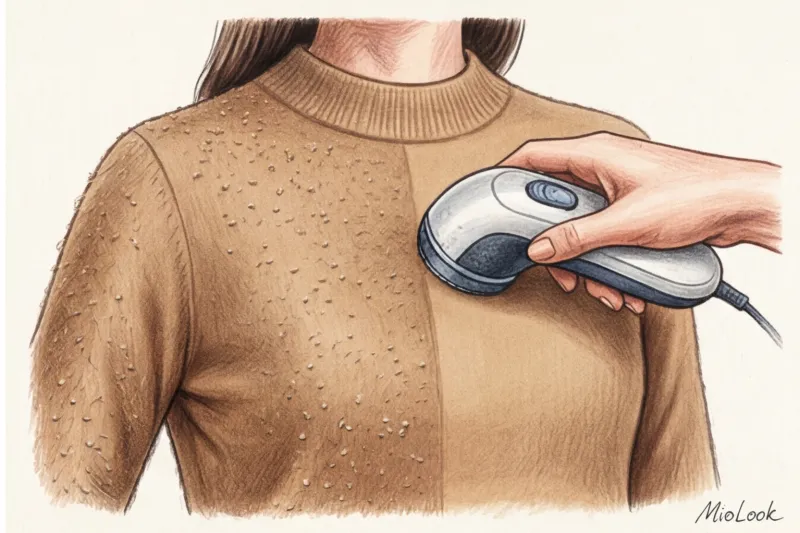
The psychology of perception is relentless: our brain interprets untidiness as "cheapness," regardless of whether the tag says Loro Piana or H&M. Pilling on a sweater, creases in trousers, and outstretched elbows kill any elegance.
It's important to know the technical "5% Elastane Rule." If you see 8-10% elastane or spandex on the tag of pants or knitwear, avoid the purchase. Exceeding the 5% threshold guarantees the garment will lose its shape, and telltale "bubble" will appear at the knees by mid-work. The ideal balance for the durability of wool or cotton suits is 2% to 4% elastane.
And one more thing: a €15 lint remover and a good home steamer are two of the most cost-effective investments in your wardrobe. Calculating the cost per wear of a quality, thick cardigan that's properly cared for is always more cost-effective than constantly buying cheap, disposable knitwear.
Error 7: Stylistic dissonance and “outdated” formulas
Many people mistakenly believe that if an item was bought at an expensive boutique ten years ago, it will retain its status forever. This is a myth. A current cut is always more important than the brand. A fitted, cropped shirt from the 2010s will ruin a modern, loose pantsuit, even if it's from Prada.
The second extreme is logomania. An abundance of obvious logos on bags, belts, and T-shirts betrays a person's insecurity about their social status. A truly expensive wardrobe speaks in a whisper: through the quality of the stitching, the purity of the color, and the perfect fit.
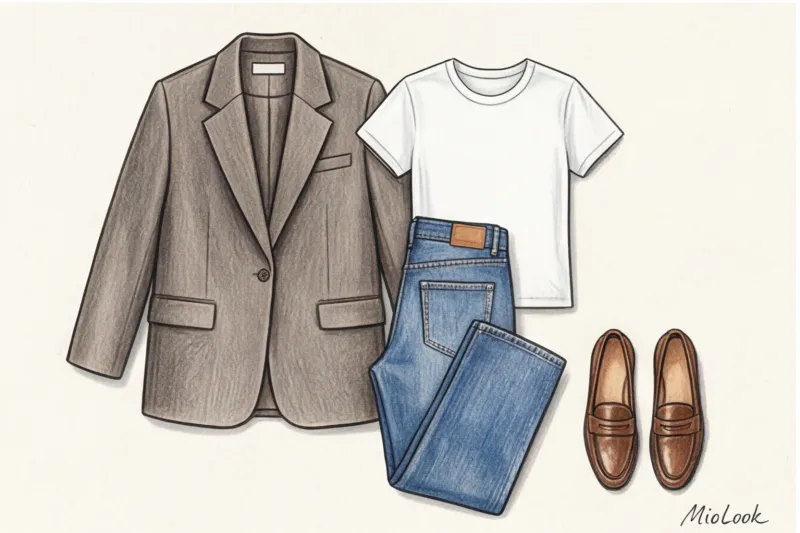
Create timeless looks. Straight-leg, heavyweight jeans with no fraying, a structured oversized jacket, and a high-quality white T-shirt of at least 180 g/m²—a basic outfit like this from COS or Uniqlo looks far more expensive than outdated designer pieces. If you find it difficult to combine basics yourself, you can Try the "smart wardrobe" feature in MioLook , which will help you create up-to-date formulas from your current items.
Checklist: What Definitely WON'T Cheapen Your Look (Smart Shopping Rules)
To avoid wasting money on things that don't last, I've put together a practical checklist for you. Use it to check every purchase right in the fitting room:
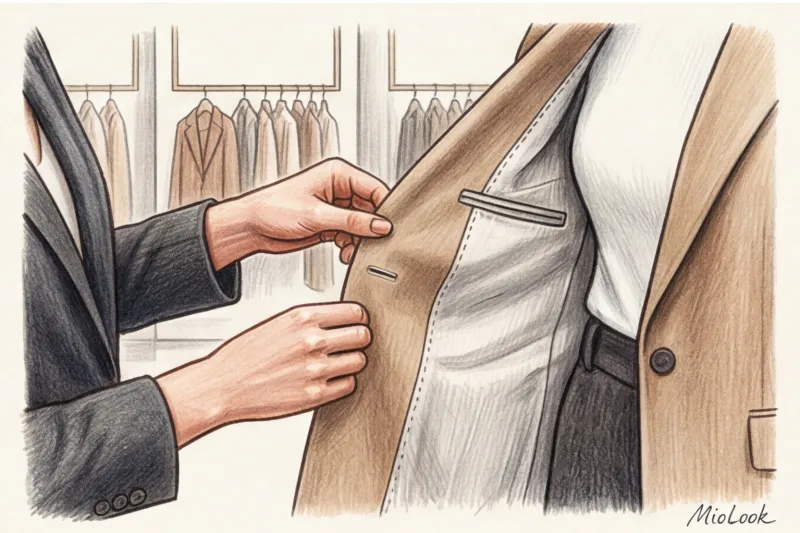
- Crease test. Squeeze the fabric tightly in your fist for 10 seconds and release. If it's still seriously wrinkled, leave it at the store. You don't want to look unkempt after 20 minutes in your office chair, do you?
- Inspection of the inside. Turn the item inside out. Are the stitches even? Are the edges finished (ideally with closed seams or a high-quality overlock)? A cheap item will always give away its crooked backside and loose threads.
- Composition analysis. Find a balance. 100% linen will wrinkle easily, while 100% polyester won't allow your skin to breathe. Blended fabrics (such as 70% wool, 30% polyester for durability) are an excellent choice for outerwear and trousers.
Ready to get started?
Try the MioLook free plan—no commitments required. Upload your items and get ready-made looks for every day.
Get access — €0.99 onceConclusion: Invest in quality, not quantity
To summarize, status in clothing isn't about zeros on the price tag. It's about impeccable fit, silhouette architecture, grooming, and mathematically precise proportions. You can dress exclusively in the premium segment of the mass market (with a budget of €60–€150 per item) and look impeccable if you avoid flimsy fabrics, shiny synthetics, and pay attention to your hardware.

This weekend, I urge you to take stock of your wardrobe. Open your closet and honestly sort your items according to the criteria we discussed above. Get rid of stretched knits and blouses with crooked seams. Keep only those pieces that enhance your status, not undermine it.