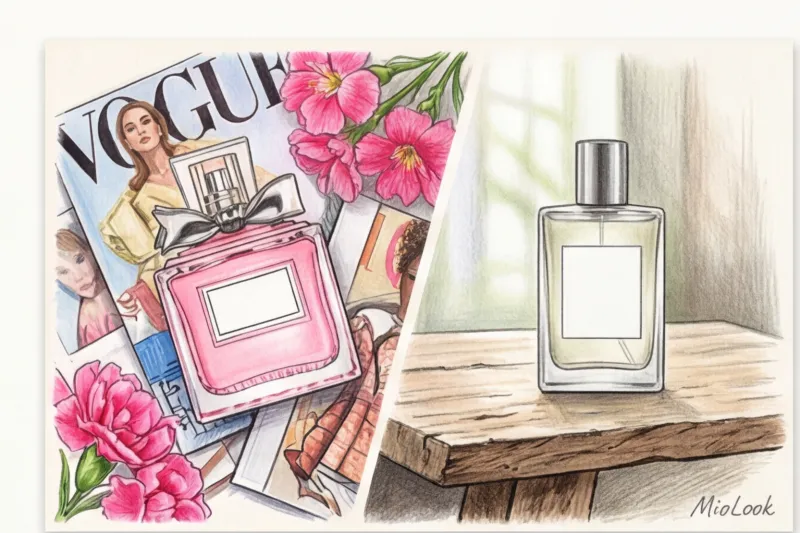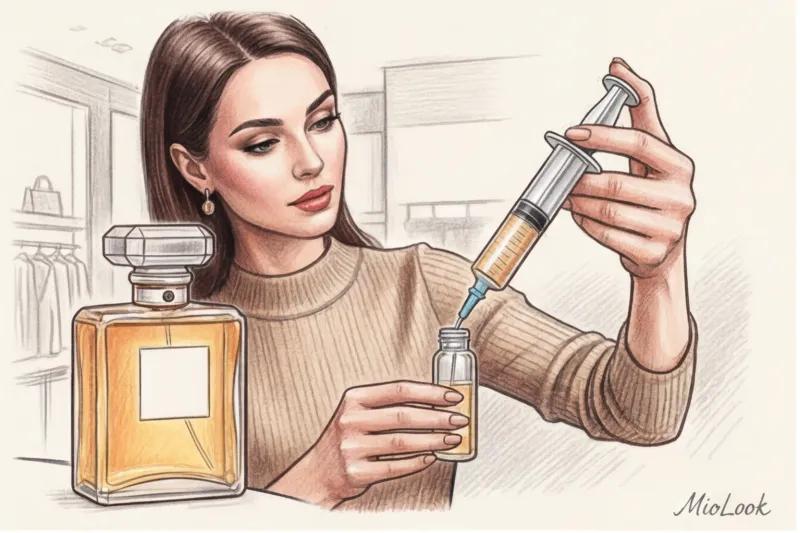
One of my clients, in a fit of inspiration, blind-bought a bottle of Baccarat Rouge 540 for 300 euros. On a paper blotter at the boutique, the scent seemed the epitome of luxury—burnt sugar, viscous resin, absolute status. But when she applied it to her hot skin before an important board meeting, the volatile compounds reacted with her individual pH. An hour later, she smelled like nothing but iodine and a sterile operating room. The 300-euro bottle was consigned to the far corner of her closet forever.
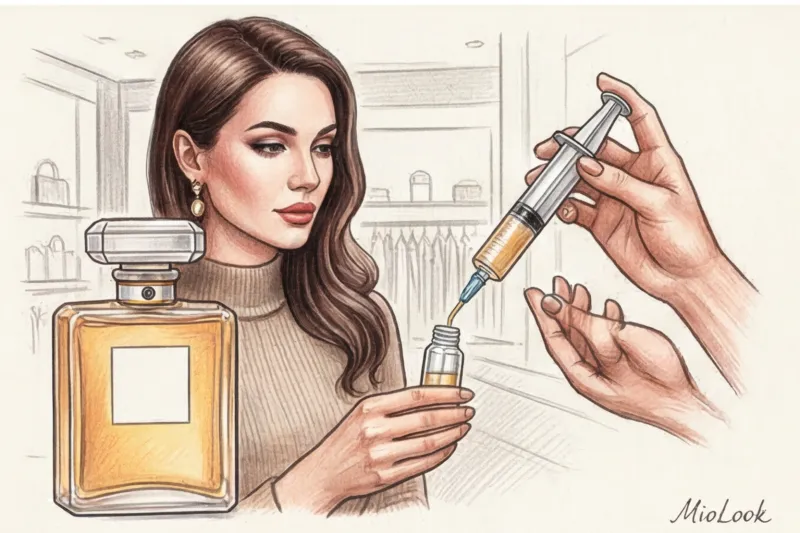
That's why when people ask me, What is perfume decanting? , I always answer: this isn't a way to "save for poverty." It's an intelligent tool for conscious consumption and risk management, used even by my clients with unlimited budgets. We discussed the basic principles of choosing complex compositions in more detail in our The Complete Guide to Niche Perfumery: Where to Start.
Today we'll explore how to use this tool wisely to create the perfect olfactory wardrobe without breaking the bank.
What is perfume bottling and how did this culture come about?
Technically, "sharing" is the shared purchase of a single bottle of expensive perfume by several people, followed by the distribution of the liquid into smaller containers (atomizers). The seller (or organizer) purchases the original full-size bottle and then carefully pours the desired amount into the customers using a special syringe.
This culture emerged in the early 2000s on closed forums for "perfume enthusiasts" (like Fragrantica or Laparfumerie). Back then, finding a rare niche was difficult, and the price was exorbitant. Enthusiasts would team up just to smell a fragrance. Today, it's a completely civilized market that solves the main problem of complex perfumery—its unpredictability.
Clear, commercial luxury is created to appeal to everyone from the very first moment. Niche (or selective) works differently. It's an art that requires time, a thoughtful approach, and multiple "try-ons" in different settings. Raspis gives you that time.
Decanter, sampler and miniature: what's the difference?
To help you feel confident when speaking with perfume consultants, let's define the terms. My clients often confuse these terms, although the difference is fundamental.
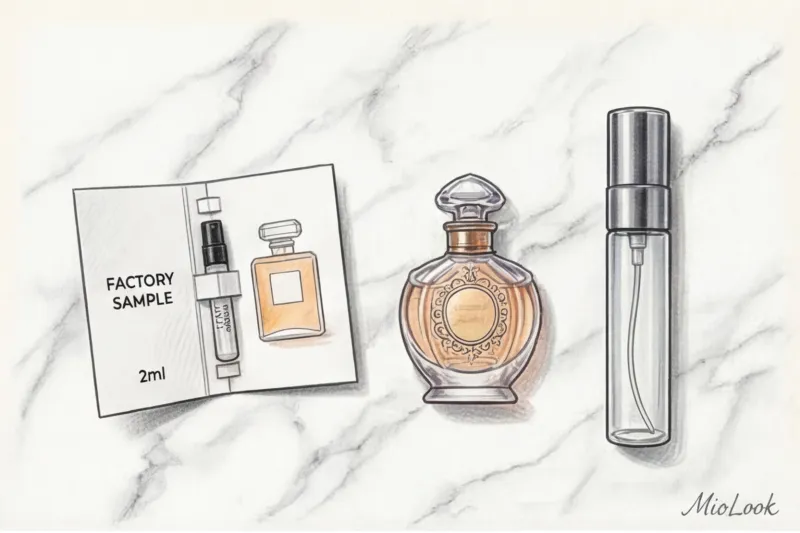
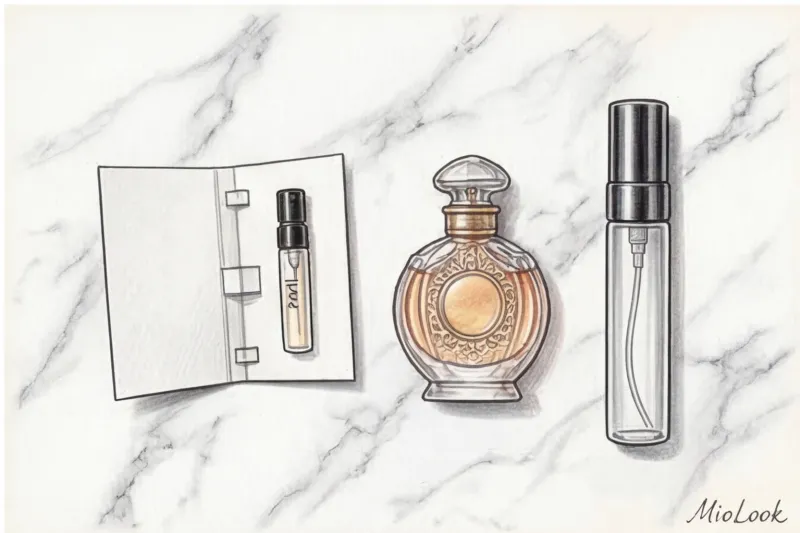
- Sample: Factory packaging, 1-2 ml. Created by the brand itself for a brief introduction only. Often comes in a glass bottle with a plastic wand or tiny spray.
- Miniature: An exact, detailed miniature replica of a full-size bottle (usually 5-15 ml). Produced by the brand, it's unreasonably expensive due to the bottle's complex production, and in 90% of cases, it lacks a spray nozzle (it's applied by dabbing, which alters the fragrance's development).
- Decanter: Any volume (from 1 to 30 ml) hand-poured by the seller from the original bottle into a standard glass atomizer with a spray. You pay only for the liquid itself and the simple container, not for the brand's marketing and design.
Digitize your wardrobe
Store photos of your outfits and perfume decants in one place. MioLook's AI stylist will help you choose the perfect outfit and fragrance combination for every day.
Get access — €0.99 onceWhy Buying a Full Bottle at Once Is a Mistake (Even If Your Budget Allows)
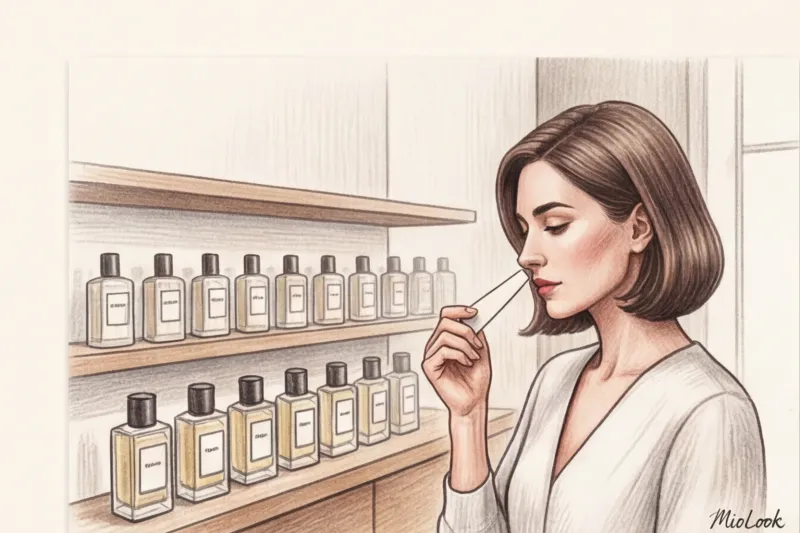
I often see this scene in TSUM or GUM: a girl applies a scent to a blotter, closes her eyes in admiration, and immediately takes a 500-euro bottle to the checkout. Buying a full-size bottle of a niche perfume immediately after testing it in a boutique is a rookie mistake, not a status symbol. True connoisseurs always wear a fragrance in for at least a week.
"Paper is dead. It only holds the top notes of a fragrance, preventing it from developing. A perfume's true life begins only when it comes into contact with the warmth of the human body," notes Michael Edwards, the world's leading perfume classifier, in his study, Fragrances of the World (2023).
The laws of perfume chemistry are inexorable. Everything influences the release of volatile compounds: your skin temperature (hot skin evaporates the base faster, cold skin retains the citrus top notes longer), your pH level, your hormone levels, and even how many spices you ate for dinner the night before. Statistically, 90% of fragrances smell completely different on a paper blotter than they do on human skin four hours later.
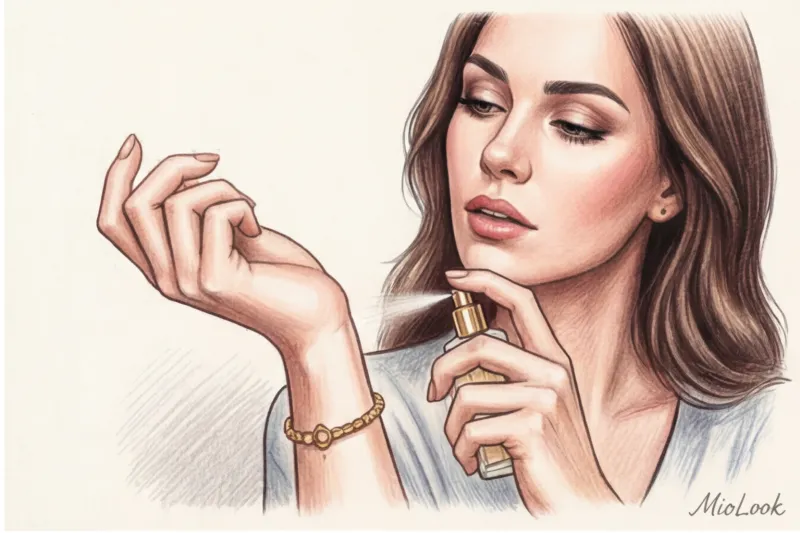
There's also olfactory fatigue. A scent that seemed fresh in a cool, air-conditioned boutique can become suffocating and give you a headache in the humid street air or in a cramped office. A 5-10 ml decanter gives you the opportunity to test the fragrance in all life scenarios.
The Mathematics of Luxury: How Drinking Can Help Create a Status Wardrobe
In personal styling, we use the cost-per-wear metric. It works just as well in perfumery. A 100ml bottle you bought for €300 and which sits on the shelf for years because the scent is too heavy is a terrible investment (€300 for one use).
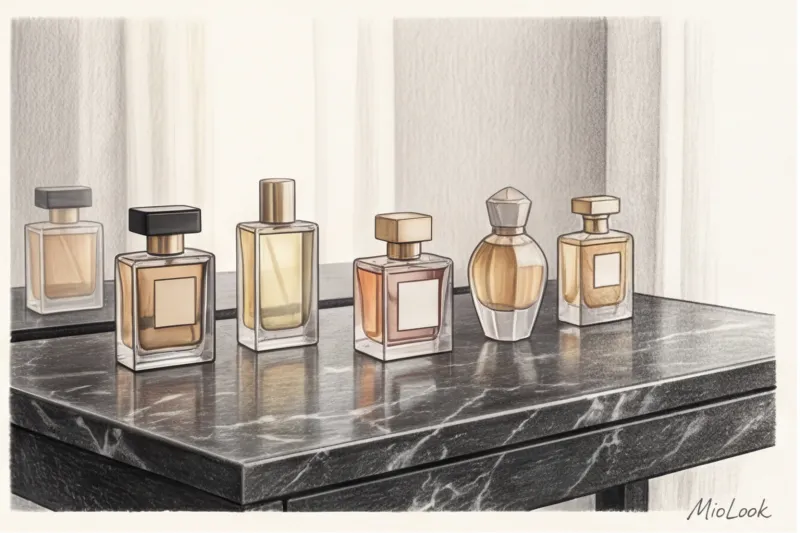
A modern expert, executive, or simply a woman who values style doesn't need one fragrance to last a lifetime. You need an olfactory wardrobe: at least three to four different perfumes. A rigorous chypre for complex negotiations, a delicate musk for the office, a deep gourmand for evenings out.
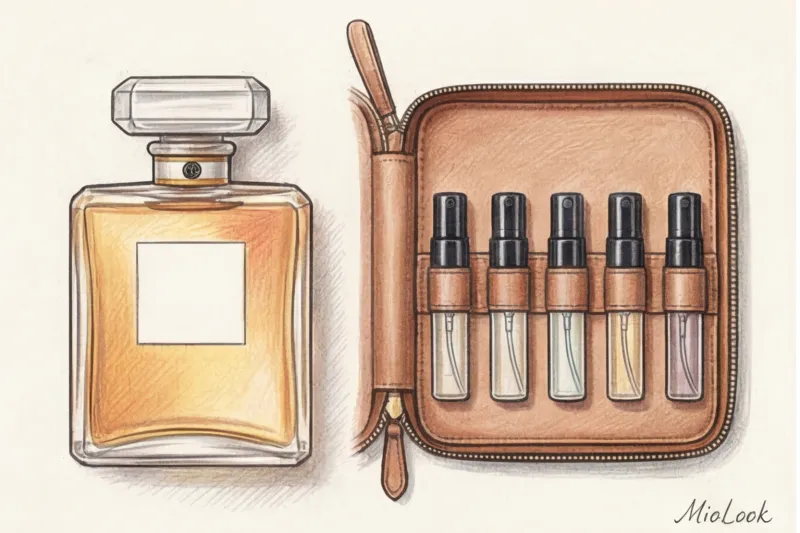
Instead of spending €300 on a single bottle (with the risk of losing your taste), you can buy five 10ml decants of a top-of-the-range fragrance for the same price. You get 50ml of a variety of expensive, high-end fragrances, covering all your needs for six months. But what if you want to test out ultra-luxury fragrances like Roja Dove or Clive Christian, which cost upwards of €700 per bottle? Decanting is the only viable option.
Fair clarification: This approach doesn't work if you've been devoted to one signature scent for 10 years and consistently go through a bottle every 6-8 months. In that case, buying the maximum size is cost-effective.
Your perfect look starts here
Join thousands of users who look flawless every day with MioLook. Plan your wardrobe wisely.
Try MioLookThe Dark Side of Drinking: A Checklist for Avoiding Counterfeiting
Where there's demand for luxury, there are always scammers. The decant market is overflowing with counterfeits (so-called "replicas" or "UAE licenses"). Here's my professional checklist for how to protect yourself:
- Abnormally low price. The math is inexorable. If 100 ml of Maison Francis Kurkdjian costs €250 wholesale, then 10 ml of bottled perfume physically can't cost €15. Miracles don't happen. If you're offered Tom Ford Lost Cherry "on sale" for pennies, it's a fake.
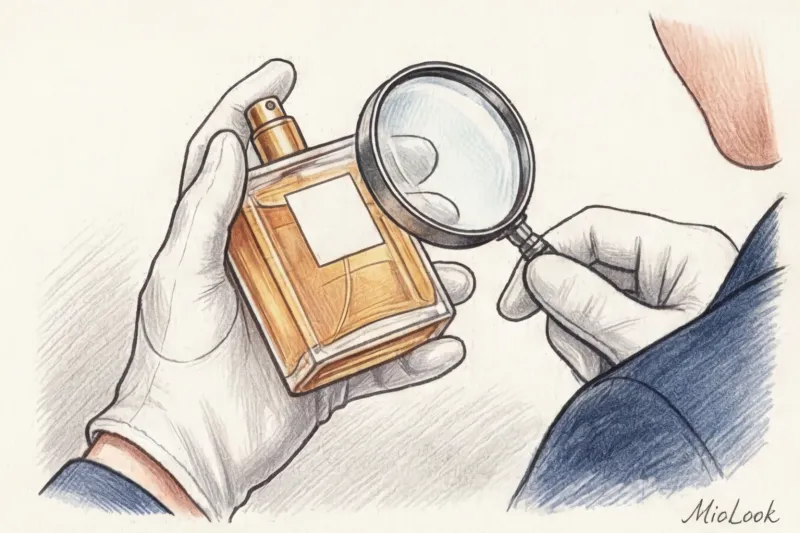
- Seller reputation and transparency. A reliable seller will always send you live photos of the original bottle with the remaining stock upon request, showing the bottom with the batch code (which can be found on specialized websites), and a close-up of the spray bottle.
- Quality of containers (critical point). According to the International Fragrance Association (IFRA) standards, alcohol is a powerful solvent. If a seller pours perfume into a cheap plastic atomizer from AliExpress, within two weeks the alcohol will begin to dissolve the plastic. The fragrance will "break down," revealing notes of burnt rubber or cheap chemicals. A proper decant is always made in a glass flask (even if it's sealed with a metal case).
How to properly store decanters and take them on trips
Over 12 years as a stylist, I've packed hundreds of suitcases for my clients. And my main life hack for business travel is using 5-milliliter atomizers. They weigh nothing, don't take up space in your makeup bag, and allow you to pack three different scents for morning meetings, daytime work, and an evening dinner with partners.
But decants have their own storage characteristics:
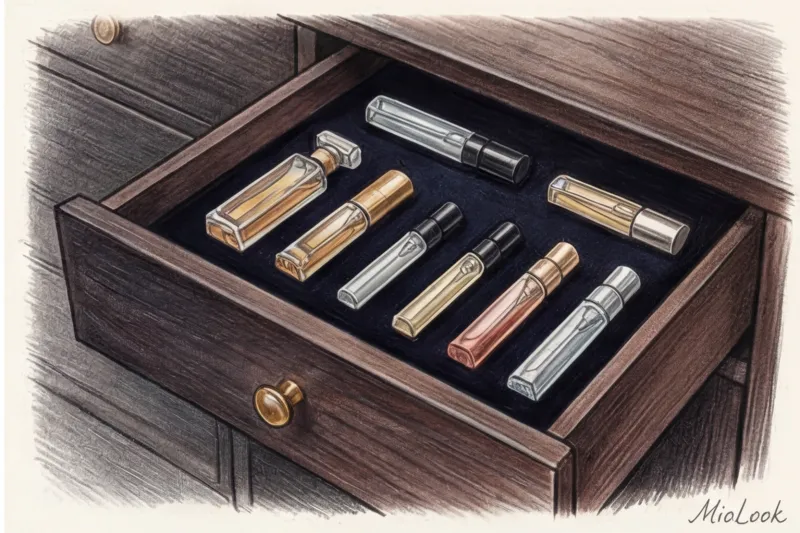
- Main enemies: Light, temperature fluctuations, and humidity. The bathroom is the worst place on the planet for perfume. Store atomizers in a dark dresser drawer or in a special case in the bedroom.
- The "vaporizing" problem: Atomizers aren't 100% airtight. Over time, the alcohol evaporates, causing the liquid to thicken (the perfume "vaporizes"). If you're using a 10-20 ml decant and plan to use it for longer than three months, buy some regular plumbing tape from a hardware store. Wrap a single layer of it around the threads underneath the spray—this will stop evaporation.
- Flights: Pressure changes in the luggage compartment can cause the atomizer to leak, soaking your silk blouses. Always pack decants in your carry-on bag in a zip-lock bag.
Building an Olfactory Wardrobe: A Plan for the First 5 Decants
If you're just getting started with the niche by sampling, don't buy five similar sweet fragrances. Build a functional wardrobe that complements your image. Here's the formula I use for my clients (use 5-10 ml quantities):
- Aroma armor (for difficult negotiations). You need to convey distance, composure, and status. Look for austere chypres, dry woods (cedar, vetiver), and cool iris. No sweetness or coquetry.
- Communicative scent (for networking and office). A scent that's inviting without intruding on colleagues' personal boundaries. Delicate, fleshy musks, light powders, and notes of cleanliness and well-groomedness (like the scent of expensive cream or a fresh shirt) are ideal.
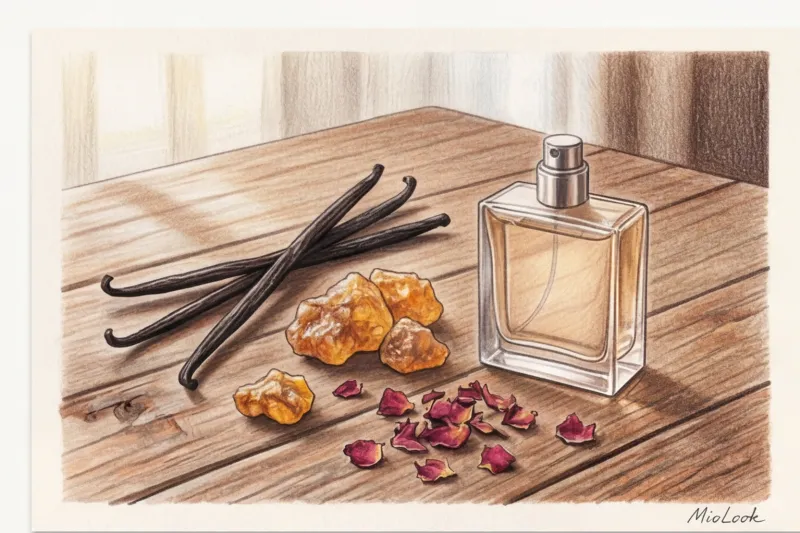
- Evening fragrance (for dates and events). Here you can indulge in sillage and volume. Deep resins, amber, expensive gourmand notes (cherry, rum, tobacco, dark chocolate), tuberose.
- A fragrance for yourself (weekend). Something comfortable to wear for drinking coffee on a Saturday morning or strolling through the park. Aquatic, green notes of freshly cut grass, fig, and light citrus.
- Experiment. Take 2-3 ml of something bold, something you'd never dare to wear in full. The scent of asphalt after rain, old books, metal, or incense. This expands your olfactory horizons.
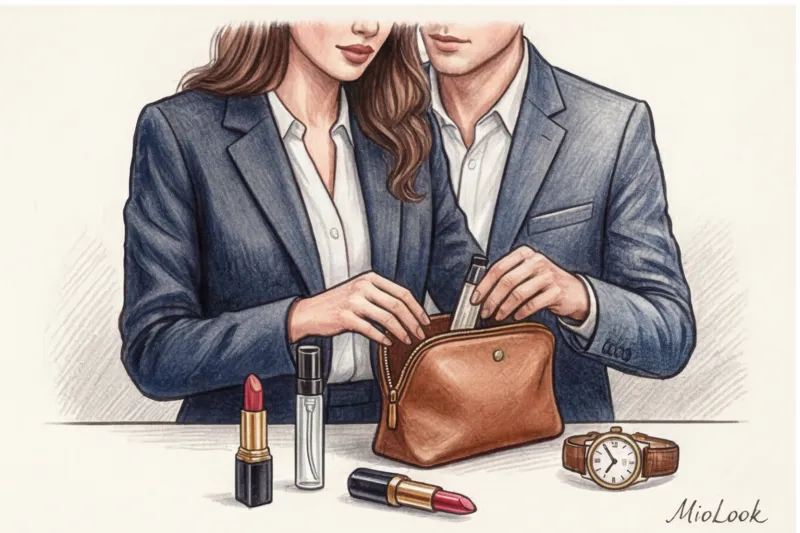
Perfume is your invisible calling card, the finishing touch that lingers in the room even after you've left. And you should have the right to change it as easily and elegantly as your handbag or shoes. Drinking perfume gives you precisely this freedom—the freedom to be different while remaining flawless.