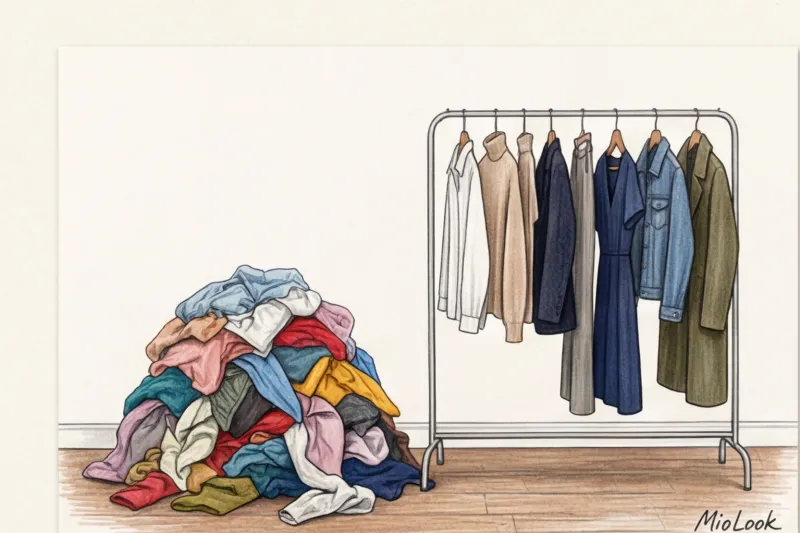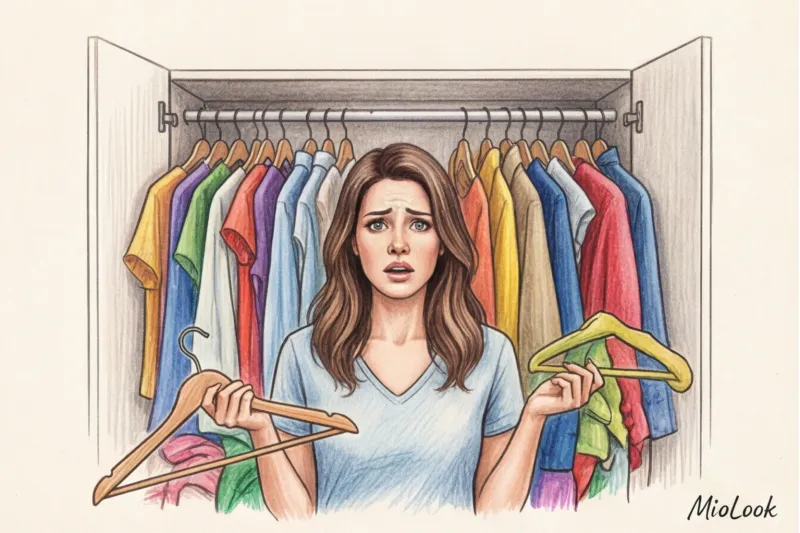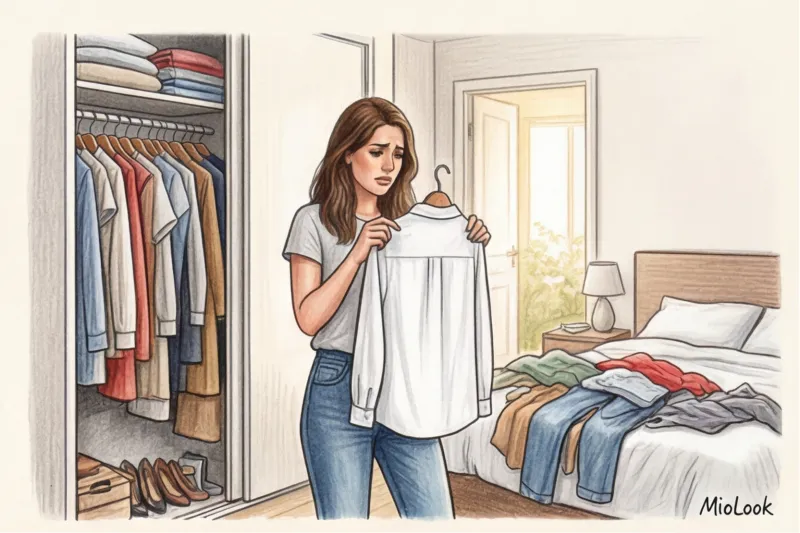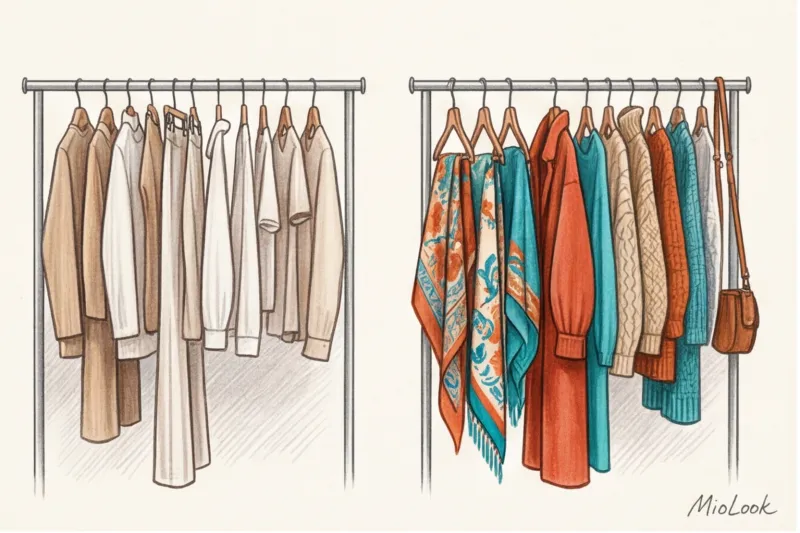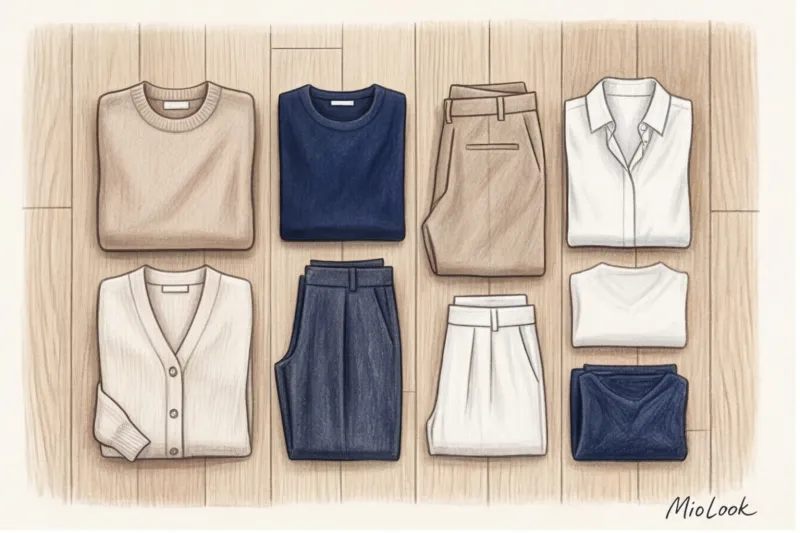
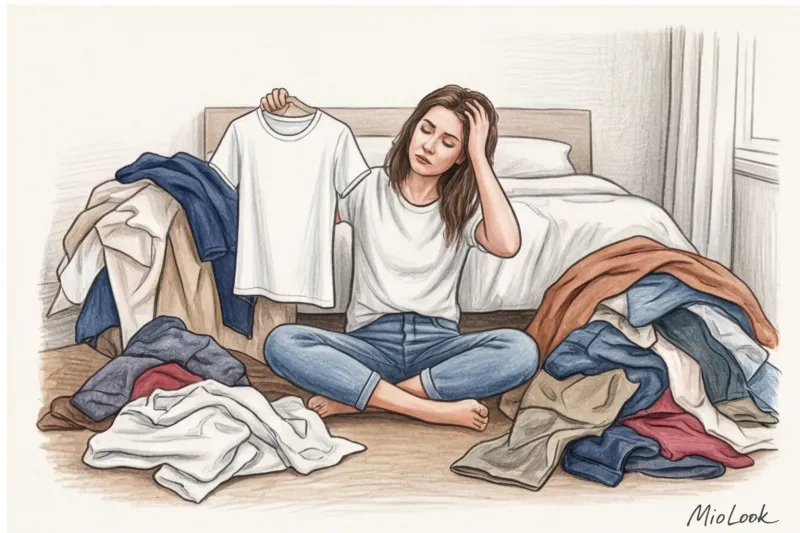
You know what I hear most often during my first consultations? "Sofia, my closet is bursting, but I'm wearing these jeans and gray sweater again because I don't have time to think." We wear 20% of our clothes 80% of the time. The other 80% is visual noise, which literally drains our energy every morning. Over 14 years of wardrobe analysis, I've become convinced: the problem isn't that you don't have enough clothes or have poor taste. The problem is that the human brain is physically incapable of processing the chaos of hundreds of hangers.
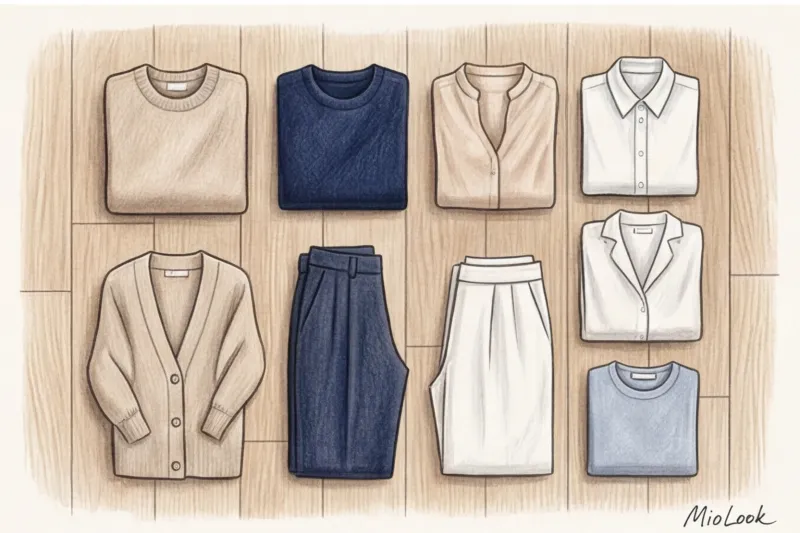
If you want to solve this problem once and for all, you need to do it right create a capsule wardrobe in the app And no, this isn't just a photo album of your T-shirts. It's a mathematical matrix. We covered the basic principles and functionality in more detail in our A complete guide to the digital wardrobe app's inventory And today I'll show you how to use this tool not for boring cataloging, but for diagnosing fabric quality, reducing your environmental footprint, and smart shopping.
Why a physical closet lies, but a digital wardrobe doesn't
In a physical closet, we suffer from the phenomenon of "clothing blindness." When clothes are tightly hung on the clothes rail, you only see a narrow strip of a sleeve or a collar. The brain habitually ignores what it can't see in its entirety. You forget about a luxurious silk blouse simply because it's obscured by a voluminous chunky knit cardigan.
The "paradox of choice" theory, described by psychologist Barry Schwartz, works perfectly here. A hundred randomly hanging items paralyze the will and create fewer tangible images than 15 digital items. When you shift your focus from a dark closet to the bright screen of your smartphone, a psychological shift occurs. You stop thinking in terms of "what should I wear?" and start thinking in terms of combinations. The smartphone screen removes the emotional attachment to an old, stretched-out T-shirt and leaves only geometry, color, and shape.
The biggest mistake beginners make is trying to digitize everything at once.
The most common failure scenario I see: a woman downloads an app, dumps her entire closet contents on her bed, and spends three days obsessively photographing every pair of socks. The result? Digital burnout and deleting the app.
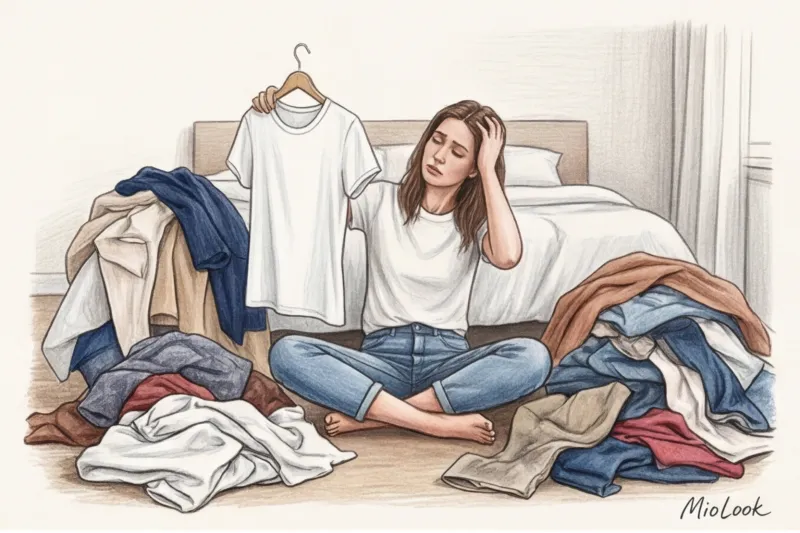
One of my clients, Anna, digitized 200 items this way. When we fed them into the algorithm, it turned out that 80% of them were completely incompatible in terms of fabric weight—light summer viscose skirts sat next to heavy winter sweaters. It was chaos digitized.
My method is different: start with a "micro-capsule of the week." Choose 12-15 items you've actually worn in the last 14 days. This is your "survival capsule." Photograph only these 12 basic items. Trust me, you can create up to 40 unique outfits from these 12 basic items if you use the right filters.
Access to MioLook for €0.99 — one-time payment
A smart AI stylist will select the perfect look for you based on your micro-capsule.
Get access — €0.99 onceAnatomy of the Ideal Matrix: The 3-4-2 Formula for Application
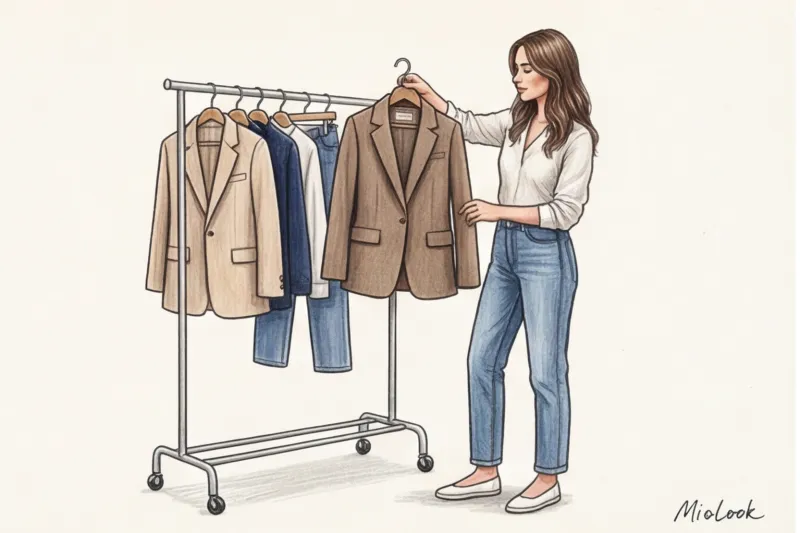
The secret to a successful capsule wardrobe lies in the right proportions. For every "bottom" (pants, skirts, jeans), you should have 3 to 4 "tops" (tops, shirts, jackets). Why? People read our personality traits. If you wear the same black wool pants to the office three days in a row but change your tops, no one will notice the repetition. If you wear the same bright sweater with three different skirts, they'll ask you why you don't change.
Shoes and bags act as the glue that holds your digital wardrobe together. I always recommend adding at least two pairs of shoes with different personalities (factor 2): for example, formal leather loafers and relaxed light-colored sneakers. This instantly doubles the versatility of your capsule wardrobe.
Textile Filter: How Fabrics Determine the Success of a Capsule
Most users make a critical mistake at the tagging stage: they only specify the color and category (for example, "blue sweater"). The algorithm doesn't understand why this sweater looks cheap with a thin silk skirt. It's all about the texture.
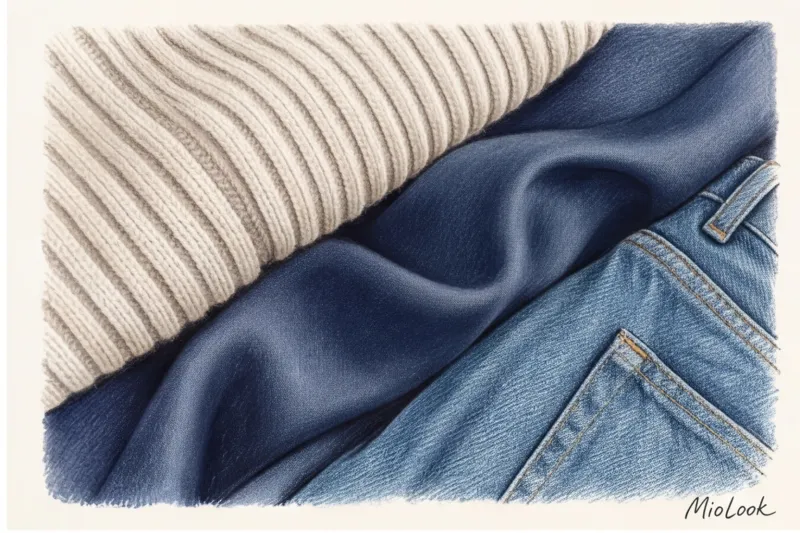
The secret to a high-status wardrobe is contrasting textures. When adding a piece, be sure to specify the material. Smooth silk calls for a rough wool or dense matte denim. A basic cotton T-shirt with a weight of at least 180 g/m² will hold its shape perfectly under a jacket, while a thin viscose with 5% elastane will treacherously sag. Train the algorithm to understand your fabrics, and it will begin to create luxury runway looks from mid-priced pieces like Massimo Dutti or Uniqlo.
How to create a capsule wardrobe in an app: a stylist's algorithm
To MioLook If you're using a smart app, or any other smart app, and it works for you, rather than you working for it, the download process should be flawless. Here's my working algorithm:
- Step 1: Proper import. Take photos of items in daylight against a contrasting background (light items on a dark floor, dark items on a light floor). Neural networks can easily remove backgrounds, but they need clear boundaries. Wrinkled clothing in the photo will ruin the image's perception in the app.
- Step 2: Smart tag architecture. Don't just write boring "blouse." Use a hashtag system based on situations and density: #office_casual , #thick_cotton , #multiseason If you decide, What to wear with an oversized blazer to the office , these are the tags that will help you filter out suitable structured shirts, not beach tops.
- Step 3: Random Image Test. This is my favorite way to test the capsule's strength. Click the random combination button. If the app gives you five frankly odd combinations in a row, your capsule is unbalanced. It likely has too many accent pieces and not enough "calming" base pieces.
- Step 4: Separating the seasons. Put down jackets out of sight in the summer. Keep only layerable pieces in your activewear zone. A poplin shirt works year-round, but linen shorts don't.
Compatibility Index: Cost Per Wear (CPW) Mathematics
Fashion isn't just art; it's also a serious financial matter. In professional styling, we use the CPW (Cost Per Wear) metric. A digital wardrobe allows us to calculate it automatically.
The formula is crystal clear: the cost of an item is divided by the number of days you wear it. A luxurious $250 cashmere sweater worn 50 times over the winter (CPW = $5) ends up costing you less than a $30 acrylic jumper from a mass-market store that's covered in pills after two washes (CPW = $15).
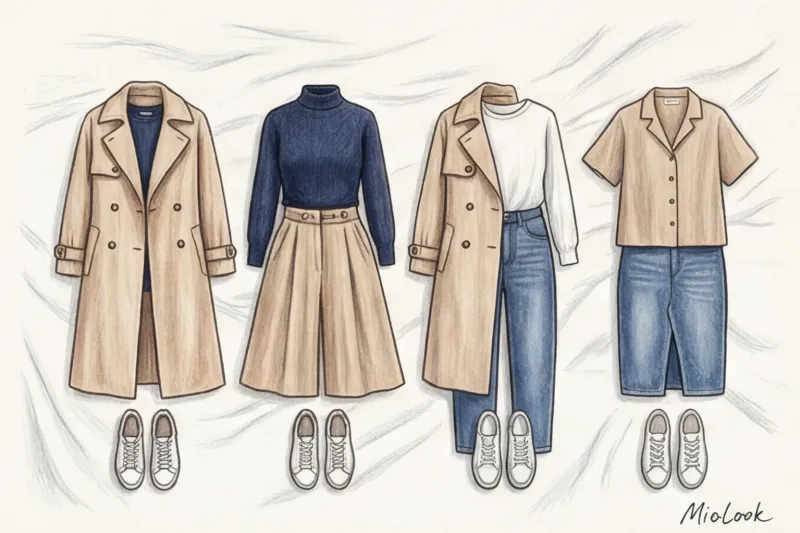
In practice, I apply the strict "Four Look Rule." Before buying a new skirt, I add a screenshot of it to the app and try to virtually create at least four outfits with it. current Things. It doesn't work out? Then it's a "single item," which will necessitate the need to buy new shoes, a bag, and a top. This is a bad investment, one that should be abandoned right at the checkout.
Ready to get started?
Try a free plan—no commitments. Start tracking your CPW today.
Get access — €0.99 onceAn Eco-Friendly Approach: How a Digital Capsule Cures Shopping Addiction
We're used to thinking of conscious fashion as something about string bags and recycled plastic. But true ecology begins with refusing to buy things you don't need. According to a large-scale 2024 study by the British organization WRAP (Waste and Resources Action Programme), extending the life of an item by just nine months reduces its carbon footprint, water consumption, and waste by 20-30%.
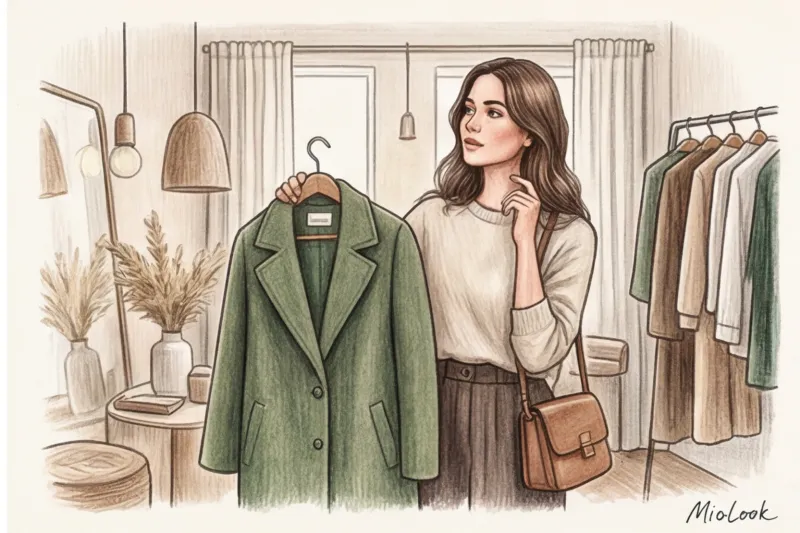
A digital wardrobe is the best antidote to emotional shopping addiction. You're standing in the fitting room with a stunning emerald jacket. Your hand instinctively reaches for the payment terminal. At that moment, you open the app. You see that your capsule is dominated by warm terracotta and beige tones, which this cool emerald will desperately clash with. The purchase is cancelled, the budget is saved, the planet has thanked you.
Instead of impulsive spending, you switch to a strategy of pinpointing your wardrobe "wardrobe gaps." The app will automatically highlight that your perfect pants and skirts are desperately missing one quality, basic long-sleeve top in a neutral color.
Checklist: Auditing Your First Digital Capsule
Let's check how functional your digital matrix is. If you answer "yes" to all four questions, your wardrobe is ready for everyday use:
- Is the color temperature the same? Items within a single micro-capsule should share a common temperature base (either warm or cool undertones). This ensures 100% compatibility between elements.
- Are there at least 3 different textures? Check for smooth (silk, satin), rough (tweed, textured wool) and matte dense (denim, cotton) materials.
- Are there any "closing" elements? These are jackets, thick cardigans, structured vests. They are what complete the outfit. For example, if you need transform a daytime look into an evening one without unnecessary things , the right double-breasted jacket will play a transformative role in this.
- Is the shoe ratio balanced? You should have 1 pair of shoes for every 3-4 looks in the capsule.
"A digital wardrobe isn't a restriction on your freedom. It's a mathematical tool that frees up your time for living, eliminating the daily stress of getting ready in front of your closet."
Let's be honest: this strict algorithm doesn't work for everyone. If your style is built on total eclecticism and theatricality, or you prefer to wear new, complexly cut, statement dresses every day (pure maximalism), the rigid capsule wardrobe concept will feel stifling. But for 90% of modern women building careers and valuing their morning time, a digital matrix is a true salvation.
Stop caring about your clothes and make them work for you. Start small, digitize your 12 favorite items today, and you'll be surprised how many truly stylish combinations were hiding on your hangers.