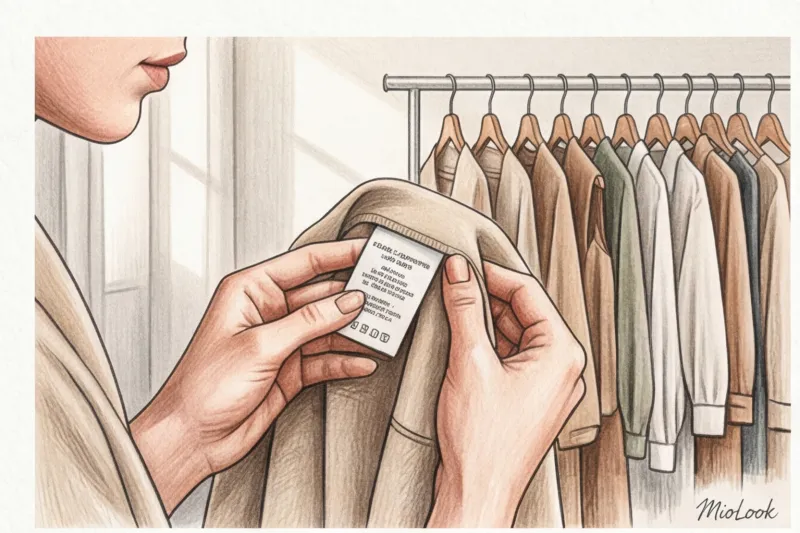
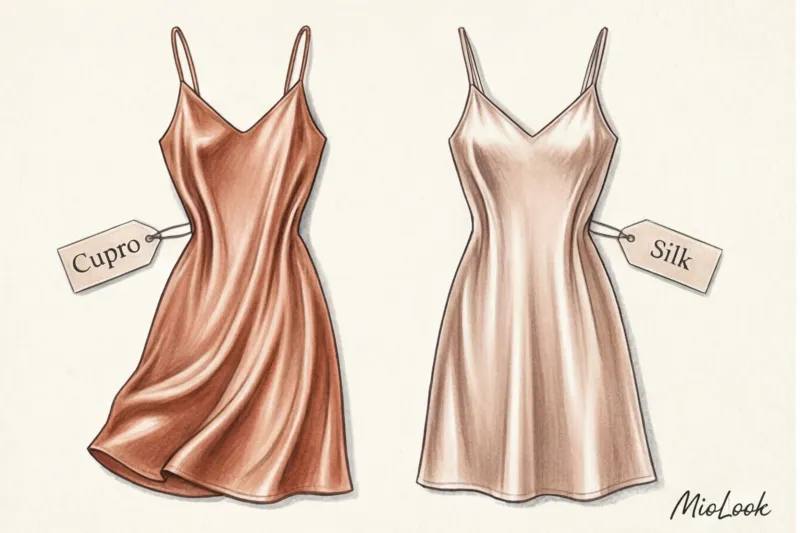
Just last week, a client of mine in Milan flatly refused to try on a luxurious olive slip dress for €450. The reason? She glanced at the tag and indignantly declared, "Julia, this isn't silk, it's some kind of synthetic! Why so much money?" The tag contained a short phrase: Cupro And this is a classic misconception I encounter constantly. Many women still search for "cupra fabric," subconsciously expecting to see a description of a cheap, mass-market polyester alternative.
As a stylist working in the premium segment for over 12 years, I want to set the record straight. Cupra is not a compromise. In expensive suits from Max Mara or Stella McCartney, it's a hallmark of impeccable quality. It's a material that breaks the stereotype that a prestigious item must be 100% natural. Today, we'll take a closer look at this fabric: why it's worth the money, how it's worn in real life, and when it's absolutely not appropriate.
Cupra: What is this fabric and why is it called "vegan silk"?
To understand the value of a material, you need to look into its DNA. Cupra (full name - copper-ammonia fiber or cuprammonium rayon ) emerged in the early 20th century, but it's experiencing a true renaissance now, in the era of conscious consumption. The term "vegan silk" hasn't stuck with it by accident. It's not just a marketing ploy. In its visual and tactile properties, cupra is a phenomenally accurate imitation of matte silk, but not a single silkworm is harmed in its creation.
The Japanese corporation Asahi Kasei sets the global standard for quality in this niche. They produce the legendary cupra under the patented Bemberg brand. If you see this logo on the tag of a jacket or dress, you're looking at a garment crafted according to the strictest technological standards and designed to last for years.
Your perfect look starts here
Join thousands of users who look flawless every day with MioLook.
Get access — €0.99 onceWhat is copper actually made from? (Spoiler: from waste)
And now for the most paradoxical fact: this luxurious fabric, flowing over the body like liquid metal, is created from waste. More precisely, from cotton linters. This is the short, fluffy pile that remains enveloping the cotton seeds after the main, long pile has been removed to produce regular cotton yarn.
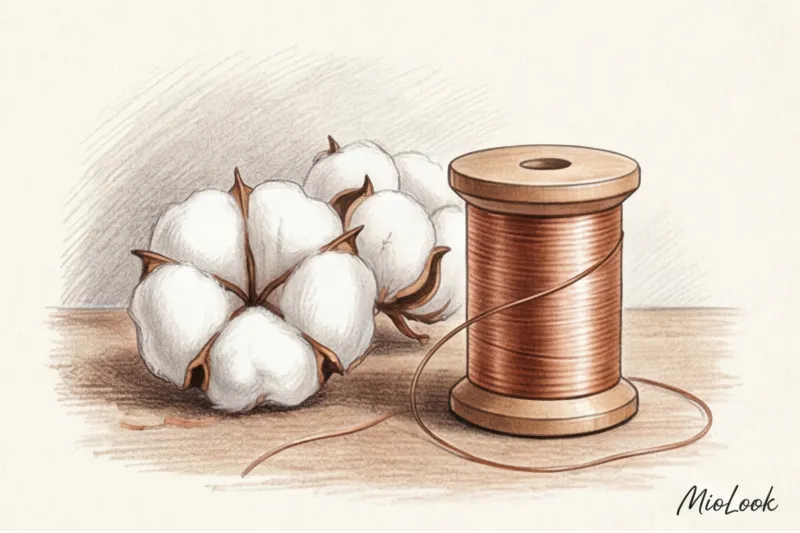
For decades, this fluff was considered waste material unsuitable for the textile industry. But thanks to sophisticated technology zero-waste This unsightly material is dissolved and drawn into a fine, flawlessly smooth thread. Thus, cupra gives a second life to resources that would otherwise end up in landfills.
Natural or synthetic fabric? Debunking the biggest myth
It's time to separate these two concepts once and for all: synthetic fibers (polyester, nylon, acrylic) and artificial Cupra, like classic viscose, tencel, or modal, belongs to the second category. We've already discussed this difference in more detail in our the complete guide to eco-friendly fabrics.
Synthetics are made from petroleum products. Artificial fabrics are made from natural cellulose (wood or, in the case of copper, cotton), which undergoes chemical treatment. During the manufacturing process, the lint is dissolved in a special copper-ammonia solution. Sounds scary? Don't worry.
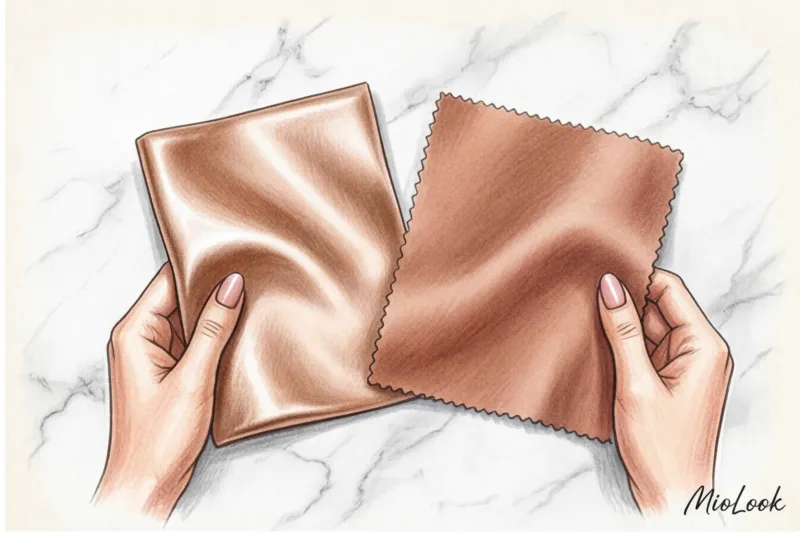
According to a 2024 report by the analytical agency WGSN, the focus of premium brands has shifted to these regenerated cellulose fibers. The reason is environmental: modern cupra production (especially Bemberg) operates in a closed-loop cycle ( closed-loop ). This means that almost 100% of the water and chemicals are captured, purified, and reused. The end result is a completely pure, safe, plant-based fabric.
Silk vs. Cupra: What Are We Paying for in the Premium Segment?
In my practice, I often conduct a "blind test" with my clients. I ask them to close their eyes and touch two pieces of fabric. Nine times out of 10, they choose cupra, calling it "the most delicate silk they've ever touched." The secret is that cupra thread is perfectly round and smooth in cross-section, devoid of the micro-irregularities that even natural silk has.
"True luxury is always hidden in the experience, not in logos. The right fabric transforms not only your silhouette but also your movement."
As for price, there's another surprise. A meter of high-quality Japanese cupra will cost the brand between €30 and €50. By comparison, basic natural silk (Mulberry) of average quality can be found for €20 to €25. You're not paying for a chemical treatment; you're paying for an innovative technology that gives the fabric exceptional wear resistance and flow.
Access to MioLook for €0.99 — one-time payment
A smart AI stylist will select the perfect look based on your wardrobe and preferences.
Get access — €0.99 onceWhy do luxury brands choose cupra for lining?
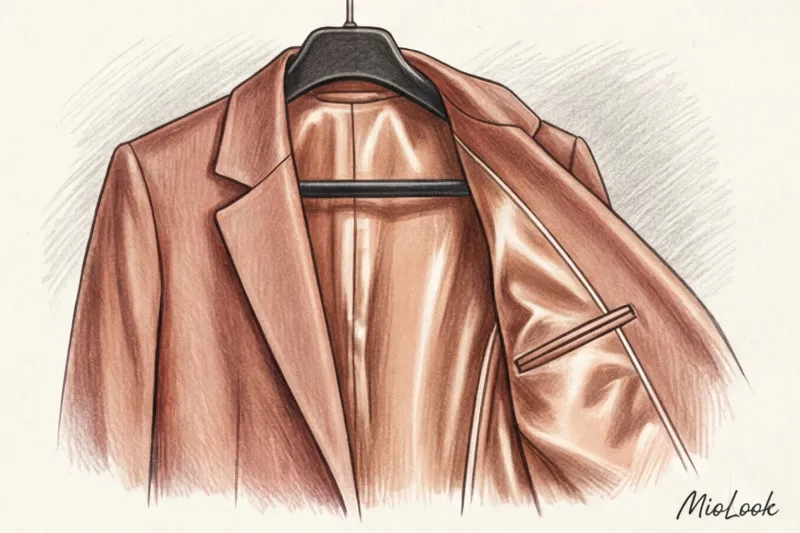
If you walk into a Tom Ford or Brioni boutique and turn your jacket inside out, you'll almost certainly see a cupra (Bemberg) lining. Why not silk? Silk accumulates static electricity and doesn't handle constant friction as well. Cupra is a complete antistatic. It will never stick to your tights, won't spark when you take off your jacket, and will glide perfectly over a shirt or turtleneck.
Practical test drive: the pros and cons of Cupra in real life
As much as I love this material, my goal is to give you an objective picture. Cupra has its own characteristics that should be considered before purchasing at the checkout.
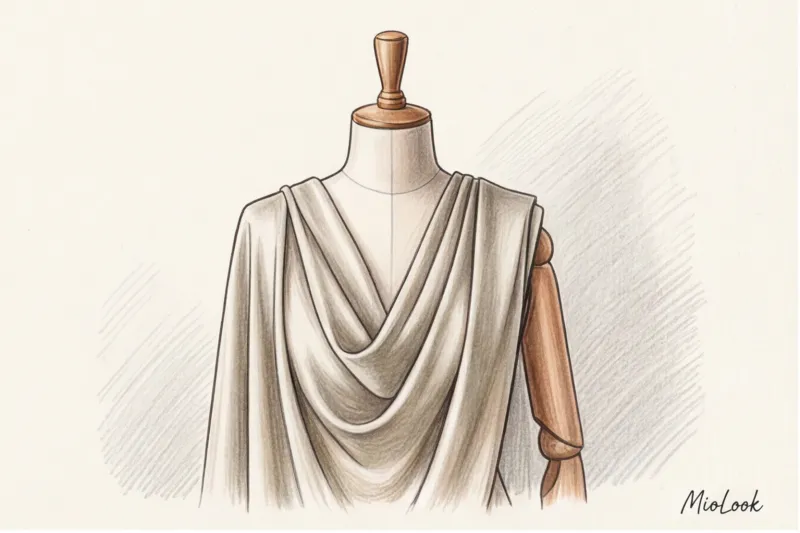
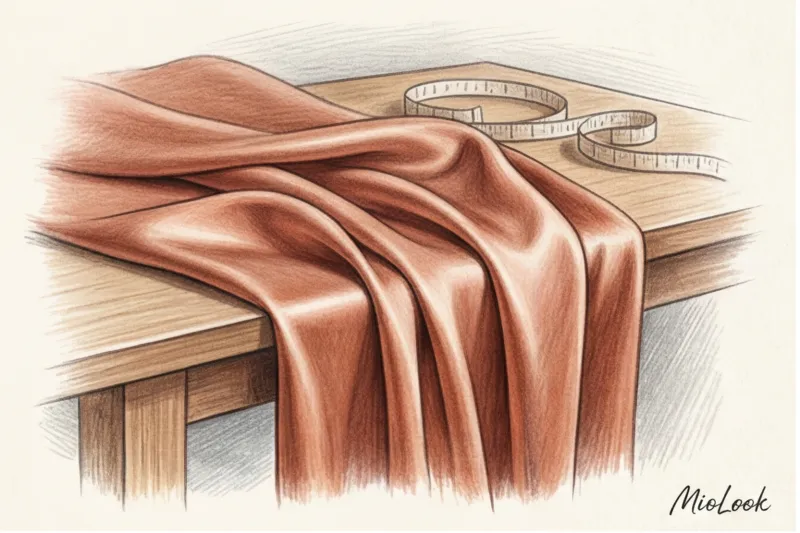
- Wrinkling. Yes, cupra wrinkles. But it does so gracefully. Unlike cotton, which creases into sharp, hard corners, cupra forms soft, flowing folds that look natural and relaxed, in the style of old money.
- Tactile comfort and hypoallergenic. It's phenomenally breathable. Research shows that cupra has a higher hygroscopicity (ability to absorb moisture) than cotton. It instantly wicks away heat from the body, creating a pleasantly cool sensation.
Honest limitation: when cupra does NOT work. Because the fabric instantly absorbs any moisture, sweat stains are very visible. I once witnessed a speaker present at a conference wearing a powder-colored cupra blouse. Due to nervousness and the spotlights, the sweat began to show through as telltale dark spots after just ten minutes. For important presentations or active events in hot weather, choose cupra only in dark shades (black, deep blue, emerald) or with a vibrant print.

Investment or Waste? Which Copper Items Are Worth Buying?
To make your wardrobe work for you, you need to plan wisely. cost-per-wear (cost per wear). A €300 dress that you wear 30 times is more economical than a €50 dress that will be sent to the country house after the first wash. To manage these metrics, I advise my clients to digitize their closets using MioLook smart wardrobe - this way you will always see real statistics of your purchases.
Which cupra products are worth investing in?
- Slip dresses. This is an absolute must-have. Cupra drapes over the figure softer than silk, concealing subtle nuances of skin texture, while fine silk can treacherously highlight every gram.
- Loose summer suits. Palazzo pants and oversized shirts. In the €150–€250 range, you can find the perfect combinations to save you from the concrete jungle of a scorching city.
- Trench coats-dust coats. Lightweight, flowing, unlined summer coats that flutter beautifully in the wind.
Avoid tight-fitting styles (like bandage dresses) and any sportswear. Cupra has no natural elasticity and won't tolerate excessive tension at the seams.
Ready to get started?
Try the MioLook free plan—no commitments or hidden fees. Discover what really works for you.
Get access — €0.99 onceCare instructions: how to wash copper wool so it lasts for years
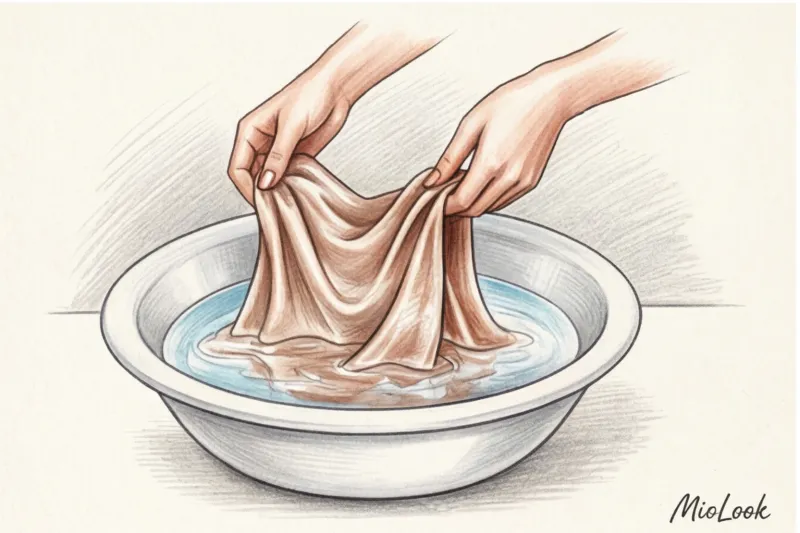
Cupra is the queen of drapes, but when wet, it becomes very fragile (like any viscose). If you throw a blouse in the washing machine at 60 degrees with a high spin cycle, you'll get a dull, two-size-shrunk rag. We wrote more about the intricacies of machine washing different materials in the article about proper care for dense fabrics , but here the rules are completely different.
- Temperature: only cold or cool water (up to 30 degrees).
- Spin: No wringing! Gently squeeze the item with your hands and lay it flat on a towel to dry.
- Ironing: Iron the garment strictly from the inside out, using the "Silk" setting. Ironing directly on the front will leave unsightly shiny marks that are almost impossible to remove.
Advice from a stylist: If your item does shrink slightly after washing, don't panic. Use a steam iron or a high-steam iron. Lightly dampen the fabric and, gently stretching it with your hands, apply the steam. Cupra is very flexible and will return to its original size in 90% of cases.
Stylist's Summary: The Place of Cupra in the Modern Wardrobe
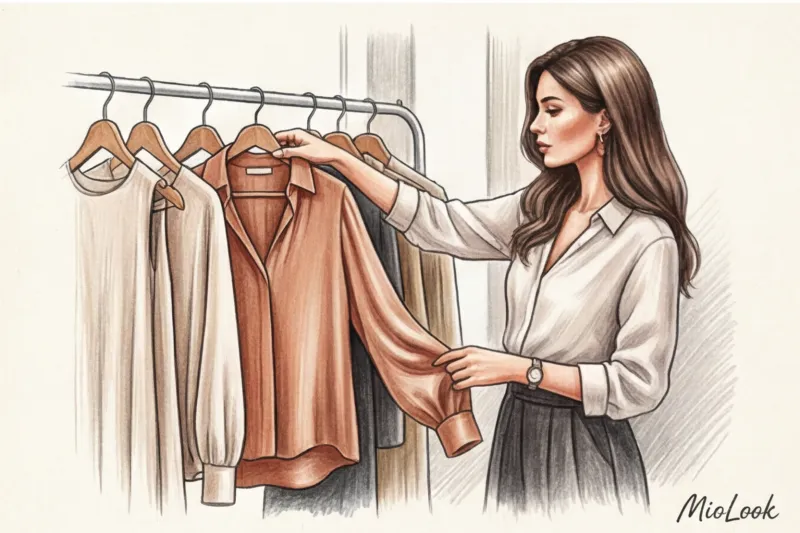
If you strive for elegance that looks expensive but also values comfort and tactility, cupra will be your new favorite. Stop fearing the word "artificial" on the label. Today, technology has advanced greatly, and intelligent materials created in laboratories often surpass what nature provides.
Remember the most important thing: investing in high-quality wool is an investment in your comfort. Read labels consciously, choose loose, flowing silhouettes and the right dark shades for hot days. Then your clothes will garner compliments, and you'll feel like a million bucks.