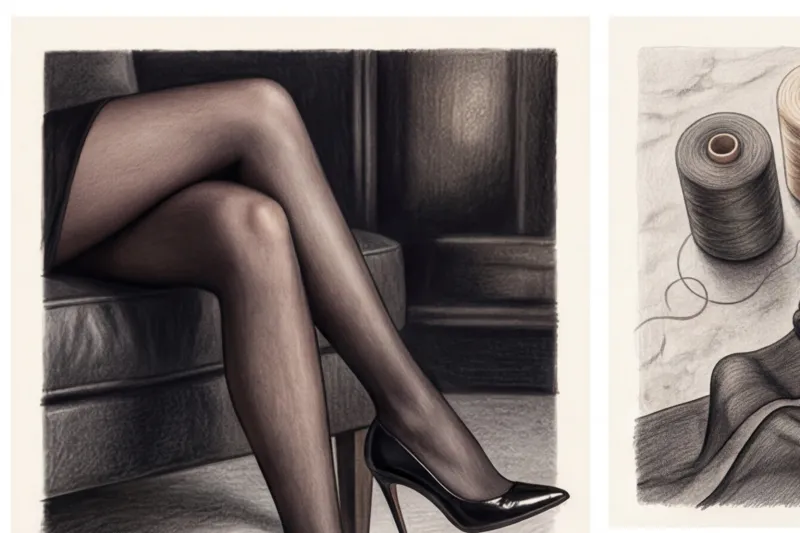
Last week, I was sorting through a wardrobe with a top executive client. She was wearing a luxurious Loro Piana cashmere coat (the kind that cost €3,000 and up) and an exquisite silk slip dress. But this entire expensive ensemble, intended to convey "quiet luxury," looked cheap because of one tiny detail: the telltale shine of her "office-appropriate" nylon tights, with a distinct yellowish sheen.
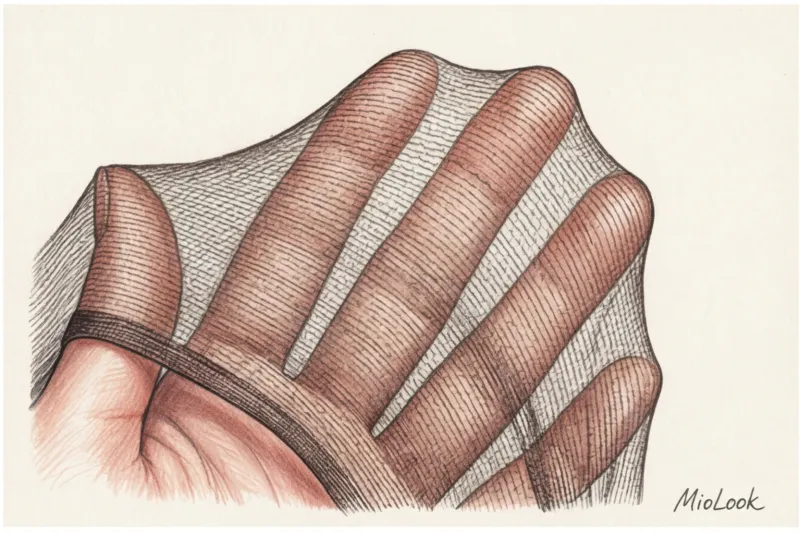
Have you ever noticed how the wrong density and texture of hosiery can ruin the most carefully crafted look? We've already covered the basic rules in more detail in our The complete guide to tights etiquette and style , but today I want to talk about the physics of fabric. Understanding, What is den in tights? Women often fall victim to marketing myths. Let's put this issue to rest once and for all and learn how to choose the right density based on visual weight, so your legs look flawless in any season.
What is DEN in tights: the physics of fabric and debunking the main myth
Many women sincerely believe that DEN is an indicator of how warm a pair of tights will be. Spoiler: this is absolutely not true. In the international textile metric (the Denier system), this term refers exclusively to the physical weight of the thread. More precisely, 9,000 meters of thread are weighed, and if they weigh 20 grams, the packaging will say 20 DEN.
Where did the warmth myth come from? Historically, mass-market products have conditioned us to associate nylon thickness with the season. But the truth is, 60-denier nylon made from cheap 100% polyamide won't keep you warm even at +5°C, while 40-denier nylon with added merino wool or cashmere will provide comfort at subzero temperatures. Warmth comes from the composition, not the weight of the synthetic yarn.
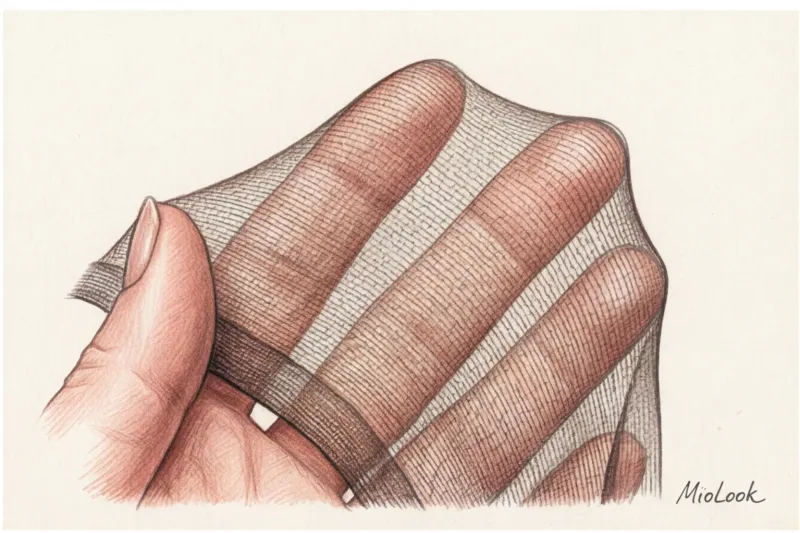
Transparency, by the way, depends on more than just the coveted number. According to the quality standards of leading Italian factories, visual density is determined by the knitting technology. For example, 3D technology (where elastane is knitted in every row, not every other one) makes even thin tights visually more opaque and dense, concealing minor skin imperfections.
Ultra-thin (5-15 DEN): a "bare legs" effect for a status wardrobe
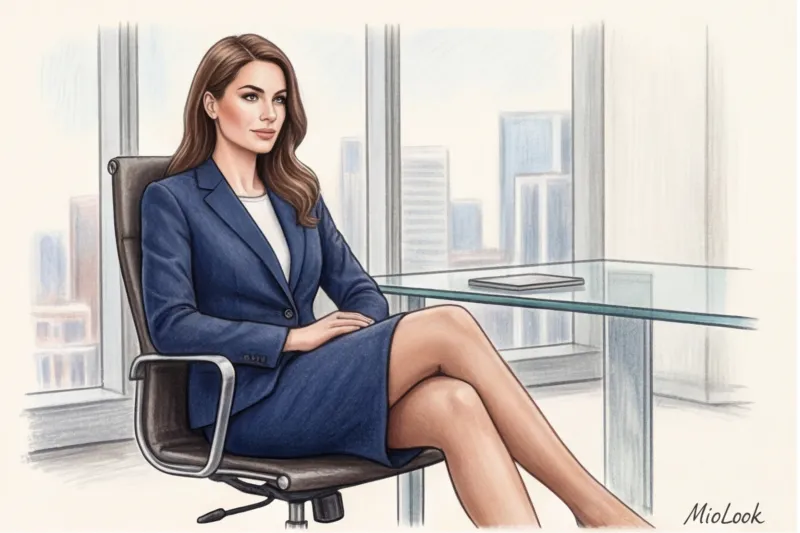
According to the strict rules of the international Business Formal dress code (as edited by The Protocol School of Washington), bare legs are unacceptable in a business environment. However, tights should not attract any attention. This is precisely why ultra-thin models are designed.
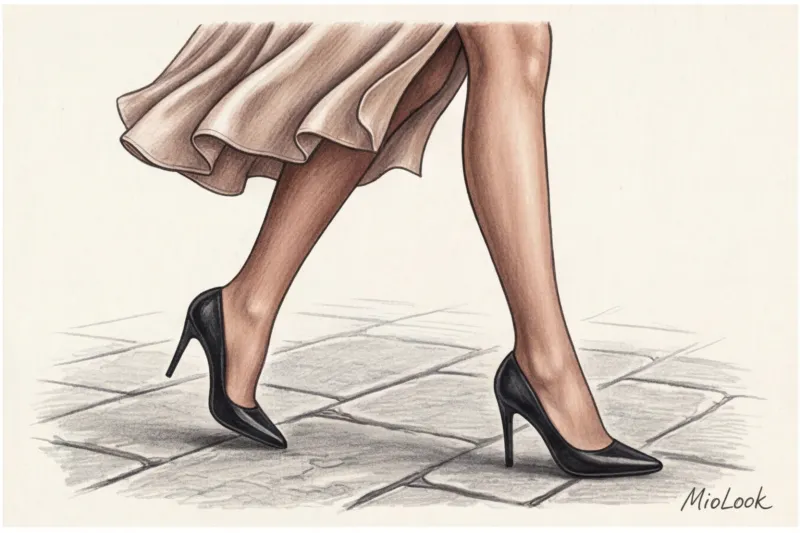
Their main purposes: strict summer dress codes, evening outings, and working under spotlights or camera flashes. I once styled an actress for the red carpet, and we spent two hours just choosing the 8 DEN shade. Why is this so important? The main danger of sheer tights is the "granny tan" effect. If your face and arms are pale, and your legs suddenly take on a rich bronze hue due to the wrong tights, the look is ruined.
"My personal life hack: the shade of sheer tights should always be half a shade lighter than the skin tone on your arms. When pulled over your legs, the color will darken slightly and match your natural tone."
Another critical point is the matte finish. A 15-denier shine ruins the aesthetic appeal of delicate fabrics. Look for this mark on the packaging. Senza Lucido or Absolute Matt And a little practical advice: only wear ultra-thin tights with special cotton gloves, otherwise one awkward movement with a fresh manicure will leave a snag before you even leave the house.
Your perfect look starts here
Join thousands of users who look flawless every day with MioLook.
Get access — €0.99 onceThe Insidious 20-40 Density: Why Stylists Try to Avoid It
I'm about to trespass on something sacred. 40-denier tights, marketed for decades as "universal office essentials," are the most insidious and unfortunate item in a woman's wardrobe. According to the WGSN consumer trends study (2024), modern women's focus has shifted to radical textures: either absolute sheerness (up to 15 denier) or complete opacity (from 60 denier).
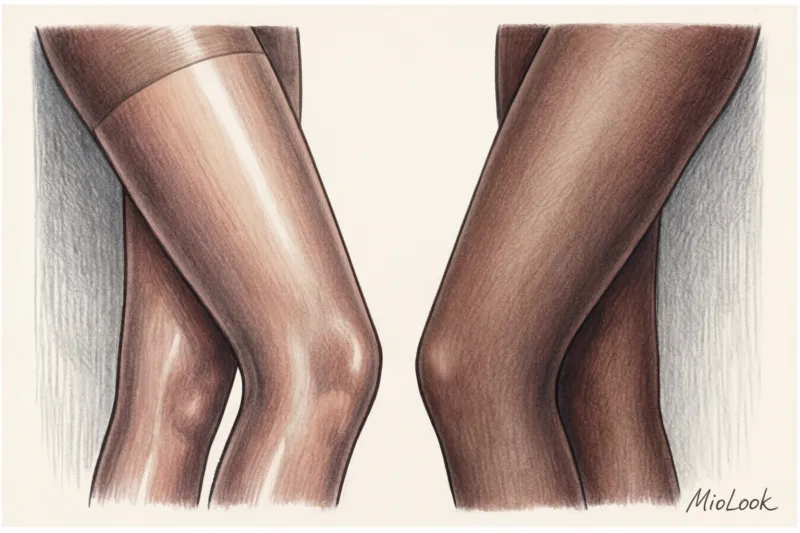
Why do I recommend avoiding mid-tone colors? The problem is the visual gradient. They appear dark on the calves and thighs, but at the knees, where the fabric stretches as you walk, they become treacherously see-through. This creates an uneven effect and visually breaks the line of the leg. Furthermore, cheap elastane in such translucent textures (especially in the budget €5-€10 range) reflects light, creating that very plastic sheen I mentioned at the very beginning.
Of course, there are exceptions to every rule. This advice does NOT work if you're going for a grunge look. Ripped black 20-30 denier tights paired with chunky boots is a style trick where the uneven color plays to your advantage. But if you're aiming for elegance, 40 denier tights are only acceptable in early fall with lightweight wool, and only in a completely matte finish.
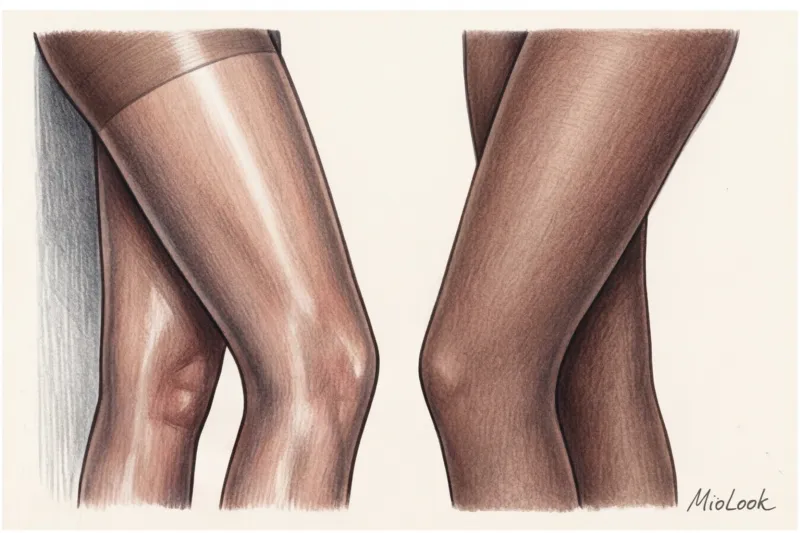
Dense textures (50-100+ DEN): the architecture of the autumn-winter look
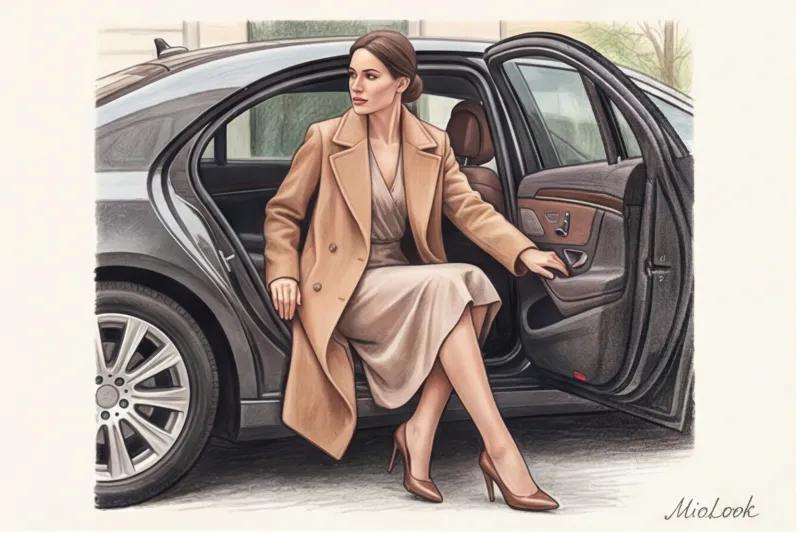
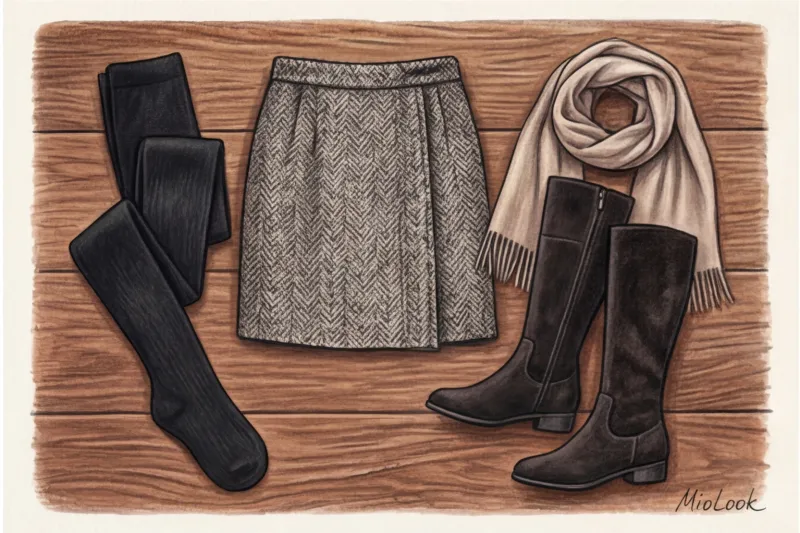
As the cold weather sets in, the rule of visual weight comes into play. The density of your legs should match the texture of your clothing. If you wear thick women's white shirt With a tweed sundress or cashmere coat, your legs cannot be translucent - this will disrupt the balance of the silhouette.
Complete opacity in cold weather is a sign of elegance. Dense 100-denier shades work perfectly with tweed, heavy wool, cashmere, and suede. In my 12 years as a colorist, I've learned that a deep, jet-black shade of 80+ denier slims the leg much more than a translucent black, which only emphasizes volume.
Materials: microfiber, cotton or wool?
- Microfiber (from 50 DEN) Velvety, completely matte, the perfect base. It doesn't crease and retains heat perfectly in the European winter.
- Cotton and wool (from 100 DEN) Choose them when you need textured, ribbed textures (ribs). They look luxurious in a relaxed smart-casual look.
- Thermal tights (up to 300 DEN) A recent innovation is models with a fleece lining that look like classic translucent tights on the outside. A lifesaver for those who want to wear skirts at -20°C.
If you're wondering how to incorporate these textured pieces into your closet, try adding them to MioLook — a smart algorithm will suggest which skirts and dresses from your collection they will look best with.
A guide to choosing: matching the density to the footwear and season
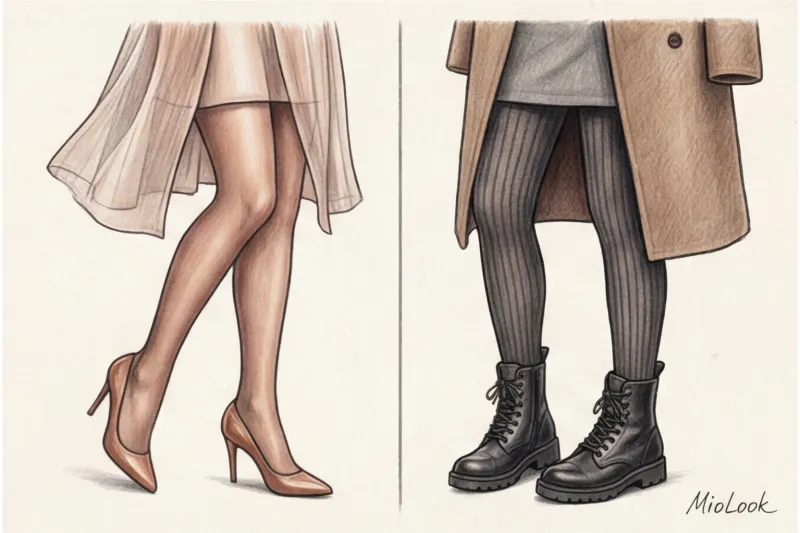
Perhaps the most common style mistake on the streets of the city in autumn is the imbalance between shoes and tights. The visual weight of the shoe dictates the thickness of the thread. Wearing delicate stiletto pumps with thick 80-denier wool tights is a crime against proportion. The shoes will appear short, and the leg will appear bulky.
The opposite situation is no less dire: heavy Chelsea boots with a tractor sole paired with 15-denier shoes make your foot look like a pencil in a glass. To avoid mistakes, keep this cheat sheet handy:
- Silk, chiffon, satin + Pumps/Sandals = Only 5–15 DEN. Complete illusion of bare legs.
- Suit wool, cotton, denim + loafers/brogues = From 50 DEN (microfiber) or socks if the length of the trousers allows.
- Tweed, cashmere, corduroy + Chelsea boots/Tube boots/Chelsea boots = 80–120+ DEN (cotton, microfiber, wool).
For example, classic women's trench coat when paired with leather loafers, it requires a density of about 50-60 DEN to match the color of the shoes to elongate the silhouette.
Access to MioLook for €0.99 — one-time payment
A smart AI stylist will choose the perfect look for you.
Get access — €0.99 onceChecklist: How to read packaging beyond the coveted DEN numbers
The numbers on the packaging are only half the story. If you're investing in a quality wardrobe, pay attention to these insider markings that distinguish a premium product (from €25) from a mass-produced item:
- Lycra 3D This magic word guarantees that the tights won't slip down or bunch up in unsightly folds under the knees. Look for a composition with 10–15% elastane, not 3%—this is the key to a perfect fit.
- Tassello (Cotton Gusset): A high-quality and hygienic marker. Cheaper models replace it with a regular stitch, which rubs and tears easily.
- Cuciture piatte (Flat seams): A must if you're wearing form-fitting clothing. The round seams found in mass-market clothing will show through even a thick wool skirt.
- Matt / Opaque: Look for these markings to avoid the shiny sausage effect in your photos.
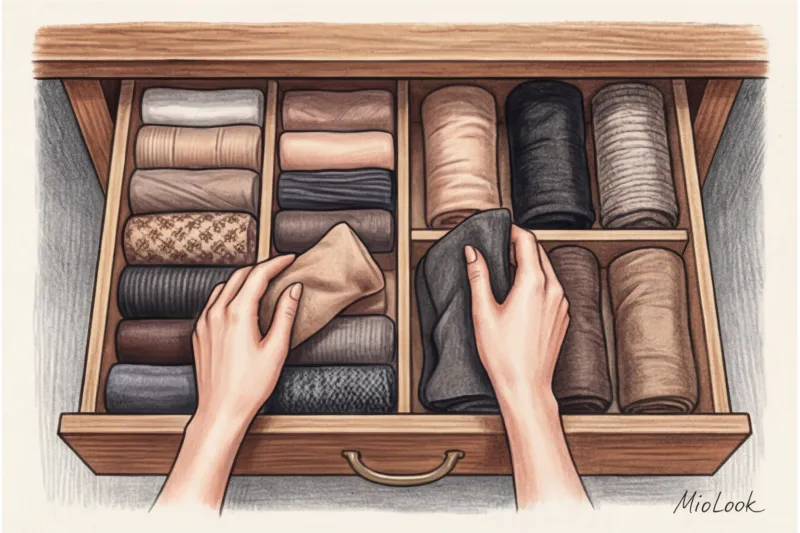
Forget the "the colder it is, the more DEN" rule. Your main guide should be the texture of your clothing and the visual weight of your shoes. Reserve the sheer weightlessness of silk and evening shoes, and the solid density of cozy cashmere and chunky boots, and your look will always look expensive and well-thought-out.