The role of hosiery in a status wardrobe
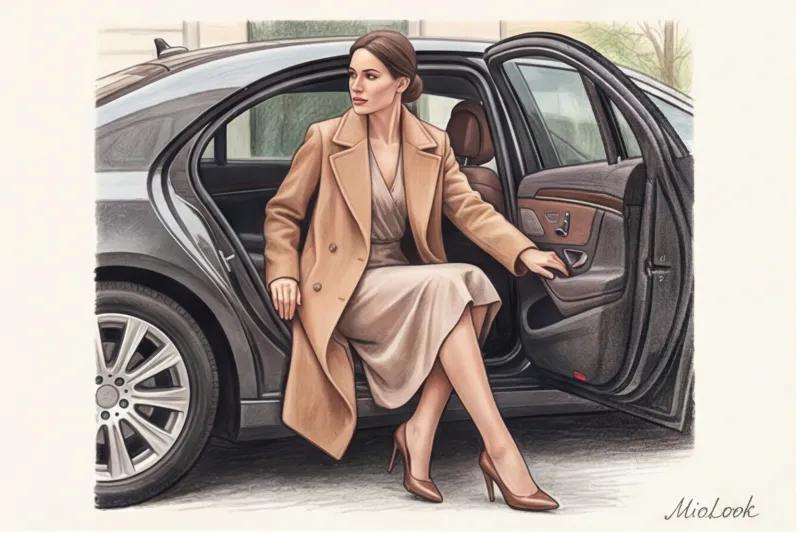
Imagine this: you're wearing an impeccably tailored wool coat, expensive leather shoes, and a classy bag, but one tiny detail instantly cheapens the entire look. Over 12 years of working in luxury styling, I've learned a hard and fast rule: no item, no matter how expensive, can save an outfit if you've chosen the wrong base for your legs. That's why knowing how to choose the right tights isn't just a matter of basic aesthetics, but a true foundation for your personal style.
A top manager at an international company once came to me for a consultation. For an important evening event, she chose a stunning Loro Piana cashmere coat and a flowing, heavy silk slip dress. The look promised to be flawless until I looked down. The cheap, unnatural sheen of nylon tights from a nearby high-street store clashed mercilessly with the noble texture of the silk. This plastic glare under the spotlight instantly destroyed the magic of "quiet luxury," turning her carefully crafted investment wardrobe into cheap props.
Have you ever noticed that tights and socks reveal the quality of your wardrobe much faster than any designer bag? A bag is an obvious, often ostentatious purchase. But what you wear on your feet reveals your true self-esteem and a deep understanding of the nuances of quality. Elegance always lies in the micro-details, not meant to be seen at first glance.
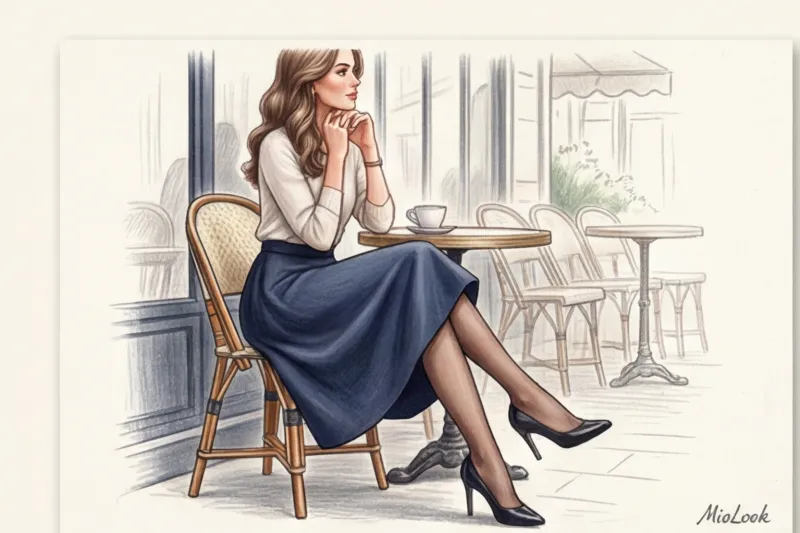
In professional styling, we call this the "architecture of an elegant look." Leg texture is the crucial connecting link, the bridge between the hem of your outfit and your shoes. If you're wearing matte suede and thick wool, glossy legs will create a sharp visual dissonance. The right texture harmonizes the silhouette and brings it together. To avoid mistakes in such combinations and to see how the elements work together in advance, I recommend my clients visualize their looks through MioLook smart wardrobe.
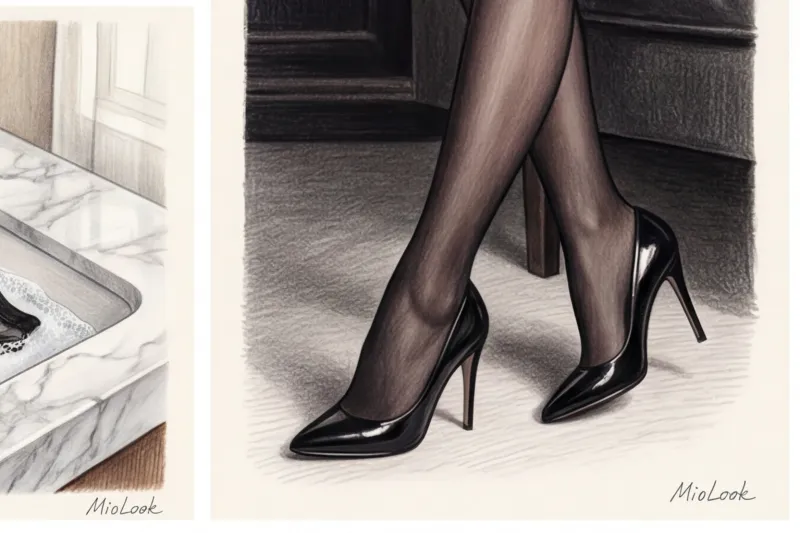
Fortunately, today we are witnessing a real evolution in the perception of this item of clothing. There has been a powerful shift from the utilitarian attitude of "putting it on to stay warm" to the status of a full-fledged, self-sufficient accessory. Depending on your style types and archetypes in clothing Even a thin nylon sock can be a key accent. Premium tights, which range in price from €30–€50, are as smart an investment as a good silk scarf. They skillfully shape the silhouette and set the tone, just like black tie dress code dictates the rules for evening fashion and gives you that very feeling of inner confidence that cannot be faked.
How to choose the right tights: basic rules and hidden nuances
Did you know that most women spend hours choosing the perfect dress, but buy tights at the last minute at the supermarket checkout? In my experience, when I first started consulting clients on investment wardrobes, this very detail turned out to be the weakest link, ruining the impression of an expensive outfit. We're willing to pay €500 for a flawless pencil skirt, but we skimp on the accessories that complement it. How do you choose the right tights so they work like a second skin and enhance the look's status?
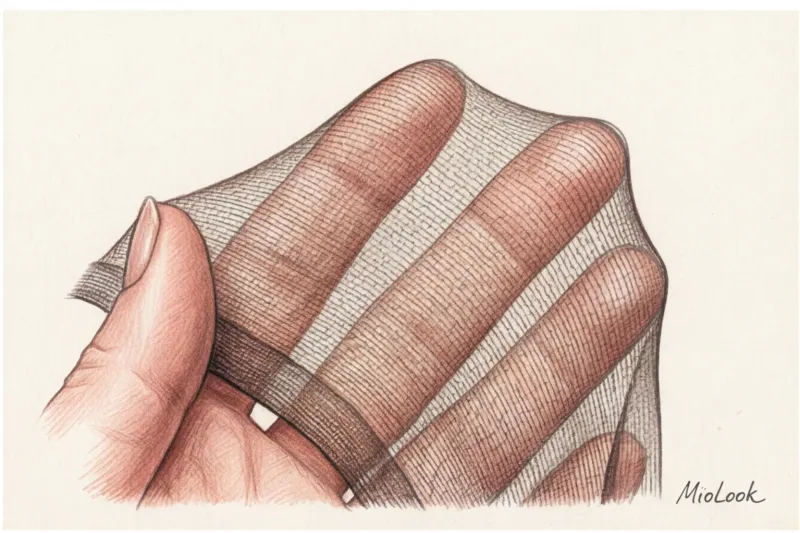
Let's examine the anatomy of a quality product. If you turn premium tights inside out, you'll see three clear status markers. First, the gusset—it should be made of breathable cotton, or, in haute couture collections, natural silk (runway etiquette generally dictates wearing such styles without additional underwear). Second, the seams must be strictly flat. No bulky ribs that would show through the thin fabric of a silk slip or a tight skirt. Third, a wide, elastic waistband that hugs the figure smoothly, without cutting into the waist or creating unnecessary bulges under form-fitting clothing.
In terms of production technology, there's a huge difference between basic and premium brands. Most budget brands use flat knitting, which essentially forms the garment like a long tube. As an expert, I can guarantee this is why they stretch out so quickly at the knees. Luxury brands use 3D knitting technology, which means the yarn is knitted simultaneously in three directions (length, width, and depth). This creates an anatomical shape that perfectly hugs the curves of the leg and prevents slippage and ankle wrinkles, even at the end of a busy workday.
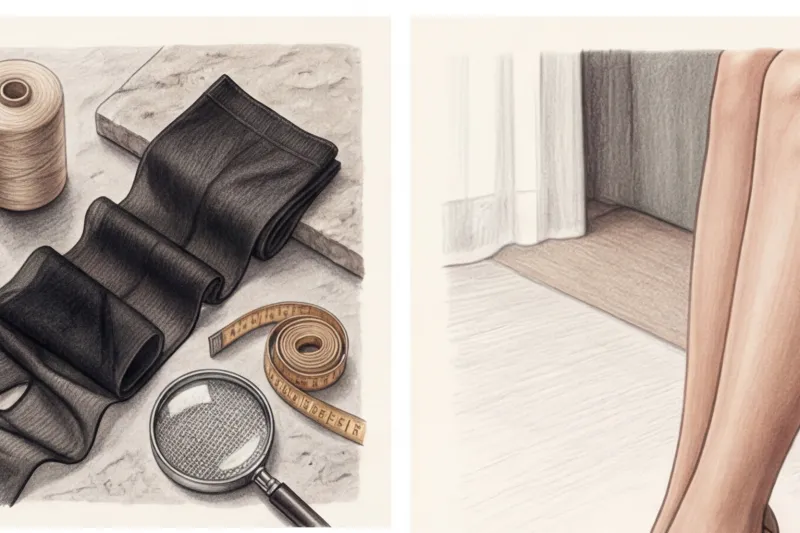
Another critical detail: why is a matte finish the main criterion for a luxury look? When I was working on lookbook shoots in Milan, stylists ruthlessly discarded any tights with even the slightest sheen. The glossy sheen of the thread visually distorts proportions, adds volume to the legs, and creates that vulgar "sausage-in-cellophane" effect. Expensive fabric should diffuse light, not reflect it, imitating the natural texture of well-groomed skin.
Remember the golden rule of sizing: if your measurements (height and weight) fall exactly on the border of two sizes in the table on the packaging, always take the next size up.
Why is it always better to go up a size rather than down? It's pure physics: over-stretched nylon loses its color consistency (dark and light stripes appear), becomes more brittle, and is prone to snagging. Furthermore, the tension inevitably pulls the elastic down, forcing you to nervously adjust the waistband every half hour.
Density (DEN) and composition: what to look for
The most common misconception concerns the abbreviation DEN (denier). Most consumers believe it indicates the physical thickness of a garment. In fact, it's a measure of the weight of the yarn. What does DEN actually mean? This number indicates how many grams 9 kilometers of yarn used to knit the garment weigh. So, in a 20 DEN pattern, 9 kilometers of yarn weigh exactly 20 grams.
To keep your wardrobe functional, use this professional density guide:
- From 5 to 8 DEN (powder effect): Ultra-thin, virtually invisible tights. They don't add warmth, but they work like an expensive foundation for your legs—evening out skin tone and concealing microveins and minor imperfections. They're the only acceptable option for summer office attire and red carpet events.
- From 15 to 20 DEN: A universal base for every day and off-season use.
- From 40 to 60 DEN: A dense demi-season garment that is already beginning to take over the visual emphasis of the look.
- 100+ DEN (winter resistant): A completely dull, matte color with no visible skin. Pairs perfectly with heavy fabrics like tweed, leather, and thick wool.
The composition is no less important. The role of elastane (or lycra) is what distinguishes a shapeless "bag" from a sculpting accessory. The optimal percentages for different effects vary: 10-15% ensures a comfortable fit, while 20-30% provides light compression and a shaping effect. If the elastane content is less than 10%, the garment will lose its shape after the first wash. To avoid getting lost in the collections and always have the right pair on hand, I recommend digitizing your basic accessories through MioLook - this will help to replenish supplies in time before the start of the season.
Luxury vs. Mass Market: Is It Worth Investing in Expensive Brands?
My clients often ask a reasonable question: why pay €40–€50 for a pair of Falke or Wolford shoes when you can buy a similar-looking pack for €6 at the nearest mall? Comparing brands like Wolford and Falke with mass-market brands isn't about snobbery, but about wardrobe economics and comfort.
The main secret lies in snag resistance: premium brands use double-wrapped yarn technology. In the budget segment, the elastane yarn is simply covered with a single layer of polyamide (or sometimes left completely bare, which causes itching). In luxury brands, the sensitive elastane is tightly wrapped with two layers of polyamide in opposite directions. This makes the fabric incredibly soft to the touch and resistant to damage. If you catch a ring on these tights, a localized snag will appear, but it won't immediately cause a run down your entire leg.
Let's do the Cost-per-wear calculation—it's the math behind smart investing that every woman should know.
Scenario 1 (Mass market): You buy tights for €7. On average, they last 2-3 wears before the first hole in the toes or run appears. The cost per wear is approximately €2.50-3.50.
Scenario 2 (Premium): You invest in a basic Wolford model for €45. Thanks to the 3D knit and double wrap, they last 30 to 40 wears when hand washed. The cost per wear drops to €1.10-1.50.
The bottom line is clear: premium brands are cheaper in the long run, while still providing flawless results, a perfect matte finish, and pressure-free comfort every day.
Access to MioLook for €0.99 — one-time payment
A smart AI stylist will select the perfect look, taking into account every detail, including the texture and color of accessories.
Get access — €0.99 onceNude tights: an outdated stereotype or a business necessity?
The debate over nude tights has been raging in the professional community for a decade. On the one hand, there are the immutable rules of royal protocol, where appearing in public with bare legs has historically been considered the most flagrant faux pas. Remember how the British tabloids closely monitored Catherine, Princess of Wales, for observing this rule? On the other hand, there's the harsh reality of the fashion industry, which has long proclaimed its rejection of imitation skin.
I'll share a counterintuitive fact that leading style experts agree with today: in a modern wardrobe, nude tights are only appropriate in settings where a strict formal dress code applies (Business Best, Business Traditional, or diplomatic protocol). Unless you're attending a board meeting with a conservative bank or an embassy reception, you simply don't need this item.
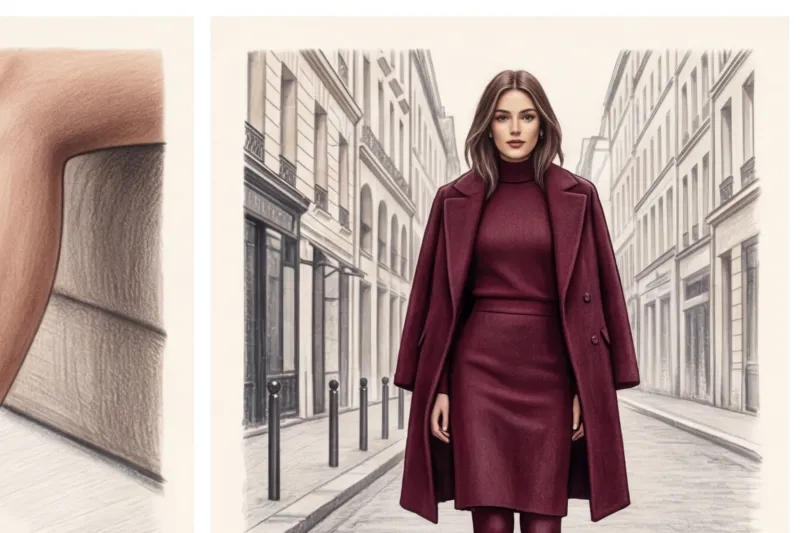
However, if your field requires wearing nude, it's crucial to avoid the "plastic legs" effect. At one of our closed business etiquette training sessions in Geneva (2022), we conducted a revealing experiment: out of twenty participants, only two had a nylon shade that truly matched their natural pigment. To become one of these flawless women, strictly adhere to the three golden rules of the perfect nude:
- Absolute matte finish. No lycra shine. The product should not reflect light from camera flashes or office lamps, otherwise it will visually add bulk to your legs.
- Matches the skin tone of the hands (!). This is my favorite pro trick. When testing a sample, apply it not to the inside of your wrist (the skin is always lighter there), but to the back of your hand. The pigment should blend into the background of your hands.
- Density strictly up to 15 DEN. Optimally, 8-10 DEN. If you're hoping to hide bruises or spider veins with a thick, flesh-colored 30 DEN fabric, you'll only achieve a comical "granny tights" effect.
A reasonable question arises: how to conceal minor imperfections when there's no strict dress code and wearing a dress on bare legs is uncomfortable? The beauty industry has long offered elegant alternatives. For the warm season, liquid tights or a light self-tanner spray are ideal—they even out skin tone and give it a well-groomed appearance. In cooler weather, ultra-thin black nylon is the best alternative. It acts as a lightweight filter, visually slimming the ankle and adding a refined, graphic touch to the silhouette.
To avoid creating dozens of packages of inappropriate shades and to know exactly which model is waiting in the wings for a formal event, I recommend digitizing your basic accessories. By adding tried-and-true pairs to MioLook , you will create a clear storage system: no more morning rushing in front of the mirror and impulsive purchases “by eye”.
Colorful, fancy, and fishnet tights: how to wear them without looking vulgar
For a long time, there was an unspoken rule in the haute couture circles: statement legs were reserved for street style. However, the Miu Miu, Saint Laurent, and Valentino shows of recent seasons have completely shattered this stereotype, making color and complex texture the primary markers of intelligent styling. The only question is how to adapt these bold runway trends to real-life everyday and business wardrobes.
The monochrome trend is the safest and most elegant way to introduce color. Deep, refined shades like burgundy, emerald, and chocolate tights work as powerful visual sculptors. The secret to their magic lies in the right combinations.
This is where the risk of "cut-off legs" lies—one of the most common mistakes I have to correct. If you wear wine-colored tights with a black skirt and contrasting beige shoes, the silhouette is mercilessly chopped into three horizontal blocks, visually taking away at least 5-7 centimeters of height. How to properly create vertical color lines? The color should flow continuously. The ideal scenario: tights match the shoes or hem, which stretches the proportions to infinity.
The golden rule for styling complex textures: the more revealing and vibrant the pattern on your tights, the more covered, voluminous, and minimalist your top should be.
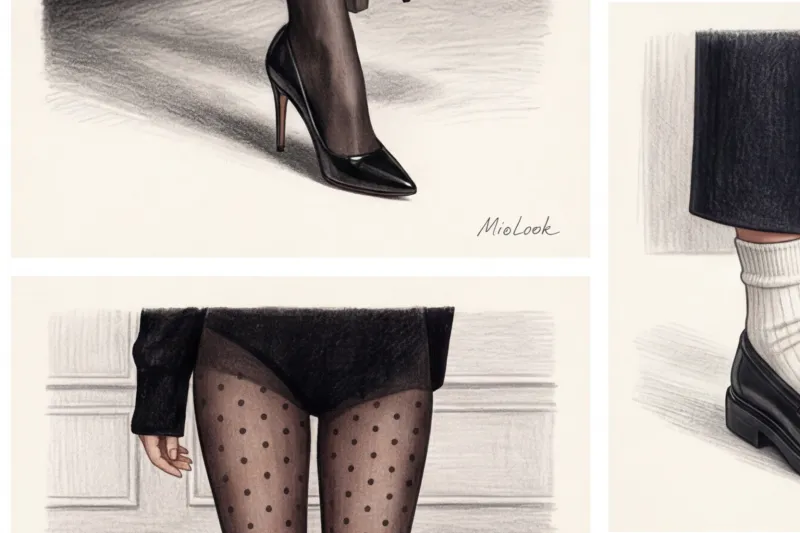
If pure color seems too radical, consider patterns. Geometric shapes and small polka dots (the famous pattern plumeti ) are a timeless classic with a Parisian chic edge, capable of livening up even the most minimalist look. Unlike large floral patterns, which inevitably deform on the calves and distort the shape of the leg, delicate polka dots with a density of 20-30 denier look graphic and expensive. I always advise against skimping on this element: on cheaper alternatives, the polka dots quickly turn into stretched ovals. Investing €25-40 for a high-quality, premium pair guarantees that the pattern will remain flawless all day long.
Lace and mesh deserve special attention. Traditionally, these textures are shunned for fear of appearing vulgar. To avoid this, we employ a strict neutralization technique. In modern styling, we deliberately tone down the provocativeness by pairing these tights exclusively with chunky or masculine footwear: chunky loafers, Chelsea boots with tractor soles, and biker boots.
The second step to neutralizing the look is choosing the right clothing. A lacy bottom calls for a calm, sophisticated top: a thick wool midi skirt, a voluminous cashmere sweater, or a tailored jacket with wide shoulders will balance the look, making it sophisticated without being too overt.
Creating such multi-layered proportions on your own can be challenging, especially if you're just starting to experiment with a color base. To check whether the color vertical is broken and how the lace works with your favorite loafers, I recommend putting together virtual outfits in smart wardrobe MioLook This allows you to see the geometry of the image in advance and avoid annoying mistakes before leaving the house.
Access to MioLook for €0.99 — one-time payment
Start creating perfect images with the help of artificial intelligence
Get access — €0.99 onceSocks in a woman's wardrobe: from the gym to the catwalk
According to analytics platform Lyst, searches for designer socks increased by 40% in 2023, cementing their status as a fully-fledged accessory. For decades, conservative dress codes held that showing socks was a stylistic faux pas. Today, the paradigm has shifted. Socks no longer need to be hidden; they have become a fully-fledged link between shoes and clothing, a tool capable of instantly changing the mood of an entire look.
However, while understanding how to choose the right tights for a basic wardrobe, many women forget that socks require the same meticulous approach to quality. The main marker of a prestigious look lies in the materials. Regular, loose cotton bought at a mass market instantly cheapens any shoe, even the most expensive one. Experts and stylists prefer fildekosu (Mercerized cotton). During the mercerization process, cotton thread undergoes a special treatment: its fuzz is removed, leaving it perfectly smooth, durable, and imbued with a refined, subtle silky sheen.
A pair of fildecos socks will cost between €20 and €35, but their resistance to pilling and deep color retention make every investment worth it. For the cold season, silk and cashmere are investment choices. Even if a pair of cashmere socks costs around €60, calculating the cost-per-wear will show their value: they last for years, keeping you warmer than any synthetic material. For evening wear, consider thin lurex socks, which create a subtle shimmer around the ankle.
Sports socks deserve special attention in casual looks. The line between relaxed style and outright sloppiness is incredibly thin here. White ribbed socks (tennis-style) work beautifully when contrasted with classic trench coats, tailored jackets, and sneakers. However, there's a strict rule: sports socks in a city look must be dazzling white, thick, and show no sign of wear or stretched elastic. Any compromise in the freshness of the fabric ruins the intended casualness.
Socks with loafers, oxfords and shoes
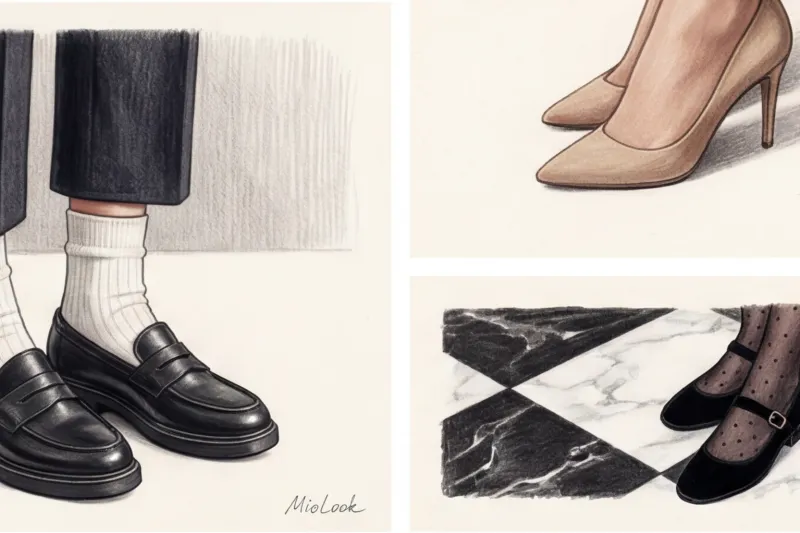
Pairing white socks with black leather loafers is the ultimate preppy aesthetic and a true old-money style. This combination works thanks to the sharp graphic contrast. To create a more premium look, choose medium-weight socks without any lettering. If the loafers are patent leather or feature prominent hardware (like the iconic Gucci models), the toe should be as minimal as possible, providing a clean backdrop.
Pairing socks with pumps and sandals is a high-fashion staple that has long since migrated to the streets. Its own rules apply. Only nylon or silk socks without a reinforced toe or heel are acceptable with open-toed shoes. The seam at the toe should be hidden under the foot or, if this is a designer's intention (as in Prada's collections), deliberately exposed as a decorative element. Heavy cotton with a delicate stiletto heel creates visual dissonance and adds weight to the foot.
The most challenging part of styling is how socks can alter the proportions of the leg and ankle. The horizontal line created by the top edge of the sock cuts the leg mercilessly. If the edge ends exactly at the widest part of the calf, the leg will appear fuller and shorter. To visually narrow the ankle, stylists use the "accordion" technique: the toe is slightly lowered. The voluminous texture of the fabric, in contrast, makes the leg itself appear thinner and more fragile.
Varying sock height is a matter of millimeters. A mistake of a few centimeters can make you look shorter.
To avoid cutting proportions blindly and changing clothes several times before going out, I ask my clients to use the "smart wardrobe" feature in MioLook By adding your footwear and hosiery options, you can create outfits in advance and evaluate how a particular sock height and color work with the length of a skirt or cropped trousers. This eliminates stylistic missteps and saves a significant amount of time.
Pairing Shoes and Tights: Common Mistakes and Rules of Elegance
Have you ever noticed how often, even on the red carpet, a luxurious look is ruined by a single detail that visually cuts off the legs and steals height? Shoes and hosiery are the foundation of a silhouette. An improper junction between the heel of the shoe and the ankle can ruin the effect of a designer outfit costing several thousand euros.
Pairing black shoes with light-colored tights is a classic pitfall that many women still fall into. According to the laws of color and visual figure correction, the sharp contrast at the ankle creates a horizontal line that mercilessly shortens the legs. This stylistic move is only acceptable in two cases: if you're consciously channeling '60s aesthetics (complementing the look with an A-line miniskirt), or if you're embracing a preppy style, where white cotton tights are paired with chunky black loafers.
One of my favorite techniques for visually elongating the silhouette, which I often use on shoots, is to choose shoes that aren't the same color as your tights, but a shade or two darker. This creates the illusion of an endless leg and makes your ankle look more graceful.
In all other situations, I strongly recommend maintaining a vertical color scheme. To accurately create such proportions and spot color clashes in advance, I recommend loading your accessories and shoes into the "smart wardrobe" feature in MioLook - this way you can always evaluate your look before leaving the house.

Now let's debunk one of the most persistent fashion myths: the strict ban on pairing peep-toes with tights. Former French Vogue editor-in-chief Carine Roitfeld proved back in the 2000s that this rule can and should be elegantly broken. The secret lies in modern manufacturing technologies: today, it's perfectly appropriate to wear seamless, ultra-thin black nylon (up to 8-10 denier) with elegant sandals or open-toe shoes.
The key to this look is the complete absence of a reinforced toe box and visible seams on the toes. A sheer black veil on the feet creates a subtle, dramatic haze effect that works stunningly in evening looks with velvet, suede, or patent leather shoes.
Another critical mistake lies in the dissonance of textures, namely, pairing thick wool tights with lightweight shoes. Wearing matte winter tights (80 denier and above) with open-toed stiletto pumps or satin pumps is an absolute no-no in an elegant wardrobe. This is due to the so-called "visual weight" of the materials. Thick merino wool or cashmere requires a strong foundation: leather ankle boots, high boots with a sturdy heel, or chunky brogues. Wearing such tights with lightweight shoes will visually transform your foot into a disproportionate hoof, and the entire look will become heavy. Elegance is always a balance of density.
Your ideal image begins Here
Join thousands of users who look flawless every day with MioLook. Plan texture and shade combinations with just one click.
Get access — €0.99 onceChecklist: A Basic Capsule Wardrobe of Tights and Socks
Have you ever wondered why your underwear drawer often resembles a lost and forgotten item? A 2023 study by a British textile association revealed a paradoxical figure: the average European woman buys 17 pairs of tights a year, but regularly wears only three of them. When reviewing my clients' wardrobes, I constantly encounter this problem: dozens of random packages, stretched elastic bands, and not a single pair that perfectly complements their morning look.
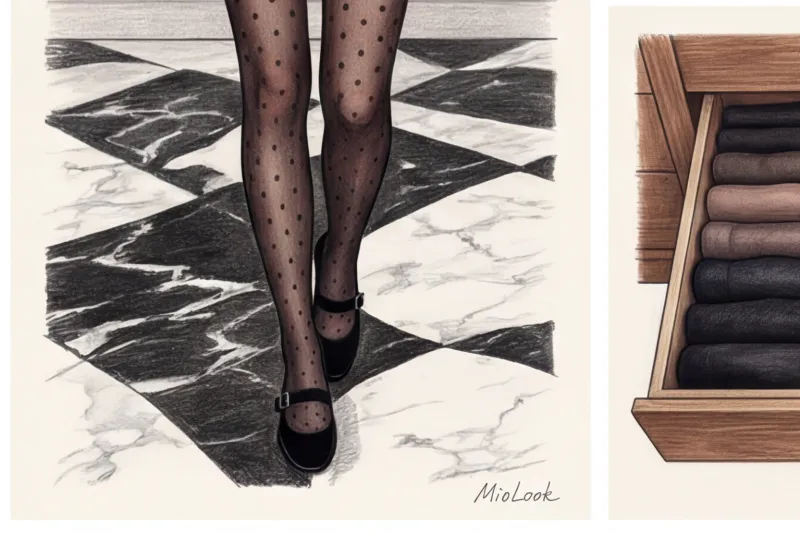
My professional response to this chaos is strict integration with the capsule wardrobe concept. Hosiery shouldn't be consumables, bought in a hurry. By understanding exactly how to choose the right tights for your needs, you can assemble a compact yet reliable essential. Below is my personal must-have list, which I compile for my clients. This mathematically verified minimum covers 99% of styling needs.
- Ultra-thin matte nude (8-15 DEN) - 2 pairs (for the record). This is your strategic backup. Even if you're a fan of pantsuits, a sudden invitation to a formal event or business reception shouldn't catch you off guard. Two pairs will ensure that if you accidentally snag them just before you go out, you'll have a backup. My advice: keep them in their original packaging until the big moment.
- Translucent black (20-30 DEN) - 3 pairs (basic for every day). The absolute foundation of elegance. They create a beautiful shadow on the leg, visually narrow the ankle, and complement everything from a formal pencil skirt to a silk slip dress. Three pairs are enough for comfortable rotation between delicate washes.
- Thick black or graphite microfiber (50-80 DEN) - 2 pairs. Indispensable for the transitional season and for working with complex textures (tweed, leather, thick wool). Pay attention to the graphite shade—it looks much softer and more luxurious than a deep black, perfectly tying in with the autumn palette. Choose styles with 3D weave threads; they provide a slight compression effect and don't slip.
- Winter with cashmere/merino wool - 2 pairs. A true investment in your comfort. High-quality cashmere wool can range from €40 to €80, but it's well worth it. Unlike cheaper acrylic alternatives, premium wool doesn't create unsightly creases under the knees, doesn't pill after the third wash, and allows you to wear dresses elegantly even in subzero temperatures.
- High-quality basic socks: smooth silk/nylon, ribbed cotton, wool. Forget shapeless multipacks. Your sock capsule should include three carefully considered textures. Smooth silk socks are essential for elegant loafers and oxfords. Thick cotton rib is the perfect base for casual looks with sneakers. And thin woolen options will keep you warm in the cold without weighing you down.
Seven to nine pairs of tights and a well-thought-out sock set aren't a limitation, but a relief from the morning rush. To maintain this perfect order and know exactly when it's time to update a worn-out item, I strongly recommend keeping track of your basic accessories. MioLook By digitizing your lingerie capsule once, you'll forever eliminate impulse purchases and the "nothing to wear" problem.
Caring for premium hosiery
The most common "fashion confession" I hear from clients after a wardrobe review is: "Julia, I bought that same pair of Wolfords for €45, wore them twice, and they started pilling and losing their shape." And almost always, the conversation reveals that the washing machine drum is to blame for this disappointment.
Let's examine this process from a materials physics perspective. Machine washing, even on a delicate cycle and in a special mesh bag, slowly but surely destroys the elastane in expensive tights. While the bag does protect the delicate fabric from snagging on the fittings of other clothing, it's completely powerless against thermal shock and chemical attack. Elastane (or Lycra) is a polyurethane fiber that provides that perfect fit. Prolonged exposure to water warmer than 30°C and conventional laundry detergents containing active enzymes and optical brighteners causes the polyurethane structure to deteriorate. As a result, the garment begins to sag unattractively at the knees and wrinkle at the ankles.
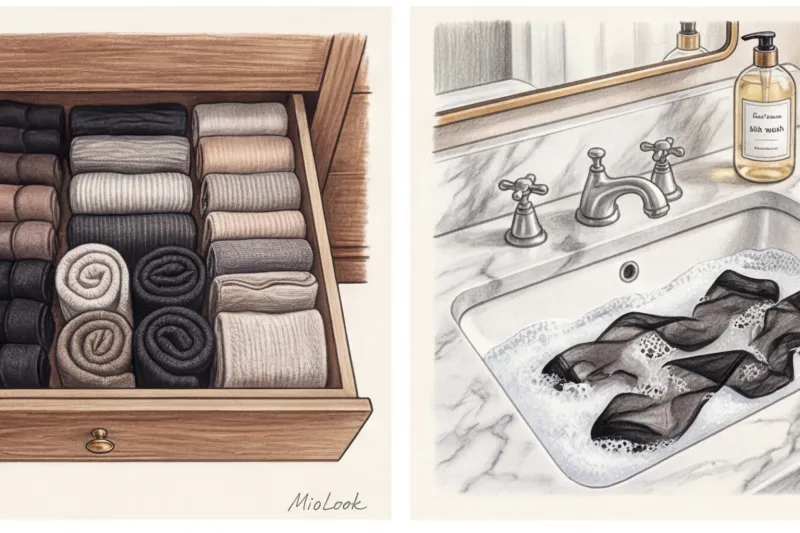
Proper washing of premium knitwear is strictly a manual process. I recommend using only cool water and gentle liquid detergents designed for natural silk or cashmere. Soak the item for 10 minutes, gently massage (do not rub!), rinse in clean water, and never wring. To remove excess moisture, simply blot the tights with a clean terry towel and lay them flat to dry, away from radiators.
Equally important is how to properly store this delicate accessory. Tying tights in a classic knot is a real crime against their shape, as it stretches the fibers and deforms the waistband. I've adapted the KonMari method for a basic wardrobe: we fold the tights in half lengthwise and then roll them into neat rolls, starting from the toe to the waistband. This way, the elastic stays in place, and you can immediately see the density and color in the drawer. Be sure to use fabric organizers—unpolished wooden or plastic dresser walls often leave micro-snags. To optimize this process and always keep your finger on the pulse of your underwear arsenal, it's convenient to use MioLook By digitizing your accessories, you'll never buy a fifth pair of black 20-denier jeans again, forgetting about the ones already at the bottom of your drawer.
Now it's time to debunk one of the most popular internet myths: the secret freezer trick. For years, many glossy magazines have been peddling the advice that if you wet new nylon tights and put them in the freezer overnight, they'll become stronger than steel.
From a polymer chemistry perspective, this is a harmful misconception. Exposure to extremely low temperatures makes polyamide fibers (nylon) glassy and brittle. Furthermore, water expands when it freezes, creating microscopic tears within the thread itself. When I was a student at the Milan Academy, I decided to test this life hack on my first pair of expensive tights. The result was disastrous: not only did they not become stronger, but they tore at the first pull, as the fibers lost their elasticity due to the temperature change. The only thing that truly strengthens nylon is the double-wrapping technology used during manufacturing. Save the freezer for gelato.
To summarize our research, I want to emphasize: understanding how to choose the right tights is only the first step to an elegant look. The second, equally important step is proper care. Treat your hosiery not as a utilitarian disposable item, but as a full-fledged accessory, a kind of makeup for your legs. Invest in the right textures, follow the rules for neutralizing colors, and care for them with respect for the material. It is from these invisible nuances that a truly luxurious and impeccable style is built.
Guide Chapters
How to Wash Nylon Tights Properly: Stylist Tips
Nylon tights are not a disposable item. Learn the key secrets of careful washing and storage that will significantly extend the life of your tights.
Shapewear: How to Choose the Perfect Pair
The secret to a flawless silhouette in a bodycon dress is the right underwear. Let's explore how to choose shapewear tights without sacrificing comfort and style.
Can you wear tights with sandals? A stylist's advice.
Combining tights with open shoes used to be considered a total no-no. We'll explain how this look became a favorite trend among fashion editors.
What tights to wear to the office: dress code rules
Cheap, shiny tights can ruin even the most expensive business look. Learn the secrets to choosing the perfect tights for formal and summer dress codes.
What to wear with white tights to look expensive
White tights are no longer a childish accessory, but a tool for creating luxurious and classy looks. Learn how to incorporate them into your wardrobe.
What to wear with fishnet tights: stylist tips
We're deconstructing the most stigmatized wardrobe item. Learn how to wear micro-mesh and printed tights stylishly while remaining elegant.
What to wear with colored tights: stylish outfit ideas
Afraid of bright accents? We'll tell you how to pair colorful tights correctly to create an expensive, modern look without the "kindergarten" effect.
How to Wear Socks with Loafers: Style Dos and Don'ts
Socks are the litmus test of your wardrobe. We'll explore how to stop hiding them and learn how to stylishly pair them with your favorite shoes.
Warm winter tights: how to choose the right ones without adding bulk
How to choose the right warm winter tights to keep you warm in the cold without adding bulk. We'll explore the secrets to the perfect texture with a stylist.
What to wear with black nylon tights: stylist tips
Black nylon can either pull an outfit together or cheaply ruin it. We'll explore the rules for choosing density and texture to create flawless combinations.
What is denier in tights: how to choose the right density
The wrong density of hosiery can ruin even the most expensive look. We explain what DEN really means and how to choose the right tights.
How to choose nude tights: rules and common mistakes
Nude tights can either enhance your status or ruin your expensive look. We'll explain how to choose the perfect pair and avoid the "plastic legs" effect.