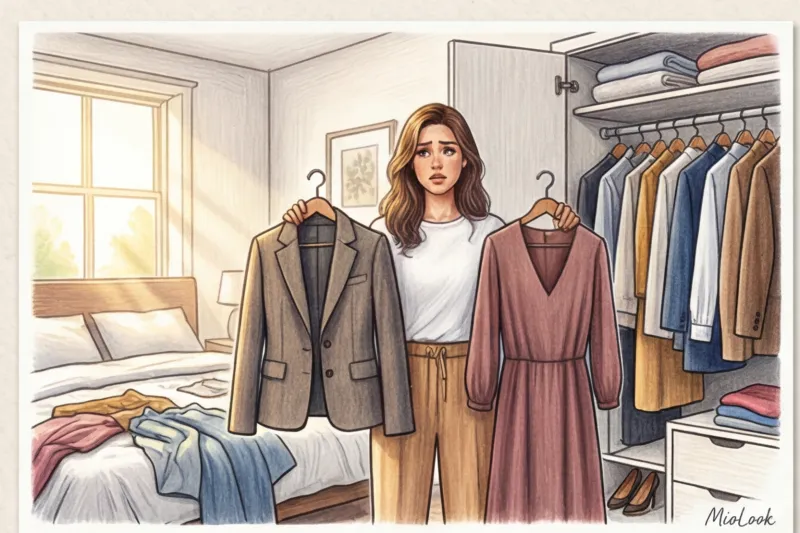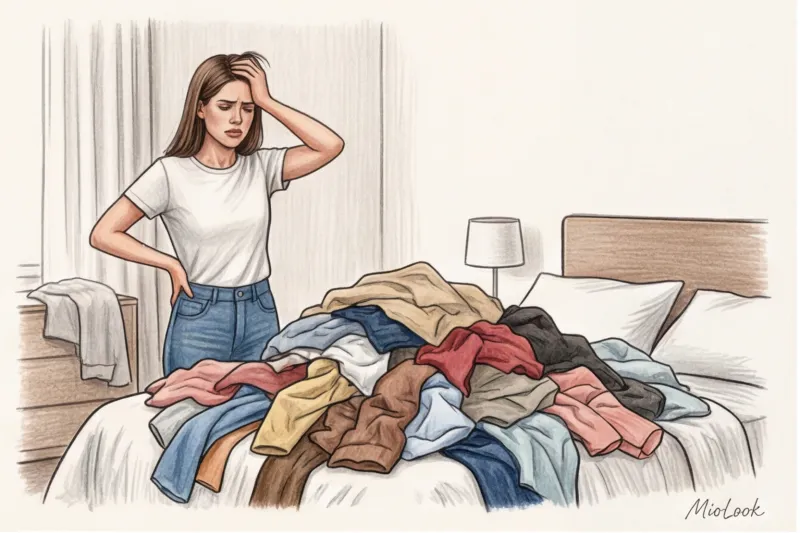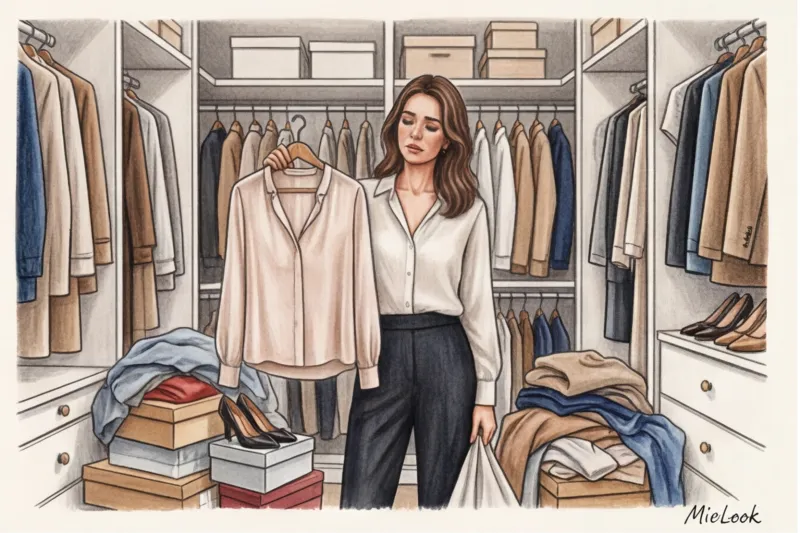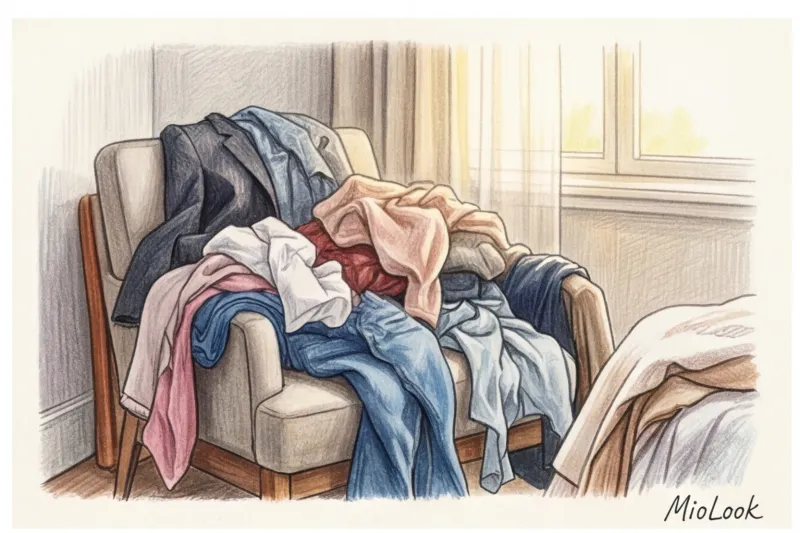
Do you know how much time we spend, on average, mulling over our closets in the morning? About 15–20 minutes each day. It seems like a small amount. But if you break out the calculator, the math is sobering: that's over an hour and a half a week, or three full days a year, spent rummaging through hangers in a state of mounting panic. In my 14 years as a personal stylist, I've seen hundreds of luxurious closets where the owners still utter the sacramental, "I have nothing to wear."
That's why the concept of storing things is changing dramatically today. While we used to simply sort clothes by color on shelves, now the focus is on Digital Wardrobe: Your Virtual AI Stylist , which takes care of the routine. In this article, we'll look at how high-quality an app for planning your weekly look acts as your "outer prefrontal cortex," eliminating morning decision fatigue and giving you back precious minutes of sleep.
Why trying on clothes in front of a mirror in the morning is your worst enemy
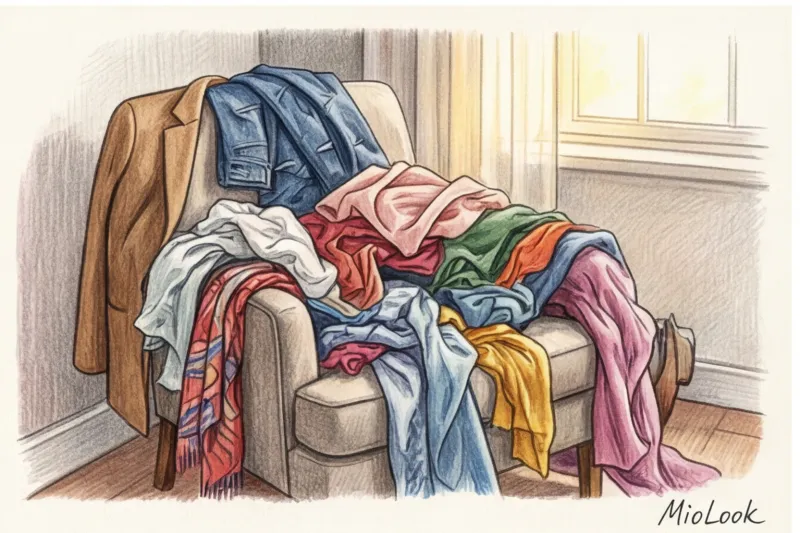
I remember my client Marina, a top manager at a large IT company. She had a magnificent closet with 300 well-thought-out items. But every morning, the same scenario played out: Marina would wake up, look at her watch, frantically try on a silk blouse, realize the pants didn't match, toss it all on the ottoman, put on her usual blue jeans and work jacket, and run out. By Friday, the ottoman had transformed into the famous "chair of rejected clothes," and Marina would feel tired even before the workday began.
In cognitive psychology (starting with the seminal research of Roy Baumeister in 1998) this is called decision fatigue — decision fatigue. Our brain has a limited amount of willpower per day. Steve Jobs wore identical Issey Miyake turtlenecks not because he lacked taste, but to avoid wasting cognitive resources on utilitarian tasks.
Morning stress physiologically blocks creativity. When you have 10 minutes left before you leave the house, your cortisol levels won't allow you to come up with a complex, multi-layered look. In a rush, we always take the path of least resistance and choose "safe," painfully boring combinations. If you want to look interesting, morning fittings should be completely avoided.
Weekly Lookbook App: From Notes to AI
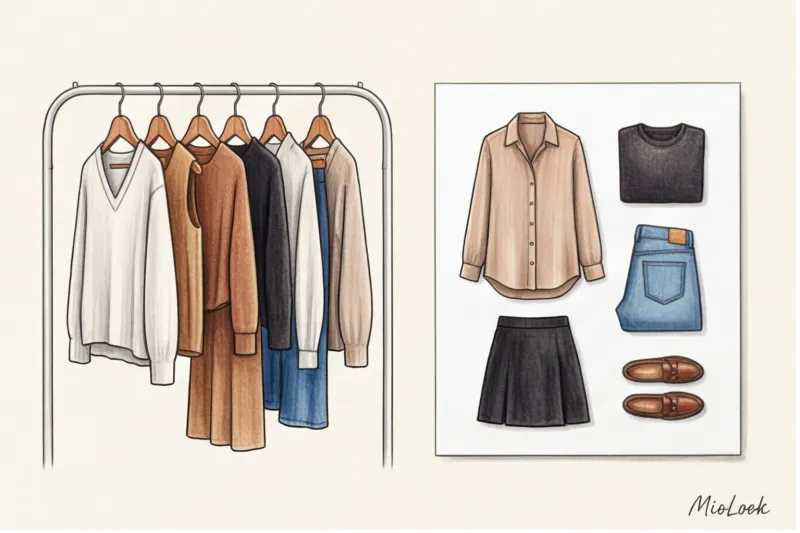
Of course, the idea of preparing clothes in advance is nothing new. Our mothers ironed clothes the night before, and stylists in the 2000s created mood boards in notebooks. Then came the introduction of racks in bedrooms where the capsule wardrobe would be hung for five days. But this still required a huge investment of time.
Your perfect look starts here
Join thousands of users who look flawless every day with MioLook. Artificial intelligence helps you create looks for the entire week in just a few clicks.
Get access — €0.99 onceToday, the evolution of planning has led us to smart digital solutions. What should a modern styling app do, based on the functionality of MioLook?
- Automatic background removal: You simply take a photo of the item on the bed, and the neural network cuts it out, making it look like a catalog photo.
- Smart tagging: The AI itself understands that in front of it is a “wool blazer, fall-winter season, camel color.”
- Virtual fitting room: the ability to layer things on top of each other on a smartphone screen.
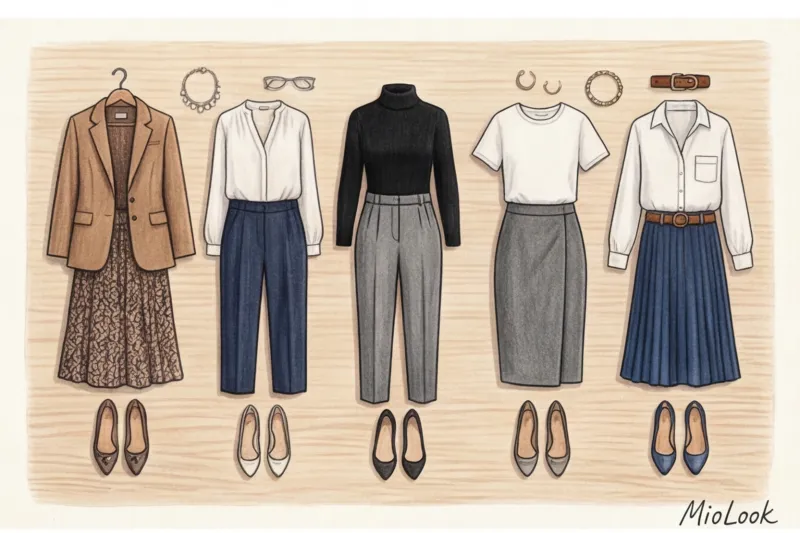
Research in visual merchandising shows that when you see items on a flat screen without the constraints of shelves and hangers, your brain begins to generate entirely new connections. You suddenly notice that that burgundy Uniqlo merino sweater looks stunning with olive palazzo pants, even though they're hung in different corners of your closet and you've never worn them together.
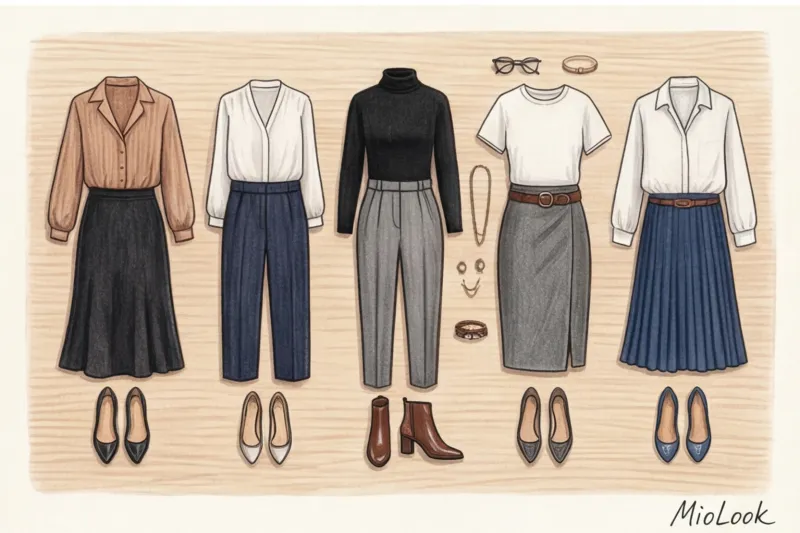
The 5+1 Stylist Method: How to Plan Your Week Properly
I'll let you in on a professional secret: stylists never plan a wardrobe "in a vacuum" or based on the principle of "just pretty things." We always start from the context. Moreover, I categorically advise against rigidly planning every seven days. Use my signature "5+1" method—five workdays plus one backup look (in case of emergency), leaving one weekend for complete freedom.
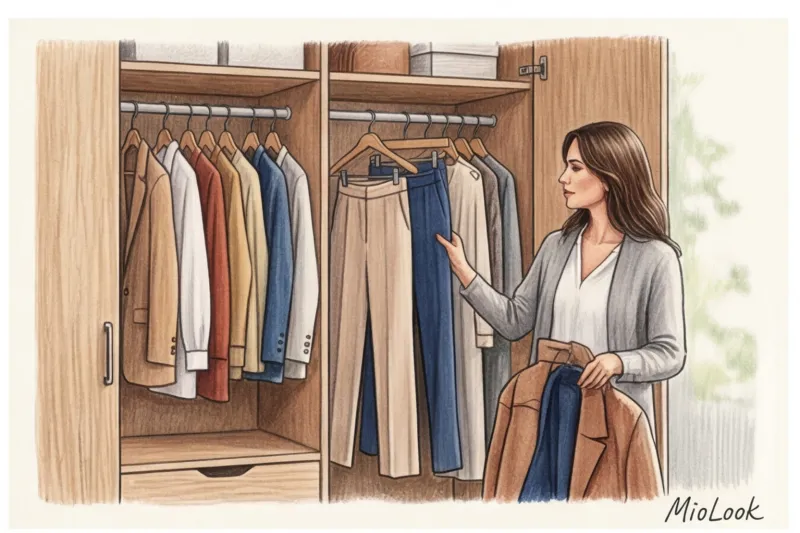
Here's the step-by-step system I implement with my clients:
- Audit of schedules and weather. You open your calendar for next week. Tuesday – meeting with management (strictness is needed). Wednesday – all day at the computer and Zoom calls (choose comfortable knitwear). Thursday – after work, go to the theater. Context dictates everything.
- Selecting "anchors". For each of the 5 days, assign a key thing. For example, on Monday it will be oversized jacket On Tuesday, a thick viscose midi skirt; on Wednesday, your favorite wide-leg jeans. This is your foundation in the app.
- Accessory modification. The most common morning problem is shoes and bags. We put on a great outfit, only to realize the only boots that go with it are those in the repair shop. The app lets you instantly pair your look with the right pair of shoes, belt, and jewelry.
Balance of base and accents in a weekly capsule
To avoid the feeling that you're wearing the same thing over and over again, it's important to alternate the mood of your looks. business capsule wardrobe is built on the right ratio: 70% base and 30% accents.
The app makes it easy to ensure that a bold statement piece (like an emerald jacket or leopard-print loafers) works for you twice a week, but in completely different ways. On Monday, you might wear the jacket with a white shirt and tailored trousers, and on Friday, you might pair it with a basic gray 180g/m² T-shirt and relaxed jeans.
The myth of loss of spontaneity: “What if I want to wear something different on Tuesday?”
This is the most common objection I hear during the first consultation: "Olena, if I plan everything on Sunday, I'll be bored! I'll lose my creativity, and what if it rains on Tuesday or I'm just in the mood for a dress?"
Let's bust this stereotype. As I've already said, spontaneous morning "creativity" at 7:30 AM is a myth. True creativity in styling happens on the weekend, when you're sitting with a cappuccino, scrolling through Pinterest, and calmly putting together complex looks on the app, testing how textures work together.
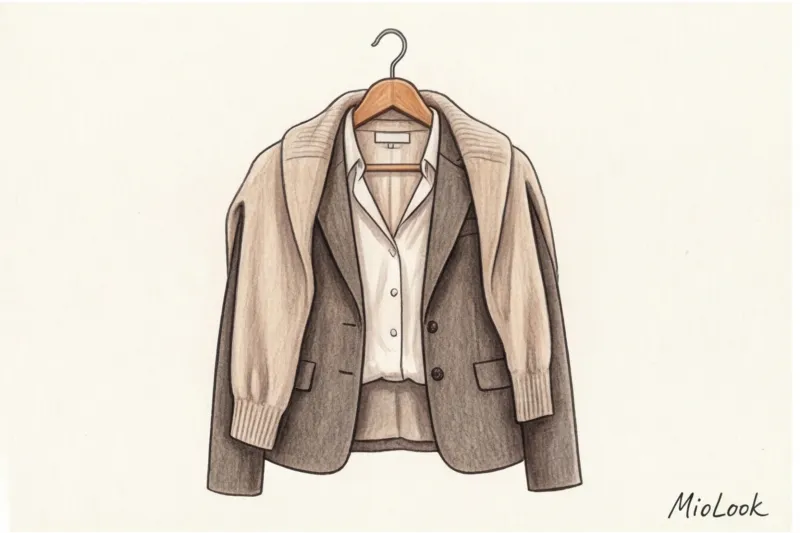
Planning at MioLook isn't a maximum-security prison, it's a flexible framework. I teach my clients the technique. "replaceable modules" Let's say you have a planned outfit for Wednesday: beige trousers, a silk blouse, heeled pumps, and a structured bag. But you wake up this morning with a slight headache and a desire for comfort. You don't ruin the whole look! You simply change one element: instead of pumps, you put on soft suede loafers and throw on a voluminous cashmere cardigan over the blouse. The basics remain, but your mood changes in 30 seconds. Without a plan, you'd be back to your go-to jeans.
Access to MioLook for €0.99 — one-time payment
A smart AI stylist will help you find the perfect look. Create flexible capsule hairstyles and save hours in the morning.
Get access — €0.99 onceSunday Ritual: Instructions for Launching the Look Planner
To make the system work, you need to turn your routine into a pleasant ritual. Set aside exactly 20 minutes on Sunday afternoon.
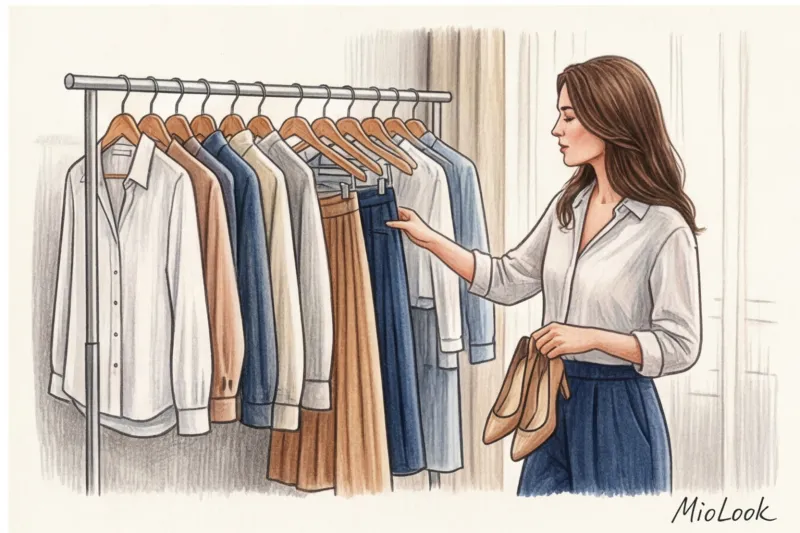
- Step 1: Digitize the new. If you bought a new skirt from Massimo Dutti or ordered a sweater this week, don't hang them up right away. Take a photo first and upload them to the app. This is an ironclad rule: if the item isn't in your digital wardrobe, it doesn't exist in your morning brain.
- Step 2: Assembling the five bows. Open the app and, using the calendar (as we discussed in the “5+1” method), create outfits for your workdays.
- Step 3: Physical preparation. Yes, after digital assembly, you need to go to the closet and check these items. Is there a stain on the shirt? Do the pants need steaming? Preparing the basics from Sunday evening guarantees a perfect week.
- Step 4: Saving templates. Be sure to save the week's best looks to the "Favorites/Tested" folder in the app. This is your lifeboat for those days when you're too lazy to plan even on Sunday.
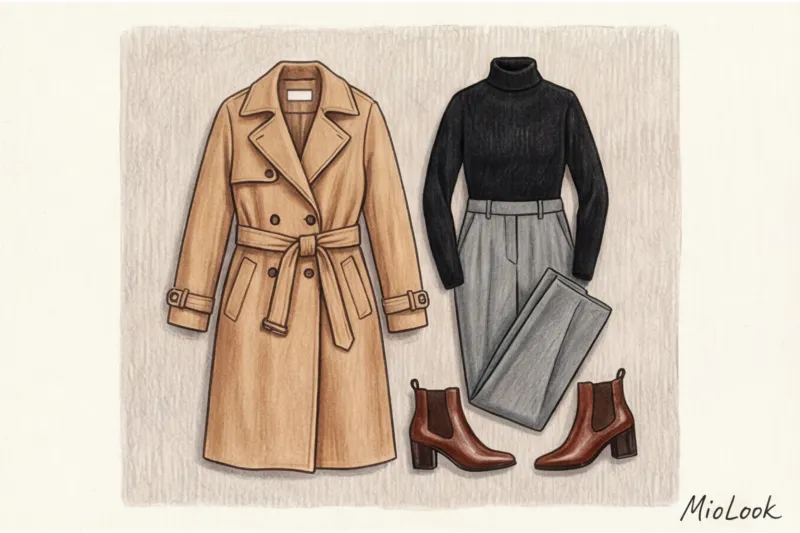
When it does NOT work: If you're trying to create outfits from un-ironed, repairable, or tight-fitting clothes, a planner isn't a magic wand; it won't make tight pants comfortable. First, an honest wardrobe audit, then digitalization.
Checklist: How to Know if Your Image System is Working
How will your life change after a month of using a planning app? I regularly measure these metrics with my clients, and the results are always impressive.
First, the reverse Pareto principle comes into play. We typically wear 20% of our wardrobe 80% of the time. Using a visual planner, wearability increases to 70–80%. You suddenly start wearing those same pants you forgot about two years ago.
Secondly, the CPW (Cost Per Wear) index drops dramatically. That expensive designer bag finally starts to earn its return on investment because you now see it on screen and integrate it into your looks.

Thirdly (and everyone notices this!), details appear in your looks. Belts, intricate knots on scarves, statement earrings, interesting layering—all the things that make a look "tasty" and complete. There's never enough time for these nuances in the morning rush, but they're easily dreamed up on a smartphone screen on Sunday.
But the most important criterion for success is that you sleep 15 minutes longer, and when you wake up, you know for sure: today you will look great, and you won't have to put in any effort. All the hard work has already been done by your virtual stylist.
Ready to get started?
Try a free plan—no commitments required. Start digitizing your wardrobe today and give yourself the gift of peaceful mornings.
Get access — €0.99 once