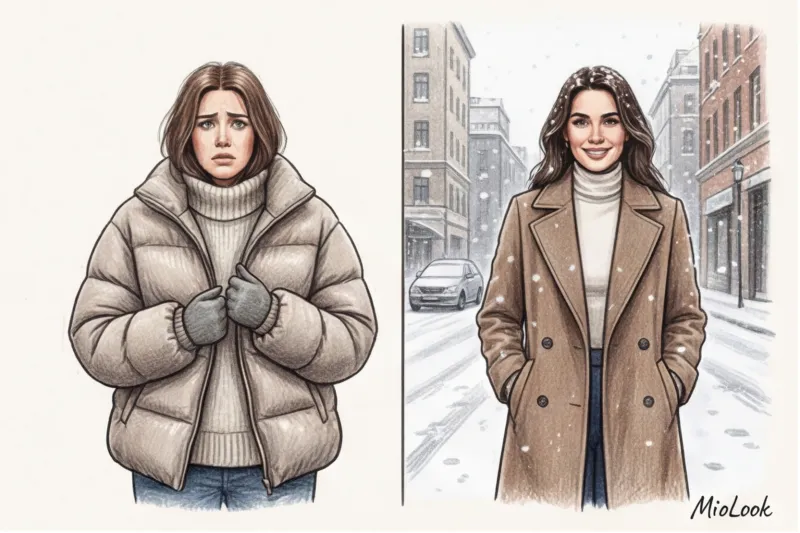
"I put on my thickest sweater, but I was still frozen to the bone while waiting for a taxi." Over 12 years of working as a personal stylist in Europe, I've heard this phrase from clients hundreds of times. We're used to thinking that the key to warding off the cold lies in the volume and weight of our clothing. But the reality every woman faces in winter is the conflict between the desire to look elegant and the instinct for self-preservation, which compels us to wrap ourselves in shapeless cocoons.
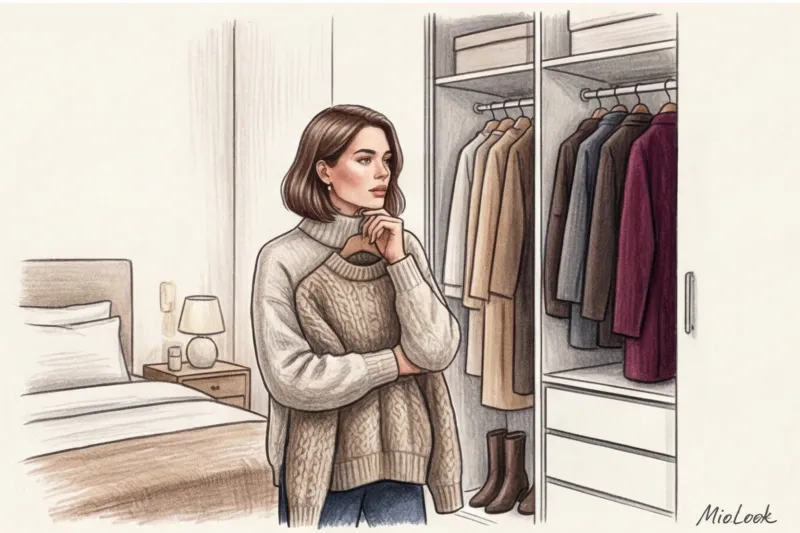
To break this vicious circle, you need a working system. And while we've already covered the basic principles of a smart wardrobe in detail, our complete guide to capsule wardrobes , the cold season requires a completely different approach. The mathematics of winter style is based not on aesthetics, but on the laws of thermoregulation.
Thoughtful winter clothing capsule — this is your personal climate control. Today we'll explore how to create up to 30 warm looks using just 12-15 key pieces, eliminating the "cabbage" effect once and for all.
Why a Winter Clothing Capsule Is a Challenge (and How to Take It)
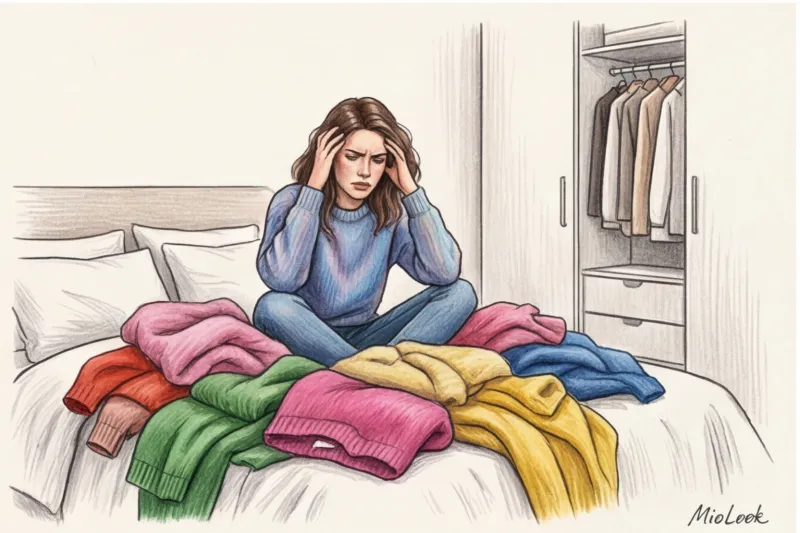
Every other winter wardrobe review I see is the same: the closet doors barely close, the shelves are overflowing with bulky hoodies and chunky knit sweaters, and the client has nothing to wear. Winter clothes physically take up three times as much space as summer ones. This creates a dangerous illusion of abundance.
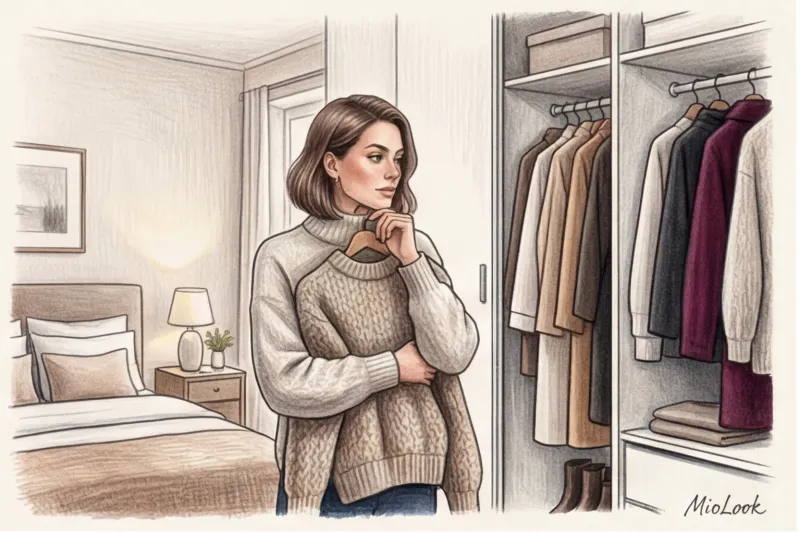
One of my clients in Berlin complained that she spent 20 minutes every morning searching for the right sweater in her tightly packed dresser drawer. Yet she only wore two sweaters out of fifteen—the rest were either itchy or didn't fit under her outerwear. It's a classic problem with impulse shopping.
The solution lies in rigorous filtering. The winter capsule should consist exclusively of elements that work together like a construction set. We don't need a lot of things—we need the right combinations.
Your perfect look starts here
Join thousands of users who look flawless every day with MioLook.
Get access — €0.99 onceThe Three-Layer Rule: The Secret to Warmth Without the Cabbage Effect
The most common misconception is that "the thicker the sweater, the warmer." In fact, it's not the thickness of the yarn that creates warmth. It's the air trapped between the fibers and layers of clothing that warms.
I often adapt outdoor gear principles for urban looks. According to research from textile institutes, layering with air pockets retains up to 30% more warmth than a single, thick layer of fabric. How does this work in the city?
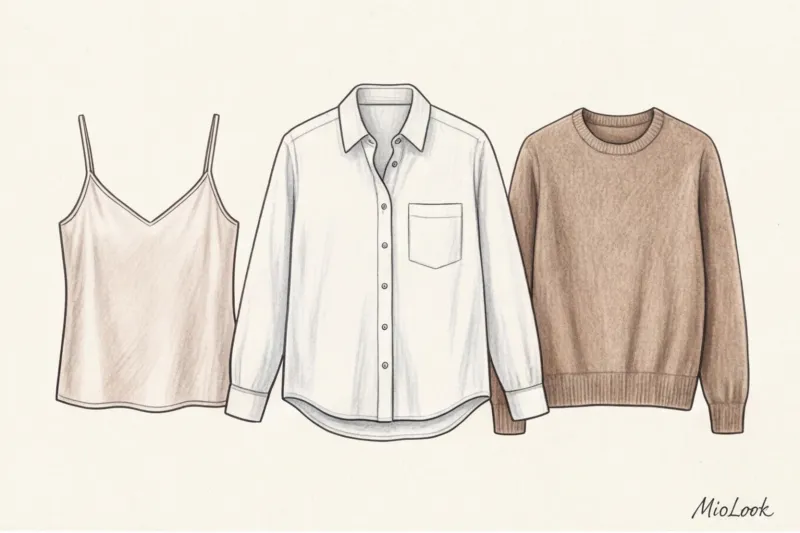
- First layer (base): wicks away moisture. Forget about cotton tank tops in extreme cold. Cotton instantly absorbs sweat, cools down, and begins to cool you down. The ideal first layer is a thin merino wool-blend thermal underwear or a silk top.
- Second layer (insulating): retains heat. This is where fine cashmere, thick cotton, or smooth merino wool come into play. They create that airy cushion.
- Third layer (protective): blocks the wind. Your outerwear should cut off the external cold flow, preventing the heat from being blown out of the inner layers.
Of course, this rule has its limitations. Thin silk and cashmere won't protect you at -30°C in Siberia—you need specialized gear for extreme temperatures. But for a European winter with slush and temperatures down to -10°C, this method works flawlessly.
What does the ideal consist of? winter clothing capsule: stylist checklist
The foundation of a work capsule wardrobe is based on strict mathematics: for every bottom, there should be at least three tops. We change pants and skirts less frequently, but changing tops, cardigans, and sweaters sets the tone for the entire look.
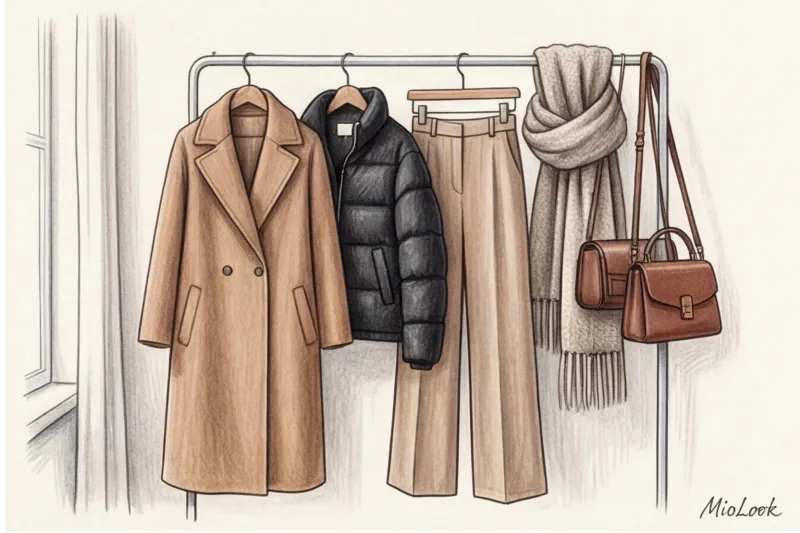
Let's look at each category through the lens of quality and compatibility.
Outerwear: Winter's Essential Investment
If you're on a budget, skimp on T-shirts, but outerwear must be impeccable. That's what people see you in 80% of the time in winter.
You'll need two basic pieces: a high-quality wool coat (look for at least 70% wool on the label) with a straight cut and an insulated lining, and a simple down coat without unnecessary fittings. My favorite style hack for in-between seasons coats is to use ultra-thin down vests (like those from Uniqlo) as a hidden insulating layer. This allows you to wear your favorite coat even in the coldest temperatures.
Knitwear: Reading Labels Like a Pro
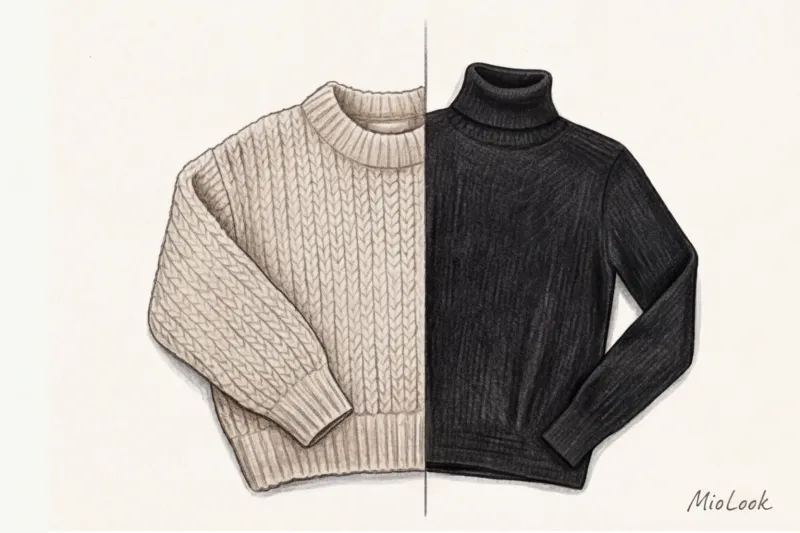
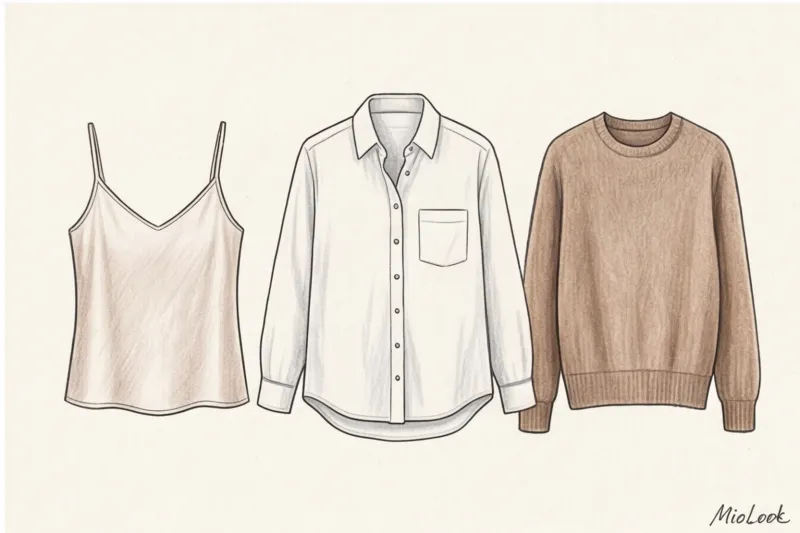
I strictly forbid my clients from buying sweaters containing more than 30% acrylic. One particularly telling example: a woman complained that she was constantly cold outside and sweating profusely in the office. She was wearing a luxurious, oversized sweater from Zara (80% acrylic, 20% polyester). We replaced it with a superfine cashmere jumper from Massimo Dutti, and the problem went away that same day.
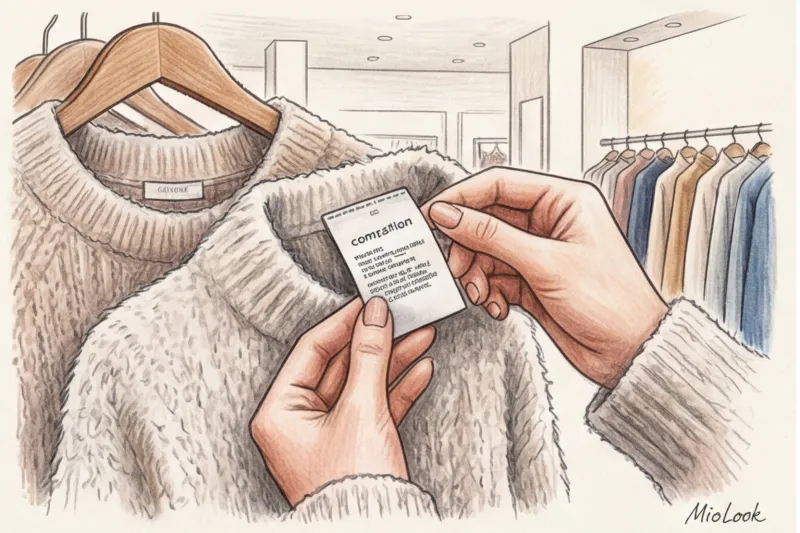
Acrylic creates a "greenhouse effect" but doesn't retain heat. Yes, cashmere and merino are more expensive. But let's calculate the cost per wear. A €40 acrylic sweater will pill in a month and be trashed. A basic €150 cashmere, with proper care, will last 5 years. A thin merino turtleneck and a heavy button-down cardigan are your best friends until spring.
Bottoms: Trousers and skirts for sub-zero temperatures
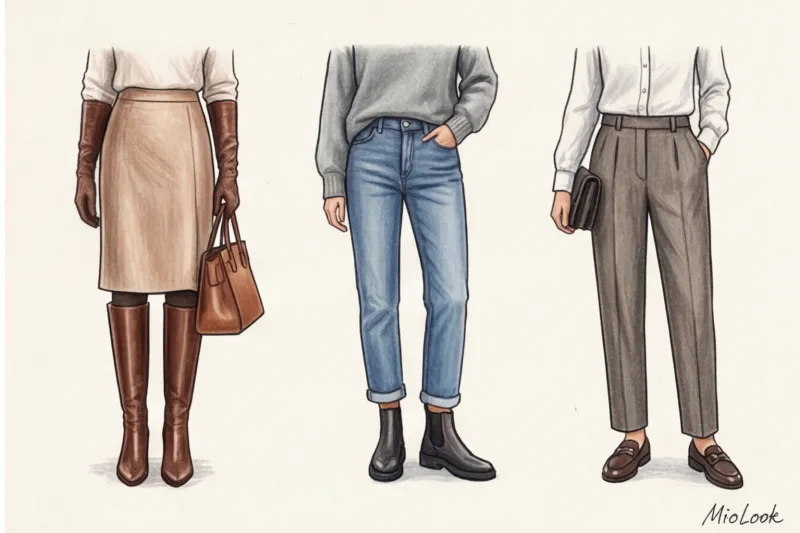
In winter, we need fabrics that hold their shape and protect from the wind. My top 3 for a basic capsule wardrobe:
- Wide trousers made of wool or thick flannel (you can easily wear thermal underwear underneath them without compromising your silhouette).
- Straight-cut jeans made of dense denim without stretch or active abrasions.
- A-line midi skirt made of structured fabric (tweed, eco-leather or thick wool).
Access to MioLook for €0.99 — one-time payment
A smart AI stylist will select the perfect look based on your items.
Get access — €0.99 onceWinter Shoes and Accessories: Putting Together Your Look
Footwear is the cornerstone of survival in a winter city. Do you know why your feet freeze even in expensive fur-lined boots? You buy shoes that fit.
This is a critical mistake. Tight shoes immediately constrict capillaries, blocking circulation. Furthermore, there's no room for warm air inside. My personal rule, proven true by Warsaw winters: buy winter shoes exactly one size larger.
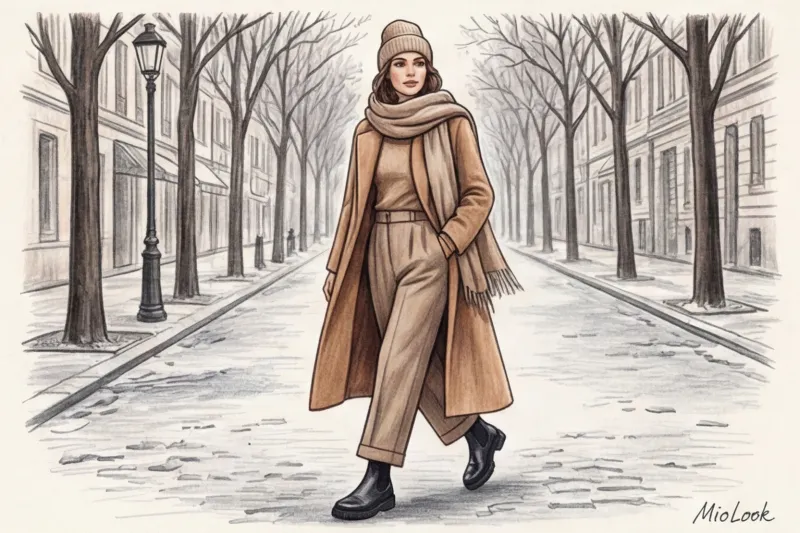
The second detail is the sole. The thicker it is, the further your foot will be from the frozen asphalt. Chelsea boots with a chunky tractor sole and tall tube boots (for skirts and dresses) will cover 99% of your style needs.
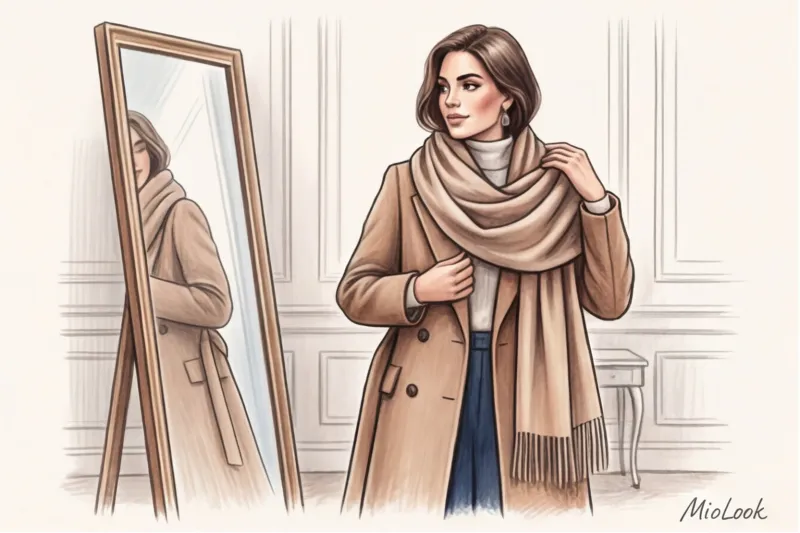
The accessory base should be monochrome: a smooth-knit beanie hat, a voluminous wool scarf, and cashmere-lined leather gloves in a single color scheme will pull together any look.
5 Stylish Winter Looks in One Capsule
The magic of a capsule wardrobe unfolds when you start mixing and matching pieces. Here are five tried-and-true formulas that work without fail.
- Strict office: Silk top + oversized cotton shirt + wool wide-leg pants + ankle boots + wool coat. The shirt underneath the coat creates a clean, vertical line, while the silk against the skin provides comfort.
- Long walk: Thermal leggings + straight-leg jeans + thin merino turtleneck + oversized chunky knit cardigan + down jacket + chunky-soled boots. Maximum layering.
- Theatre or dinner: A thick leather midi skirt + a cashmere jumper (COS makes great options) + thigh-high tube boots (that go under the hem of the skirt) + statement earrings.
- Friday Casual: Turtleneck + shirt (worn over the turtleneck, not buttoned up) + jeans + Chelsea boots.
- Relaxed weekend: Warm tracksuit made of thick brushed cotton + down jacket + contrasting voluminous scarf + beanie.
To avoid reinventing the wheel every morning, I strongly recommend digitizing your outfits. You can upload photos of your items to MioLook , and the algorithm itself will suggest fresh combinations from what’s already hanging in your closet.
The Biggest Winter Wardrobe Mistakes: Why You're Still Cold
Even with perfect clothes, a look can be ruined by minor stylistic or practical mistakes. Let's outline what absolutely must be avoided.
- Put on cotton as the first layer. I've mentioned it before, but I'll say it again: wearing cotton T-shirts under a sweater is guaranteed to make you feel cold as soon as you start sweating a little.
- Wear short outerwear with thin tights. If your down jacket ends above mid-thigh and has 40-denier nylon at the bottom, you're compromising the warmth. Thick wool pants or thermal leggings are essential under a short top.
- Ignore the gap between the shoes and the trousers. Bare ankles in winter are not only cold but also unfashionable. Wear ribbed ankle socks that match your shoes or pants.
- Get carried away with oversize on all layers. If you're wearing an oversized sweater and equally oversized pants, you'll lose your shape. Balance the volumes: a voluminous top calls for a more gathered bottom (and vice versa).
Action Plan: How to Assemble Your Winter Capsule This Weekend
Theory is dead without practice. If you want to organize your closet and face the cold weather fully prepared, set aside two hours this coming Saturday and follow these four steps.
- Get rid of visual noise. Collect all your summer sundresses, linen shorts, and lightweight blouses in vacuum-sealed bags and store them on the top shelves. Display only seasonally appropriate items.
- Conduct a ruthless audit of knitwear. Turn sweaters inside out and read the composition labels. Anything containing more than 50% acrylic or polyester, as well as items with irreparable pilling, should be recycled.
- Make a shopping list. More often than not, what's missing in a wardrobe isn't a "flashy dress," but rather boring but vital pieces: a good thin turtleneck, the right pair of smooth socks, or a pair of thick trousers. Buy what will tie your existing pieces together.
- Record the result. Create 10 ready-made outfits, try them on, and take photos with your phone (or save them in an app). Remember: we make stylish decisions on the weekend so we can simply enjoy the results on weekdays.
Ready to get started?
Try the free plan—no commitments required. Start creating perfect looks with AI.
Get access — €0.99 onceWinter isn't a reason to put your style on hold. It's a time for elegant textures, complex, deep shades, and clever design choices. Invest in quality materials, respect the physics of layering, and the cold will no longer be a problem.