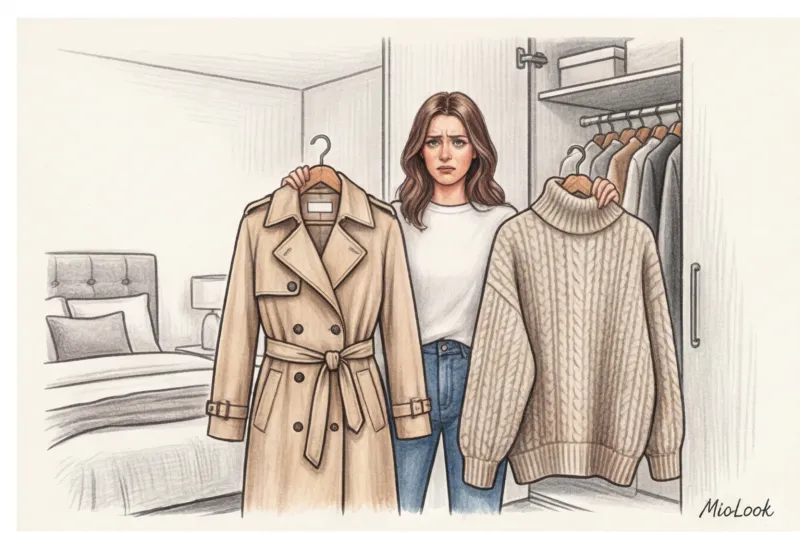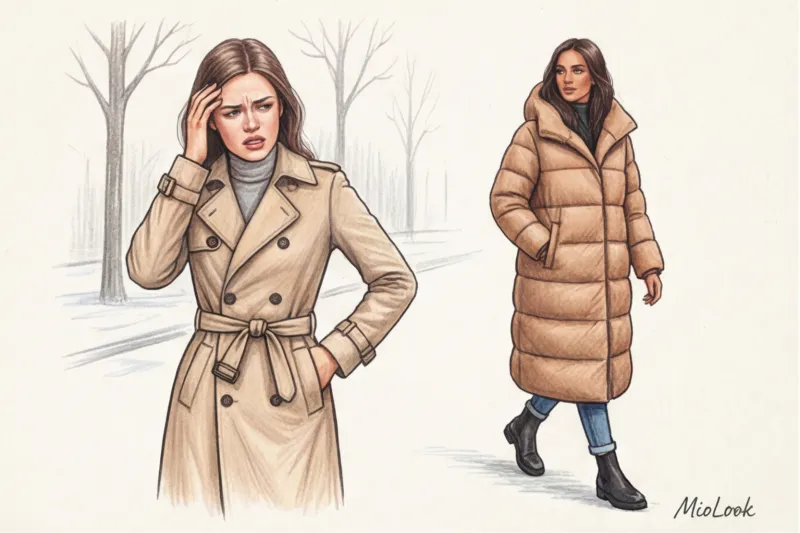
Last November, a client came to me in tears. She'd just bought a luxurious, fitted camel coat from Max Mara for €2,000, the kind she'd been dreaming about for three years. The result? She was freezing to the bone at the bus stop, and couldn't lift her arm to grab the handrail on the subway. The armholes were too tight for her thick cashmere sweater, and the lack of a membrane left the wool vulnerable to the icy wind.
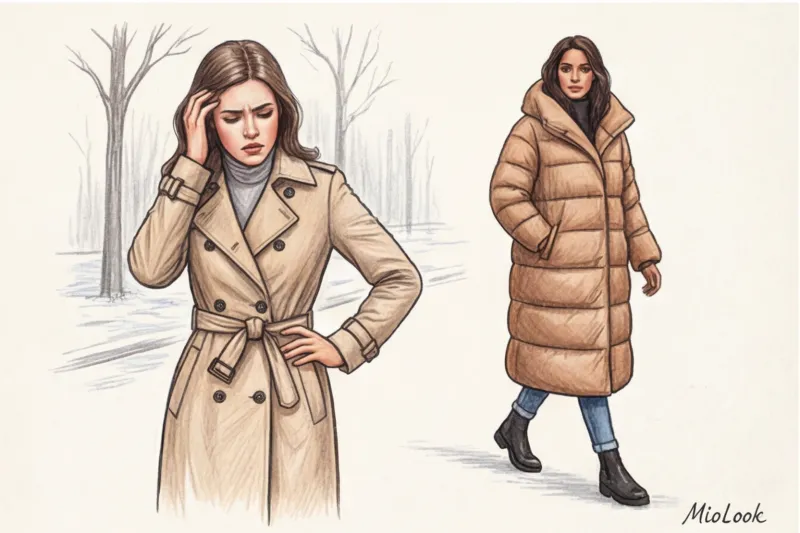
This story perfectly illustrates the main problem: we often buy winter clothes for the sake of a pretty picture, ignoring the harsh reality. When we pack basic winter wardrobe, outerwear should be more than just a pretty wrapper, but a functional tool. We discussed the architecture of such wardrobes in more detail in our The complete guide to basic outerwear.
Today, as a stylist and colorist, I'll show you how to put together a winter capsule that actually works in the cold without turning you into a shapeless snowman. And yes, we'll talk about why it's time to ditch your black down jacket.
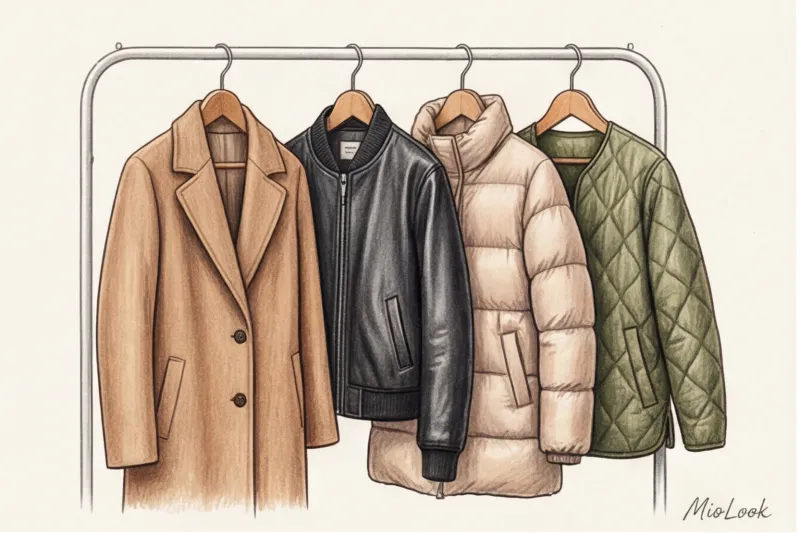
Winter Wardrobe Essentials: Outerwear That Actually Works, Not Just Hangs in the Closet
For years, glossy magazines have been feeding us lists of "5 must-have items for winter," featuring a thin wool coat and a short sheepskin aviator jacket side by side. In real winters, with temperatures ranging from -5°C to -25°C, such lists are useless.
In my practice I use the concept Wardrobe efficiency (coefficient of performance) It's calculated using the Cost Per Wear formula. If you buy a stunning but cool eco-friendly fur coat for $300 and wear it twice during the winter (because it's cold), its real cost to you is $150 per outing. A high-quality, technical parka for $500, worn 90 days straight, costs you only $5.50 per day of comfort.
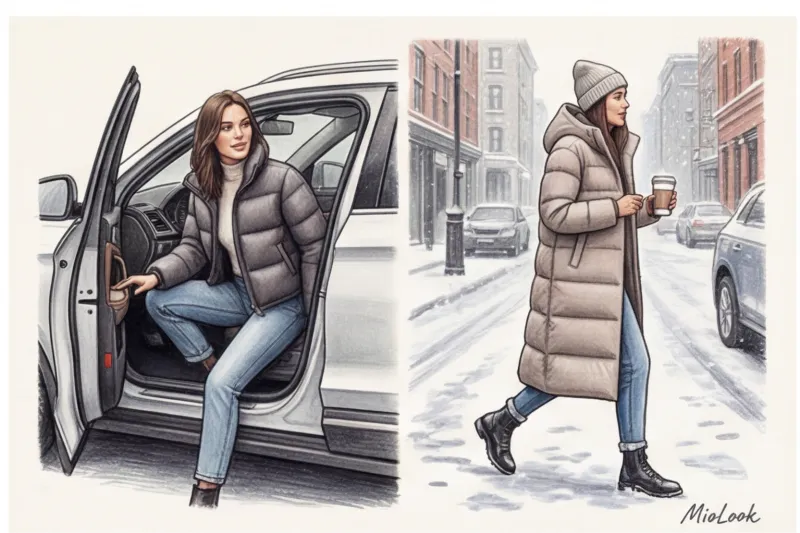
Outerwear is your protective shell. It should integrate into your lifestyle, not dictate it. If you spend 80% of your time driving, a long down jacket will become your nightmare. If you're waiting for a bus, a short jacket will guarantee hypothermia.
"There's no such thing as the perfect all-around winter jacket. There's only a well-designed layering system tailored to your personal schedule."
Winter Capsule Formula: 3 Layers of Protection Instead of One "Perfect" Coat
The outdoor gear industry has long solved the cold problem with a tiered system (for example, the military's ECWCS standard). I've adapted this principle for the urban environment. A single winter item isn't enough for the modern pace of life. You need a three-tier system.
Fair point: This three-layer approach is overkill if you live in a climate where winter temperatures top out at +5°C and rain. In that case, a good trench coat with a wool lining and a lightweight down jacket will suffice.
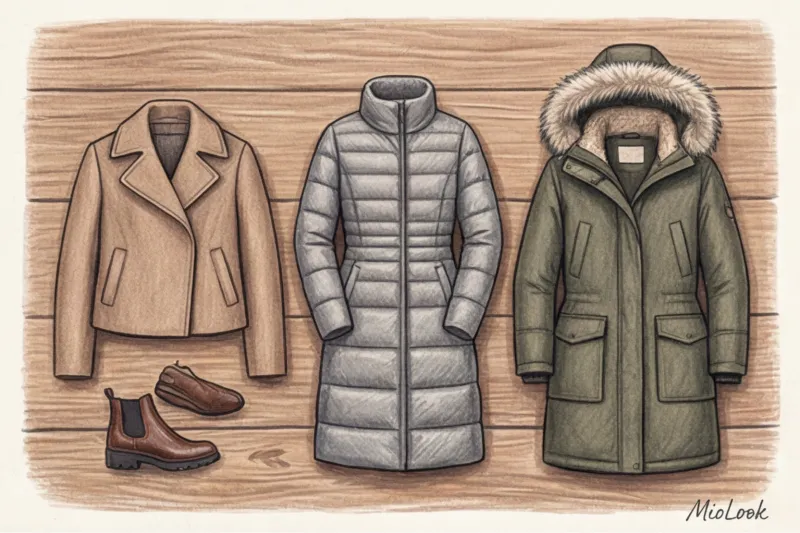
Level 1: Car, thaws and short runs
These are clothes for situations where you'll be outside for no more than 15 minutes. These include cropped, voluminous down jackets, thick shearling aviator jackets, and insulated blazer coats.
- The main requirement: freedom in the shoulder girdle for comfortable driving.
- Length: to the middle of the thigh or slightly higher, so that the hem does not wrinkle on the seat and does not get dirty on the car thresholds.
- Details: Avoid hoods that are too large and obscure your view in the rearview mirrors.
Level 2: City life, office and public transport
The workhorse of your wardrobe. These are the pieces you wear to the office, lunch, or a meeting. Midi coats with a windproof membrane (like those from the technical lines of Uniqlo or COS) or straight-cut quilted jackets are the best choices.
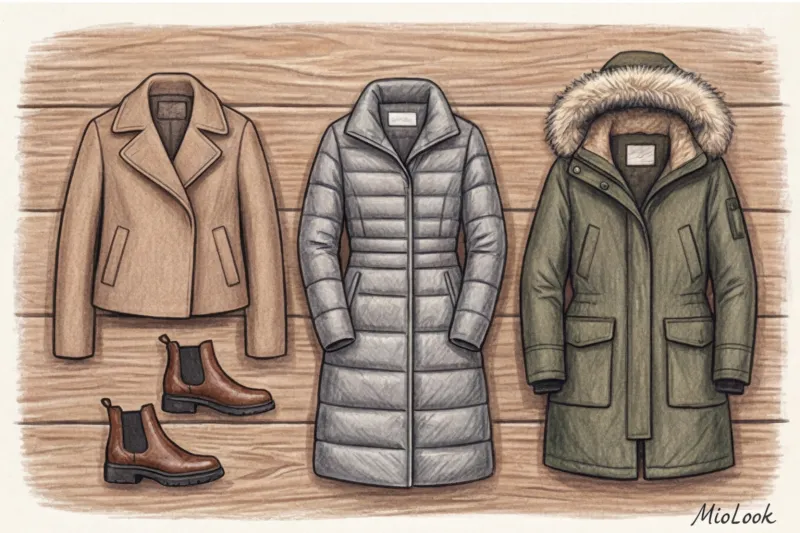
Length is critical here. The hem of your outerwear should cover your longest dress or skirt, or leave no more than 5-7 cm visible. This is not only a matter of aesthetics, but also to protect against drafts. If you're collecting capsule wardrobe , this is the item that should perfectly match 90% of your everyday looks.
Level 3: Long walks, weekends and severe frosts
Heavy artillery for temperatures below -15°C, trips out of town, or long walks with the dog. Here, we forget about sleek silhouettes and opt for technical parkas or long down blankets.
The focus shifts to maximum thermal insulation: a deep insulated hood, a high collar that covers half the face, drawstrings at the waist and bottom of the garment to protect against drafts.
Access to MioLook for €0.99 — one-time payment
A smart AI stylist will help you digitize your outerwear and show you what elements are missing from your winter capsule.
Get access — €0.99 onceOuterwear Color: Why I Forbid My Clients from Buying Black Down Jackets
In my 12 years as a colorist, I've heard hundreds of arguments in favor of black in winter: "it doesn't stain," "it goes with everything," "it's slimming." Let's shatter this illusion right now.
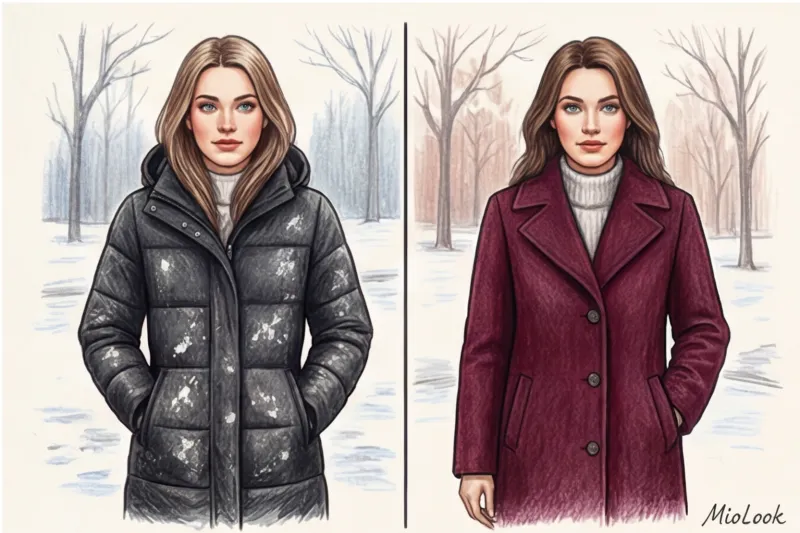
A black winter down jacket or coat is the dirtiest item in your closet. Against a black background, every lint from your sweater, dust, cat hair, and, most importantly, the white salt stains from the chemicals generously sprinkled on the streets, are visible. You'll look unkempt within 15 minutes of leaving the house.
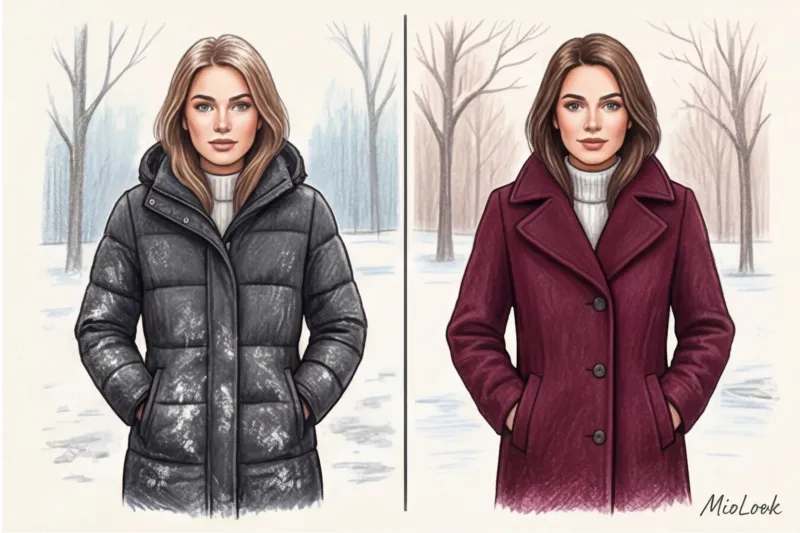
But there's a second, physiological reason. In winter, the lighting changes. The light becomes cool and diffused (around 6500 Kelvin). Combined with the natural winter pallor of the skin, a deep black complexion acts as a reverse reflector: it absorbs light and casts harsh shadows on the face, highlighting nasolabial folds, fatigue, and dark circles under the eyes.
The WGSN Trends Study (2024) confirms a global shift away from black toward so-called "Grounding Colors." What to use instead of black?
- Deep graphite or anthracite: retains contrast but looks softer.
- Navy: Ideal for contrasting color types (Winter), looks more expensive than black.
- Dark chocolate: a luxurious base that pairs stunningly with beige and off-white sweaters.
- Burgundy and coniferous: complex dark shades that completely hide urban dirt.
If you can't live without a black coat, be sure to separate it from your face with a voluminous scarf in your ideal light or bright shade.
The Anatomy of the Perfect Item: What to Look for When Trying It On (A Stylist's Perspective)
The statistics are relentless: about 80% of women buy winter clothes a size too small. It's warm in the store's fitting room, you're wearing a thin T-shirt, and your coat fits perfectly. Then the next day, you put on a fleece-lined hoodie—and it's bursting at the seams.
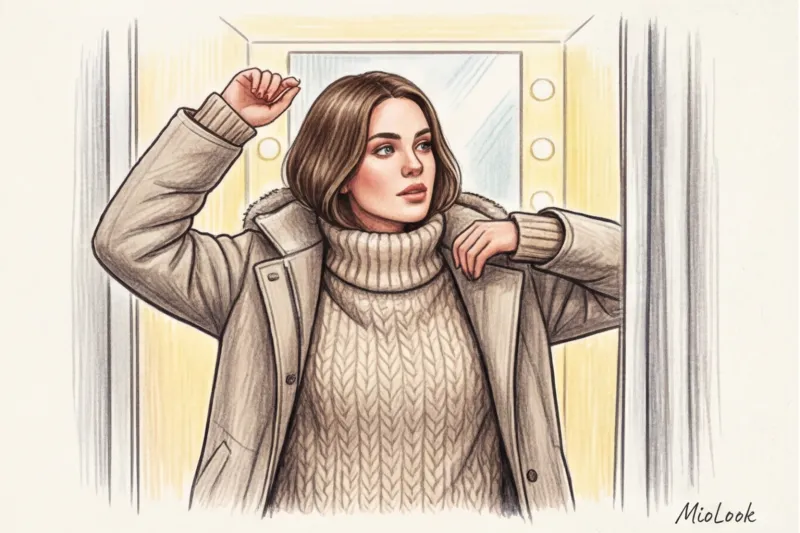
The "winter sweater" rule: Always try on the thickest sweater in your closet. Outerwear should be a size (or sometimes two) larger than your summer size. The air between your body and the clothing is what keeps you warm. No air gap = you're cold.
In the fitting room, do the test: zip up your jacket and raise your arms up, as if you were holding onto a handrail on a bus. If the jacket feels tight in the shoulders and the hem rides up above your waist, the armhole is too tight. Look for styles with dropped shoulder seams or raglan sleeves.
Fillers: What really warms?
Don't trust the "very warm" label. Check the ingredients:
- Natural fluff: look for the indicator Fill Power (Down elasticity). For urban temperatures down to -15°C, an FP of 600 is needed. For severe winters, 700 to 800+ is needed. The ideal down-to-feather ratio is 80/20 or 90/10.
- Modern synthetics: Forget about that old synthetic padding that clumps up after the first wash. Look for high-tech insulation: Thinsulate , PrimaLoft or Isosoft They are much thinner than down, waterproof, and extremely warm. A density of 200-250 g/m² will ensure comfort down to -20°C.
Pay attention to the hardware. Beautiful buttons are great, but at -20°C, the only thing that will save you is a double zipper (which can be unzipped at the bottom for stepping in) and hidden knitted cuffs on the sleeves to block the wind.
Your perfect look starts here
Upload photos of your items to MioLook, and artificial intelligence will curate dozens of stylish winter combinations for you, taking into account proportions.
Get access — €0.99 onceProportions and combinations: outerwear + winter shoes and hats
Layering is a great tool, but the line between "stylish Scandinavian fashionista" and "cabbage" is very fine. The main secret lies in the golden ratio and working with textures.
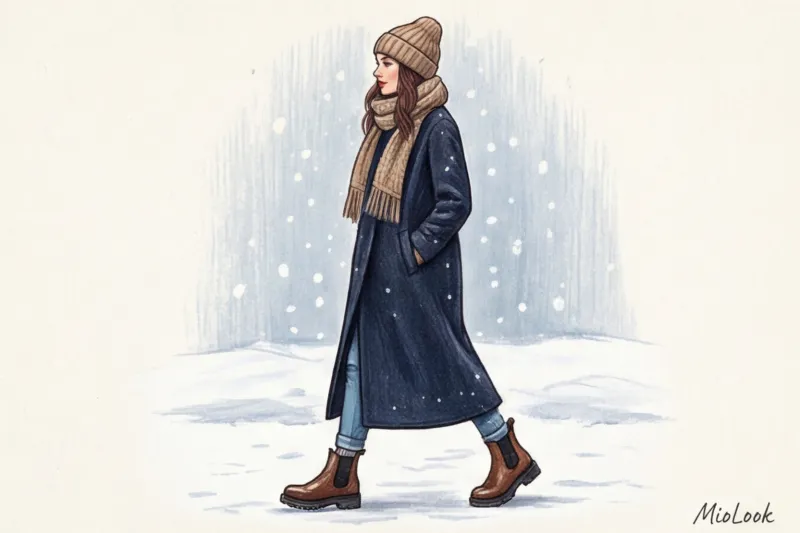
Length rule: Avoid horizontal lines that cut into the widest part of your leg. If you're wearing a midi down jacket, it should either completely cover the boot shaft (creating a continuous vertical line) or end so that there's at least 15 cm of leg between the jacket and the ankle boots, wearing thick tights.
Selection of headwear: The rule of similarity or contrast of textures applies here.
- If you have a smooth coat or a matte down jacket, add volume around your face with a fluffy angora hat in chunky knit.
- If your outerwear itself is textured (faux fur, bouclé, chunky quilting), choose smooth, thick-knit beanies or hoods. Two fluffy textures placed side by side will create a "bear" effect.
Checklist: Audit your winter outerwear before the cold weather hits
Don't rush to the store for a new jacket. First, take an honest inventory of what you already own. I recommend my clients do this a month before the first frost.
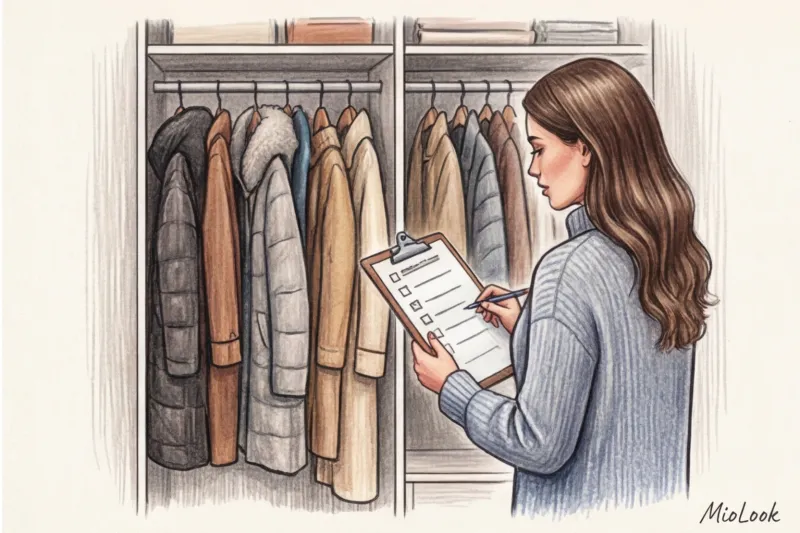
- Step 1: Remove all outerwear. Assess the condition. What needs dry cleaning? Where does a stuck zipper need replacing or a broken button need sewing? Do it this week, not the day of the first snowfall.
- Step 2: Try on with the base. Put on your heaviest hoodie or chunky knit sweater and try on each jacket. If it's too tight, put it aside. It's not suitable for real winter.
- Step 3: Evaluate efficiency. Think back to last winter. How many times did you wear that beautiful but thin coat? If the answer was "none" or "once to a corporate event," sell it on a resale platform. It's just taking up space.
- Step 4: Finding temperature holes. Look at your remaining items through the lens of three levels (car, city, long walks). What's missing? This should be your next target purchase.
Building a winter wardrobe isn't about buying trends. It's about respecting yourself and your comfort. Stop freezing for the sake of dubious aesthetics. The right color, high-tech insulation, and the right fit will make you not only stylish but also a happy woman who welcomes even the harshest frosts with a smile.