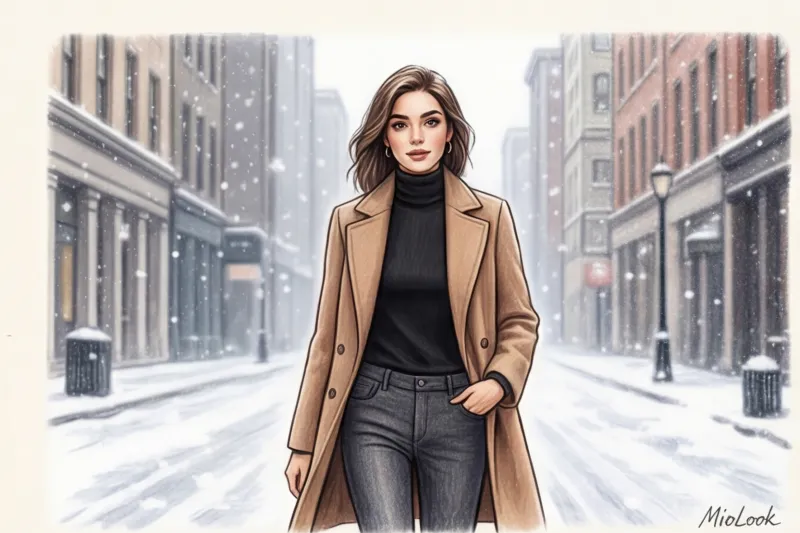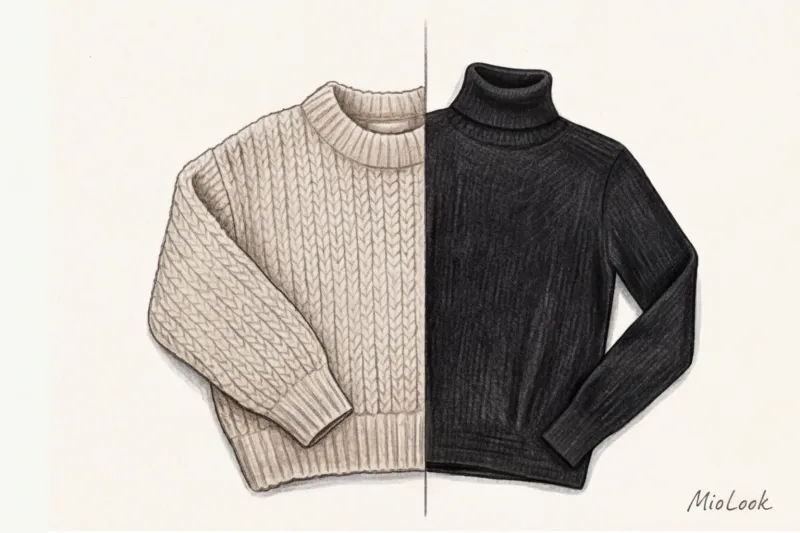
February 2018. New York Fashion Week. The city was hit by the infamous snowstorm, paralyzing traffic in Manhattan. I stood at the entrance to Spring Studios, bundled up in the thickest chunky knit sweater I could find, shivering. Fashion editors strolled past in elegant, seemingly thin coats, looking completely relaxed and warm. It was on that day, analyzing their looks, that I realized: elegance in subzero temperatures requires not thickness, but an engineered approach.
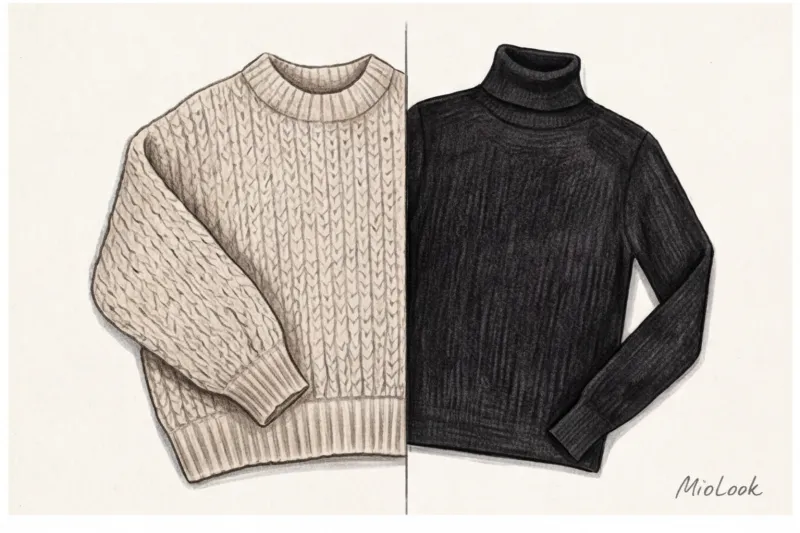
Collecting winter basic wardrobe We habitually reach for the bulkiest items. But modern fashion has long abandoned the outdated principle of "wearing the thickest garments." Instead, the concept of an urban "microclimate wardrobe" has come to the fore, combining the principles of outdoor gear with the sophistication of high fashion.
Why the classic approach to winter wardrobe essentials no longer works
The biggest mistake eight out of 10 of my clients make every fall is buying a giant, textured knit sweater. It sounds counterintuitive, but it's precisely these kinds of items that sabotage your comfort. According to consumer behavior research from WGSN (2023), modern city dwellers experience temperature fluctuations of up to 25°C in one hour: from -10°C outside to 15°C in the subway and 22°C in the office.
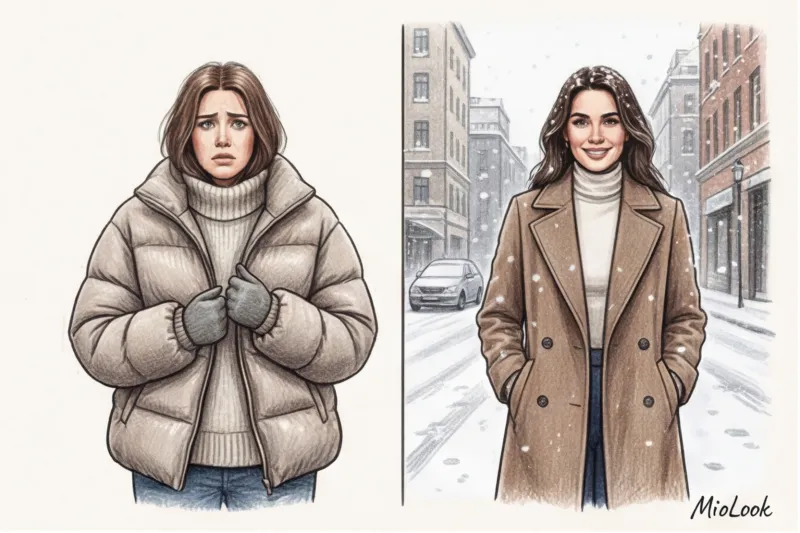
A bulky wool sweater can become unbearably hot indoors. You sweat, and when you step outside, your damp skin instantly becomes chilled. Furthermore, chunky knitwear visually adds 2-3 sizes and can barely fit into the sleeves of an elegant coat, restricting your movement to the point of looking like a mannequin.
Instead of a "cabbage" of random warm layers, we need smart layers. A thin turtleneck made of smooth merino wool, paired with the right jacket, provides more effective warmth, looks classier, and allows you to easily adapt to the room temperature.
Architecture of Heat: A Three-Layer Principle for the City
For decades, mountaineers have used a three-layer system: moisture wicking, insulation, and wind protection. Today, this algorithm has been brilliantly adapted for everyday style. Take a look at Loro Piana's collections—their Storm System technology transforms the finest cashmere into a windproof shield, proving that technology and luxury go hand in hand.
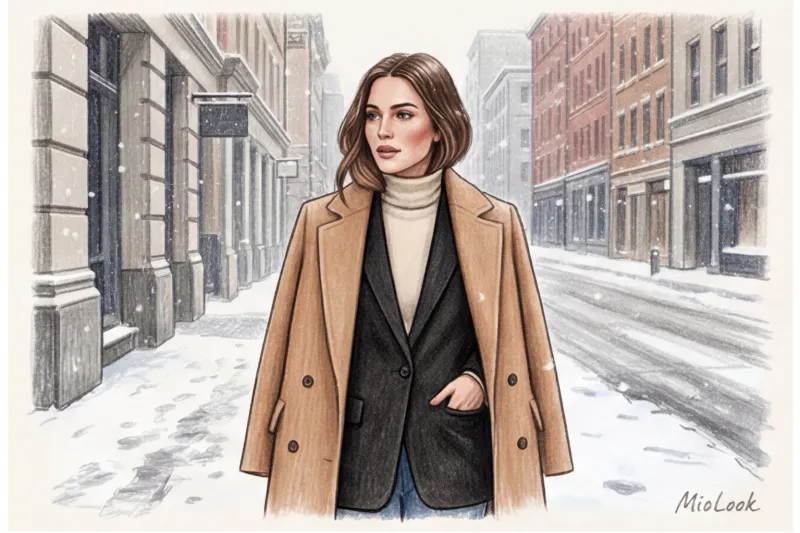
Base layer: invisible protection
Your second skin. Forget cotton—it absorbs moisture and takes a long time to dry in winter, leaving you cold. The ideal choice for the city is thermal underwear made of silk with added wool or high-tech synthetics (similar to Heattech designs, adapted for everyday wear).
When it comes to visible layers, invest in lightweight knitwear. Turtlenecks and long sleeves made of merino wool up to 19 microns thick are completely non-itchy, softly cling to the body, and create the perfect base for complex combinations.
Midlayer: Insulation and Style
This is where cashmere V-neck sweaters, heavy structured cotton shirts, and wool vests and jackets come into play. The key rule I never tire of repeating during my consultations is: air is the best heat insulator Midlayers should not be too tight. There should be a 1-2 cm air gap between the turtleneck and the jacket.
Top layer: shield from the elements
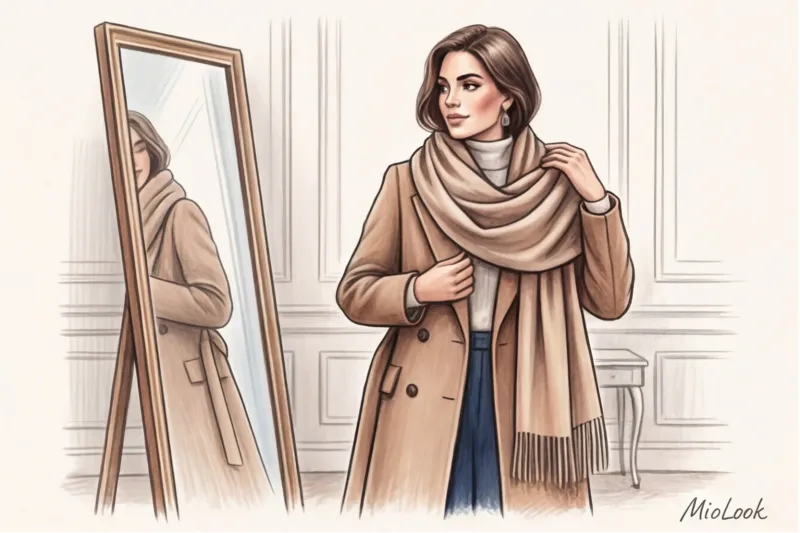
A winter coat should have the right cut—semi-fitted or oversized. It should accommodate a jacket without the fabric feeling tight on the shoulders. My favorite styling trick for cold weather is a thin down vest (matte, without active hardware) worn under a classic wool coat. It remains invisible, but keeps you just as warm as a sporty down jacket.
Access to MioLook for €0.99 — one-time payment
A smart AI stylist will help you create the perfect layered looks from your clothes.
Get access — €0.99 onceWhat Makes an Ideal Winter Basic Wardrobe: A Checklist
The mathematics of a winter basic wardrobe follows the 80/20 Pareto principle: we wear 20% of our clothes 80% of the time. Therefore, these key elements must be of impeccable quality. We discussed the fundamental rules of creating a capsule wardrobe in more detail in our complete guide to basic wardrobe for a woman.
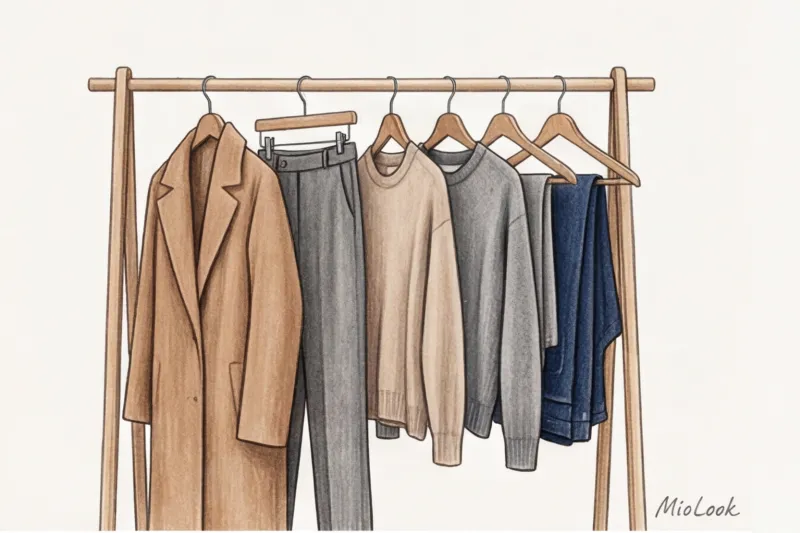
Formula tops: from cashmere to heavy shirts
- 2-3 turtlenecks or thin jumpers made of merino or cashmere blend in a neutral palette (dark chocolate, graphite, camel).
- 1 thick structured shirt (flannel or heavy oxford cotton with a density of 180 g/m²).
- 1 wool or tweed jacket straight cut that holds its shape.
The bottom formula: wool trousers and the right denim
Skinny jeans in winter are a guarantee of cold legs due to the lack of breathability. Choose heavyweight 13-14 oz denim without elastane (straight or wide-leg). As for business attire, look for wool pants with a viscose lining—it will protect your skin from scratches and block out cold winds.
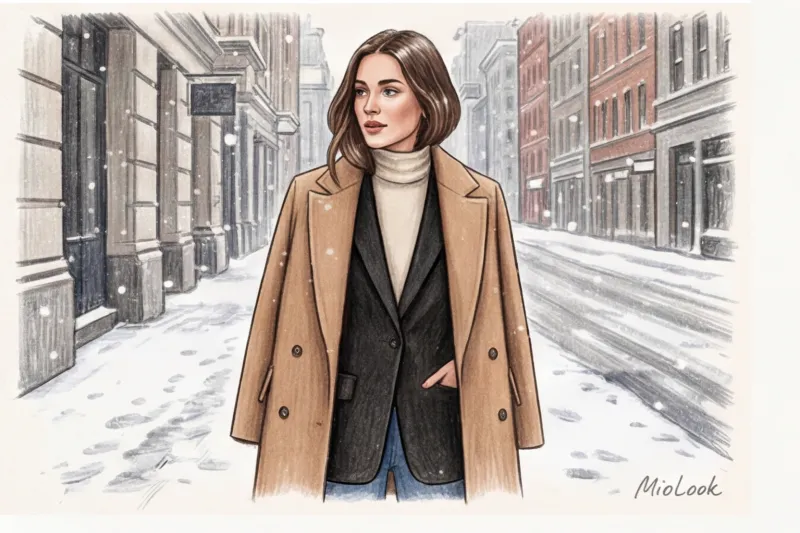
For feminine looks, a chunky knit midi skirt or a structured A-line wool skirt is essential. They look great with thigh-high boots that cover the hem.
The Illusion of Warmth: How to Read Tags on Winter Clothes
Mass-market brands have masterfully mastered the art of creating the illusion of a high-quality winter garment. You see a fluffy, voluminous sweater, buy it, and a week later, you discover it's pilled and realize it's completely unwarm. The secret lies in the inner tag.
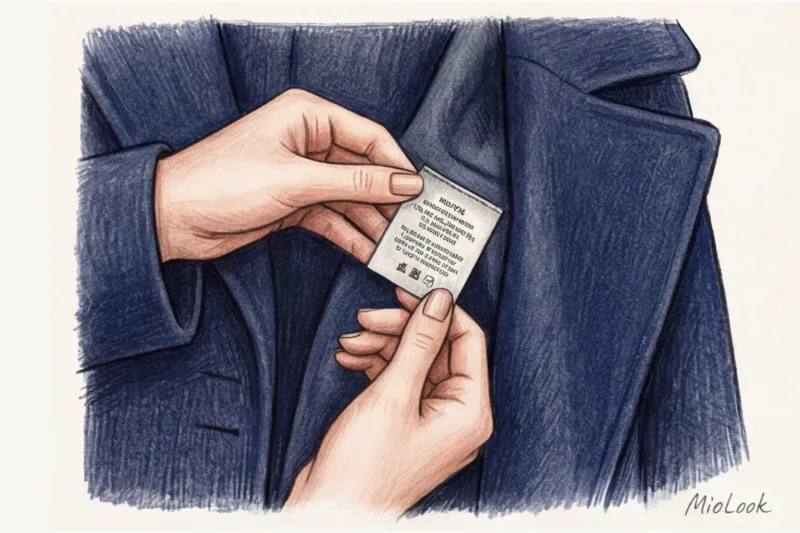
According to The Woolmark Company's experts, acrylic (a synthetic fiber that imitates wool) has virtually zero hygroscopicity. This means it doesn't absorb moisture. When you sweat, the moisture stays on your skin, cools down, and you instantly freeze outside. Acrylic in winter clothing is public enemy number one.
"The ideal winter coat follows the 70/30 rule. It should contain at least 70% natural wool, alpaca, or cashmere. The remaining 10-30% polyamide is acceptable—it makes the fabric durable and prevents deformation."
Interesting fact: 100% wool in a coat sometimes wears worse than a blend with 20% nylon. Synthetics, in the right proportions, act as reinforcement for natural fibers.
Your perfect look starts here
Upload photos of your items, and MioLook's artificial intelligence will create dozens of warm combinations.
Try MioLookWinter shoes and accessories: the basics that elevate your look
Over 12 years of styling, I've developed an ironclad rule: an expensive set of accessories can elevate even the simplest basic coat. The secret lies in the contrast of textures. The combination of smooth leather gloves, fluffy mohair on a scarf, and matte suede on a bag creates that visual depth we recognize as a "status look."
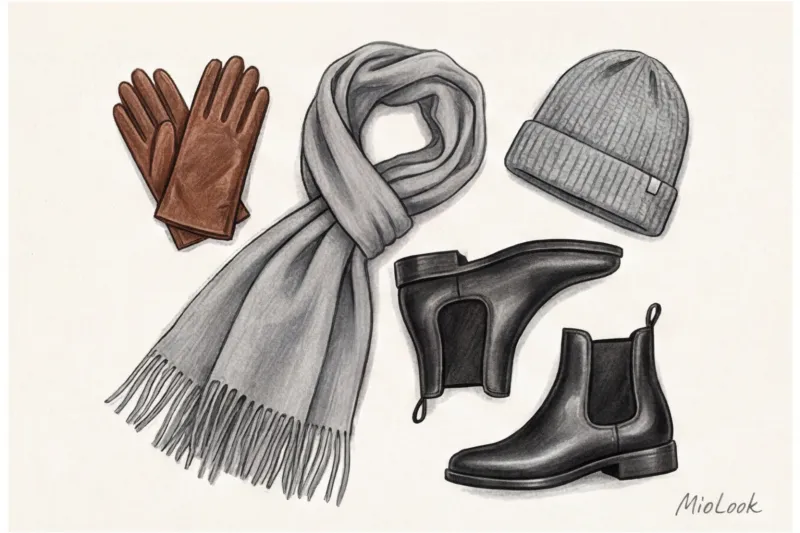
Minimum footwear for cold weather
Many people chase thick fur inside their boots, ignoring the laws of physics: cold comes from the ground. The sole is more important than insulation. Choose Chelsea boots or lace-up shoes with a thick thermoplastic elastomer (TPE) sole at least 2-3 cm high. This will protect against both freezing and urban chemicals. Smooth leather jockey boots or wide-shafted tube boots are ideal for skirts and dresses.
Hats, scarves, and gloves as an investment
Avoid thin acrylic sets. A basic beanie hat without a bulky cuff (preferably made of cashmere and silk) and a long, thick scarf are your base. Instead of knitted mittens, which will simplify the look, choose leather gloves with a thin cashmere lining. They maintain the elegance of the wrist and provide excellent wind protection.
Common mistakes when creating a winter base
Even if you know all the rules, it's easy to slip up in the fitting room. Here are three scenarios I regularly correct when sorting through wardrobes:
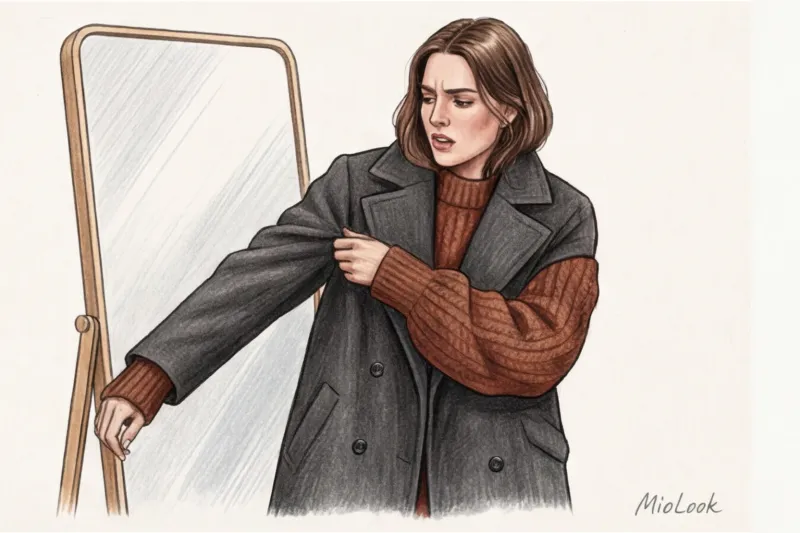
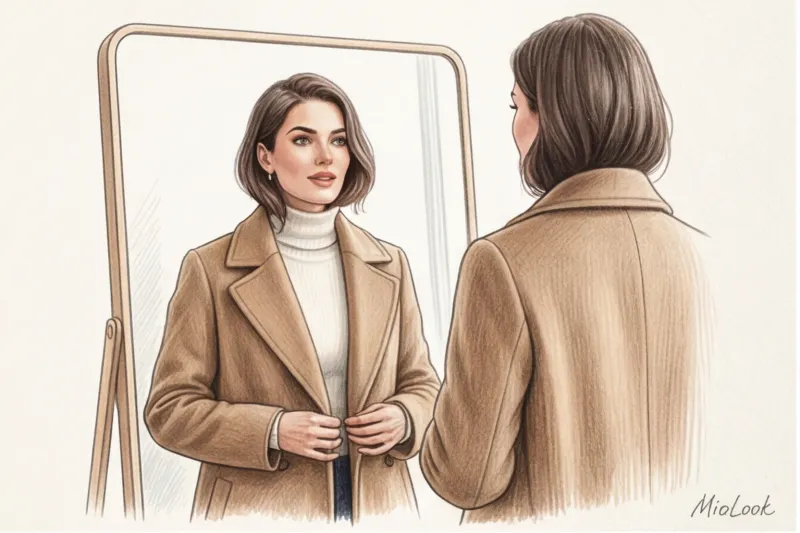
- Buying a coat that fits. Trying on a coat in a store over a thin T-shirt is a mistake. Always try on a thick jacket. If the armholes are tight or the sleeves bunch up, go up a size.
- Ignoring the lining. A wool skirt without a smooth lining will treacherously cling to tights and ride up as you walk, ruining the geometric shape of your silhouette.
- Black caterpillar down jacket as the only outerwear. One of my clients, an IT director, complained about the lack of status in her winter outfits. The solution was simple: we replaced her shapeless black down jacket with a straight-cut camel coat, adding a concealed ultra-light vest inside. The warmth remained the same, but the overall effect was dramatically improved.
Of course, let's be honest: these rules don't apply if you're planning to walk your dog in the woods at -25°C. A parka and puffer pants are a must-have there. But for a business meeting in the city center, they're inappropriate.
How to integrate winter essentials into your office dress code
Cold weather isn't a reason to abandon business attire and switch to cozy hoodies, even if your dress code is relaxed. Adapting warm clothing for the office requires only slight texture adjustments, which we discuss in detail in our article about winter office wear for women.
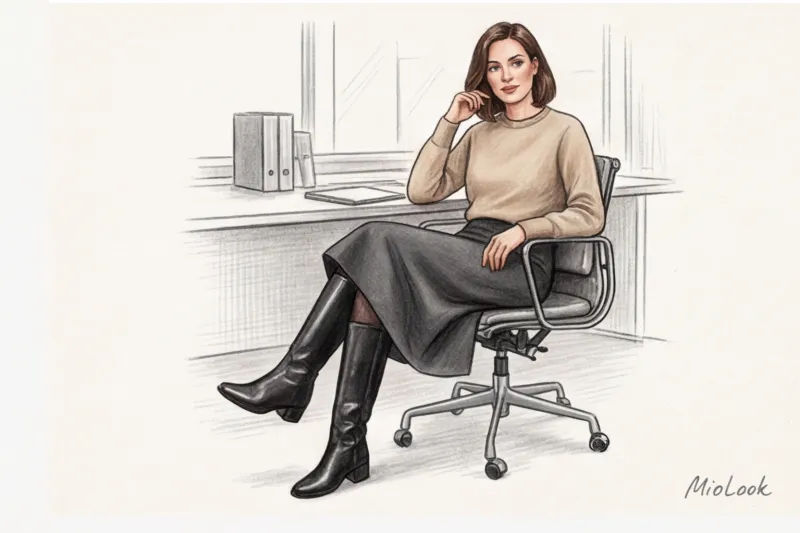
Swap out classic crisp poplin shirts for thin merino turtlenecks. Paired with a pantsuit, they create a flawless look. smart casual look , maintaining the strictness of lines.
Tights etiquette requires special attention. Forget nude 40-denier nylon tights paired with winter boots—it's a stylistic clash. Choose thick matte black tights (60 denier and above), in graphite or mocha shades. Important: they shouldn't be shiny.
Finally, changing your shoes in the office isn't a faux pas, it's a necessity. It's impossible to look elegant sitting at your desk in chunky, fur-lined winter boots. Keep a pair of classic pumps or leather loafers at work: they'll instantly tie your look together and keep your feet from overheating in a heated office.
A stylish winter isn't a compromise between beauty and the risk of catching a cold. It's a well-thought-out layering system, high-quality materials, and the right volumes. Start building your microclimate-friendly wardrobe with a good turtleneck and a heavy coat, and you'll notice how the cold season transforms from a challenge into the most elegant time of year.