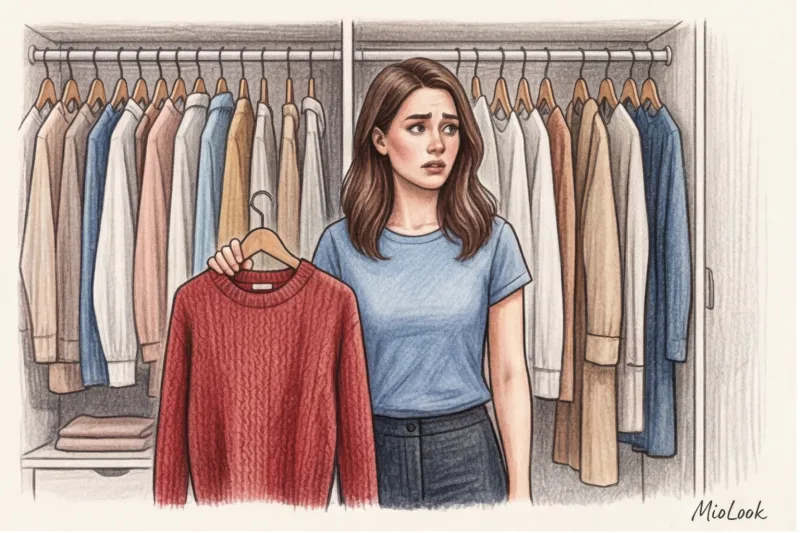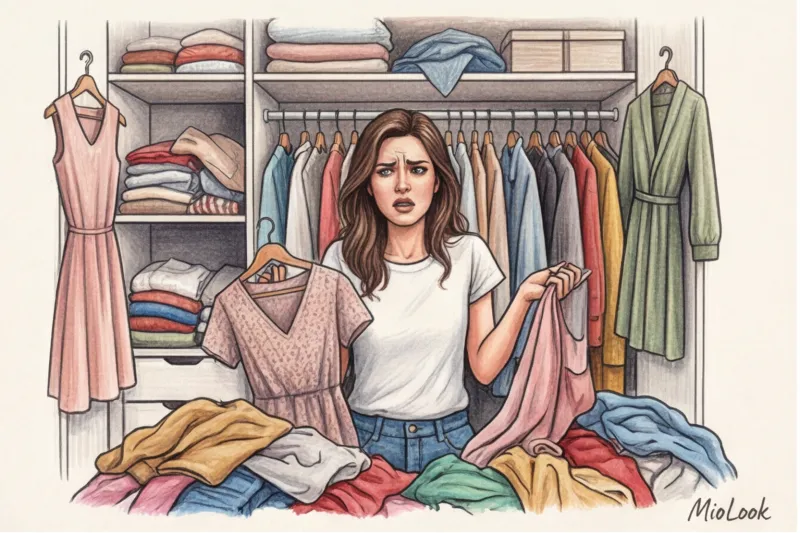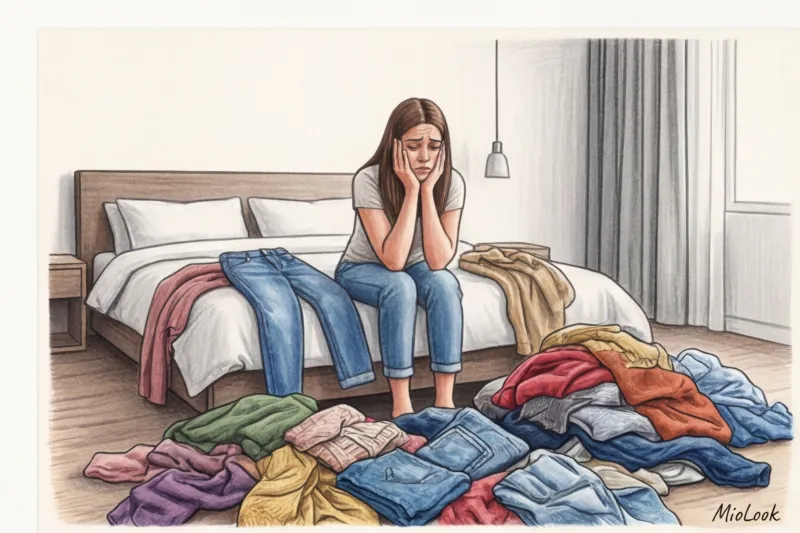
One day, a client in Paris approached me with the classic question: "My closet is bursting, but I have absolutely nothing to wear." When we emptied her wardrobe onto the king-size bed, I counted 43 items with the tags still attached, all from mass-market stores. Three sequin dresses, bought in a fit of pre-New Year's panic, five identical, uncomfortable blouses, and shoes that were barely fit for a walk. The total cost of this "dead weight" was about €1,300. It was then that she realized the most important rule of conscious consumption: a proper wardrobe review before shopping is, first and foremost, a financial audit, not simply shuffling T-shirts from shelf to shelf.

Over 12 years as a stylist, I've learned a simple truth: buying new things without understanding what you already have is a waste of money. You can't solve the "nothing to wear" problem at the mall; it's solved at home, in front of your closet. I wrote more about how to create a foundation without spending too much in our The complete guide to building an affordable basic wardrobe.
Why decluttering your wardrobe before shopping is a financial strategy, not just a cleaning.
Let's forget about trends for a minute and talk like investors. Every item in your closet has its own profitability index. In professional styling, we use the metric Cost Per Wear (CPW) — the cost per wear. The formula is simple: the price of the item plus the cost of dry cleaning or tailoring, divided by the number of days you wore it.
Let me give you an example. A perfectly tailored blazer made of a heavy wool blend from Massimo Dutti for €150, which you wear to work twice a week for a year (about 100 times), has a CPW of only €1.50. But a trendy neon top from Zara for €30, worn exactly once to a party, cost you €30 per outing. Which is the expensive purchase, and which is the cheap one?
MioLook app analytics clearly confirm this: users who started tracking their belongings digitally reduce their annual clothing spending by 40%. They stop buying duplicates and start investing in items with a low predicted CPW. Wardrobe analysis reveals your true consumption patterns and shows where exactly your budget is leaking.
Your perfect look starts here
Join thousands of users who look flawless every day with MioLook.
Get access — €0.99 onceThe biggest mistake newbies make: why you shouldn't just throw away old things
Perhaps the most damaging glossy myth of the last ten years is: "Ruthlessly throw away anything you haven't worn in over a year." As a journalist who studies the psychology of fashion, I am categorically opposed to this approach.
Radical closet cleansing to the point of sterile emptiness inevitably triggers anxiety. Your brain sees empty hangers, switches to shortage mode, and you go on a panic shopping spree, buying everything in sight. But what's worse is that throwing out clothes without analyzing them guarantees you'll fall into the same style traps again. If you got rid of three skinny pencil skirts because they're uncomfortable, but didn't register the reason, next season you'll buy a fourth.
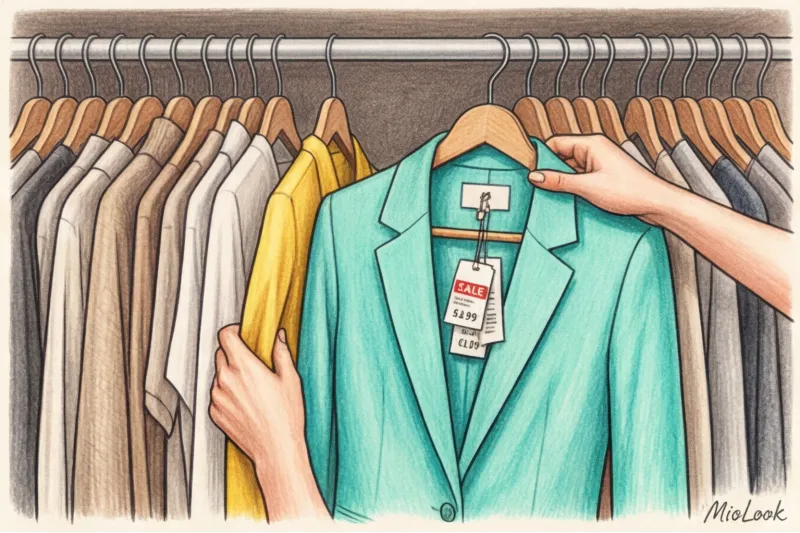
Instead of a trash bag, I recommend creating a "quarantine" box. Put things you're unsure about in there, tape them shut, and put them away for six months. If you haven't thought about their contents during that time, let them go with peace of mind.
Dead Weight Analysis: What's Hidden in the Things We Don't Wear
What's hanging around like dead weight is your best style guide. Pull out these items and honestly categorize your mistakes. Typically, they fall into three categories:
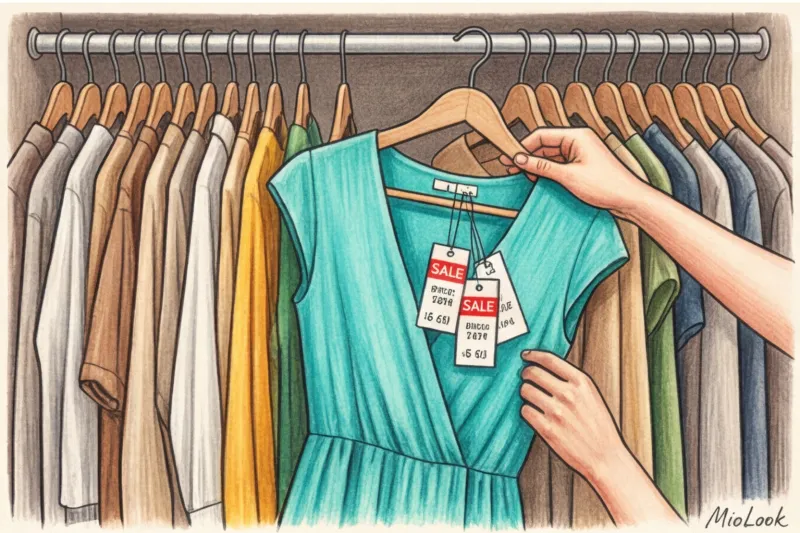
- Fantasy style: Things for the woman you'd like to be but aren't. Boho dresses for imaginary festivals or formal suits even though you work from home.
- Clothes for Another Life: things that suited you perfectly five years ago before changing careers, going on maternity leave, or moving to a different climate.
- Compromise fit: "I'll lose weight by summer", "my shoulders are a little tight, but at least there's a big discount."
Use this negative experience to your advantage. Your future shopping list should be based on a strict rule: no purchases from your list of typical mistakes.
A stylist's guide to a smart closet audit.
A professional audit requires preparation. You'll need a mobile bed frame (or a bed clear of other clutter), a full-length mirror, excellent natural lighting, and a couple of hours of uninterrupted time.
Don't try to organize your closet by season—that's an outdated approach. Sort your items strictly by category: all bottoms to bottoms (skirts, trousers, jeans), all tops to tops. Why is this important? A thin turtleneck you consider "fall" might be perfect for a cool summer evening or a base layer under a winter cardigan. You need to be able to see the volume of each category. It often turns out that a client has 15 T-shirts but not a single pair of decent basic trousers.
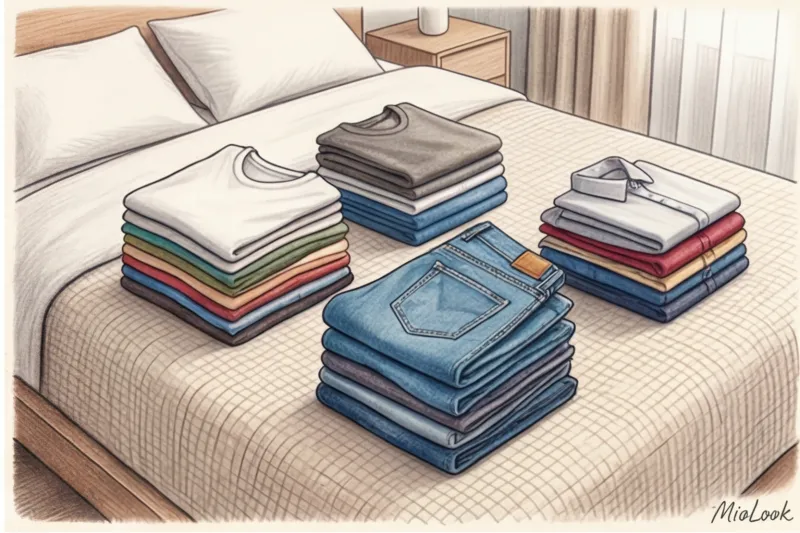
Next comes the fitting stage. You need to try on everything, especially the basics. Your favorite white shirt might have a yellowed collar, or the knees of your black pants might have stretched out. Be critical of wear: pilling on acrylic, frayed hardware. To be fair, this strict wear filter and CPW shouldn't be applied to eveningwear and specialized clothing (such as snowboarding gear)—different rules apply there.
The 80/20 Formula and How to Find Your Real "Base"
WGSN's 2023 Global Consumer Behavior Study confirms the age-old Pareto Principle: the average woman wears only 20% of her wardrobe 80% of the time.
Your task is to find that 20%. Look at pieces that are worn to the point of holes, those that make you feel confident and relaxed. This is the true DNA of your style. These silhouettes, fabrics, and colors should become the foundation for your future investments, not Pinterest boards.
The Three Stack Method with a Professional Upgrade
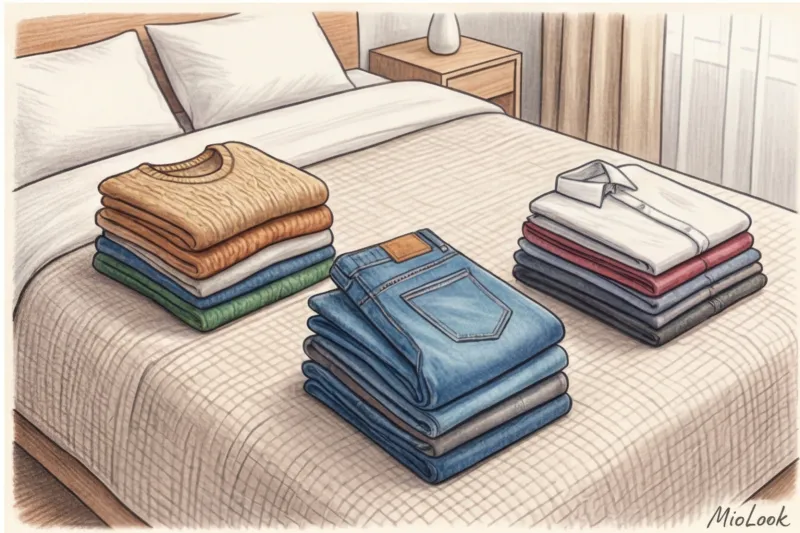
When trying on clothes, sort them into three categories, but with a slight twist on the classic method:
- I wear it all the time. These are the backbone of your wardrobe. Return them to the closet on their best hangers.
- Hidden potential. Items you love but need some attention. Put them in a shopping bag and take them to a tailor or dry cleaner tomorrow. Shortening the hem or replacing buttons on a jacket costs around €15–20, which can give a great item a second life.
- Archive and eco-friendly disposal. Items in good condition, but not your style or size, are sent to resale platforms (Vinted, Vestiaire Collective). Items that are worn out are recycled.
Ready to get started?
Try MioLook's free plan—no commitments, access to basic smart wardrobe features.
Get access — €0.99 onceFrom Chaos to System: Creating a Shopping List That Works
Only after you've eliminated the excess and left behind a functional base can you grab a notebook. Your goal is to find wardrobe gaps. If you have a great tweed jacket and a luxurious silk blouse, but you don't wear them because you don't have the right, simple trousers, then your capsule wardrobe needs trousers.
In styling, there's a golden rule for perfect combinations: for every waistband item (skirt, pants, jeans), there should be three to four shoulder items (tops, shirts, jackets). Bottoms get dirty less often, and we visually interpret the look based on the portrait area.

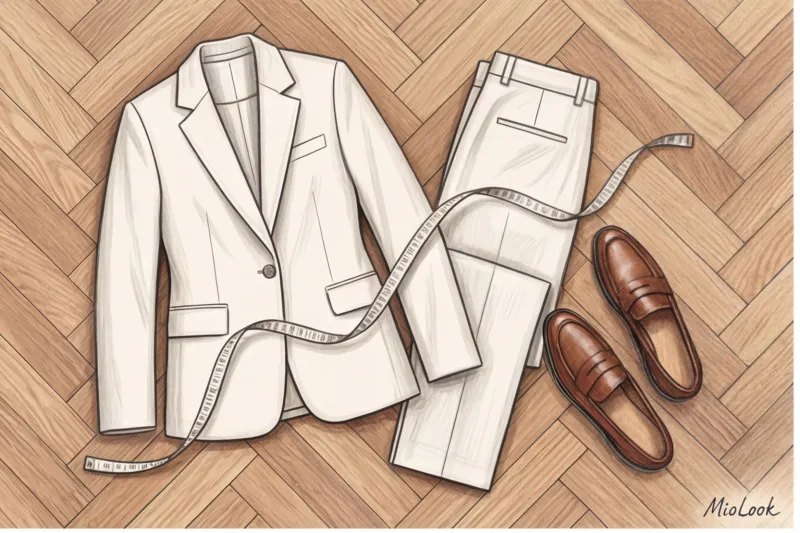
The math behind an effective capsule wardrobe is relentless: it's better to invest €100–€120 in a single pair of impeccable, heavyweight denim jeans than three pairs of mediocre ones for €40 each. Prioritize: spend 70% of your budget on excellent quality basics, and only 30% on trendy accents (bright bags, unusual shoes, jewelry).
Digitalization: How a Smart Wardrobe Protects Against Impulse Buying
Have you ever noticed how your visual memory fails you at the mall? You're standing in the fitting room, see the perfect gray sweater, and buy it. But when you get home, you discover it's the third one in your collection, and you still have nothing to wear it with, because you were missing a belt, not a sweater.
The human brain isn't capable of keeping 150 items of clothing and all their possible combinations in its working memory. Digitizing your clothes is the only reliable way to always have your closet "in your pocket." It relieves a colossal cognitive load.
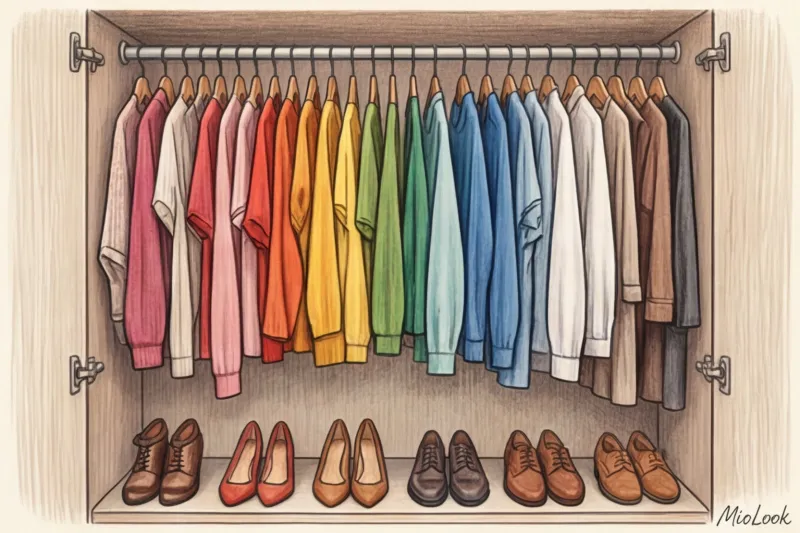
It is for such tasks that I recommend my clients to use smart wardrobe feature in MioLook When you upload photos of your items to the app, AI algorithms help generate new looks from what's already on the hangers. You can test combinations while lying in bed and pinpoint exactly what you're missing before you even step foot in the store.
Checklist: 5 Questions to Ask Yourself Before Checking Out
So, you've done your research, made a list, and arrived at the store. You're standing in front of the mirror in the fitting room with a potential purchase. Before you pull out your bank card, run the item through my personal 5-question checklist:
- Will this thing replace the one I just put in the archive? If it's another tight jacket that you can't lift your arms in (like the one you put in the box yesterday), put it back on the hanger immediately.
- What three things from my closet will I wear this with tomorrow? If you can't name three combinations off the top of your head, this purchase will become a new "dead weight."
- What is the projected CPW of this thing in a year? Divide the price by the number of days you can realistically wear it. If the figure scares you, it's a bad investment.
- Is this my real style or a "fantasy" one? Am I buying this for the real me or for the ideal version of me who goes to brunch every weekend (even though I prefer to relax with a book on the couch)?
- Does this item require additional expenses? Does this backless dress require special lingerie for €60? Will this length require new shoes? Hidden costs often double the cost of an item.
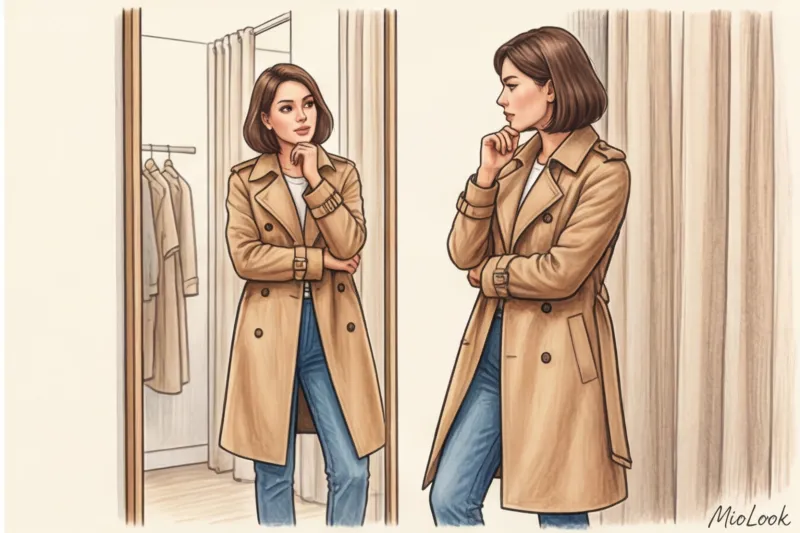
A wardrobe declutter is an honest dialogue with yourself. It's an acknowledgement that clothes should serve your comfort, and your money should work for you, not gather dust on shelves with the tags still attached. Start by organizing your assets, and you'll be surprised how predictable, easy, and cost-effective your next shopping trip will be.