Open your closet and look at the shoe rack. I bet there are at least three pairs of stunning, expensive shoes you've worn exactly once. And next to them, most likely, are your worn-out, shapeless everyday shoes, the ones you spend 80% of your time in. Sound familiar?
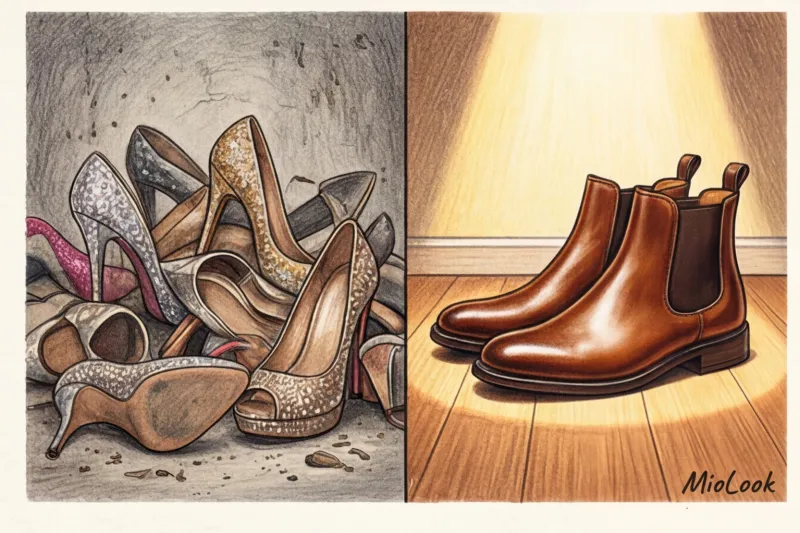
Over 12 years of working as a personal stylist in Europe, I've seen this paradox hundreds of times. We're happy to spend half our salary on "dream shoes" for a New Year's corporate party, but we skimp on quality basic Chelsea boots, justifying it by saying, "They'll trample us on the subway anyway." This is a fundamentally flawed approach. Today, we'll examine it with mathematical precision. What shoes shouldn't you skimp on? , and where buying from a mass market will be the smartest decision.
We covered the architecture of a smart shoe closet in more detail in our complete guide. A Basic Shoe Wardrobe: How to Assemble the Perfect Capsule Now let's talk about money, the health of your feet, and smart investments.
Why We're Spending Money on the Wrong Shoes (and How to Fix It)
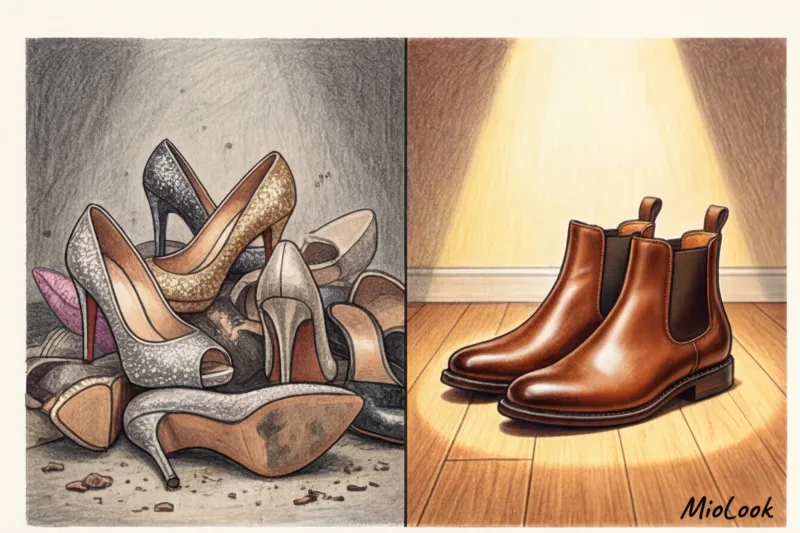
One of my clients, Anna, invited me to a wardrobe review. On the top shelf of her closet, 15 pairs of luxurious stilettos graced her wardrobe—from classics to rhinestone-studded styles. Yet, every day, Anna wore 30-euro loafers from a mass-market store to the office, covering her heels with bandages. Why was this happening?
This is a typical "fantasy wardrobe" trap. We invest in the lifestyle we dream of (red carpets, social dinners, theater), while ignoring our reality (dog walks, driving, eight hours at a desk). Internal app statistics MioLook It's ruthless: modern women regularly wear only 20% of the shoes they buy. The remaining 80% simply take up space.
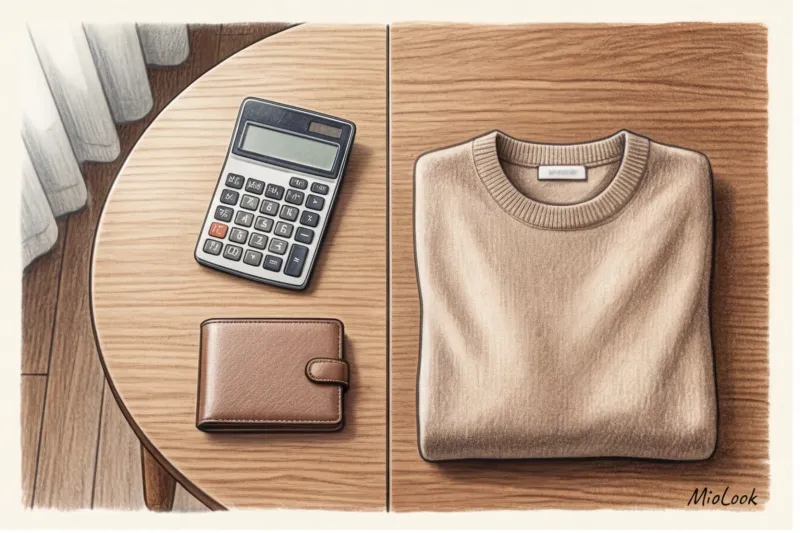
To break this pattern, I always teach my clients to count. Cost Per Wear (CPW) — the cost of one exit. Let's calculate:
- Scenario A: You bought cheap polyurethane ballet flats for €30. They rub and your feet don't breathe. You wore them 10 times during the season and then threw them away. The cost per wear: 3€.
- Scenario B: You invested in a pair of high-quality mid-range leather loafers (like COS or Massimo Dutti) for €150. They fit perfectly. You've worn them for three seasons, about 200 times. The cost per pair: 0.75€.
Cheap everyday shoes always cost more in the long run. You pay not only in money, but also in comfort.
Access to MioLook for €0.99 — one-time payment
A smart AI stylist will select the perfect look and help calculate the effectiveness of your wardrobe.
Get access — €0.99 onceWhat Shoes Should You Skimp On? Top 4 Investments for a Modern Wardrobe
If you're on a budget, manage it strategically. Here are four categories where skimping directly harms your style and health.
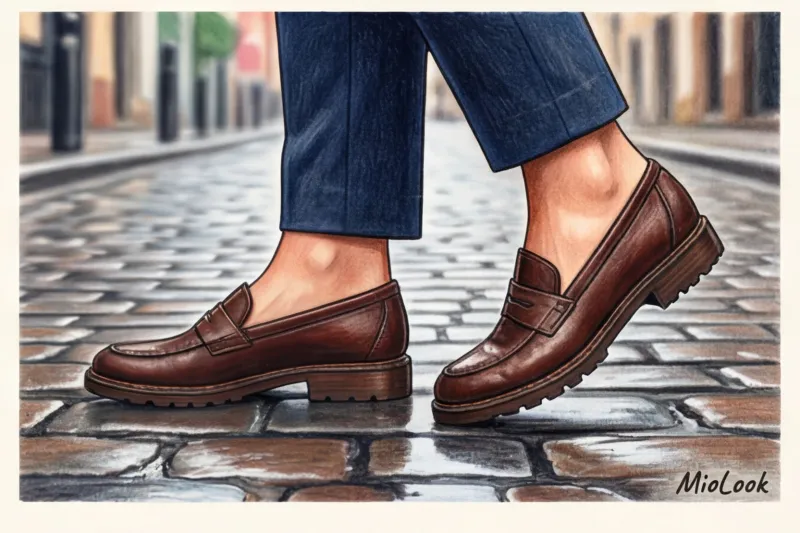
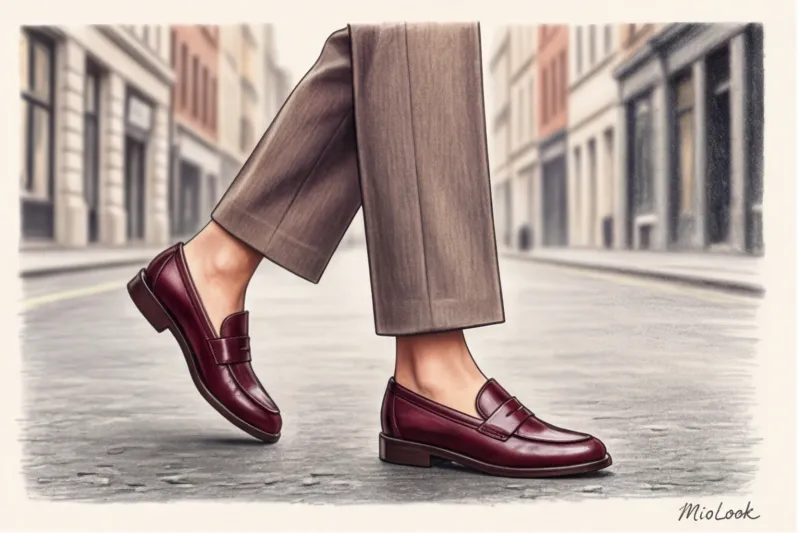
1. Everyday loafers, oxfords or brogues. This is the foundation of smart casual style. Rigid eco-leather from budget lines doesn't stretch to the shape of your foot. It creates a "greenhouse effect," and creases appear in just two weeks and are irreparable. Natural leather or high-quality suede, on the other hand, develops a refined patina over time and fits your foot perfectly.
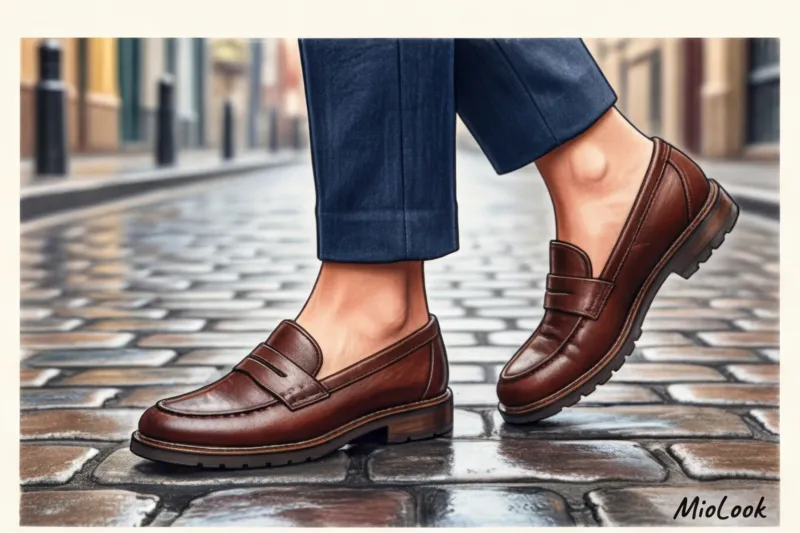
2. Winter boots (Chelsea or lace-up). Winter is a harsh environment. Cheap glue can't withstand temperature fluctuations and urban chemicals. By investing in winter footwear, you're paying for proper thermal regulation (natural fur or high-tech insulation) and reliable tread that will protect you from injury on ice.
3. Basic urban sneakers. Forget the myth that all sneakers are comfortable. A flat rubber sole for 20 euros is your spine's main enemy. Urban sneakers (like the New Balance 574 or the classic Veja models) are not a sports shoe, but an orthopedic investment. They provide the right cushioning when walking on pavement.
4. Structured knee-high boots. As a stylist, I can spot cheap boots right away: thin, low-quality leather doesn't hold the shaft's shape and tends to bunch up at the ankle, shortening the leg. Expensive boots have the right amount of rigidity in the tubular shaft, creating a flawless silhouette.
The hidden cost of a cheap brake pad
The difference between expensive and cheap shoes is hidden inside. Mass-market shoes often have just flat cardboard under the insole. High-quality shoes have an anatomical last with proper roll and arch support.
"Regularly wearing shoes with completely flat, thin soles and no arch support is the leading cause of plantar fasciitis in women under 40, according to the American Podiatry Association (APMA) in 2023."
Your evening fatigue, heavy legs, and even lower back pain are often treated not with pills, but simply by changing your everyday shoes to better quality ones.
Your perfect look starts here
Join thousands of users who look flawless every day with MioLook. Digitize your wardrobe in just a few clicks.
Get access — €0.99 onceBusting the Myths: Should You Invest in Classic Pumps?
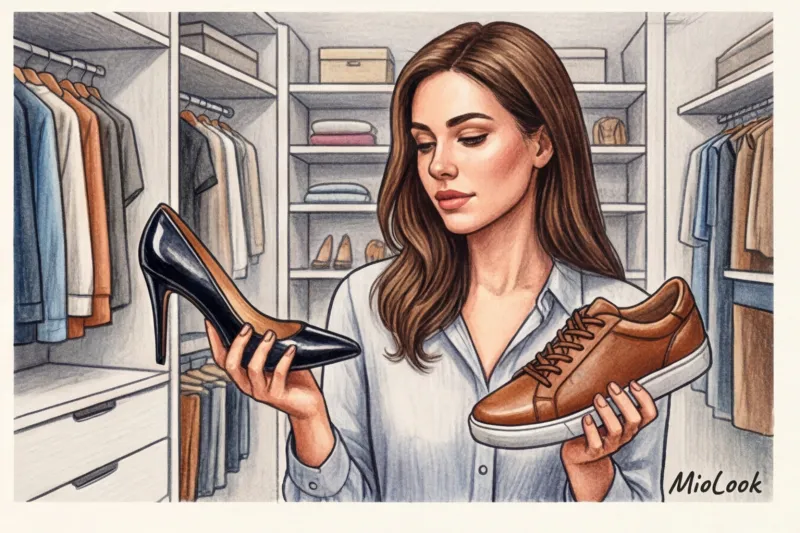
The glossy magazines of the 2000s instilled in us a toxic rule: "Every self-respecting woman must buy expensive black or beige pumps from Manolo Blahnik, Jimmy Choo, or Christian Louboutin." This is the worst financial advice one could give to a modern woman.
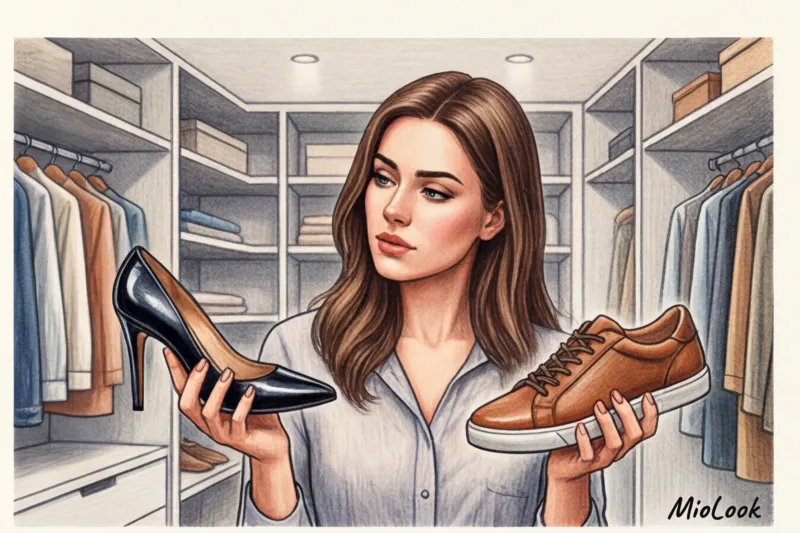
Let's be honest. Unless you're a trial lawyer or a top bank manager with a strict dress code (that's the exception where the rule doesn't apply), how many times a year do you wear classic stilettos? Three? Five? To a friend's wedding, a trip to the theater, and a New Year's Eve dinner.
My insight as a stylist: expensive shoes won't make your gait more graceful if a 10-centimeter stiletto heel doesn't fit your body. You'll suffer just as much in €700 shoes as you would in €50 ones. For occasional occasions, a neat pair from Zara or Mango is perfectly sufficient. Wear and tear will be minimal, and the €600 you save is better spent on luxurious everyday ankle boots that you'll wear 100 days a year.
What you can and should save on without sacrificing style
A smart wardrobe is a balance. I never advocate buying everything expensively. There are certain categories where mass-market styles work perfectly:
- Microtrends for one season. Mesh ballet flats (the 2024 hit), neon-colored shoes, and styles liberally embellished with rhinestones or studs. The rule is simple: if the shoes have a bright, recognizable embellishment that will go out of style in six months, buy them at H&M or Asos.
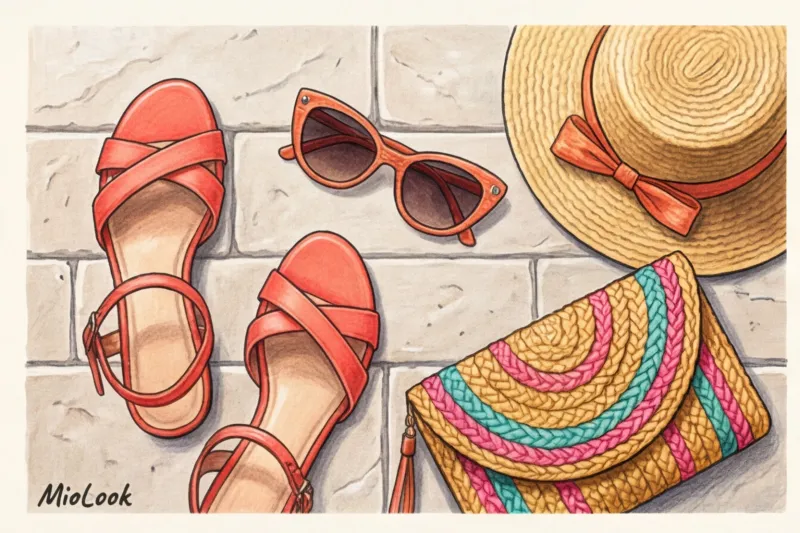
- Holiday and beach footwear. Straw espadrilles, rubber flip-flops, sandals. The beach is a harsh environment. Hot sand, salt water, and sun destroy both Hermès flip-flops and mass-market equivalents just as quickly.
- Shoes for noisy parties. If you're going to a club where you might get a cocktail spilled on your feet or step on while dancing, wearing an investment pair is simply not practical.
Ready to get started?
Try the MioLook free plan—no commitments required. Artificial intelligence will help you distinguish between a fleeting trend and a long-term investment.
Get access — €0.99 onceA stylist's checklist: how to tell if shoes are worth the money right in the store
When I'm shopping with clients, I always make them physically test the shoes before they go to the checkout. Brand and price tag don't always guarantee quality. Here's what to do:
1. Twist test. Take the shoe with both hands and try to bend the sole. A properly designed shoe should bend in only one place—where your foot naturally bends (around the toes). If the sole bends right in the middle or doesn't bend at all, like a block of wood, put it back on the shelf. A rigid shoe last won't "break in"; it'll just deform your joints.
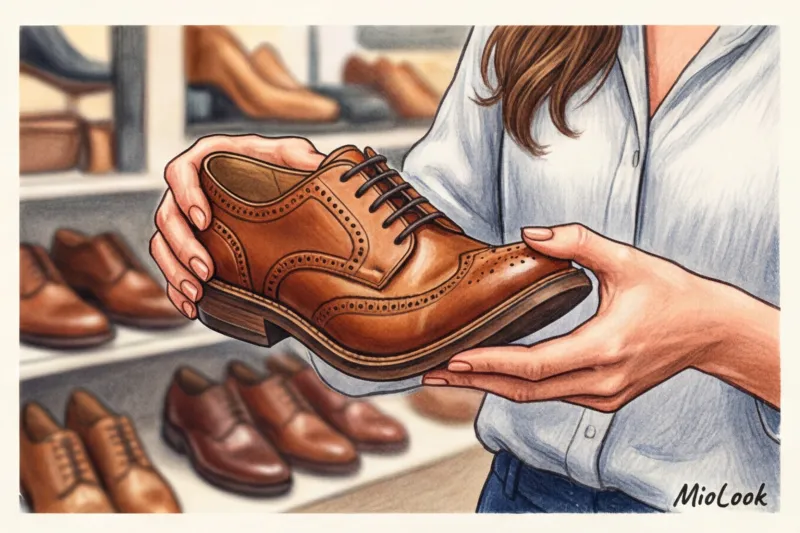
2. Inspection of seams. Pay attention to the welt (the junction between the upper and the sole). Cheap shoes often have imitation stitching—it's simply rubber trim molded into the sole, and the shoe itself is held in place with glue. High-quality shoes (especially men's shoes) use a welt fastening method (Goodyear welted)—you'll see real stitches made with thick thread.
3. Smell and tactility. Smell the shoes. High-quality full-grain leather has a light, refined aroma. Cheap pressed leather or faux leather smells of chemical glue and plastic. Good leather should feel slightly warm and pliable.
4. Checking the heel. Press your thumb into the heel of the shoe. It should feel firm and hold its shape well, but the top edge should be soft enough not to dig into your Achilles tendon as you walk.
Integration: How to Build a Basic Shoe Wardrobe
Now that you know where to spend your budget, let's structure your purchases. I recommend using The 3+1 Rule To get started, you need three pairs of investment-grade casual shoes for different weather conditions and occasions, and just one pair of statement or dress shoes.
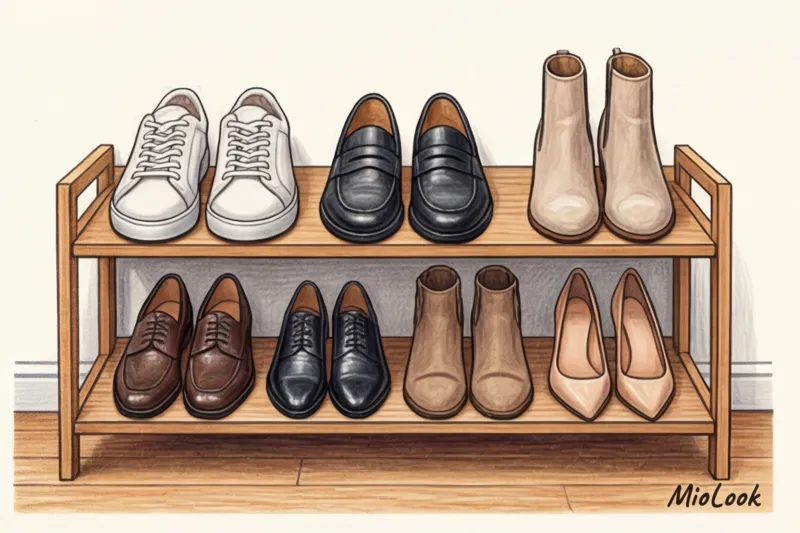
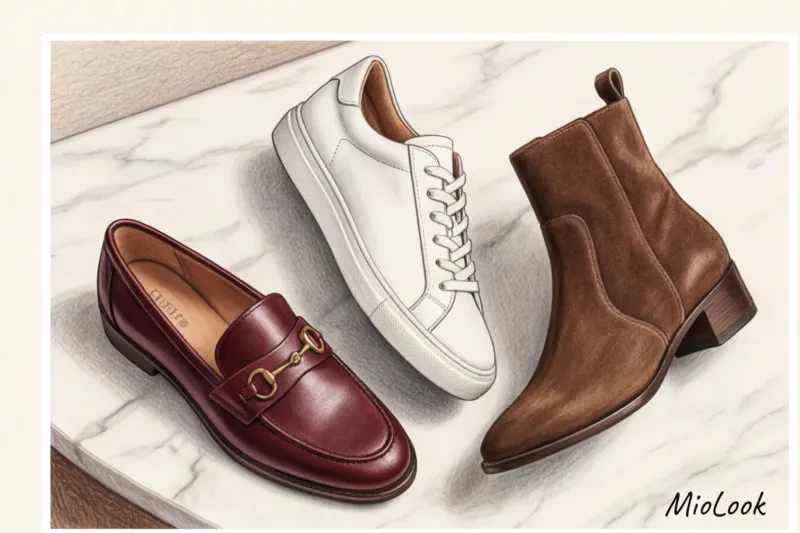
For example, for an urban autumn, these might be: white leather sneakers, classic chocolate-colored loafers, and reliable Chelsea boots. And as a "+1," consider those inexpensive yet striking shoes for occasional outings. Your investment shoe doesn't have to be black. Deep burgundy, dark green, cognac, or taupe look much more expensive and fit more easily into a modern wardrobe.
This evening, conduct an honest audit of your shoe closet. Take out all the pairs, put aside the ones you haven't worn in over a year. And for the remaining favorites, calculate the Cost Per Wear. You'll be surprised, but the most expensive items in your wardrobe are those cheap impulse buys you only wore once.