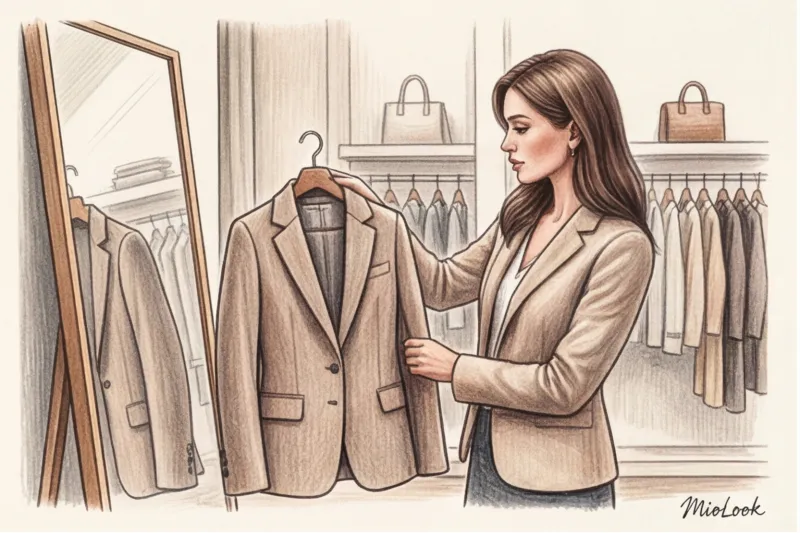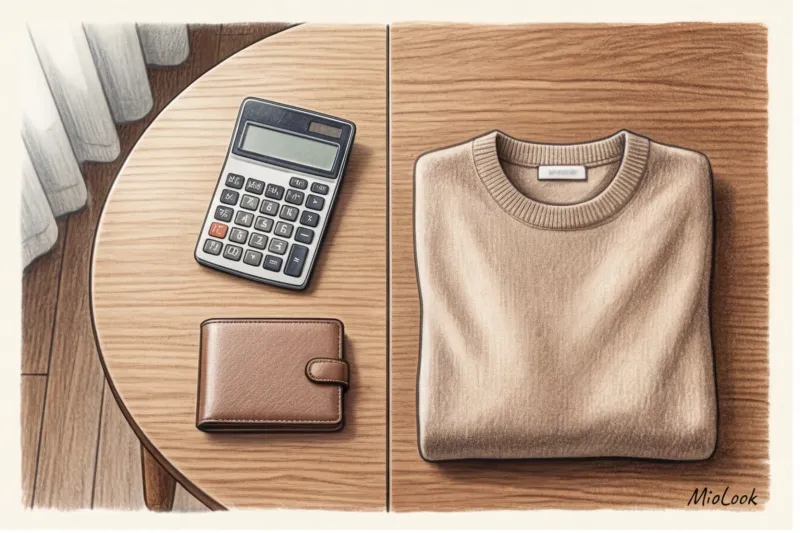
A year ago, my client triumphantly carried out a €2,000 bag from a boutique, bought specifically for "special occasions." Over the next 12 months, she wore it exactly twice. That same year, she bought a basic wool jacket from Massimo Dutti for €150 and wore it almost every day, garnering compliments. Guess which of these purchases turned out to be a real investment, and which a financial mistake?
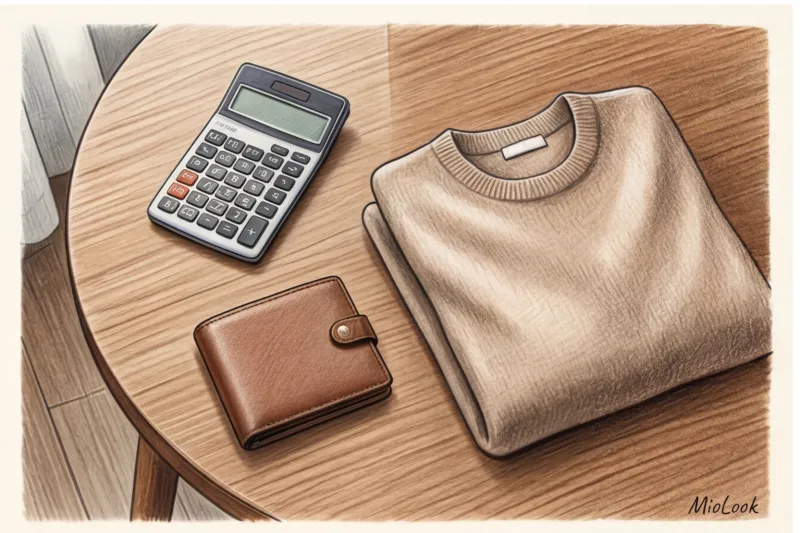
Glossy magazines have been selling us the idea of "investment purchases" for years, compiling lists of Burberry trench coats, Chanel bags, and the obligatory little black dresses. But after 12 years as a personal stylist, I've realized one thing: a real investment isn't a brand name with a lining. It's the math, multiplied by the quality of the cut and the durability of the fabric. If you've read my The Complete Guide to Creating Timeless Style , then you know: your wardrobe should work for you, and not you - for the maintenance of expensive things.
Let's put aside the marketing gimmicks. Today we'll look at how to calculate the real value of things and What to invest in in your wardrobe so that every penny spent pays for itself in comfort and impeccable appearance.
ROI Formula: How to Know What to Invest in Your Wardrobe
In fashion, the word "investment" is often used as a convenient excuse to spend half your salary on something you just really like. But in economics, an investment is an investment that pays dividends. In your wardrobe, those dividends are self-confidence, time saved in the morning, and physical comfort.
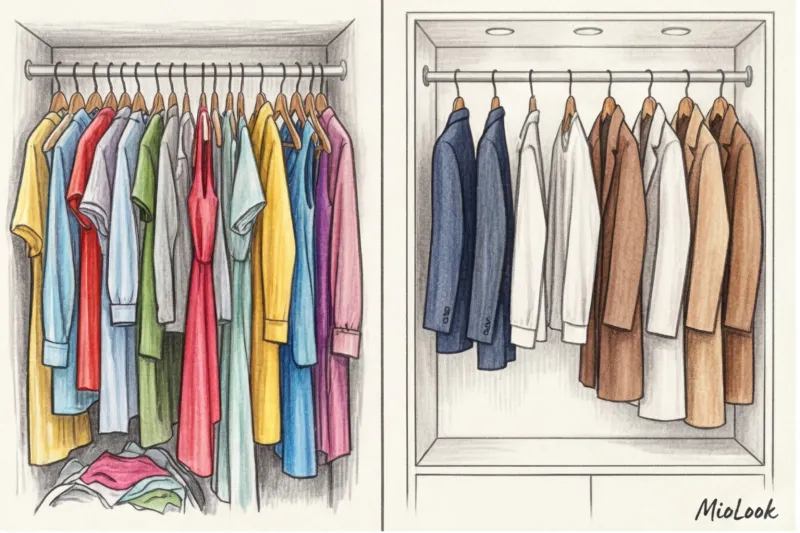
There's no universal "must-have" list for everyone. A freelancer working from their favorite coffee shop doesn't need an expensive fine wool pencil skirt, and a corporate lawyer probably shouldn't spend hundreds of euros on a premium hoodie. Invest exclusively in your "personal uniform"—the items you wear 80% of the time.
Cost Per Wear (CPW) Rule in Practice
The key tool for mindful shopping is the Cost Per Wear formula. It looks like this:
CPW = (Item Cost + Care and Repair Cost) / Number of Wears
Let's compare two situations. You buy a stunning evening dress for $100 and wear it to a New Year's corporate party exactly once. Its CPW = $100.
Then you buy the perfect leather loafers for $500, give them $30 in maintenance, and wear them 200 days a year. Their CPW is $2.65.
From a wardrobe math perspective, expensive loafers turned out to be 37 times more cost-effective than a "cheap" dress. McKinsey's 2024 consumer habits study confirms this logic: shoppers who adopted the CPW pricing model reduced their overall clothing spending by 22% per year, while visually enhancing the status of their look.
Your perfect look starts here
Join thousands of users who look flawless every day with MioLook. Upload your items and let AI calculate their effectiveness.
Get access — €0.99 onceOuterwear: Why a Quality Coat Is Worth the Money
In climates where the cold season lasts for half the year, outerwear is your calling card. On the street, on public transport, or entering a restaurant, people only see your coat. It's what makes the first impression.

The difference between mass-market and premium items is colossal. A cheap coat made of polyester or acrylic doesn't keep you warm, creates a greenhouse effect, and, worst of all, starts to pill after just a month of active wear. A high-quality coat made of sheepskin, cashmere, or alpaca naturally regulates temperature and drapes gracefully.

Insider tip: As a stylist, I always check the fabric right in the store. Take the edge of the coat and lightly rub the fabric against itself for 10-15 seconds. If the fibers immediately start to clump, the garment will quickly lose its appearance. Look for at least 70% virgin wool.
Also, pay attention to the inside. An expensive coat's lining is a telltale sign. Ideally, it should be viscose or cupro—breathable materials that won't static your hair or the clothes underneath. If a brand charges $300 for a wool coat but uses 100% polyester lining, it's a bad investment.
Shoes and bags: the main markers of status and comfort
If you ask me what to invest in first in your wardrobe, I'll answer without hesitation: what separates you from the ground and what you hold in your hands. Shoes bear the brunt of your physical impact. Skimping on lasts not only ruins your style but also leads to problems with your posture, joints, and veins.
Today, "quiet luxury" rules the world. High-status accessories no longer scream logos. On the contrary, a huge gold buckle with a brand's initials often looks provincial. True class is revealed by the geometric shape, the quality of the stitching, and the texture of the material.
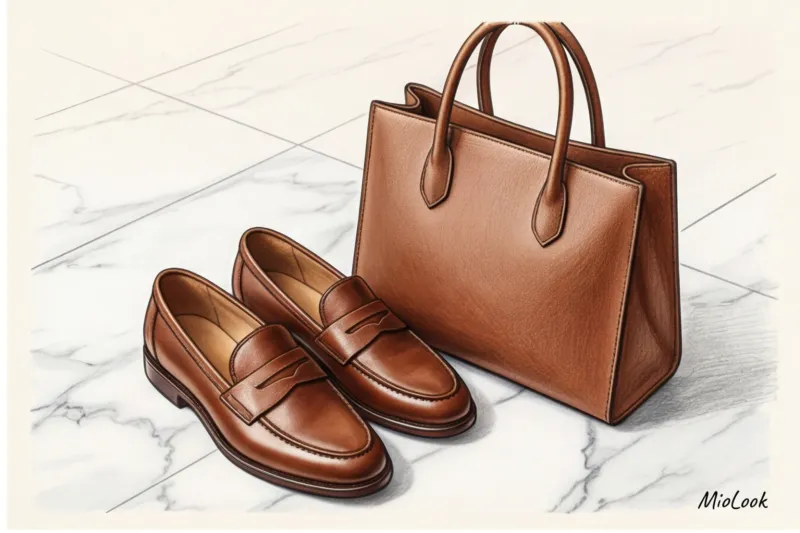
I was once sorting through a client's wardrobe. She had a nice, but inexpensive, faux leather bag. The shape was trendy, but the hardware gave it away: it was too yellow, lightweight, and the zipper jingled with every step. Cheap hardware ruins a look faster than the absence of a famous label. Choose bags with minimalist designs and matte or slightly distressed hardware—they always look much more expensive than their price.
The Anatomy of Expensive Shoes: What We Pay for
When you spend a hefty sum on ankle boots or loafers, you're paying for more than just the top layer of leather. You're paying for the underlying anatomy:
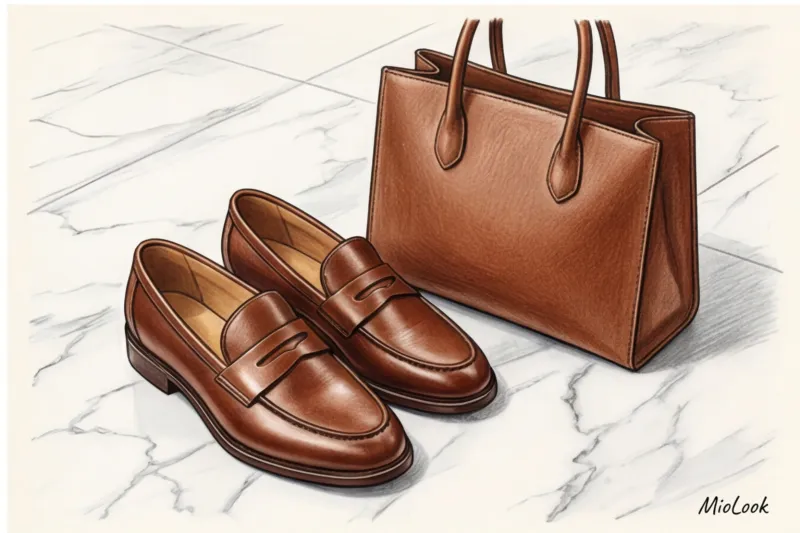
- Leather lining: Unlike leatherette, it allows your foot to breathe and adapts to the shape of your foot.
- Correct arch support: a metal piece inside the sole that supports the arch of the foot and prevents the heel from loosening.
- Stacked heel: It is made of layers of genuine leather (fleece), and is not cast from a piece of plastic covered with a film that peels off on the first step.
According to WGSN, shoes with leather soles (provided that high-quality polyurethane treatment is installed in a workshop) last on average 4 times longer than shoes with factory-molded soles from the mass market.
Access to MioLook for €0.99 — one-time payment
A smart AI stylist will select the perfect look based on your shoes and accessories in just a few seconds.
Get access — €0.99 onceA perfectly tailored jacket: the foundation of a personal uniform
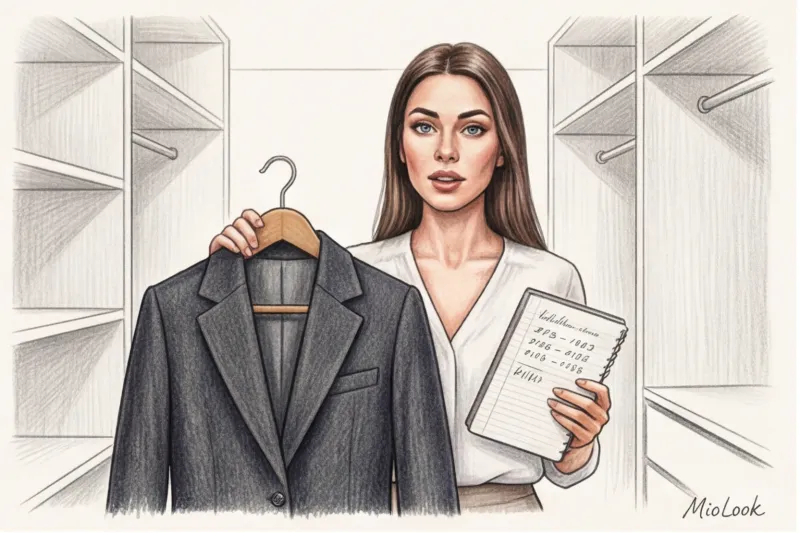
A good jacket is the architectural framework of your look. It can pull together even the most casual basics: a simple white T-shirt and straight jeans. It's the piece that instantly takes you from "just out for coffee" to "I'm in control of my life."
But why does a $60 Zara jacket often look sloppy after just a month, while a jacket from a good tailor holds its shape for decades? The answer lies in tailoring techniques rarely discussed in women's styling but well-known in men's tailoring.
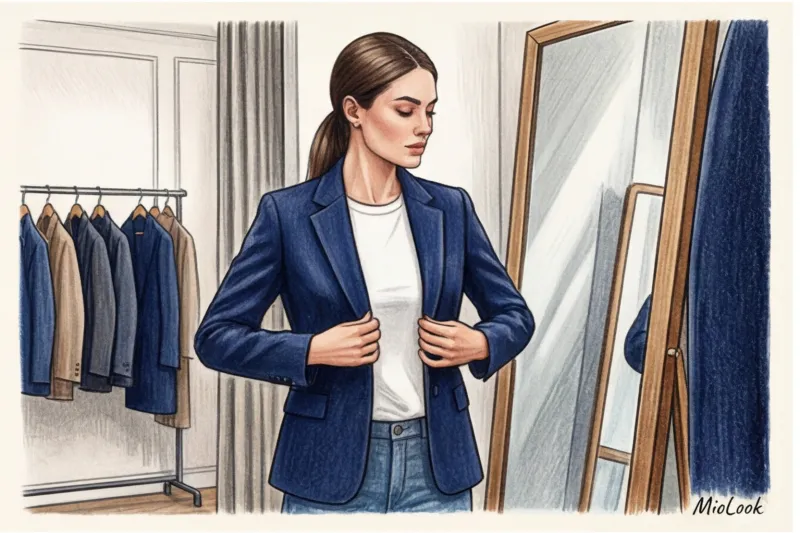
Cheap jackets are made using technology fused — the outer fabric is simply glued to the backing material under pressure. After the first unsuccessful dry cleaning or exposure to heavy rain, the glue begins to peel off, and unsightly bubbles appear on the lapels or fronts. This cannot be fixed.
Expensive jackets are sewn using technology canvassed (or half-canvass). Inside, there's a special padding made of horsehair and cotton, sewn to the main fabric with thousands of invisible stitches. This jacket molds to your body over time and never bulges.
Limitation of the method: It's fair to say that fully quilted (canvassed) women's jackets are rare and expensive. Moreover, they can appear a bit stiff. If your budget is limited, look for a high-quality half-canvas option or a dense fabric (tweed, heavy wool) that holds its shape well. And the main rule: even an expensive jacket almost always needs to be taken to a tailor. Shortening the sleeve by 1.5 centimeters to show off the wrist bone is a micro-investment that visually doubles the cost of the look.
The Biggest Myth: Things You Shouldn't Invest Big Money In
Let's talk about what you absolutely shouldn't invest in for your wardrobe. A counterintuitive insight that often shocks my new clients: don't buy expensive evening dresses and basic T-shirts.
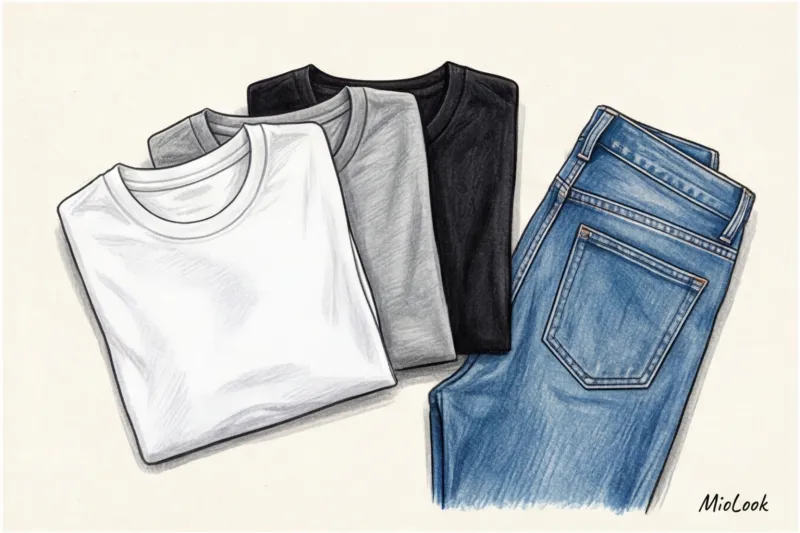
- Basic cotton t-shirts. White cotton yellows from deodorant and loses its shape with repeated washing, regardless of whether the tag is labeled with a luxury designer. 180-200 g/m² cotton from COS, & Other Stories, or even a basic Uniqlo line will do the job just as well as a $300 T-shirt. It's a consumable.
- Evening dresses. Glossy magazines have convinced us that every woman should have an expensive silk dress for special occasions. In reality, we wear it once or twice, take a photo, post it on social media, and... never want to wear it again. The CPW of such a dress is skyrocketing. Better yet, rent a luxurious gown.
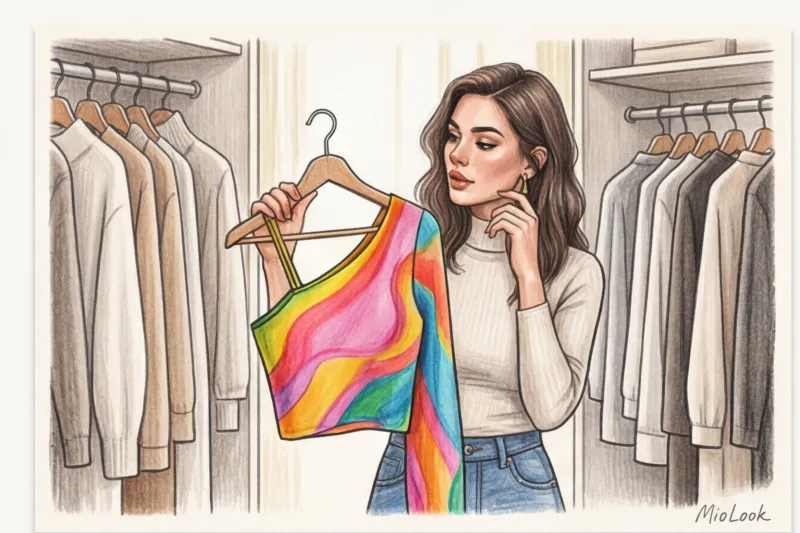
- Ultra-fashionable trends. Neon micro-bags, giant Bratz-style platform shoes, leopard-print leggings—everything that's all the rage today will be a counter-trend in six months. Save these experiments for the mass market.
Checklist before buying an expensive item: 5 questions from a stylist
To avoid impulsive spending and know exactly what to invest in for your wardrobe, I give my clients a strict checklist during shopping sessions. Before you take an item to the checkout, ask yourself five questions:
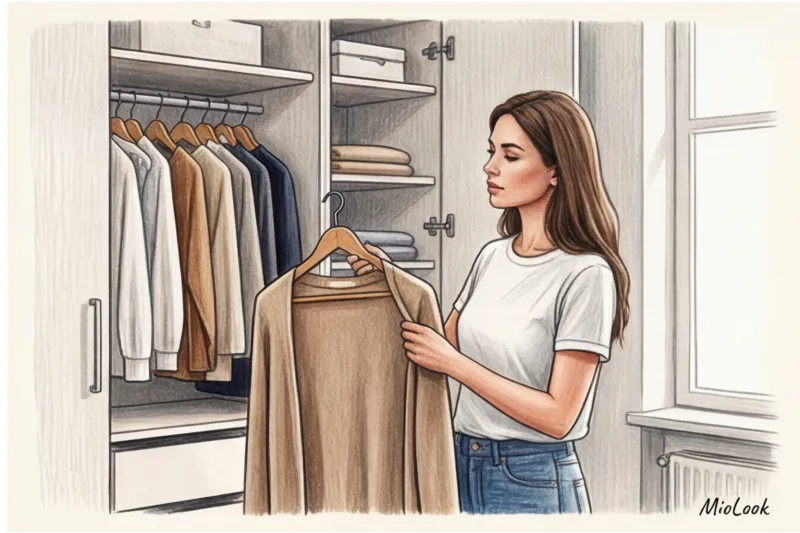
- Will I be able to create at least 5 looks with this item from what I already have? If you need to buy new trousers, a matching blouse, and different shoes for a new jacket, it's not an investment; it's a financial black hole. To quickly check this, use the virtual fitting room feature in MioLook — create a collage of your current belongings right on your phone.
- Does this fit my real lifestyle? Instead of thinking abstractly about "work," think concretely: will this jacket be appropriate for the Friday dress code at an IT company where everyone wears jeans, but you, as a manager, want to look put-together? Don't buy clothes for your "fantasy" life.
- Am I willing to pay for care? A cashmere coat is not machine washable. A silk blouse requires delicate dry cleaning. Factor these amounts into your CPW formula.
- Does this item fit perfectly right now? Never invest in things "for when I lose 3 kilos." An investment should work for you today, bringing you joy in the present moment.
- Would I buy this if it didn't have a brand tag? Cover the logo with your finger. Evaluate the stitching, hardware, and fit. If the magic of the garment has disappeared along with the logo, return it to the hanger.
A smart wardrobe isn't built on unlimited budgets, but on discipline and an understanding of your needs. Invest in quality pieces that protect you from the elements, preserve your health, and serve as a reliable foundation for every day. Everything else is just decoration, on which you can and should save.