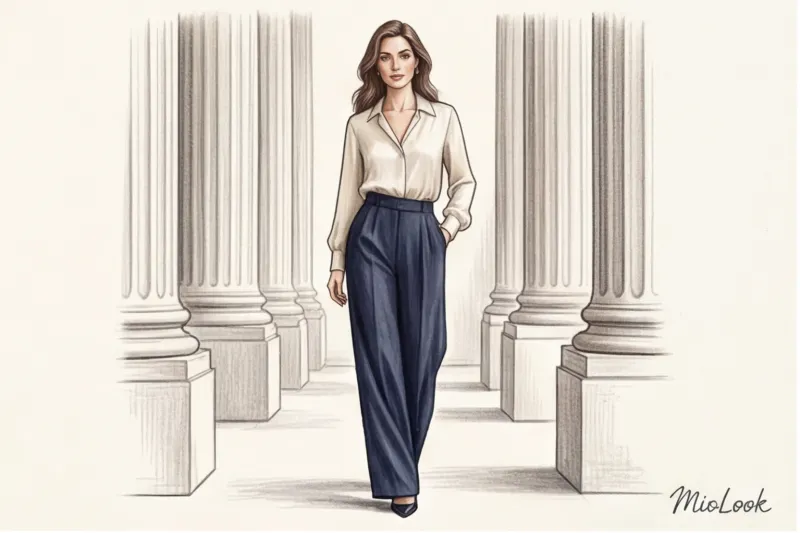
Have you ever wondered why you look like a graceful statue in some pants, while in others of the exact same size, your figure suddenly becomes squat and heavy? Spoiler: it's not about the dessert you had for dinner. Our visual assessment of proportions is pure physics, optics, and geometry. When applied correctly visual correction of figure, clothing It ceases to be just a piece of fabric. It becomes an attention-management tool.
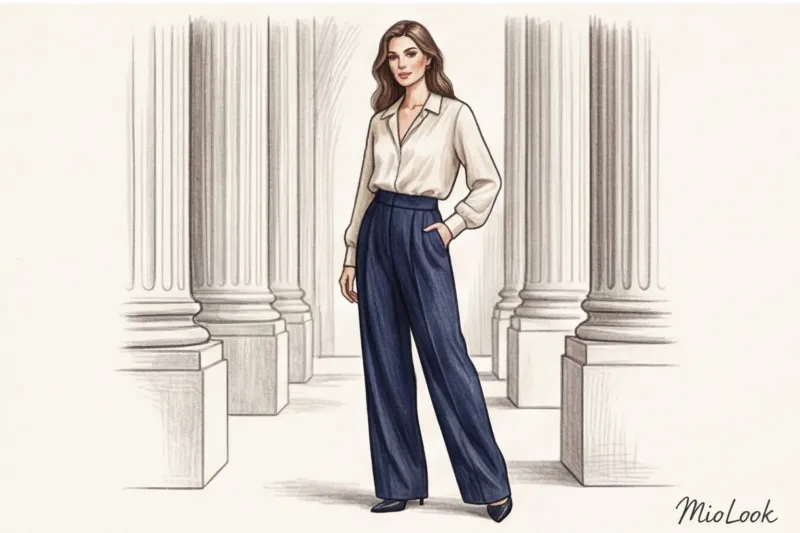
Over 12 years of working as a stylist, I've realized one important thing: attempts to "hide" or "tighten" the body with shapeless robes or aggressive shapewear are always doomed to failure. Instead of hackneyed (and often harmful) advice like "just wear heels and always wear black," I suggest relying on the laws of Gestalt psychology and the properties of textiles. We've discussed in more detail why it's time to stop dividing yourself into "apples" and "pears" and embrace a more sustainable approach to body image in our A complete guide to choosing a wardrobe without stereotypes.
Visual body shaping: clothing as an architectural tool
Constructing a silhouette is no different from an architect's work. We have predetermined volumes, lines, and lighting. For some reason, the fast-fashion industry has spent decades telling women their bodies are "wrong" and must be urgently fitted to a single standard. But everyone's bone structure is different, and that's a wonderful thing.
If we stop focusing on toxic typing and start evaluating reference points (shoulders, pelvis, leg length relative to the torso), assembling images will become much easier. Your goal isn't to reduce actual dimensions, but to guide the observer's eye along the correct trajectory. When the gaze moves smoothly from top to bottom, the brain automatically perceives the subject as taller and slimmer.
The main rule of proportions: forget about the 50/50 ratio
The most common mistake I see on the street is dividing the figure exactly in half. Mid-rise jeans and a t-shirt or sweater with a folded-out silhouette create a visual 50/50 ratio. The human brain perceives such equal sections as static and "heavy," which instantly reduces height.
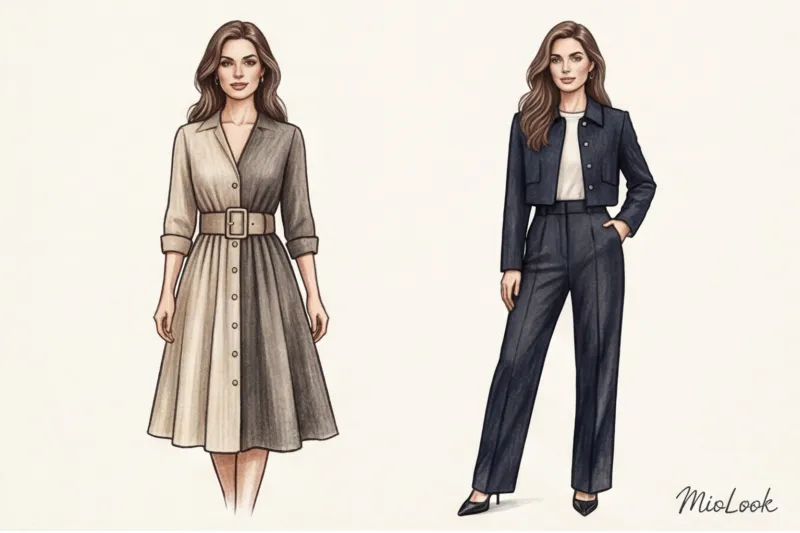
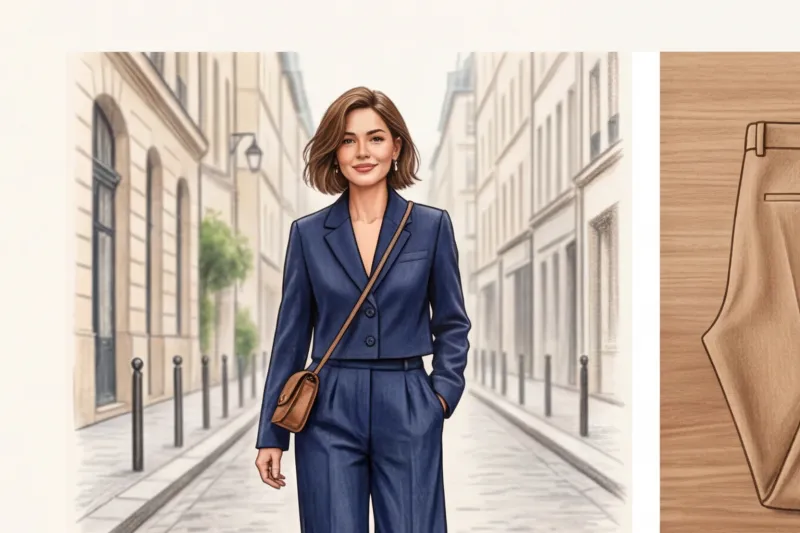
In styling, the golden ratio—the 3:5 ratio—rules the day. In practice, this means dividing the silhouette into 1/3 (the top) and 2/3 (the bottom).
"A few years ago, many of my clients began to give up heels en masse for the sake of foot health (the so-called flat shoe movement). I was faced with the challenge of how to maintain leg length without physically lifting the heel. The solution was strict discipline in maintaining the 1/3 ratio. As soon as we switched from a mid-rise to a high-rise and started wearing crop tops or tucking the hem of shirts into the waistband, the legs visually lengthened by those missing 7-10 centimeters."
There is, however, an important limitation here. This rule does not work for everyone: If you have a naturally short torso and a full bust, a high waist can visually "swallow" your neck and make your upper body look boxy. In this case, it's better to reverse the proportions: a longer top (2/3) and a narrow bottom (1/3), or go for a monochrome look.
Access to MioLook for €0.99 — one-time payment
A smart AI stylist will select the perfect look based on your individual proportions and show you how items will look together.
Get access — €0.99 onceHow the length of your top layer eats away at your height
Pay attention to where your jackets, cardigans, and coats end. If the horizontal hemline runs exactly along the widest part of your hips, you're artificially drawing a marker there. Your conversation partner's eye will focus on this area.
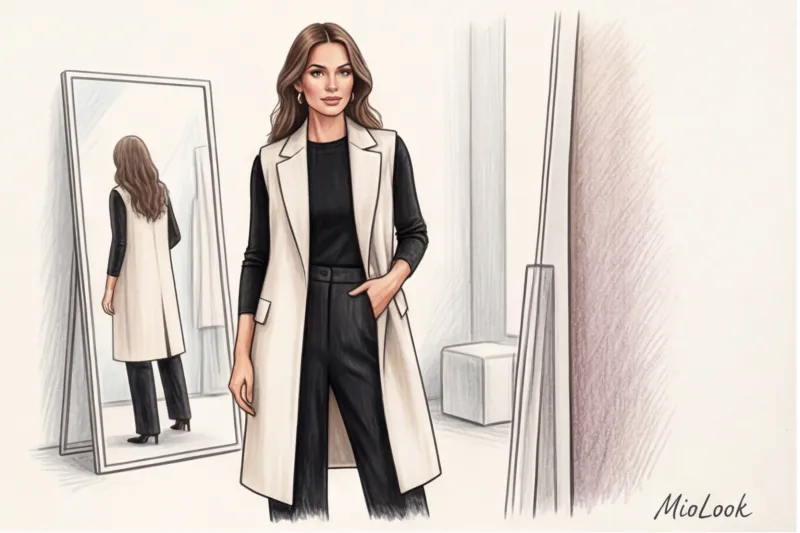
The rule of elongated layering states that outerwear should either end above the hipbone (for cropped jackets) or cover the widest part of the hip. This is why a midi- or maxi-length trench coat or coat always elongates the silhouette more effectively than a mid-thigh parka.
Color and Contrast: Monochrome as the Greenest Way to Grow Taller
According to the laws of Gestalt psychology, particularly the law of continuity, our perception tends to unite similar elements into a single line. A sharp color block (for example, a white sweater and black pants) physically "cuts" you in half. The gaze stumbles over the contrasting boundary.
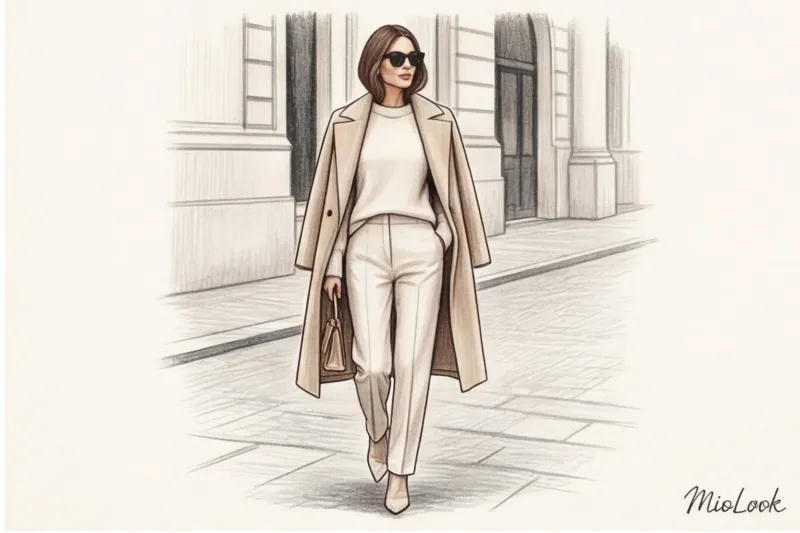
I'm not advocating wearing only black. A solid monochrome of a single color often looks flat. It works much more effectively. tonal monochrome — a combination of different textures (wool, silk, leather) within one shade, for example, ecru, caramel or deep blue.
Incidentally, building a wardrobe based on tonal monochrome significantly increases the rewearability of items. You buy less but combine them more often, which directly reduces your environmental footprint—a great alternative to impulse purchases from mass-market stores.
The rule of vertical shoe color
Want an instant leg-lifting effect? Match the color of your pants (or tights) to the color of your shoes. Dark brown boots with dark brown tights paired with a midi skirt blur the horizontal line at the ankle, adding 5-7 centimeters to your legs.
Your perfect look starts here
Join thousands of users who look flawless every day and save time getting ready with the MioLook app.
Get access — €0.99 onceTissue Anatomy: Why Hard Material Makes You Look Fat
Few people think about the density of textiles, although it's the foundation of visual correction. In the textile industry, there's a metric called GSM (grams per square meter). Fabrics with a high GSM (heavy cotton over 300 g/m², stiff taffeta, corsetry) hold their shape well. But if you're a plus-size woman, such fabrics can play a nasty trick on you.
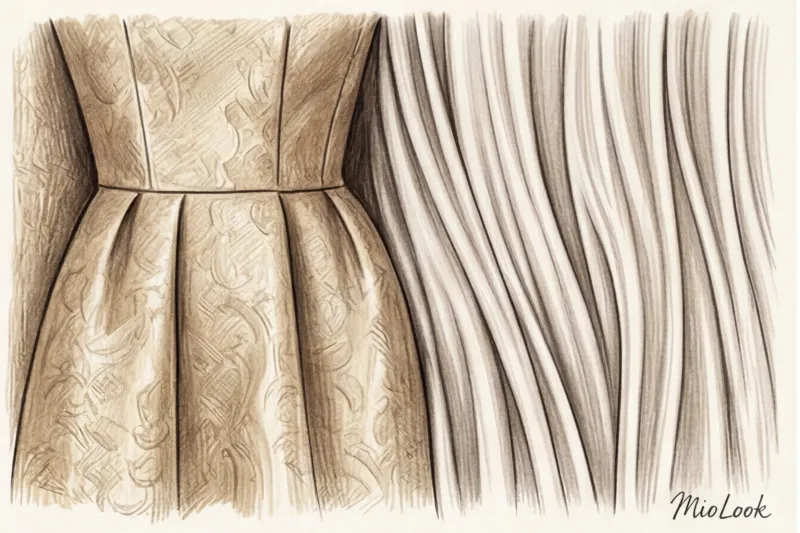
Rigid material doesn't conform to your body—it becomes rigid, creating its own framework around you. As a result, others see the dimensions of this rigid "wardrobe" rather than your true, more graceful curves.
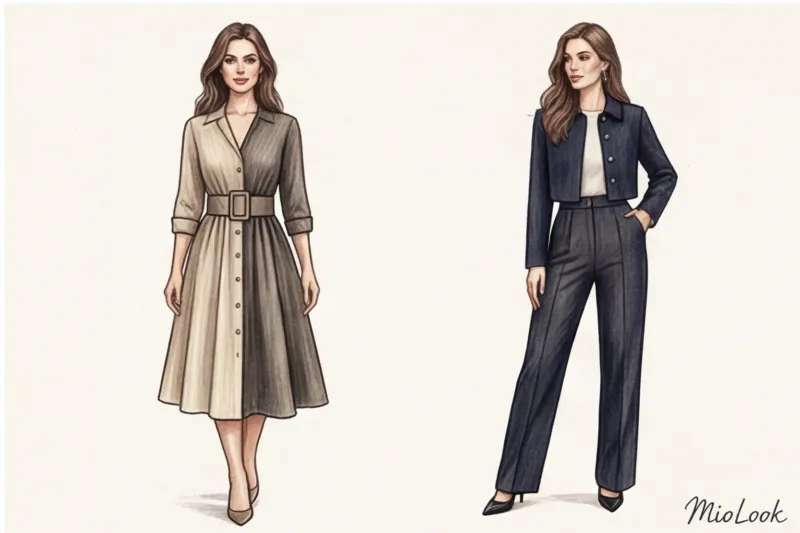
While working backstage at Milan shows, I often observed how cutters at premium brands worked with the direction of the warp thread. They used so-called fluid fabrics (flowing fabrics) – viscose, cupro, dense silk. These materials have a remarkable property: they flow around the figure under their own weight, creating deep, narrow vertical folds (drapery) that act like columns, elongating the figure. Excellent eco-friendly alternatives today include Tencel and certified Ecovero viscose.
Mythbusters: Stripes, Prints, and Oversized
It's time to dispel some mossy stereotypes that have been migrating from glossy magazine to glossy magazine for decades.
Myth #1: “Vertical stripes always make you look slimmer.”
This isn't true. If you wear pants with wide, contrasting vertical stripes (for example, white and red) made of a thick fabric, you'll create a widening effect. The wide stripes distort on the curved parts of your body, emphasizing the volume of your hips.
Myth #2: “Horizontal stripes make you look fat.”
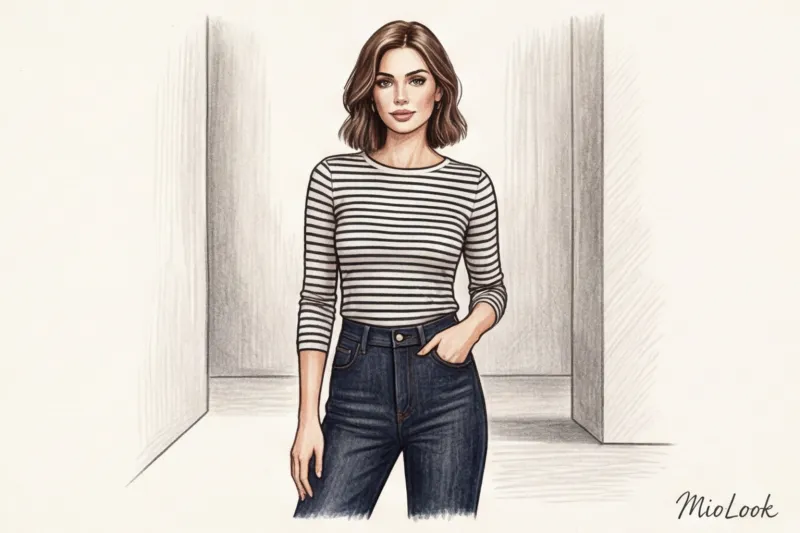
And here's where the real magic of optics begins. In 2008, researcher Peter Thompson of the University of York experimentally demonstrated the Helmholtz illusion in clothing. It turned out that narrow, dense horizontal stripes (the classic Breton striped shirt) visually narrows Object! The brain can't focus on numerous small details and "compresses" the image. The main condition is that the stripes should be narrow (up to 1-1.5 cm) and located close to each other.
Myth #3: “Oversized clothing hides volume.”
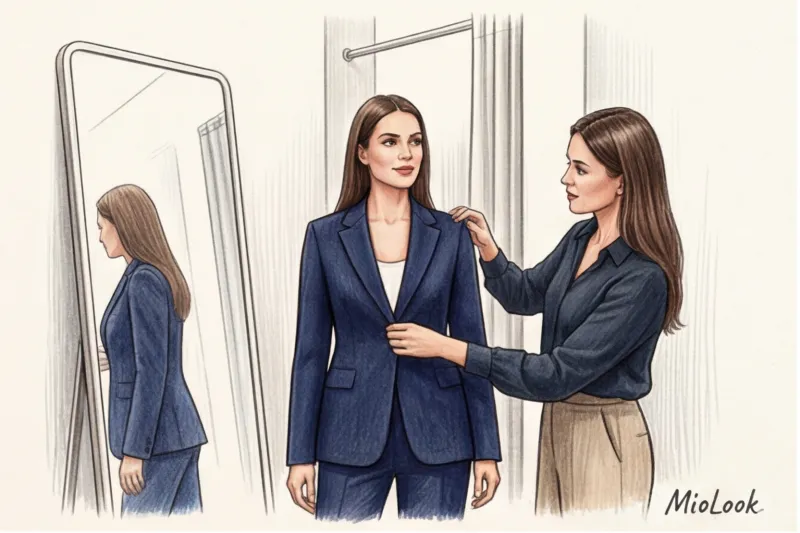
There is a huge difference between architectural oversize (with an architectural cut that maintains the shape of the shoulder, like brands like COS or The Frankie Shop) and shapeless knitted hoodies. The former establishes clear geometric boundaries within which the body appears fragile. The latter simply transforms the figure into a shapeless ball.
Shoes and the Portrait Zone: How to Control the Eye
The focal point theory states that you can't stop people from looking at you, but you can tell them to where exactly Look. If your goal is to draw attention away from your stomach or wide hips, you don't need to tighten them. You want to create a powerful visual magnet near your face.
In my practice, especially when styling clients for video appearances and business portraits, statement eyeglass frames, large, architectural earrings, and a well-designed neckline work best. V-necklines and deep U-necklines expose the collarbones and visually lengthen the neck, making the entire silhouette appear lighter.
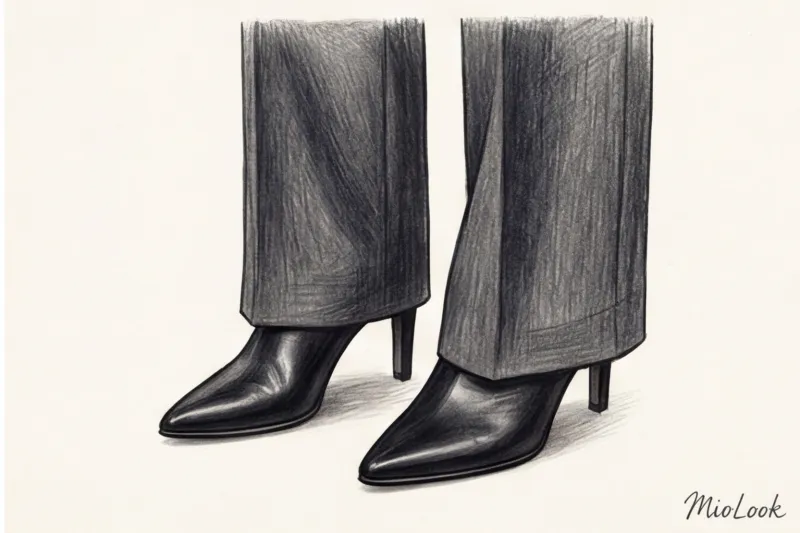
The geometry of the shoe is equally important. Square (bob) and round, chunky toes visually cut off the foot. Almond-shaped or slightly pointed toes, however, continue the line of the leg, creating the illusion of endless length, even if the shoes are flat.
Checklist: A Smart Wardrobe for a Slim Silhouette with MioLook
Theory without practice is dead. To begin applying the laws of optics today, I suggest a quick closet audit.
- Audit your current lengths: Try on all your jackets, sweaters, and T-shirts. Put away those whose hem stops at the widest part of your hips.
- Digitize your wardrobe: To avoid having to keep all the formulas in your head, upload your things to the app MioLook Artificial intelligence will help you visualize 1/3 proportions in advance and create an elegant tonal monochrome from what you already have.
- Check your shopping list. If you're still missing something, here are 5 basic pieces guaranteed to elongate your silhouette:
- Full length palazzo trousers made of flowing fabric (viscose, tencel) with a high waist;
- Basic top or jumper with a V-neck;
- Structured long jacket (covering the groin and buttocks);
- Shoes with an almond or pointed toe (even loafers);
- Pendant on a long chain (creates an additional vertical line).
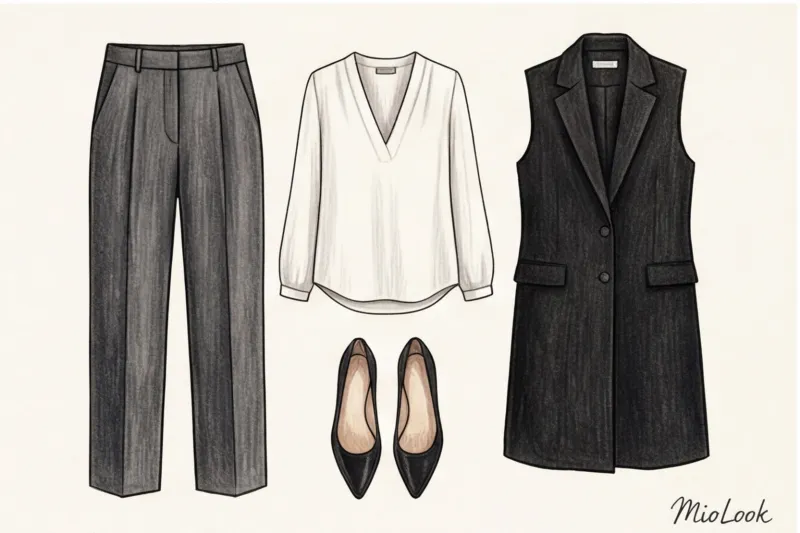
Remember, an ideal figure isn't a number on the scale. It's a well-designed geometry that allows you to move comfortably, live, and achieve your goals. Treat your clothes as tools, and your body with respect and love.
Ready to get started?
Try the MioLook free plan—no commitments required. Start creating perfect looks with AI.
Get access — €0.99 once